Strolling With Confidence

26 October 2025 – A double pun, both parts inspired by what I see, this drizzle-rich day, at the VanDusen Botanical Garden.

One part, the Michael Dennis cedar sculptures visible from the forecourt, which I always enjoy…

but whose title I always forget. I have to read it anew each visit: Confidence, says the label, Western red cedar, 2012.

Truth to tell, I don’t quite understand this title.

Dennis’ cedar sculpture for Guelph Park was called Reclining Figure, a name that made obvious sense — though also a name that disappeared from popular memory when the piece was recast in bronze, nicknamed The Dude, and in turn caused the park itself to become known as Dude Chilling Park. (But that is another story, and one I’ve already told you.)

To me, this Van Dusen duo look more contemplative than confident. Pffft, who cares? Confidence is an admirable characteristic, so let’s run with it. Confidence in my outerwear to be as waterproof as it claims, for example… confidence in nature’s transitions each season… confidence in the bones and installations of this Garden to be of interest, whatever the season, whatever the weather.
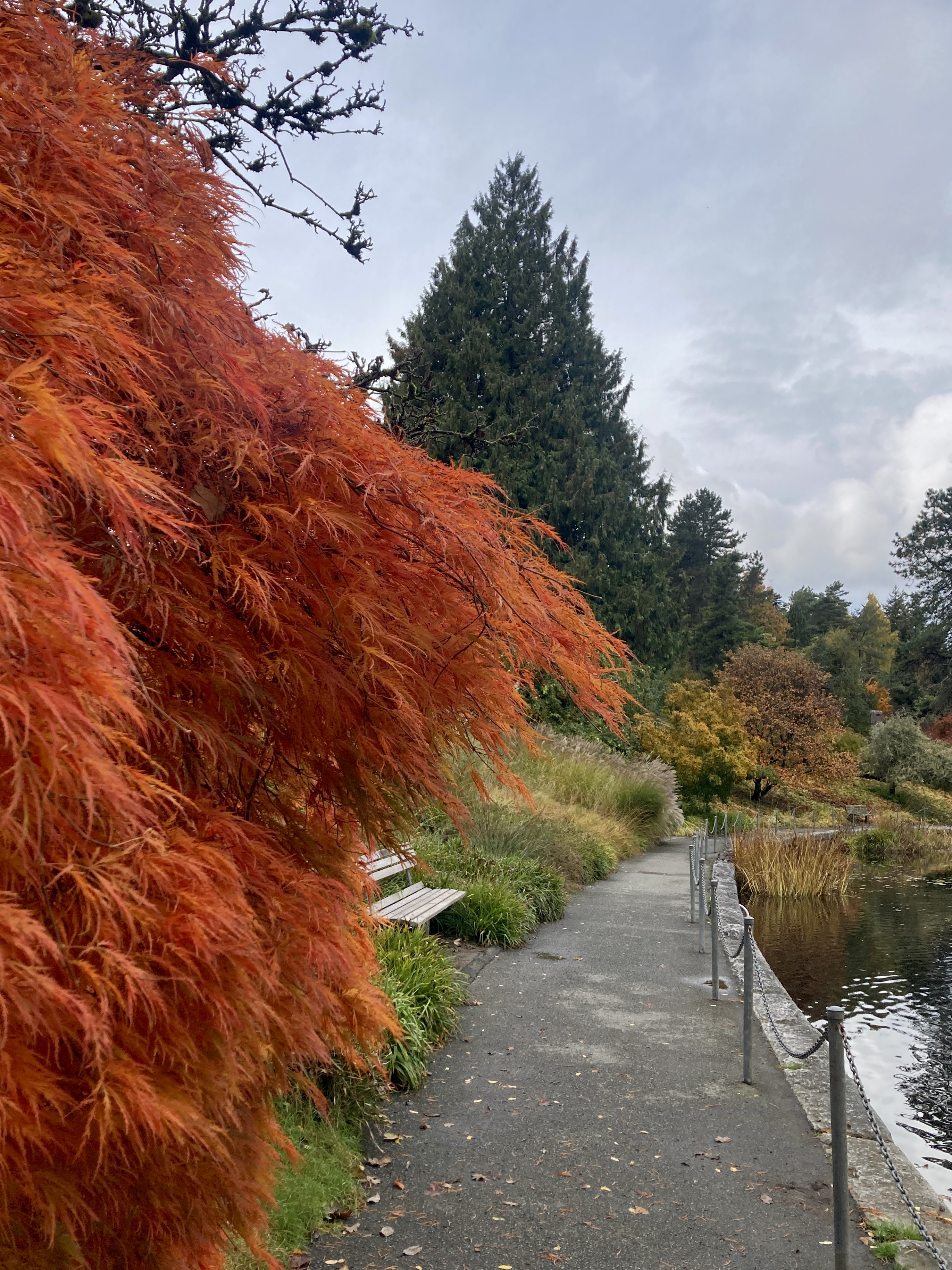
Confidence immediately justified. This is what greets me, as I start northward along the west side of Livingstone Lake.

Contrasts in the slopes to my left, fall textures and colours at play against the deep green of the coniferous background.

Sculptural details, in seed pods I can’t identify…

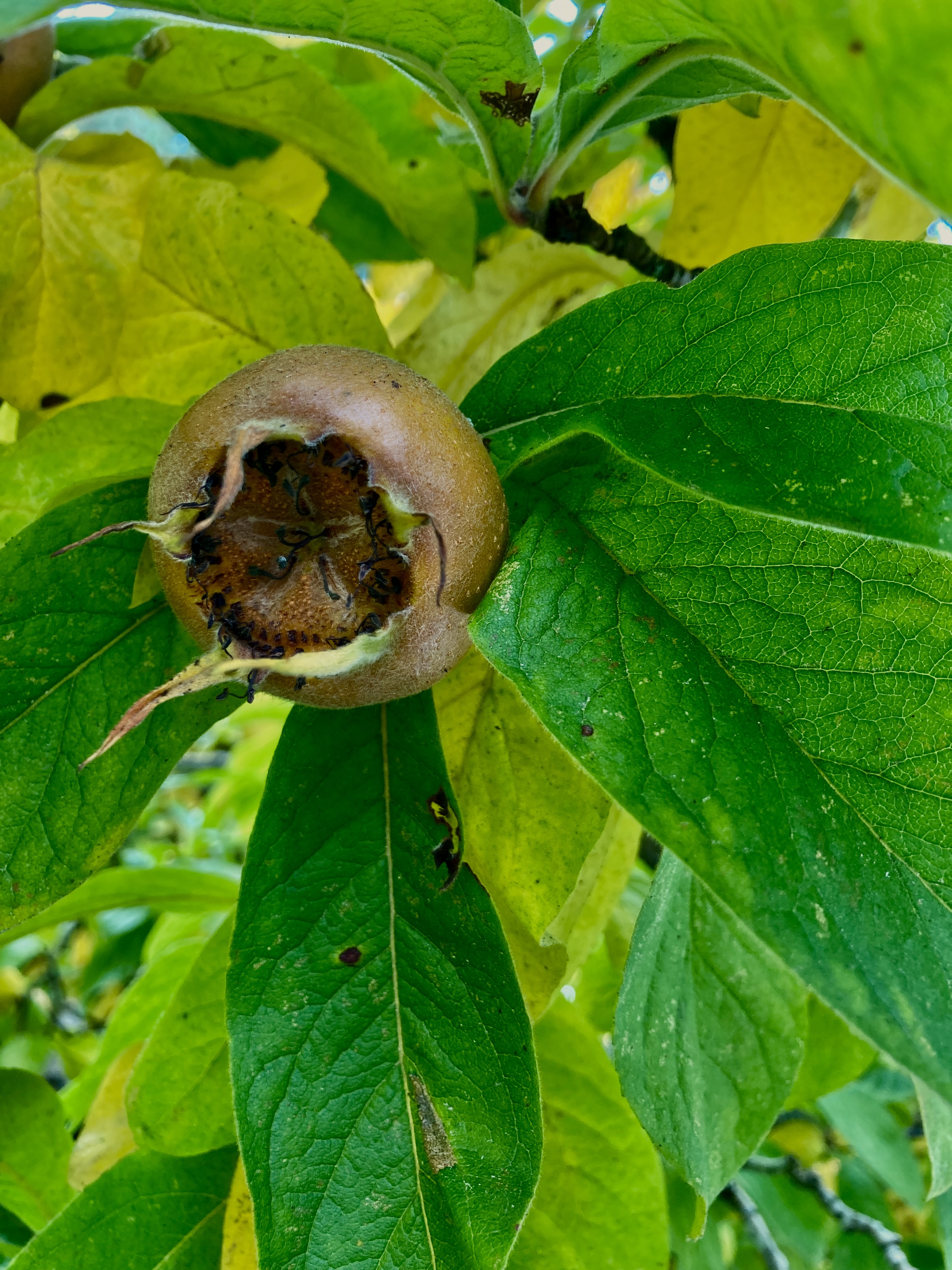
and in a curious fall fruit that I can, namely the Common Medlar (Mespilus germanica).
Then, just before I reach the footbridge that divides Livingstone Lake from Heron Lake, I see this enormous leaf on the ground before me.

Which I can also identify, and which sets me looking for more.
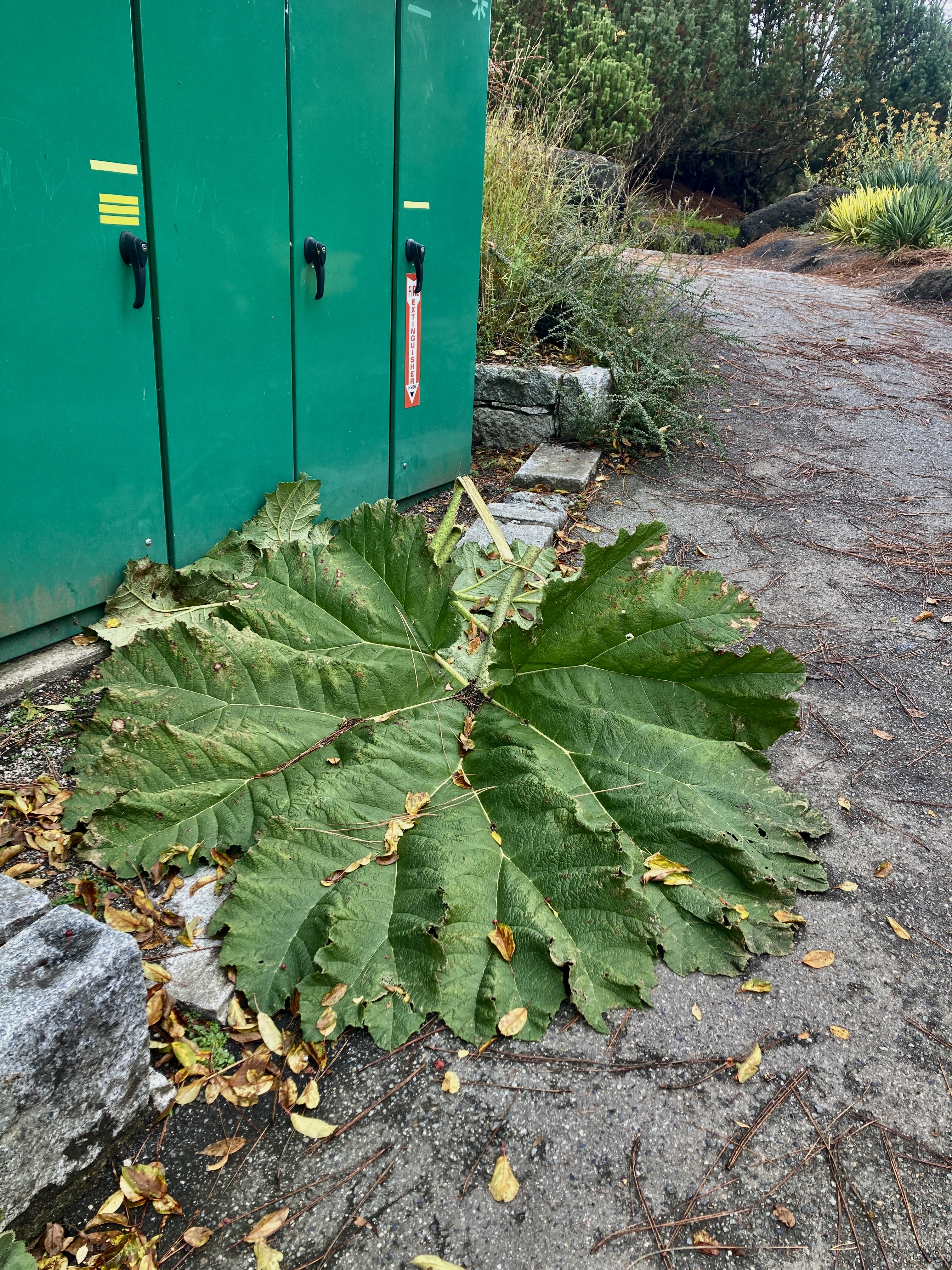
This is a Gunnera leaf — Gunnera manicata, aka Giant Chilean Rhubarb, and worthy of the adjective. One leaf can be a couple of metres wide, clumps run 3-plus metres high and 3-4 metres across. There are great clusters of this plant around the inter-zone of these two lakes.

The plant towers over visitors all summer long.
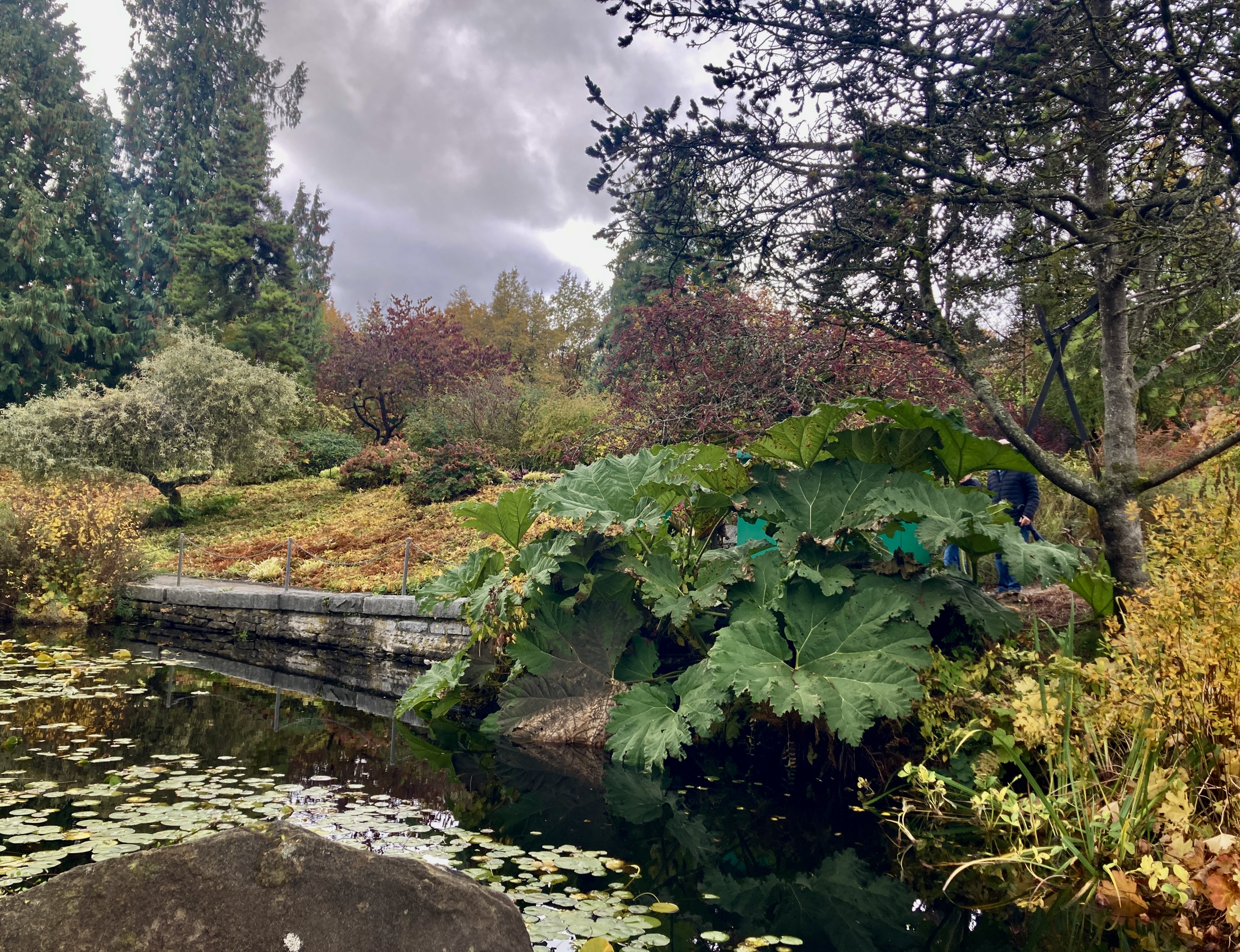
In fall, it is cut back…

and its leaves inverted, to protect plant crowns from winter temperatures.

I’m properly awed by Gunnera in summer, I giggle at it in winter.
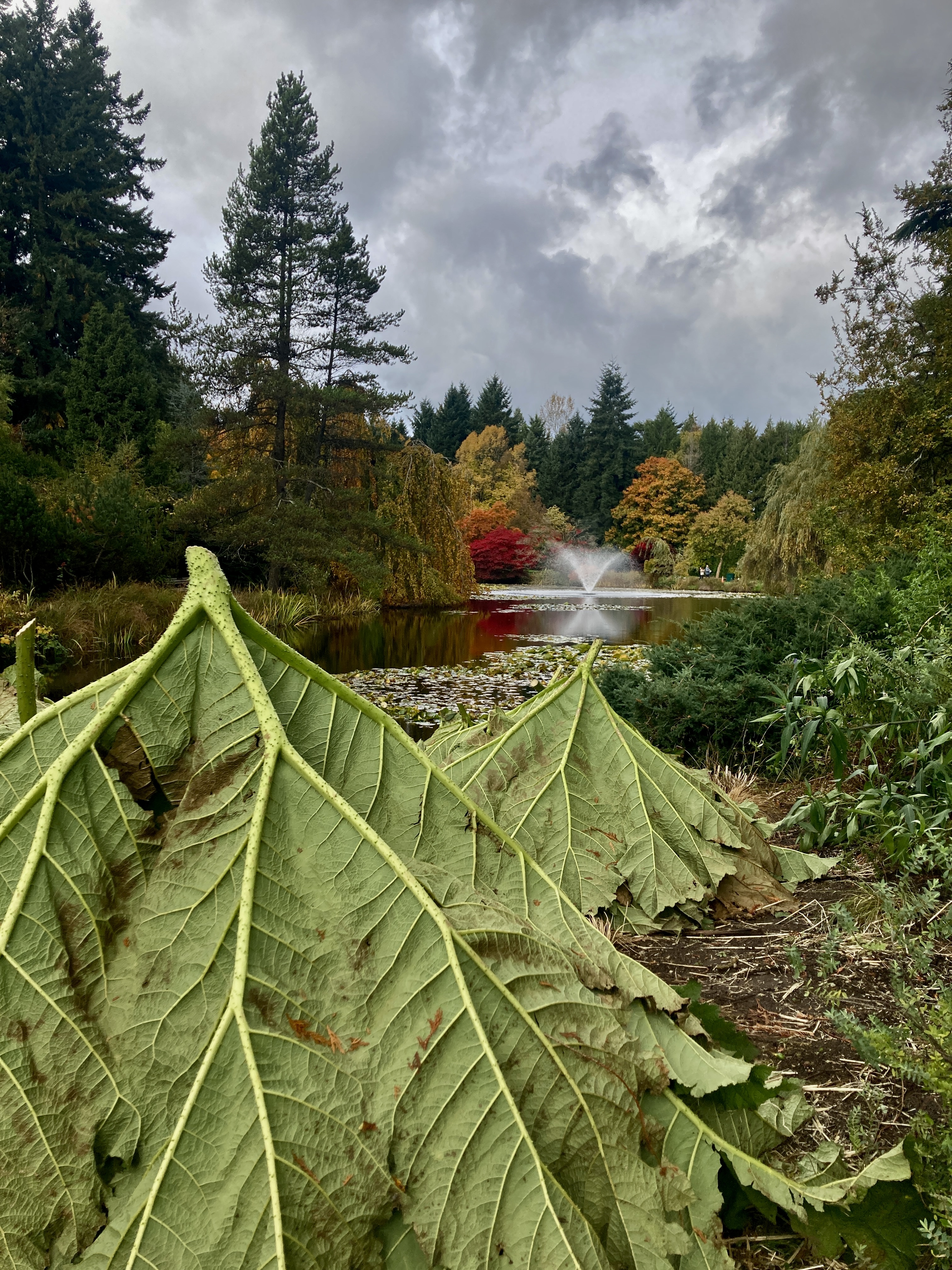
Giant pixie caps!

I’m across the foot bridge now, looking north into Heron Lake, taking in the whole sweep of autumn complexity, from desiccated russet stalks at my feet to flaming trees in the distance. So rich.
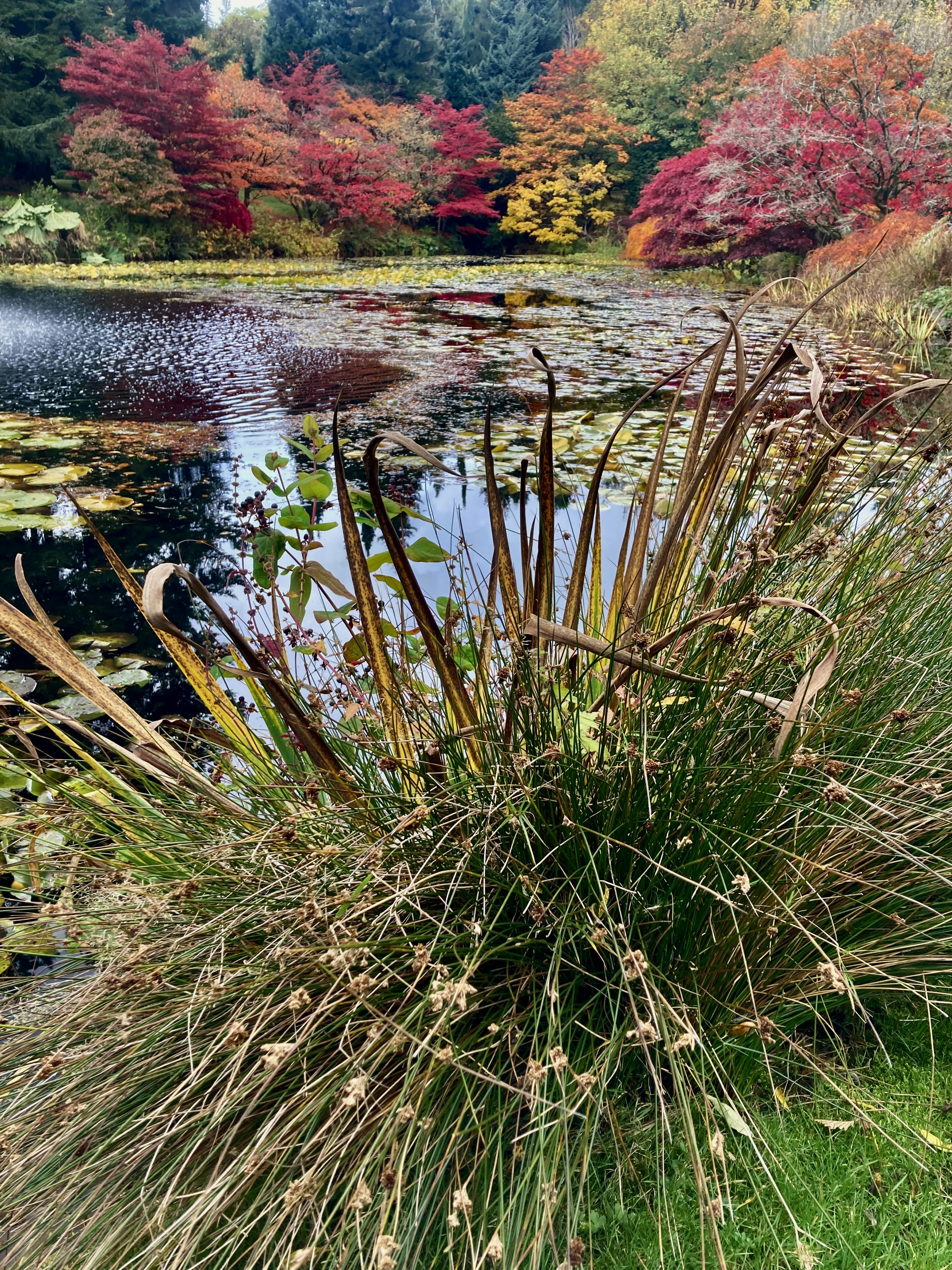
Also, in places, so denuded.

I follow the sweep of this dug-over flower bed, past that uprooted tree, and come to a signpost that promises me the most extraordinary amount of choice: both seasonal and geographic.
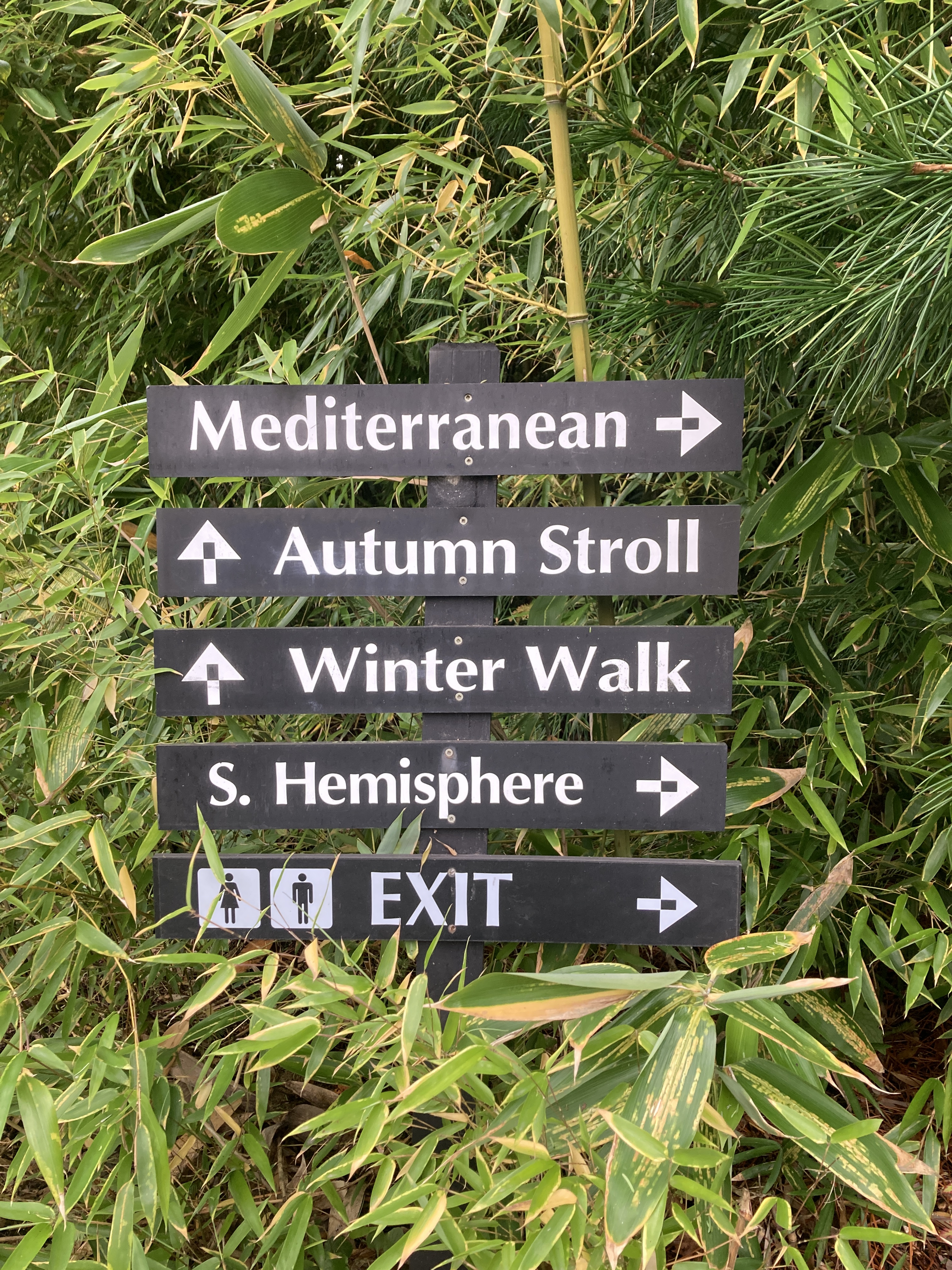
Here’s where the other part of my punning post title kicks in. I am offered a stroll, and I take it. Specifically, at this point, an autumn stroll in Eastern North America.

Yes. It is very all-of-that.

A side trail loops me past the Cypress Pond, and brings me out once again to the south-east curve of Livingstone Lake.

Where I rejoin the Confidence couple.

I too have confidence — confidence they watch over their lake, just as The Dude watches over his park.

I take my leave.

Twists in Time

14 April 2025 – It’s spring time, full-tilt — but even so, twists of last fall and winter are still woven into the offering.

We’re once again at the VanDusen Botanical Garden. We’re eager for spring and, at first, that’s all we see.

Western skunk cabbages are once again a-glow in the boggy creek that feeds into Livingstone Lake…

and trilliums, Ontario’s provincial flower, are in their seasonal glory on a slope in the VanDusen’s Eastern North America garden.

Then we begin to notice the overlaps, the twists in time.

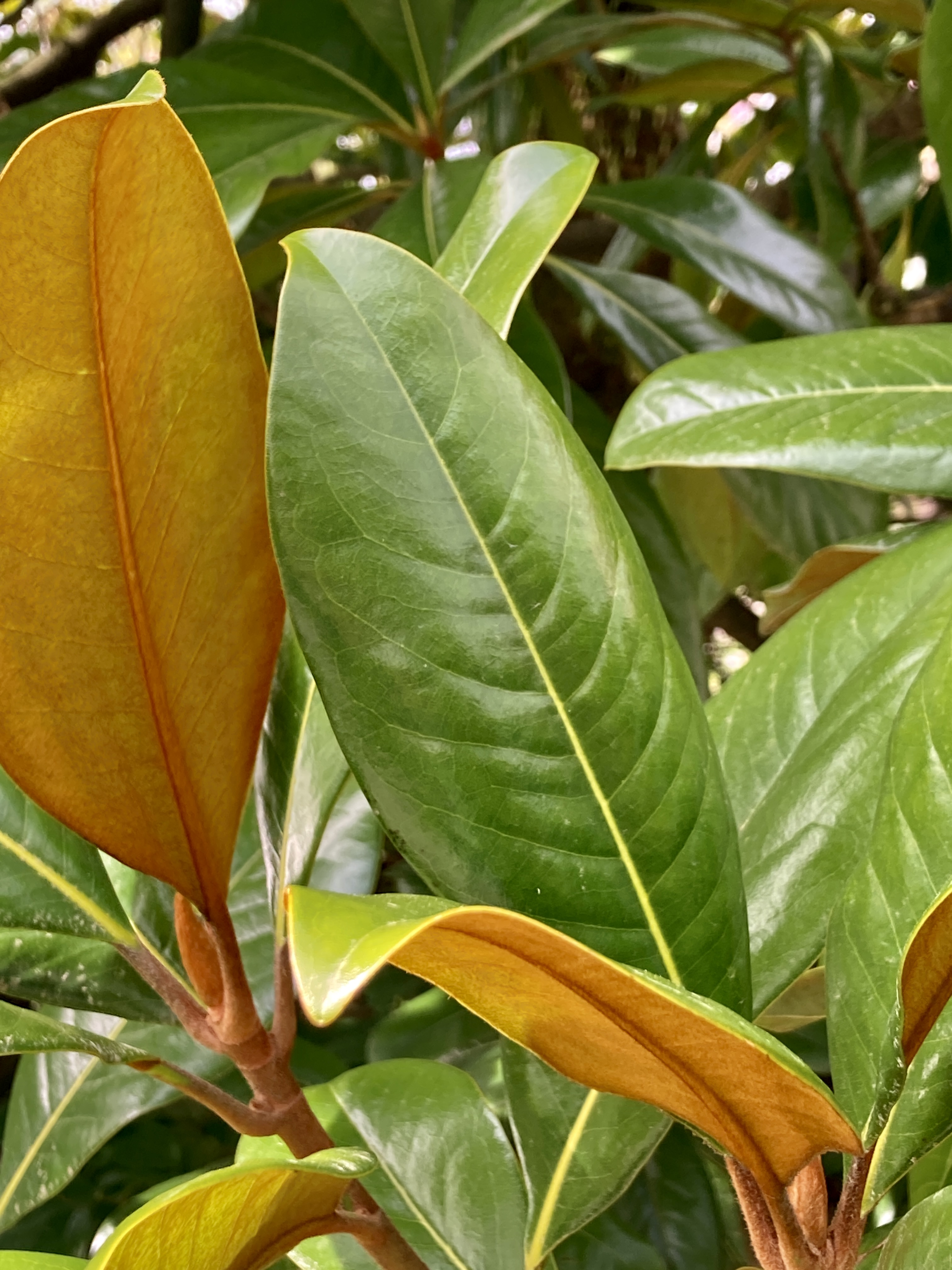
Glossy two-tone Southern Magnolia leaves are always with us…

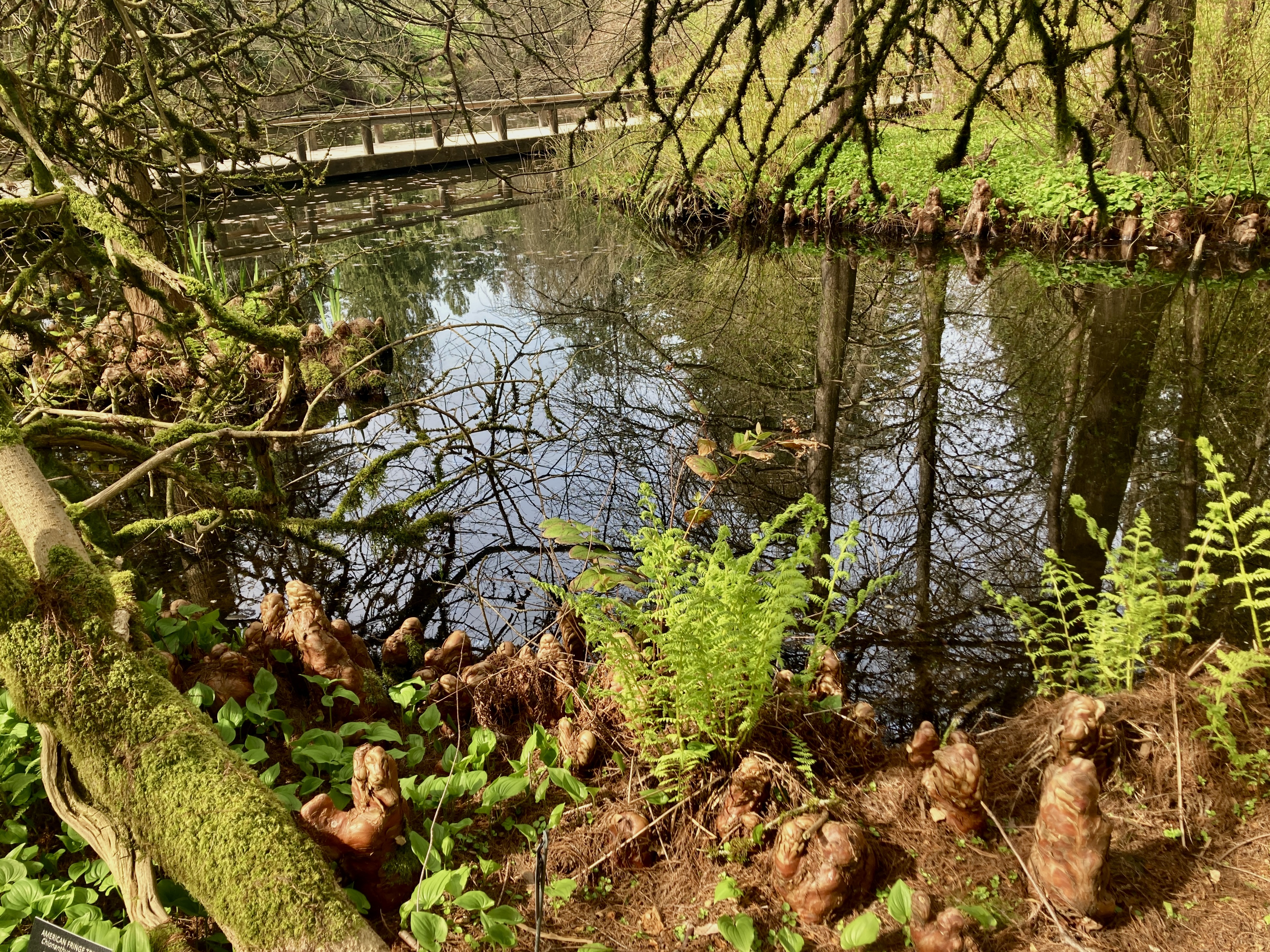
but all around the R. Roy Forster Cypress Pond, those same two tones tell a more complex story. Here the green of new ferns begins to rise above the year-round ochre of cypress “knees.”

Just off the north end of the pond, the shadow fork of a still-bare deciduous tree frames the spring blossoms of this burst of Snake’s Head…

while over at the north end of Heron Lake, this Japanese Maple doesn’t yet obscure the long view down the lake. (But just wait another few weeks! Those leaves are about to unfurl.)

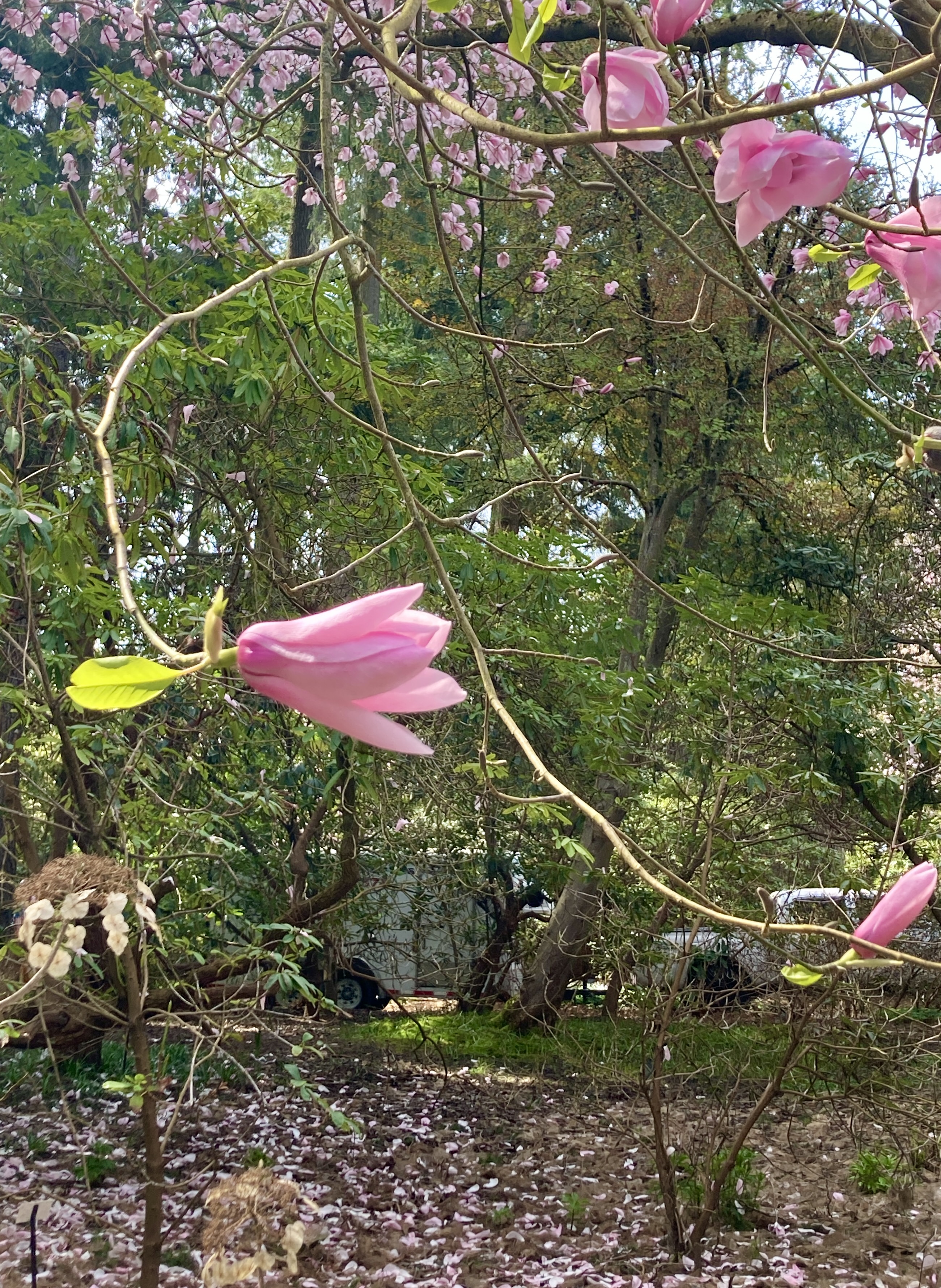
Face to face with the spring blossoms of this Sargent’s Magnolia, we’re also face to face with fall and winter. Petals already litter the ground — where they lie atop the desiccated leaves that fell last year. Visible also, there in the lower left quadrant of the photo, another reminder of last year: rusty skeletons of Mophead Hydrangea.

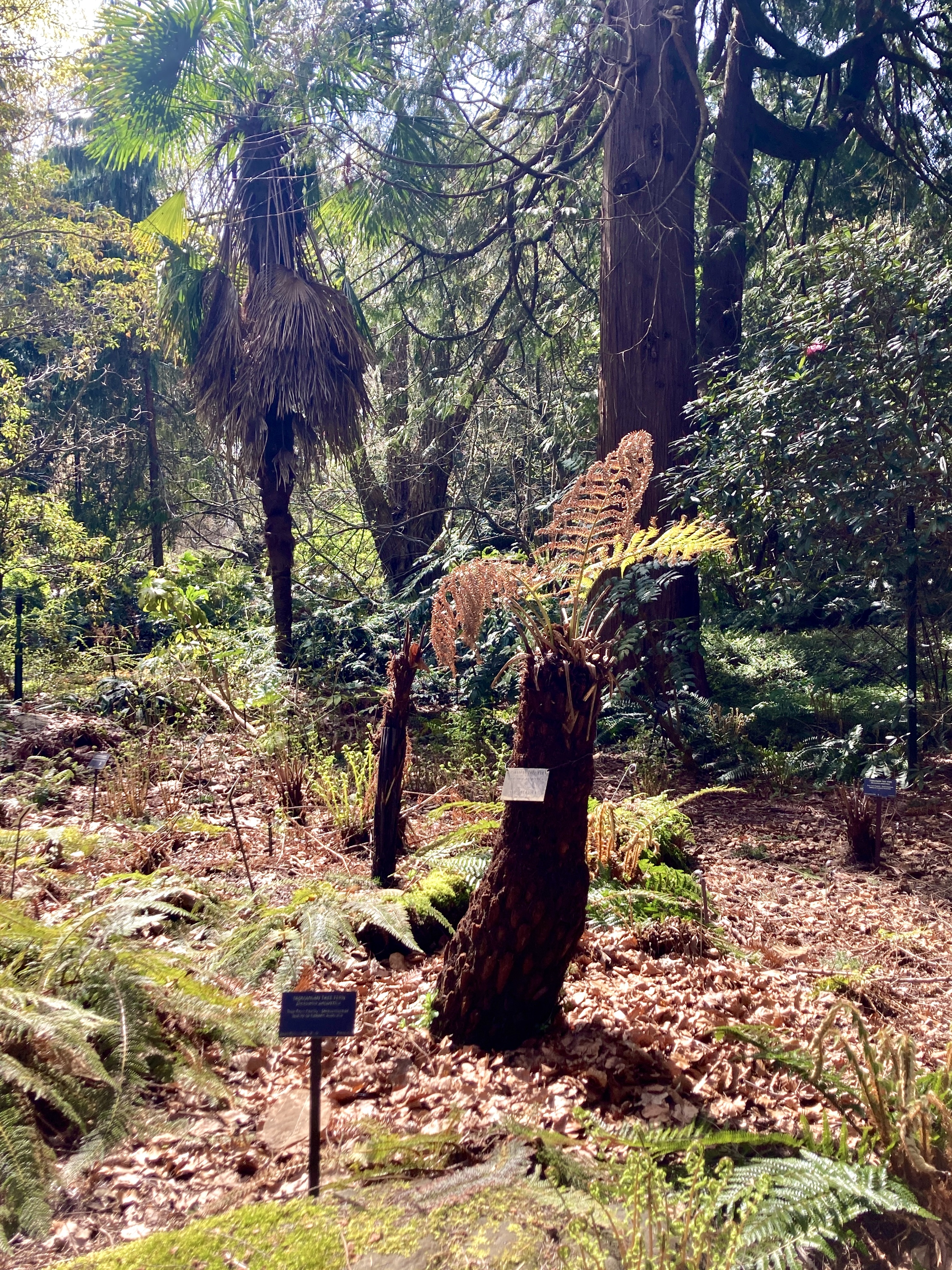
In the Fern Dell, the Tasmanian Tree Fern is — I think — putting out new spring fronds. (A hemispheric twist in time: from the Down-Under cycle of seasons, to our own, here in the Up-Over.)

There are things that don’t change, such as the deep-textured bark of a mighty Douglas Fir..

and things that do, such as the intricate spring coils of the Hedge Fern.

An old Emperor Oak leaf is caught in the glossy leaves of an Autumn Camellia (which saves its blooms, thank you very much, for fall)…

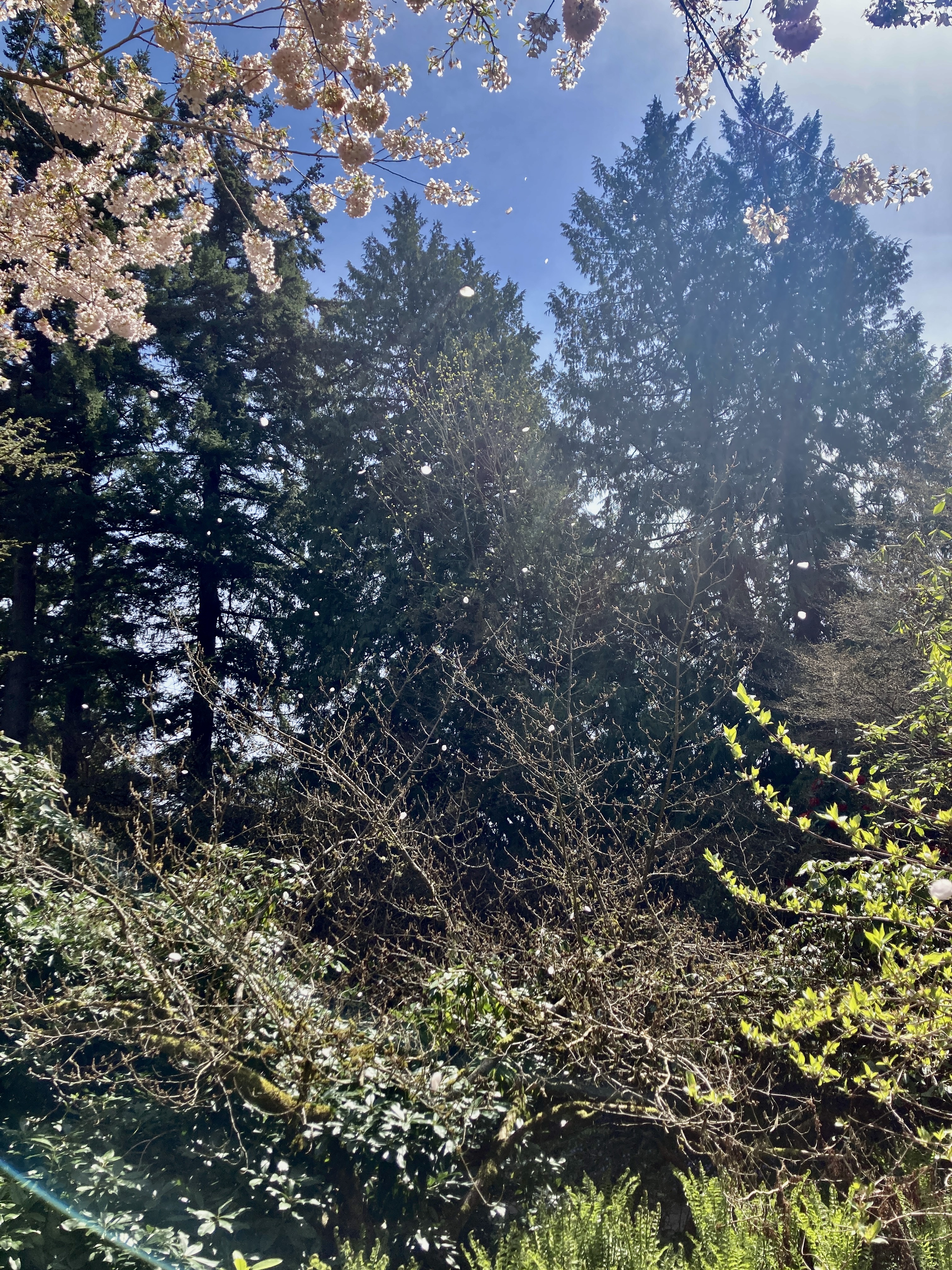
and this season’s cherry blossoms are already flying through the air like confetti…

as if they know that the Sakura Days Japanese Fair has now ended.

No, I take that back.

Yes, the Fair has ended, and yes, petals are flying — but these Daybreak Cherry trees are still laden with blossoms.

How fitting that the marble sculpture they shelter, titled Woman, is by Japanese artist Kiyoshi Takahashi.

“Today in the Garden”

17 February 2025 – Only a few days since my Frozen post, and the city has unfrozen itself. I’m off to meet friends at the VanDusen Botanical Garden, where we’re hoping for early-spring blossoms.

We arrive with hit lists: turns out we each lingered at the “Today in the Garden” displays on the way in, where volunteers regularly display sprigs of what’s seasonal, and cross-reference their suggestions to map locations.

It gives us a tempting and manageable list: Witch Hazel, Dogwood, Winter Aconite, Cornelian Cherry and the wonderfully exotic-sounding Dragon-s Eye Pine — plus, of course, whatever else comes our way.

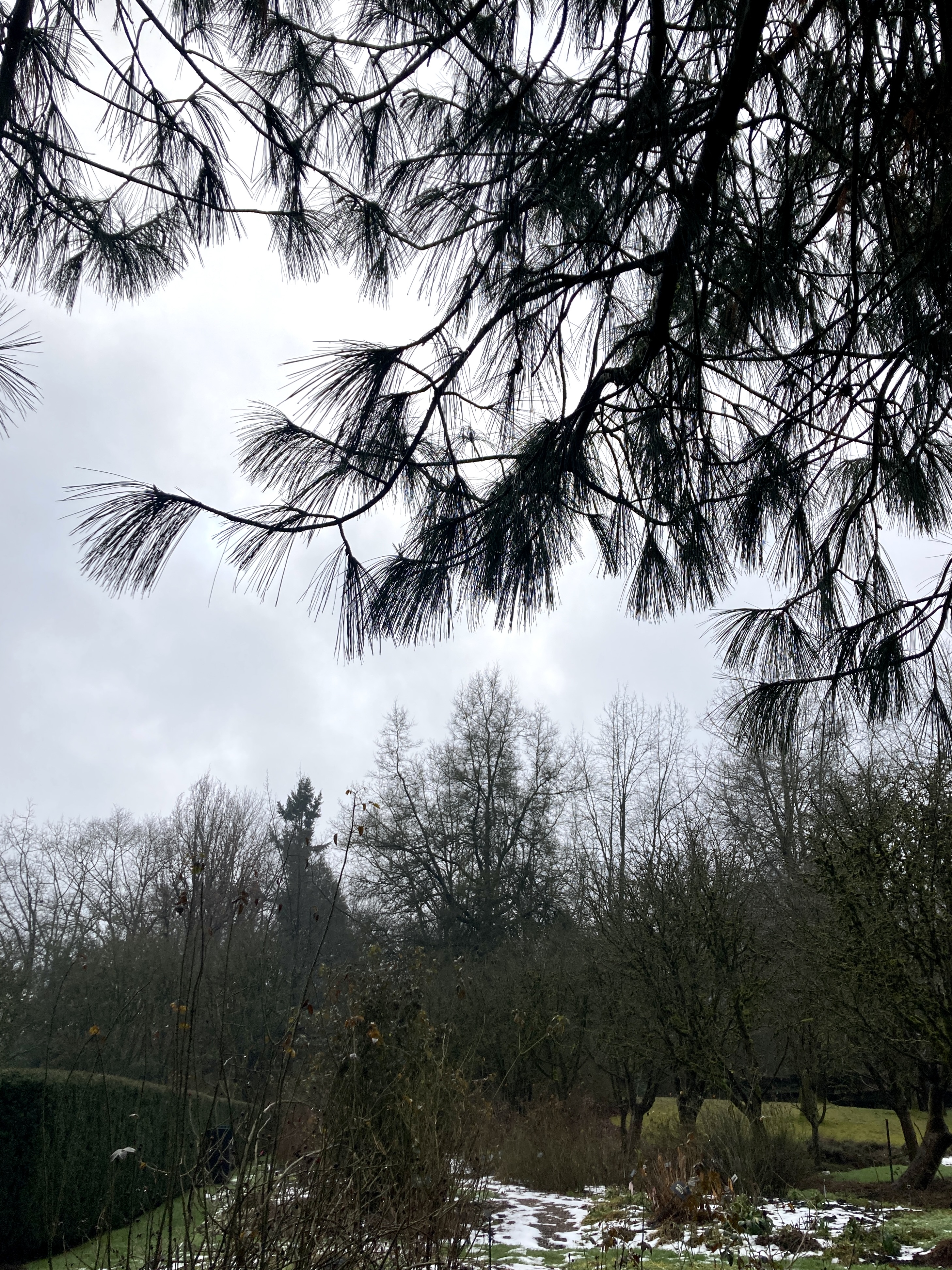
The day is mild-ish and misty, with a barely perceptible drizzle in the air. Evergreens are dark against the sky as we veer right at Livingstone Lake…

and head for our first targets, along the Garden’s Winter Walk.

And there they are. Witch Hazel…

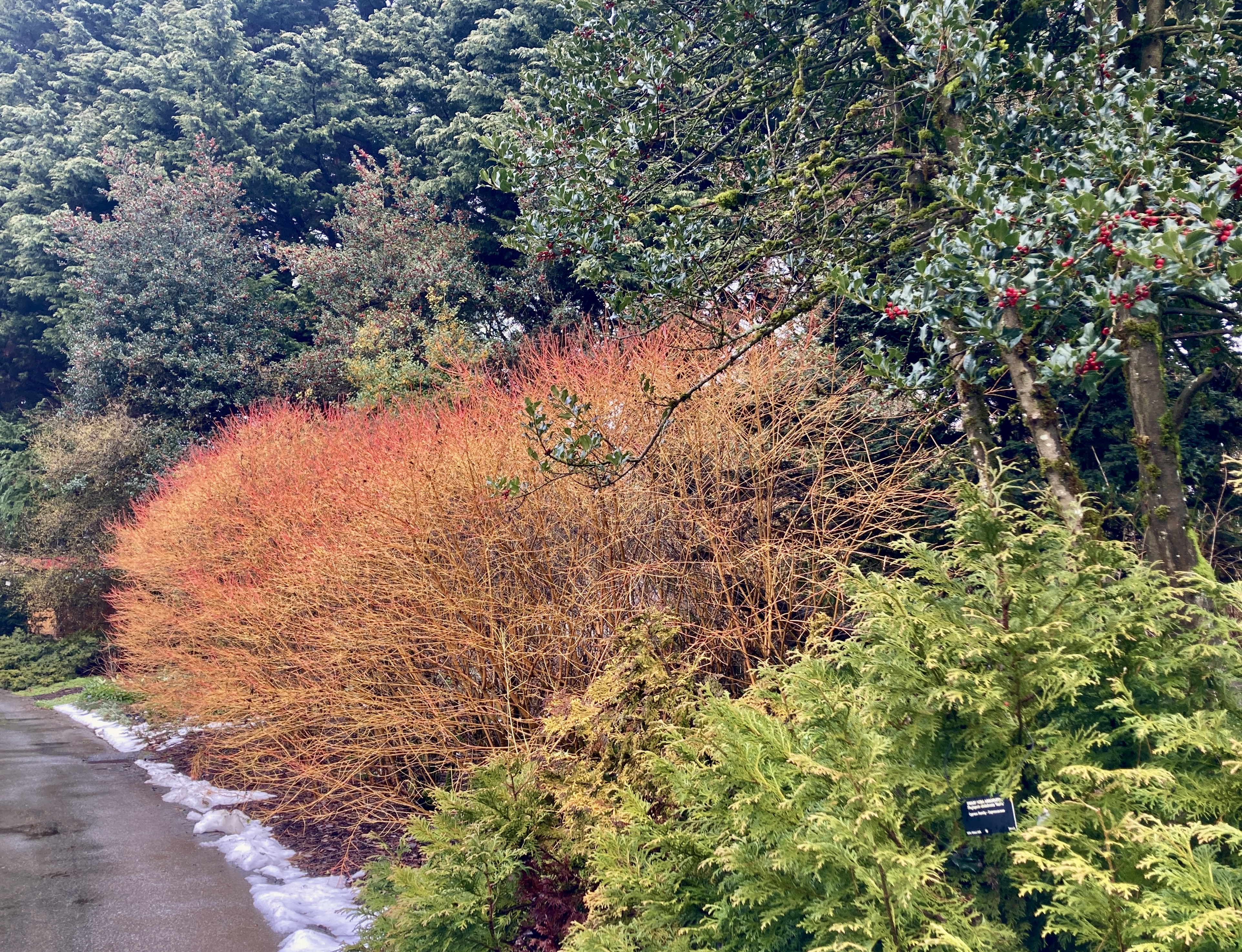
fiery Dogwood branches…

and a discovery we didn’t know we were going to make, the Ghost Bramble.

Even pruned back for winter, it’s easy to see how it got its name. In behind, another discovery — at least for me — the American Holly (on the left), with bright yellow berries rather than red.

The buds of the Cornelian Cherry are also bright yellow, though still very small and tightly furled.

We leave the Winter Walk, cut cross-country toward Heron Lake with a further target in mind — but are reminded, en route, that you don’t always need new growth for winter interest.

Sometimes, as the American Beech points out, all you have to do is hold on to your old leaves from summer.

Two more en-route bonuses: mist droplets glistening on the Giant Sequoia needles overhead…

and pretty little Winter Aconite buds bursting through leaf litter underfoot.

Plus — because I always notice — winter moss. This lot is on a wonderfully gnarled Something.

I don’t note the tree name; I’m too besotted with the moss to bother.

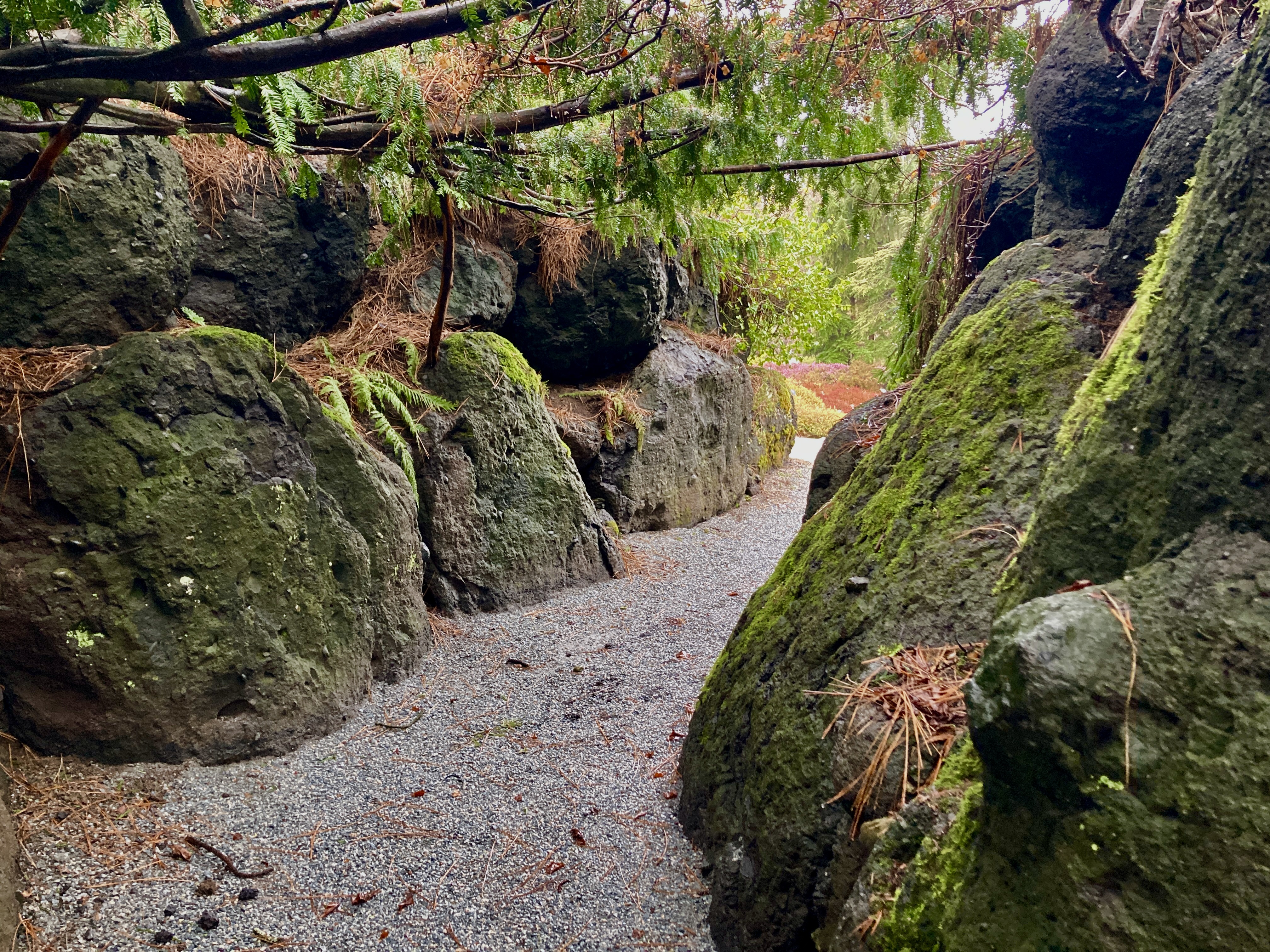
And then we’re across the zigzag footpath over Heron Lake, up the trail, and coming out the far end of the rocky tunnel that leads us to the Heath Garden.

Pretty as this garden-room is — and it is very pretty, all those heaths and heathers in all their jewel tones — it is not why we’re here. We’re hunting something at the periphery, over by the Laburnum Walk.

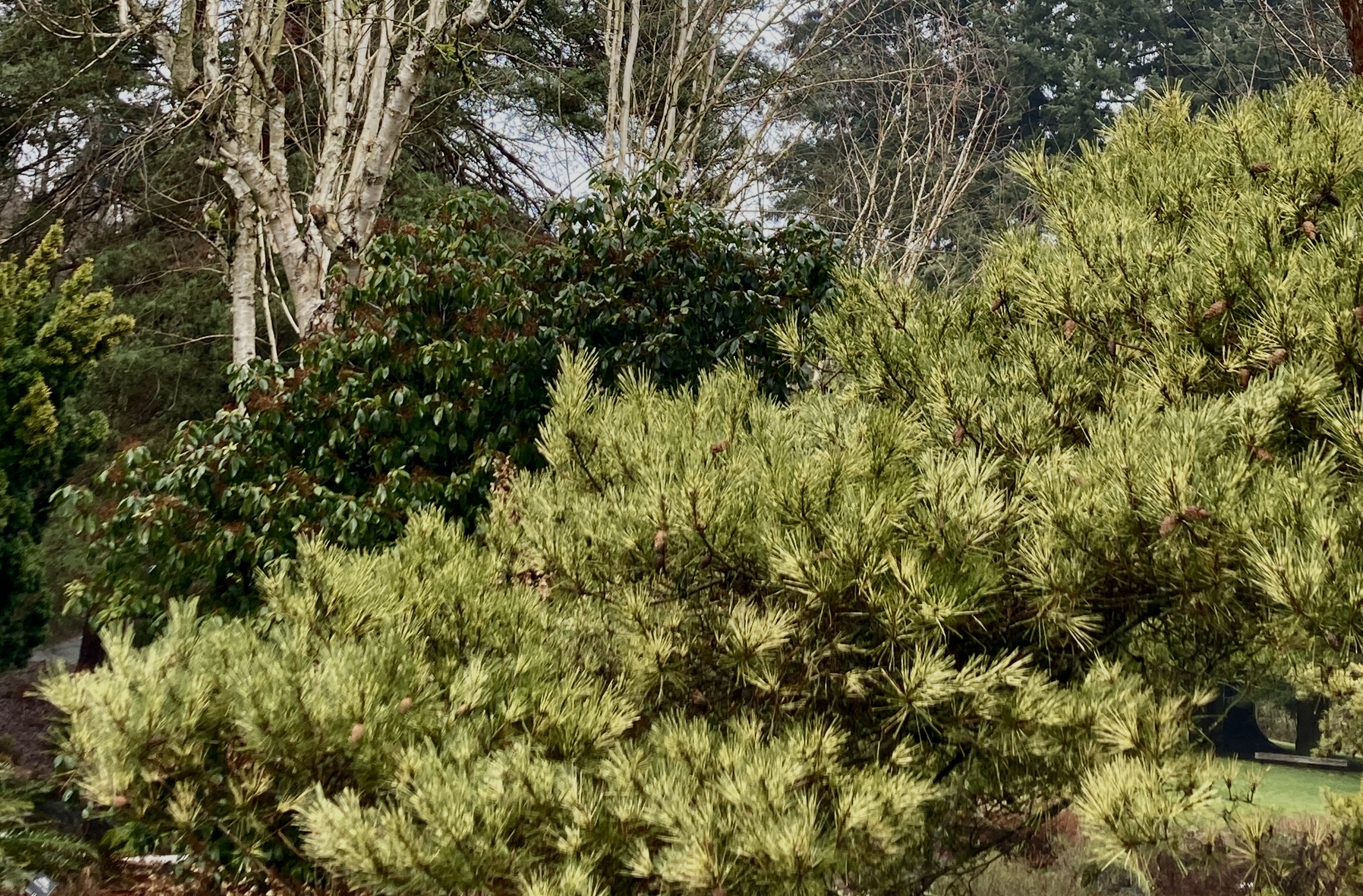
We want the Dragon’s Eye Pine.

And we find it!

With its bursts of green and white, it holds its own against the the birch, holly and evergreen backdrop.

More displays of moody evergreen needles against a moody sky…

and finally we’re circling back along the edge of Livingston Lake, with lunch by now uppermost in mind.

Until, that is, we see what the gardeners have done with the winter-yellowed ornamental grasses that cover the lake-side slope. They could have just let the the weary old blades flop on the ground. Or they could have cut them down and hauled them away.

But, no!

They braided them. Clump by clump, spiral by spiral.

We are properly delighted. We forget all about food as we discover the many varieties of grass-sculpture that inventive weaving can create.

When we do finally head off to lunch, we are in very good humour indeed.

  • WALKING… & SEEING

    "Traveller, there is no path. Paths are made by walking" -- Antonio Machado (1875-1939)

    "The voyage of discovery is not in seeking new landscapes, but in having new eyes" -- Marcel Proust (1871-1922)

    "A city is a language, a repository of possibilities, and walking is the act of speaking that language, of selecting from those possibilities" -- Rebecca Solnit, "Wanderlust: A History of Walking"

  • Recent Posts

  • Walk, Talk, Rock… B.C.-style

  • Post Categories

  • Archives

  • Blog Stats

    • 128,823 hits
  • Since 14 August 2014

    Flag Counter
  • Enter your email address to follow this blog and receive notifications of new posts by email.

    Join 2,047 other subscribers