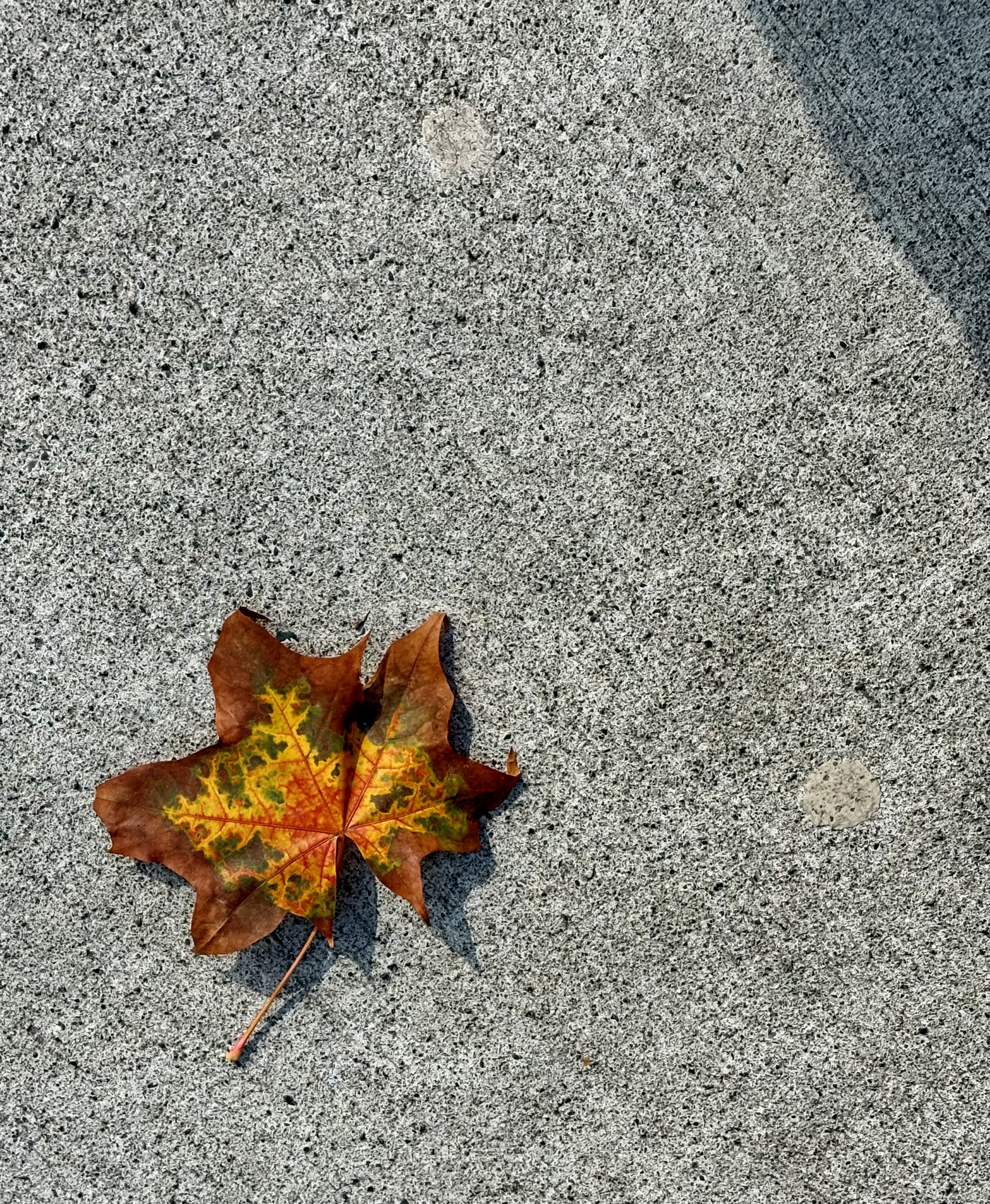
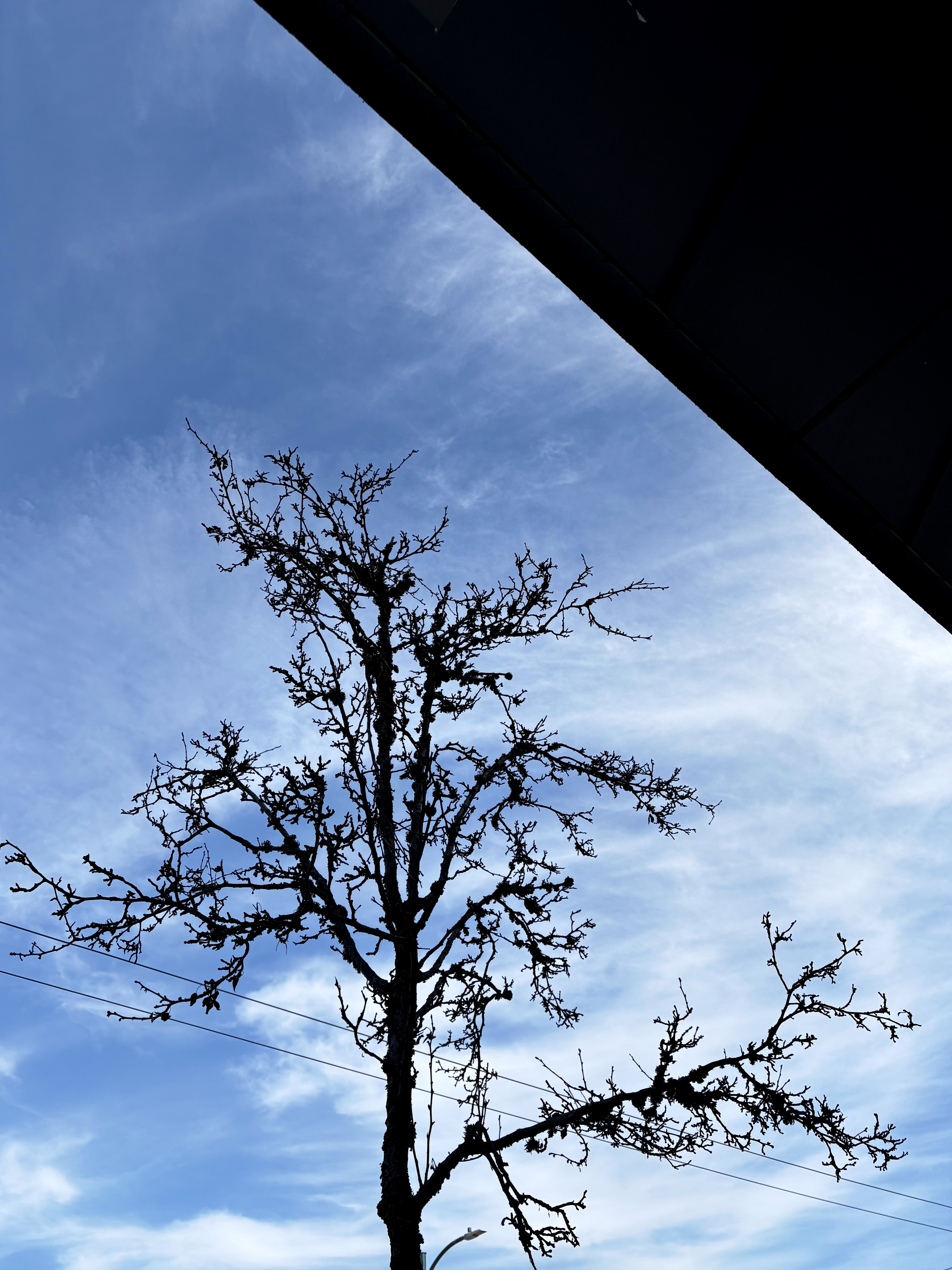
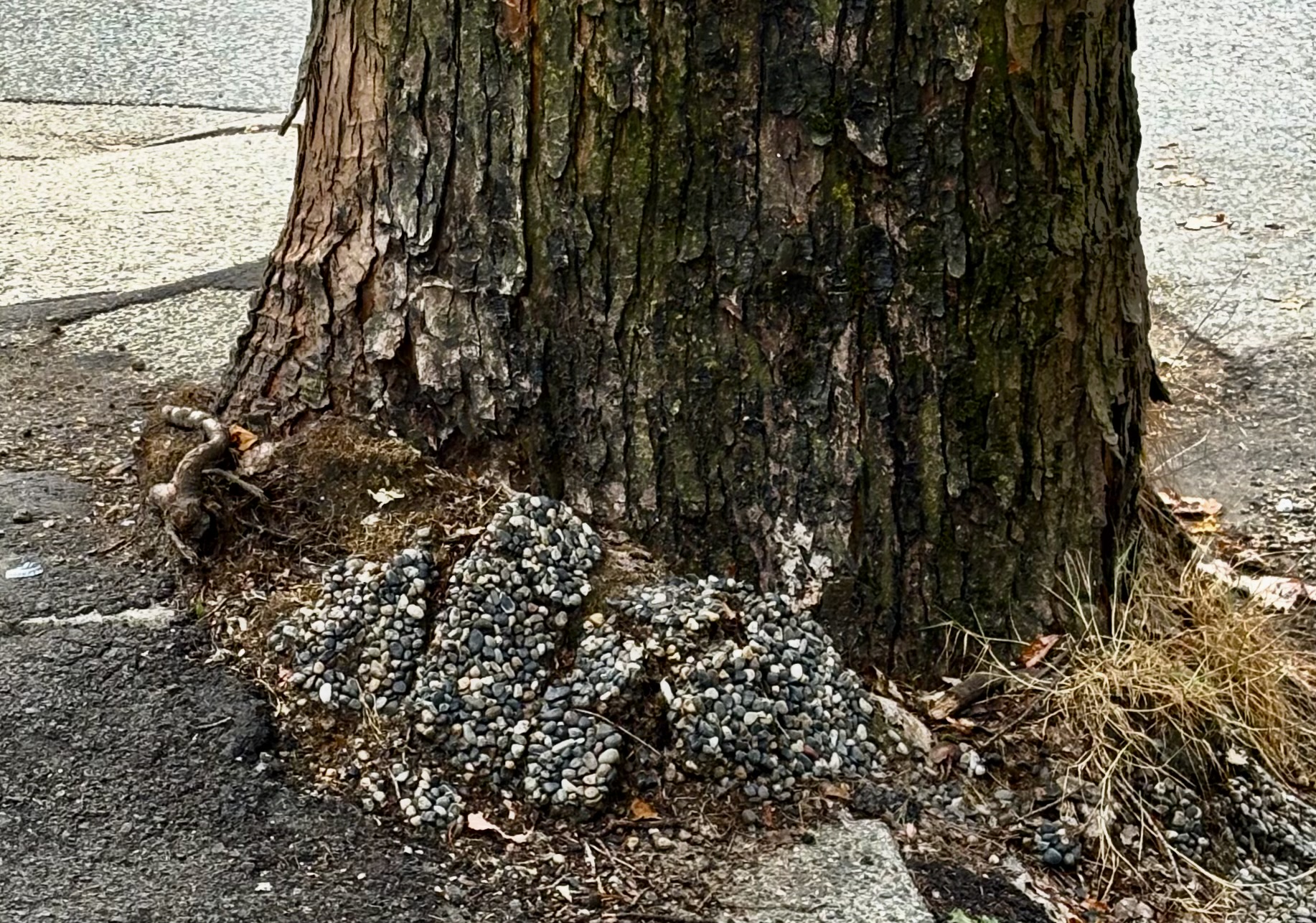
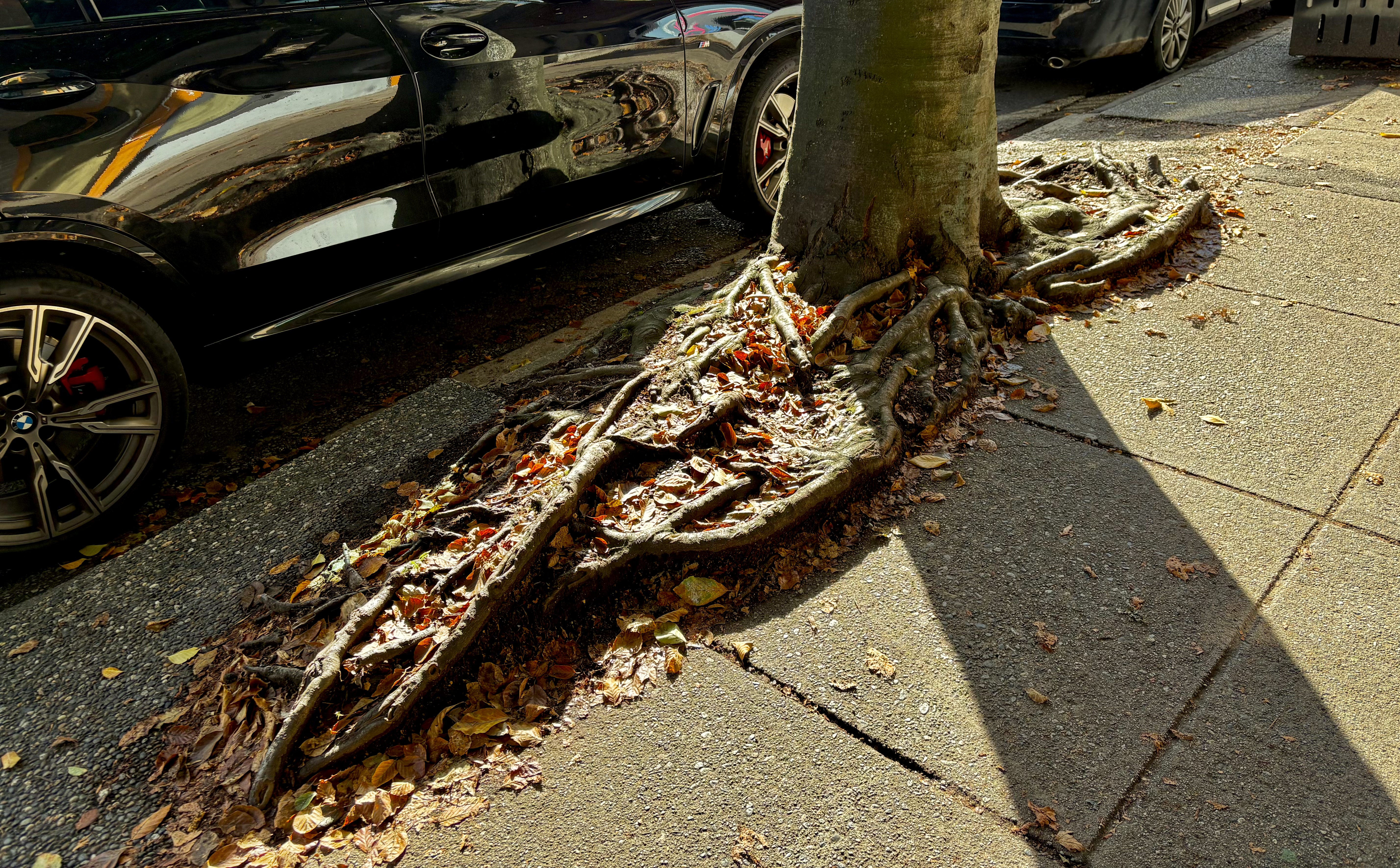
6 November 2026 – I don’t notice these things because of mathematics. I assign numbers later, to unite them in a passingly acceptable theme. Truth is… I notice them because I notice them. Because I’m walking down a street and down an alley, and my eyes tell my feet to stop. My feet stop, and I pay attention. Then, later, to amuse myself — and you — I give the resulting post a title.
As promised: Math
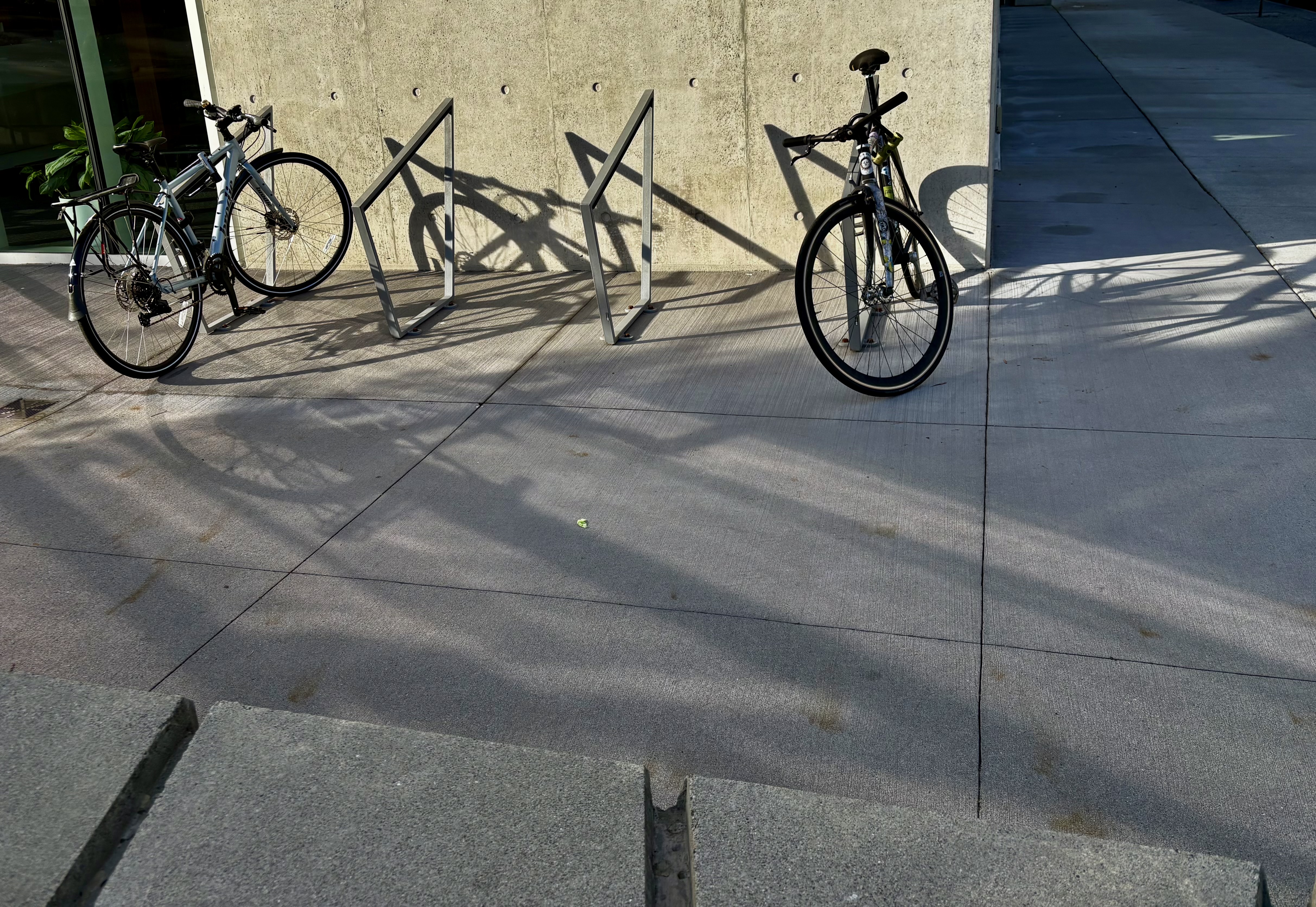
2 bikes + 4 bike racks flaunt shadows.
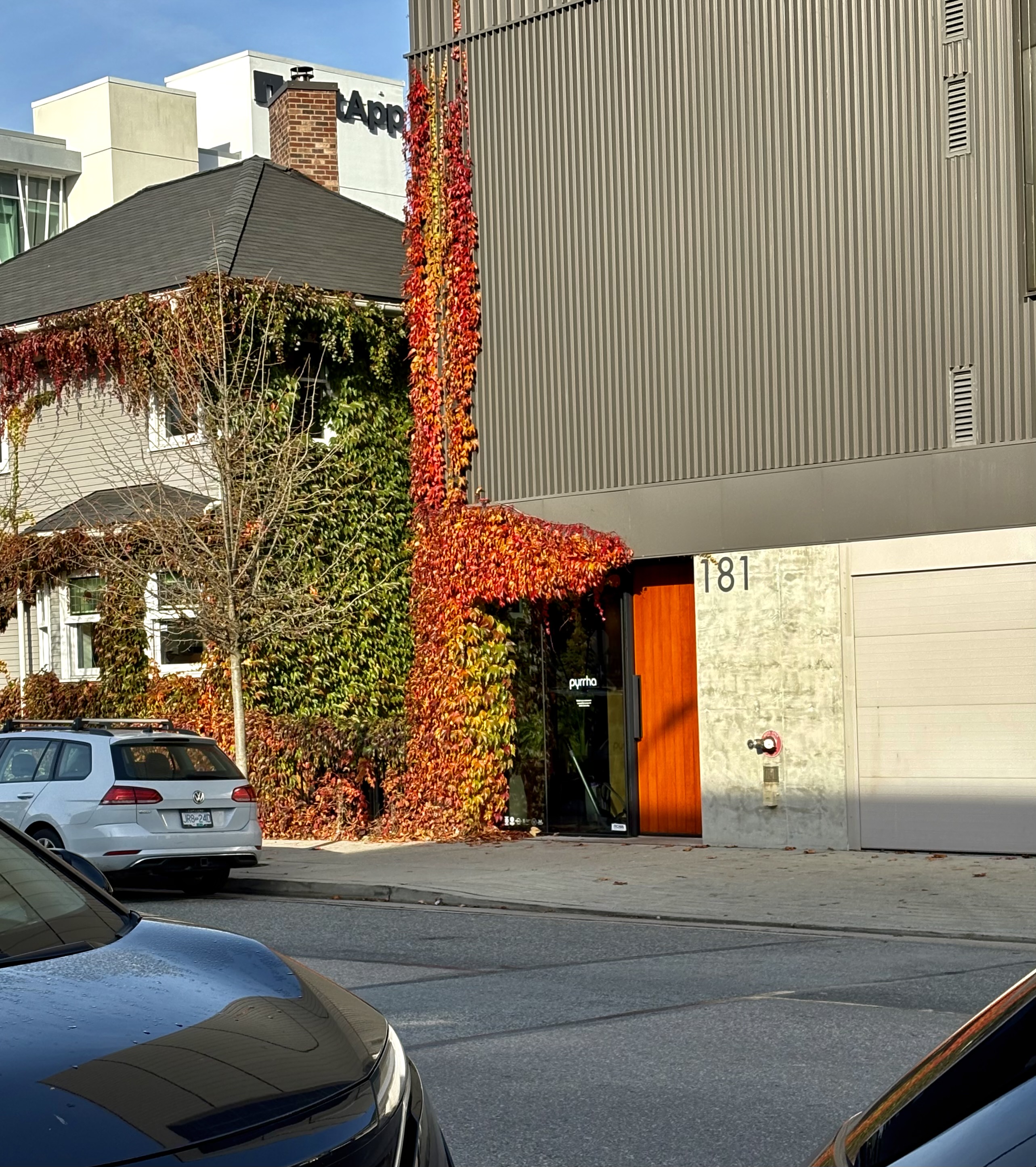
1 wall flaunts 2 hits of colour, door + vine.
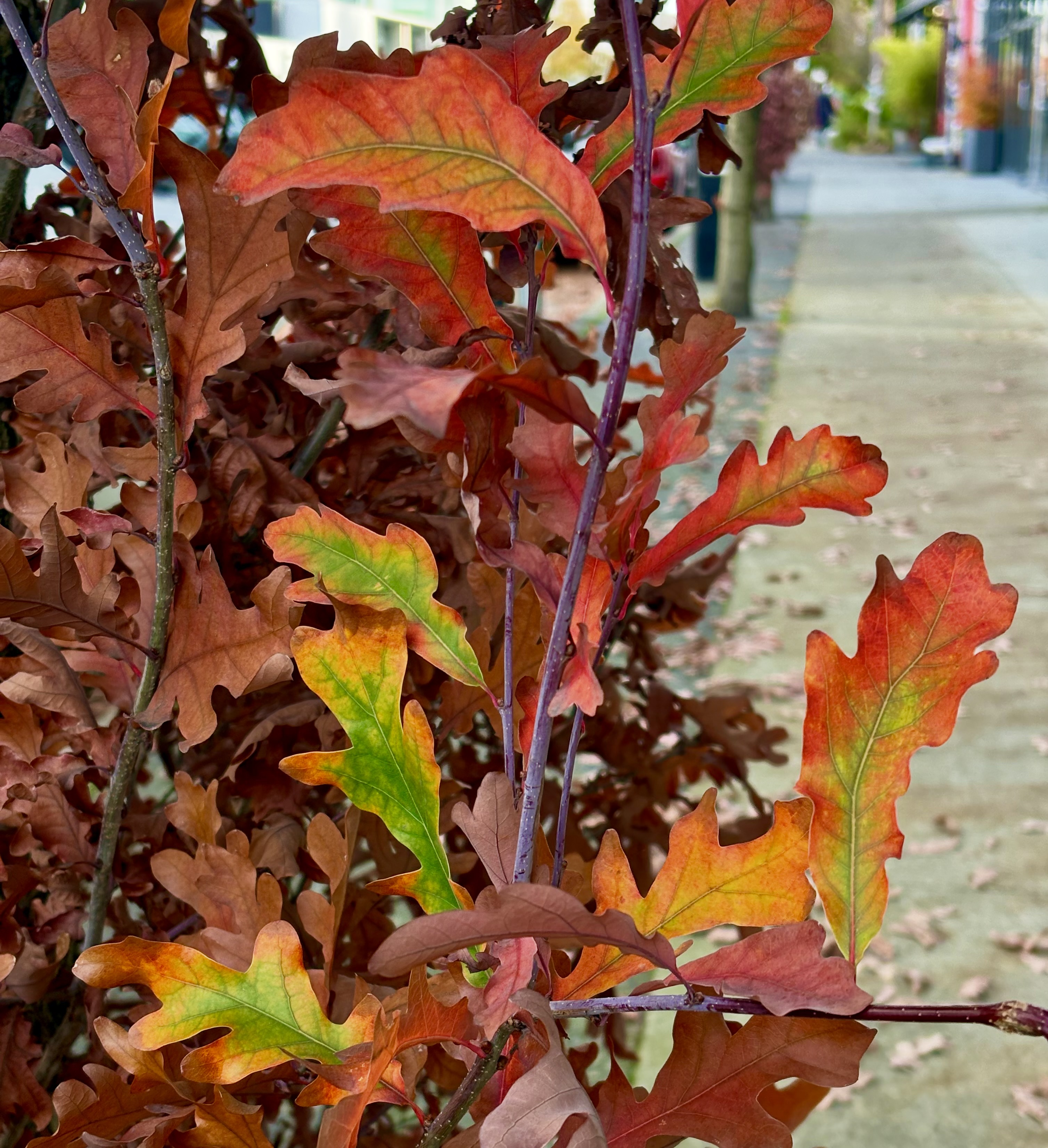
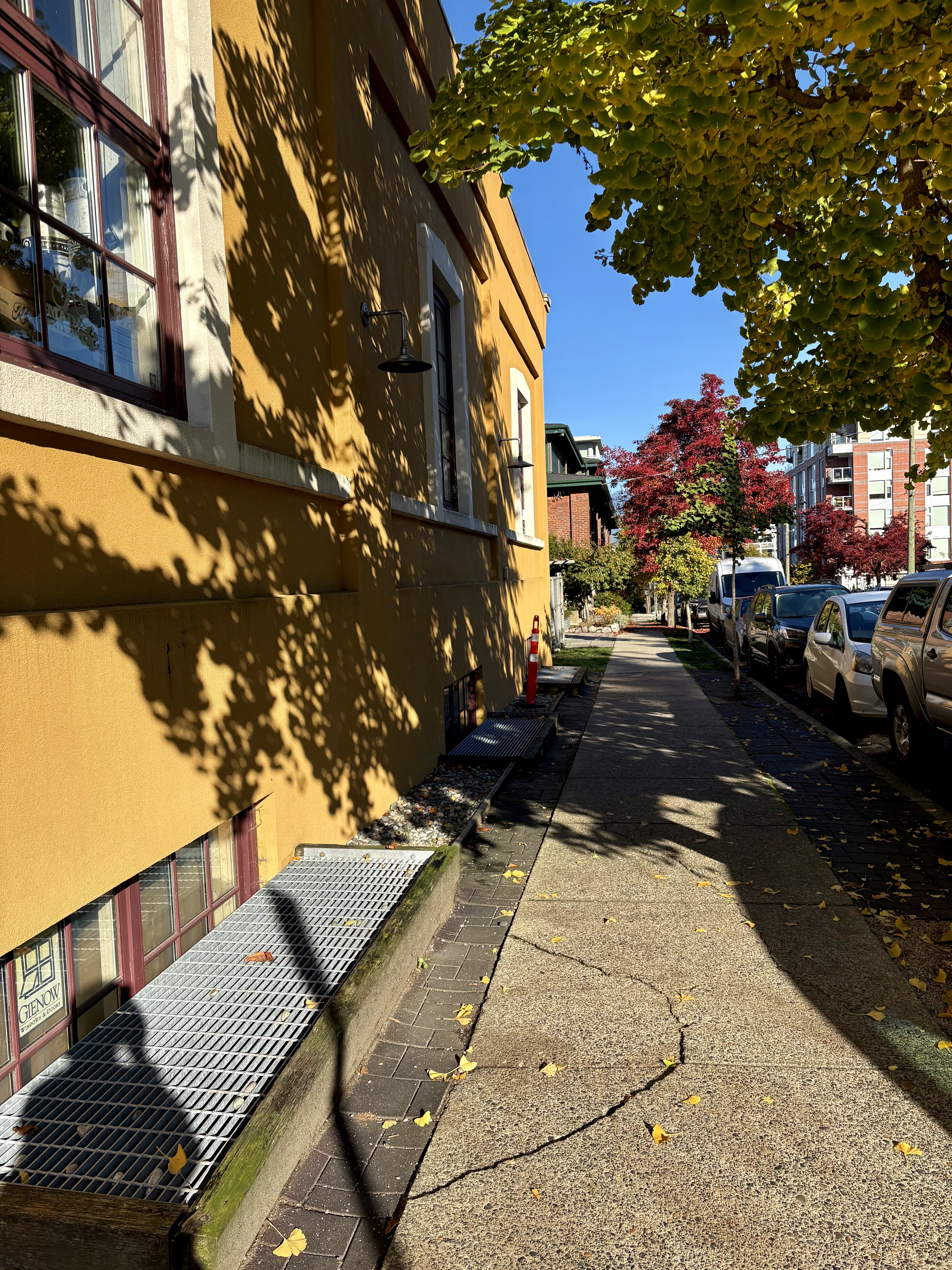
1 tree flaunts even better colour. (So there.)
And… and…
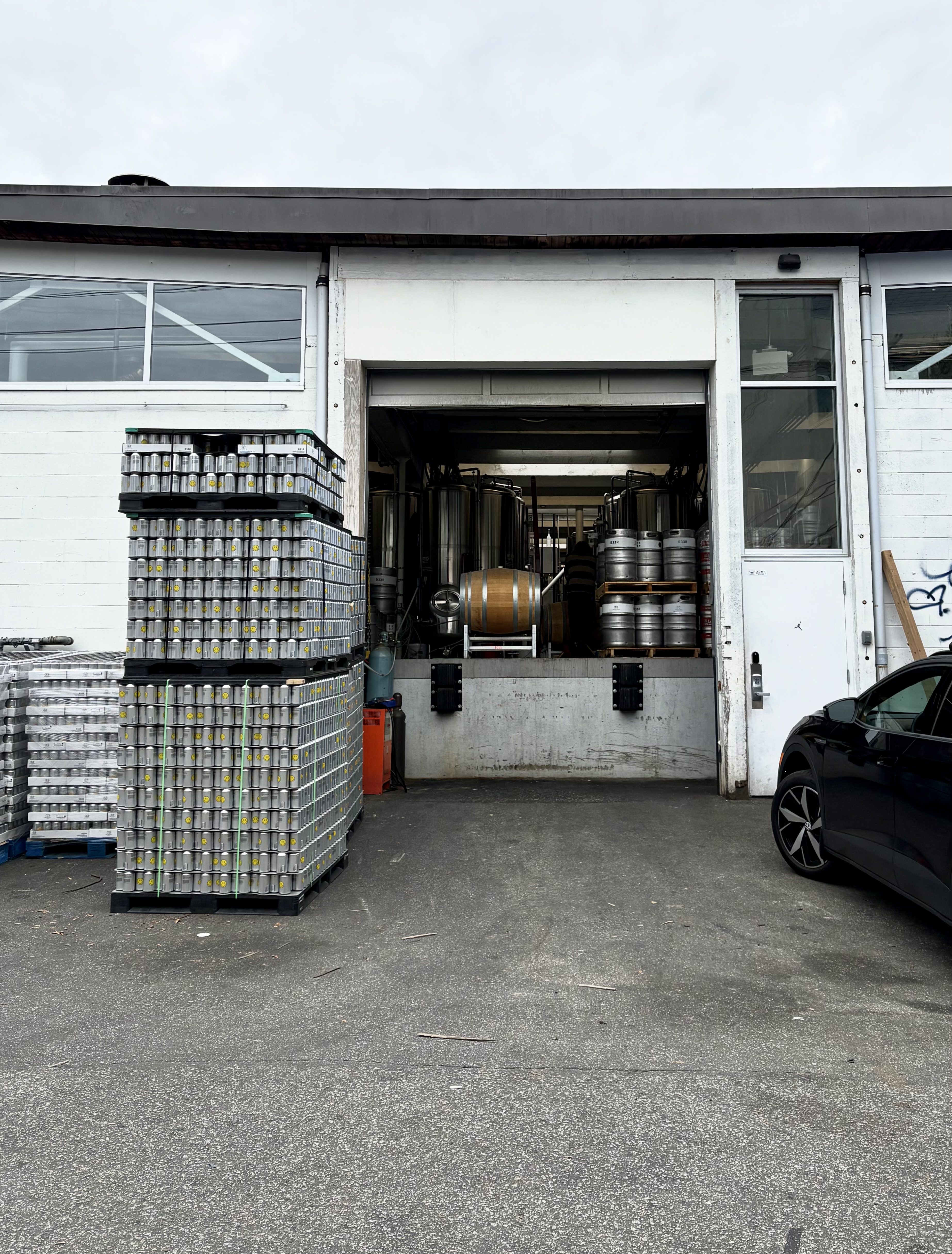
1 alley flaunts 33 acres of beer.
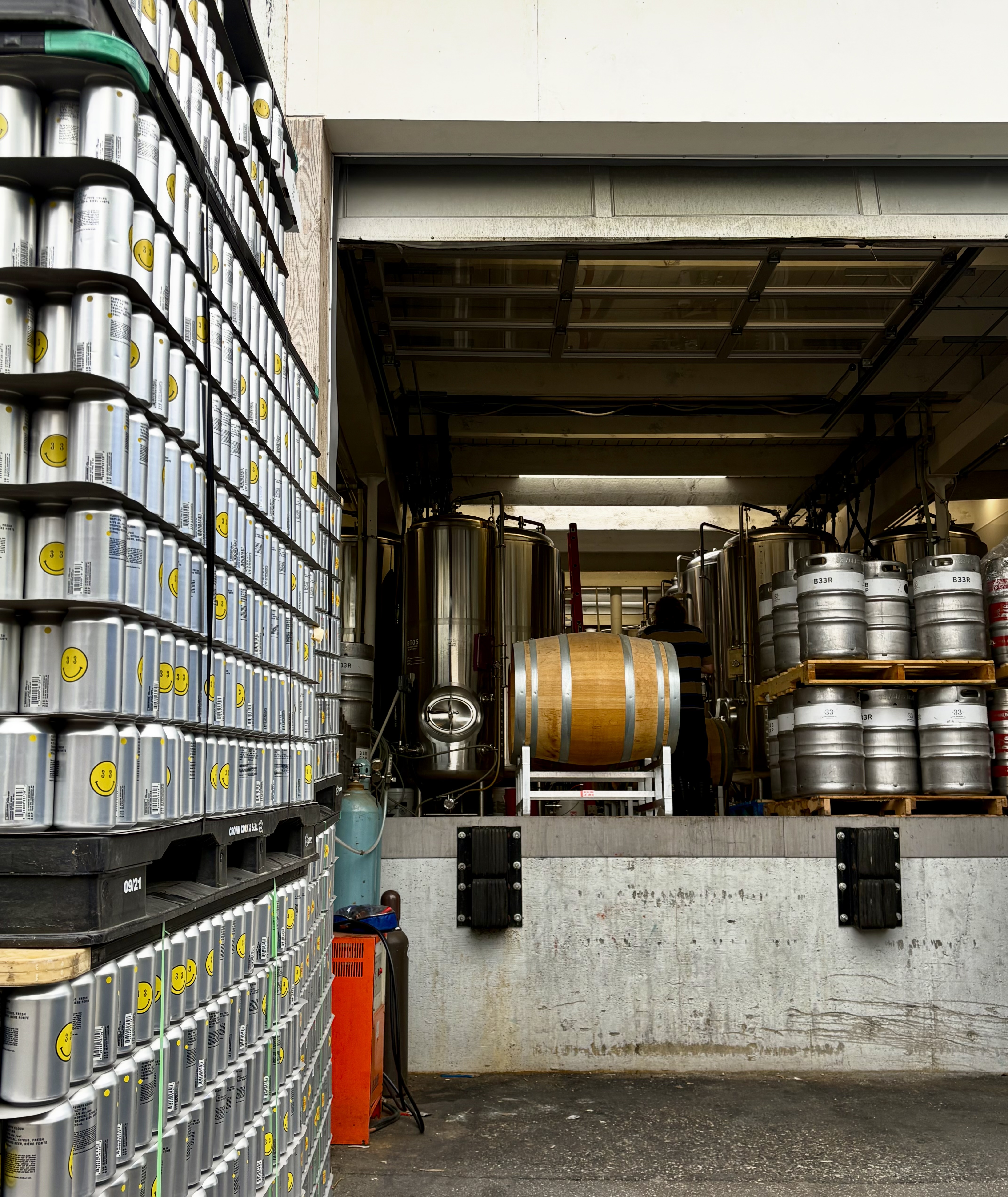
I stand here a stupidly long time, “stupidly” long only because I don’t even like beer, and I am mesmerized. Shiny stacked cans! Deep dark doorway! Shiny barrels! Wooden barrel! All this in a grotty alley!
It is even sillier, even more wonderful, up close.
Smiley-face emojis on every can!
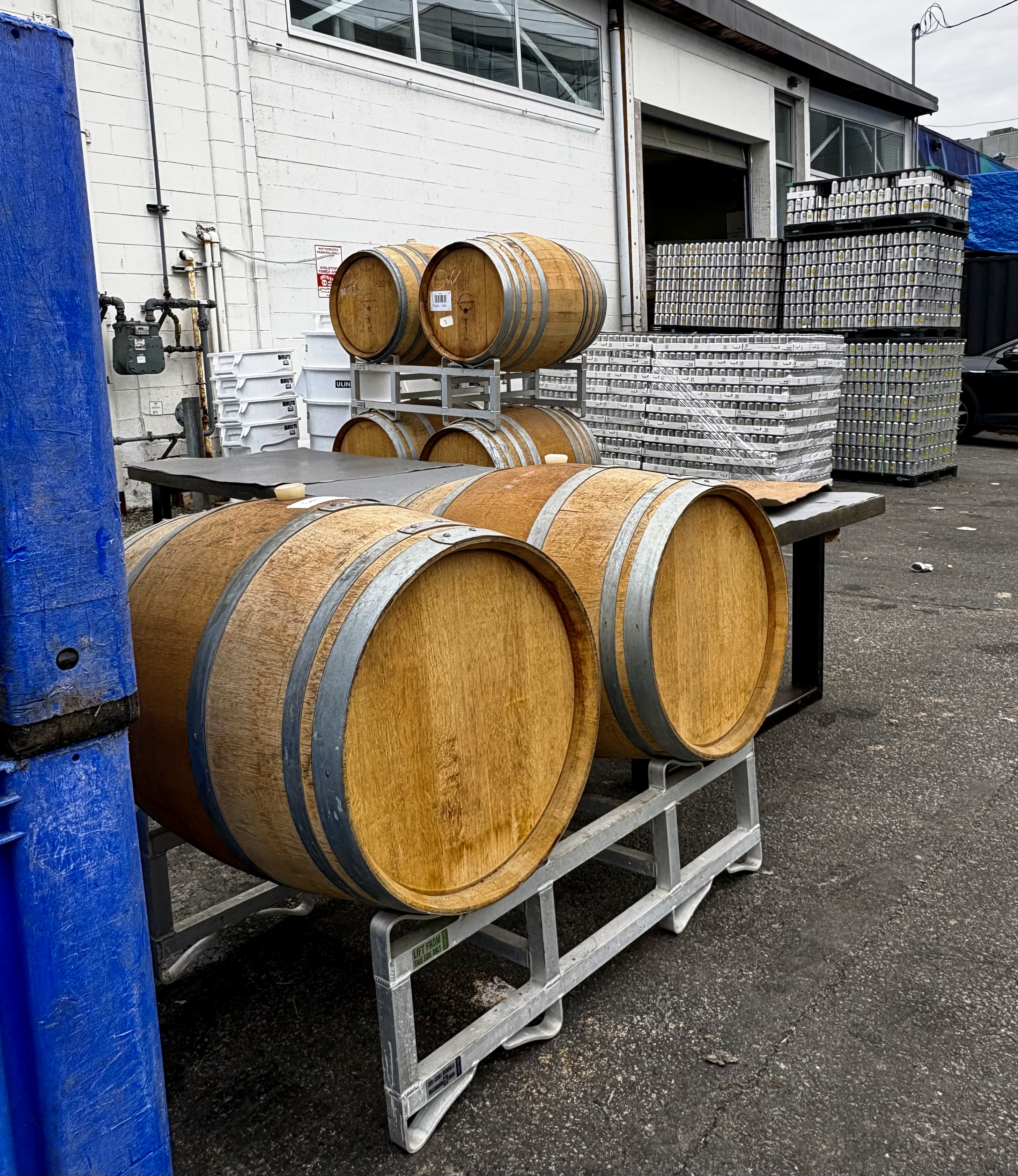
One last backward glance, with even more wooden casks thrown in…
and I take my besotted self off home.
Where, also as promised, the Two Backstories come into play.
Looking at that colourful vine + doorway, I notice white letters — pyrrha — on black in the companion panel. I look up “pyrrha.” I learn it is a local boutique jewelry factory & showroom, and I am not interested until I read the building is an example of a Heritage Revitalization Project. The oxymoronic potential of this phrase has me wary. Are any of you also old enough to remember how the American army “pacified” Vietnamese villages? By blasting them out of existence, was how. So I sniff this phrase suspiciously and read that, in exchange for retaining and restoring a 1909 single-family residence, the developer was allowed to build this 6-storey tower on the same site. Hmm, well. But also, hmm-well, it does provide artisan industrial space for local entrepreneurs.
I fiddle with some more online maps & citations, and discover my alley-entrancement is the unglamorous back side of 33 Acres Brewing Co., a Vancouver company which, on its street side, offers a bar and a tasting room and other delights. Those smiley faces on the cans? In addition to a long list of beers with dramatic names (33 Acres of Sunshine/Darkness/Euphoria/Nirvana… ), the brewery also offers the straightforward cheer of Fluffy Cloud.
I am now quite done with promoting ornaments I don’t buy and a liquid I don’t drink.
Still… Look at all the local factoids I have learned, just because, out there on the streets, my eyes made my feet stop.
1 November 2026 – I hadn’t planned a capital-W Walk for today, I only had the “stops” part of this agenda in mind, but spectacular weather pull me out the door and onto the streets for a more ambitious adventure.
Late-morning timing and brilliant sunshine offer me “shadows.”
So here I am, me and my shadow, heading off north on Scotia Street. My destination — very eventually — will be St. James Anglican Church at Gore & Cordova in the city’s Downtown East Side (DTES).
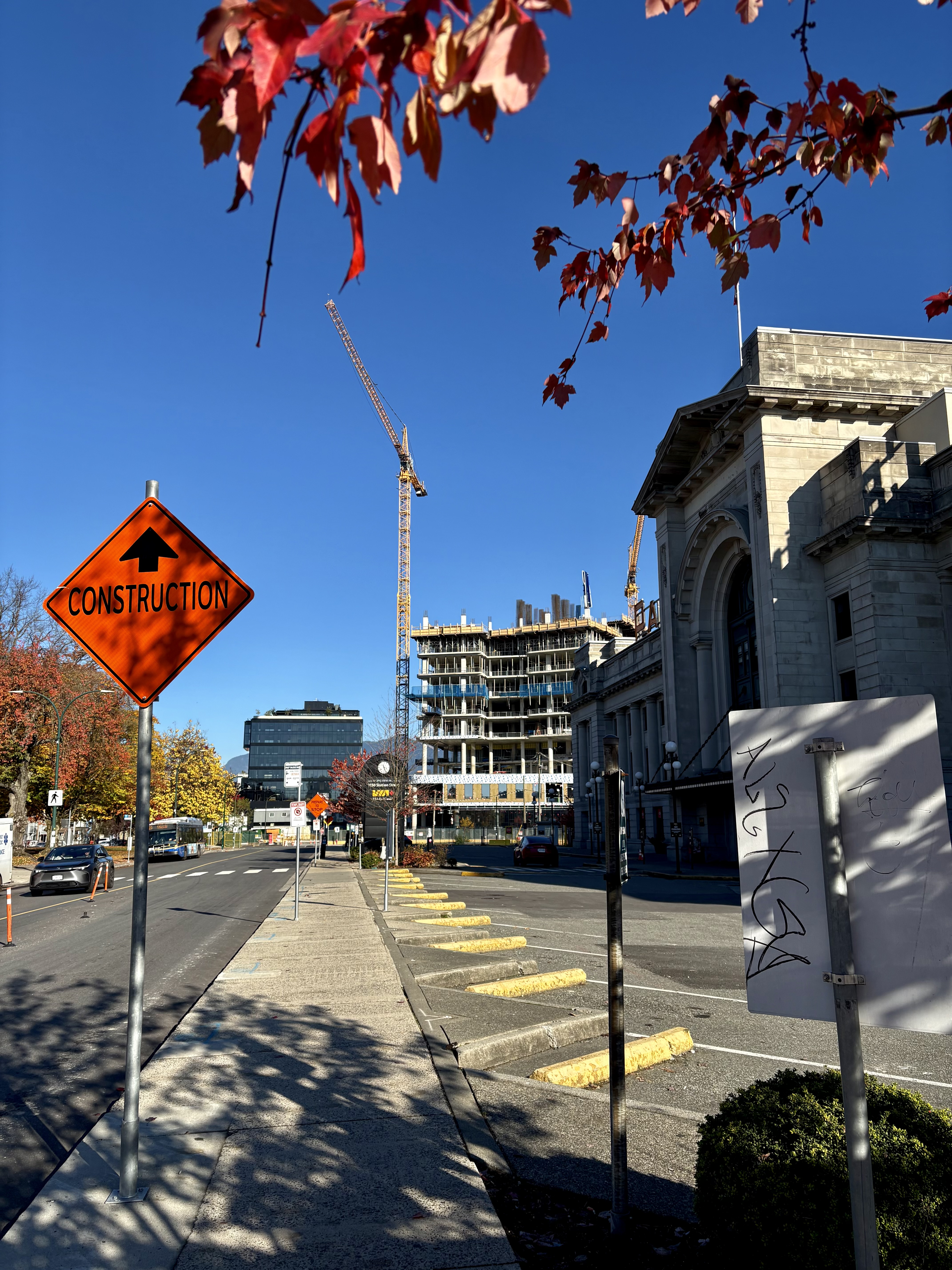
More shadows on Station Street as I approach Pacific Central Station, thrown by a flaming maple tree not only on the sidewalk, but on the equally flaming Construction sign, which shows us the obvious: the new St. Paul’s Hospital / Providence Health Care campus, just ahead, is one massive (and much needed) project.
I’ve been chattering with people all along the way. We’re all beaming at each other, wriggling with pleasure in the brisk-but-friendly weather, exchanging the usual social small talk, agreeing it’s a great day for a walk, yessiree, it sure is.
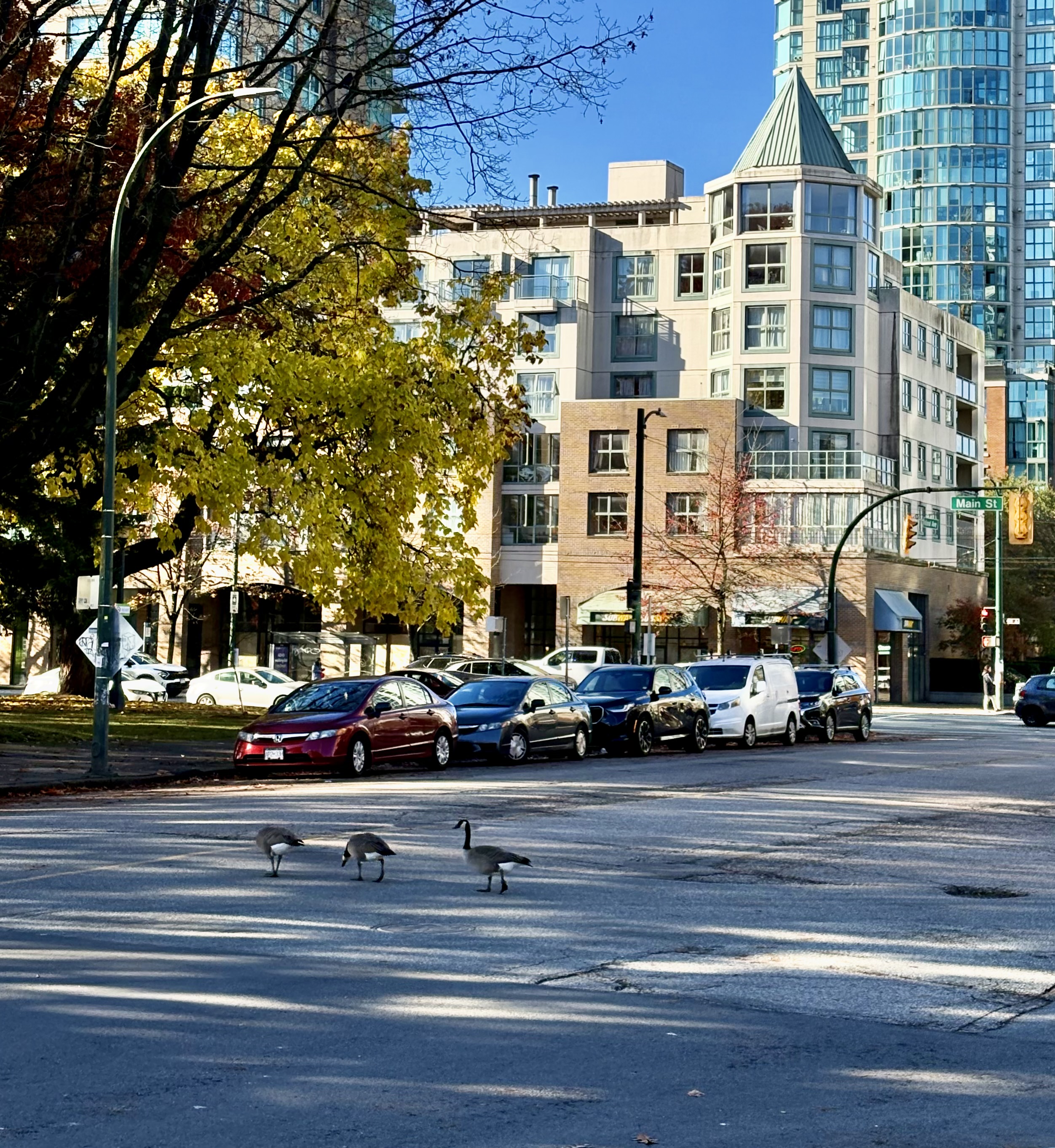
Canada geese, here at Thornton Park just past Pac Central, agree with the humans. I stare at this trio calmly stepping their way across Station Street…
and think of Lynette d’Arty-Cross’ post on 19 October, A Duckie Adventure, with adorable ducks crossing a much busier street. (If you don’t already know her blog, Pictures and Stories of Life, here’s the moment to pay it a visit.)
I have to do a little navigating, in order to weave northward around the construction while still avoiding Main Street (a game I like to play with myself). This particular weave benefits from conversation with a DTES woman who describes where best, at this stage of hospital construction, to cut through barricades and make it to Gore Street.
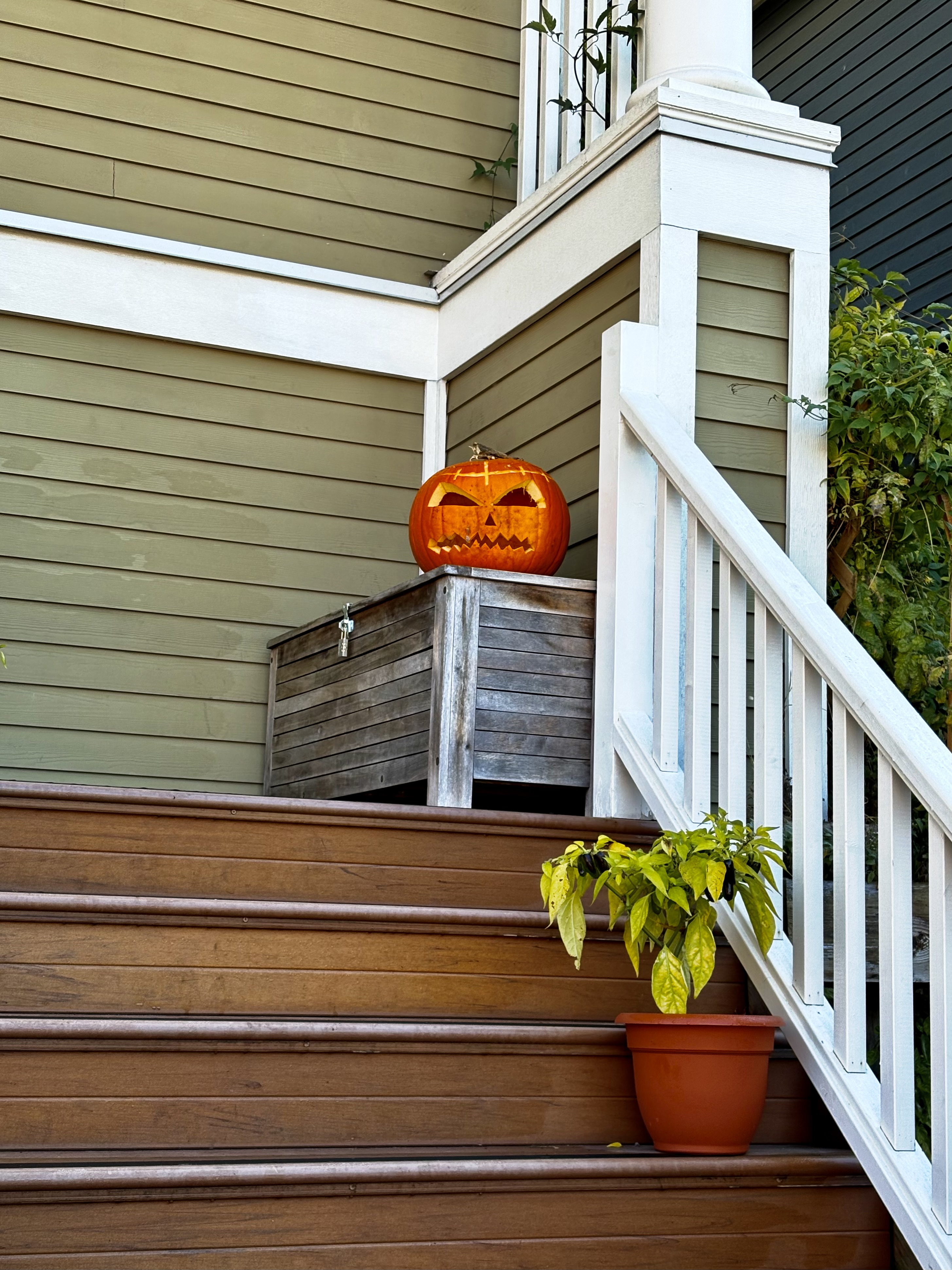
I follow her advice. It brings me to the foot of Gore, between Prior and Union streets, where homes still display their Hallowe’en pumpkins.
Jack o’ Lanterns are a seasonal icon; over the next few blocks, I encounter three more icons with staying power.
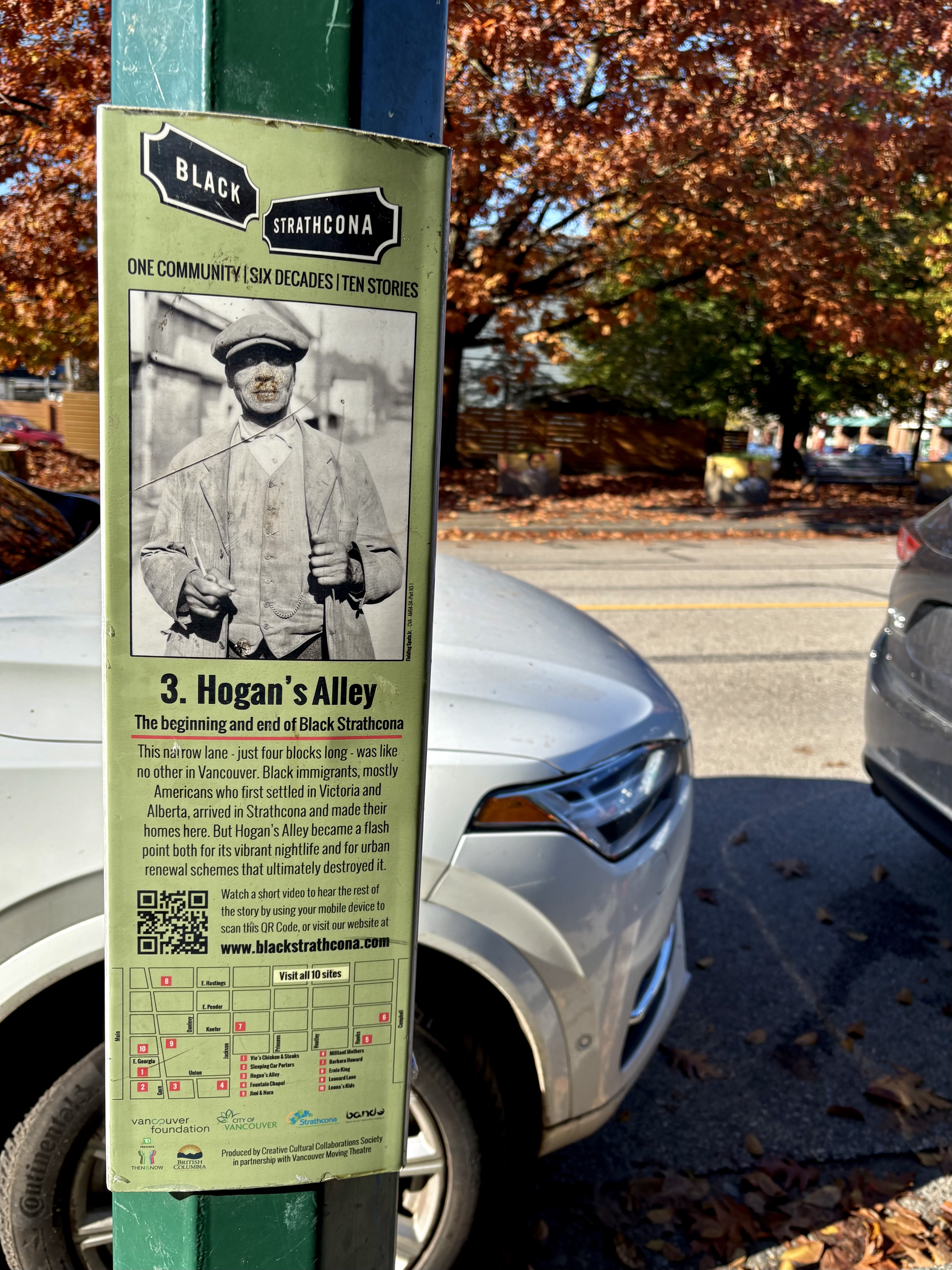
Black Strathcona: This lamp post plaque is a tribute to Hogan’s Alley, a narrow lane home to Black immigrants “that became a flashpoint for its vibrant night life and for urban renewal schemes that ultimately destroyed it.”
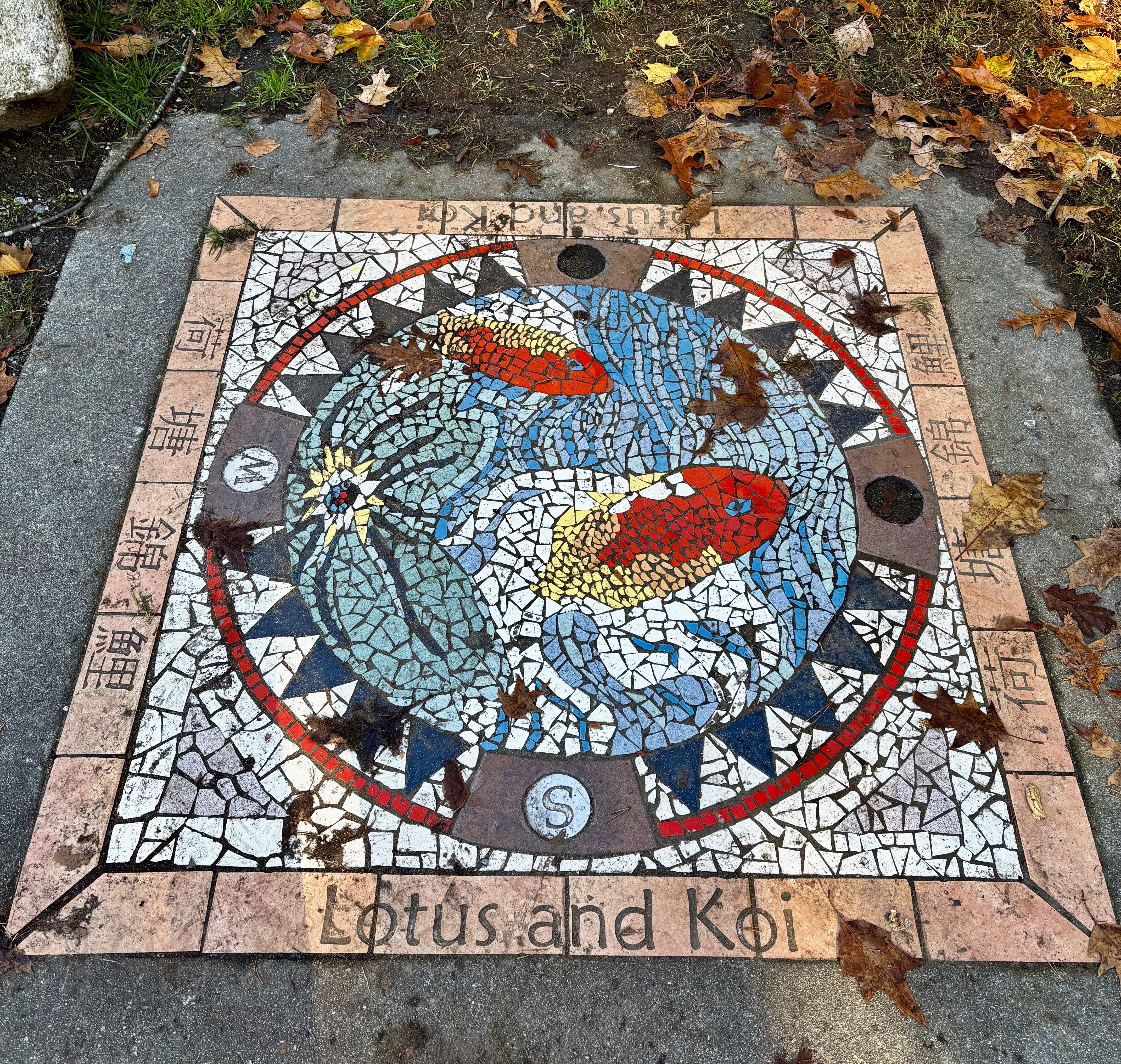
Asian Strathcona: referenced in the sidewalk mosaic of lotus and koi at the corner of Gore and Keefer.
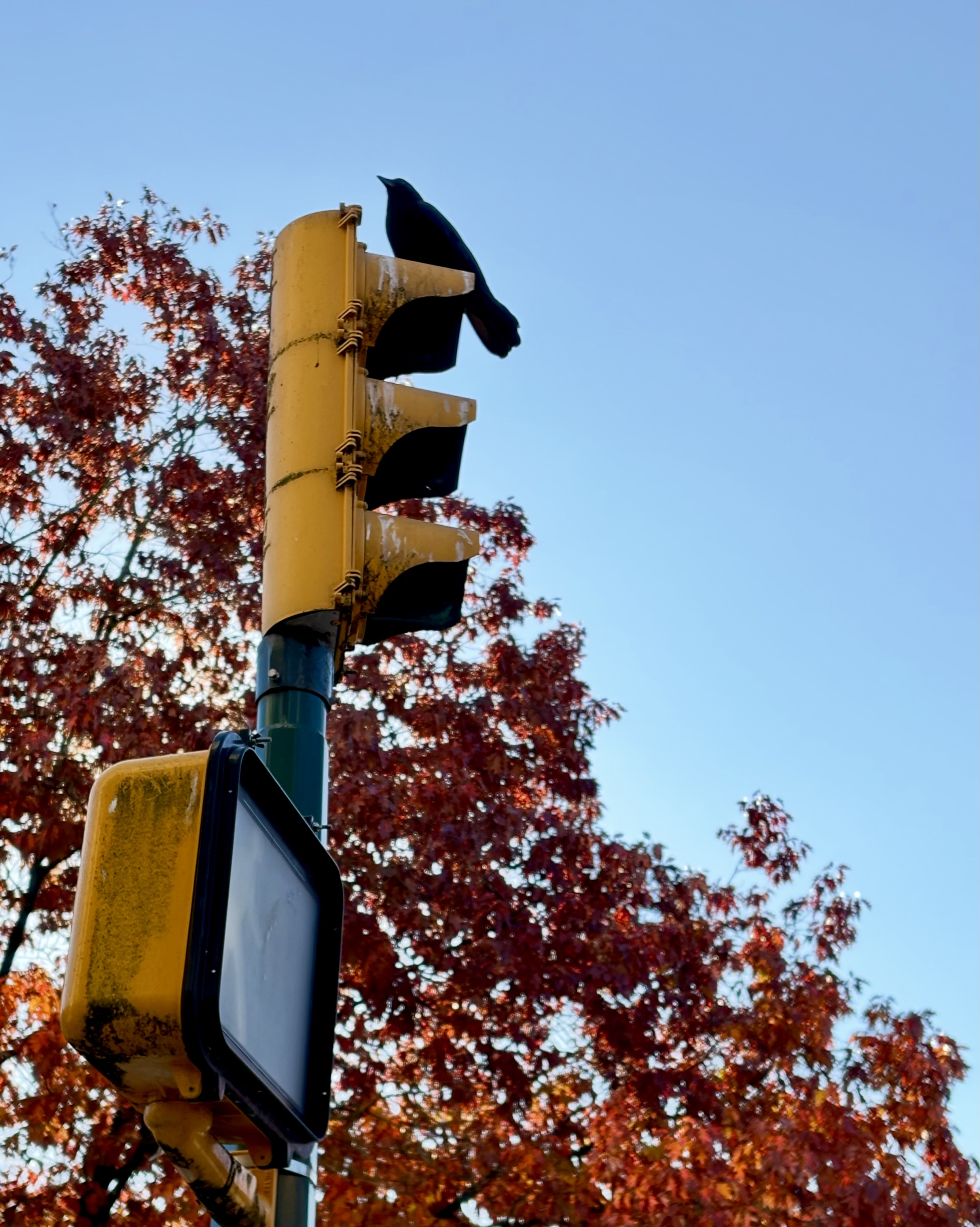
A crow! Of course. All the time, everywhere, with this particular one at Gore and East Pender.
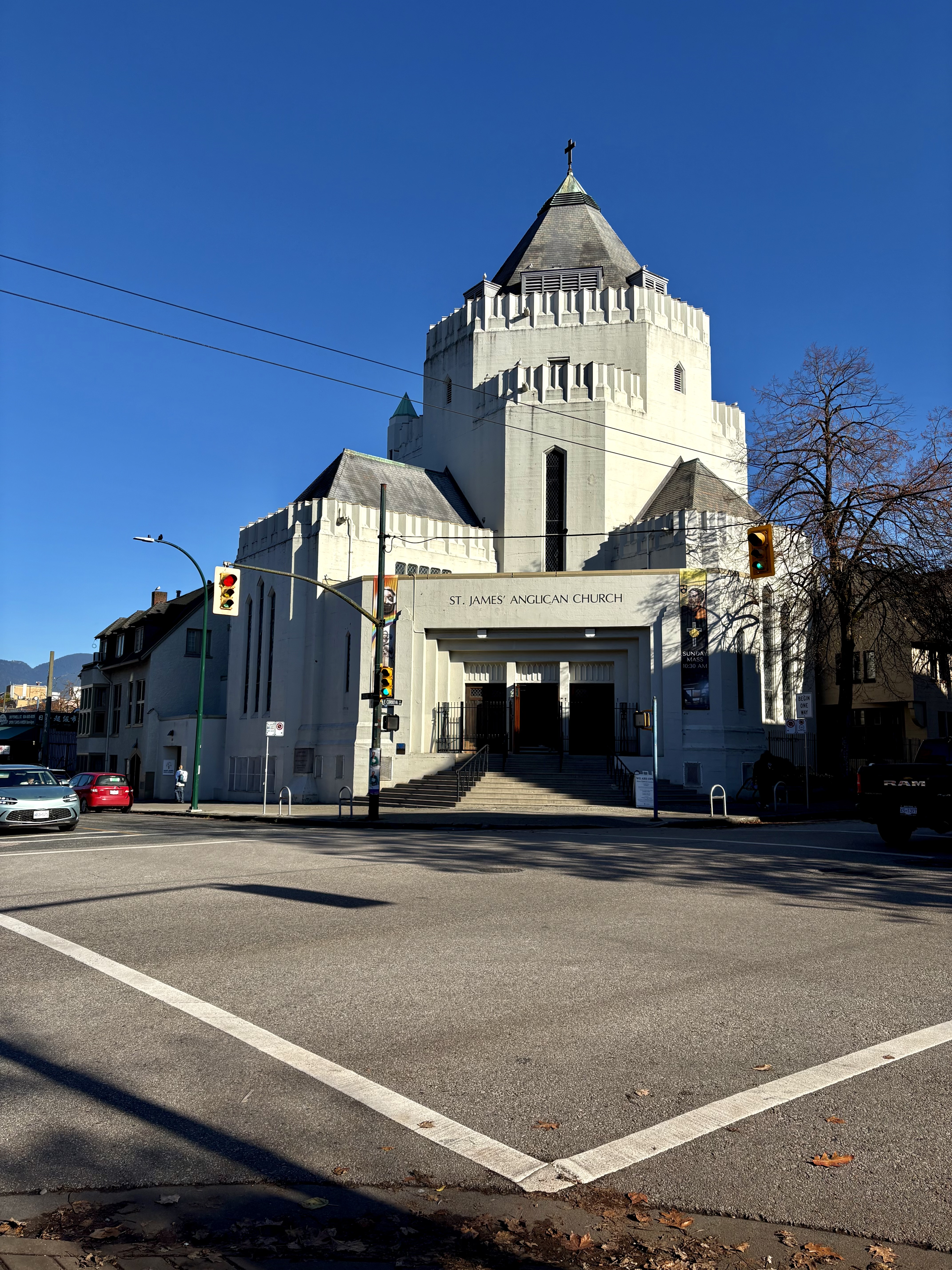
Finally I reach Gore and Cordova, and this 1930’s take on 14th-c Gothic style architecture. The building is the third iteration of St. James Anglican Church, this one in durable concrete, unlike its vulnerable wooden predecessors (the first having been destroyed in the Great Fire of 1886).
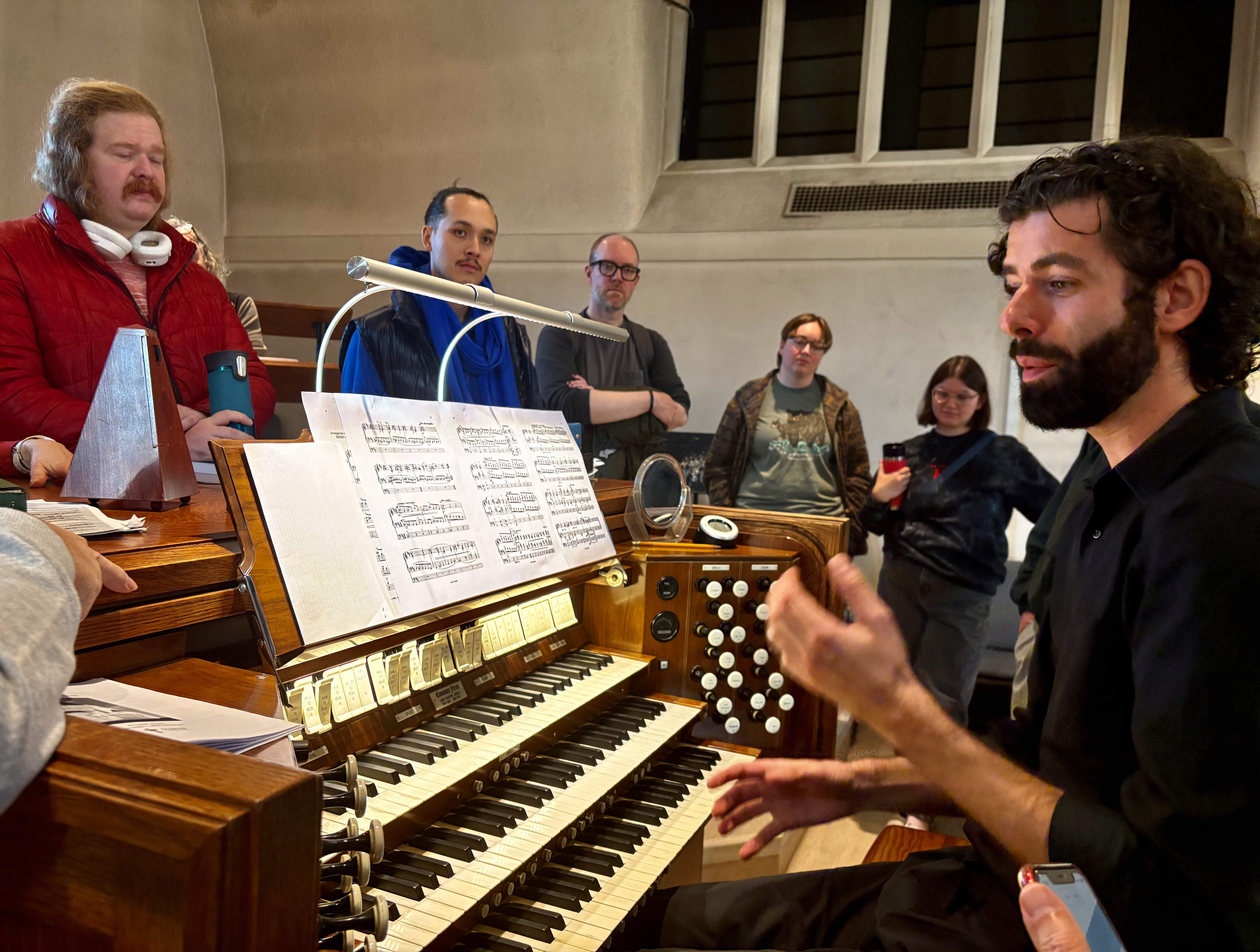
I’ve attended architectural tours of this building, and would do so again. But that’s not my purpose today. Today is all about the church’s magnificent Casavant Frères organ — a three-manual, 31-stop organ of 1,760 pipes — installed in November, 1938. I and other event attendees, ranging from the deeply knowledgable to the humbly fascinated (like me), are here for a show-and-tell-and-play with the church’s Music Dirctor, Dr. Abraham Ross.
You see? I am now moving from the “shadows” of this post to the “stops” (and everything else to do with organs).
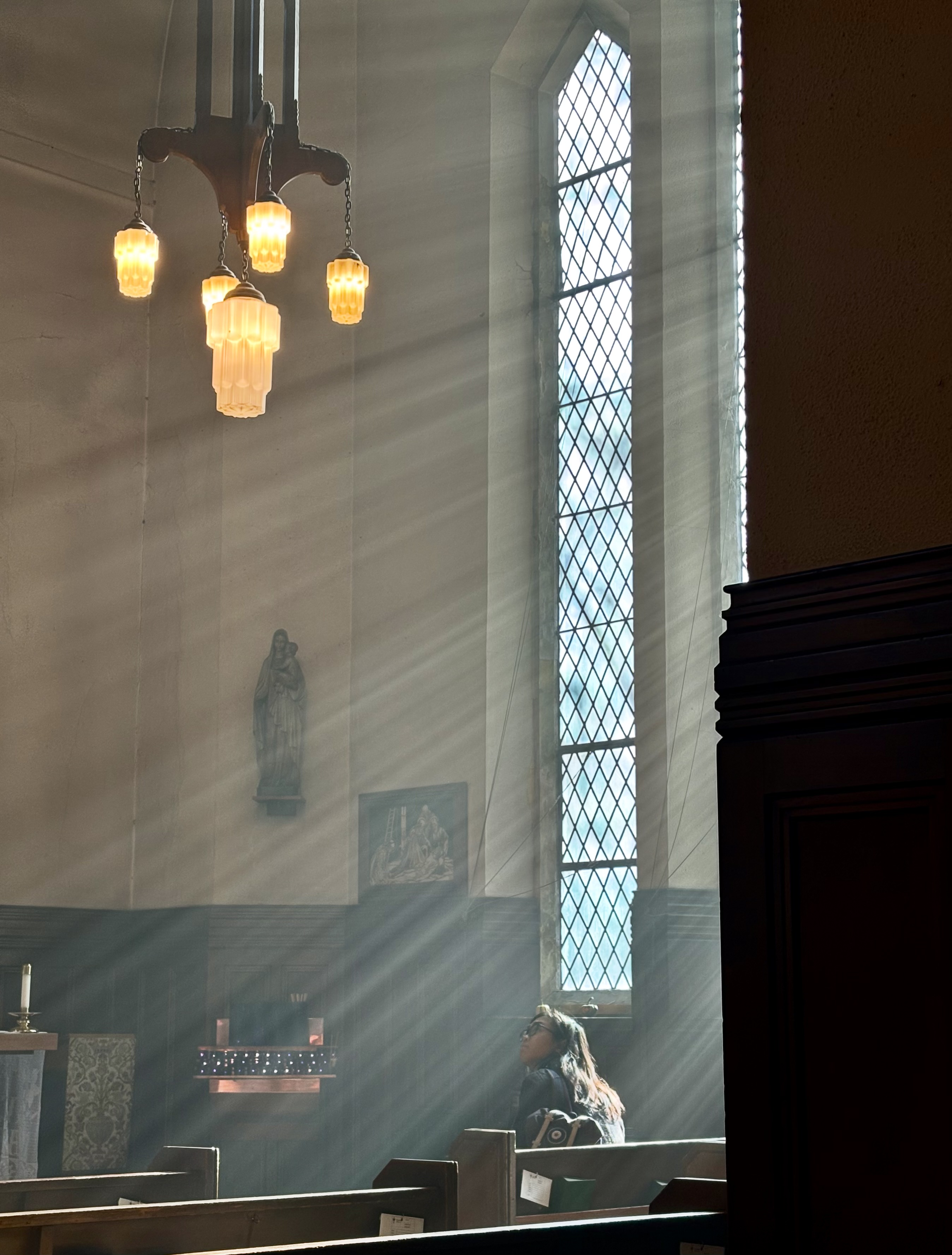
It turns out, I’m not quite done with shadows yet. I step into the church, where I am struck by the play of shadows among the sun’s rays, as light streams into the Lady Chapel.
Dr. Ross (“Call me Abe”), rounding off his first year in this post, wears his knowledge lightly, a characteristic that I deeply admire. We listen, we question, we discuss, as his fingers and feet dance and his words and music fill our heads and hearts.
Later, when he invites anyone interested to sit on the bench and make music, both Red Jacket and Blue Jacket (above) respond. They had each listened intently and asked thoughtful questions — no surprise they each also play the organ well.
Smiling and thankful and light-hearted, we all wind back down the steps, ready to leave. Then… a surprise. The organ again swells through the church, this time with a soprano voice in soaring duet. (I remember Dr. Ross’ comment, that in commissioning this organ, St. James instructed Casavant to adapt away from classic French cathedral style toward the Anglo-Catholic style of the Church of England, a more mellow sound suited to the C of E interplay between organ and choir.)
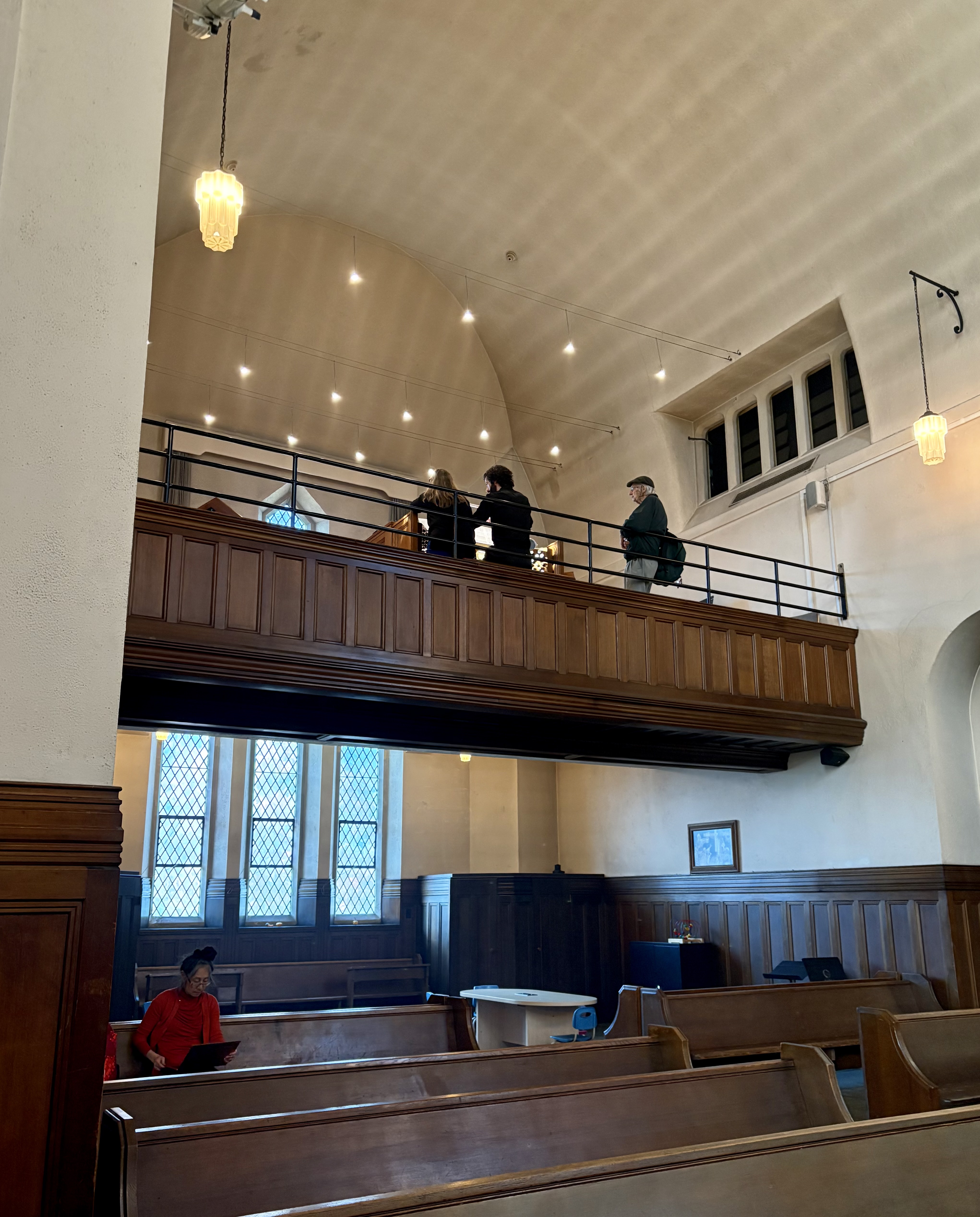
I look up from the nave to the gallery, and, transfixed, watch and listen for another moment: the singer standing to the left of the seated organist, an observer off to the right.
Then finally I do leave.
Because the day is so extraordinary, and I am so buoyed by both day and music, I do not turn toward home. Instead, I follow Cordova Street on east, deeper into Strathcona. Eventually it occurs to me that while music and sunshine are all very fine, lunch would also be fine, ’round about now.
So I say good-bye to Cordova at Hawks Street, and follow Hawks south to Keefer and to the Wilder Snail.
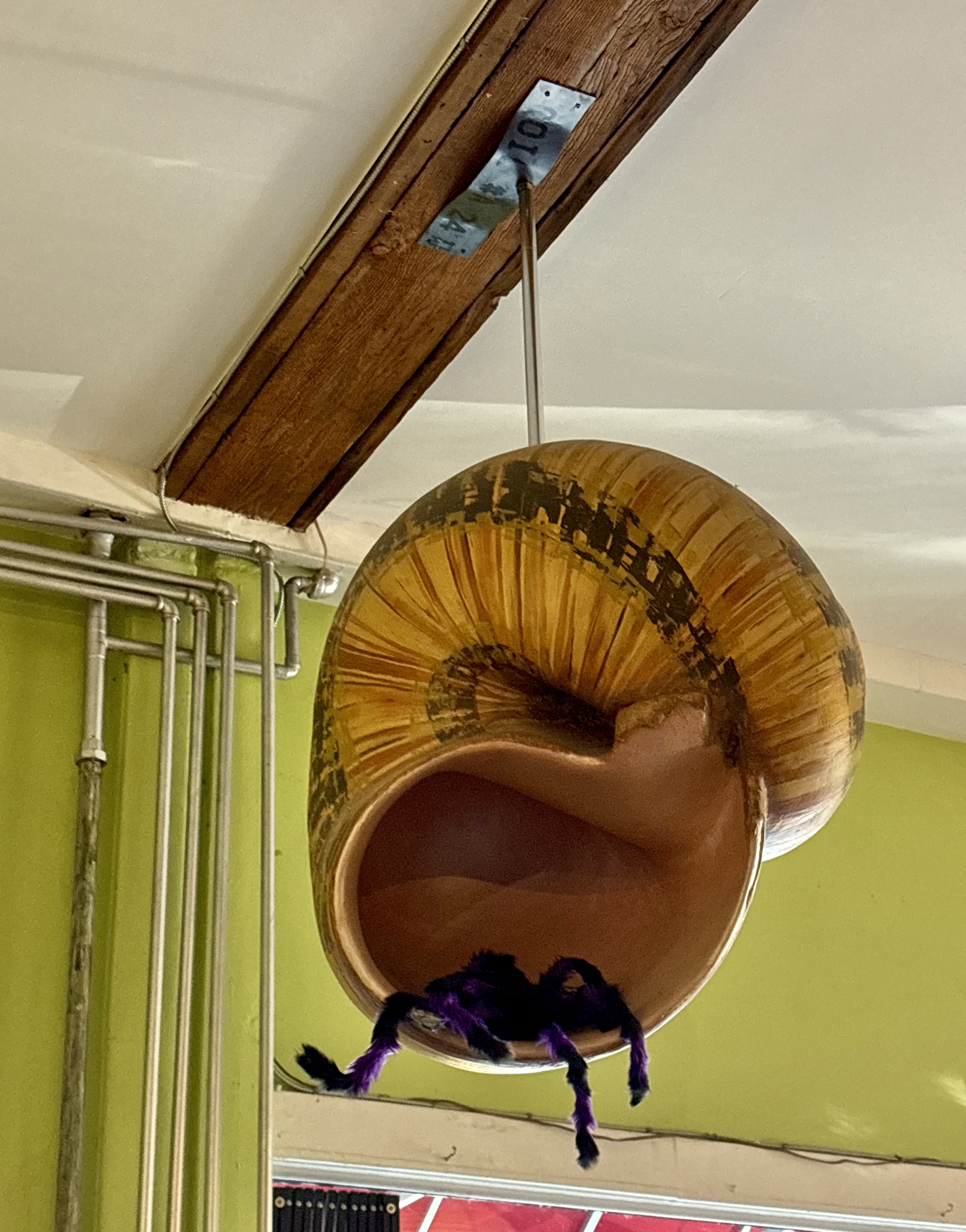
I’ve visited this venerable café/grocery store before, and I’ve already shown you its mammoth suspended snail mascot at least a couple of times. “Snail” could have been the third “s” in this post’s title.
But it’s not. Because, while I’m charmed by the spooky-season addition of a black tarantula, I am even more charmed by another discovery.
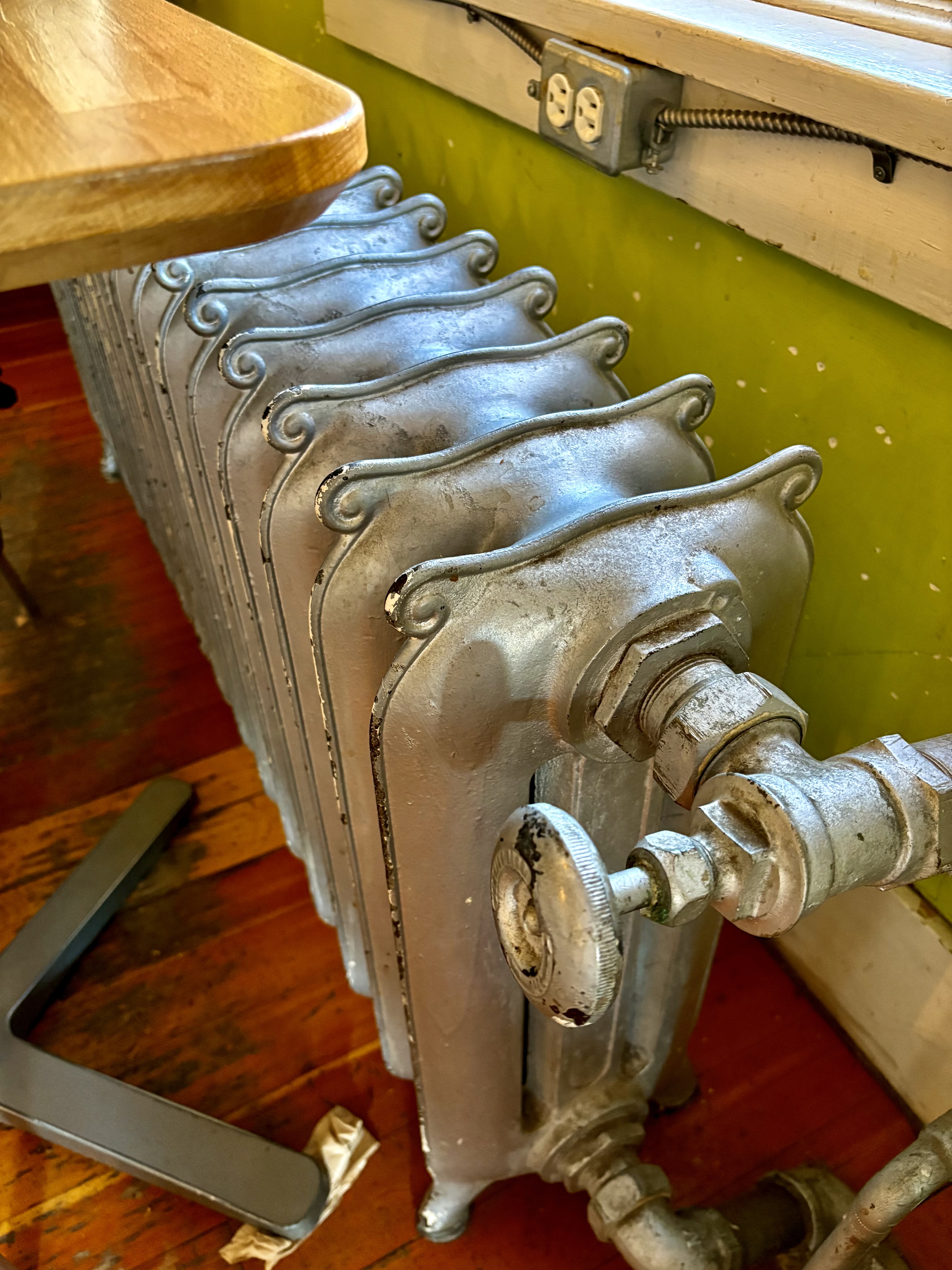
Along with its vintage wooden floors, and its vintage trick of steadying wobbly table legs with folded bits of paper, the Wilder Snail has genuine old vintage steam radiators. “S” for “steam.”
I warm my insides with broccoli-cheddar cheese soup, while the radiator gently warms my outsides.
Then I take my insides and outsides back home, and put on my lined jeans. T’is the season!
30 October 2026 – I’ve already chattered about the discoveries we make when that chlorophyll curtain falls. Here’s one more chatter on the same subject.
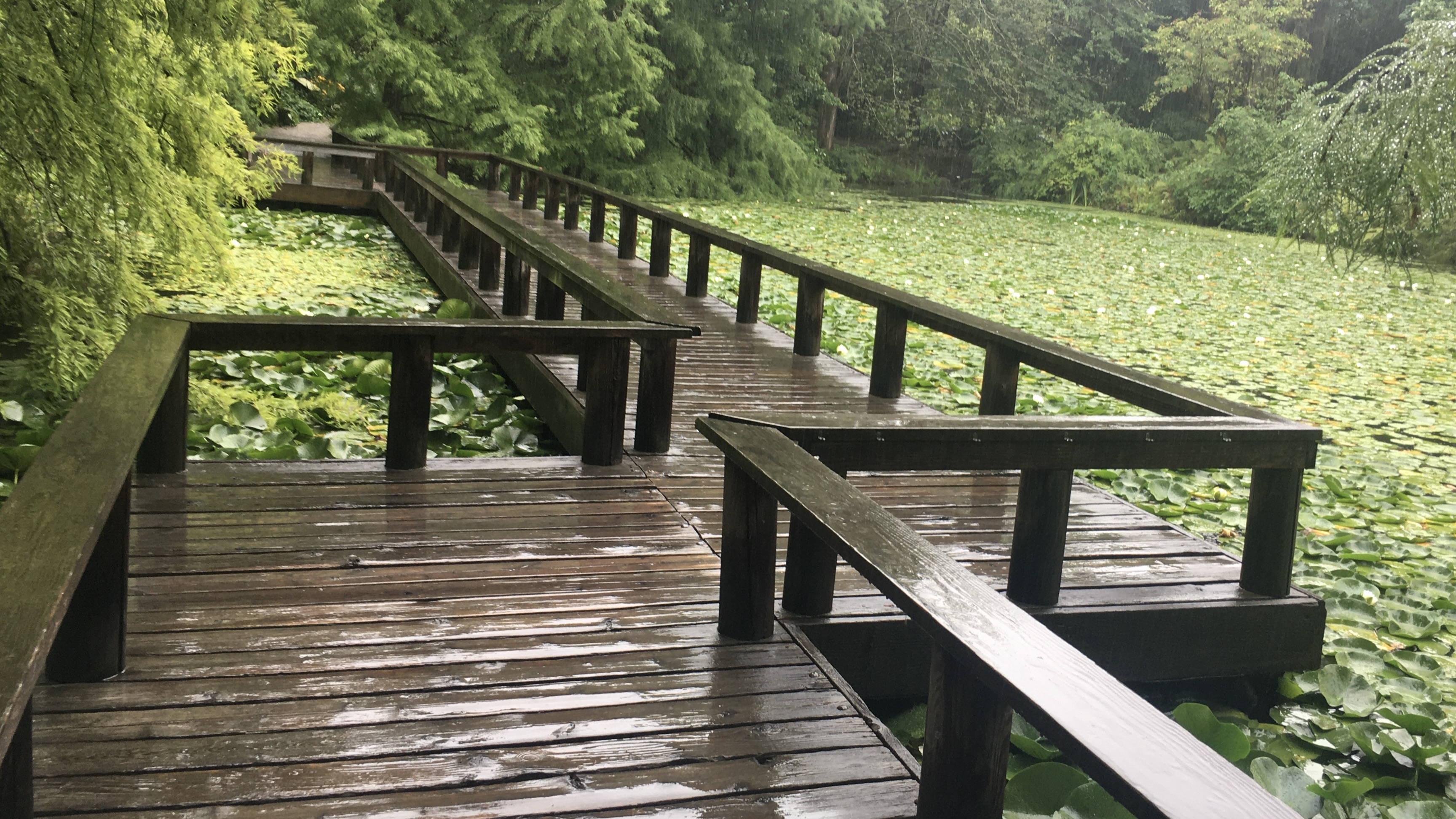
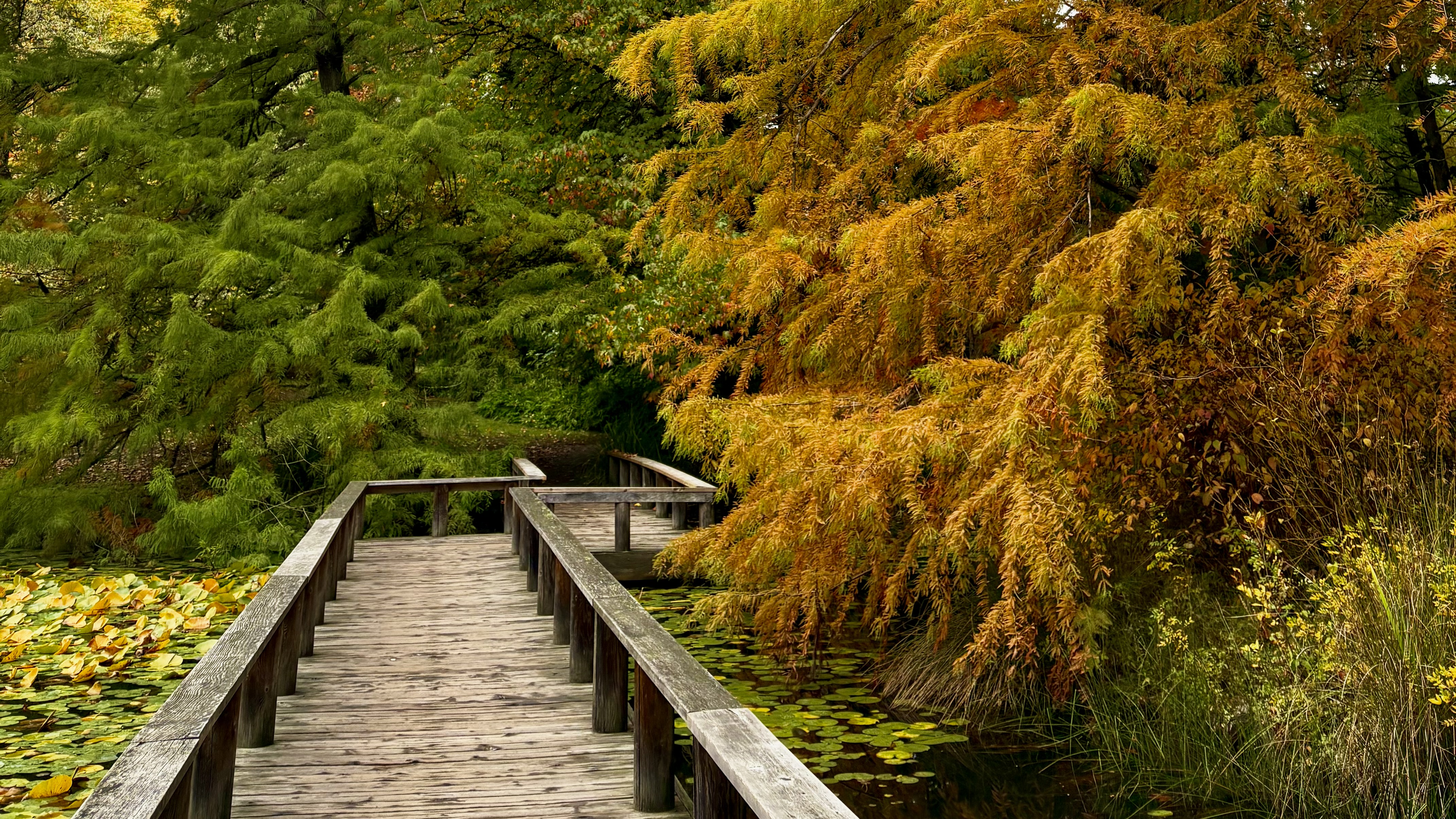
We’re at the R. Foy Forster Cypress Pond in the VanDusen Botanical Garden. It is home to, as you might anticipate, a great many cypress trees. The Taxidum distichum, to be exact, known in its more informal moments as the “bald cypress.”
This is because, unlike most members of the Cupressaceae family, it is deciduous rather than evergreen. Spring and summer, its feathery leaves are bright green. Like this. Green on green on green.
Come winter, it has bare branches. This cypress is bald.
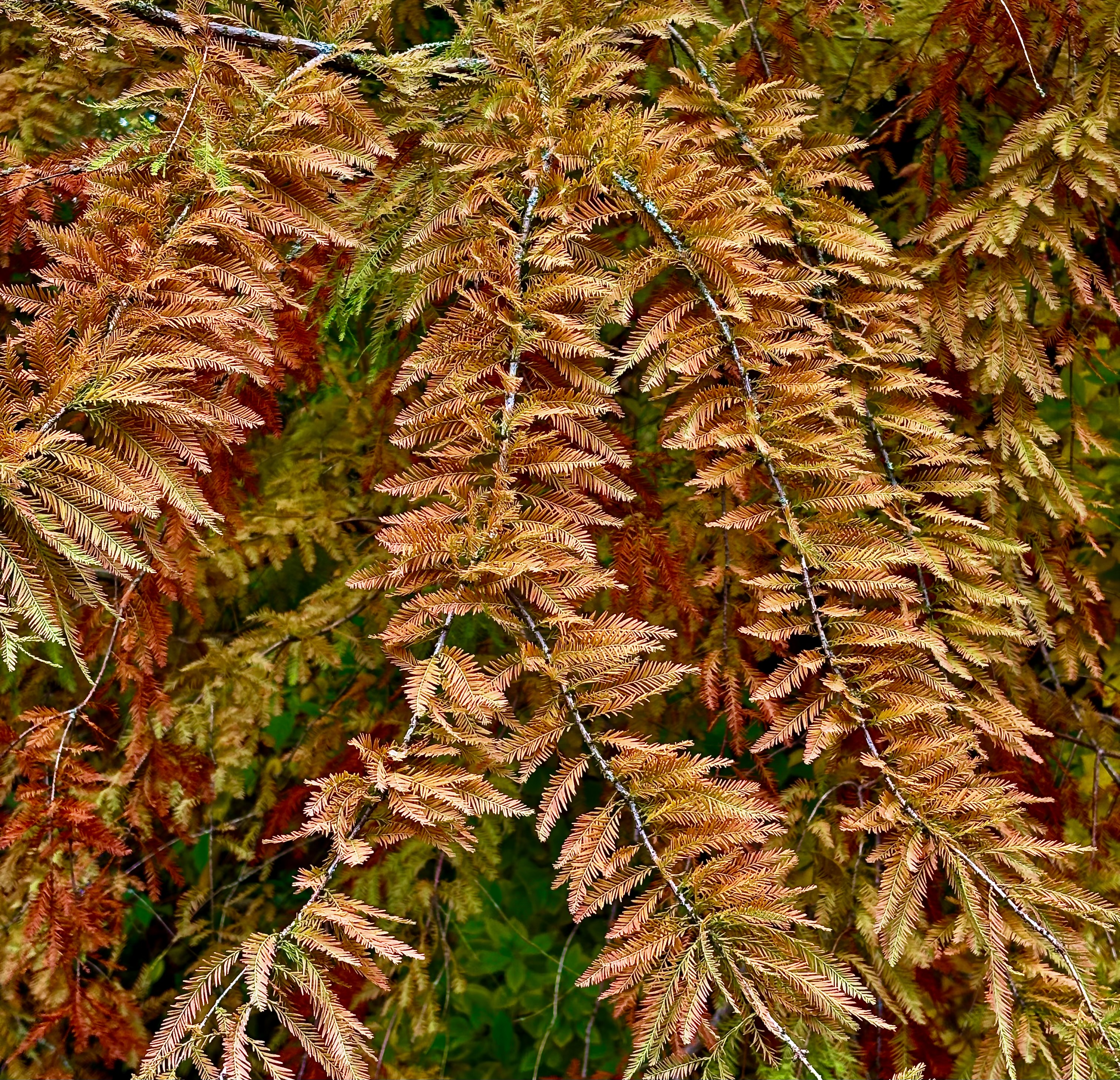
But… in fall? When it is almost bald? When all those other colours jump out from behind the green curtain?
It is a wonder.
All those shades. All those textures.
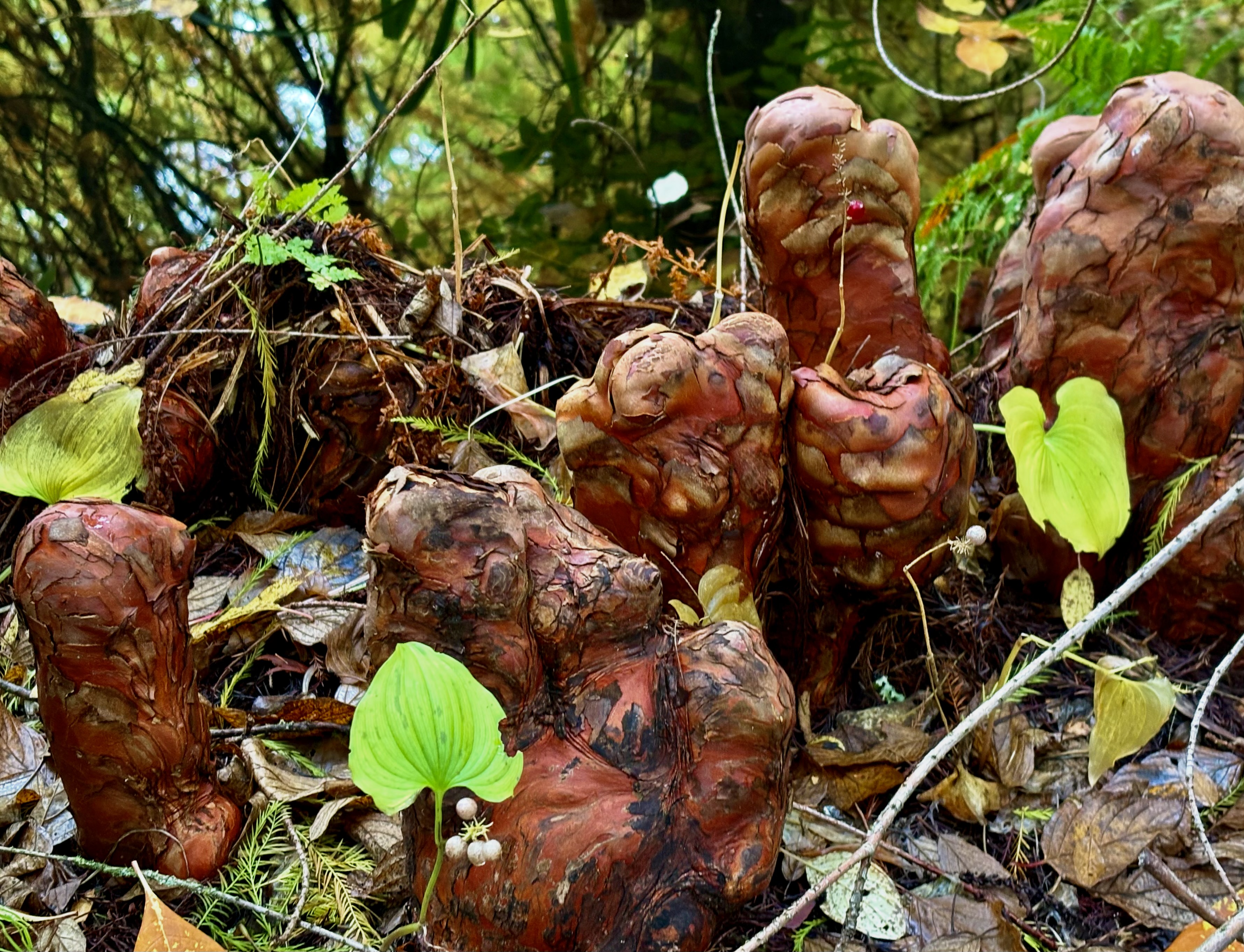
And, for added delight…
all those knees (aerial roots), dancing a jig at water’s edge.
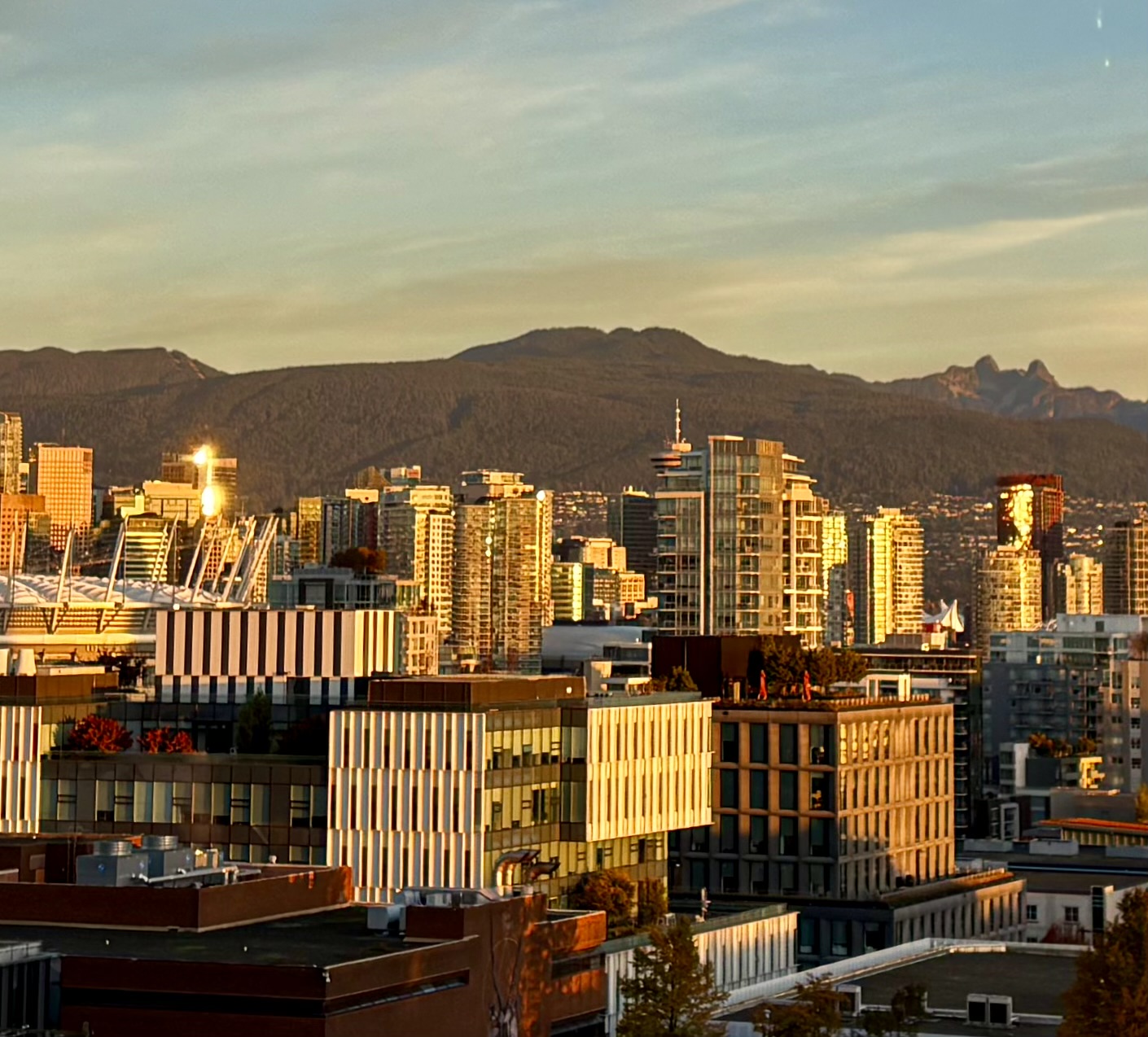
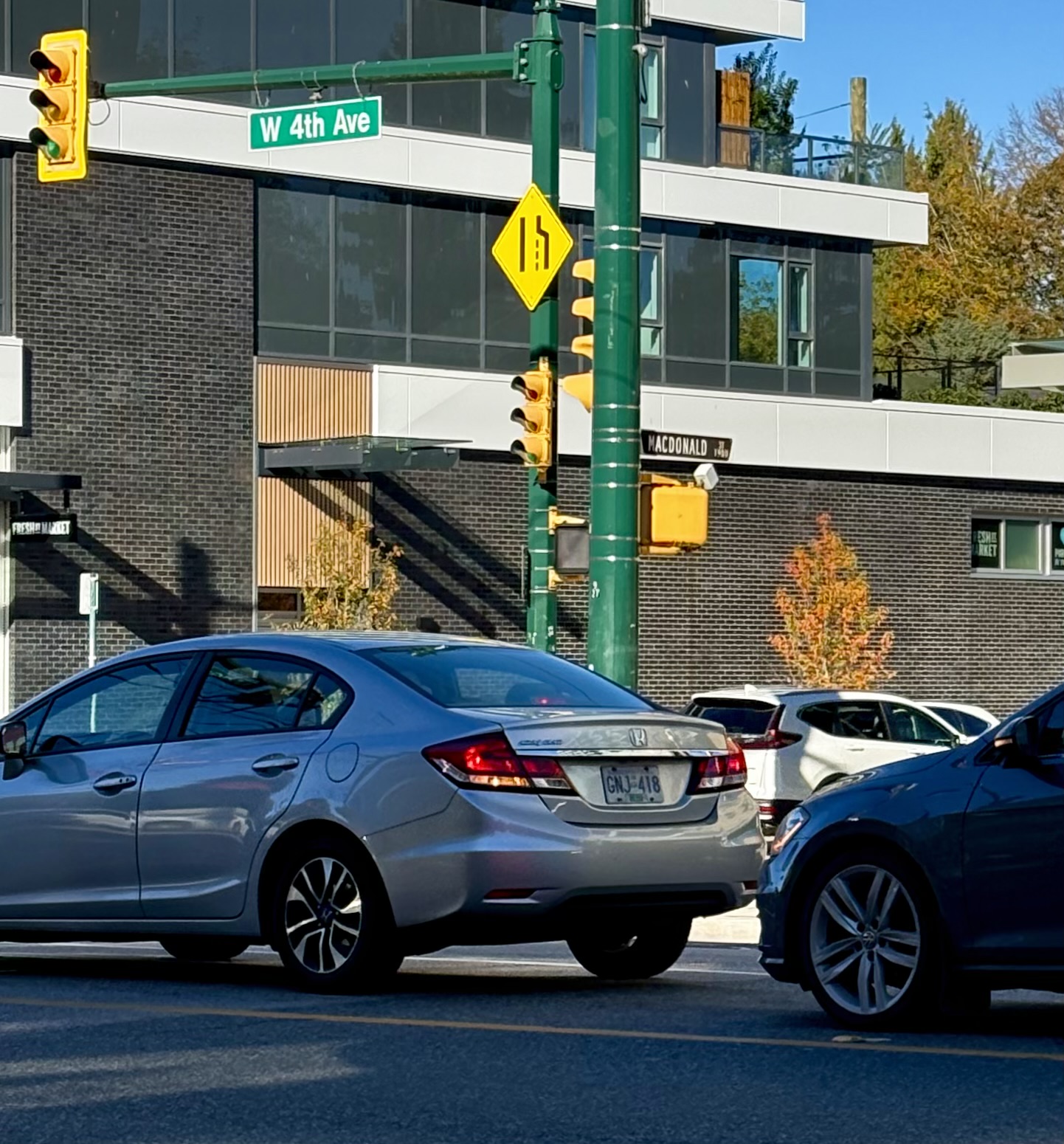
24 October 2026 – I’m waiting for the red light to turn green, out there on a Kitsilano street corner, but, mostly, I’m admiring a flaming yellow-orange tree. This tree, ‘way over there on the right against the brick wall.
Red light turns green, away I go. Thinking, as I go, about green trees turning red.
All part of the seasonal shift, and I enjoy the added bonus of a pun: each fall (whenever it happens to be fall, in your hemisphere) the chlorophyll curtain falls… and all those other colours are finally on view.
Oh, the maple trees! A child of eastern Canada, I’m big on the bravura performance of our maple trees each fall. For good reason a red maple leaf is smack-central in our flag.
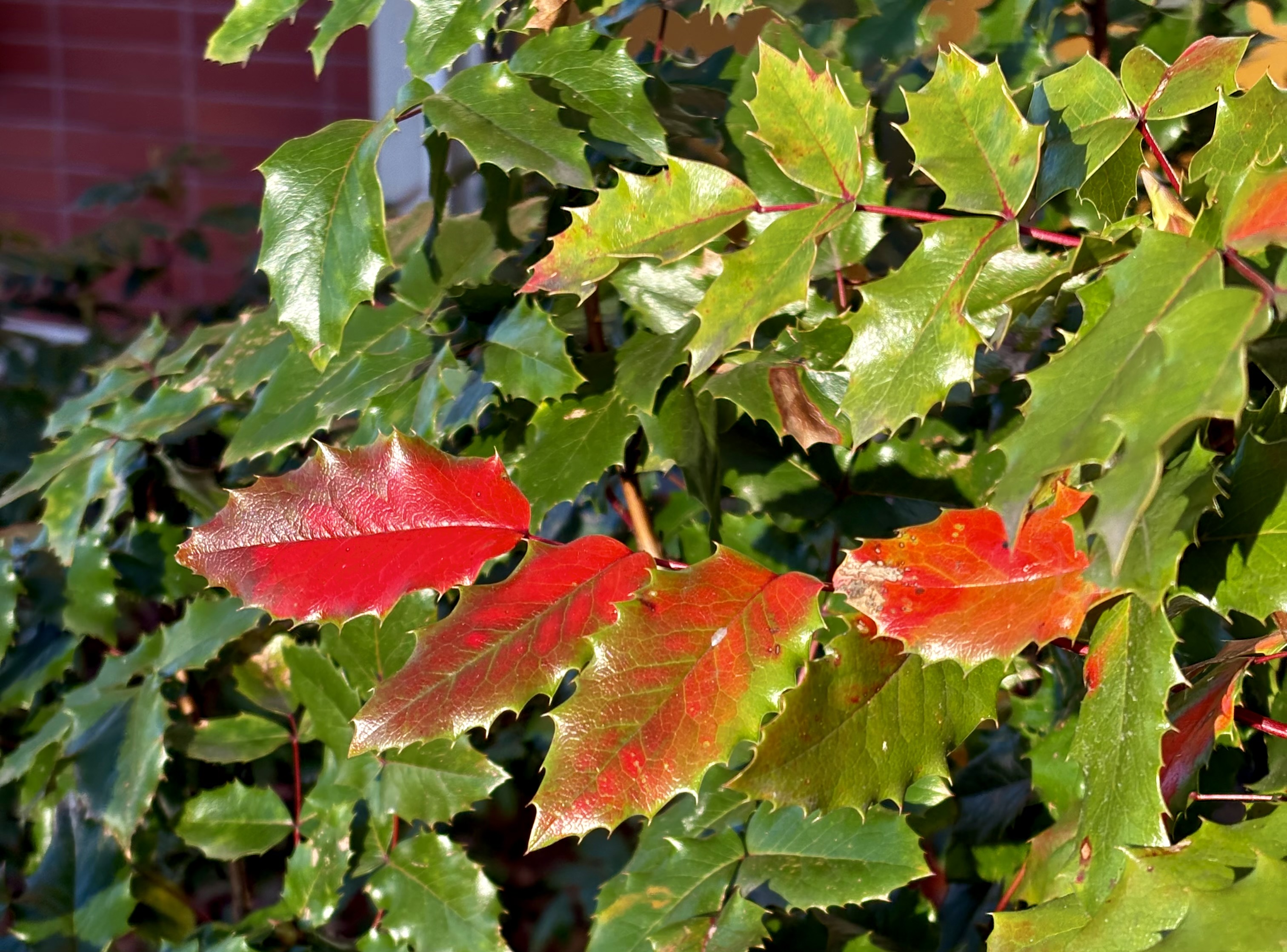
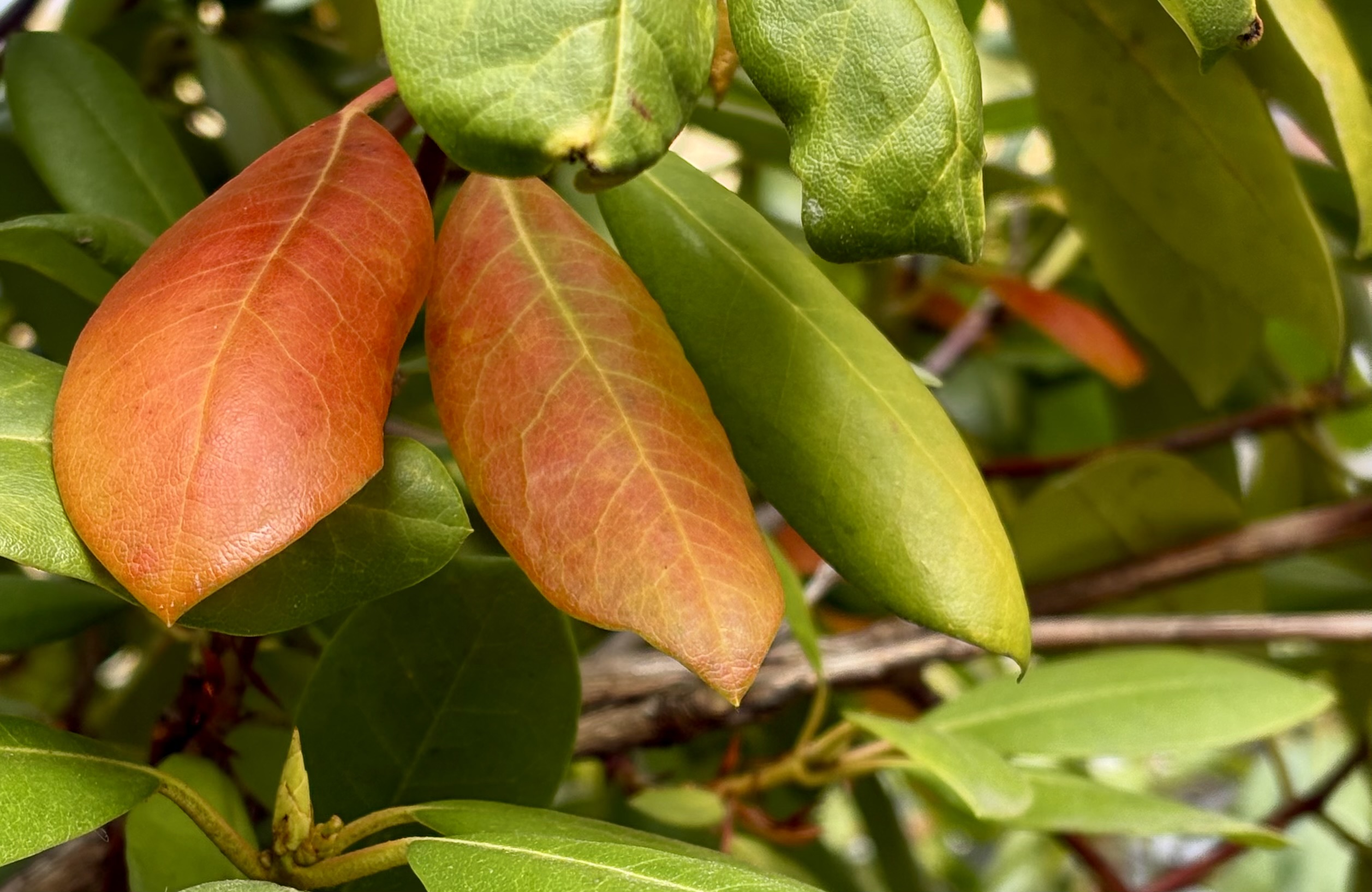
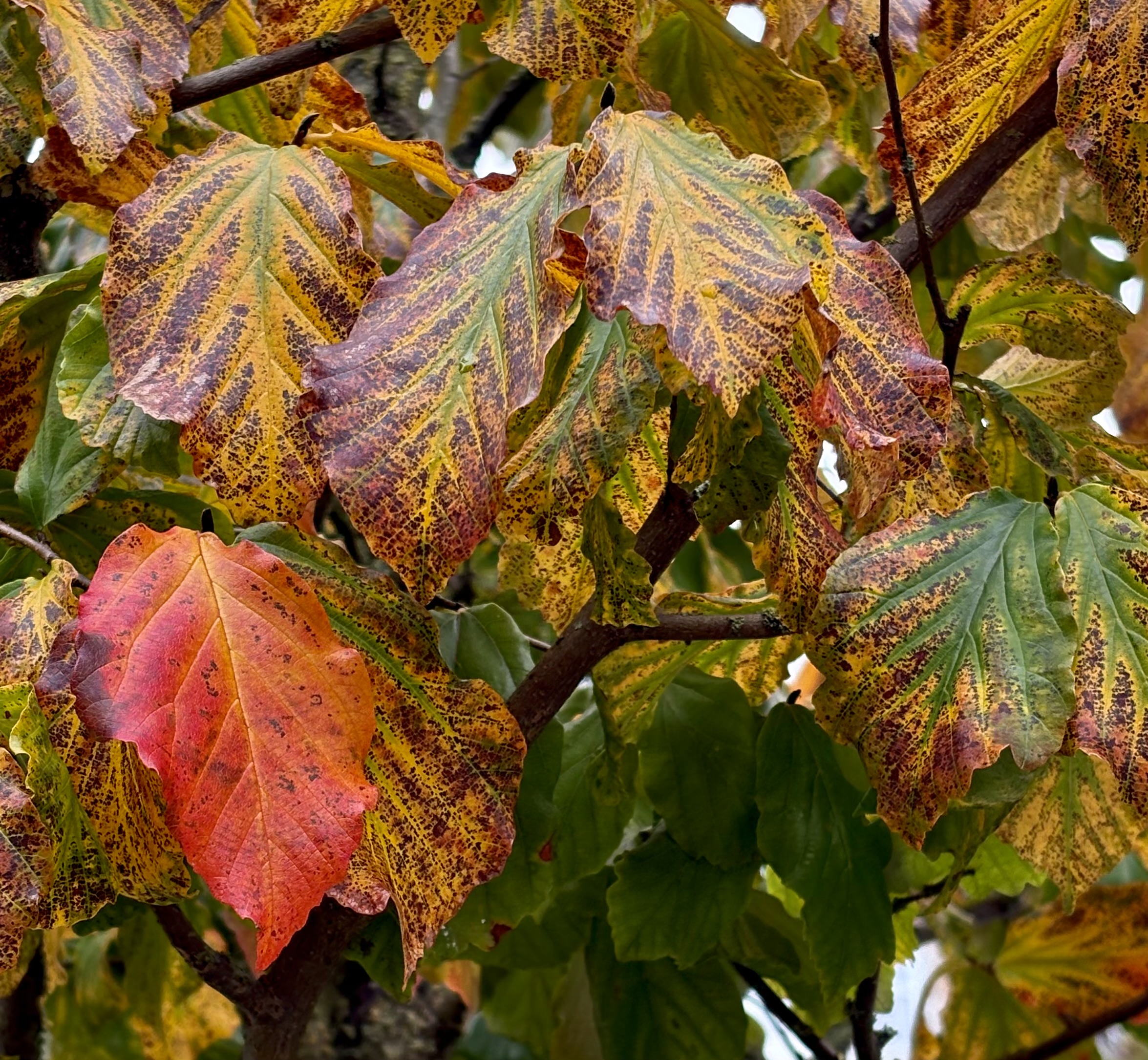
But, this year, I’ve started noticing other trees, other shrubs. I’m paying attention to the delicacy of their shade ranges, as chlorophyll drops away. I am amazed by what I start to see. (Isn’t that the way? First, you have to look. Then, you see.)
This, for example…
and this…
and this, my absolute favourite. Theme and variations.
Now that I’m paying attention…
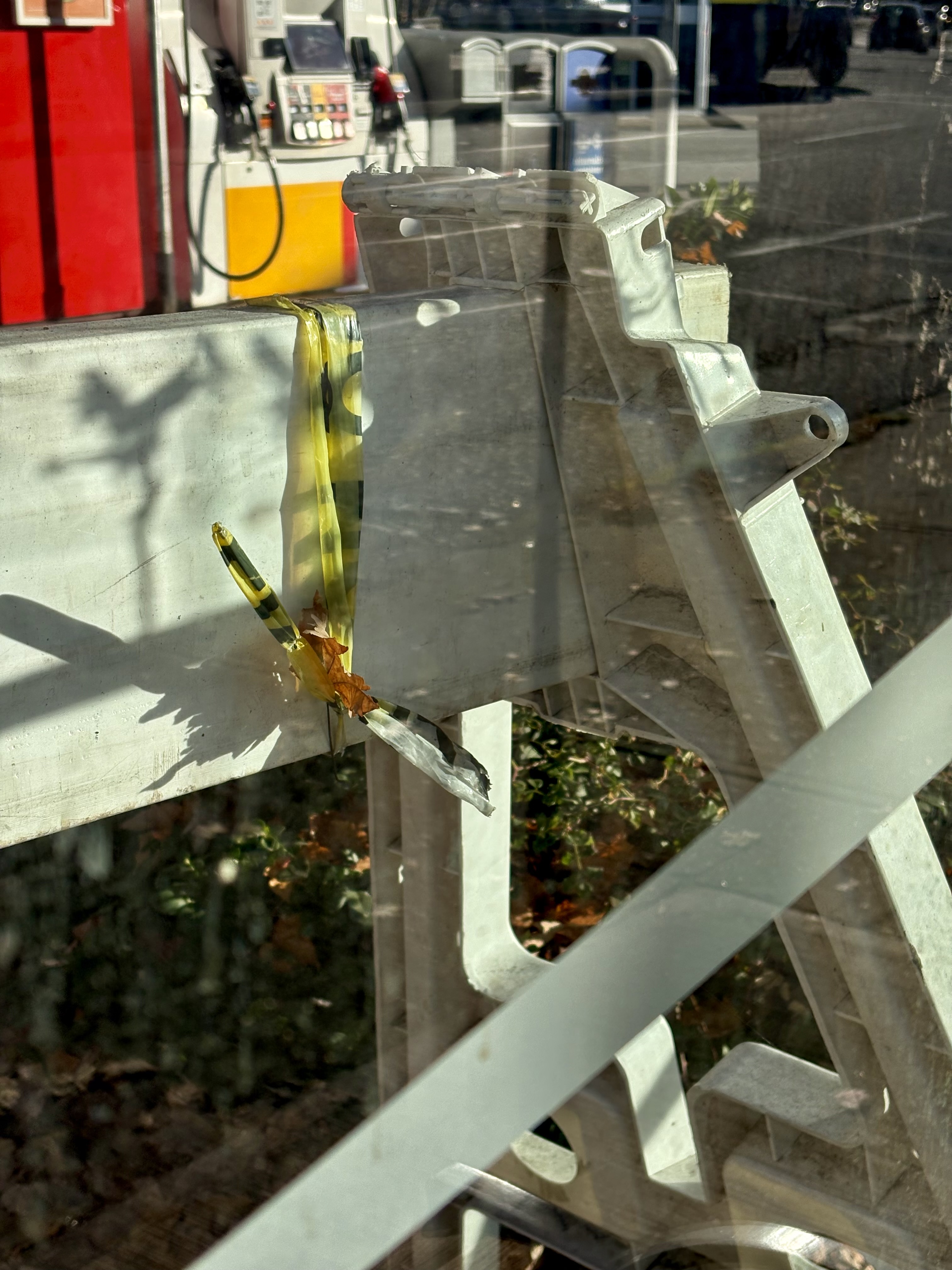
Days later, seated at a bus stop in the east end of town, I idly glance backward through the glass. At first the view is an unprepossessing tangle of background gas pumps and foreground traffic bric-à-brac storage, including a white barricade. There is also a something-or-other wrapped around the barricade, and my idle gaze sharpens to interest.
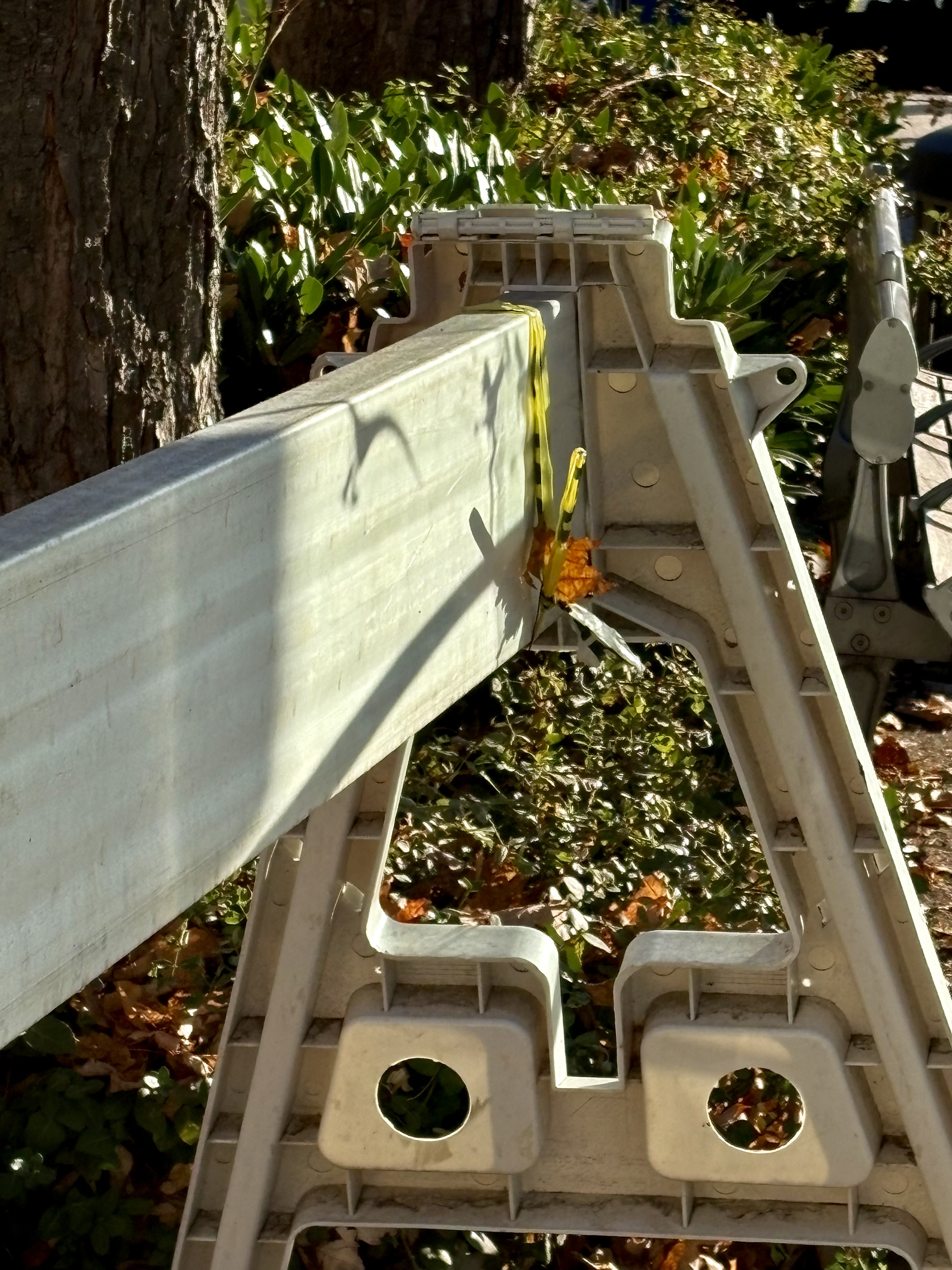
No bus in sight. I have time to walk around the bus shelter for another angle.
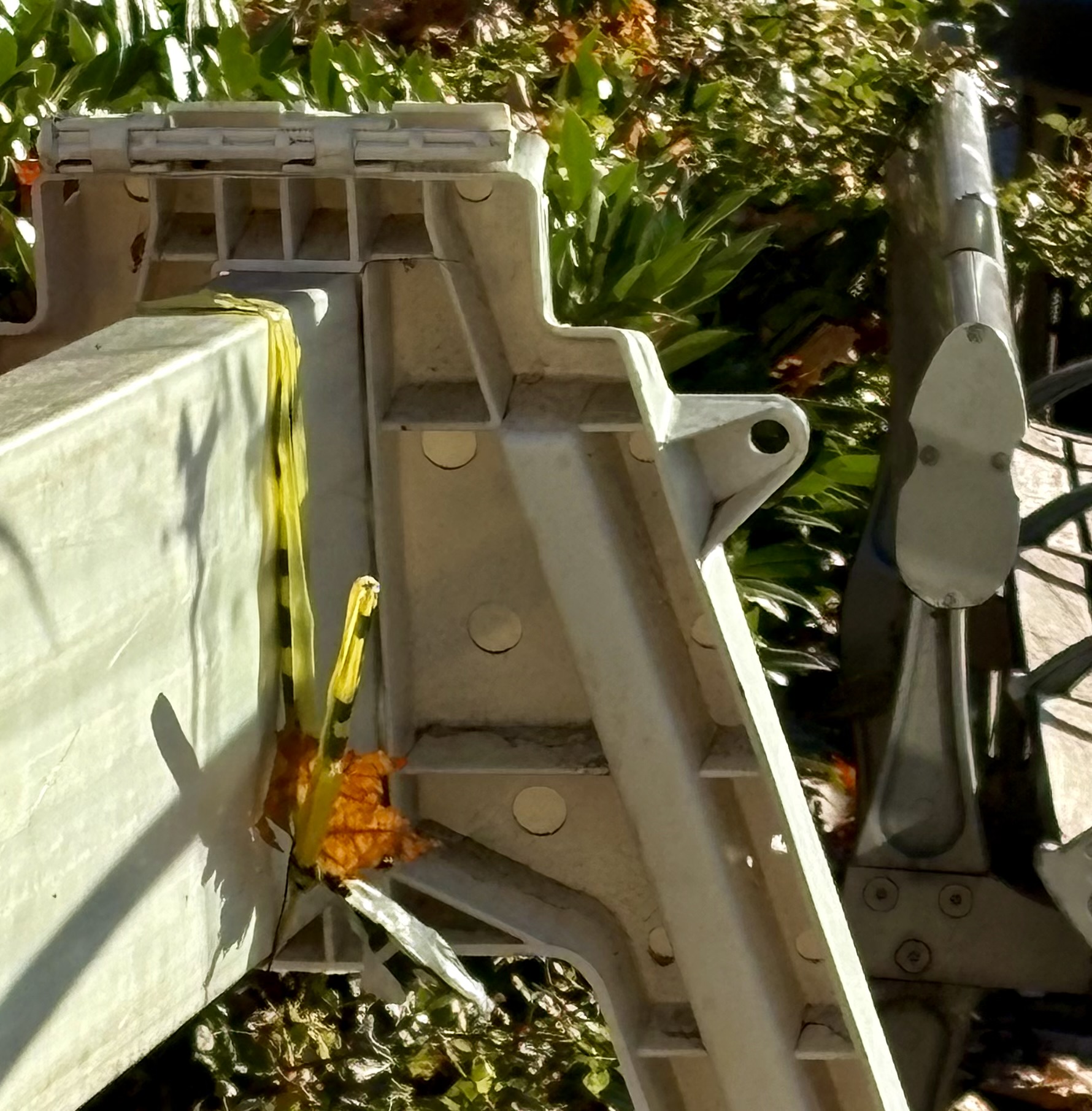
I laugh out loud. Somebody (probably waiting for a bus, killing time) found a bit of construction warning tape, wound it around one end of the traffic barricade, and neatly inserted into it… one leaf, caught in its brief, bright moment of glory.
Well, of course somebody went to all that trouble. We do love the leaves of fall!
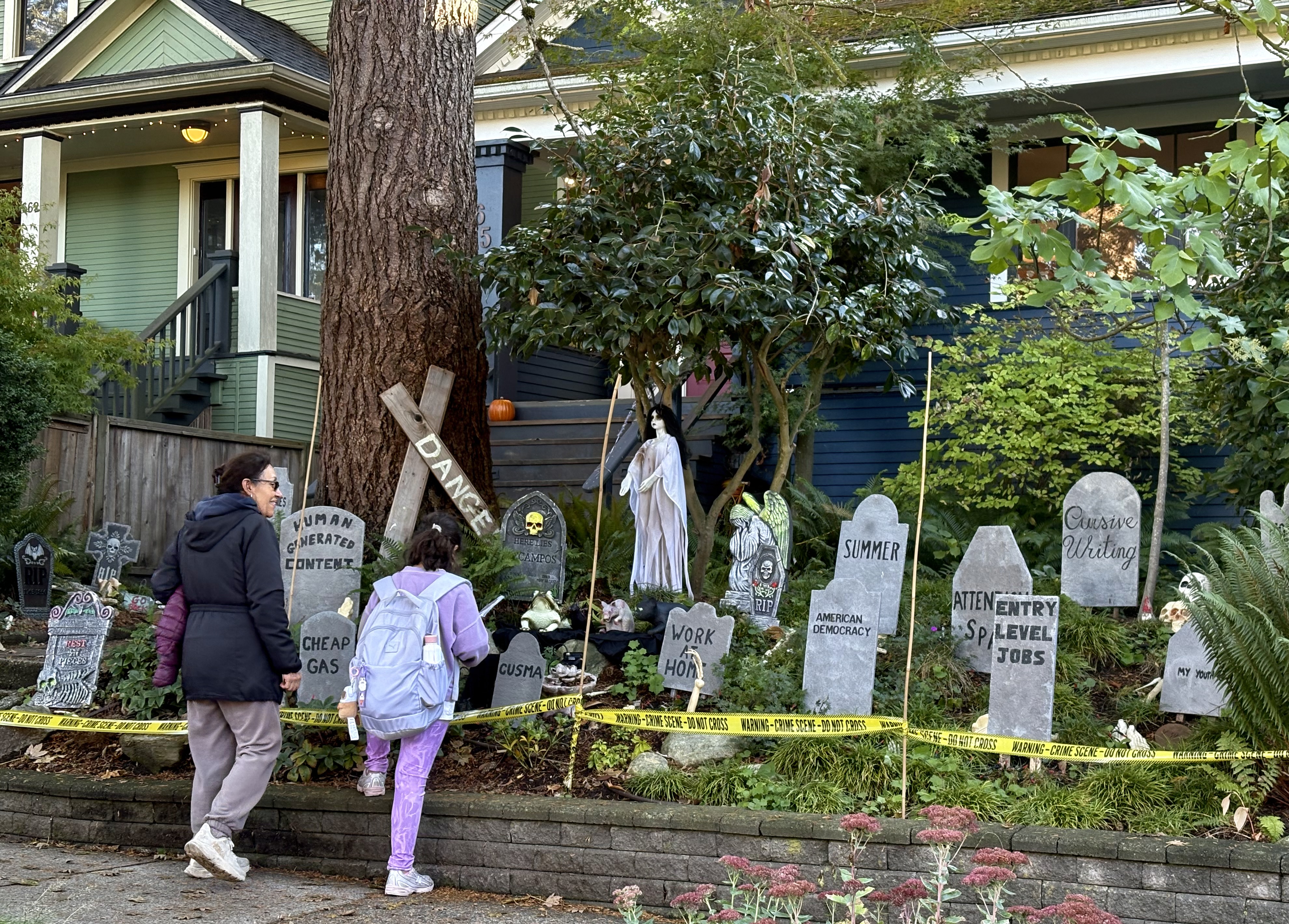
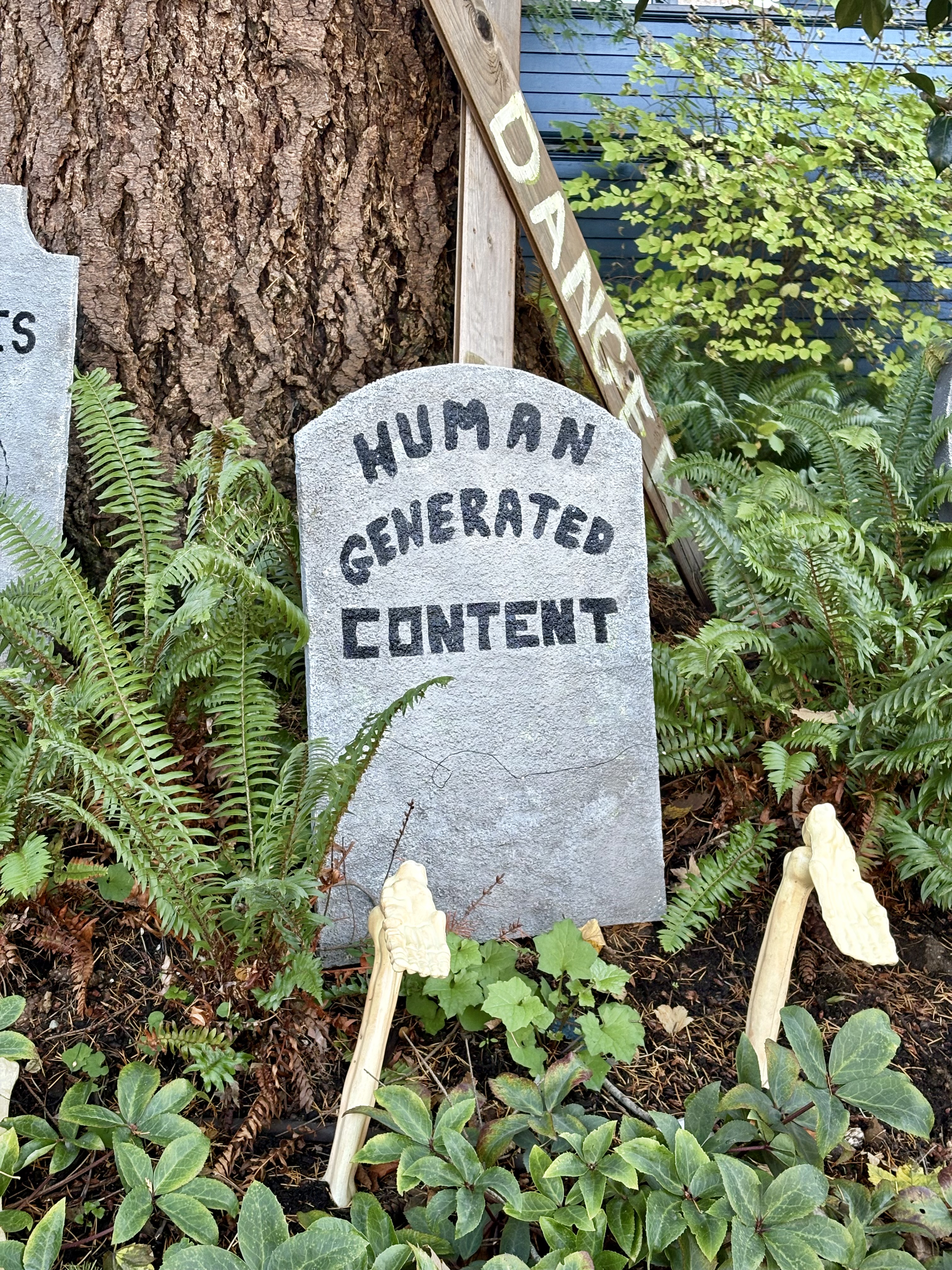
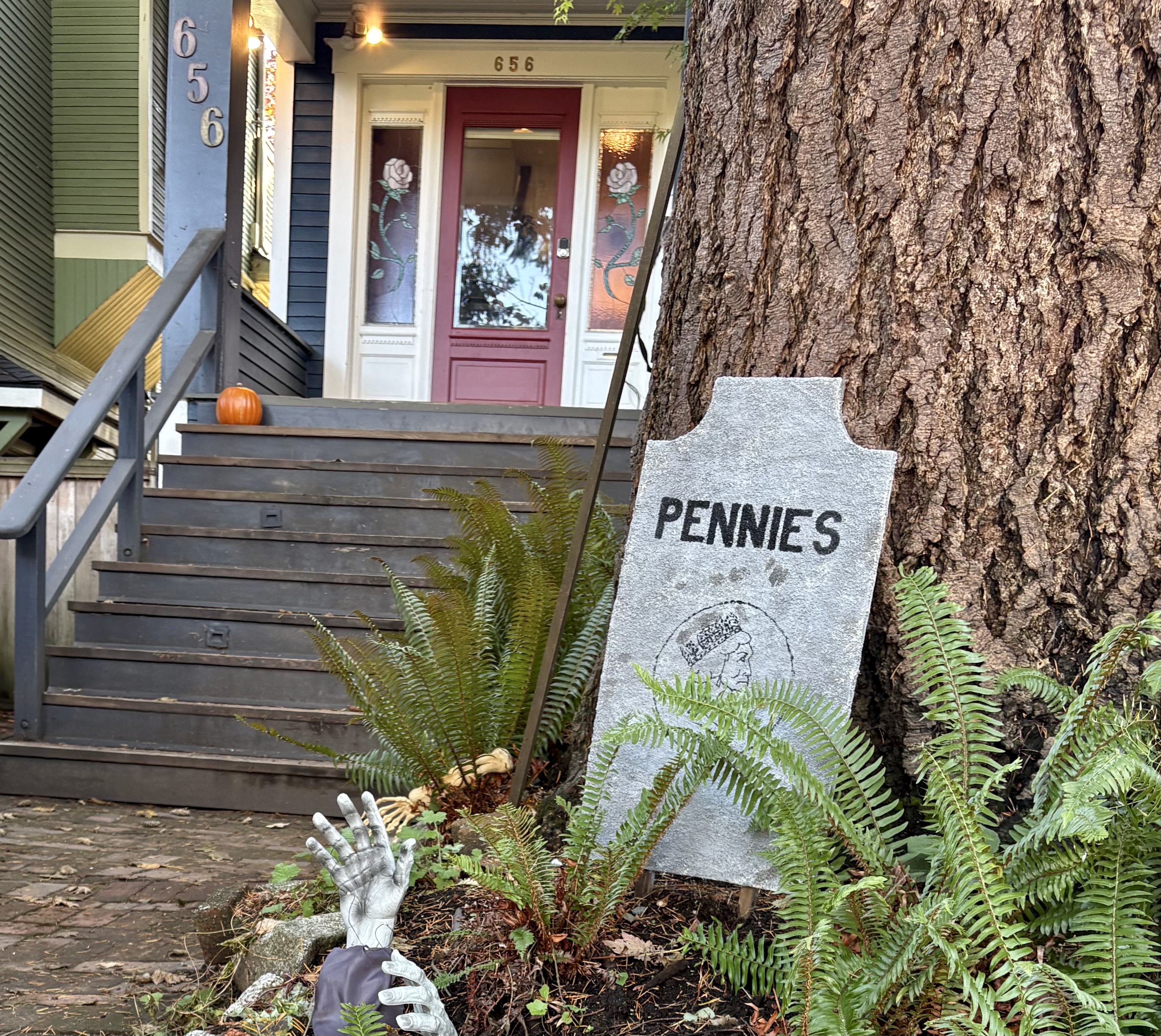
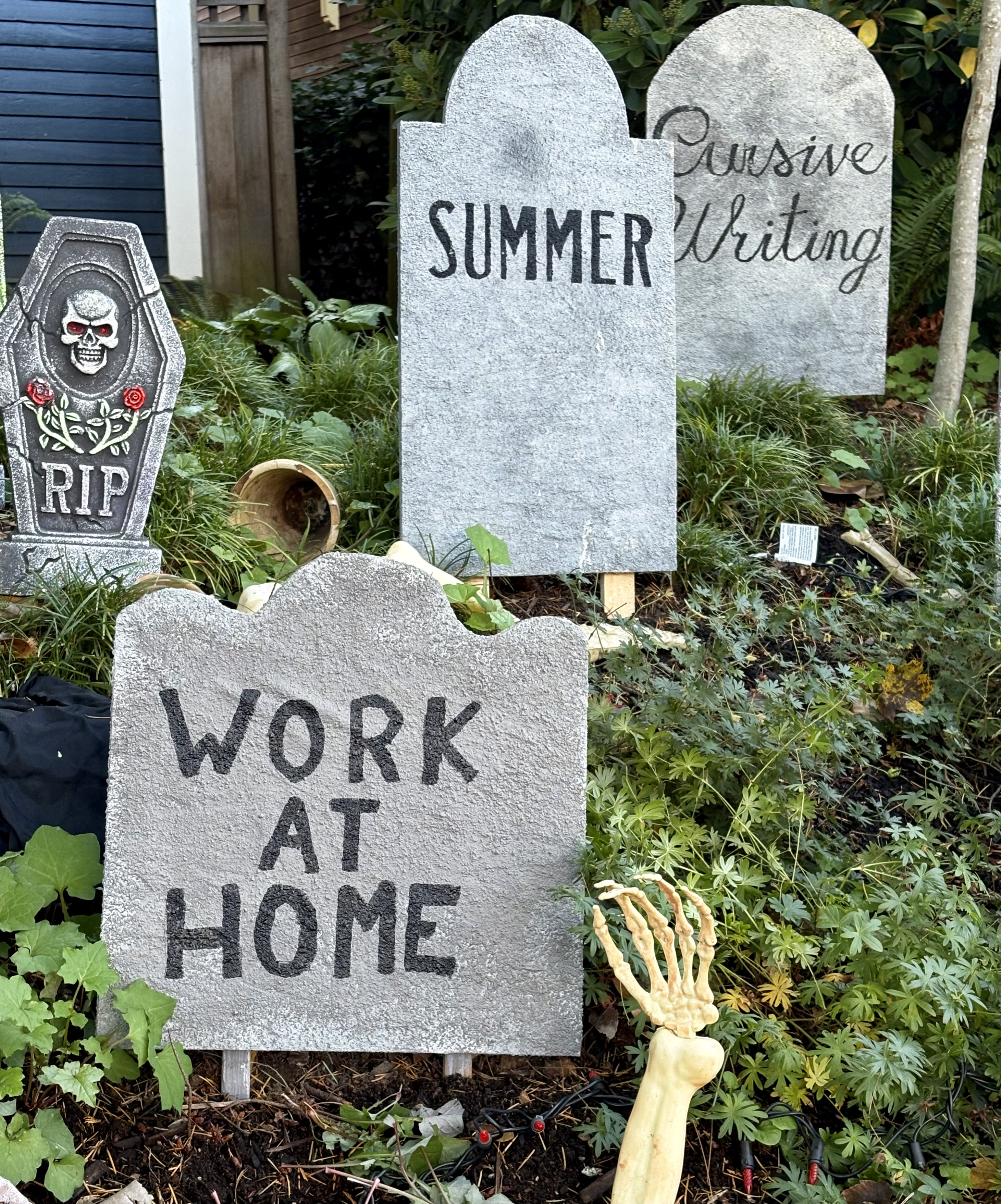
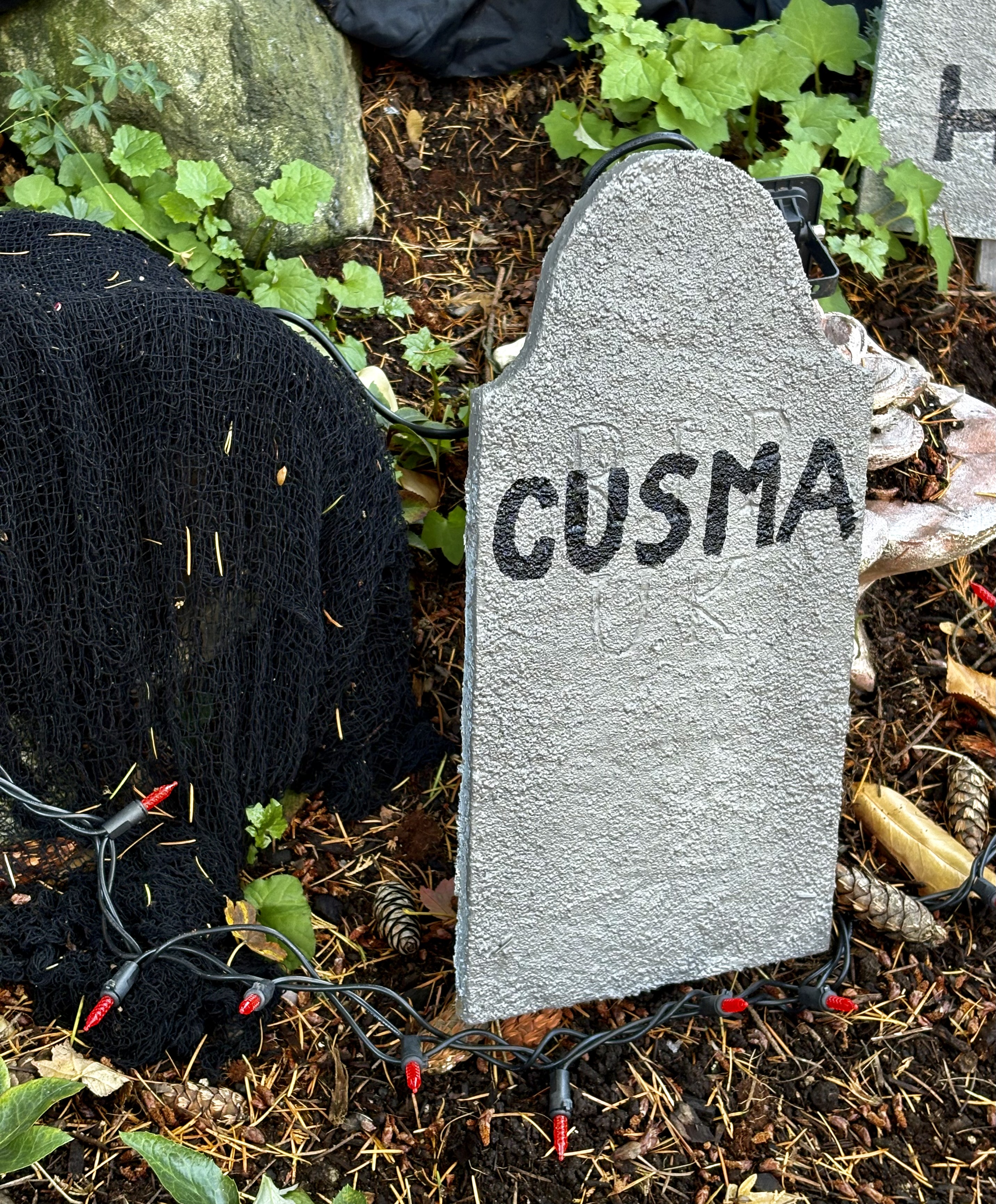
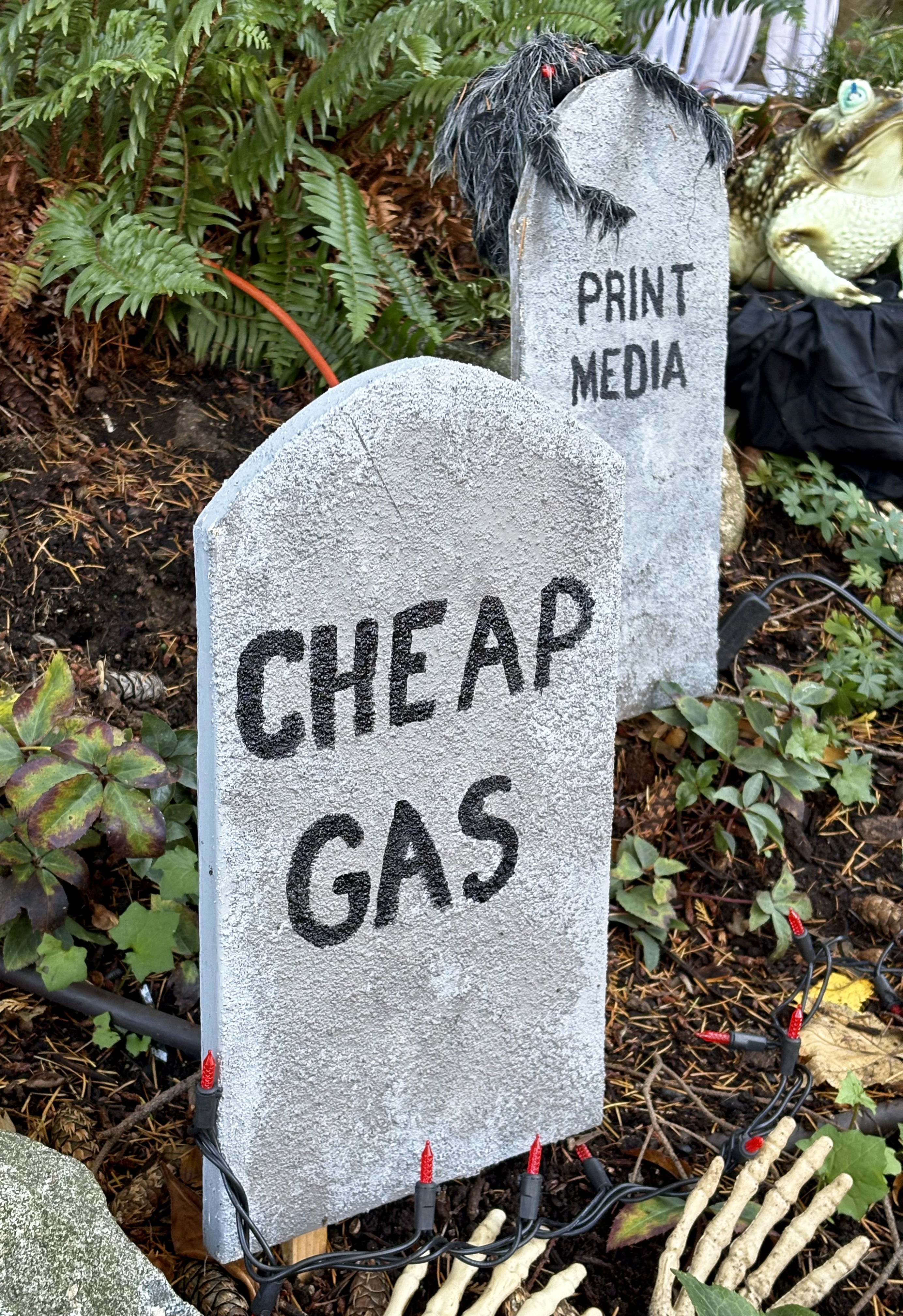
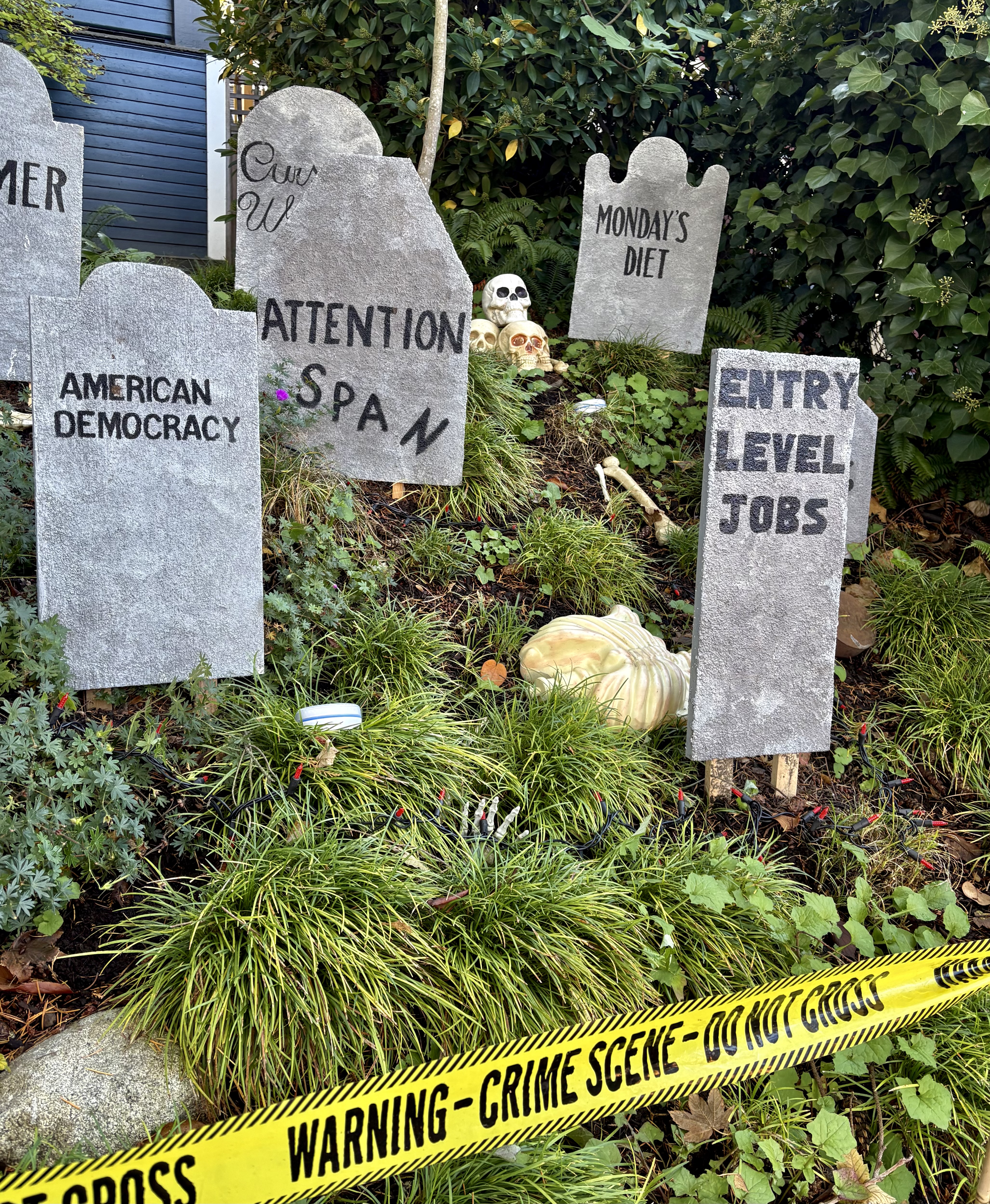
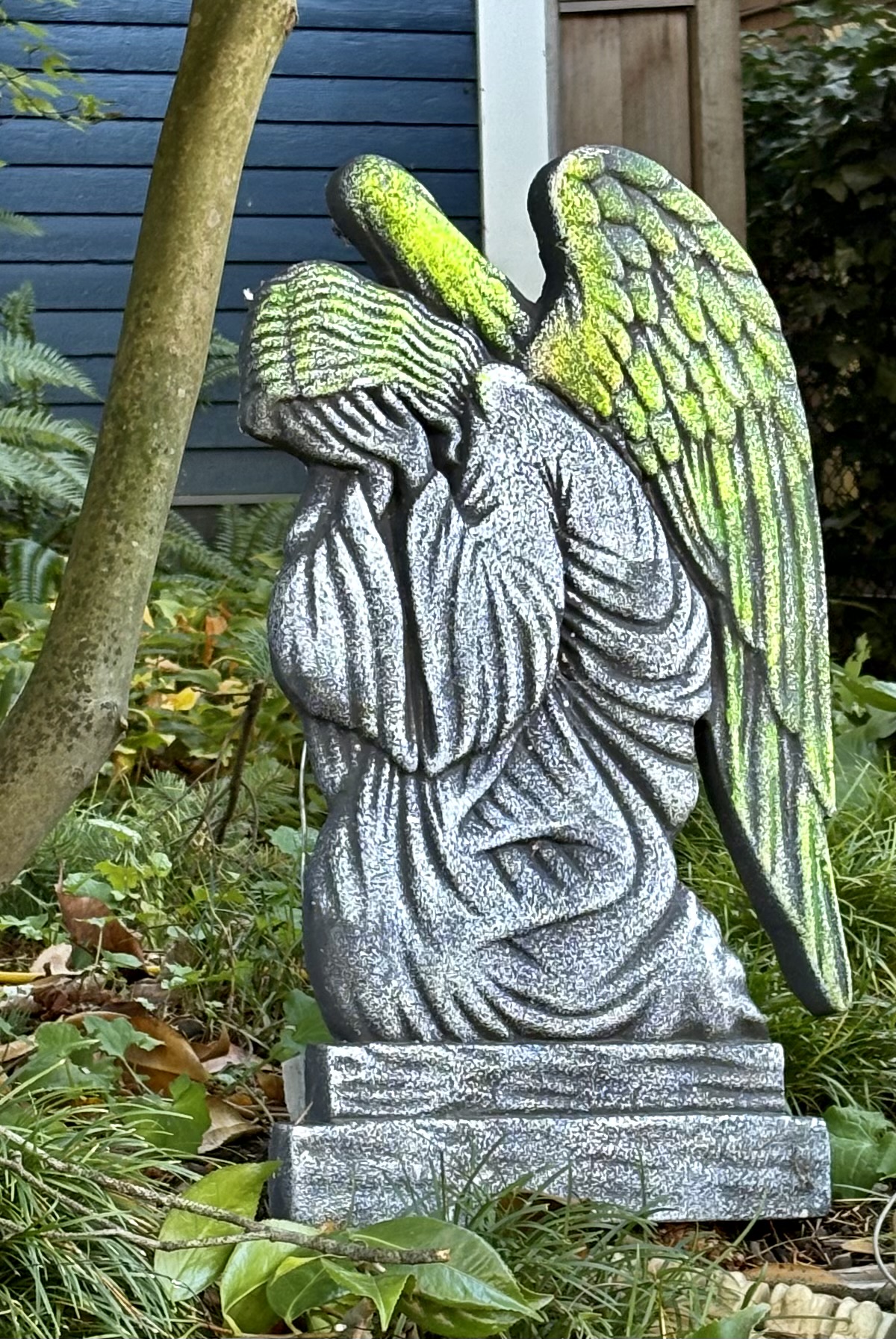
15 October 2026 – At a first quick glance, walking along East 10th, I think it’s just another Hallowe’en-themed front yard — the usual cliché cemetery.
Then I step closer, and realize we are being offered quite a different category of deaths.
"Traveller, there is no path. Paths are made by walking" -- Antonio Machado (1875-1939)
"The voyage of discovery is not in seeking new landscapes, but in having new eyes" -- Marcel Proust (1871-1922)
"A city is a language, a repository of possibilities, and walking is the act of speaking that language, of selecting from those possibilities" -- Rebecca Solnit, "Wanderlust: A History of Walking"