Land Cruise: 5-6 September

5 September – Now I’m doubling back across the same terrain, this time south, Churchill to Winnipeg. It will surprise none of you that even though we’re travelling the same tracks, passing/stopping in the same places, the trip is entirely different. There’s the same train culture around me, but with different people. Perhaps because I’m slightly less obsessed with the landscape this time, I’m more aware of the people — who, because we’re still between tourist seasons, are again individuals rather than job-lot packages on tour. Such a range!

  • the trio who trained as nurses in Winnipeg long ago and as a result have been friends, and attending reunions and sharing other adventures, for more than 65 years
  • the young Parks Canada IT/AI specialist, who works summers based in Churchill and winters back in Winnipeg
  • the Australian couple (she originally from Ireland) who are this side of the world to attend a wedding in the Caribbean but decided, having come this far, to explore Canada while they’re at it
  • the deep-south American who “hates heat” and therefore does advance reconnaissance each year for the following summer’s travels in Canada with his wife (so far, Newfoundland is his hands-down favourite)
  • and… Origami Man. Oh, I’ll save him ’til later.

I think the other reason the reverse trip is different is precisely because it is in reverse. You approach from a different angle, you come at a different time and probably in different weather, and you yourself, even if only slightly, are already a different person. So, you notice differently.

For example, I notice the young man dis-embarking in Thompson, sporting the cap his wife found for him on the internet…

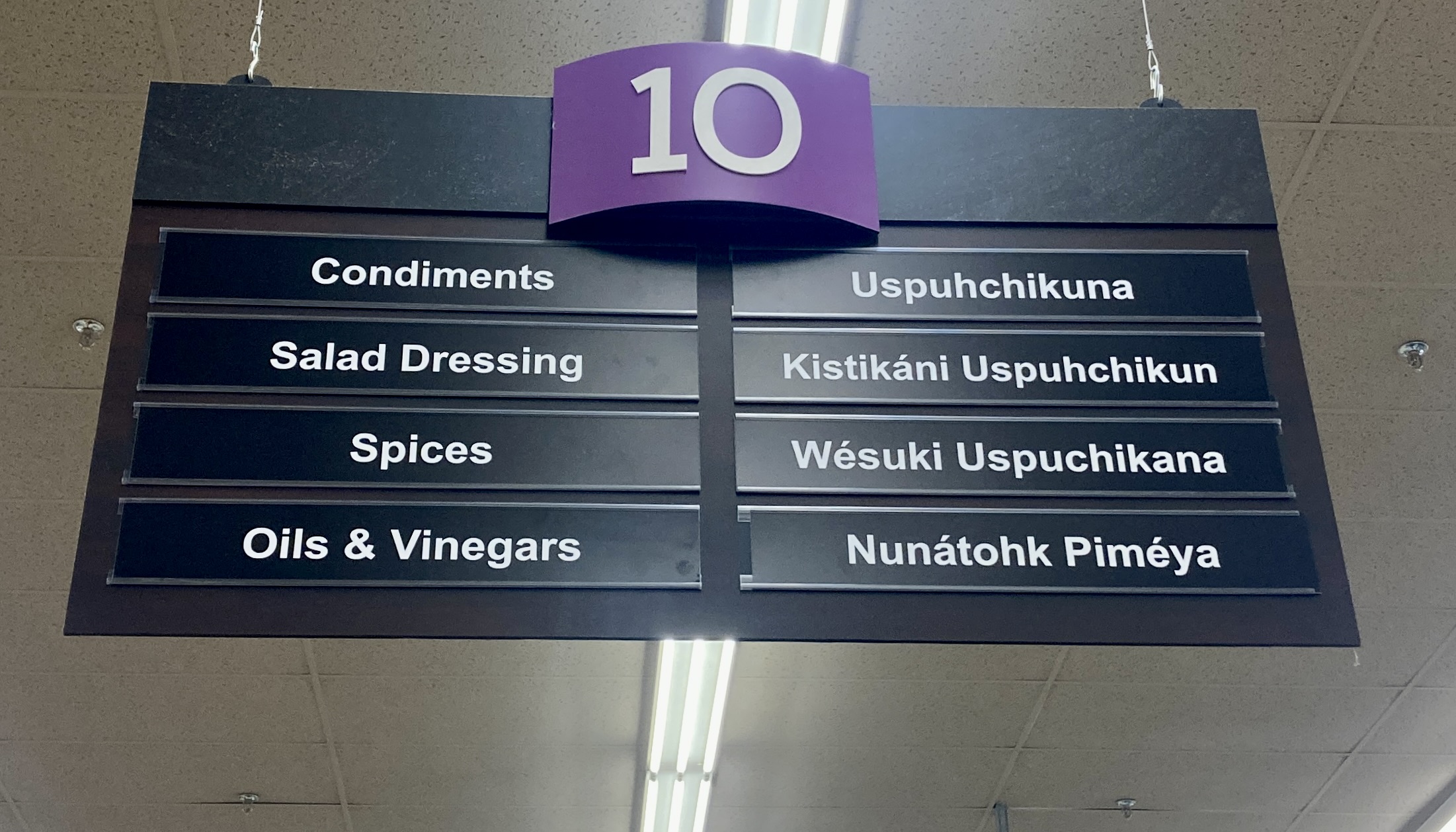
and the bilingual aisle signs in a Thompson grocery store.
Soon after Thompson, ’round about Mystery Lake, I come through the dining car and see Origami Man teaching the basics to two VIA staff with a rare moment free of obligations.

It’s another day before I learn he and his wife (she knits, while he folds) are from Detroit, and have their own deep Canadian memories, including ferry travel some 17 years ago down the north shore of the St. Lawrence River east of Quebec City.

We roll into The Pas at 10:30 pm. This time, I’m awake. I raise my blind a smidge…

take in the sliver of train station, and decide our steward is right. The location means there’s nowhere interesting to walk, especially this time of night. I pull down my blind once again.

6 September – I meet Calgary Alex going into the dining car, also with breakfast on his mind. He tells me he saw a deer, when he looked out his window shortly after dawn. I saw no deer — but now, in the dining car, we both see cranes.

Origami Man strikes again!

Talking with him later, I learn that, maybe predictably, his career was in the spatially precise world of engineering, and that this skill has become his passe-partout worldwide. “I start folding paper wherever I am. People gather. I spent a whole afternoon with kids in Mongolia.”

I’m startled when, at about 7:30 am, our cabin attendant announces we’ll soon roll into Kenora for a 10-minute stop. I smack the side of my head. Kenora? We’re in Ontario? She smiles, sorts me out: “Cee-ay-nora. Canora. Not Kay-ee.”

At the station, the display caboose and its signage complete the story.

No, a comment from fellow passenger Sue completes the story.

She is from the other one, from Kenora, and she explains that its name is also an acronym. In their case, for local communities & history: KE – Keewatin; NO – Norman; RA – Rat Portage. I tell her I want to visit Rat Portage; she says it’s now Kenora. Kenora was called Rat Portage until Maple Leaf Milling Company said they wouldn’t build a mill there if it meant putting the word “rat” on their flour.

Back to Canora-with-a-C. The town has an historic main street…

and a this-minute communications tower.

Approaching Dauphin, early afternoon, I don’t have to gawp at the 1912 train station — I’ve done that already. I’m free to notice brightly-graffiti’d box cars…

and the RR-themed parkette, with its plaque-bearing benches.

The arrival of the first train in 1896, says the plaque, “sparked the binding of over 550 communities across Canada, and forever changed the landscape of immigration, settlement, agriculture and commerce.”

{While all this 2025 train travel is going on, Origami Man is teaching Parks Canada AI Man some serious skills. The young man bends his head to the task. There is much laughter and an accumulation of geometric, and beyond-geometry, shapes.}

And then, pouf!, we’re in Winnipeg.

By 5:30 pm, I’m physically out on the street….

but mentally/emotionally…

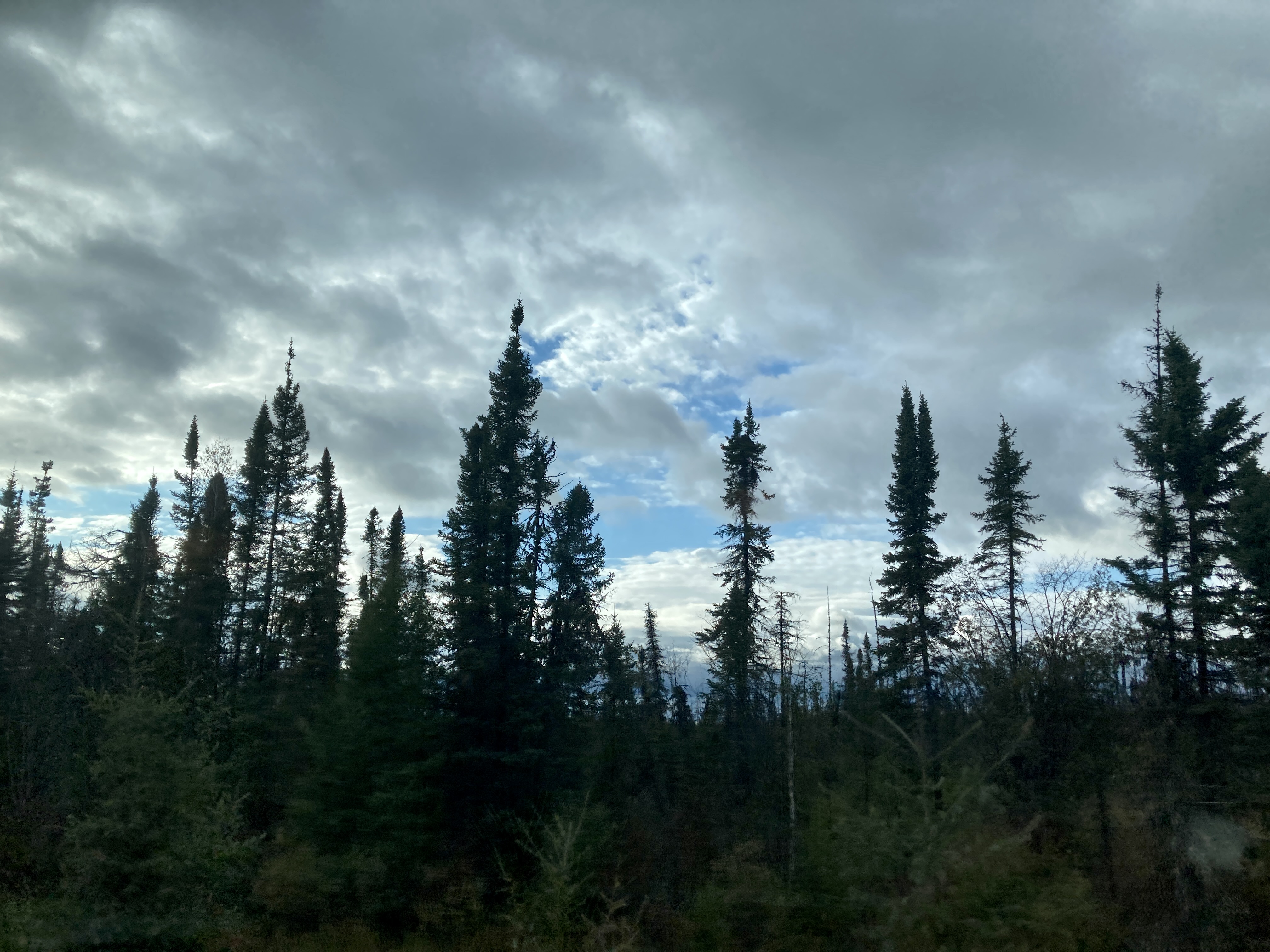
I’m still back there with the birch and the black spruce.

Land Cruise: 2-3 September

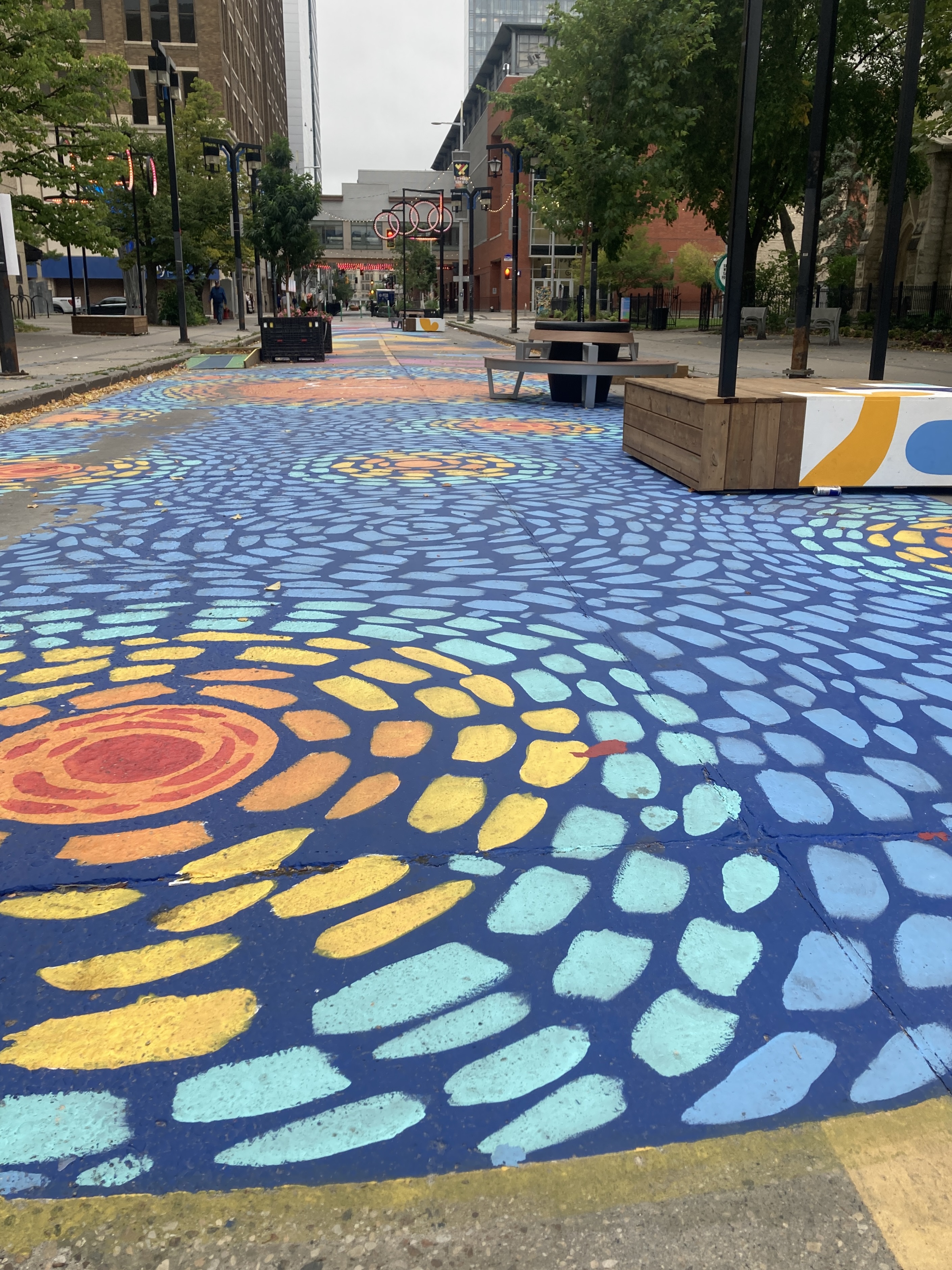
2 September – The train doesn’t depart until 12:05 pm, so I have time for a morning walk on Winnipeg’s “Cool Streets”…

before obediently turning up at Union Station by 11 am.

I just see people. I don’t yet know, for example, that the Calgary couple in the cluster on the left are delighted to see some distant relatives will also be on our train, albeit only part way. Or that the young people over there on the right belong to two separate post-grad teams, one from France and one Québécois (Université Laval), travelling north to research climate change on ice structure and on permafrost, respectively. (Even later, I learn the French project was originally planned for Siberia, but world politics got in the way, and they had to find themselves a new home.)

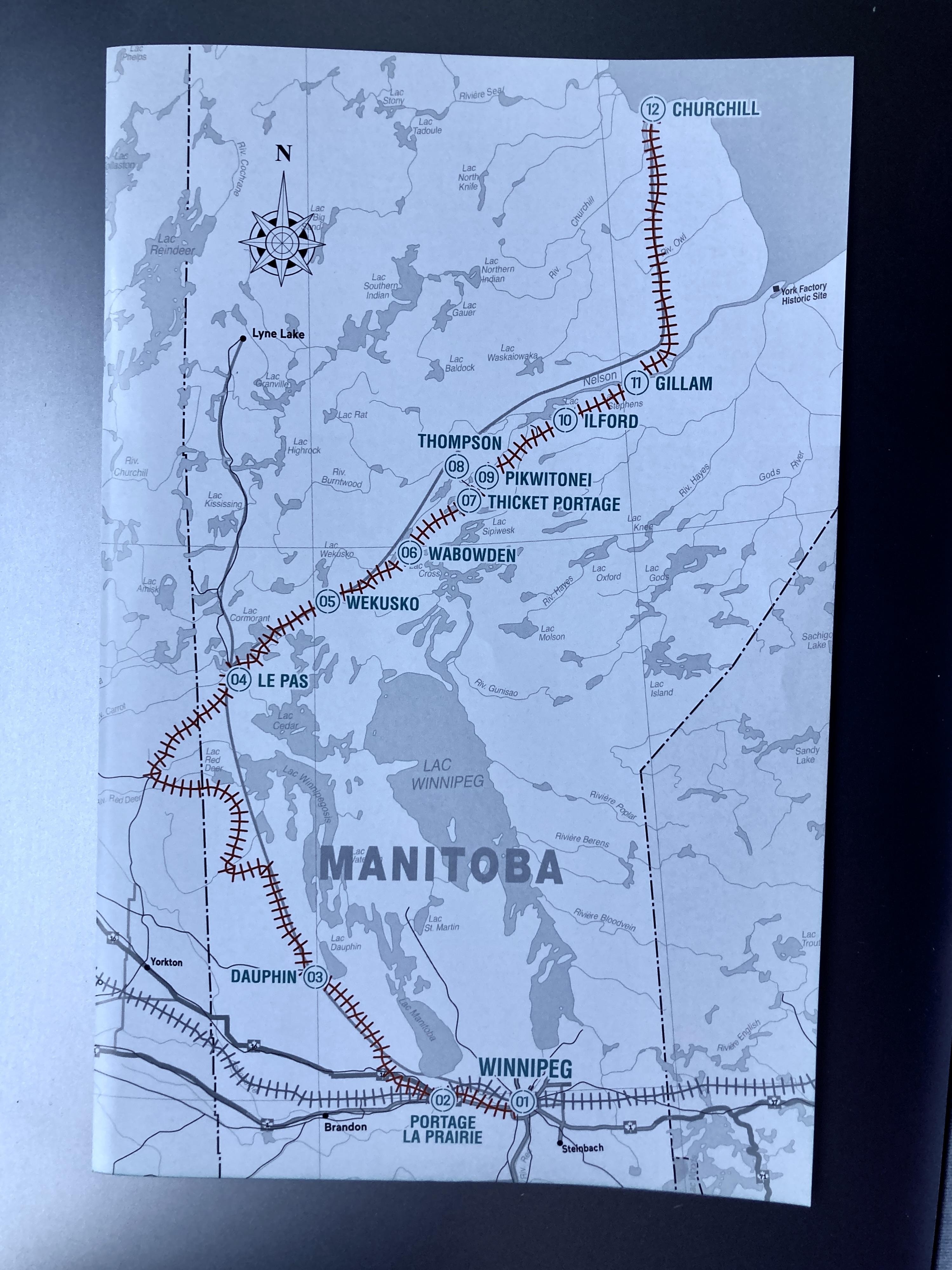
Into my cabin, and a quick study of our trip map.

I am excited. Once, so many decades ago, I returned to Winnipeg from Churchill by train, but I’ve lost almost all memory of the trip. Here I am, about to do it again. Both ways! We’ve been told there’ll be quite frequent stops, in many very small communities as well as the larger ones. This train run is still an important communications link — and, indeed, beyond Thompson, the only land route to Churchill.

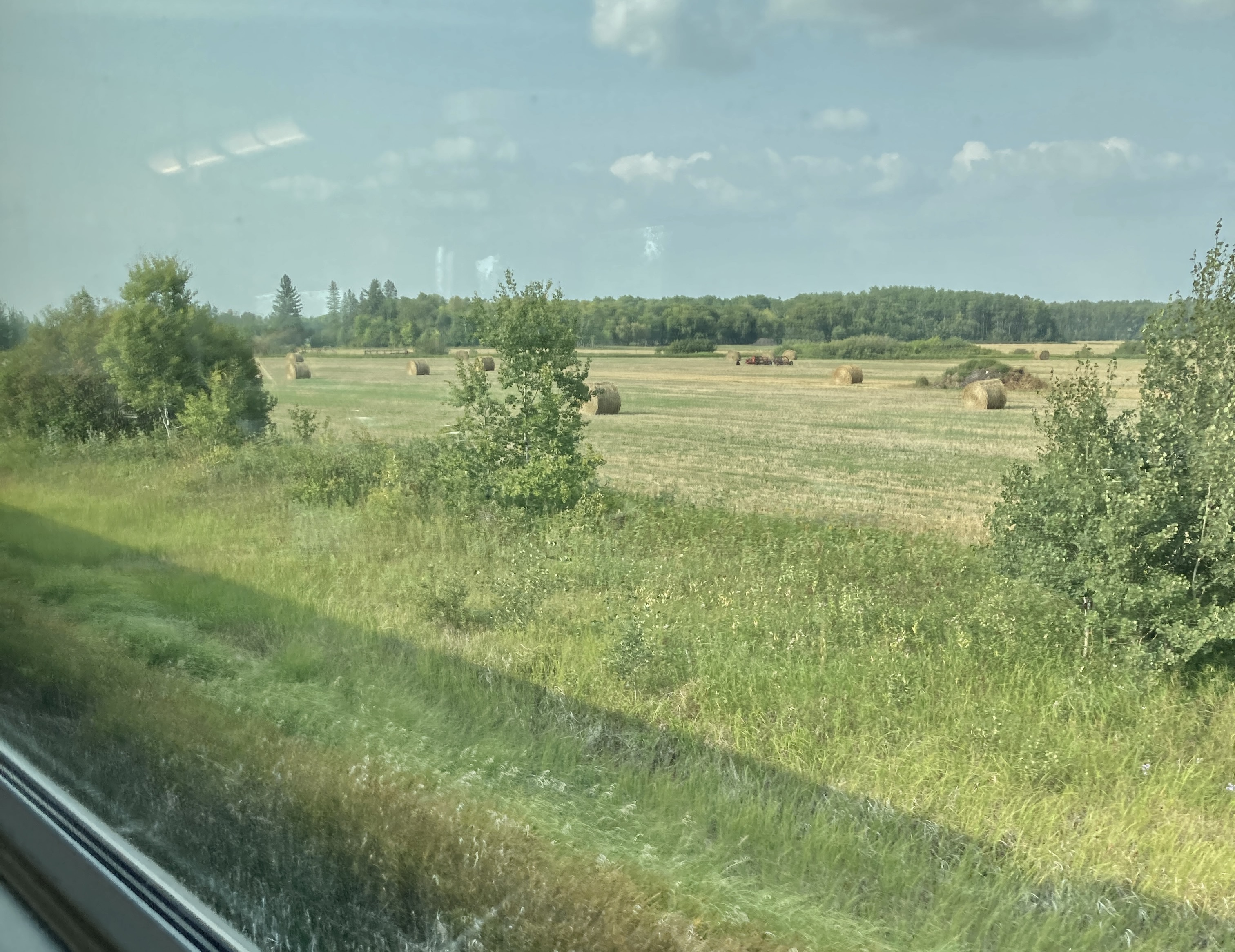
Farms, harvested fields…

as we roll past Portage la Prairie, the land still looks a lot like Saskatchewan. Still very southern.

How could I have forgotten the imposing train station in Dauphin?

A CN station, built in 1912, when train travel was a very big deal indeed.

The next stop will be The Pas, but I’m long asleep by then. I don’t even notice our brief swing across the Saskatchewan border and back again.

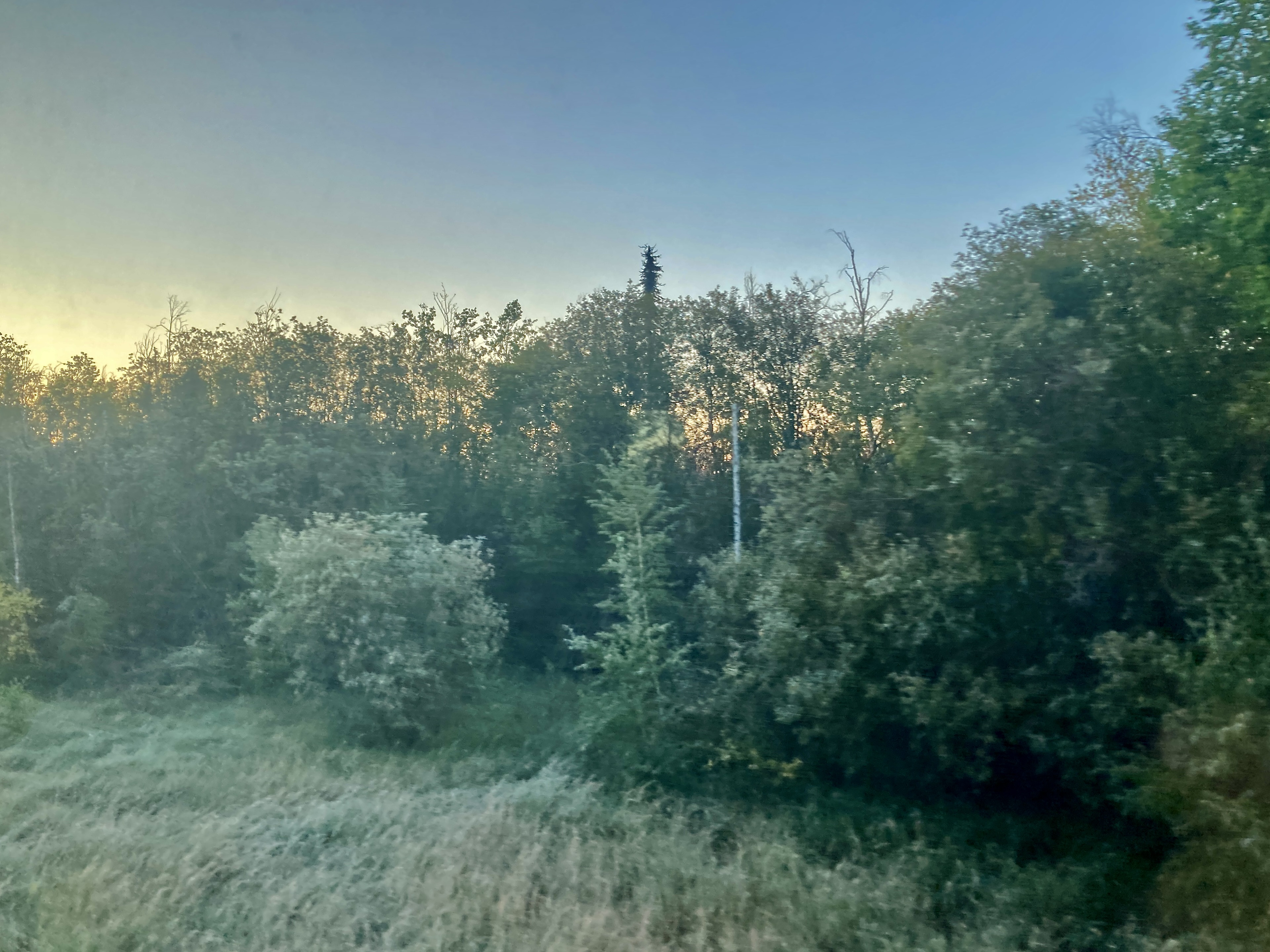
3 September – Sunrise somewhere near Wekusko, and it’s a different world.

Becoming boreal, it really is. I think some of those lacy silhouettes are tamarack, also some white spruce? I’m not an expert, don’t quote me, but at least I can tell we’re moving into a different world.

Colder, too. Hoar frost rims every leaf, needle and blade…

and here I can name a few things with reasonable certainty. That tall skinny guy in the back row is black spruce, there’s at least one white birch (later I see whole groves of them) and the deciduous trees there on the right look like trembling aspen — all these species part of the boreal mixture.

As the sun rises, mist also rises…

from ponds, lakes and this pretty creek.

Usually this run has a dome car, but what should have been our dome car is in the repair shop, so the dining car is our everything car. It becomes our hangout, for much more than food.

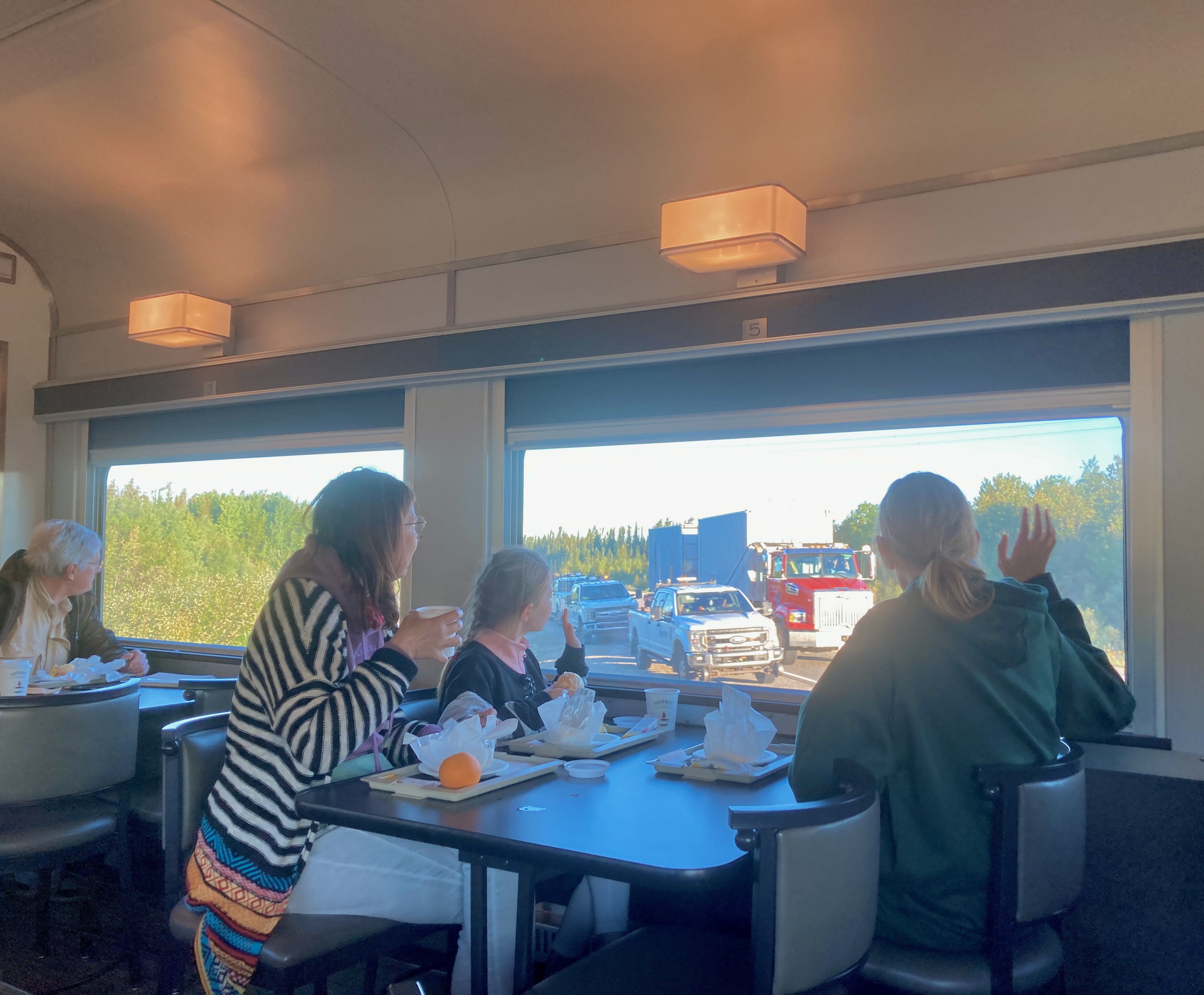
Families wave to cars at the road crossings…

the students bend over the data on their laptops, prepping for their projects…

and I have my own little spread of resources, quite frivolous by comparison.

Notepad, map, coffee, grapes (I swapped one of my Gemini apples for some of the attendant’s grapes), and — and how appropriate is this? — Agatha Christie’s 1930s The Mystery of the Blue Train. (My copy is in French — snapped up from the Take/Donate bin on my previous train.)

We make brief stops in small communities. Fresh air and a look at daily life for us; vital on- and off-loading for them. Wabowden, for example…

and Thicket Portage, where the Quebec students are chatting next to that ubiquitous vehicle of the north, the fat-wheeled buggy.

Back on board, and in passing I meet Conductor Ted Thompson.

(So there, Paddington Bear! We have Ted.)

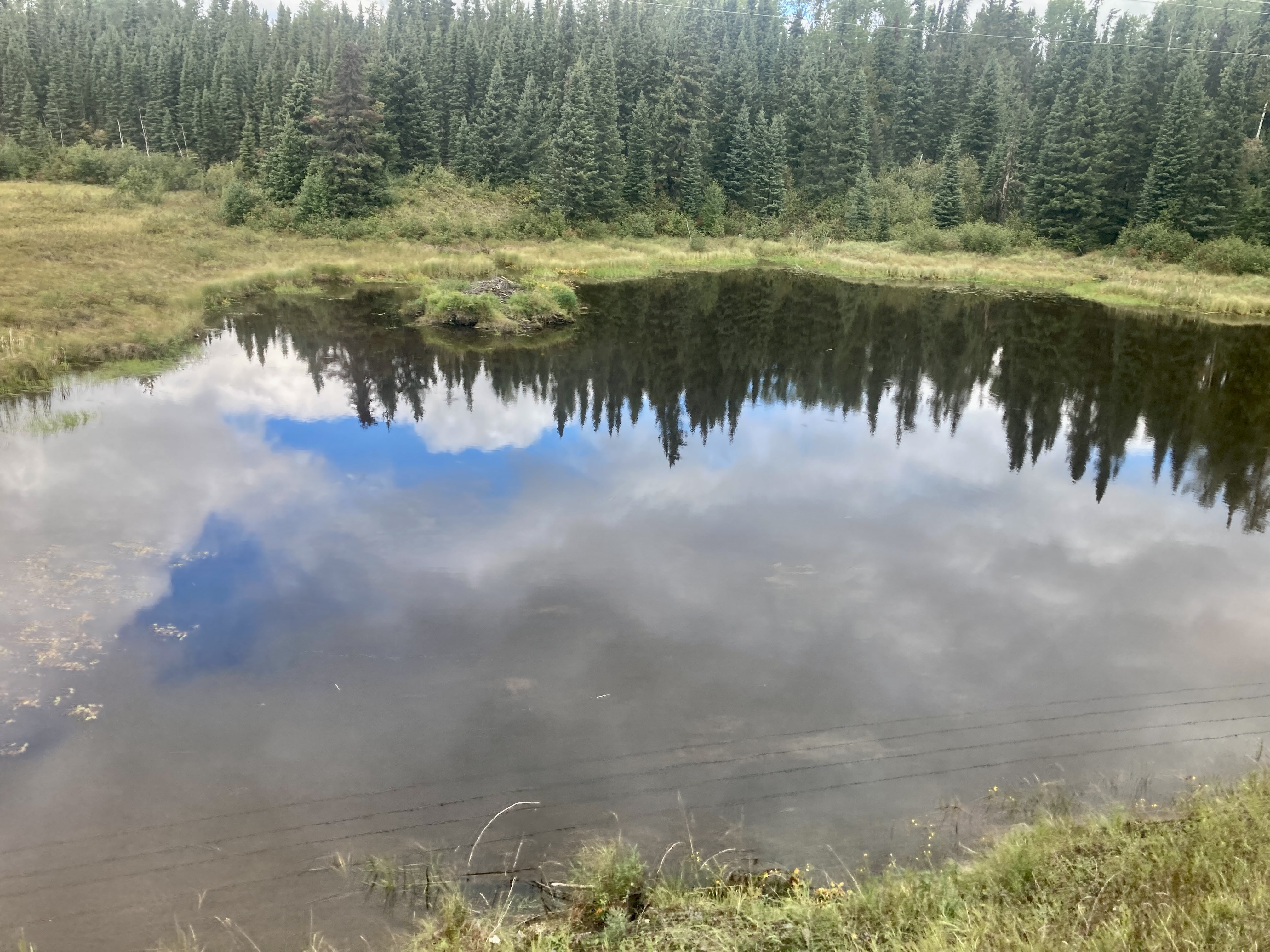
I see my first beaver lodge of the trip…

that knob at 11 o’clock in the pond, but I almost miss it, so many leaves cover the distinctive twiggy dome.

I watch the train curve with the tracks. Completely different from those craggy twists in the Alberta mountains! Here, a setting of scrub, aspen, birch and coniferous I don’t dare to try to identify.

There’s a rock cut that makes me think of driving though Ontario’s Muskoka region…

and piles of materials…

presumably for some project along this river.

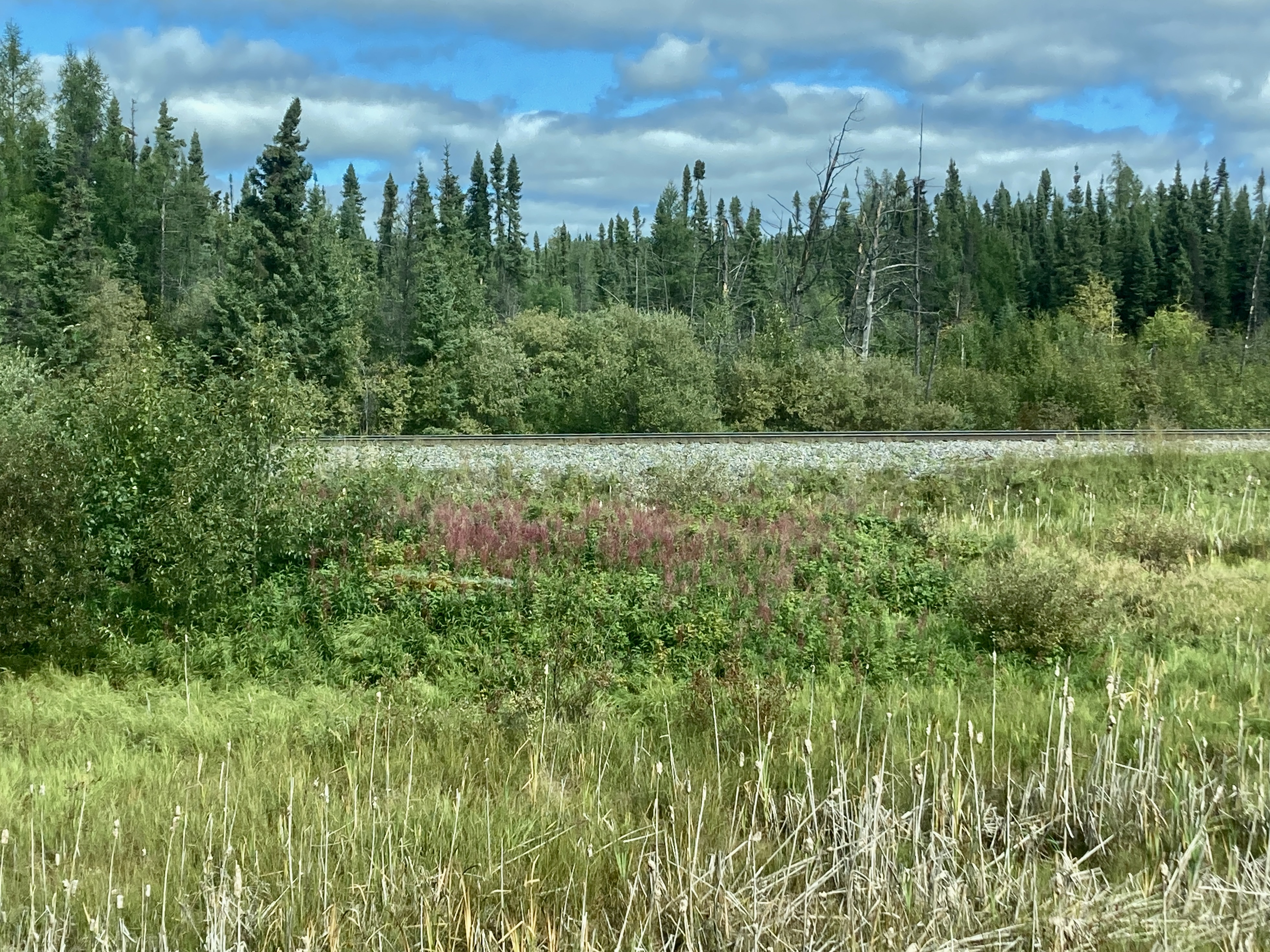
A set-piece scene:

wildflowers, train tracks, aspen, birch and conifers.

Just before 3 pm, we do the back-and-forthing required to shift us from the main track to the spur line into Thompson. Thompson: created by INCO, a planned city and a mining town. While now more diversified, you still see that mining architecture from anywhere in town.

The part we got to walk is very big-box. Anybody who knows the outskirts of Barrie ON will know what I mean. Still, everyone I spoke with was friendly and helpful, and I did get to see my first — of what surely will be many — polar bear mural.

(Though I must add, I prefer the battered float plane mural on the left.)

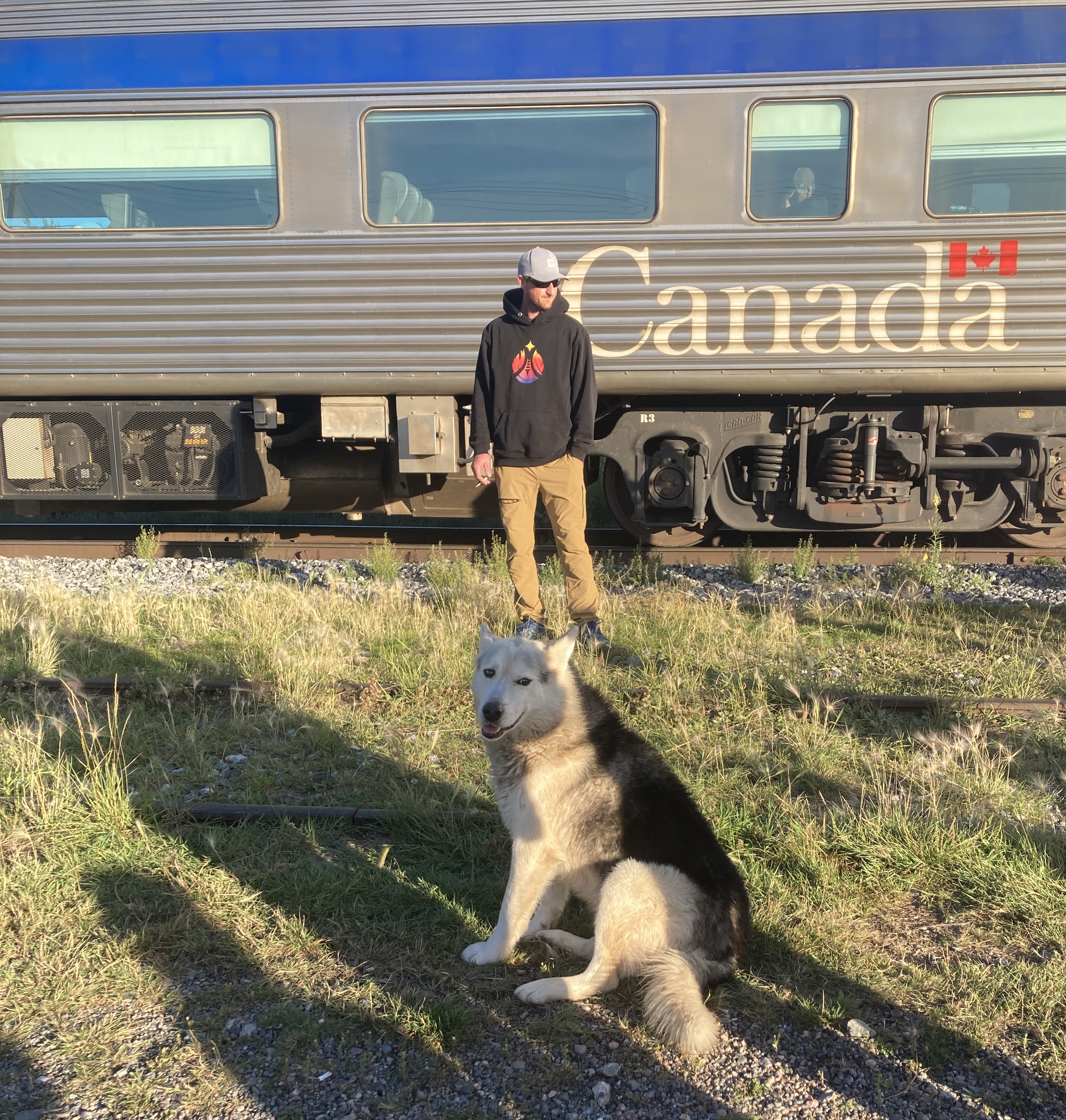
Out of Thompson, back on the main line, and on to Pikwitonei. Population less than 100, says our travel guide, but don’t curl your lip. It also has its very own Greeter Dog.

Greeter Dog meets every train, and while I scratch under his ears and he leans happily on my leg, a Cree gentleman teaches me how to pronounce the town name. It is “Pick-whi-tonNAY.” with the emphasis very firmly on the last syllable. (Like NewfoundLAND. Understand?)

Round about 8:20 or so, somewhere north of Pikwitonei but still south of Ilford, I watch the moon rise…

and then I fall asleep.

Tomorrow: Churchill. Tomorrow: Hudson Bay.

My boots expect me to keep my promise.

  • WALKING… & SEEING

    "Traveller, there is no path. Paths are made by walking" -- Antonio Machado (1875-1939)

    "The voyage of discovery is not in seeking new landscapes, but in having new eyes" -- Marcel Proust (1871-1922)

    "A city is a language, a repository of possibilities, and walking is the act of speaking that language, of selecting from those possibilities" -- Rebecca Solnit, "Wanderlust: A History of Walking"

  • Recent Posts

  • Walk, Talk, Rock… B.C.-style

  • Post Categories

  • Archives

  • Blog Stats

    • 128,834 hits
  • Since 14 August 2014

    Flag Counter
  • Enter your email address to follow this blog and receive notifications of new posts by email.

    Join 2,047 other subscribers