1 July 2026 – It starts with moss. No. It starts with my desire — fresh from travels that have grounded me (literally) in realities of maritime and eastern Canada — now to ground myself once again in my temperate rainforest home.
I decide to visit the Camosun Bog, once again to spend time “listening to the moss.” Influenced by Gathering Moss (author, Robin Wall Kimmerer), I did this once before, and described it to you in my post of 3 February 2026.
Approaching the Bog, about to walk under that leafy arch and turn that pathway corner…
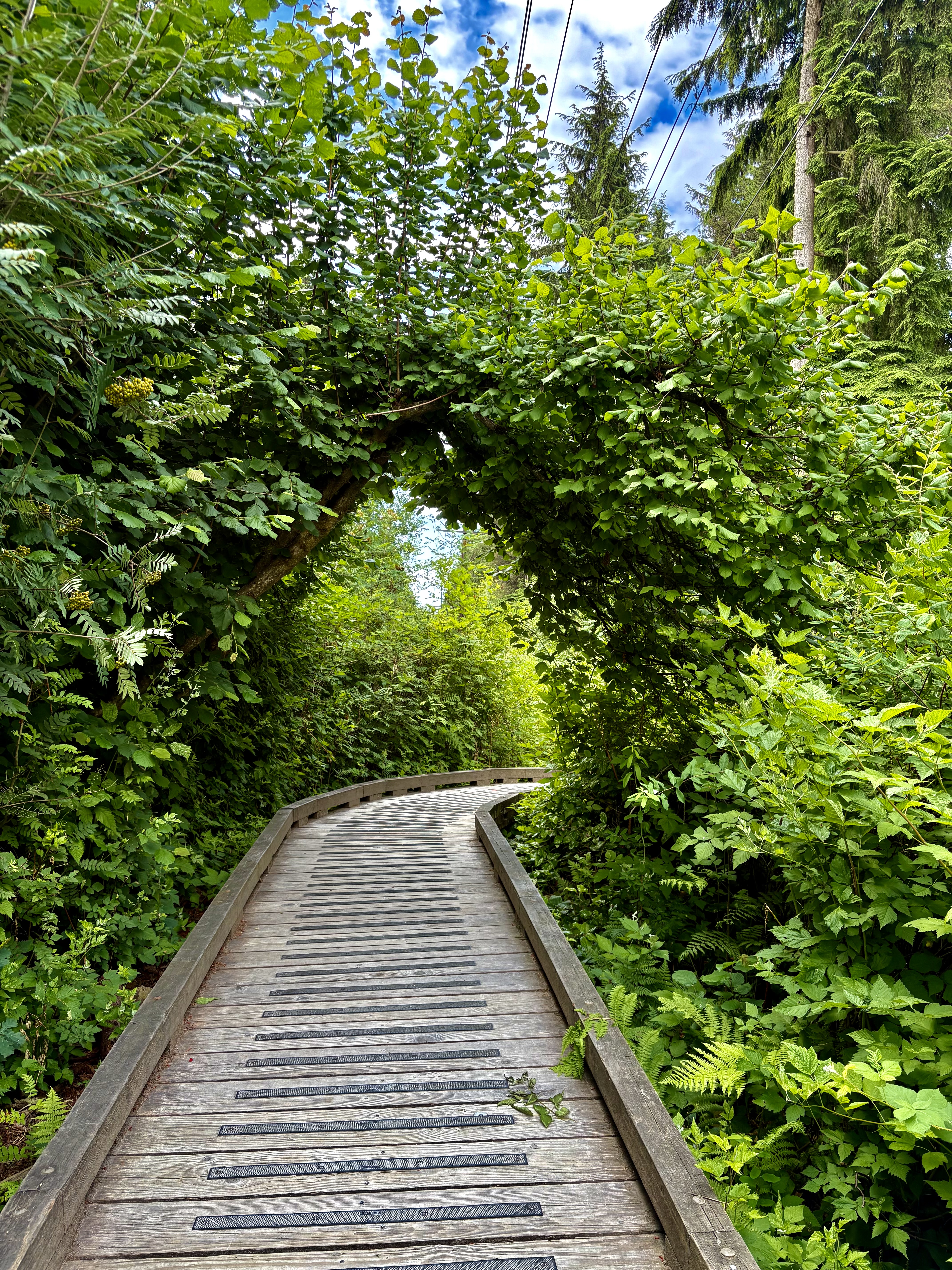
I know that, this time, it will be different. The February visit was at the height of winter rain; this July visit is full summer.
Now, the bog itself is dry…
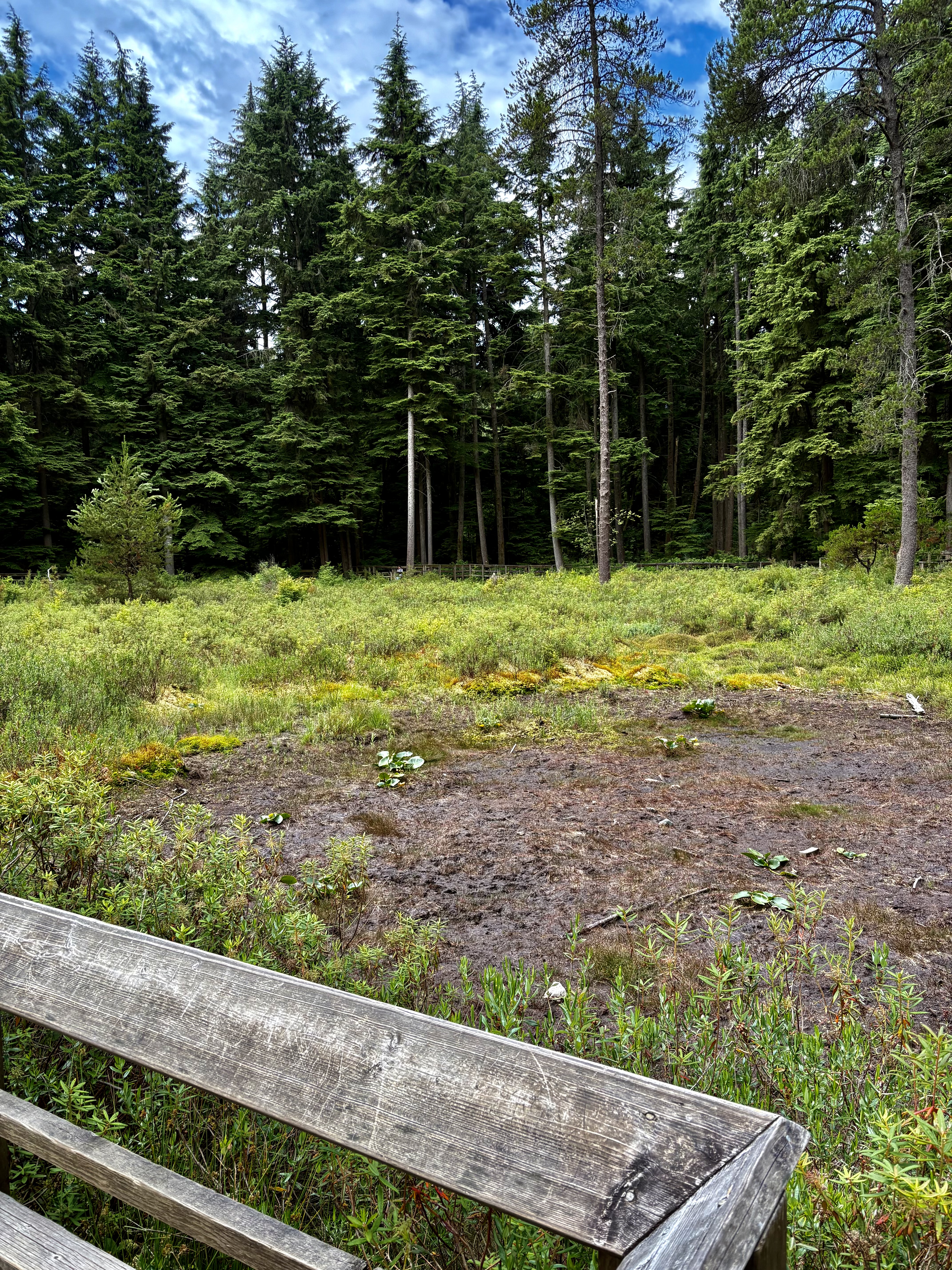
and the mosses at the muddy edge …
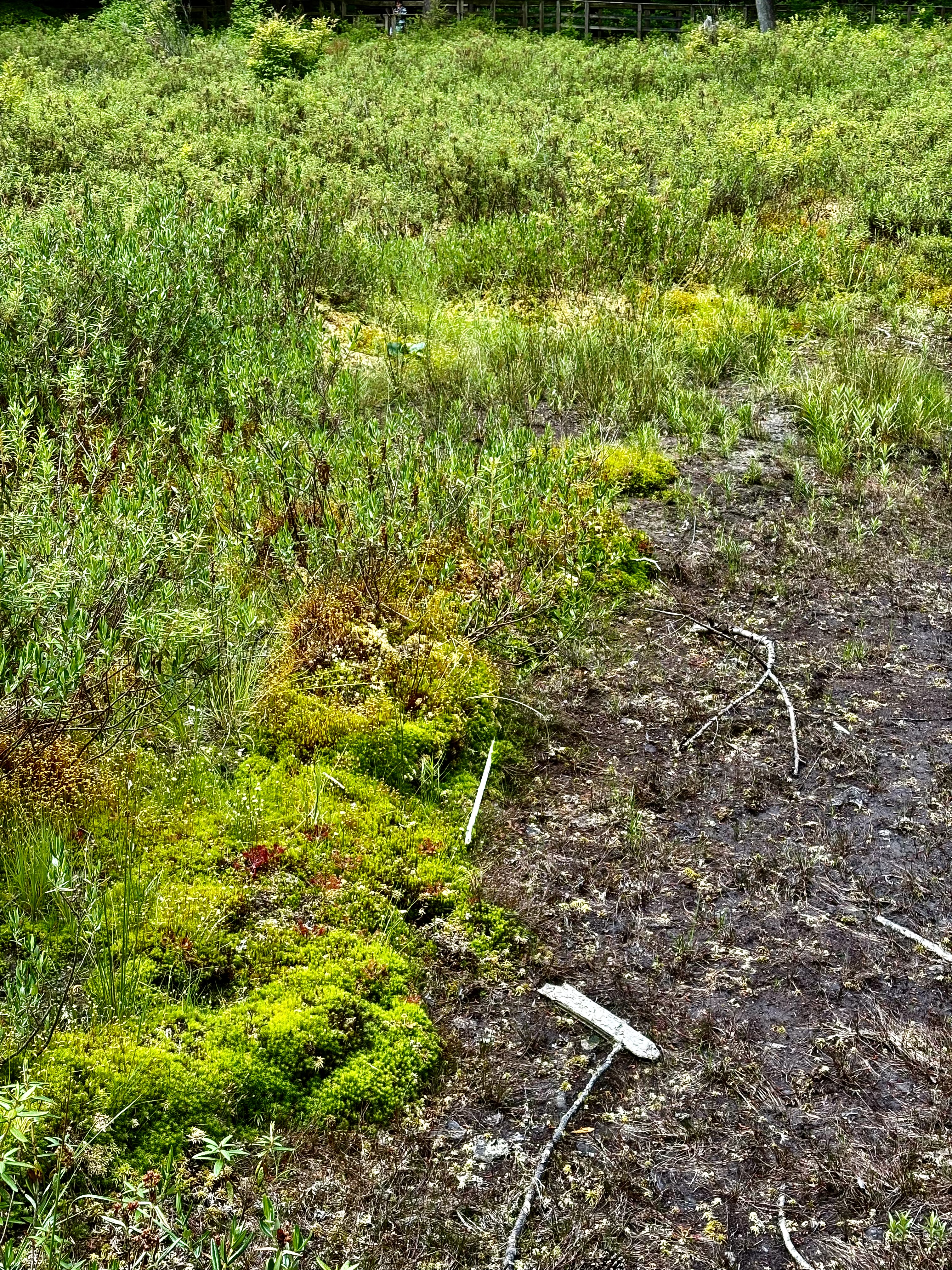
are citrus green, not emerald.
Beyond, where moss beds mingle with bog plants, patches of moss are fast bleaching…
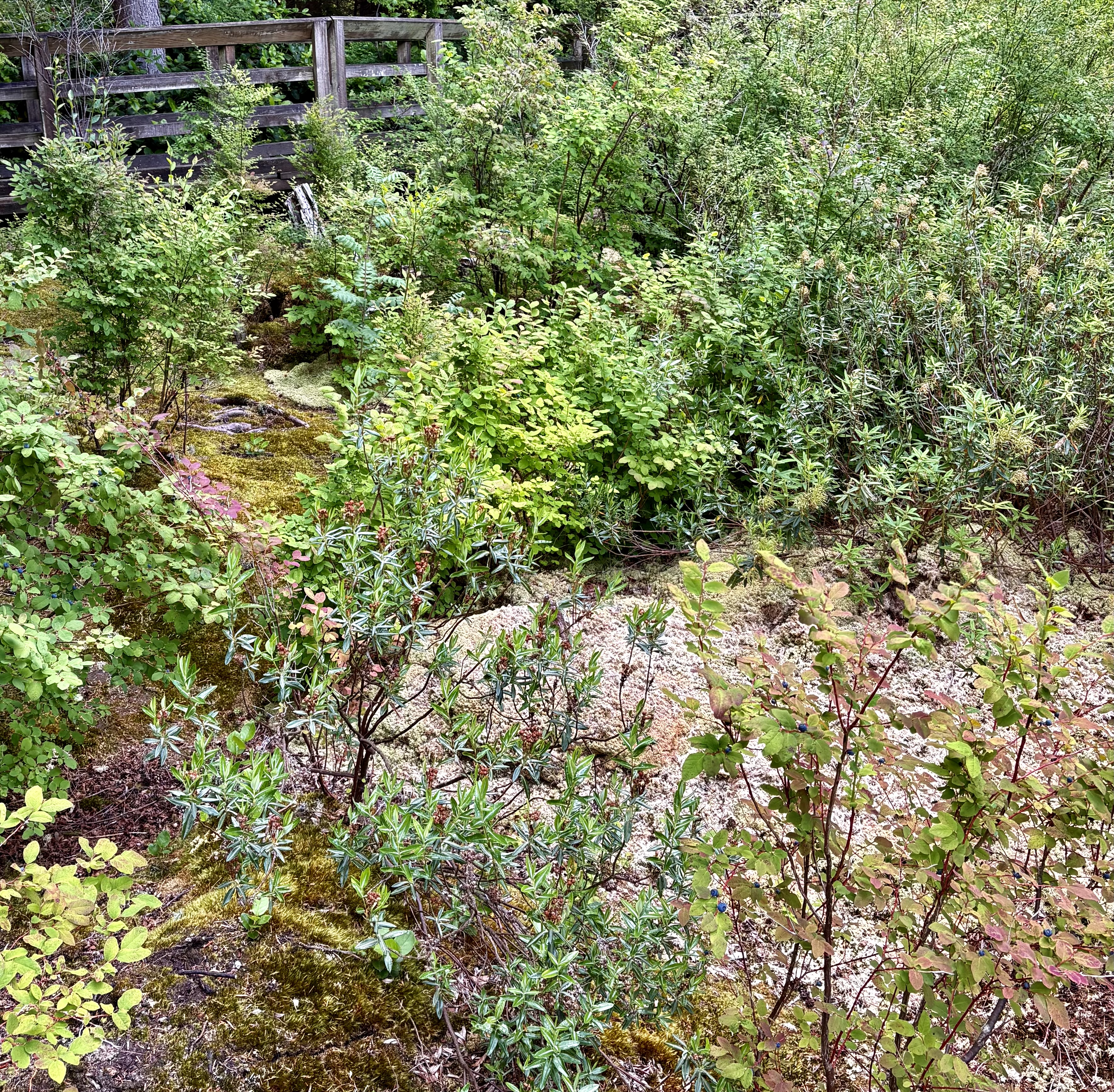
to the ghostly pallor of mid-summer.
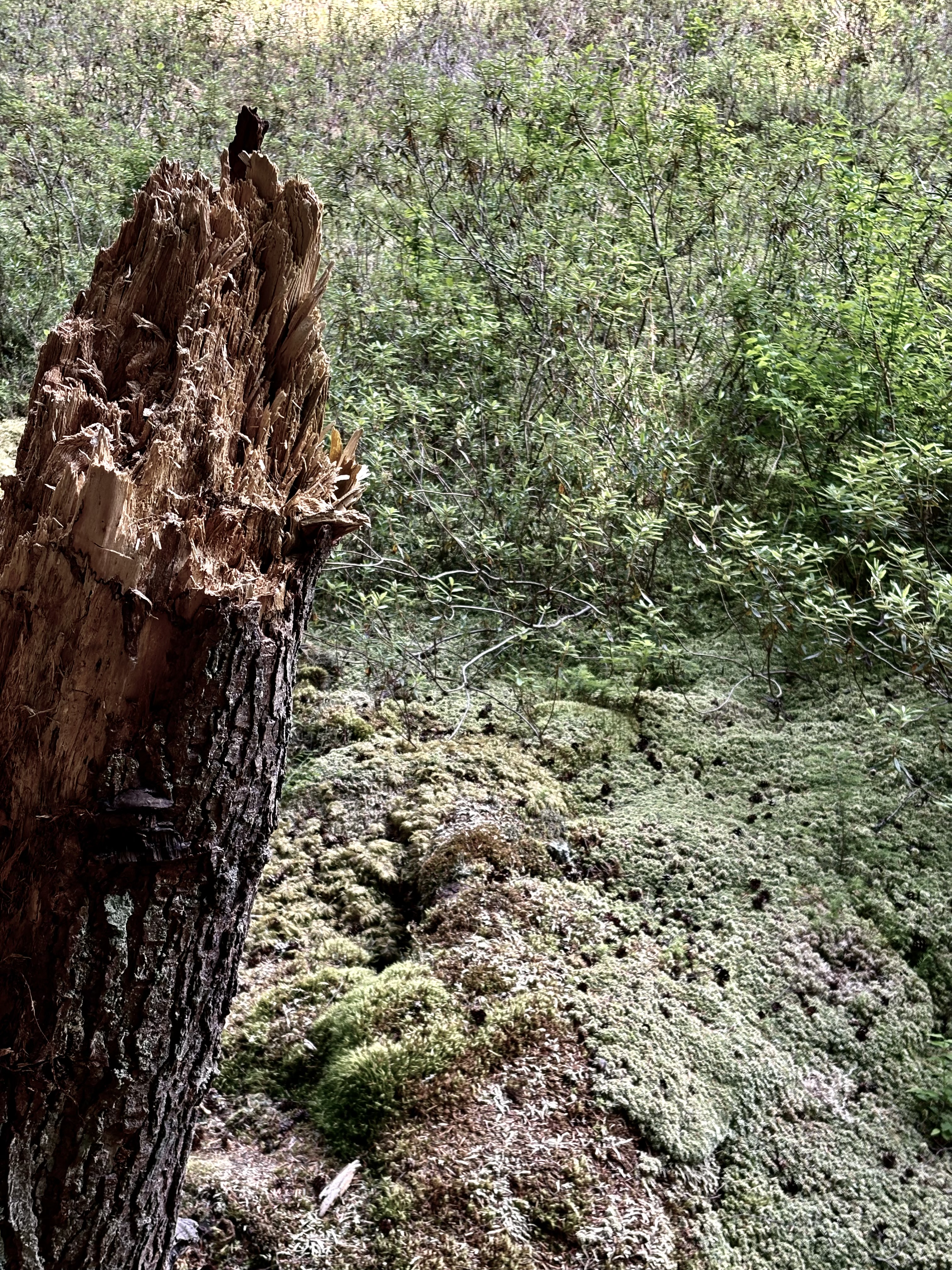
“It is seasonal,” murmurs the moss. “Seasonal cycle, seasonal change.”
All around, all nature demonstrates that truth. As mosses step back, others step forward. Growth tips on the evergreens…
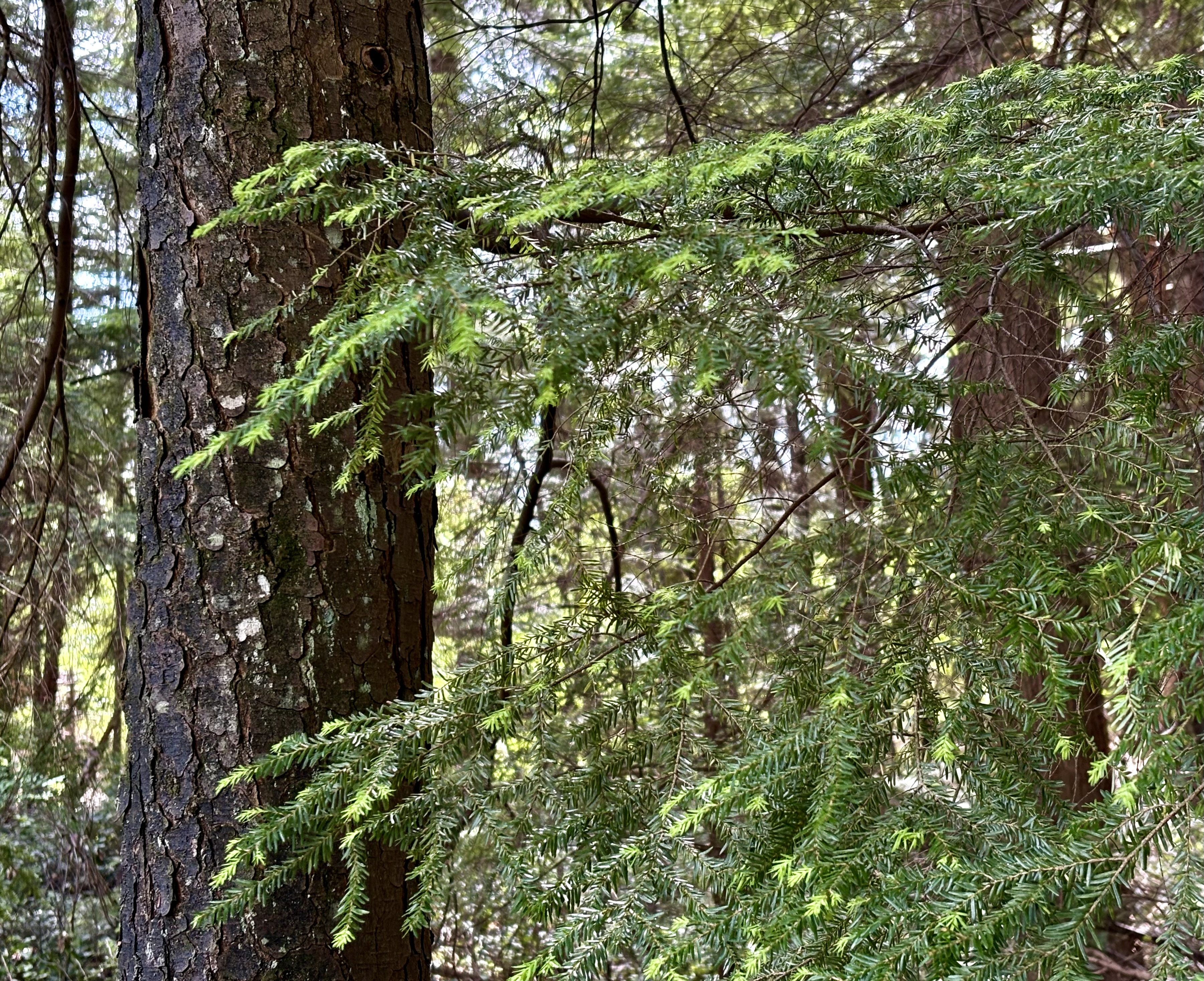
and riots of wildflowers along the paths — yellow…
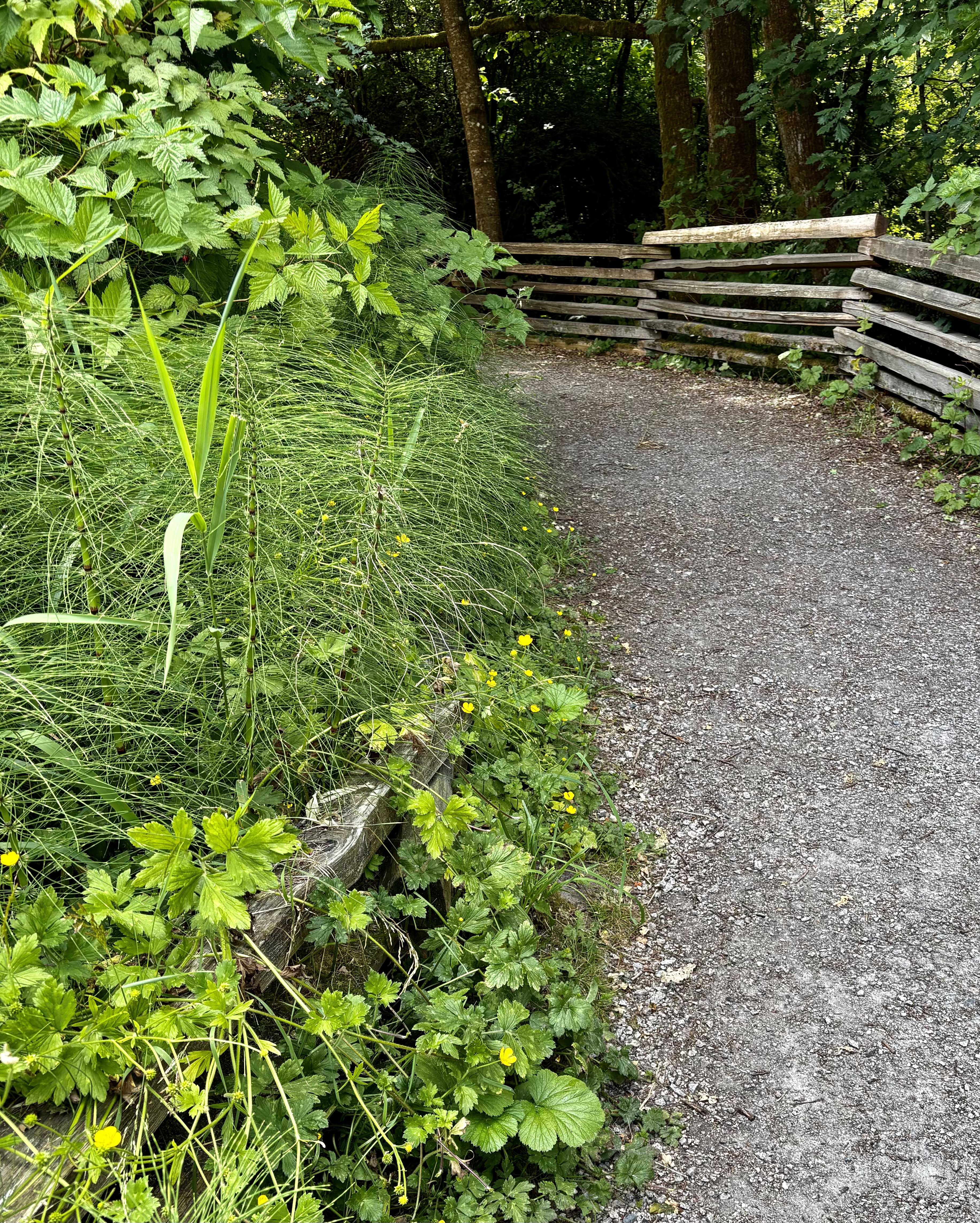
purple…
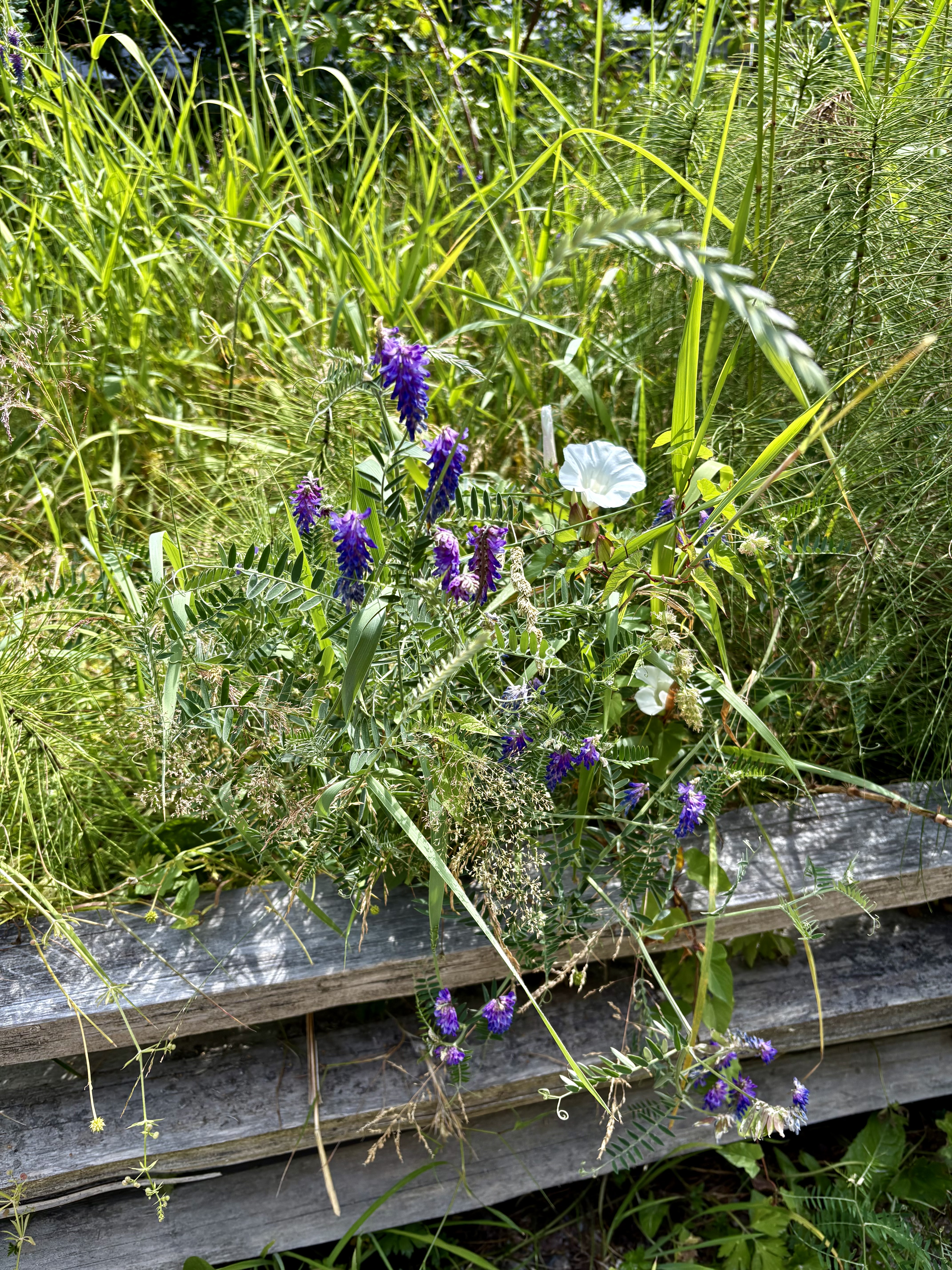
and blue.
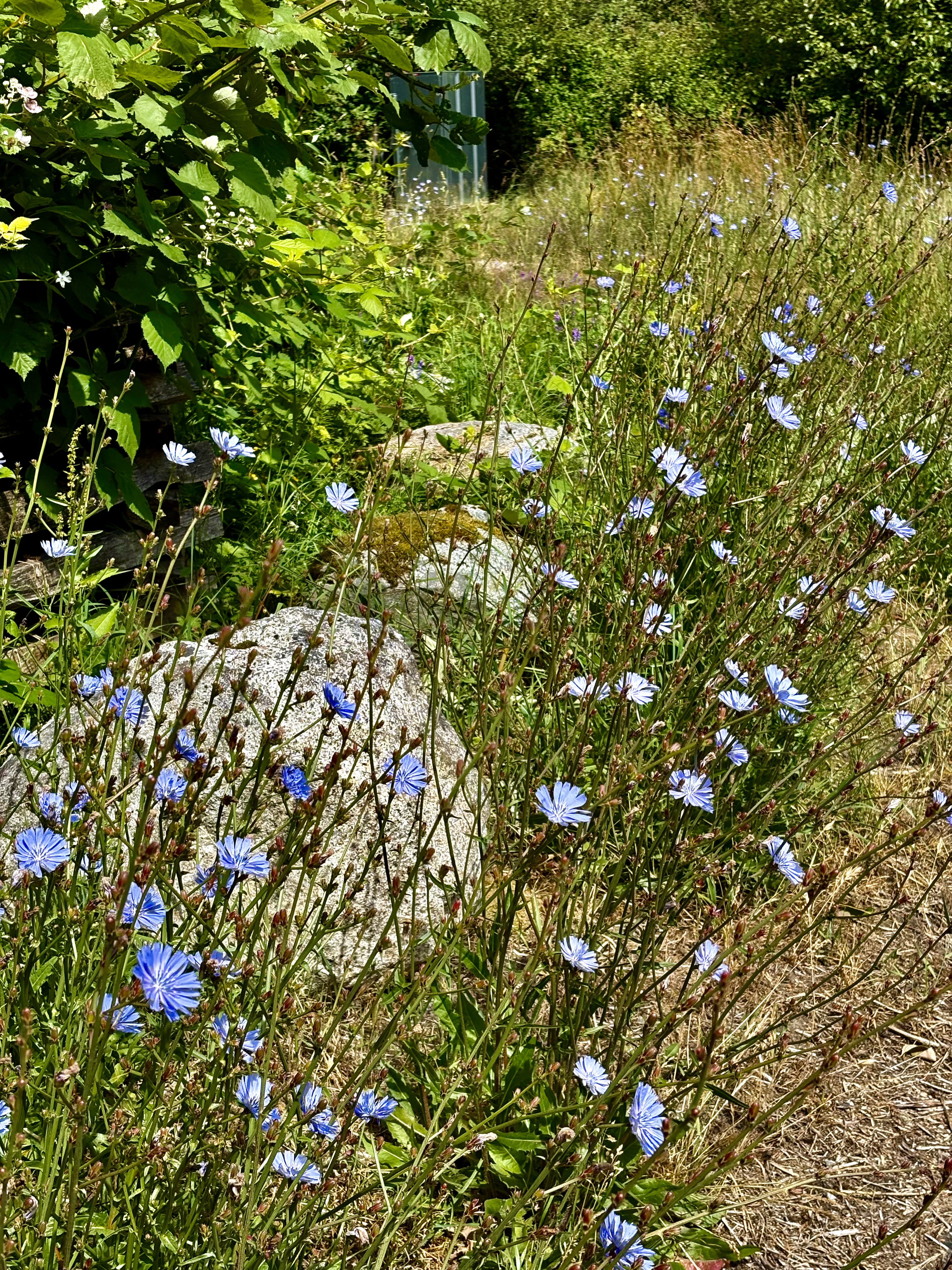
I sit on a bench, and let my mind drift with the pulse of change.
Drift past seasonal change to the open-ended, larger truth enunciated by Zen Buddhist monk Shunryu Suzuki: “Everything changes.”
Then, perhaps inevitably — this being Canada Day and I so recently immersed in so many components of this magnificent, fractious, generous, squabbling, exasperating, beloved country of mine — I let my mind drift into the possibilities of change in Canada.
Not just the risks. The possibilities.
What if?
Though constitutionally this country is a federation, we have confederation at our core — Canadian Confederation was “the process of federal union in which the British North American colonies of New Brunswick, Nova Scotia and the Province of Canada [both Upper and Lower] joined together to form the Dominion of Canada.” (The Canadian Encyclopedia)
Our self-image is a mosaic, not (cf that country to the south) a melting pot. We live this image through our evolving concept of multiculturalism, which currently has the support of 66% of Canadians, a support base that even includes people who’d like to see less new immigration (Canadian Diversity Study 2026, the Environics Institute and Global Migration Institute, Toronto Metropolitan University).
What if we were to look for new ways to embrace these multiplicities? Ways that, instead of shredding us into isolated fragments, could strengthen the whole as a supple, breathing organism?
Celebrations around me, as I head for home, both public and back-yard private.
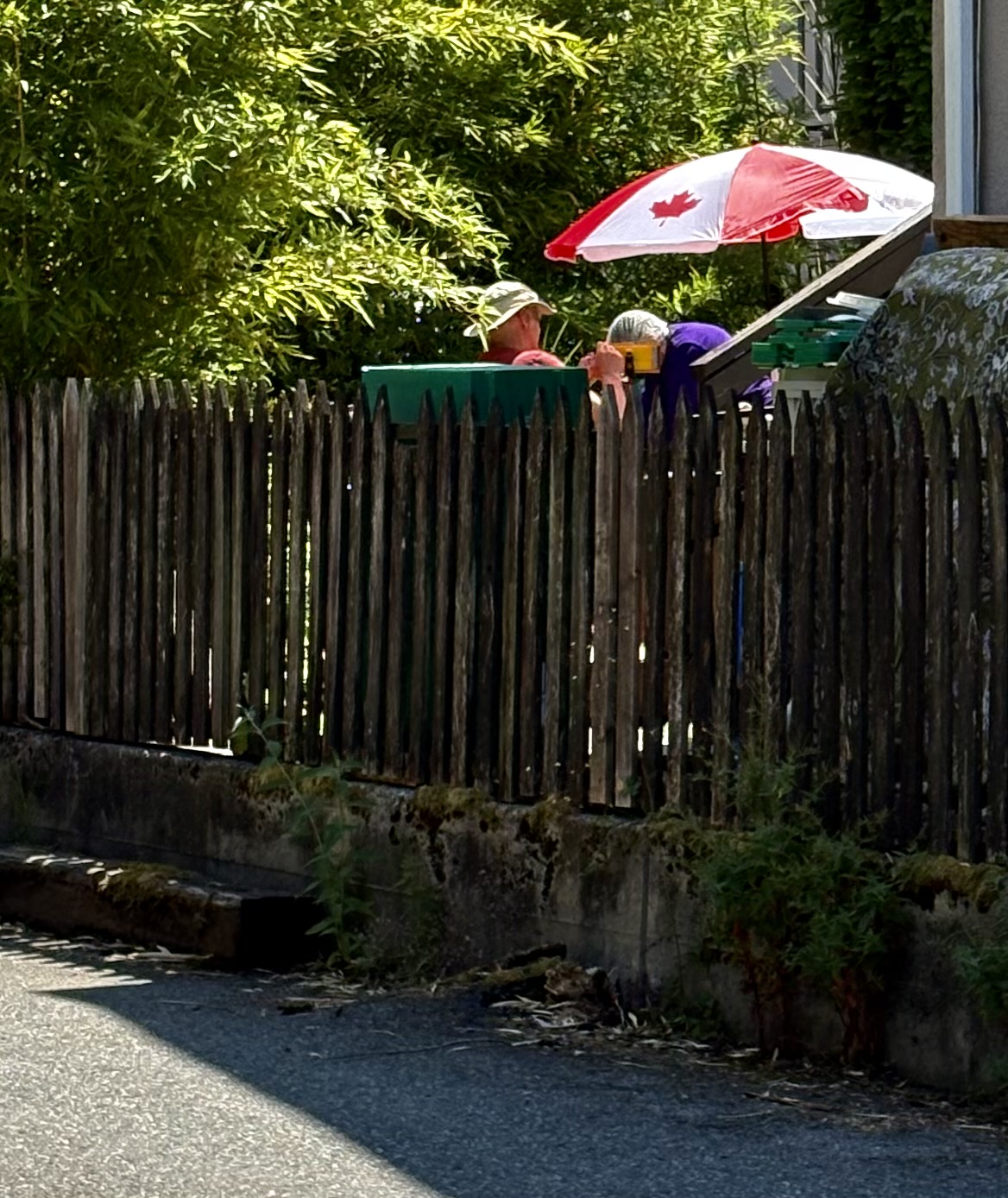
What if?

 WALKING WOMAN