31 January 2026 – And then…
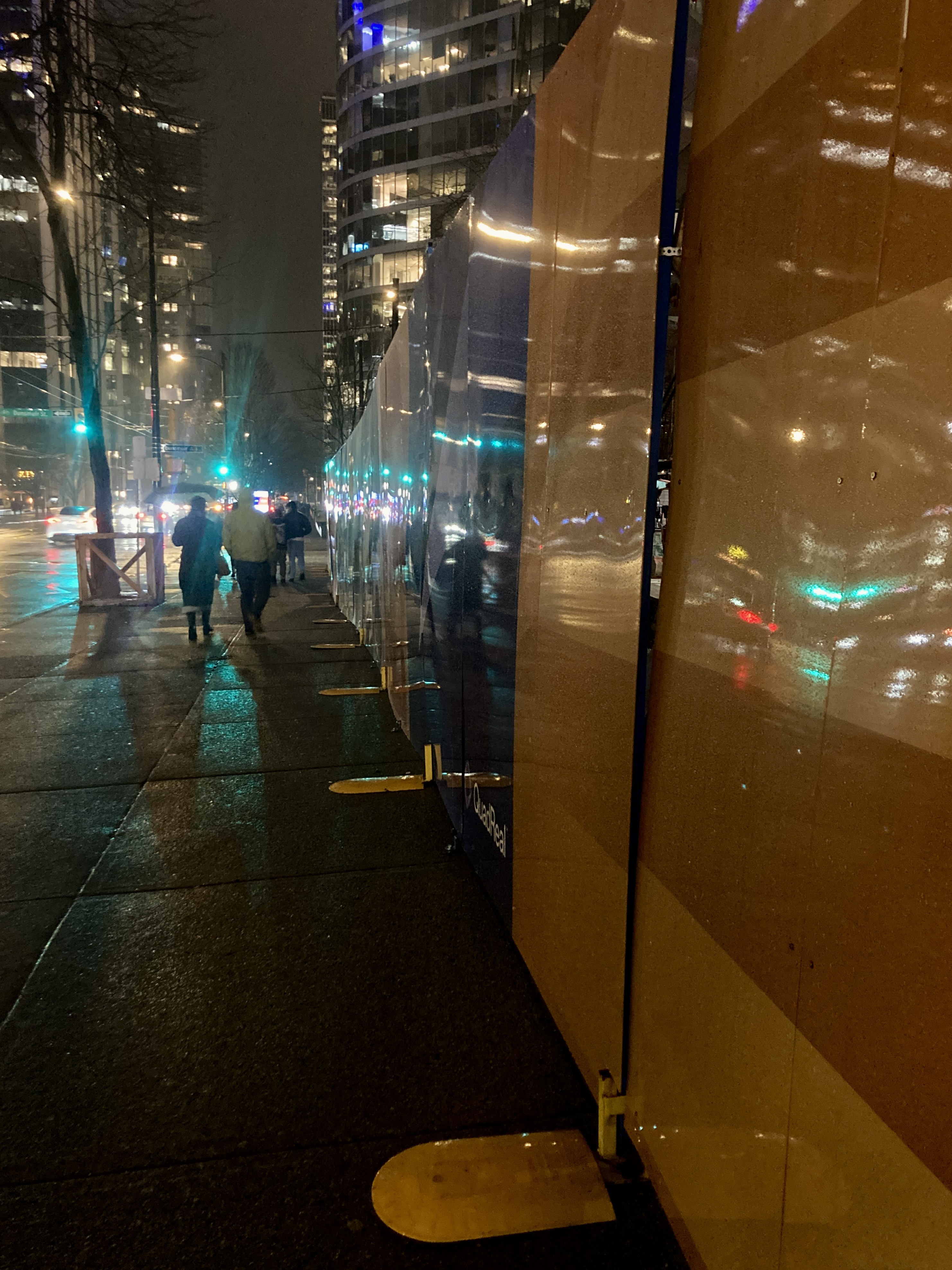
the rain came back.
31 January 2026 – And then…
the rain came back.
Posted by icelandpenny on 31 January 2026
https://icelandpenny.com/2026/01/31/and-then/
28 January 2026 – Or, maybe: “Colour.” Or, for the old-school among us: Colour [sic].
Meaning, I have found myself playing with the concept of colour these last few days. It is all thanks to a comment by J. Walters on my previous post — her pleasure in the “gorgeous colours” in Vancouver, viewed from her farther-east landscape of “variegated white.”
(By the way, if you don’t already know her Canadian Art Junkie blog, give it a visit.)
So I walk around, and I amuse myself by seeing colour differently. Seeing it in relation to other attributes.
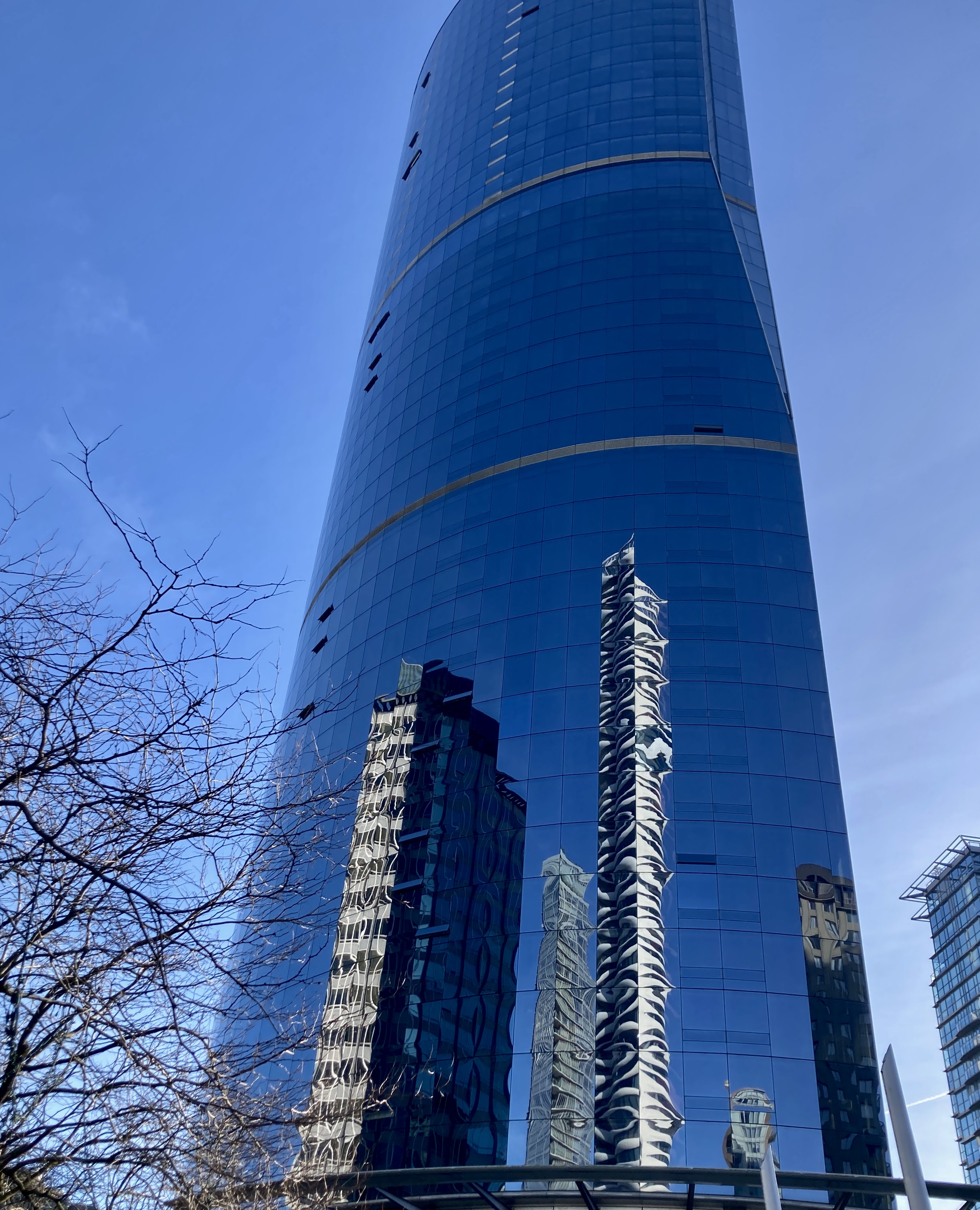
Colour: Brilliant
What’s more brilliant than reflected colour, bouncing off the plate glass of a downtown tower, under a blazing sky?
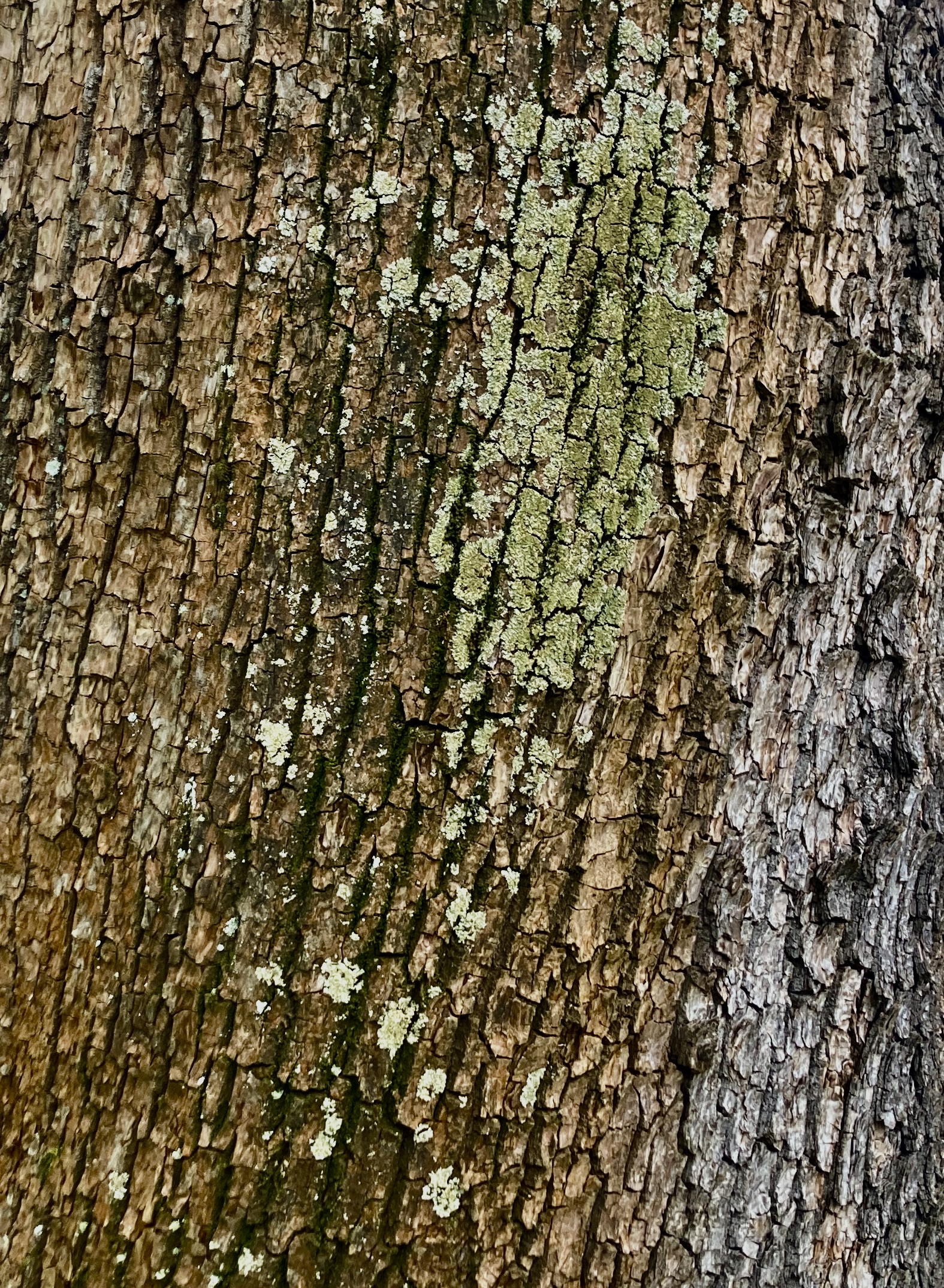
Colour: Muted
A murmur of colours, quietly living and breathing within the textures of their host, a tree trunk.
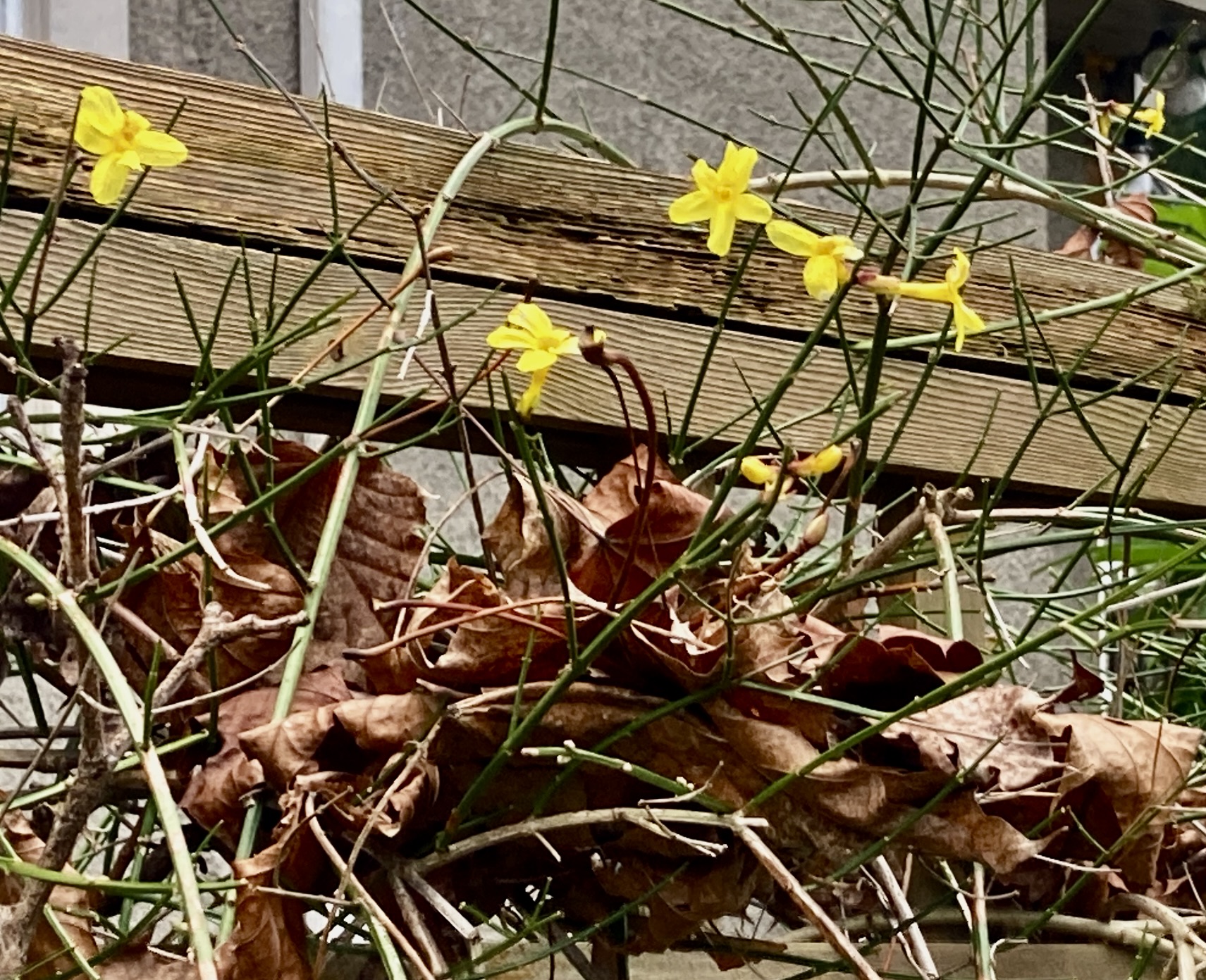
Colour: Juxtaposed
I’d not have bothered with either, on its own. Dead leaves. Pretty but unexceptional tiny blossoms. Yawn. The appeal is the contrasts of their juxtaposition. Deep rust vs sunshine yellow; battered vs fresh; last-season vs right-now.
Colour: Unexpected
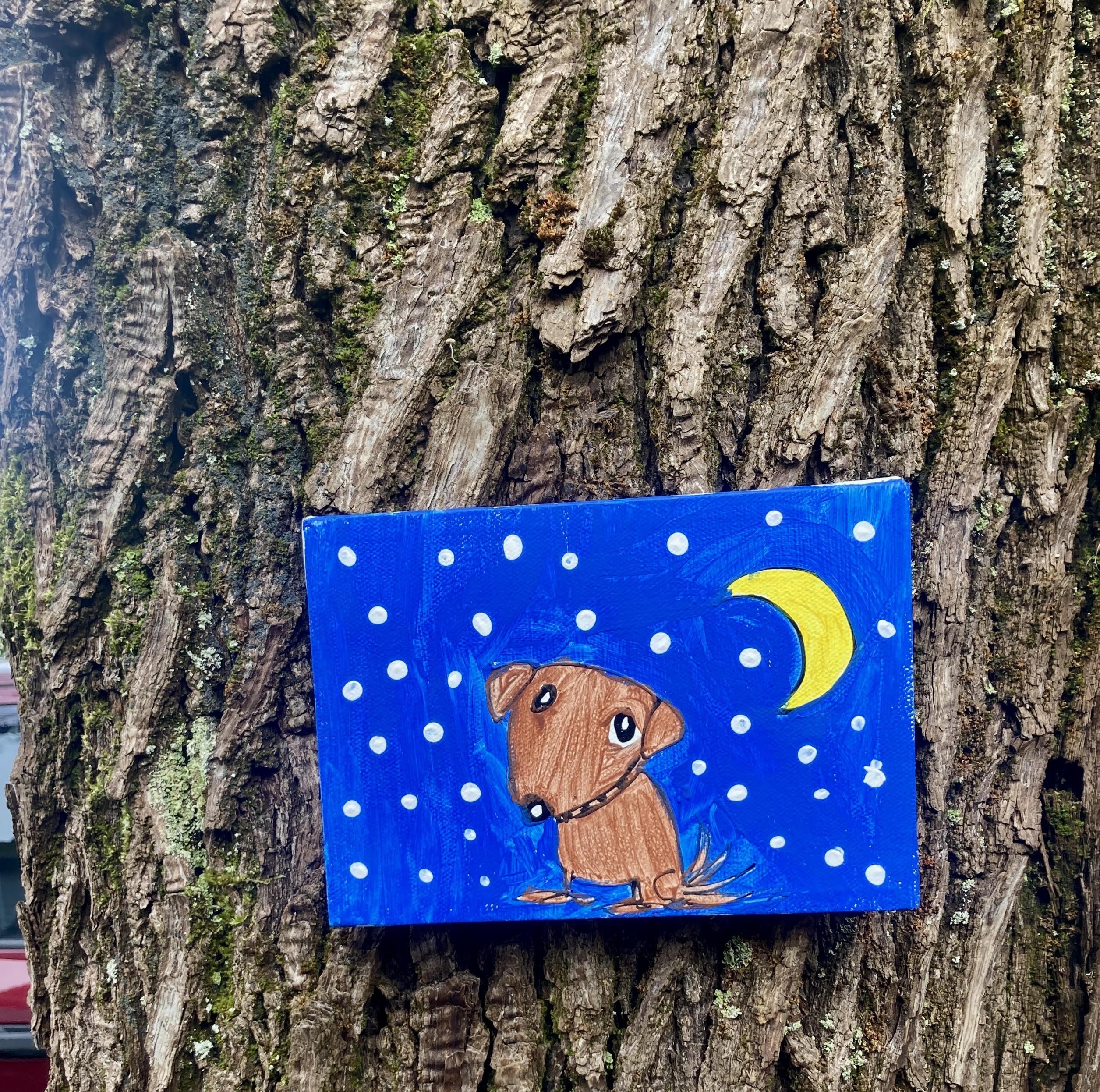
One of the Monty Python skits had a character intone: “Nobody expects the Spanish Inquisition.” Well, nobody expects a Very Colourful Dog on a tree trunk, either.
Colour: Obsessed
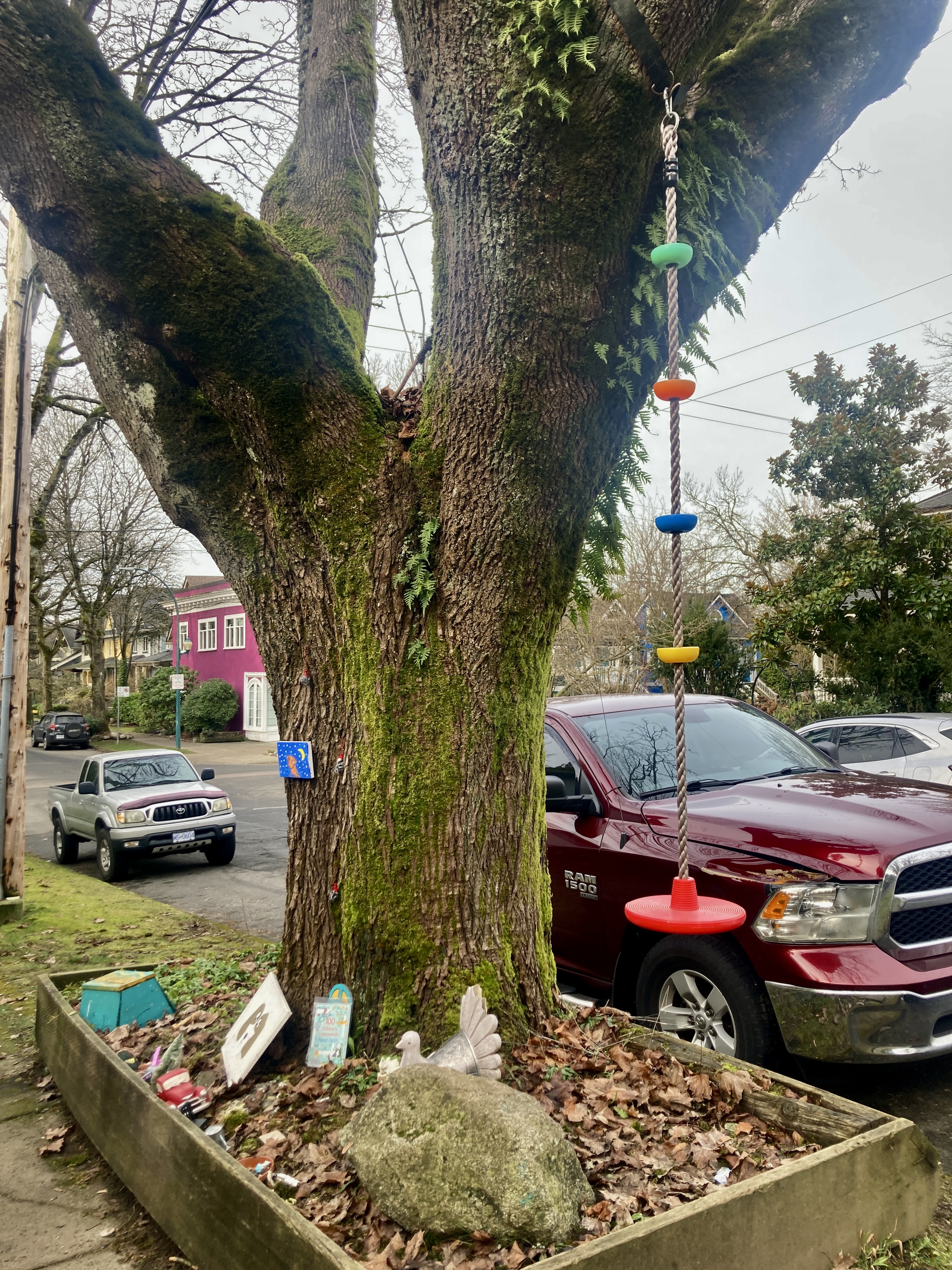
Namely, the colours I discover while indulging my obsessions. Two examples.
1 – My obsession with neighbourhood street-side “fairy trees,” decorated by civic-minded residents, sometimes with a swing for extra delight. Plus, in this specific example, our “Unexpected Dog.”
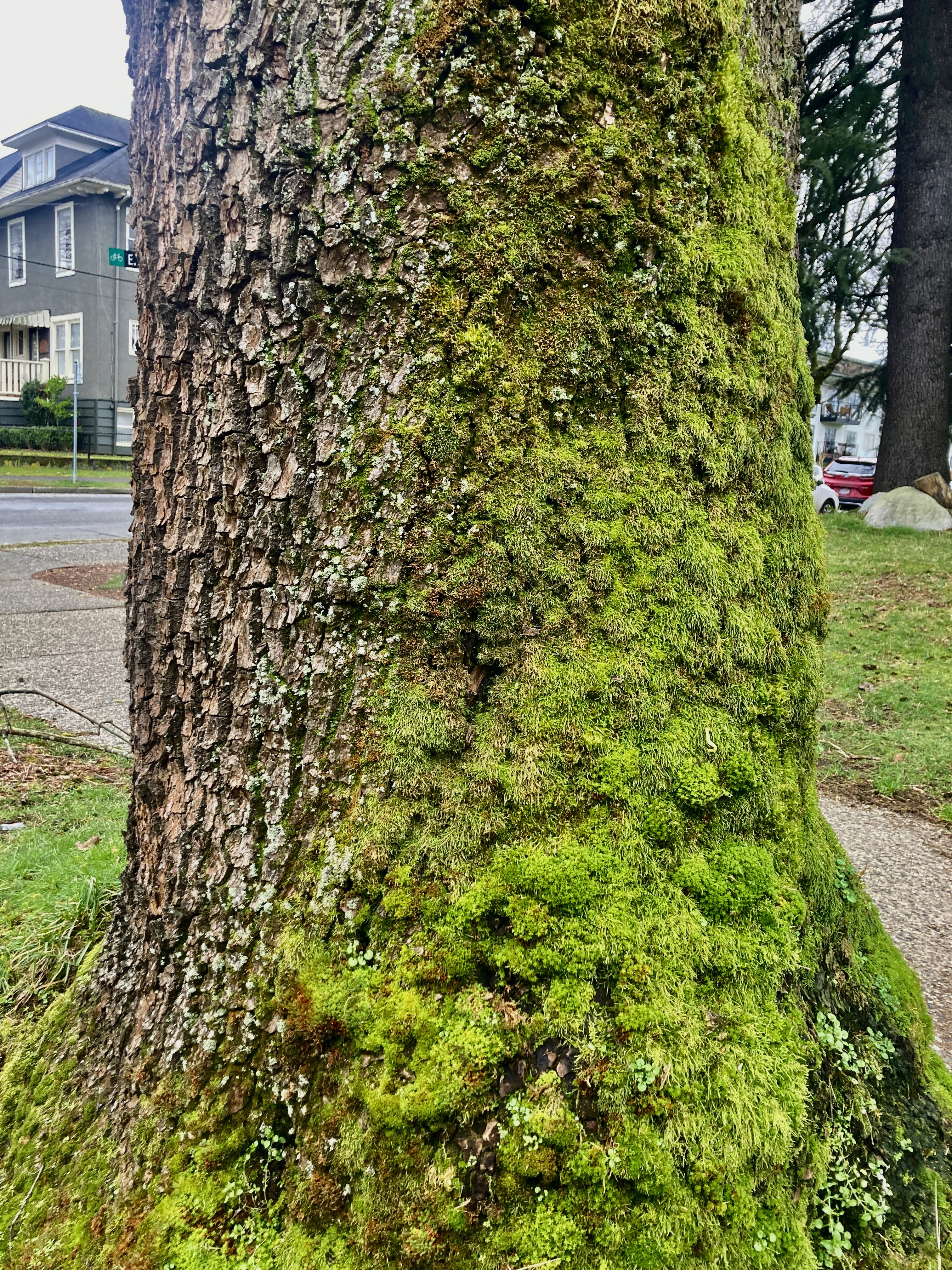
2 – My obsession with winter moss. In this case, right at the base of my “Colour: Muted” example above.
It’s all colour, if you want it to be. Hurray for colour.
Posted by icelandpenny on 28 January 2026
https://icelandpenny.com/2026/01/28/colour/
24 January 2026 – Let us first define our terms.
Winter, not as most of the country is currently experiencing it, but winter as we experience it here at sea level on the Canadian west coast. More precisely, because the quip fits: winter as we experience it here on the wet coast.
While much of the rest of Canada contends with brutal temperatures and heavy snowfall…
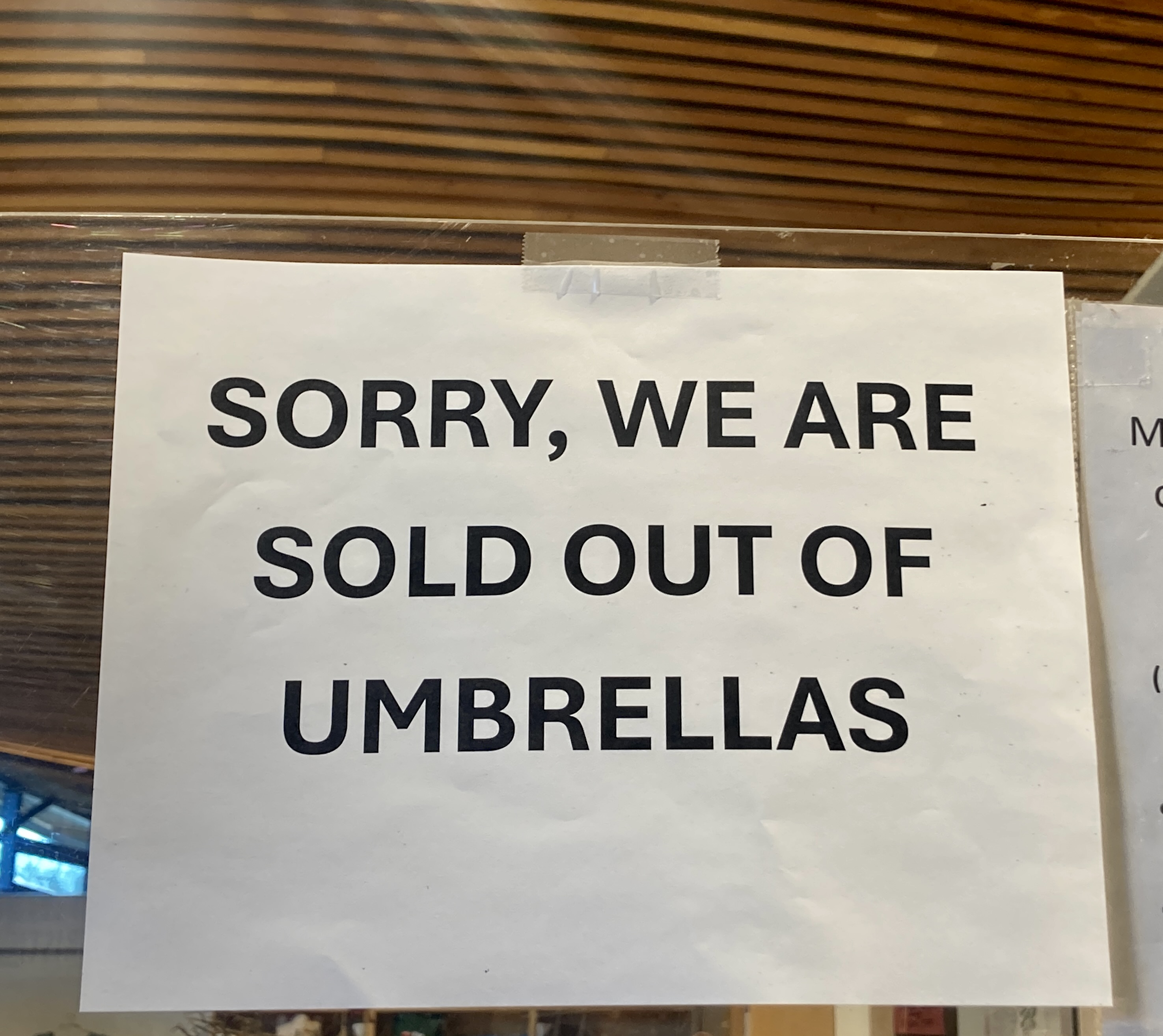
our shops run out of umbrellas.
I see this sign in the VanDusen Botanical Garden gift shop, where I loiter awaiting my partner for our planned winter walk in the Garden.
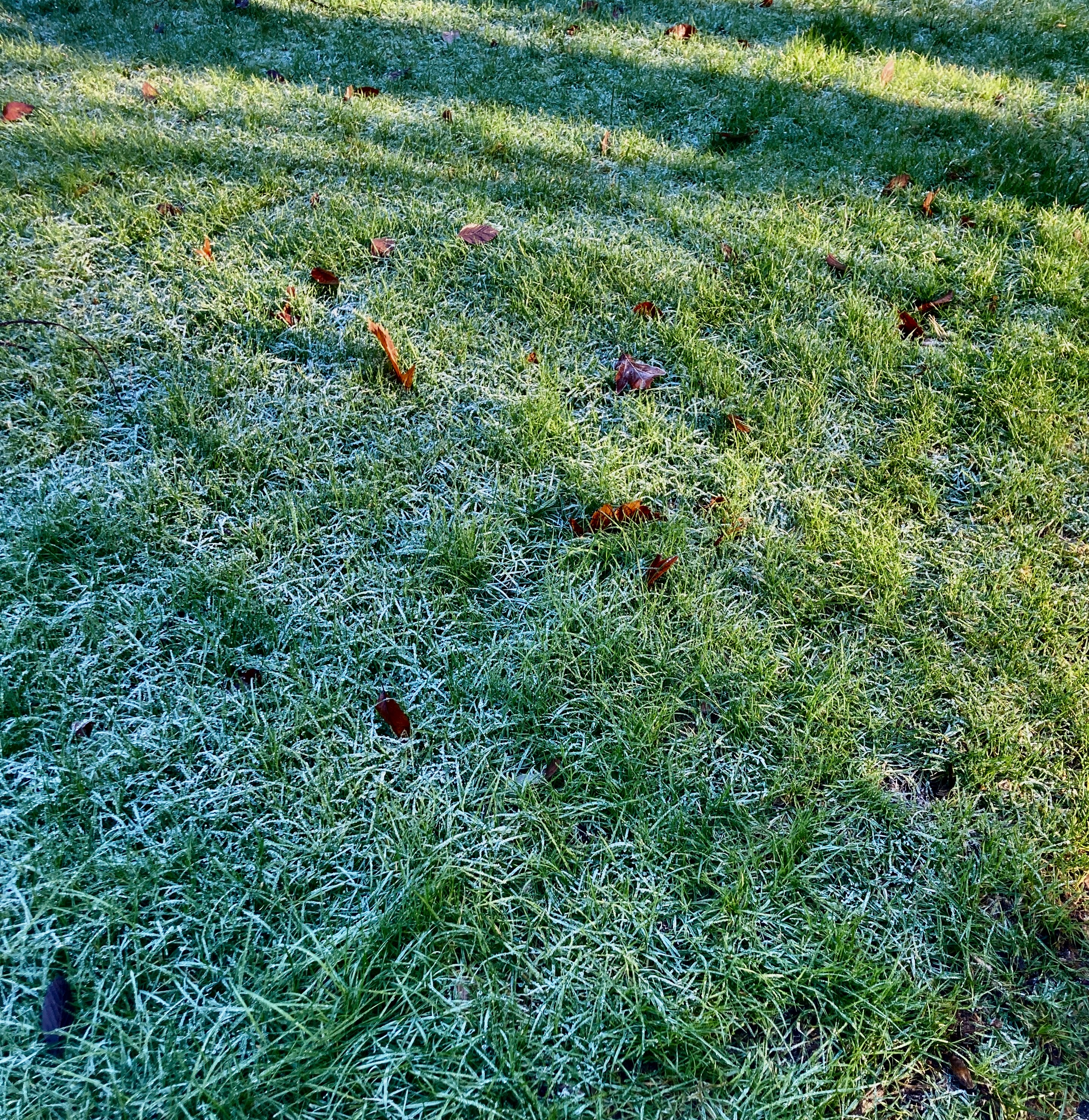
Sun overhead, and hoar frost sparkles on the grass.
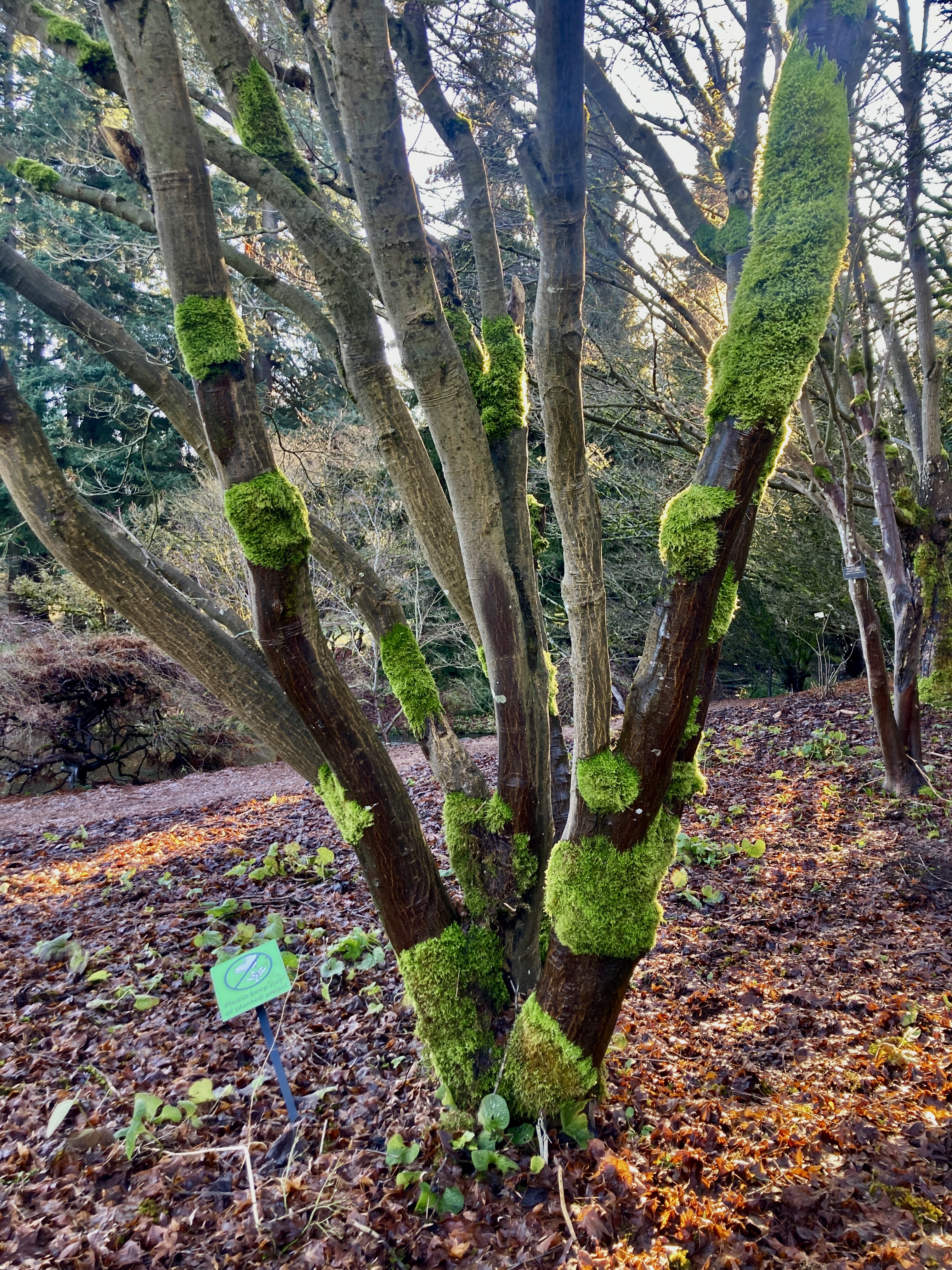
Tree trunks and branches flourish their winter coats of moss.
Sometimes in great goofy patches…
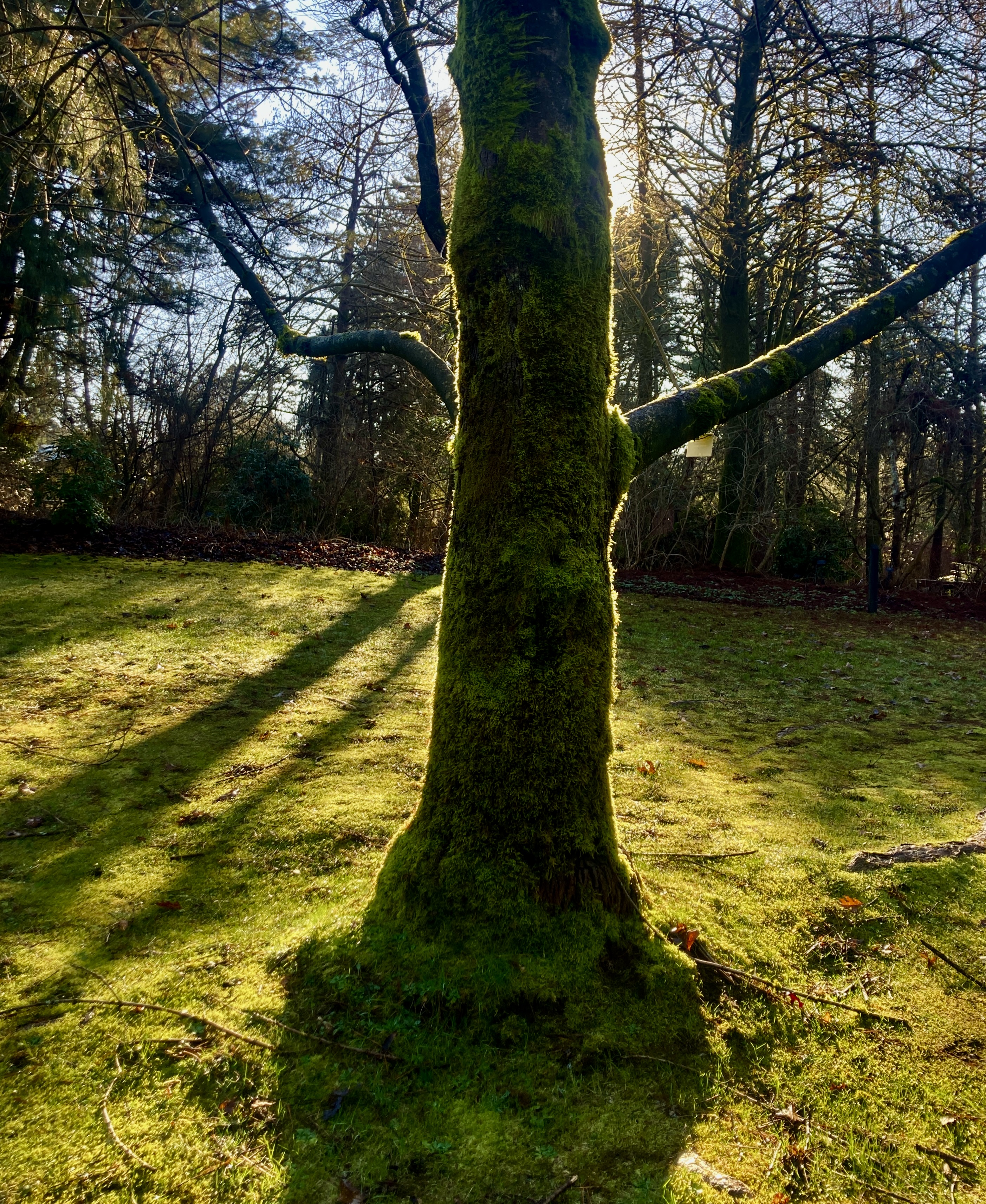
sometimes as a shimmering outline, viewed from the shadow side of a tree trunk facing the sun…
and sometimes draped along the branches of sibling Japanese maples, touching fingers above Heron Lake, itself adorned with a rare skin of ice.
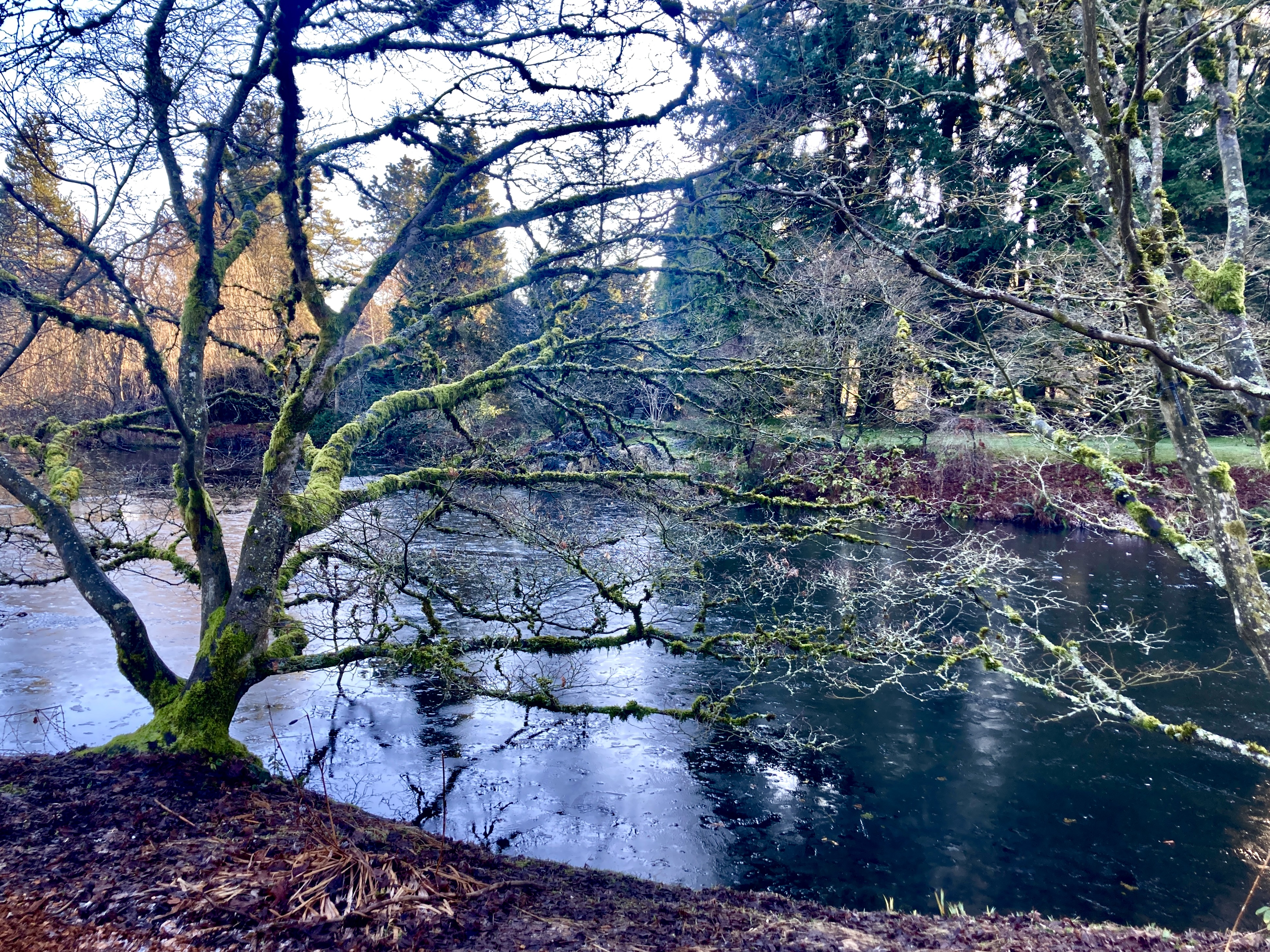
That ice, however, is only in the upper reaches of the lake.
Farther along…
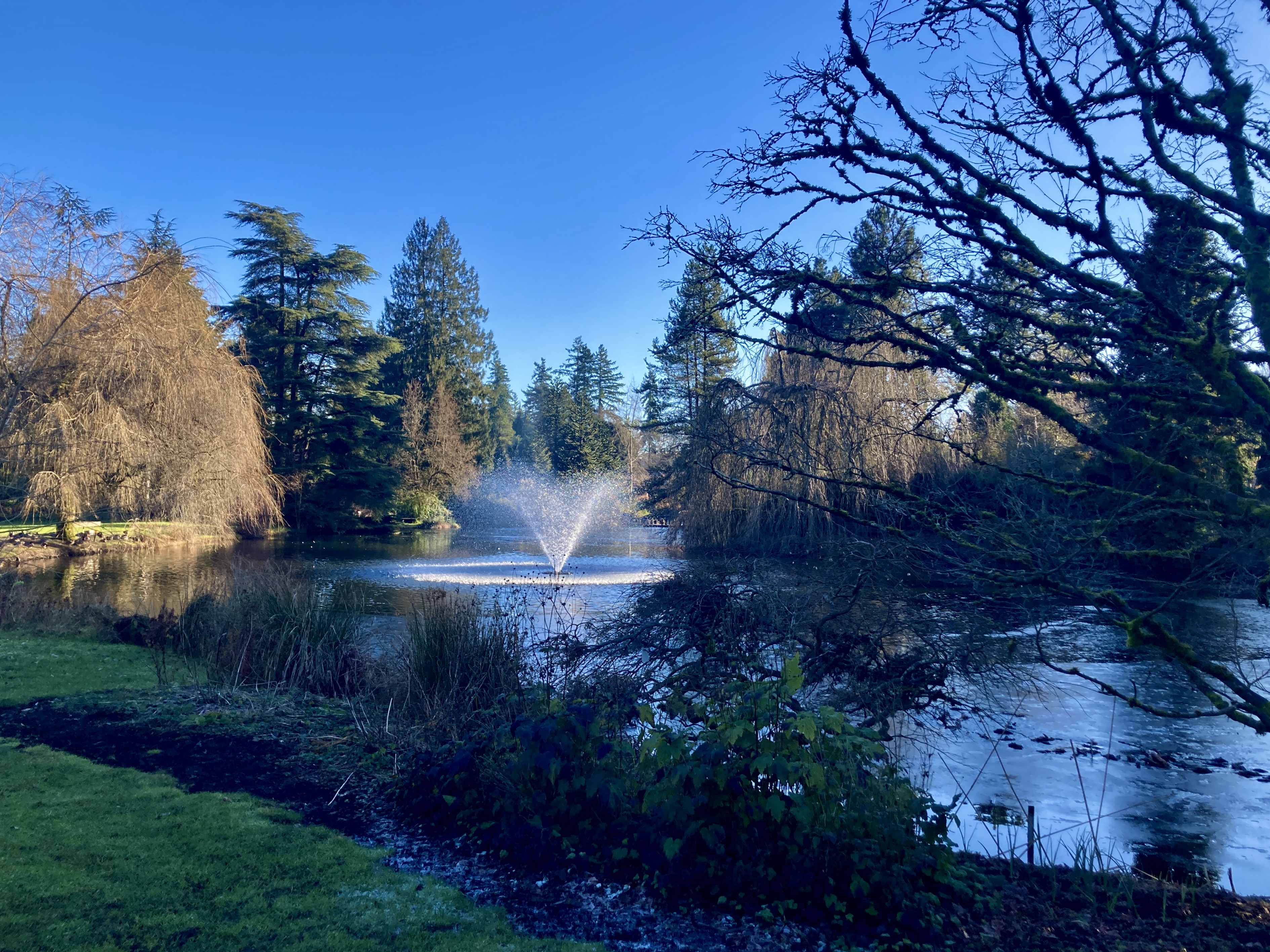
the fountain guarantees open water — to the delight of paddling ducks.
We first walk a path known officially as the Winter Walk, because of its plantings, and as we go we tick the list of its star attractions: witch hazel, heavenly bamboo, Japanese laurel, and wintersweet.
Then we veer off, take other pathways across the Garden, and notice their mid-winter palette as well.
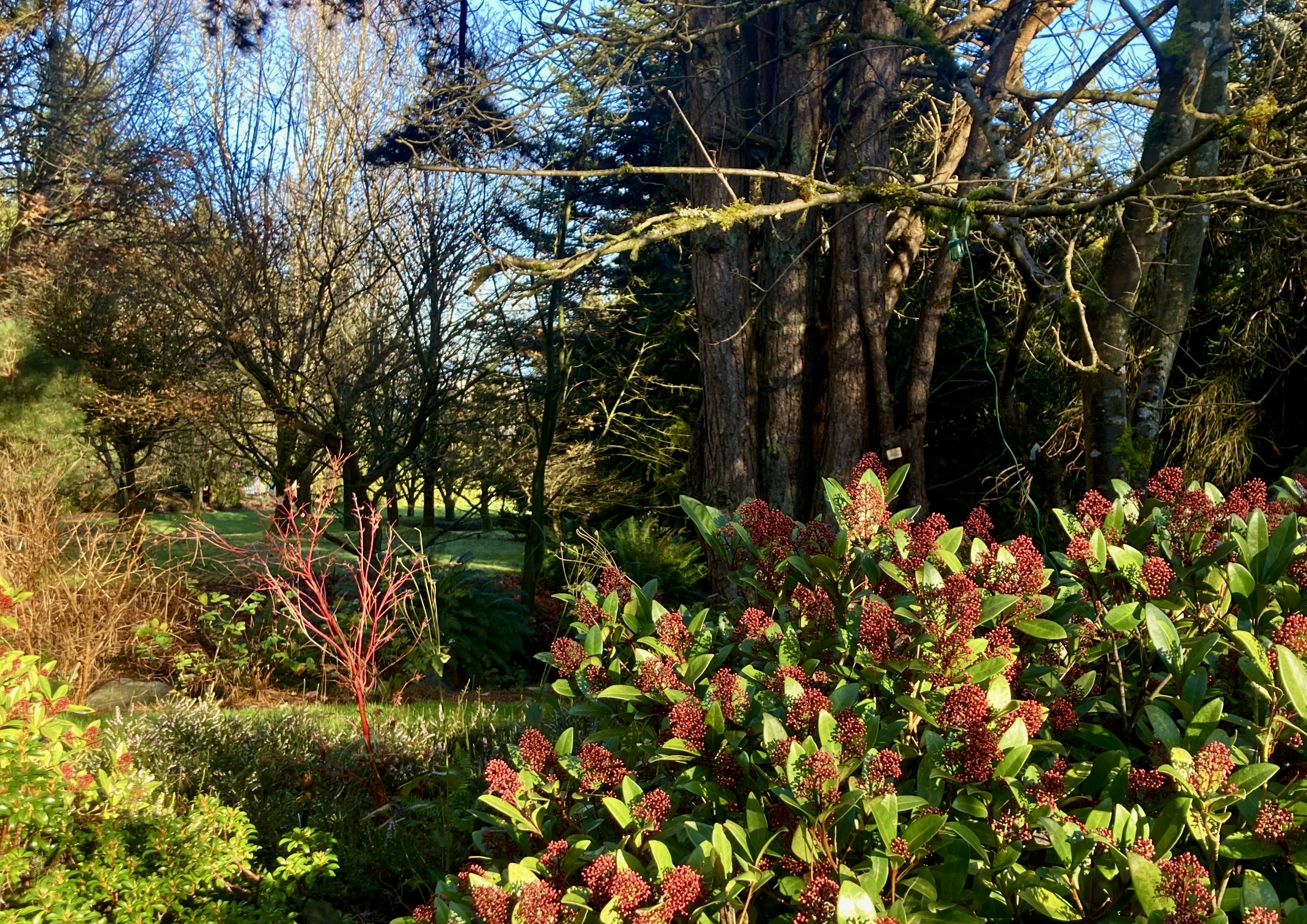
A fiery Red osier dogwood, for example, there in the middle distance, with bright Japanese skimmia right here at our finger tips.
Grasses in the perennial beds are neatly bundled up…
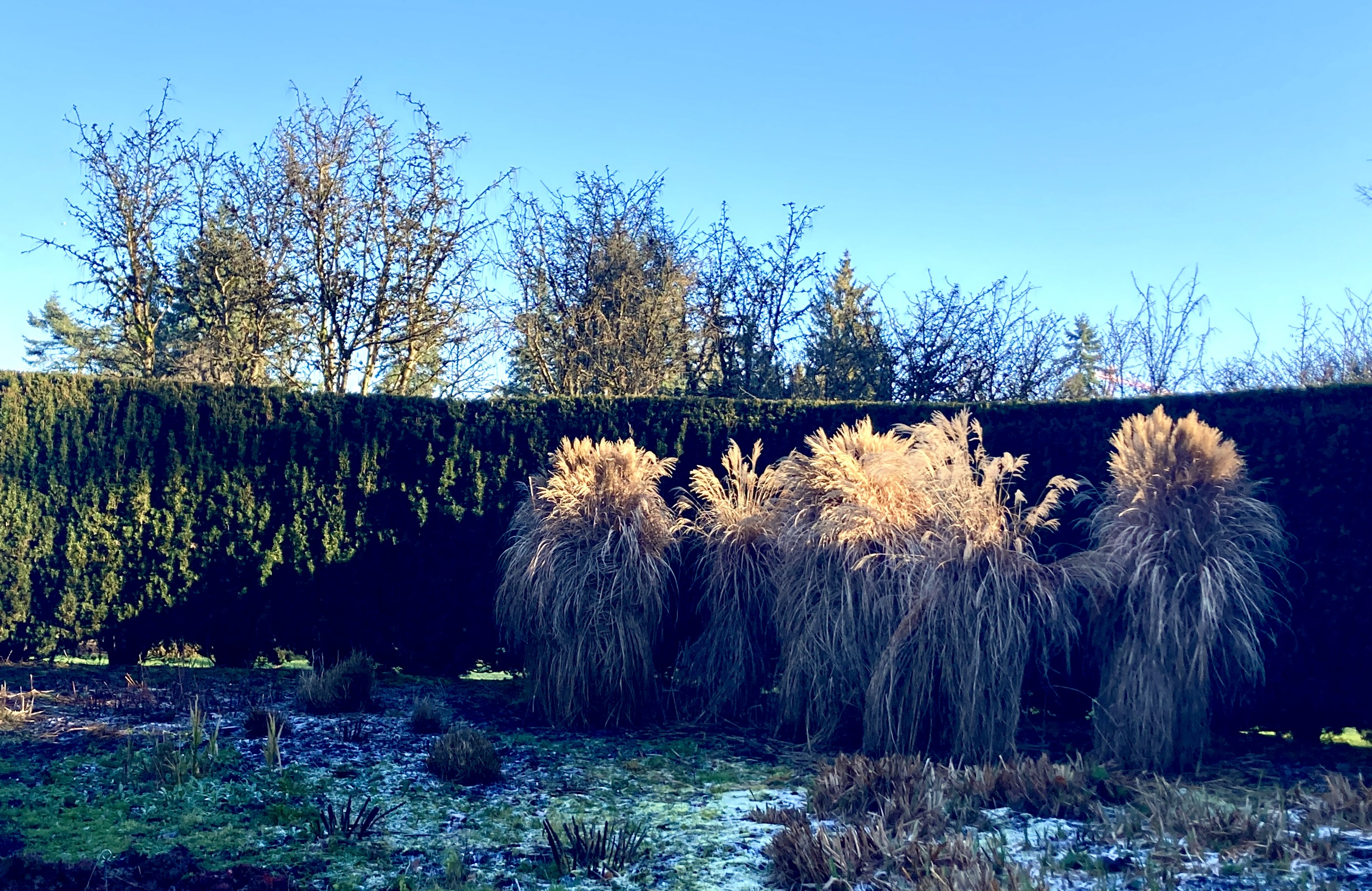
dancing their feathery tips over plant stalks in the flower beds. These plants are pruned for winter and currently anonymous, but their time will come.
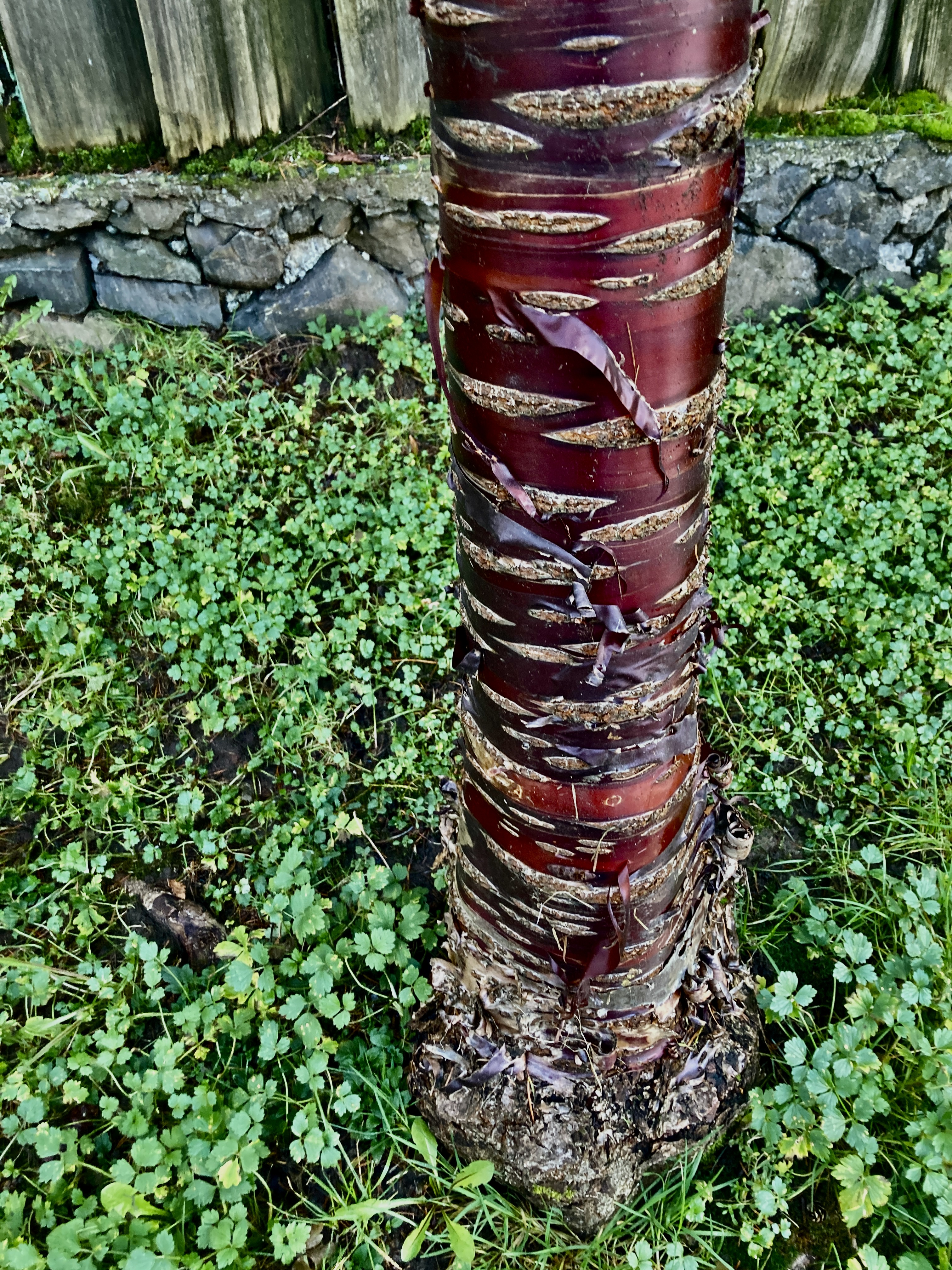
Tree trunks!
We are drop-jawed at the jewel tones of this Snow Goose flowering cherry…
and then find ourselves equally impressed by the austere tones of this Sichuan birch.
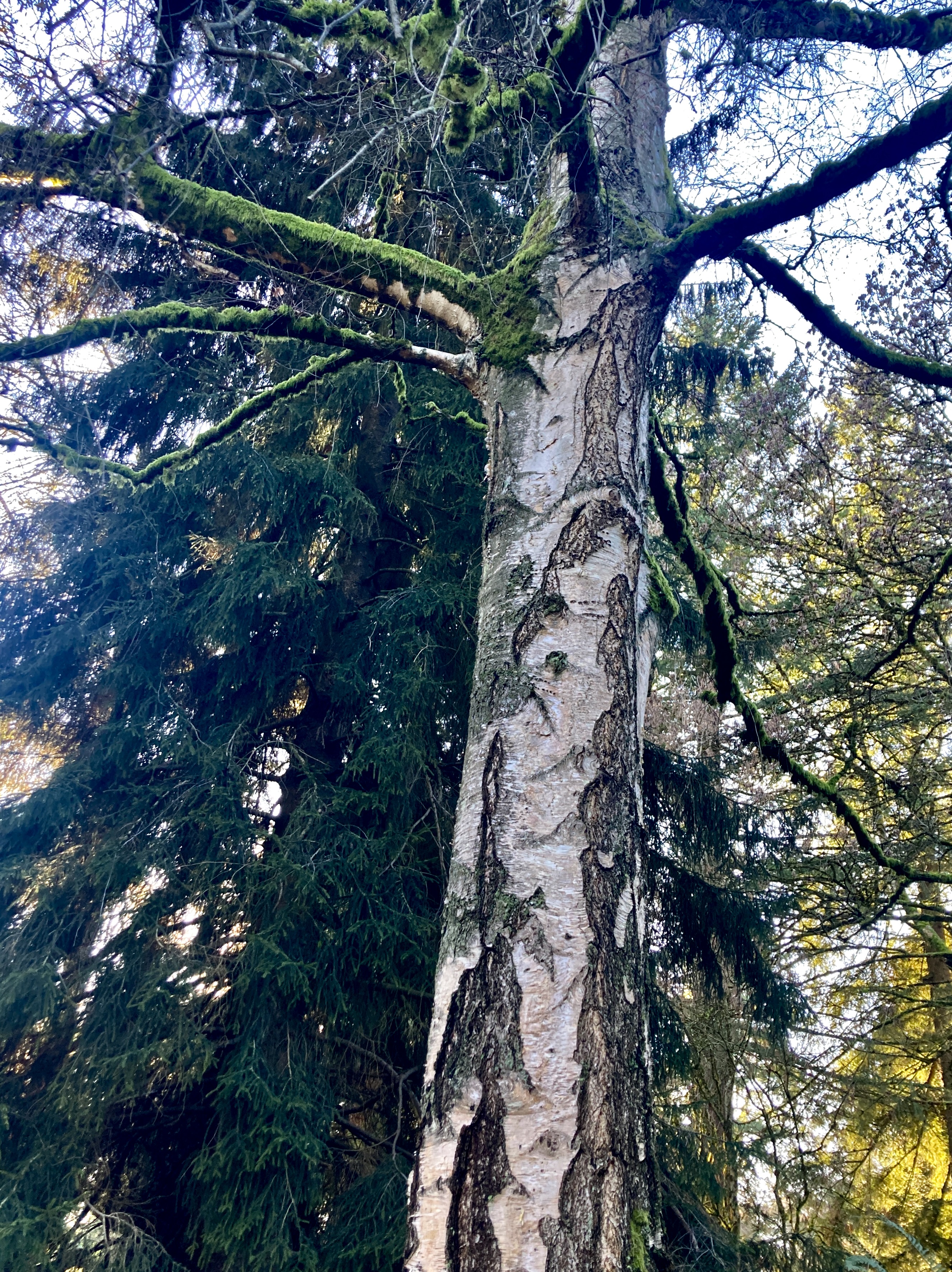
(Enlivened, I feel compelled to add, by a kick of moss in its upper branches.)
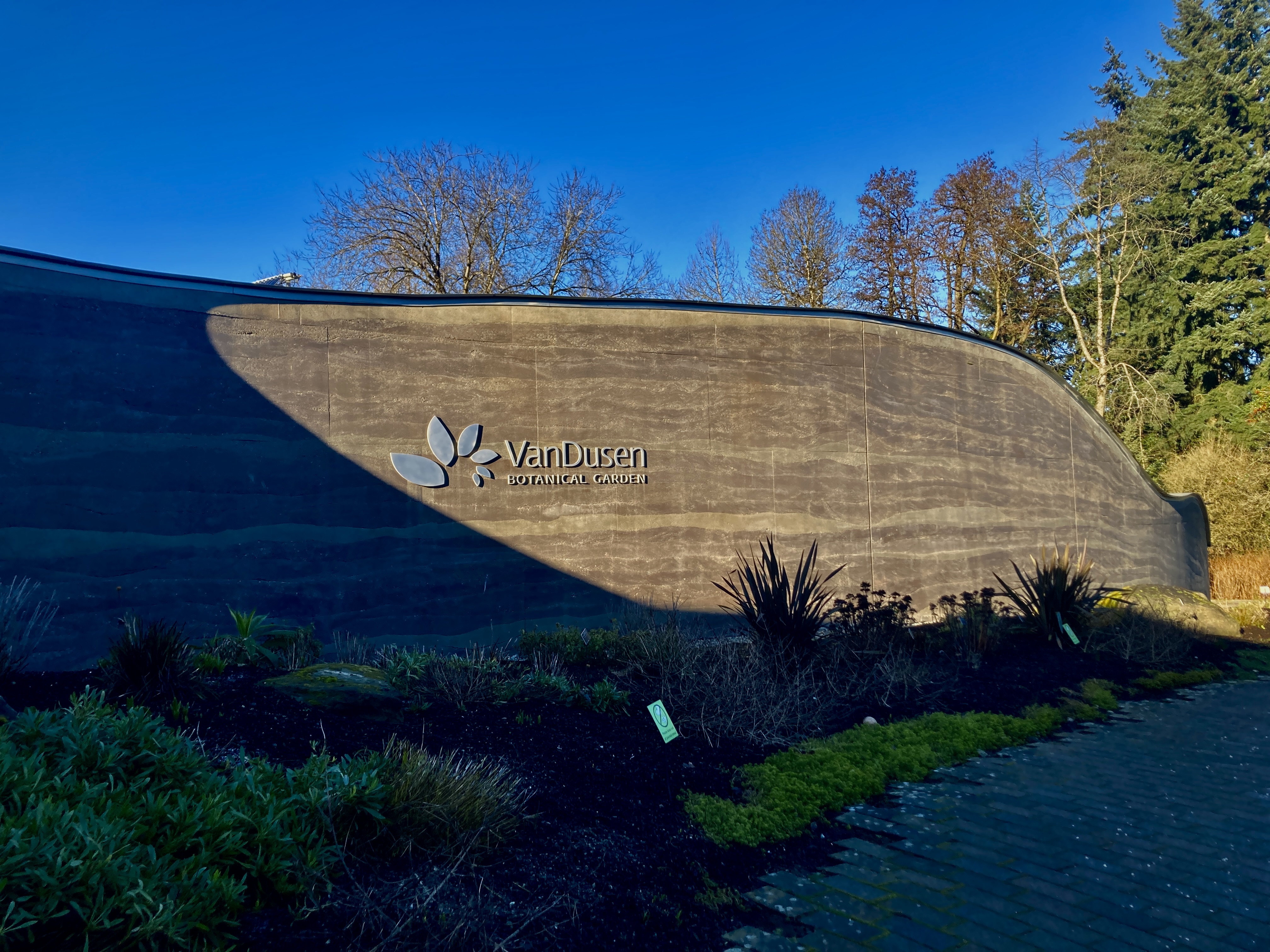
Then we’re off, out past the Garden’s rammed earth sirewall, handsome in any season…
and on down Oak Street for a while, prolonging the walk.
Posted by icelandpenny on 24 January 2026
https://icelandpenny.com/2026/01/24/winter-walk/
21 January 2026 – The cat came back.
We must be more fun than a ball of wool.
(Literary allusions note: from Sandburg’s 1918 fog poem yesterday to a folk-song today that is pure cat not fog — 1890s American blues-folk origins, Harry S. Miller; 1979 Canadian folkie hit with revised lyrics, Fred Penner; 1988 Oscar-nominated 7-min. animation, the NFB. Click here for 7 minutes of delightful silliness. A break from grim real-world silliness.)
Posted by icelandpenny on 21 January 2026
https://icelandpenny.com/2026/01/21/that-cat/
20 January 2026 — Oh, those little cat feet!
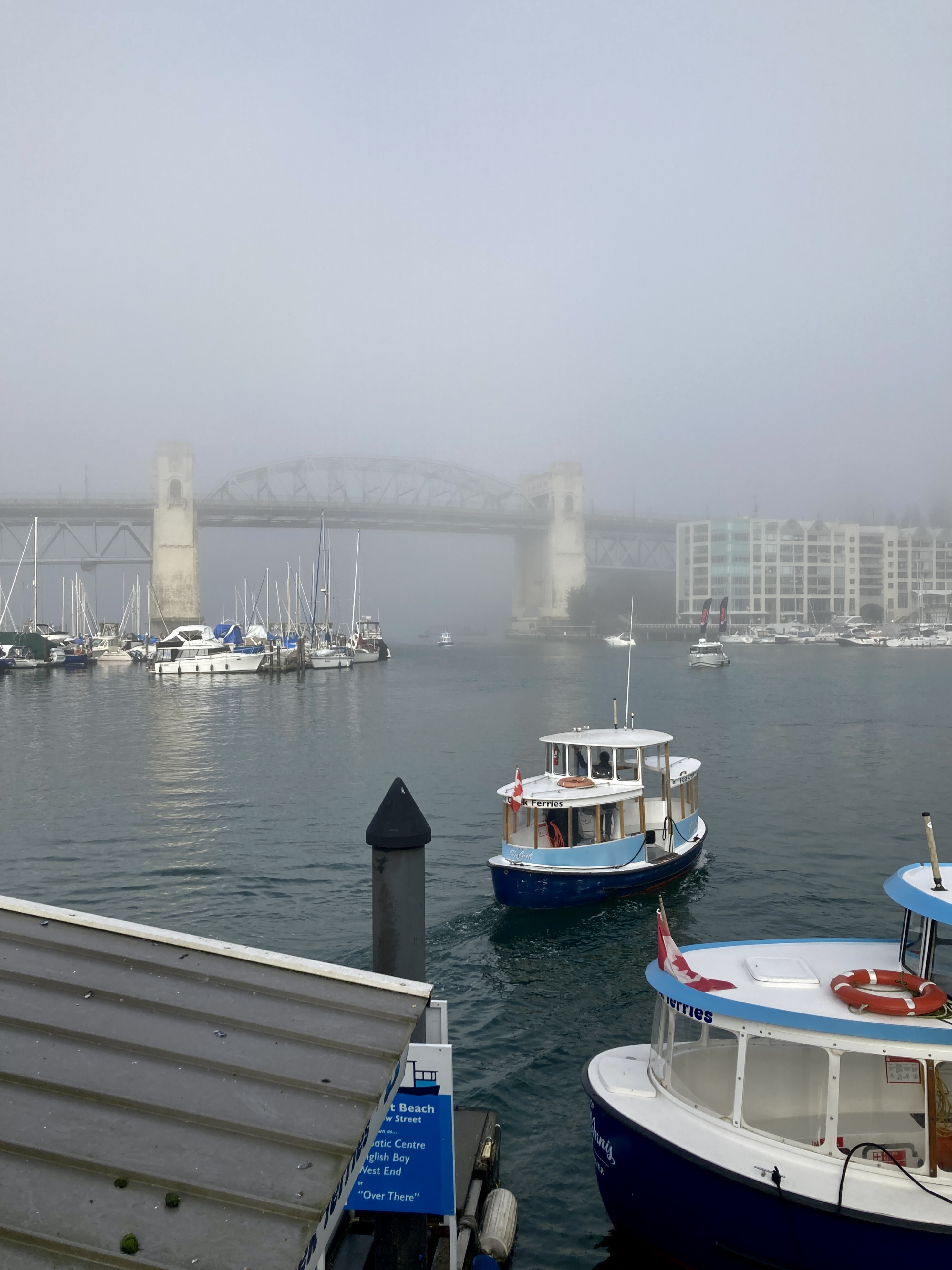
Yesterday the fog prowls in from the west, slides its paws under the Burrard Bridge…
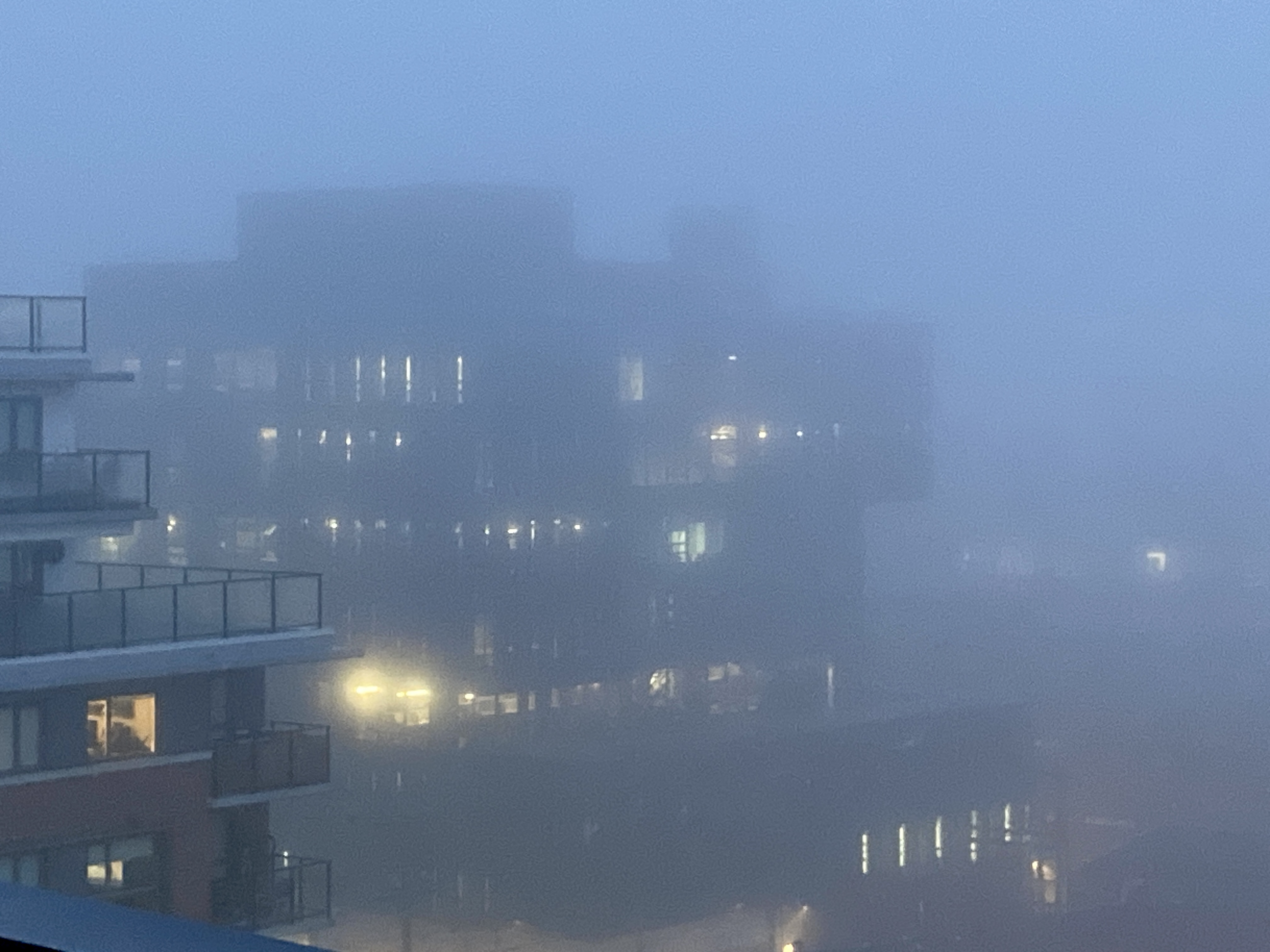
overnight it settles comfortably into place downtown…
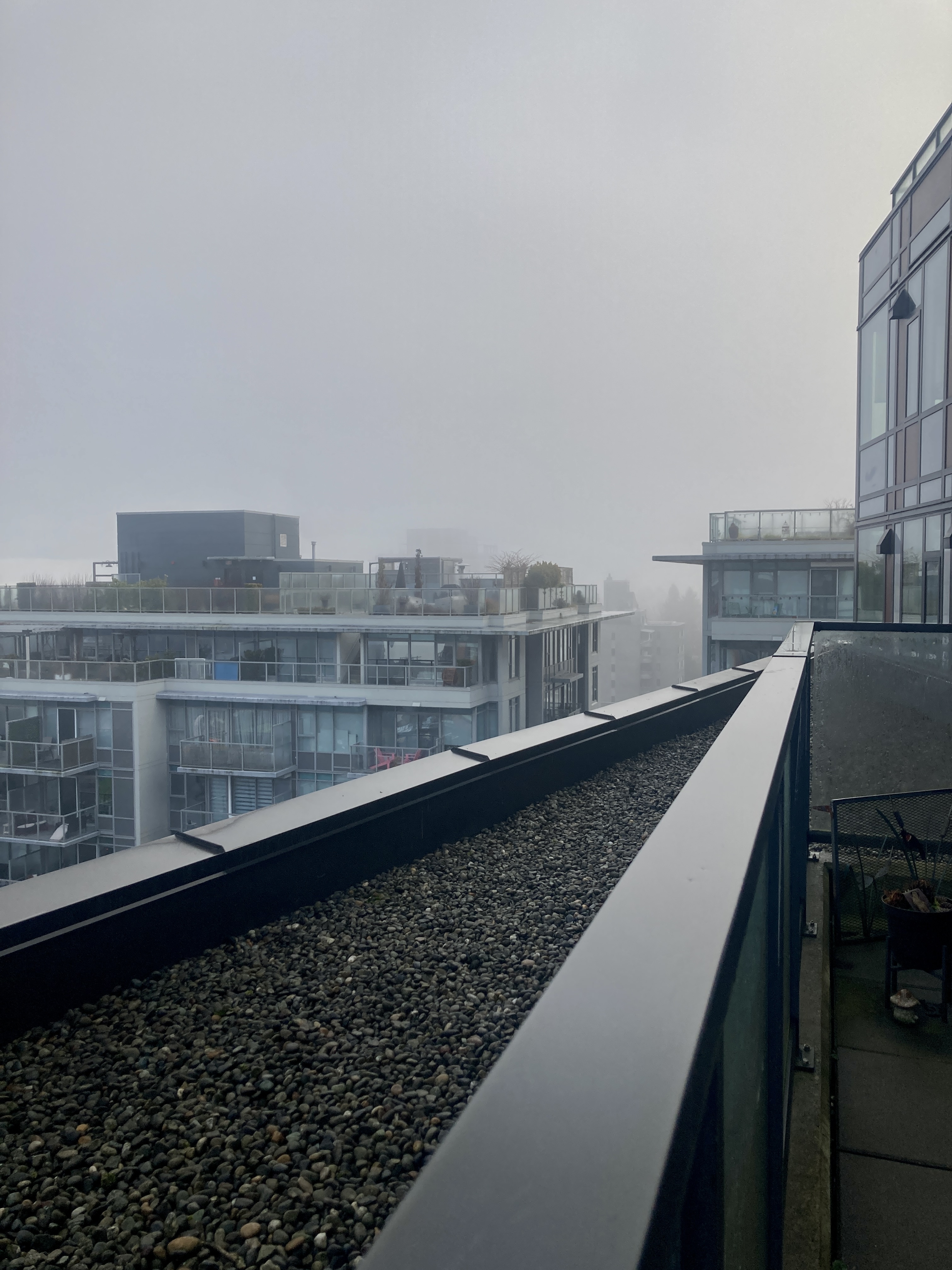
mid-morning we are still its favourite place to be…
but then?
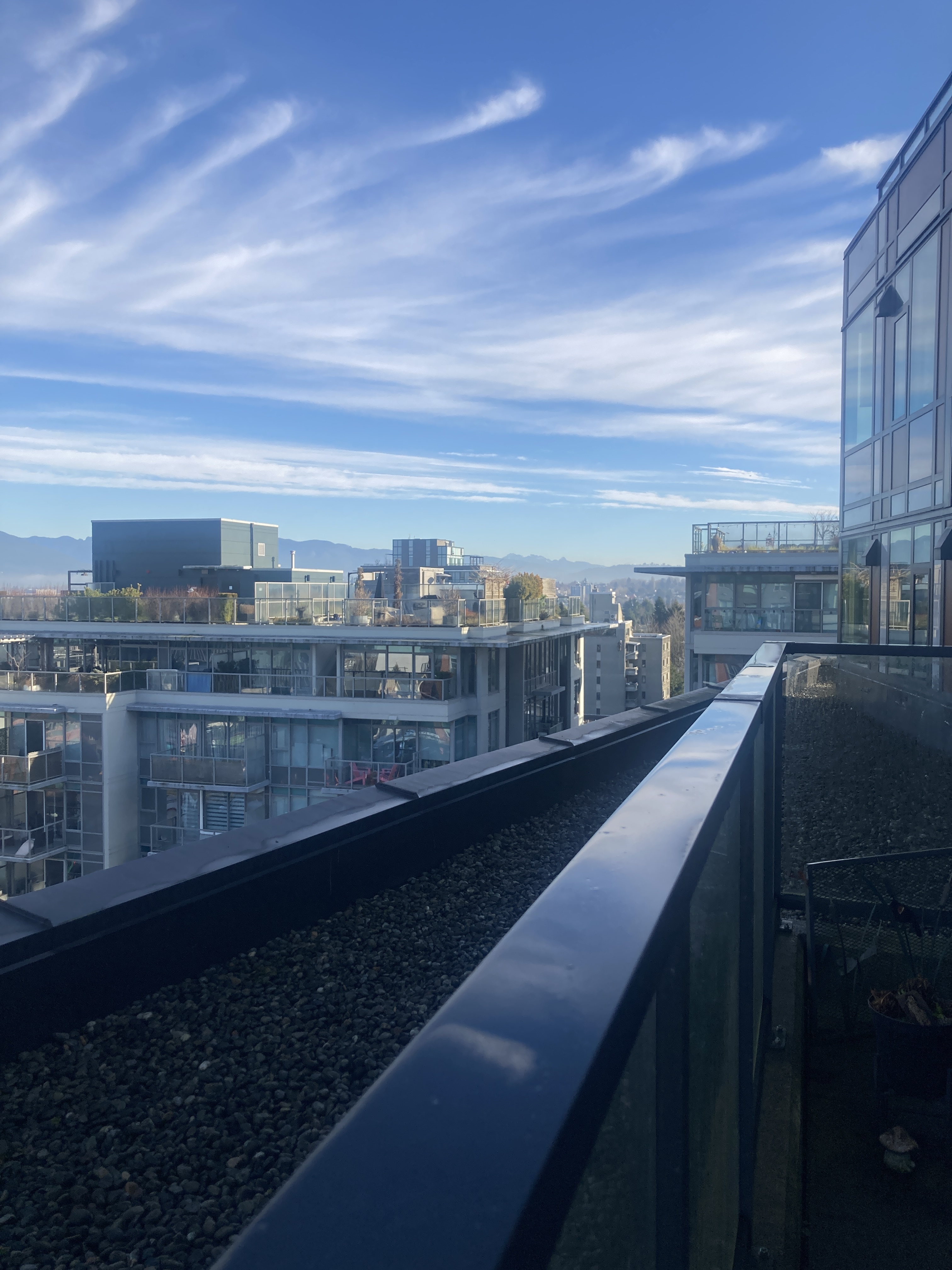
It scampers off.
Presumably to chase a ball of wool.
Posted by icelandpenny on 20 January 2026
https://icelandpenny.com/2026/01/20/fog-fog-fog-not-fog/
10 January 2026 – I have an errand, down by Pacific Central Station, and the skies are not heaving anything at anybody. I am happy indeed as I walk north on Scotia Street.
Even happier when, near East 2nd, I get to moon over yet another growth of fresh winter moss on a curb-side tree.

Oh, I know. This is a perfectly ordinary photo of a perfectly ordinary patch of moss, and either you share my obsession and moon along with me, or you shake your head and move on.
As I also do.
Errand accomplished, weather still surprisingly agreeable, I keep walking north. Cutting through False Creek Flats, I see that this stretch of battered old warehouses is, apparently, finally being demolished.
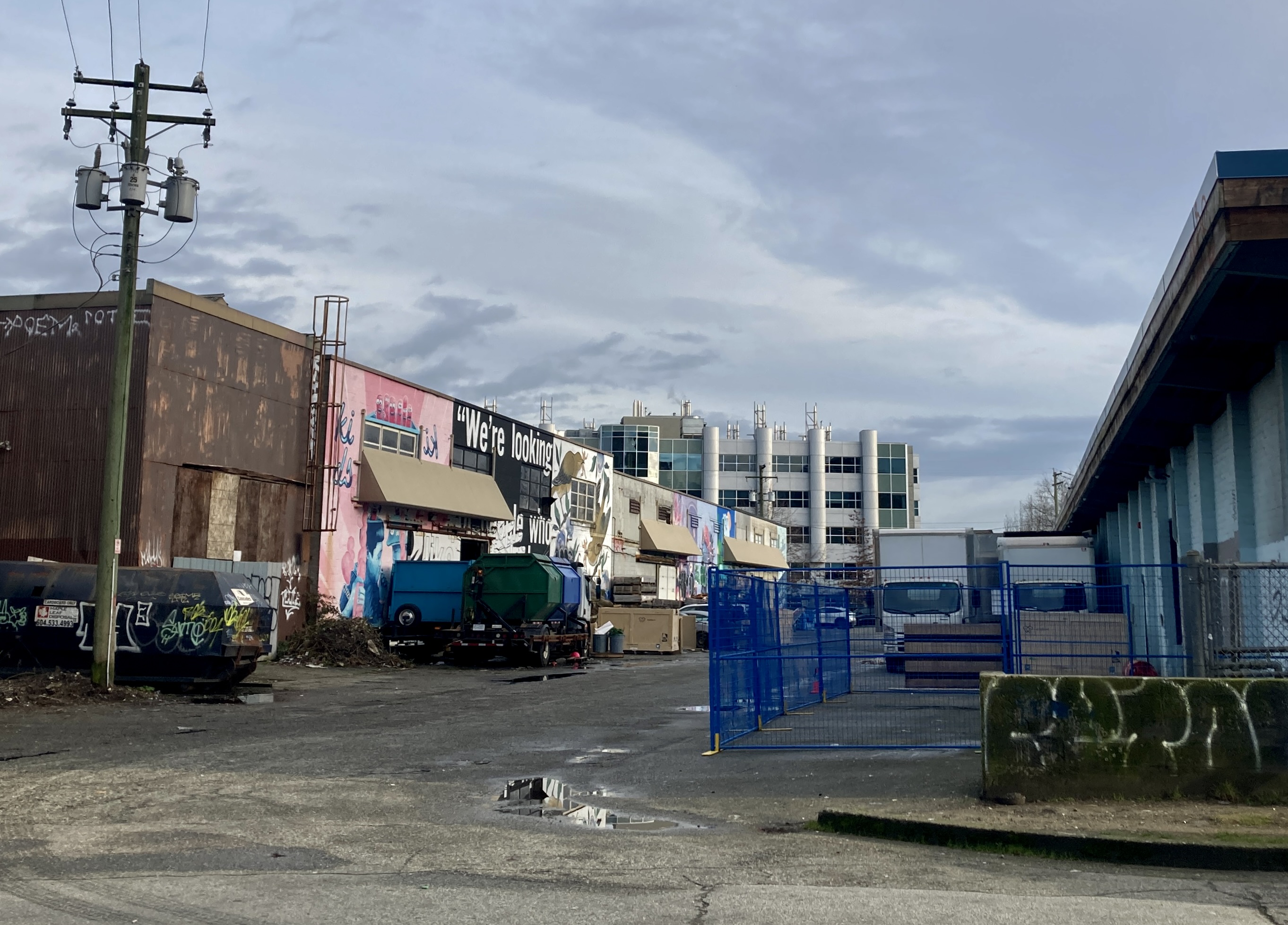
All the signs suggest this conclusion: windows boarded up, dumpsters out front, bright blue mesh fencing. Down there at the far end, the kind of new-build we can likely expect — structures to welcome more “knowledge industry” activities.
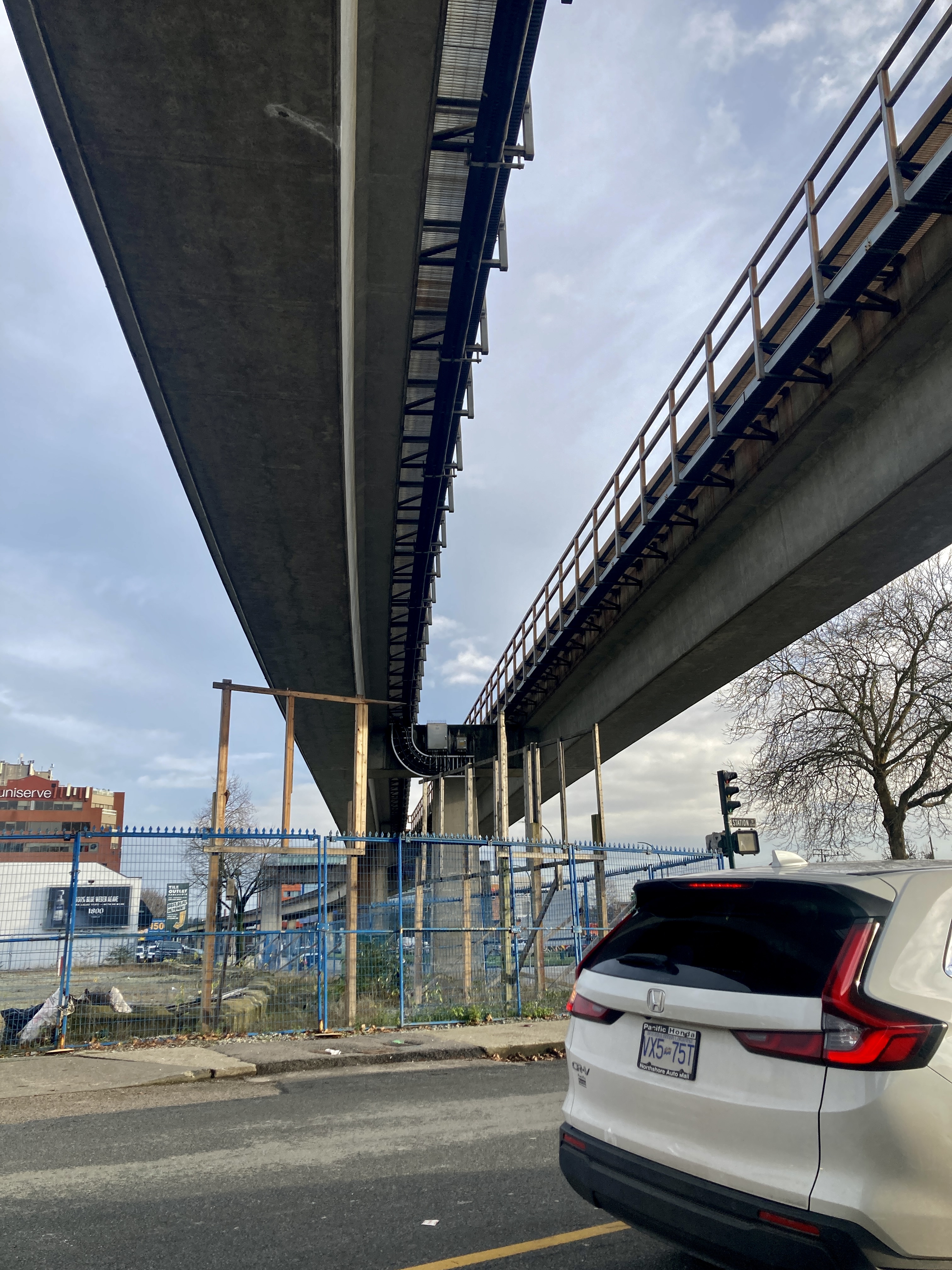
Across Terminal Ave., heading indeed toward the terminal (Pacific Central Station), I look up while waiting for a light to change. It gives me time to admire the vee of SkyTrain tracks overhead.
I also have time to look left, skimming my gaze along the front façade of Pac Central to rest on the cranes beyond…
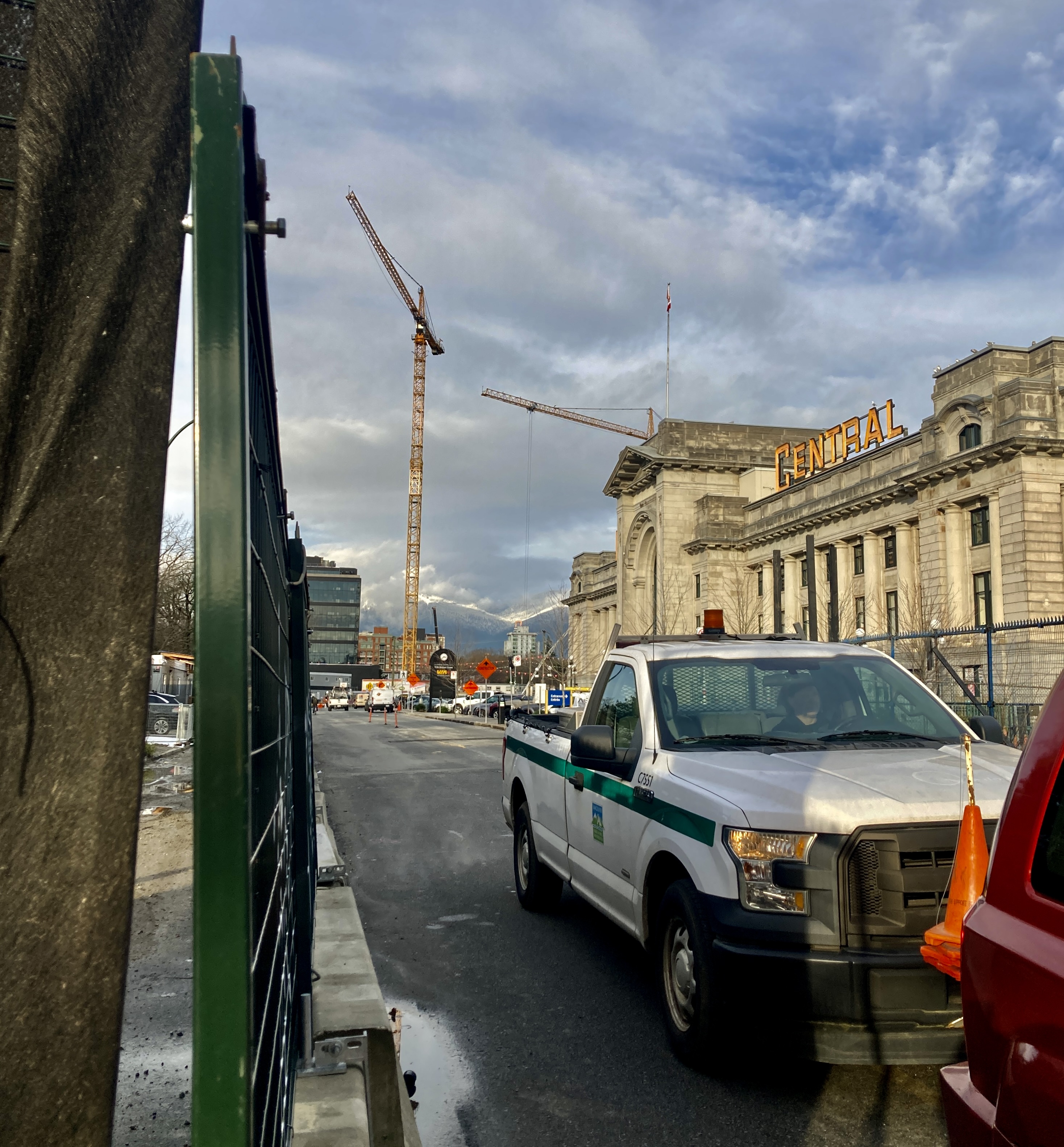
which mark a New Build worthy of those capital letters: the new St.Paul’s Hospital complex.
Lights change. I cross, I walk, and I pivot around this elegant lamp post shadow at the far train station corner…
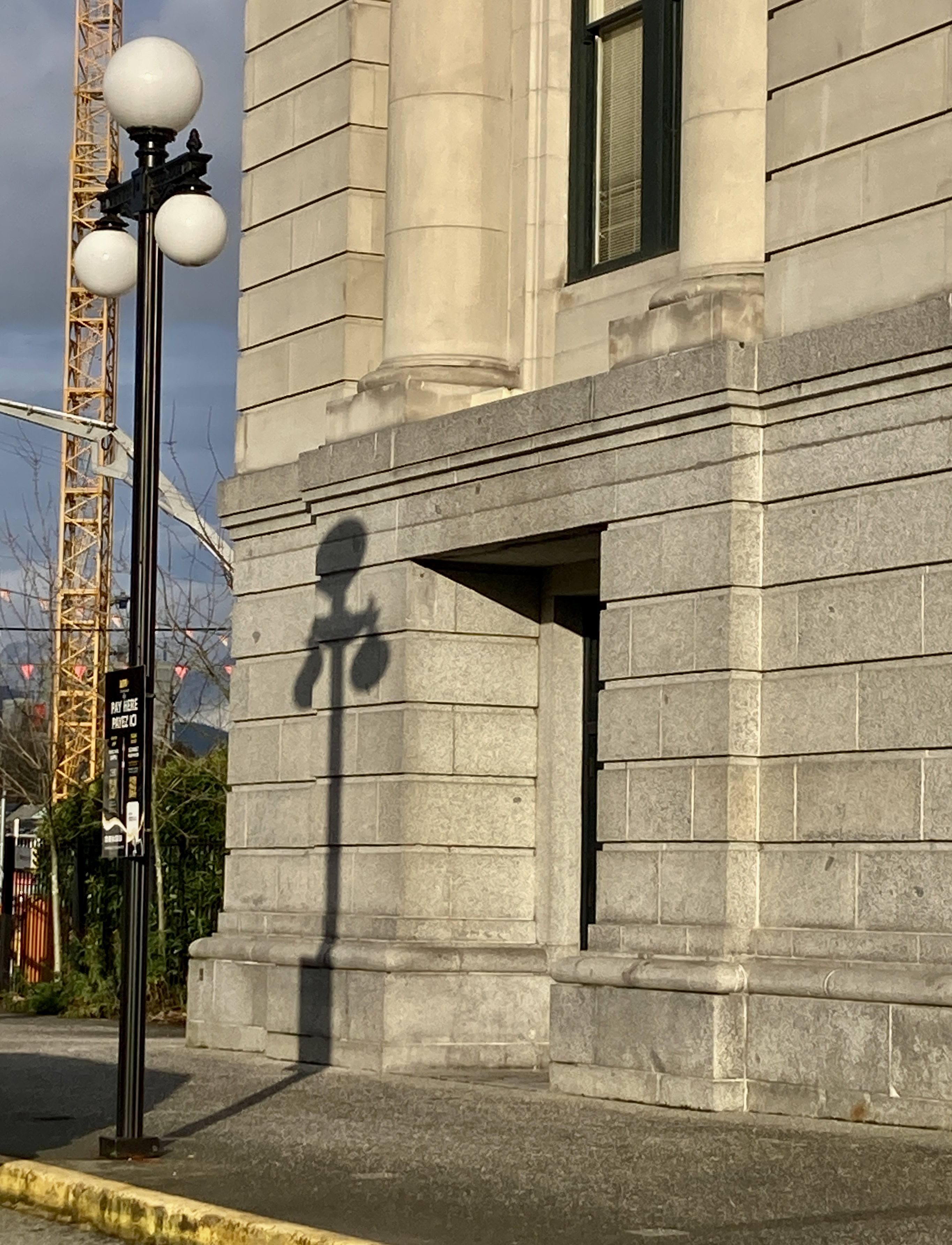
to see…
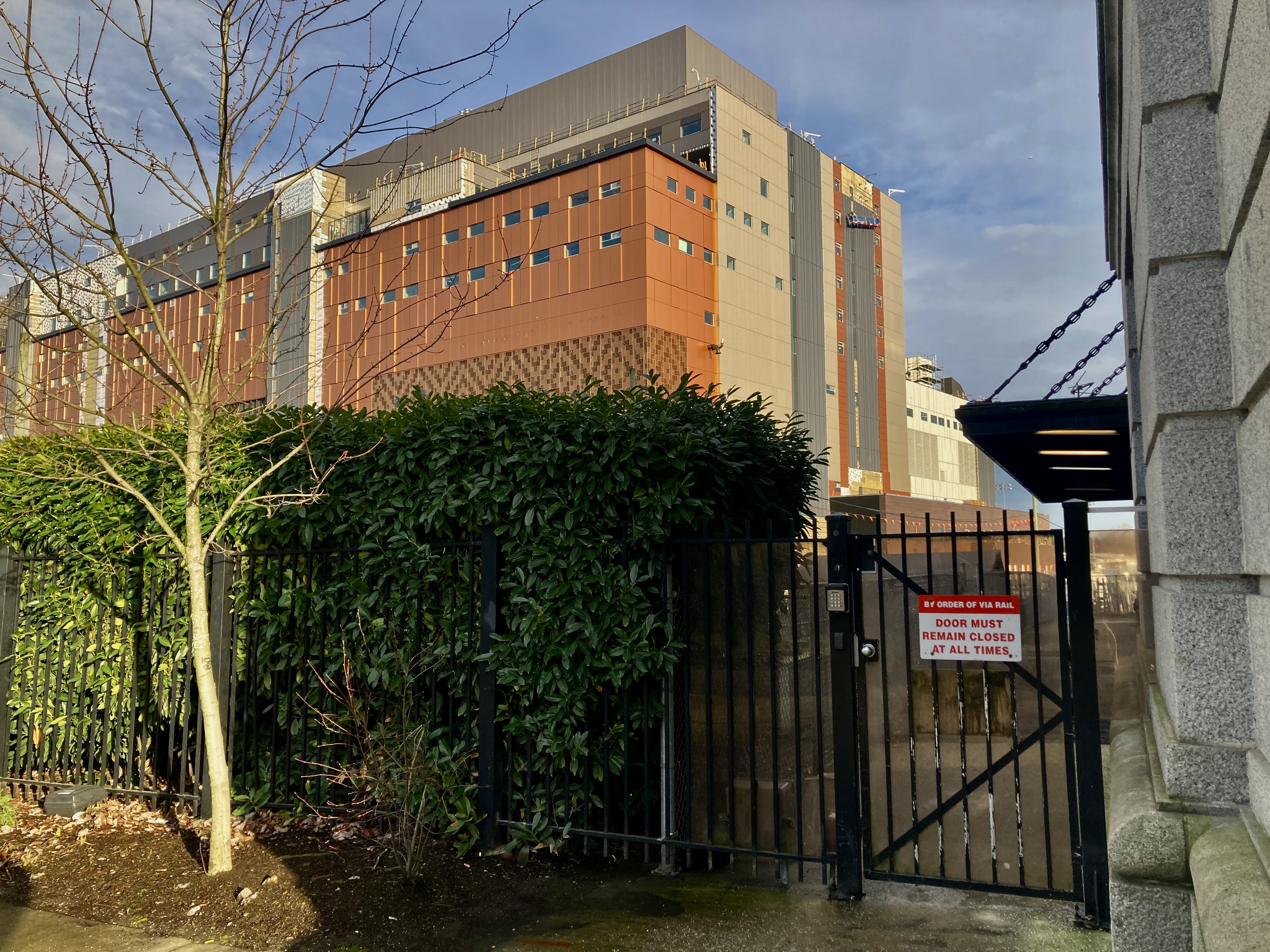
the bulk of the new hospital, now showing us its full dimensions and scale.
One peek at an explanatory billboard, visible through a gap in the fencing…
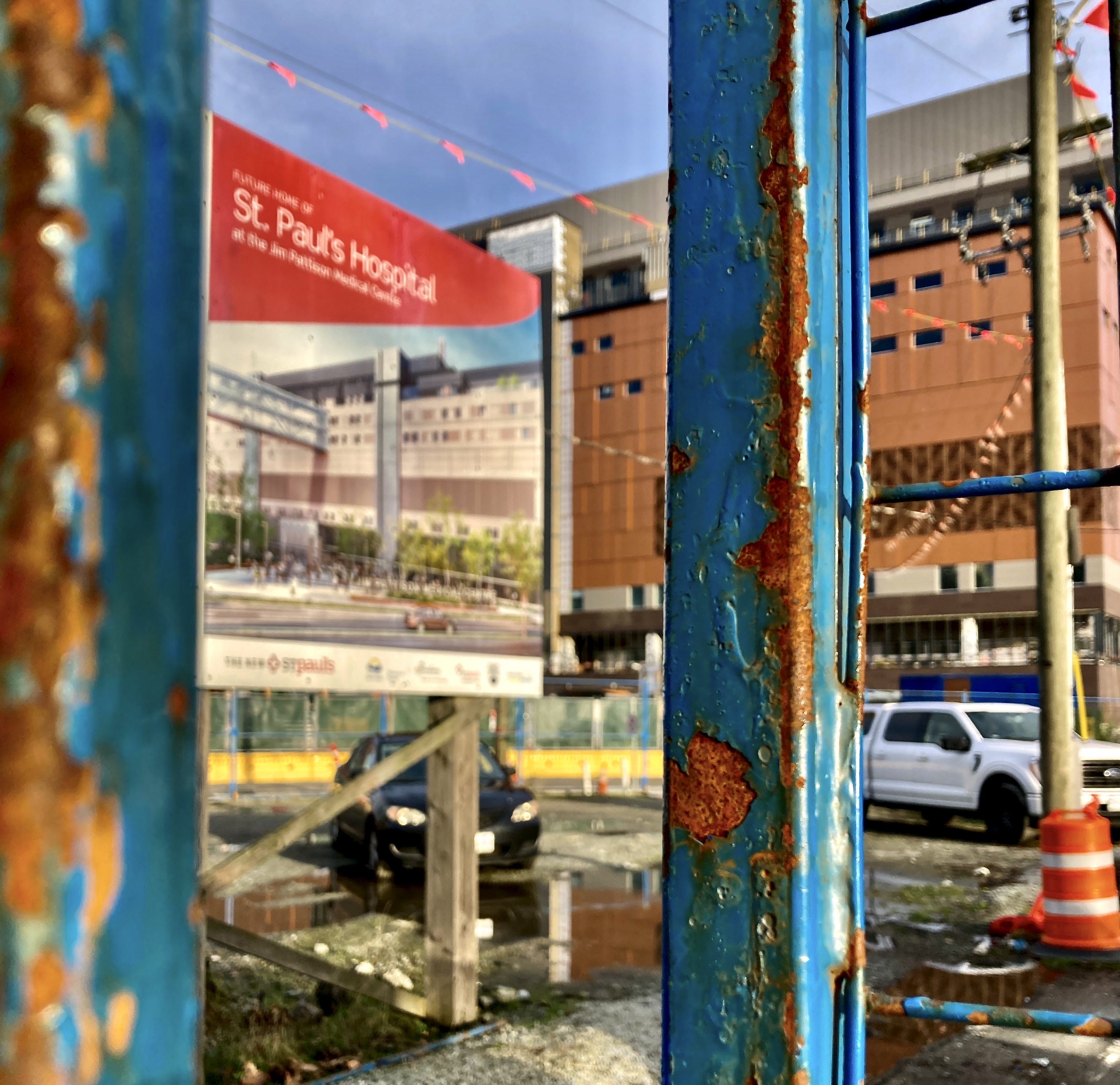
and I right-turn to follow a pathway to Gate 4, which runs along the far side of the complex.
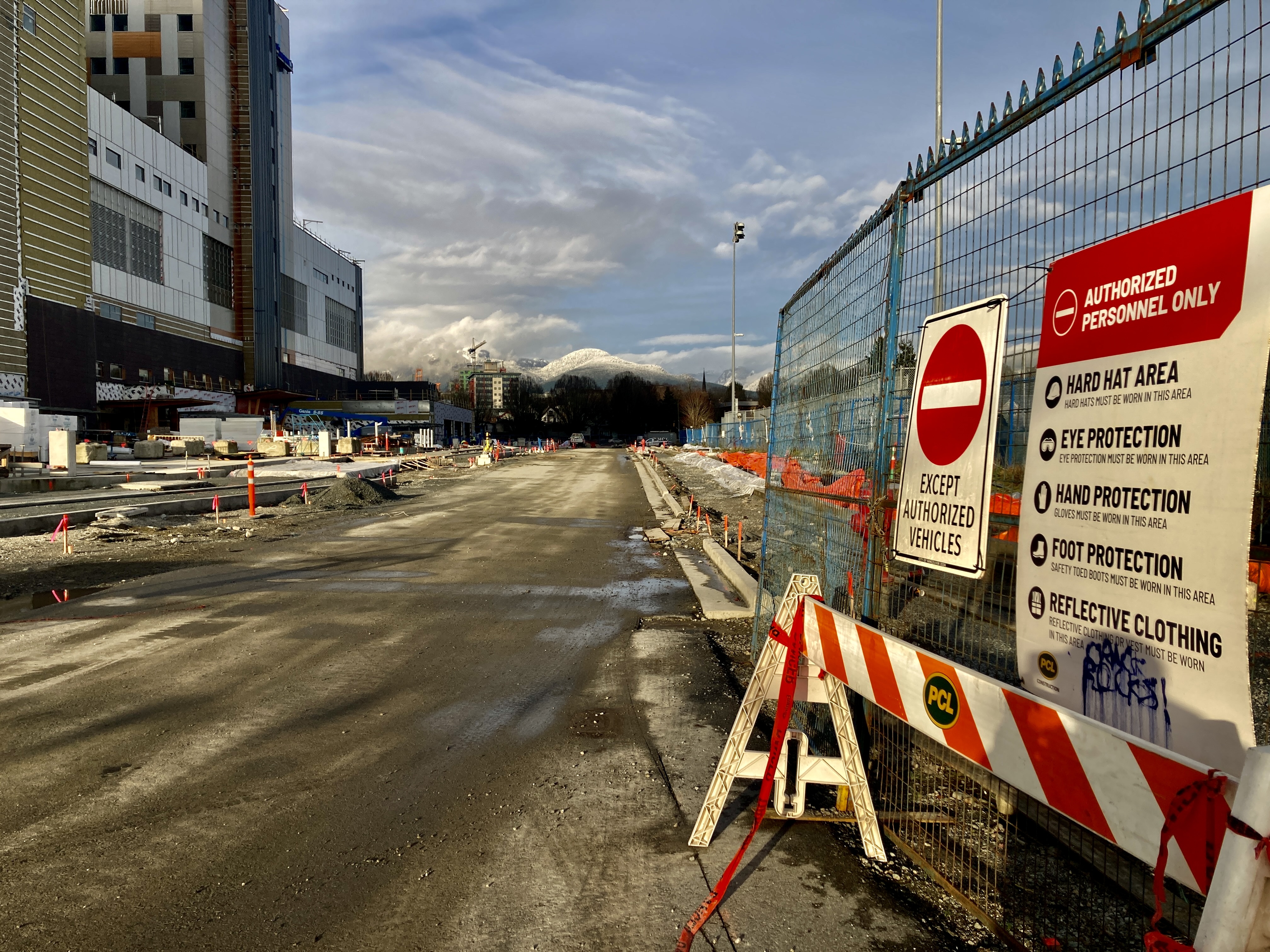
East side of the building to my left, Trillium Park to my right, and straight ahead — over there in North Van, the far side of Burrard Inlet — snow on the mountain peaks. Plus, you bet, warmly dressed skiers.
Down here at sea level, the Trillium Park soccer players are lightly dressed…
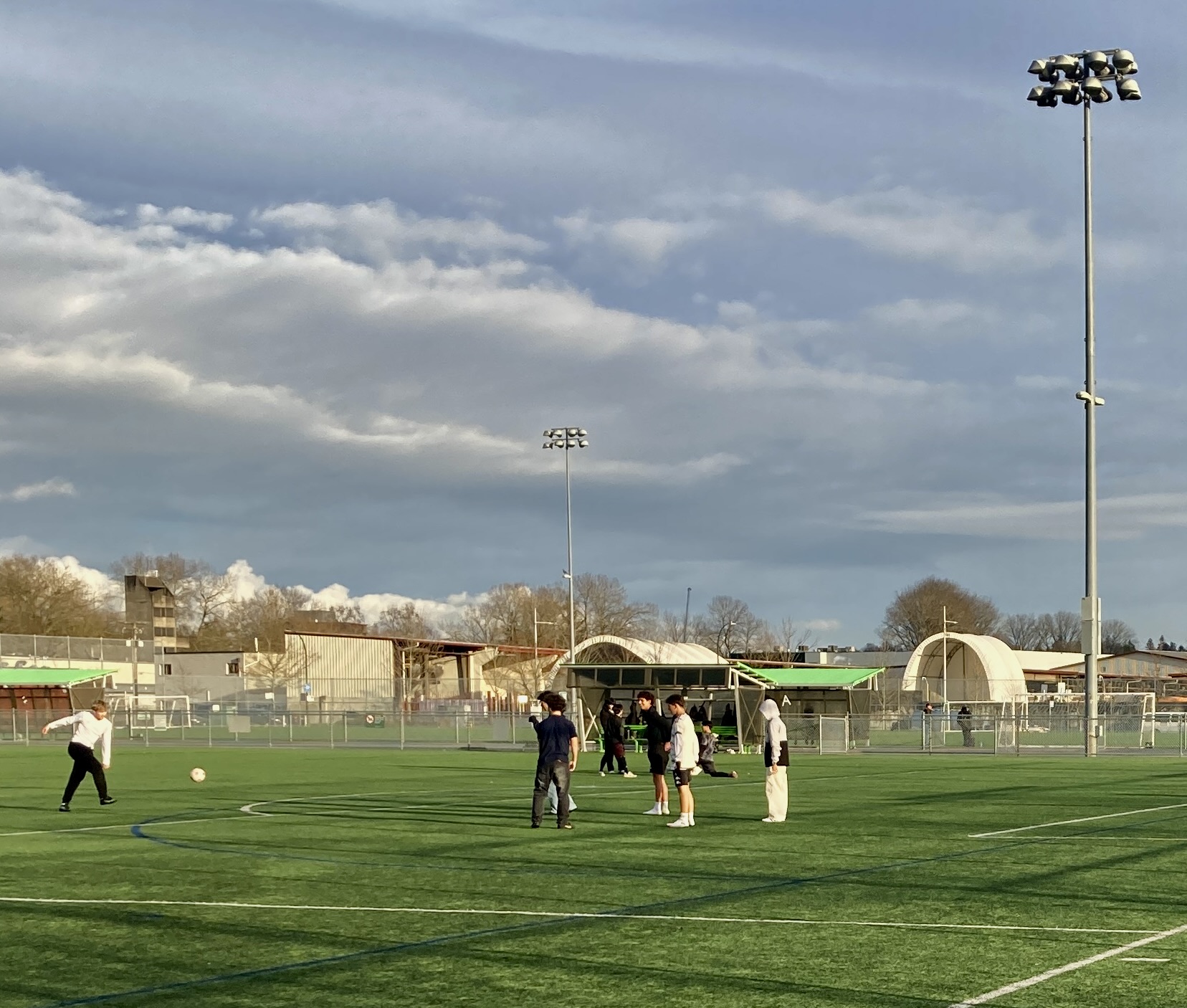
and even I have bare hands and an open jacket.
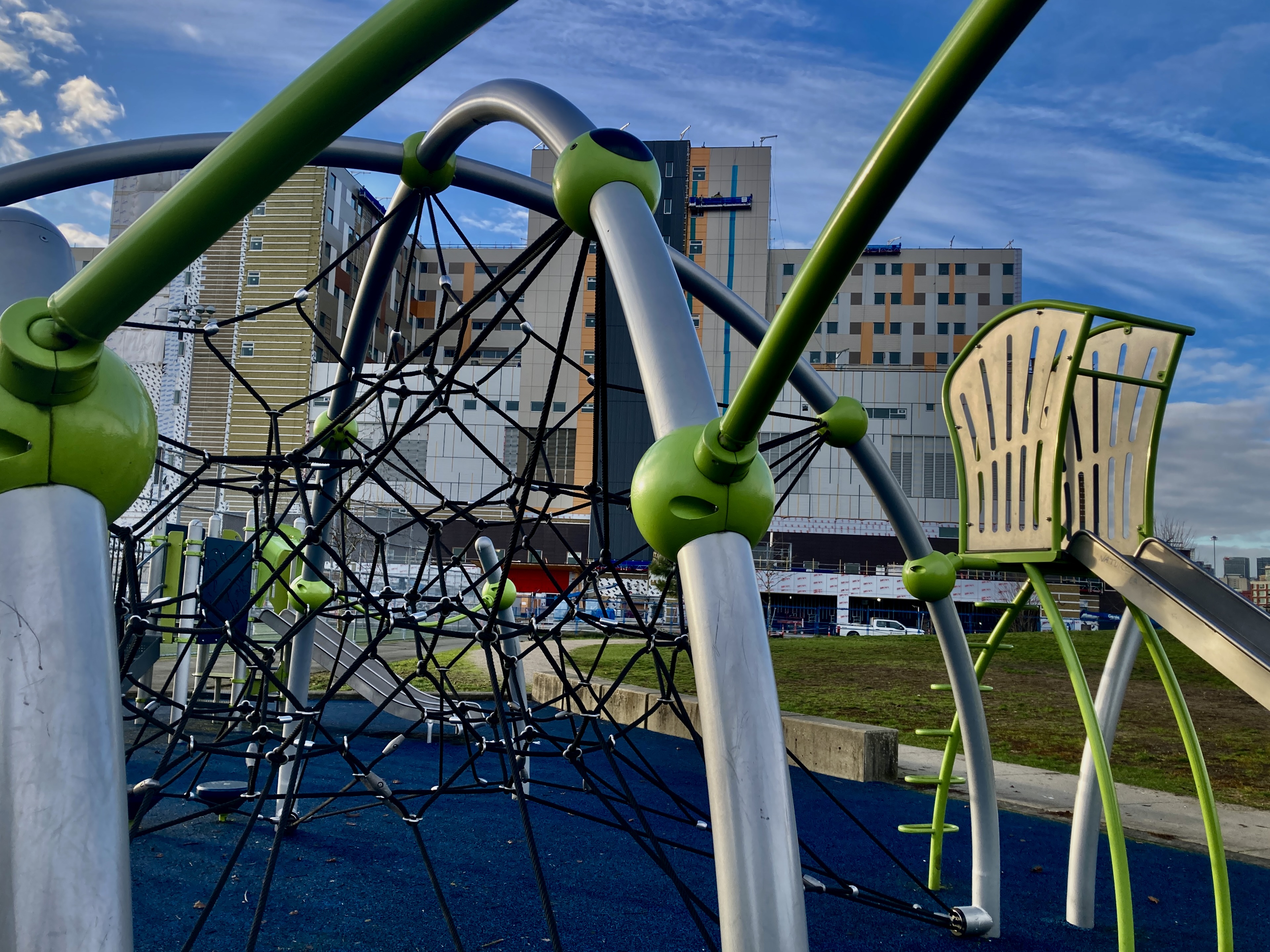
One last glance at the hospital complex through playground equipment in spiffed-up Trillium Park…
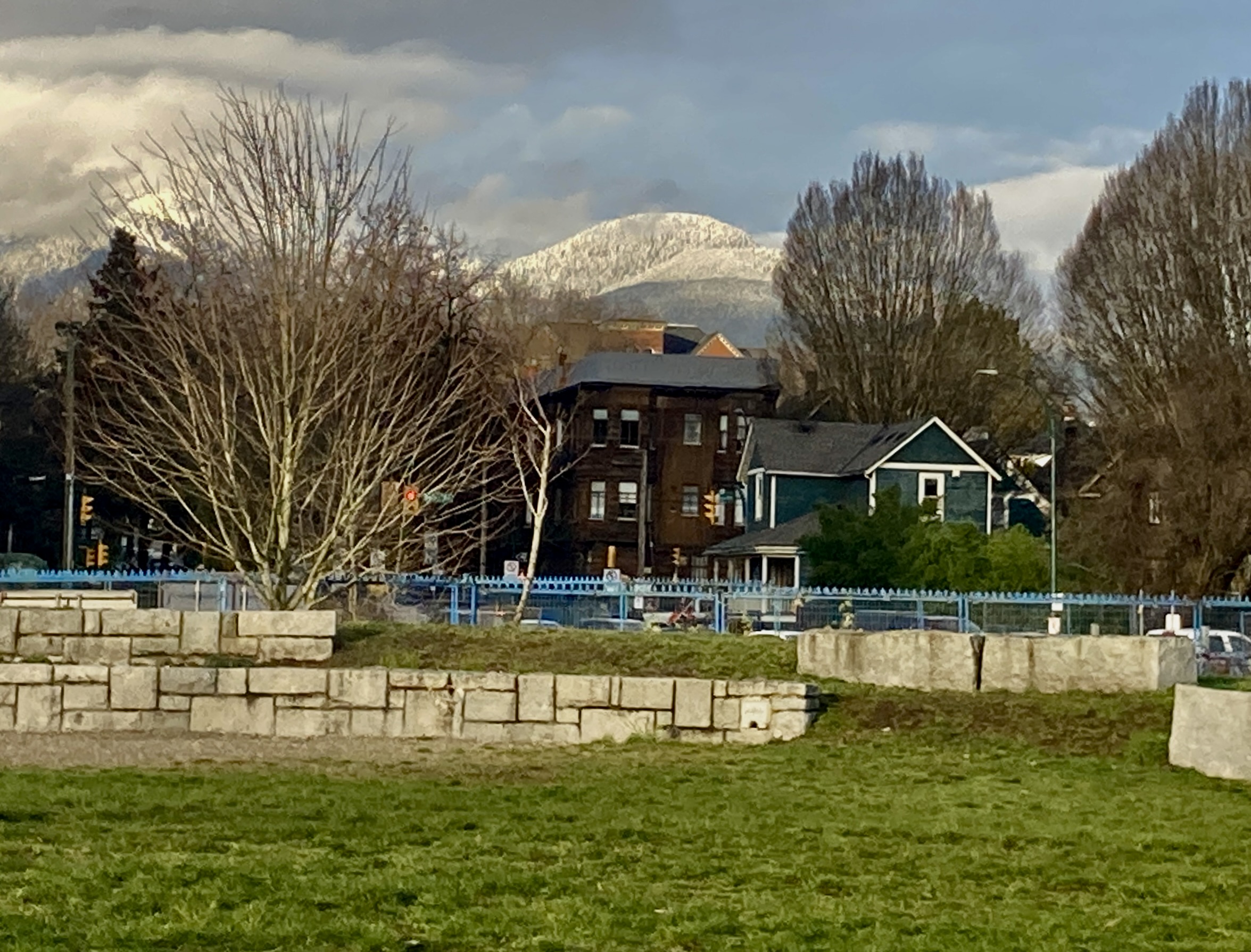
one last salute to all that high-altitude sparkling snow…
and I carry on north & west into Strathcona, heading for Main Street the other side of Chinatown.
My zigzag takes me between two very modest apartment complexes. I’m thinking they’re a bit on the grim side, then slap myself for snobbery. Whatever their aesthetics, they are clean & tidy & details like paint and windows look well-maintained.
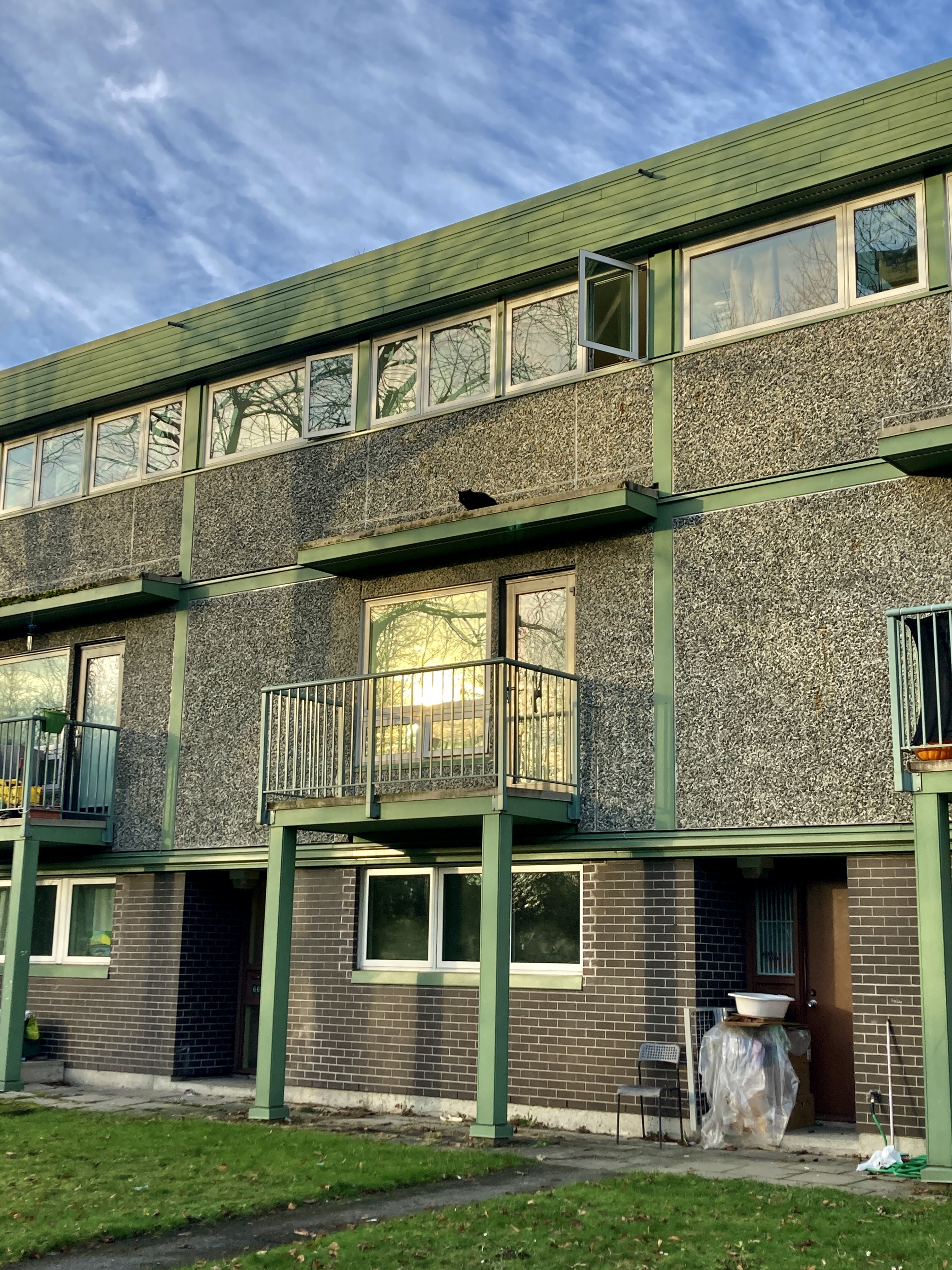
But that’s not why I’m showing you this photo. After you pass (or don’t pass) your own judgment on the aesthetics, please note the black blob on the ledge between the centre balcony and the open window.
See it?
It is not a blob.
It is a cat.
Out of the corner of my eye, I caught sight — or so I thought — of a cat tumbling out that open window, surely to his death. He does not die. He lands on the ledge. I stand there, waiting for him to start wailing for help. He does not wail. He settles down, toes curled over the front of the ledge, and does what he clearly does on a regular basis. He fills his lungs with fresh outdoors air, and watches the world go by.
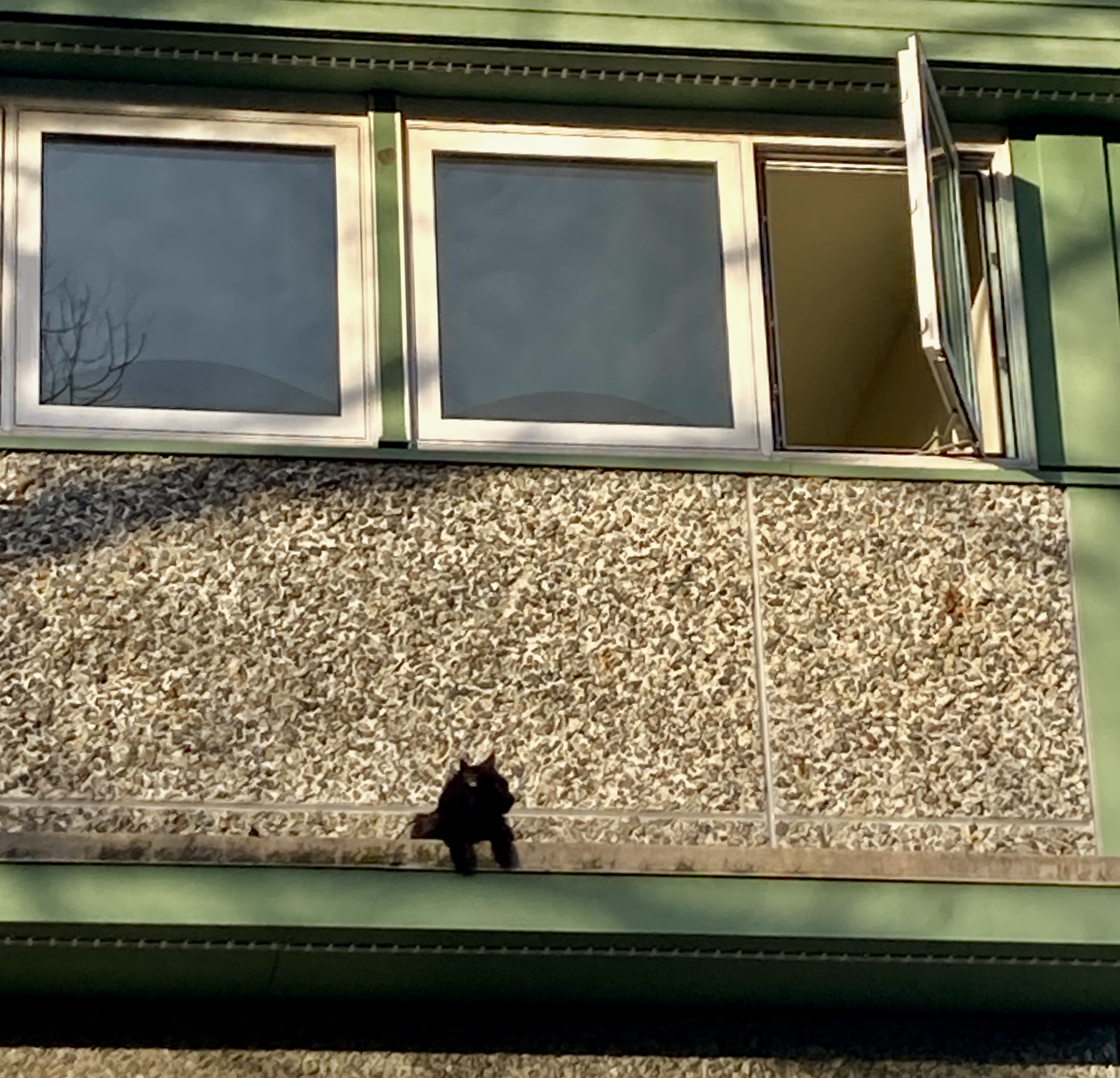
I salute him with great respect. He ignores me.
I walk on.
Posted by icelandpenny on 10 January 2026
https://icelandpenny.com/2026/01/10/new-moss-new-builds-new-snow-a-very-calm-cat/
6 January 2026 – True, it’s a new year.
But the clinic doorway…
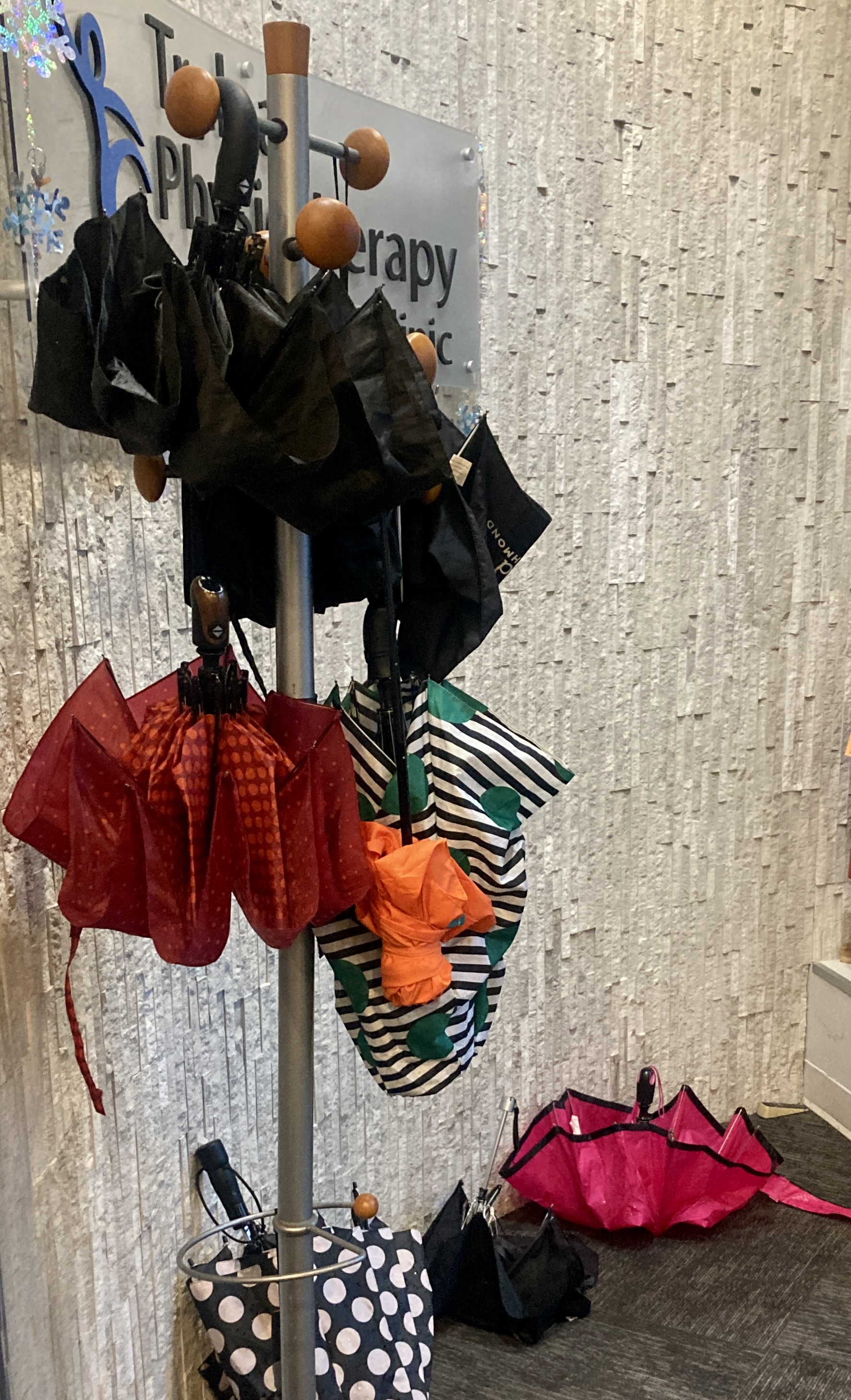
and the bus window…
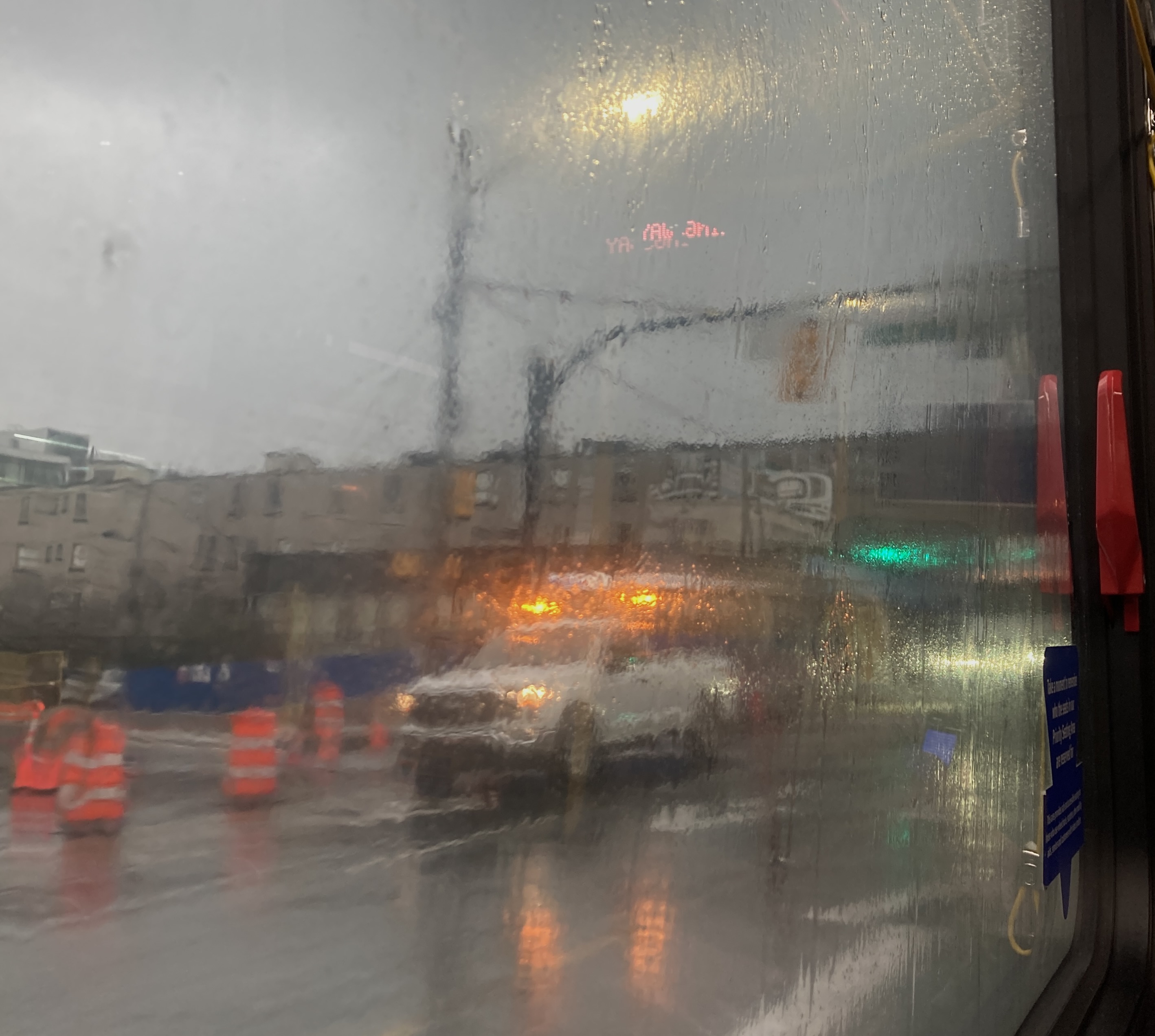
both tell us:

it’s the same old weather!
Posted by icelandpenny on 6 January 2026
https://icelandpenny.com/2026/01/06/same-old/
1 January 2026 – Well, it is forward, isn’t it, when the reverse of your usual choice offers a new way to look at things. It’s hardly a major life breakthrough, but it does qualify as a pleasing little experiment, and worthy of the first day of a new year.
My “little experiment” is to walk the Burrard Inlet Seawall east-to-west between Waterfront Station and Stanley Park, instead of west-to-east. I know: small stuff indeed. But the fog is burning off, and it isn’t raining, and the temperature is comfortably above zero. Good reasons to drop off a bus at Waterfront Station, and get myself down to the water by Canada Place.
Tourists and locals stroll; the sights present themselves for admiration:

the fabric roof “sails” of Canada Place, the rental bicycles, a SeaBus completing its run from North Vancouver, a laden freighter and, of course, the orange cranes that tend to the freighters.
After that, my eye seems to focus more on slivers of scenes, not the whole panorama.
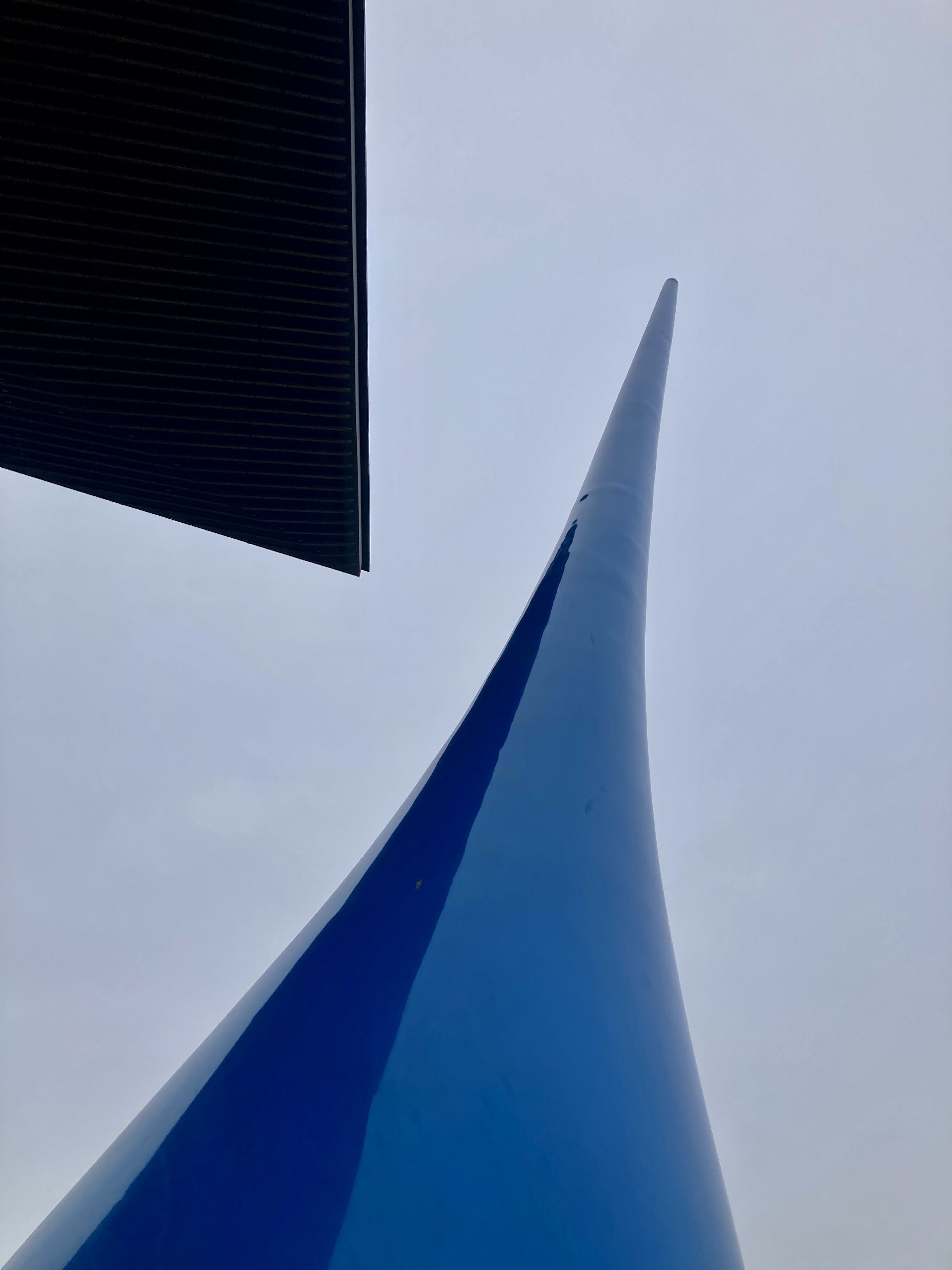
The tip of The Drop, the 2008 sculpture in Bon Voyage Plaza by the German four-artist collective Inges Idee that honours our temperate rainforest status with one elegant raindrop…
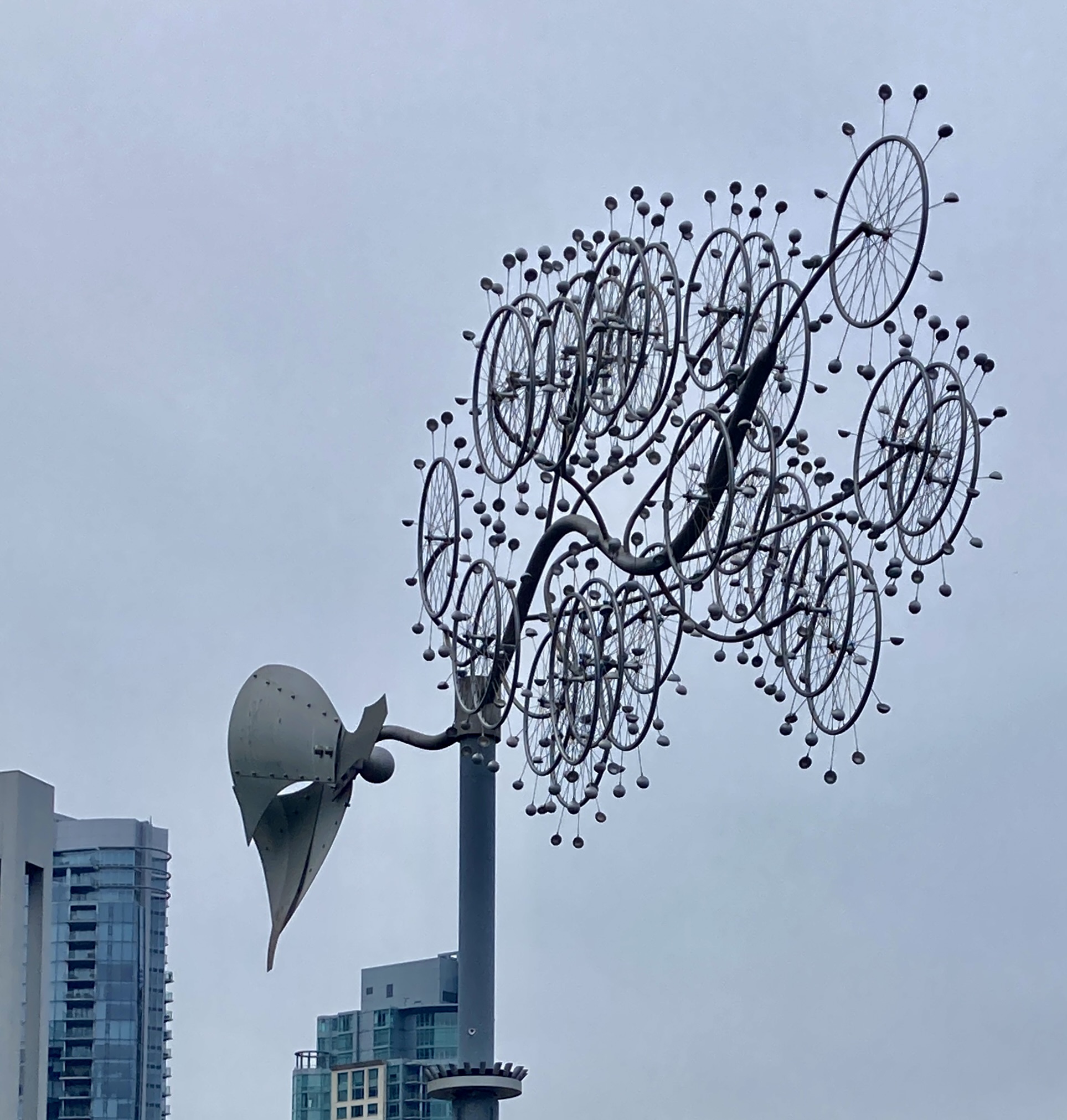
Doug Taylor’s kinetic weathervane Wind Wheel Mobile just west of the Convention Centre, which, from this angle, resembles a bobbing duck more than a weathervane…
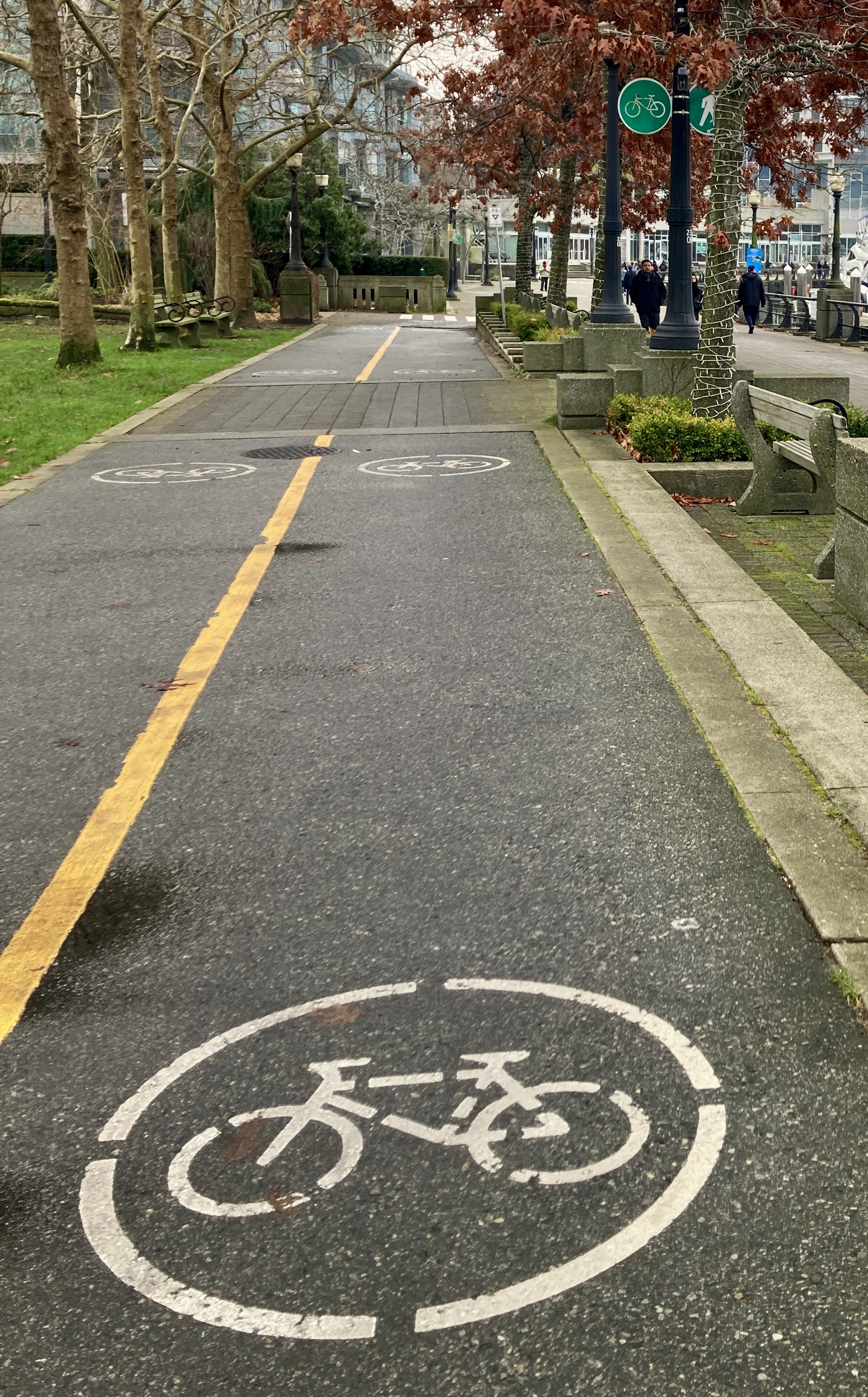
Seawall bike lanes bordering the west side of Harbour Green Park, under a russet canopy of (I think!) winter beech leaves…
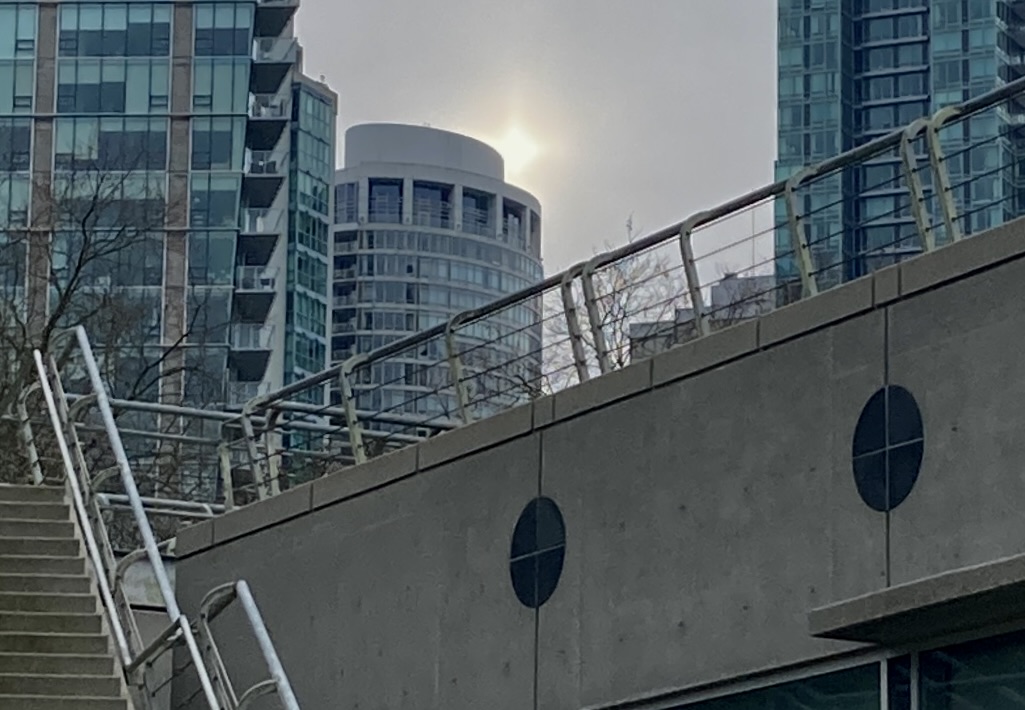
and the merest ghost of the sun, glimmering through the fog between buildings at the top of a Coal Harbour Park staircase.
I spend a moment with Santa’s floating gift “To YOU” in the Coal Harbour marinas.
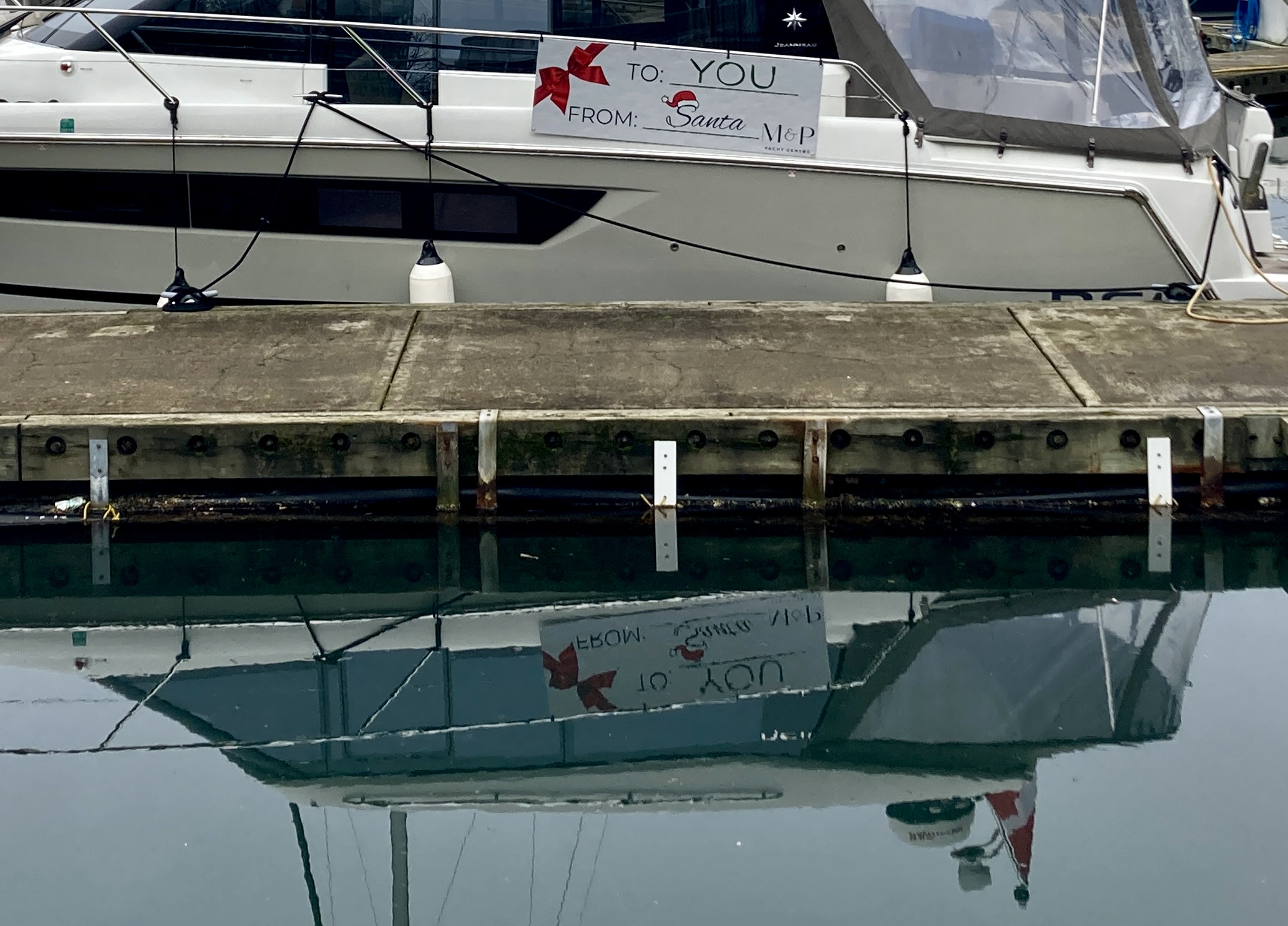
Really a lavish Christmas present? Or, wait a minute, a clever-boots For Sale sign? The suspiciously generic label bears the M&P Yacht Centre logo, after all.
Far (west) end of the marinas, and I pause again, this time for something I feel no need to interpret.
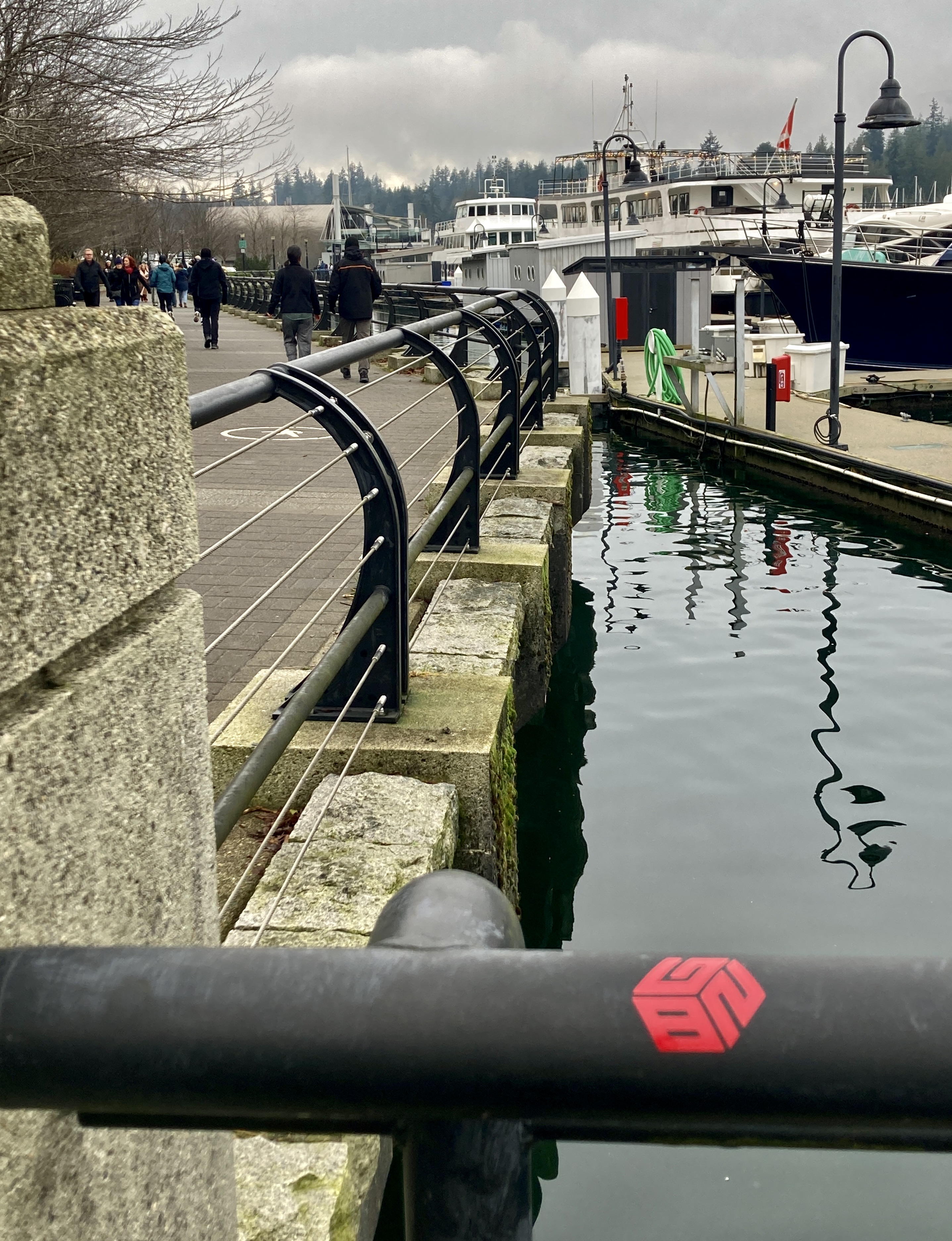
A red cube sticker + a vee of water. I just like it.
Then the brass curve of the Coal Harbour Fellowship Bell (commemorating the companies and people of the “self-contained industrial marine community” that, 1891-1979, populated this area)…
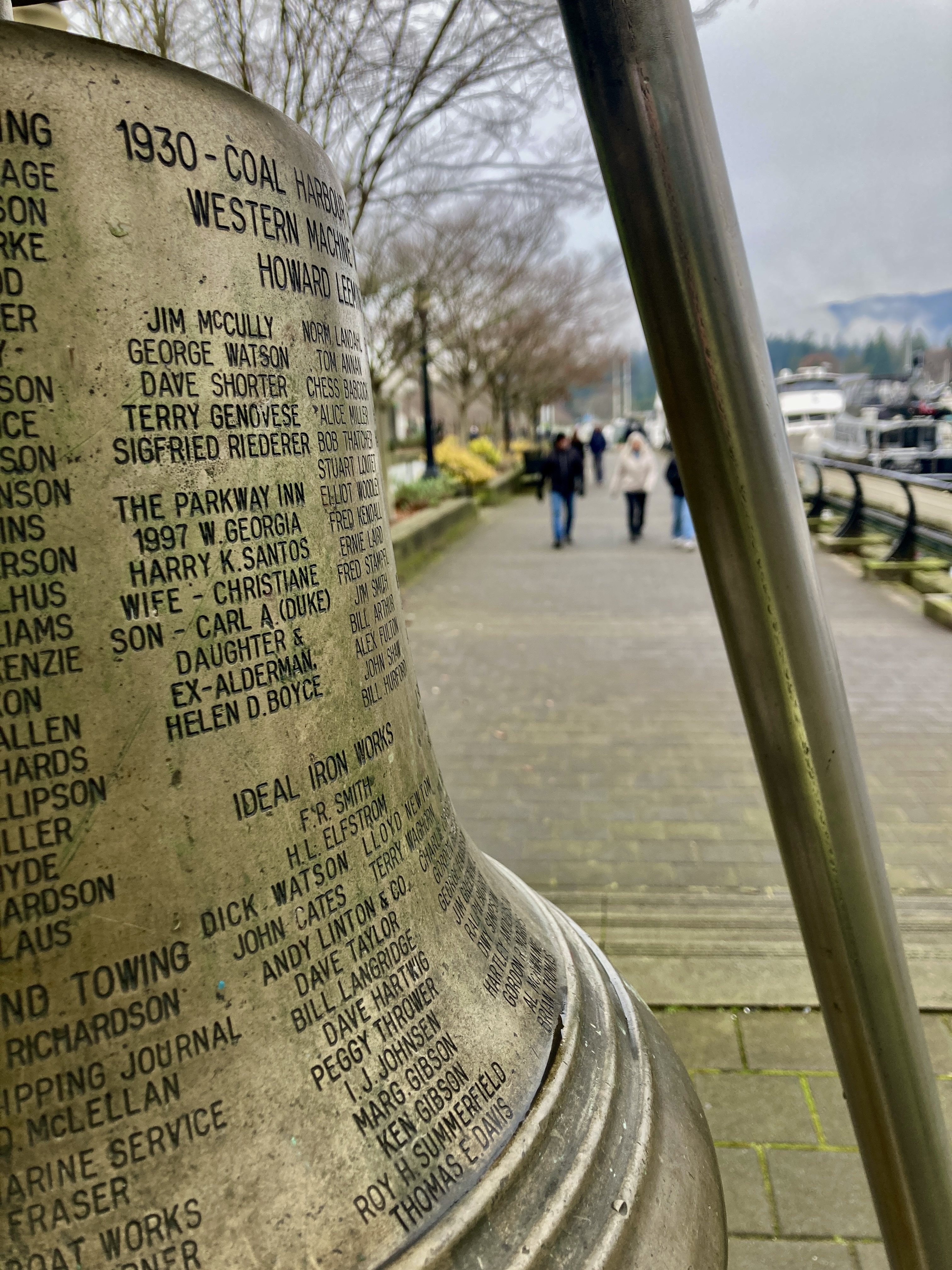
and then more red, and another curve. This time red bobbing in the water, not fixed above it, and in a sinuous horizontal arc, not vertical.
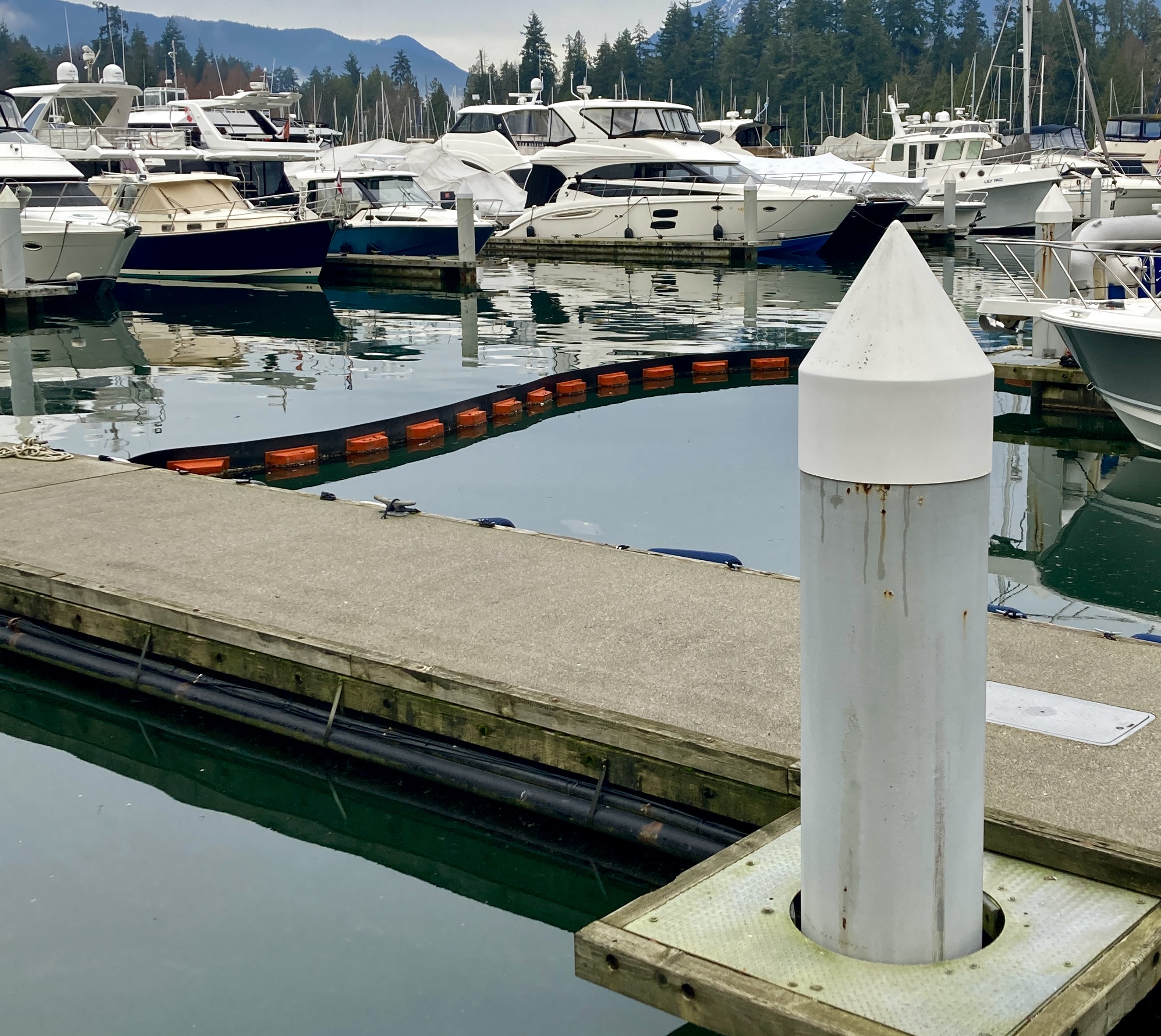
A bit more hoofing along, and, finally, I am here.
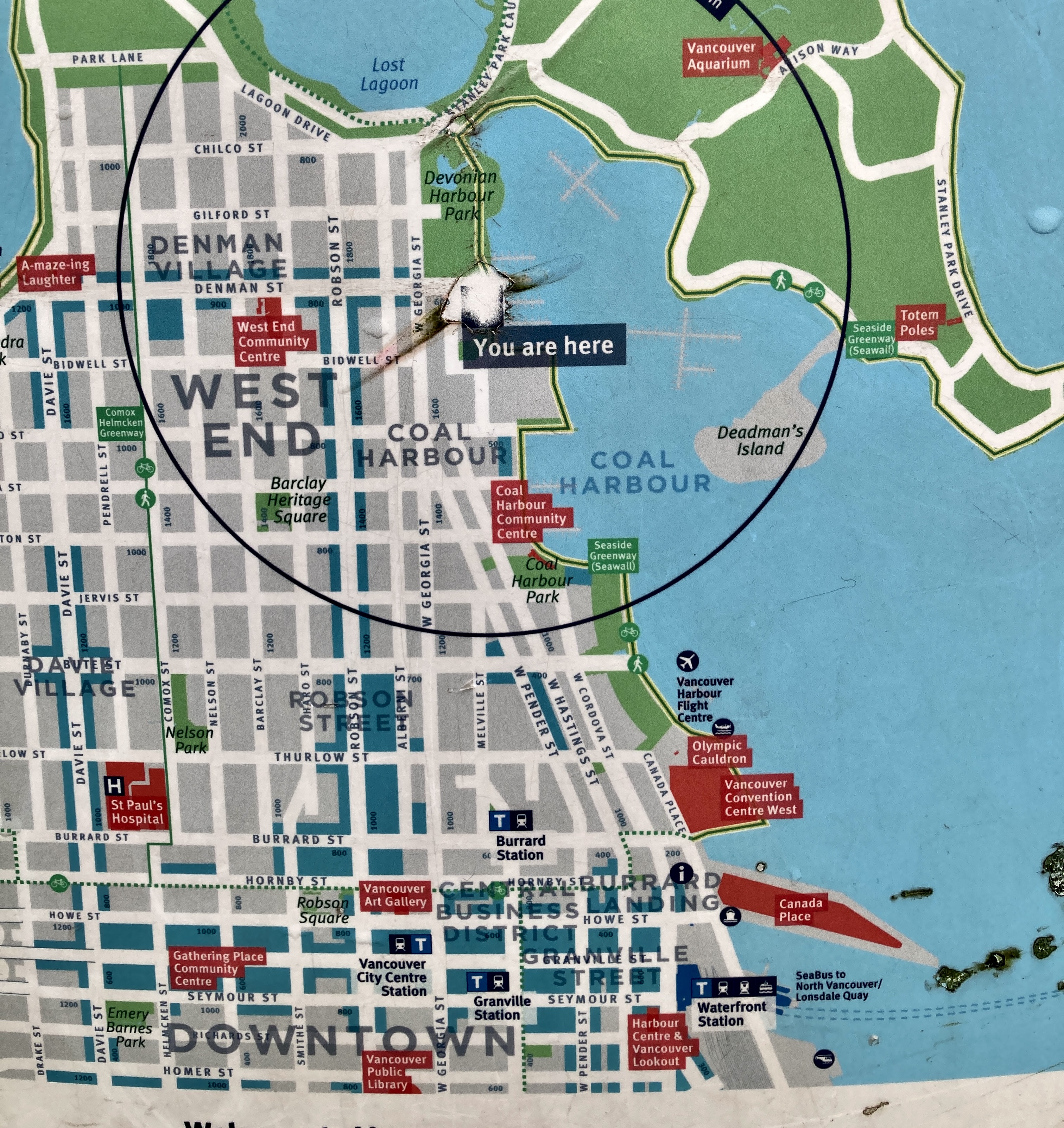
I am exactly where the map says I am: on the Seawall at the east end of Devonian Harbour Park, in turn a gateway to Stanley Park, and also the end of my route from Waterfront Station, down there in blue/white signage at the bottom of the map.
Time for me to follow the snake fence through the park…
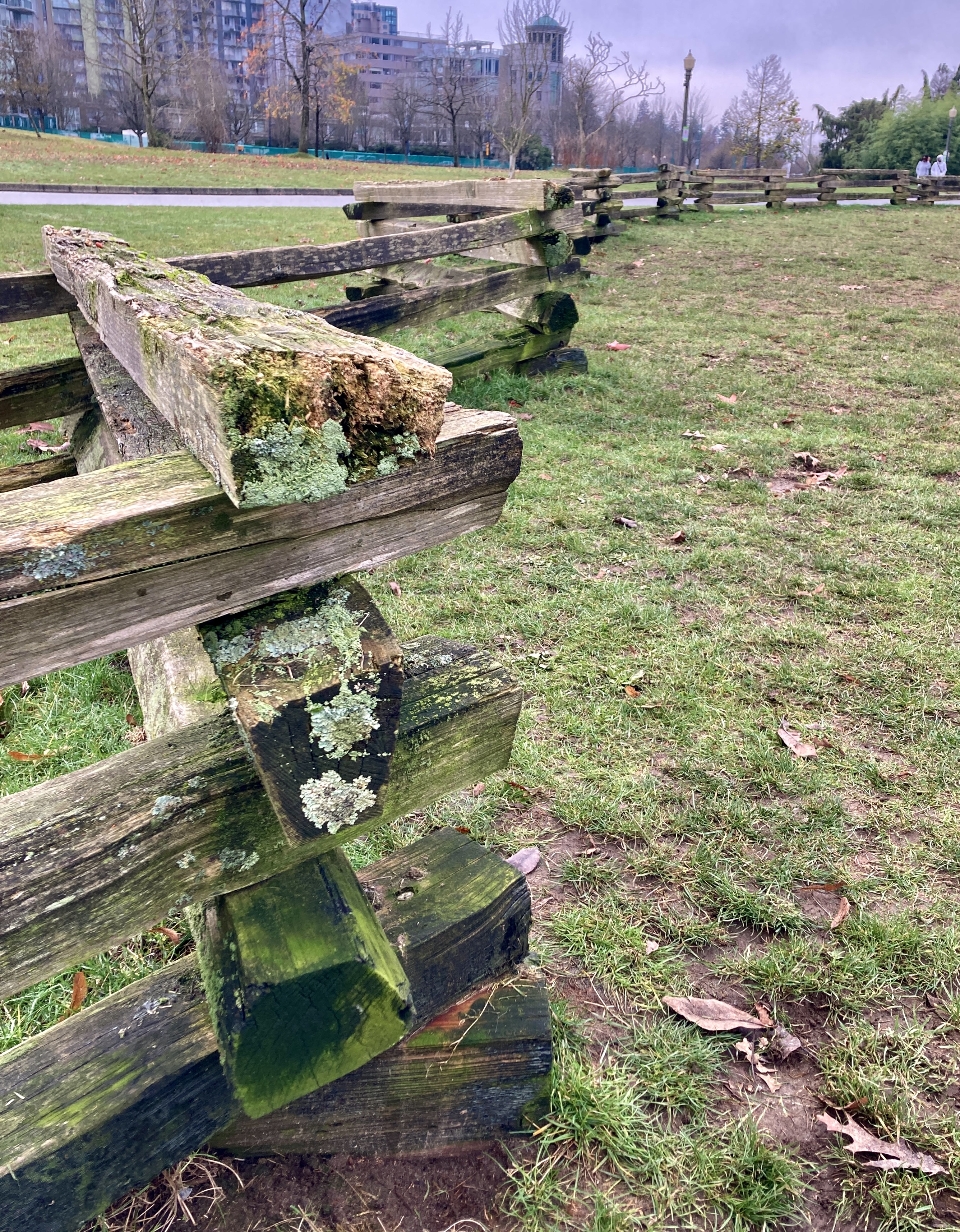
pause to take group pictures for some happy tourists, then….
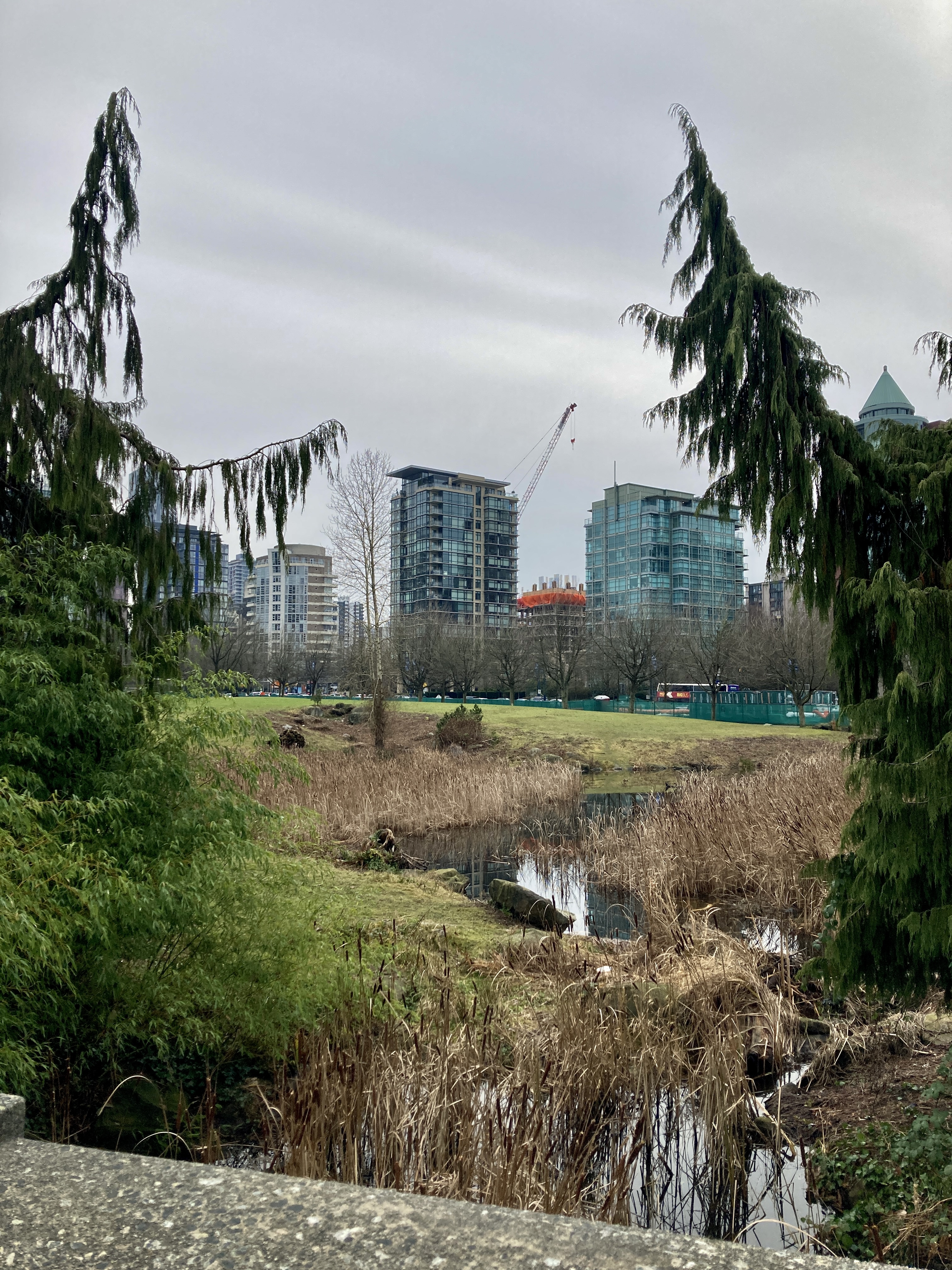
cross this little bridge, and angle up along the creek to those cranes and new-builds on West Georgia.
Where I hop on a trusty #19, and ride my way home.
(Happy New Year, everyone! I so appreciate your interest and generous good humour.)
Posted by icelandpenny on 1 January 2026
https://icelandpenny.com/2026/01/01/forward-in-reverse/
29 December 2025 – It starts with a cat, not that the feline has any connection with our reasons for being on East 6th and poised to head north on Quebec.
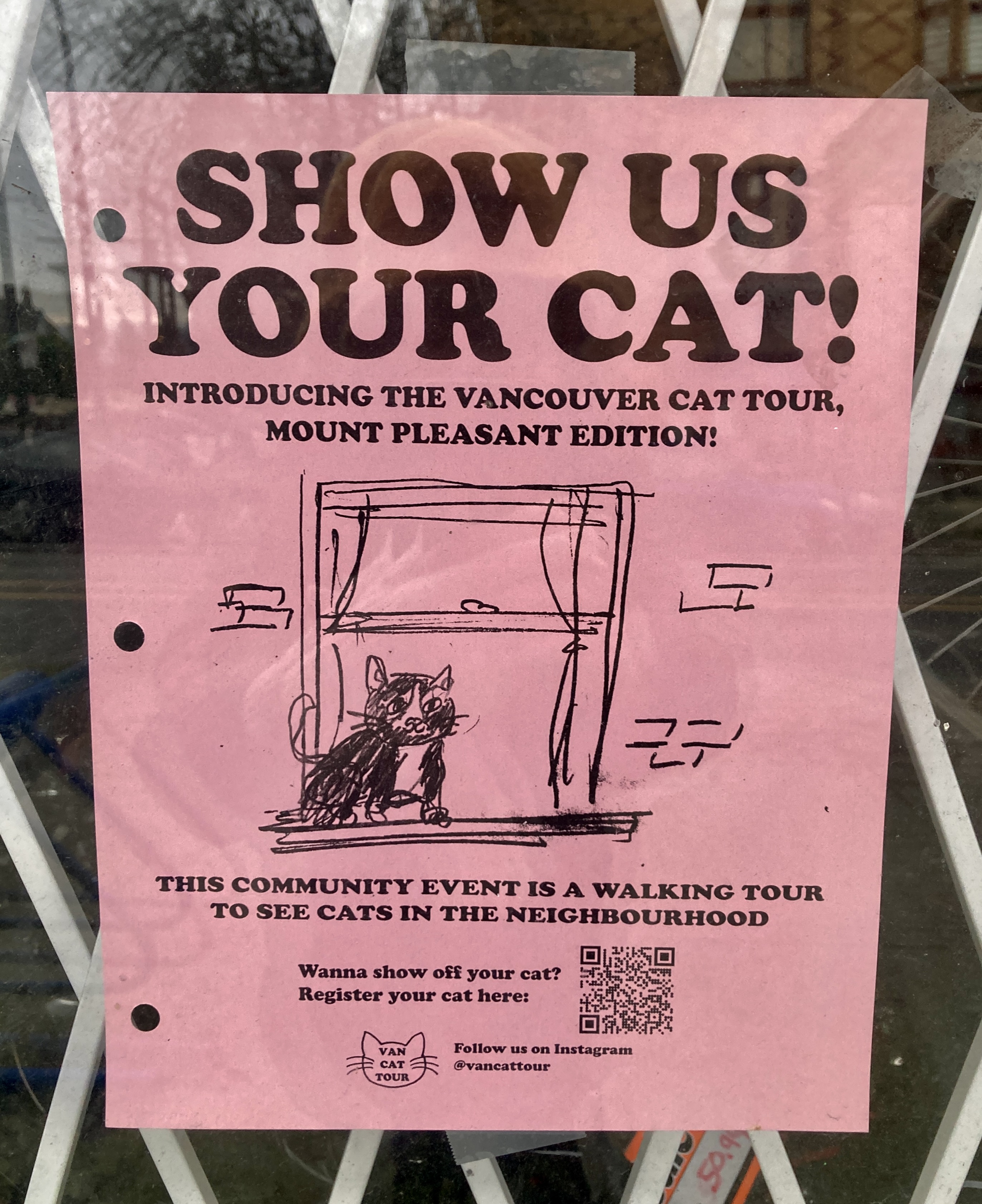
But who could resist? I promise myself I’ll pursue that code once I’m home.
Meanwhile, on we go. On down Quebec St. to the water. We are en route the Village dock, about to make a two-ferry trip all the way west to the Maritime Museum dock.

Our goal isn’t even the Maritime Museum. Ferries are just the most delightful way to get ourselves to the Museum of Vancouver, out there in Vanier Park, for their twin exhibitions about chairs: Deep-Seated Histories (old chairs in their collection) and Future Makers (new chairs by Kwantlen Polytech students).
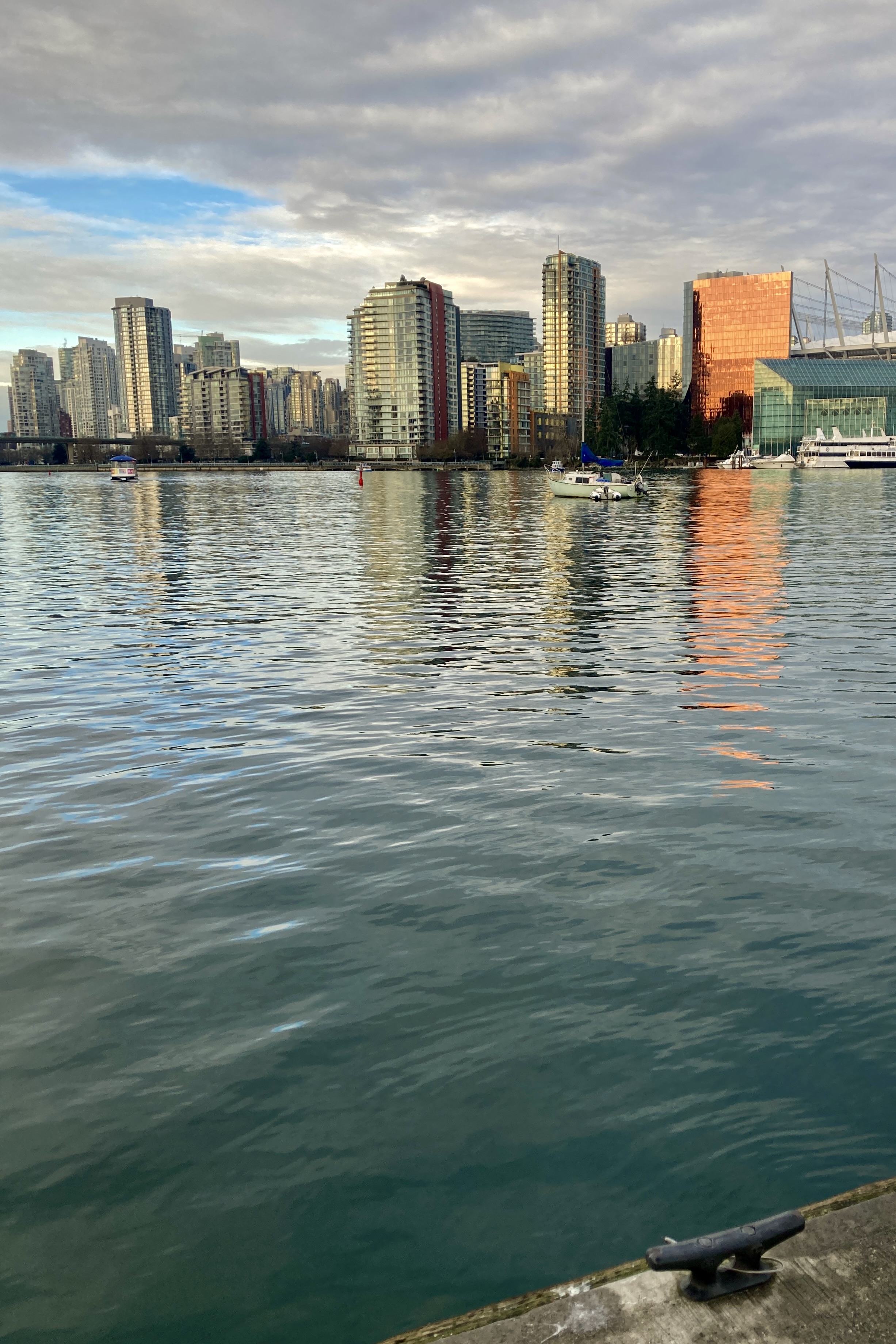
Light travel — reflections across the water — captures us before we even leave our home dock. Copper light, rippling its way south across the water.
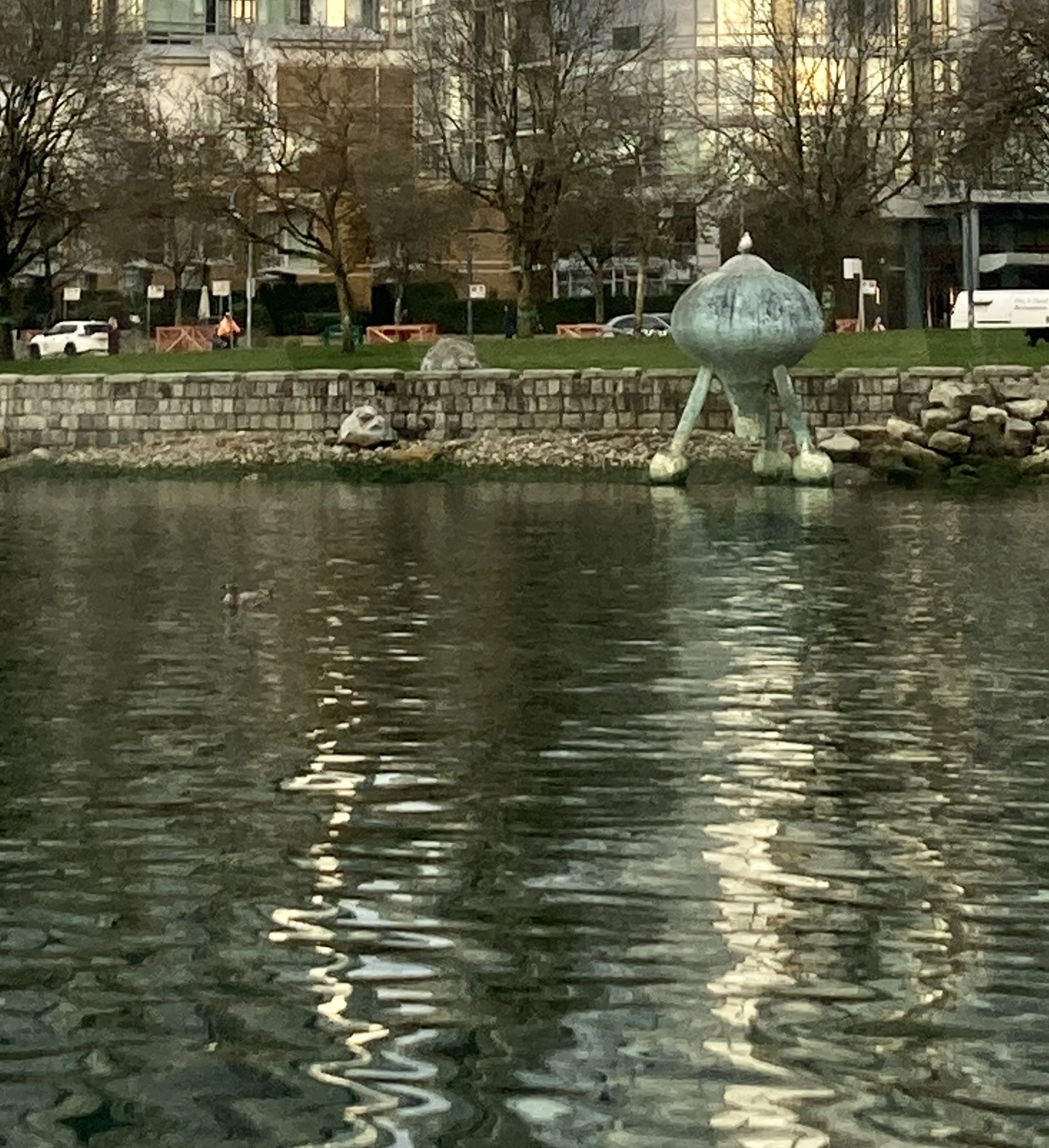
Light travel + time travel: Jerry Pethick’s Time Top sculpture sends its own ripples southward as we pass the Cambie Bridge.
From one ferry to another at Granville Market, and soon we dock at the Maritime Museum — a free outdoor exhibit of vintage wooden vessels. And, not incidentally, home to the non-profit Oarlock & Sail Wooden Boat Club, housed in the floating Wooden Boat Shop.
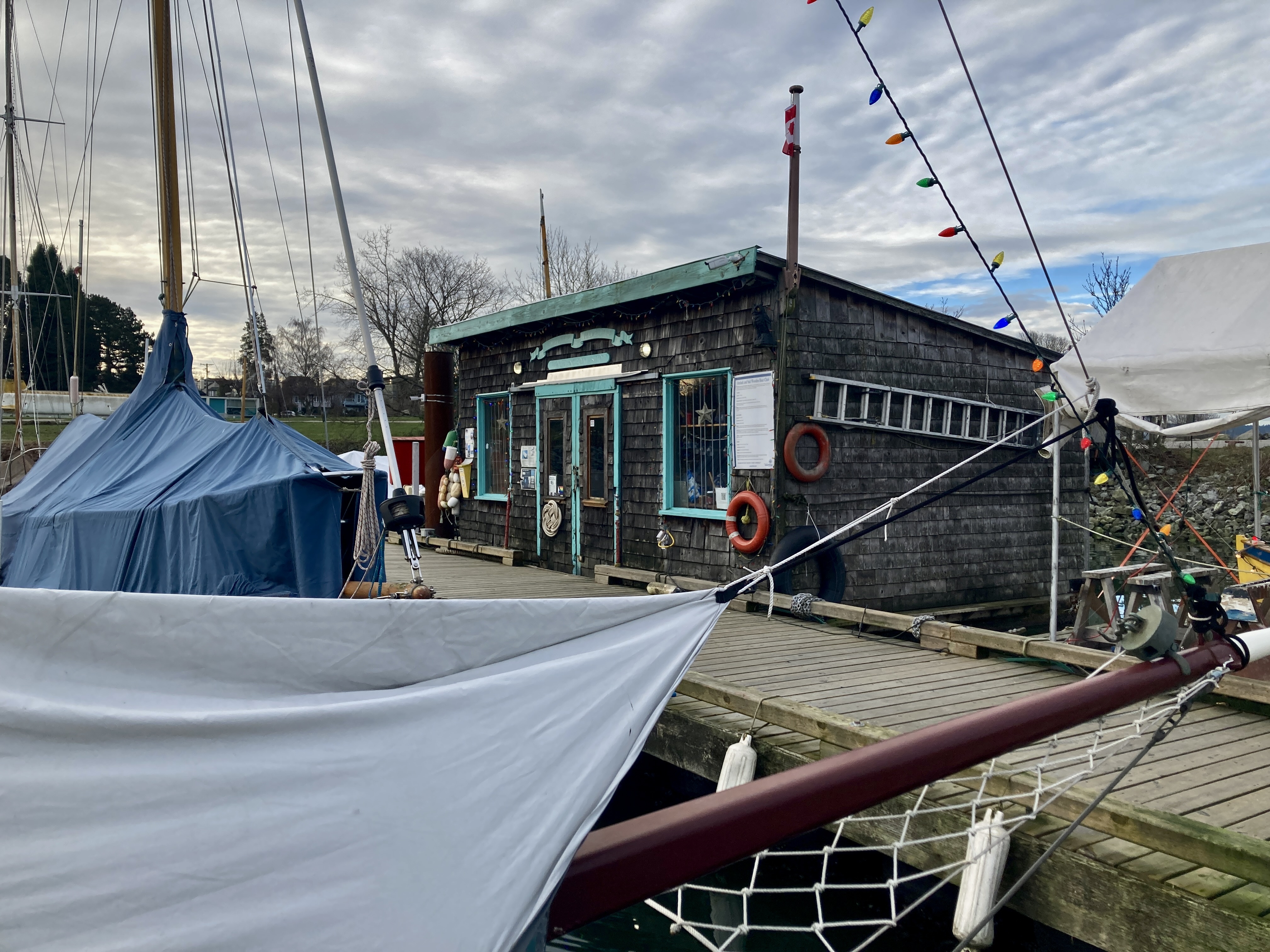
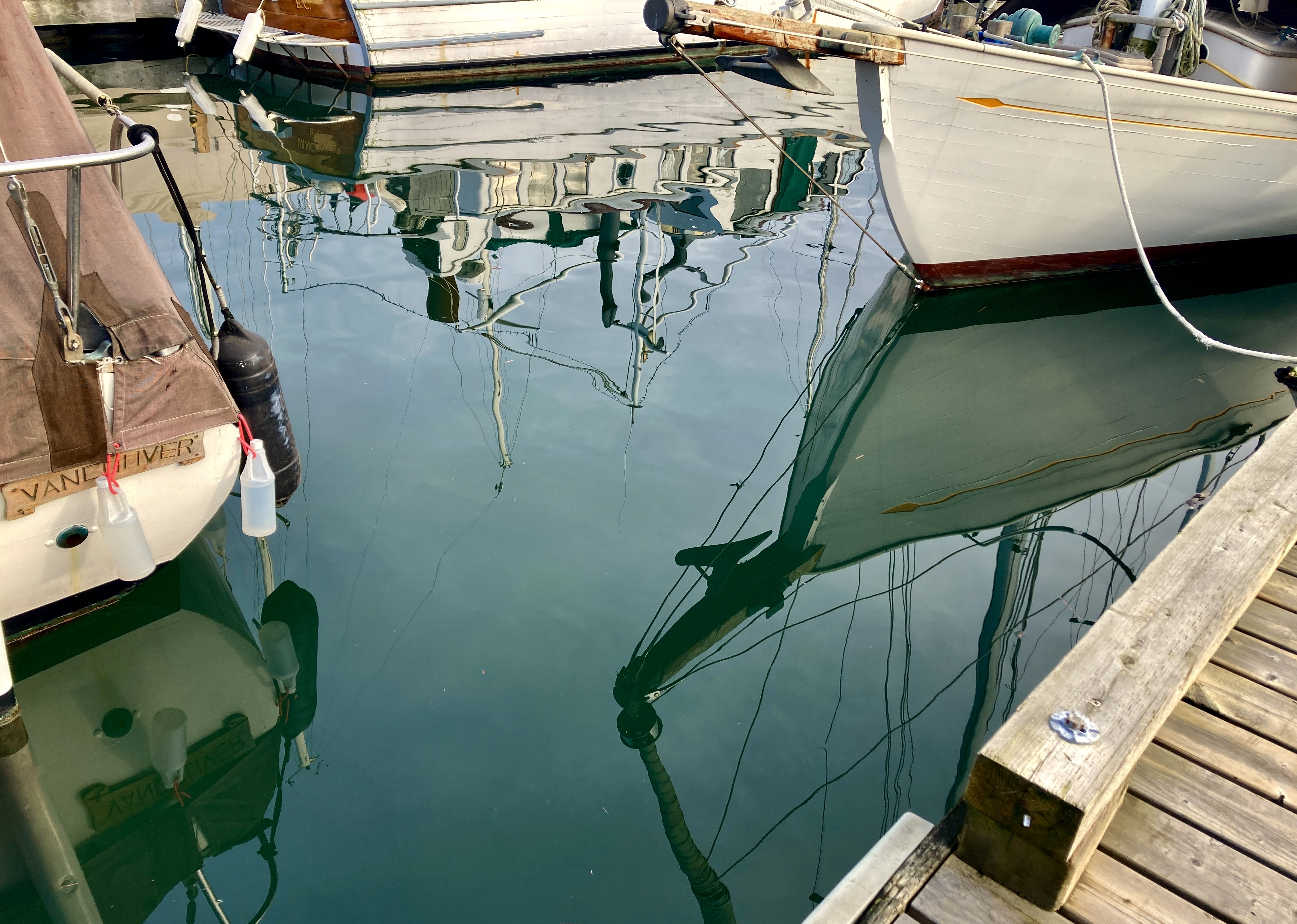
More light travel, shimmering among the aged vessels (many wrapped against winter, but alas therefore incognito as well).
From light travel, back to time travel.
Barni-cycle!
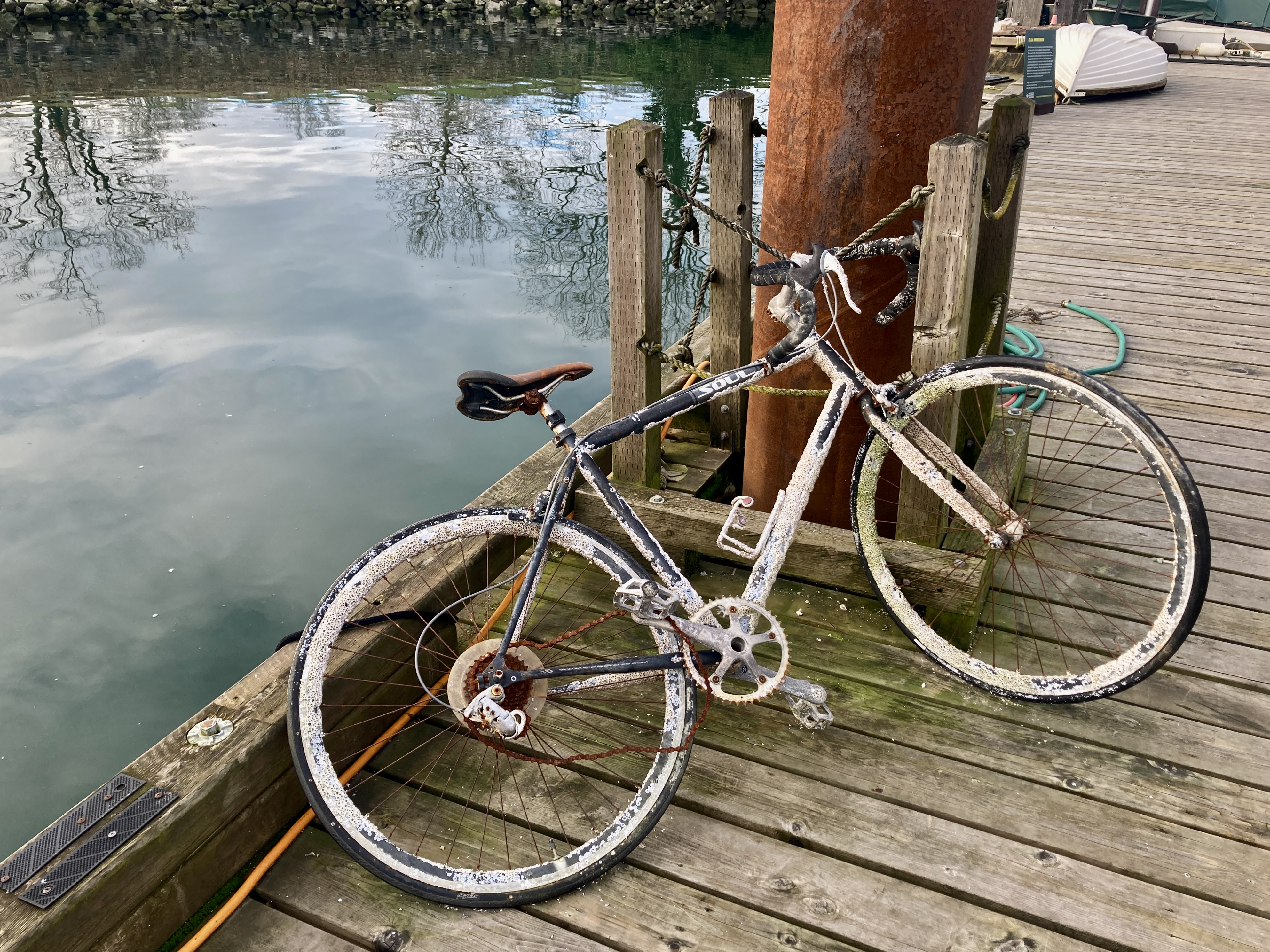
It didn’t collect all those barnacles in just a day or two.
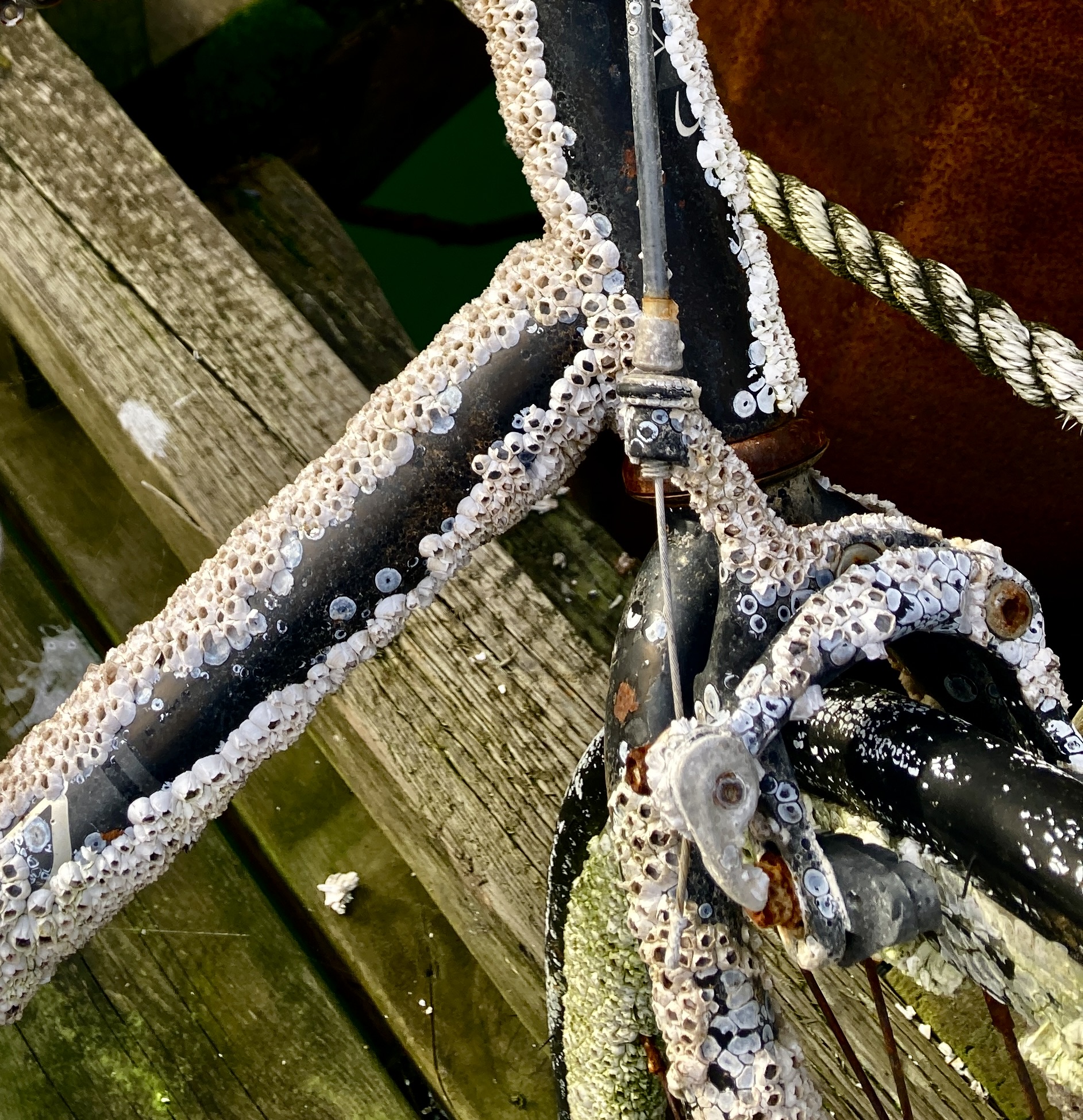
I add an extra layer of time travel + distance travel.
I bounce myself back years and back east to the Art Gallery of Ontario’s display of Simon Starling’s Infestation Piece (Musselled Moore). It shows what happens when first you make a faithful copy of Henry Moore’s Warrior With Shield, then you place it in Lake Ontario as an offering to zebra mussels for a few years, and finally haul it up again for display.
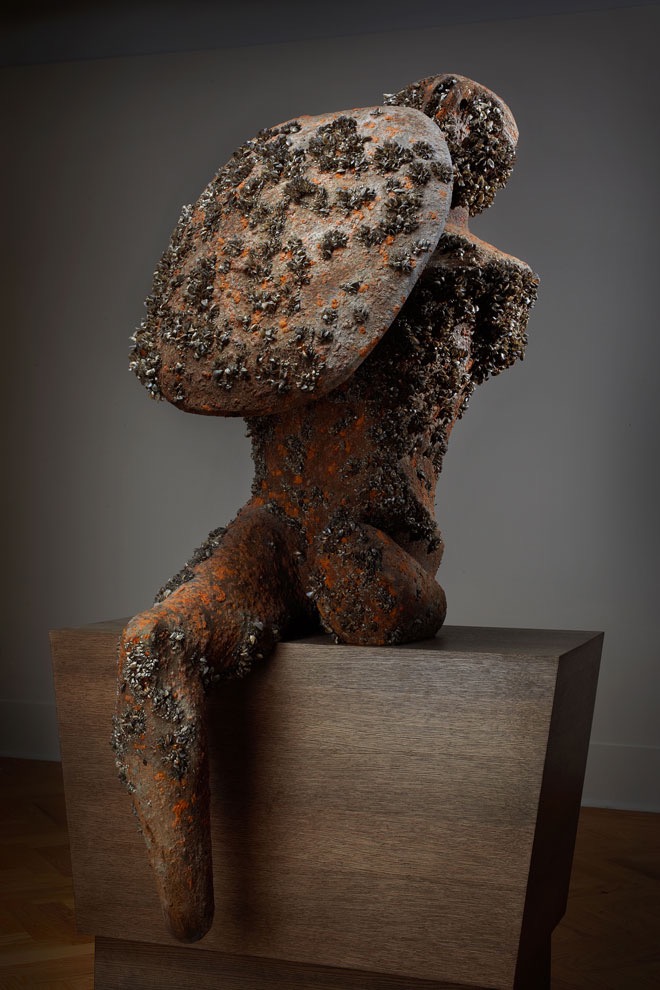
I shake that image out of my head, rejoin present time & place, and follow my friend to the MOV, where we meet another friend and all three of us go look at chairs.
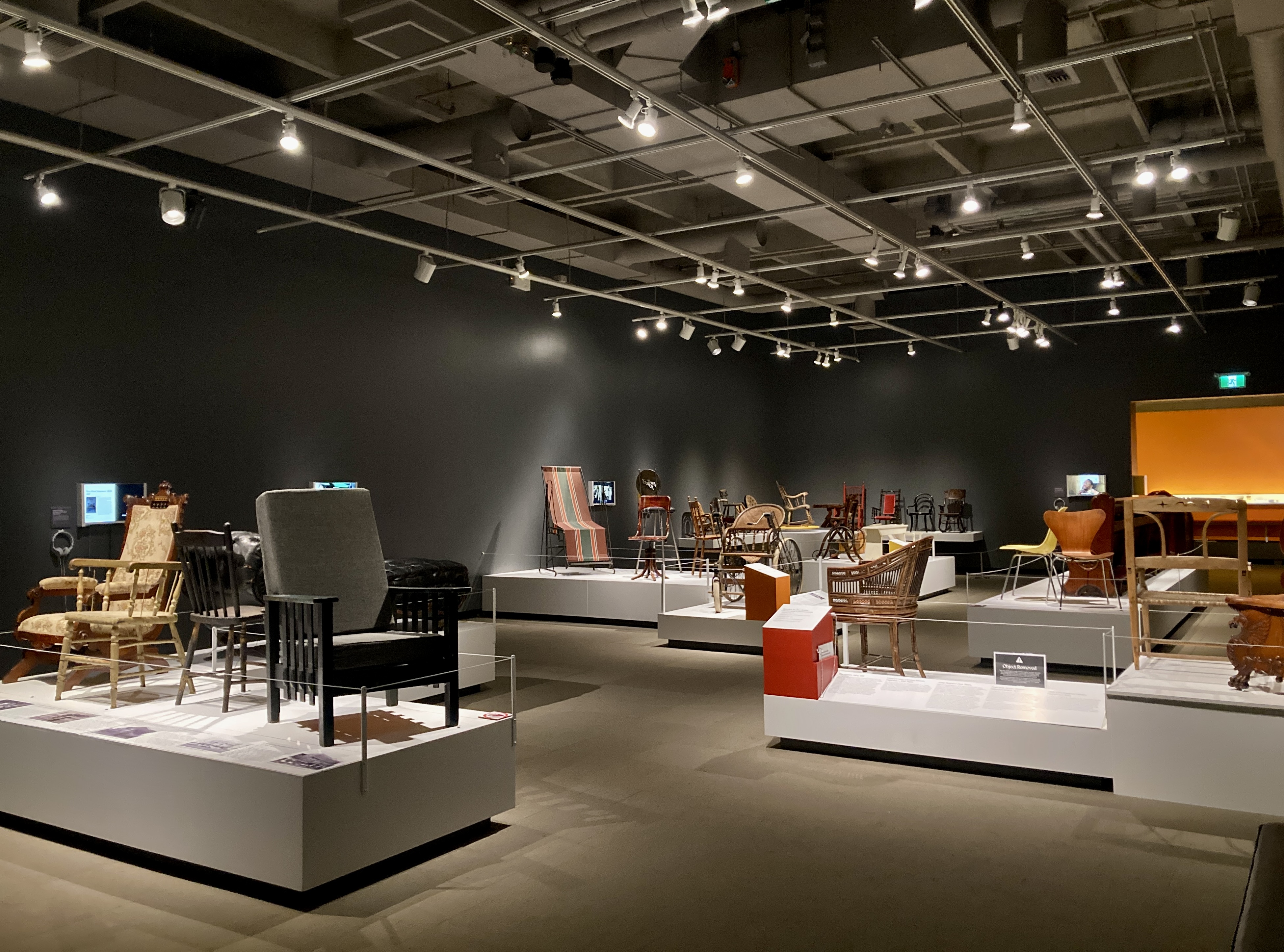
They are twinned exhibits. First, as seen above, Deep-Seated Histories of vintage chairs with local connections. But even here I’m back to light travel. No longer light crossing water to create reflections; instead, light crossing air to create shadows.
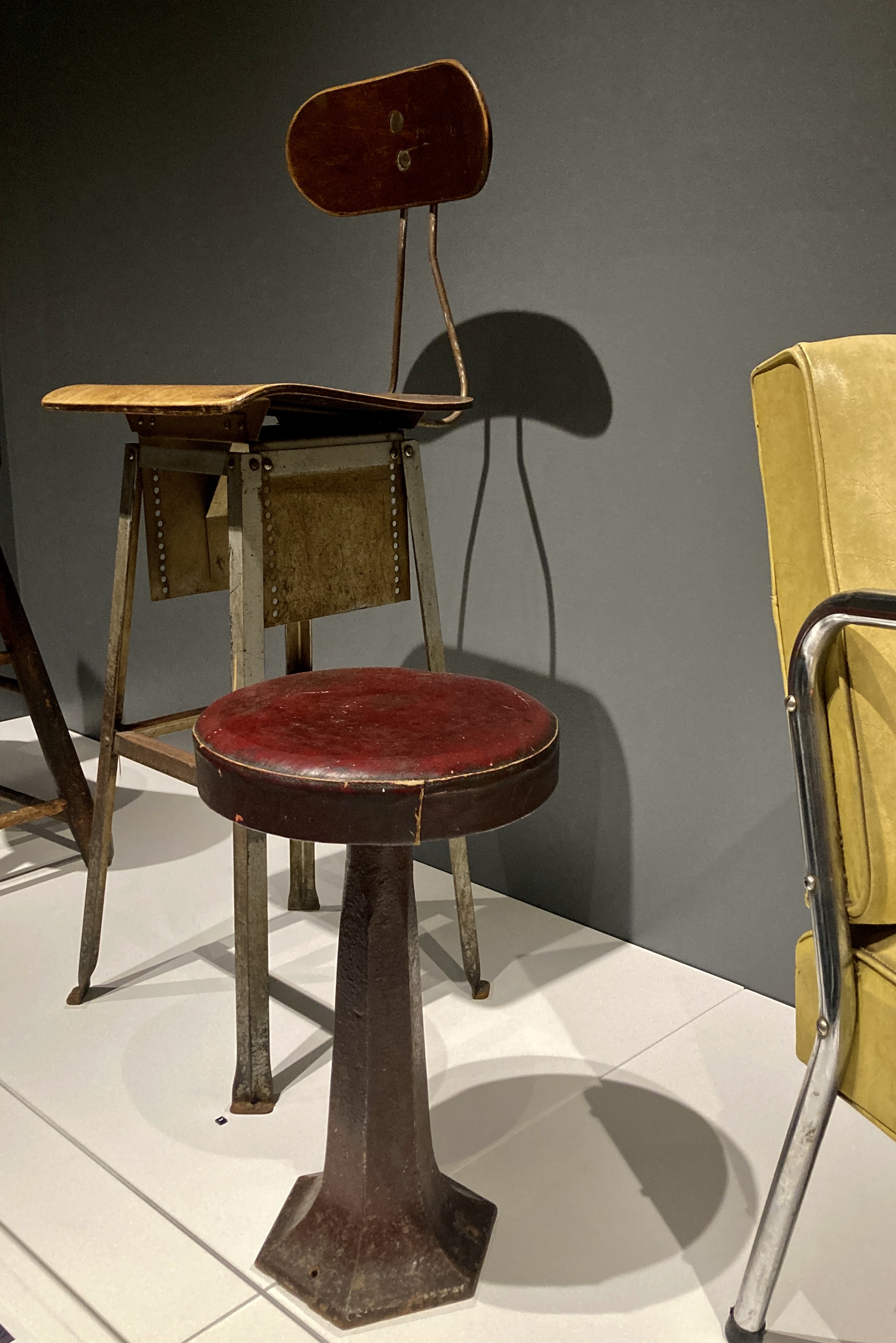
(Above) Edward’s Razor Repair Shop Metal Chair, 1930; and (below) Peter’s ice Cream Parlour Stool, c. 1930.
Later, in the Future Makers exhibit, more light travel, more shadows.
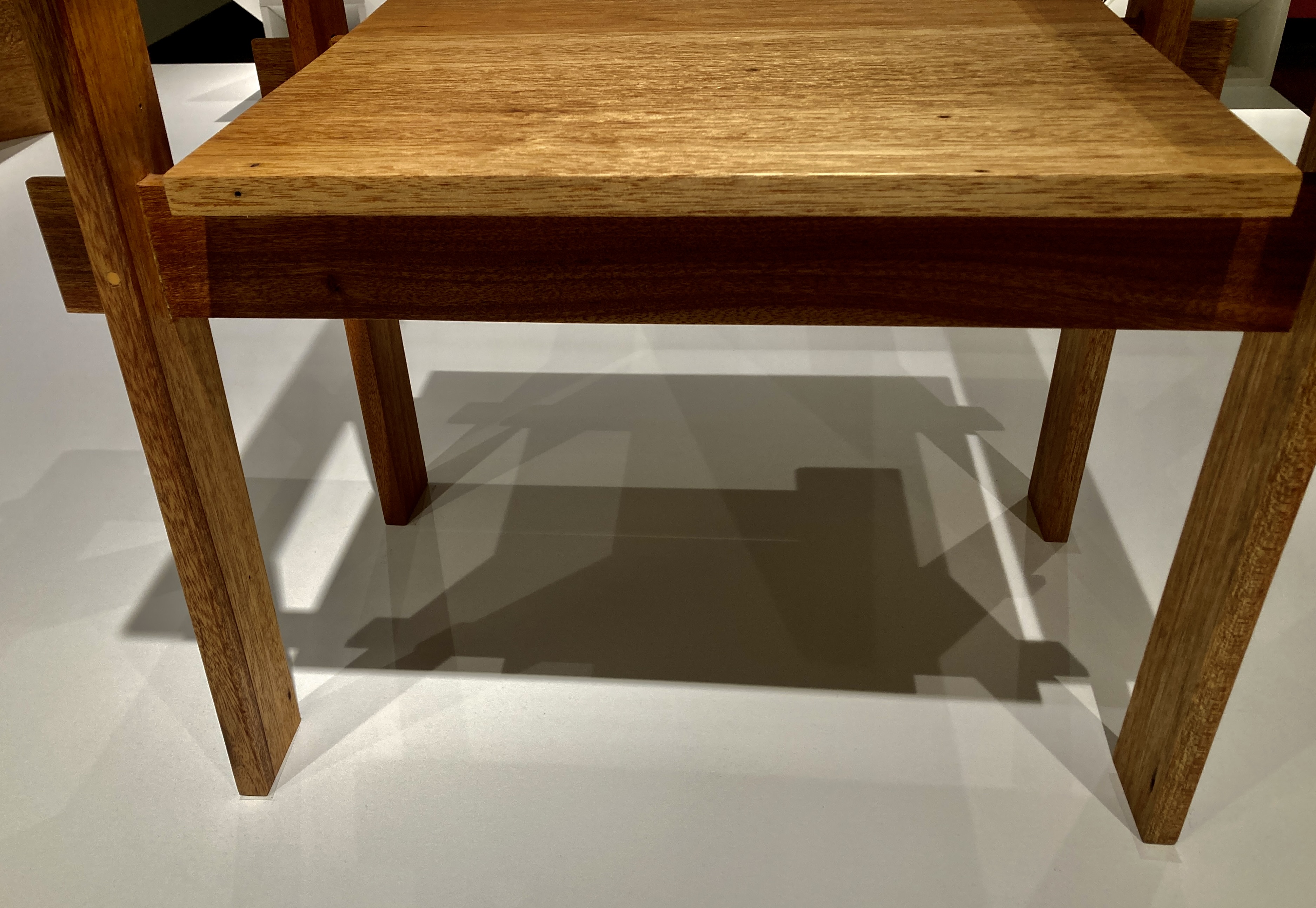
This time, beneath the Kuma Chair, in homage to Japanese architect Kengo Kuma and the outside lobby of his Alberni building here in Vancouver. The chair, its signage tells us, explores negative space. I see shadows.
And then more walk-abouts, and then lunch at the splendid Melo Pâtisserie, and then home.
Where I look up the code for that cat show. And discover it took place on 25 August 2025.
More time travel!
Posted by icelandpenny on 29 December 2025
https://icelandpenny.com/2025/12/29/light-travel-and-time-travel-and-the-flick-of-a-cat-tail/
18 December 2025 – Just a description, mind you, not a complaint. Compared to weather almost everywhere else in the country, including here in BC, Vancouver’s weather is a walk in the park.
But even so, it is still very windy and very wet!
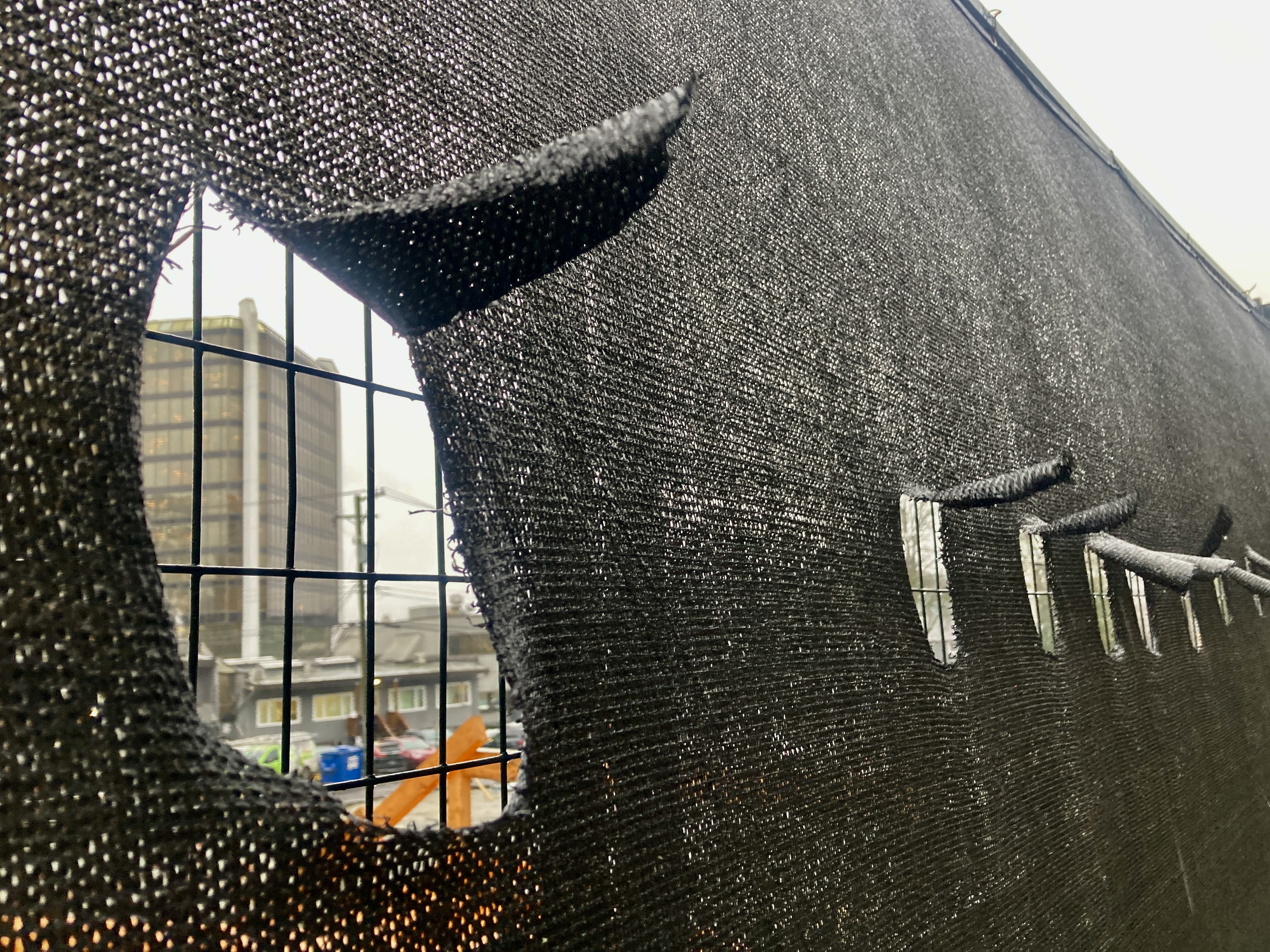
Just look at the air vents blown horizontal in the sodden construction fence fabric, as I splosh my way along West 10th this morning.
By the combined might of word + weather association, I start thinking about anapest metre.
Why? Because wet weather on 8 December caused me to rewrite a limerick to fit, and that in turn caused me to discover the anapest metre and its (quote-unquote) “galloping rhythm.”
So here I am, in yet more wet & windy weather. To distract myself, I compose a limerick. An ode to the anapest metre.
(More throat-clearing)
The anapest metre is now my best friend,
It offers me rhythm without any end,
I gallop and giggle,
I wobble and wiggle.
It distracts me from rain and that’s a great trend!
Once home… and dry… I look up “anapest metre” online. The Poetry Foundation explains it consists of two unaccented syllables followed by one accented syllable, and then helpfully gives two examples of words that — all by themselves! — are anapestic: “underfoot” and “overcome.”
Yah well, here’s the Canadian example: “Newfoundland.”
From now on, let’s all pronounce it correctly.
Finally! A new year’s resolution we can keep.
Posted by icelandpenny on 18 December 2025
https://icelandpenny.com/2025/12/18/windy-wet/

 WALKING WOMAN