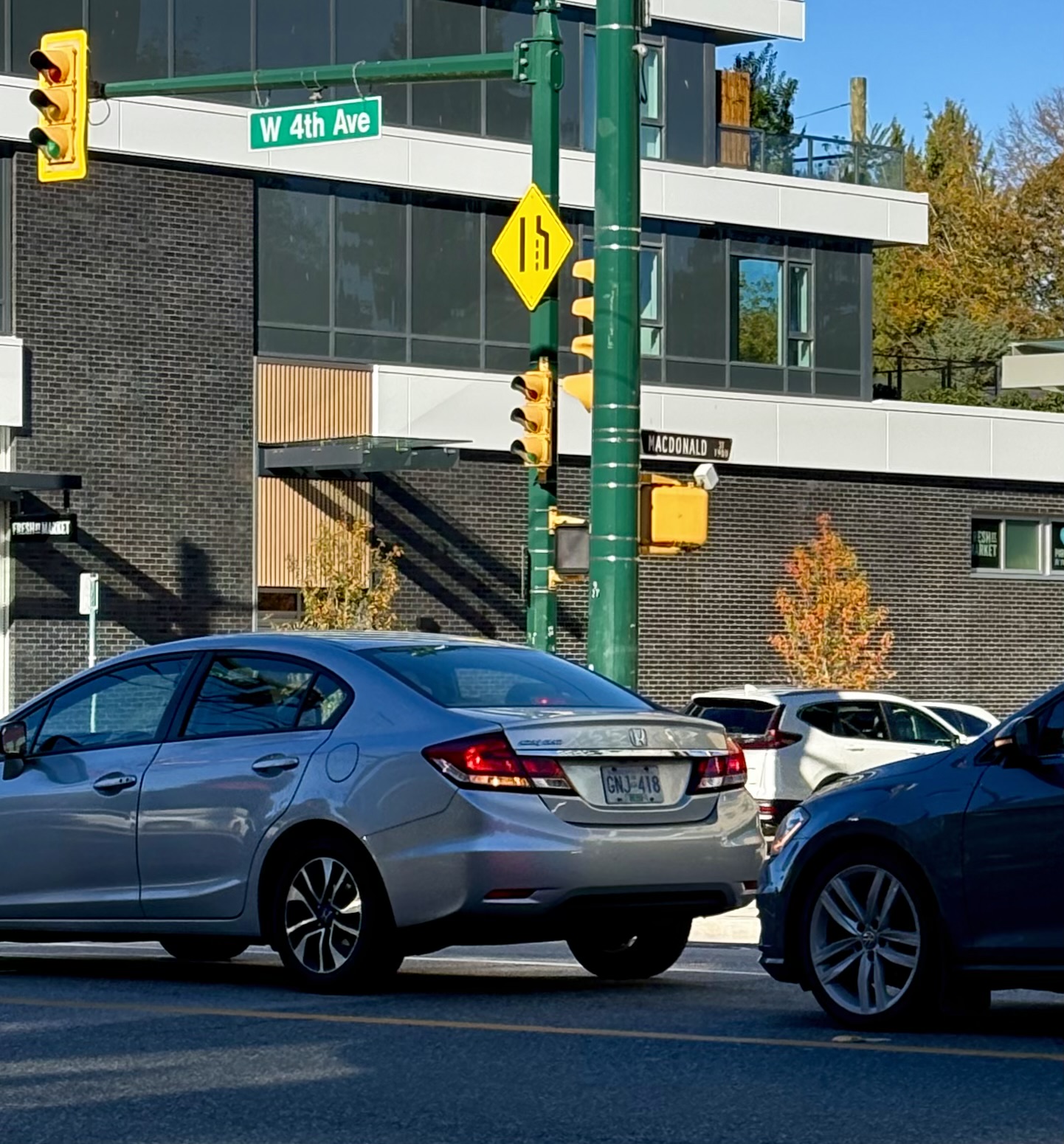
24 October 2026 – I’m waiting for the red light to turn green, out there on a Kitsilano street corner, but, mostly, I’m admiring a flaming yellow-orange tree. This tree, ‘way over there on the right against the brick wall.
Red light turns green, away I go. Thinking, as I go, about green trees turning red.
All part of the seasonal shift, and I enjoy the added bonus of a pun: each fall (whenever it happens to be fall, in your hemisphere) the chlorophyll curtain falls… and all those other colours are finally on view.
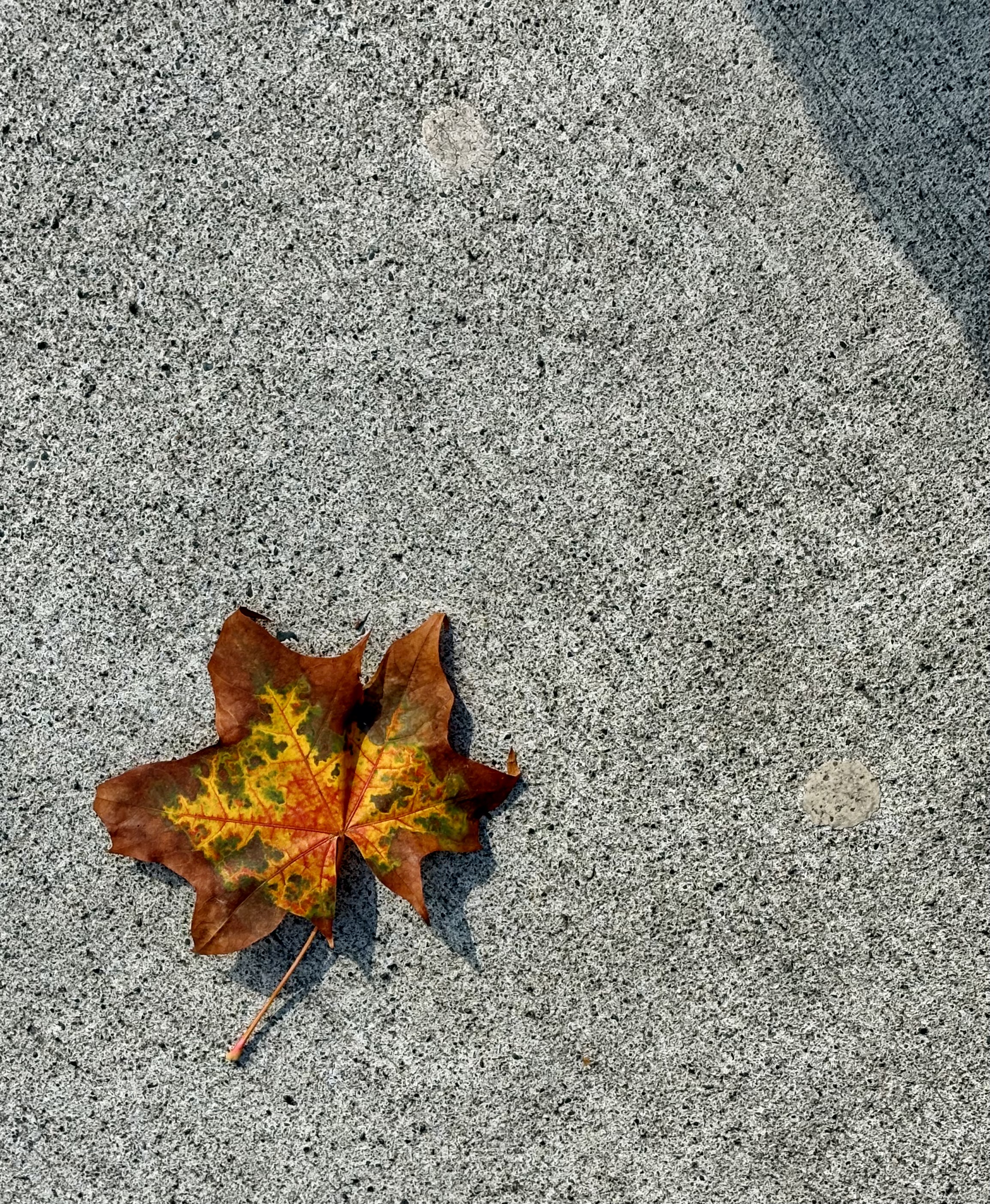
Oh, the maple trees! A child of eastern Canada, I’m big on the bravura performance of our maple trees each fall. For good reason a red maple leaf is smack-central in our flag.
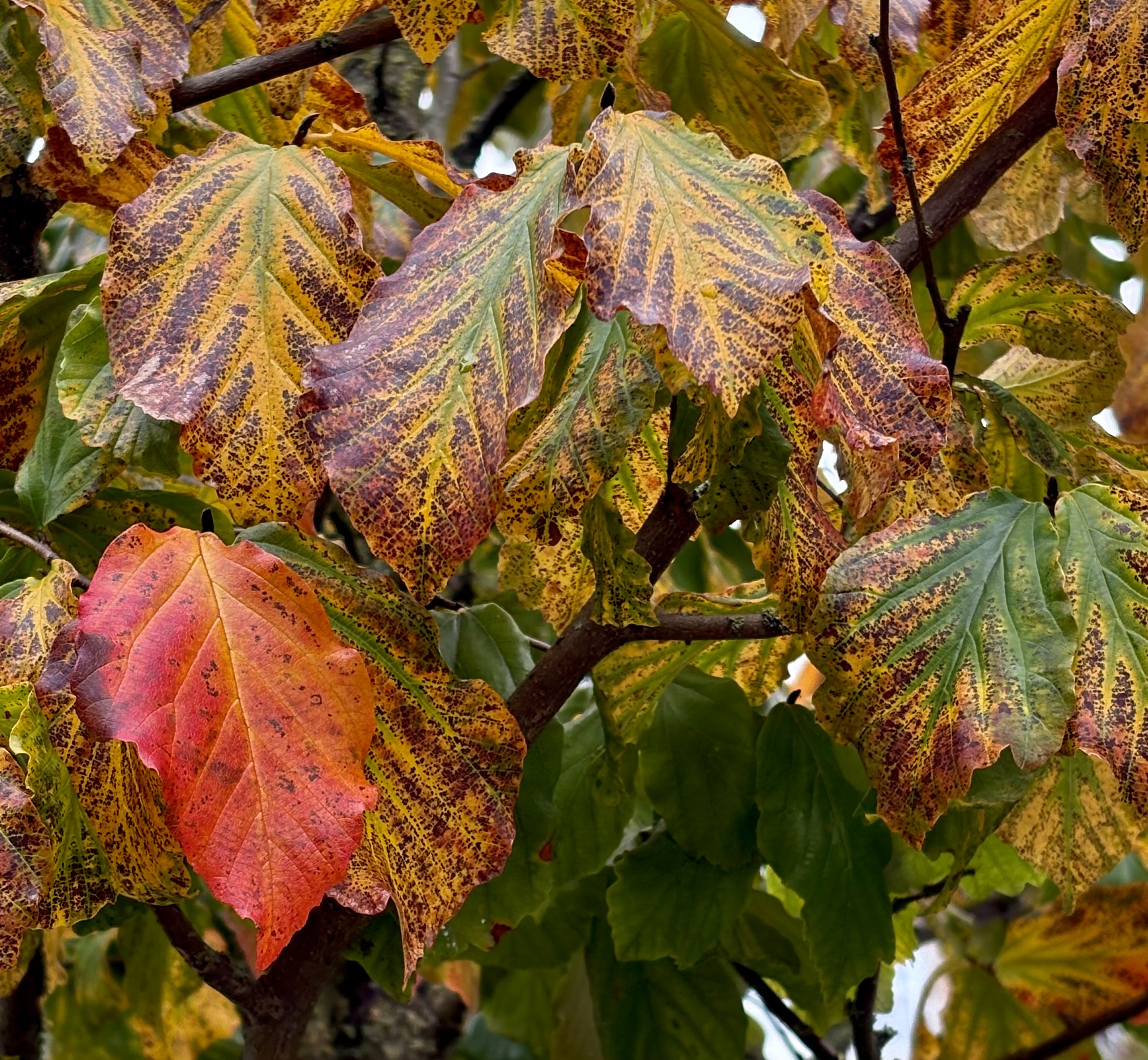
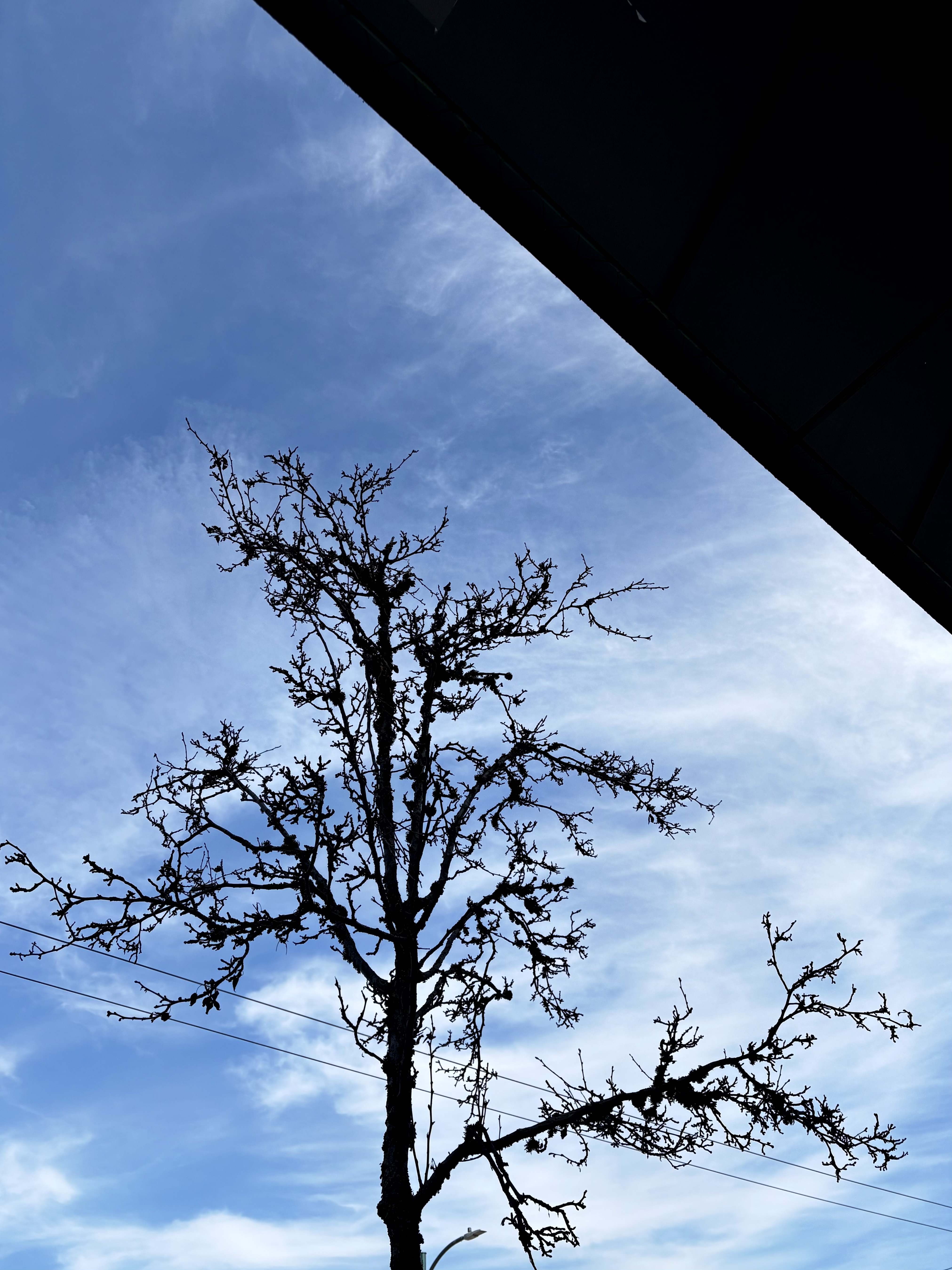
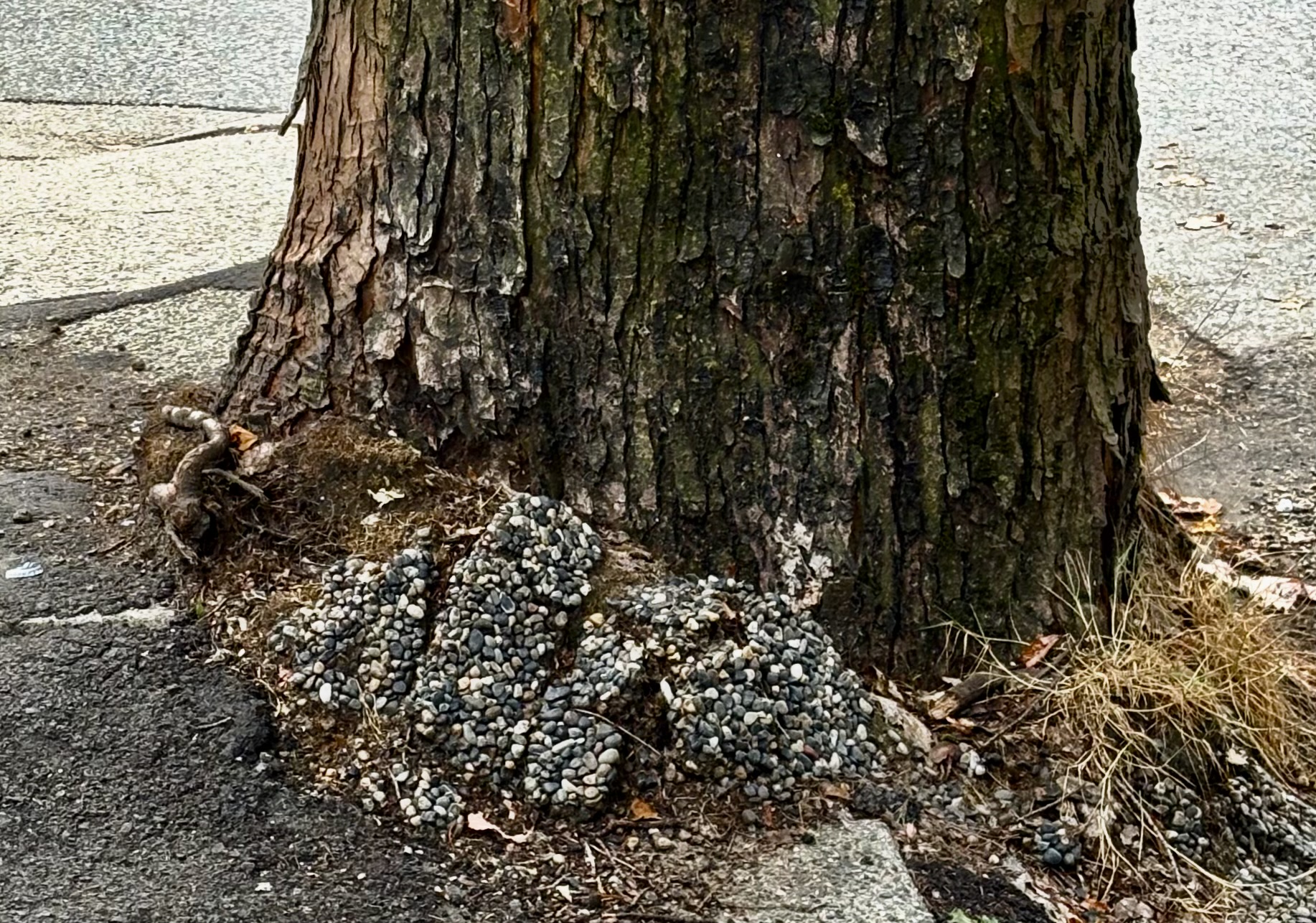
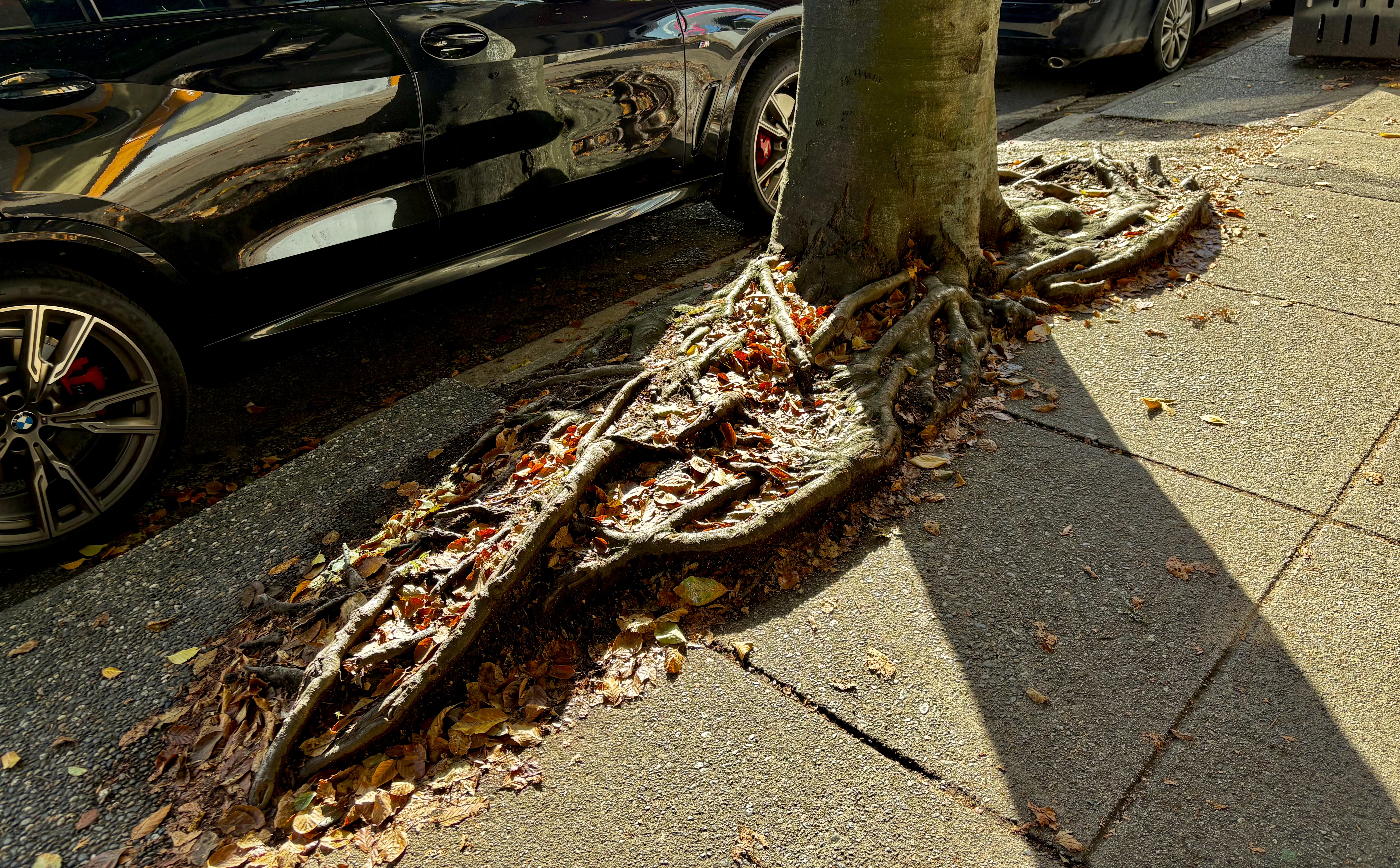
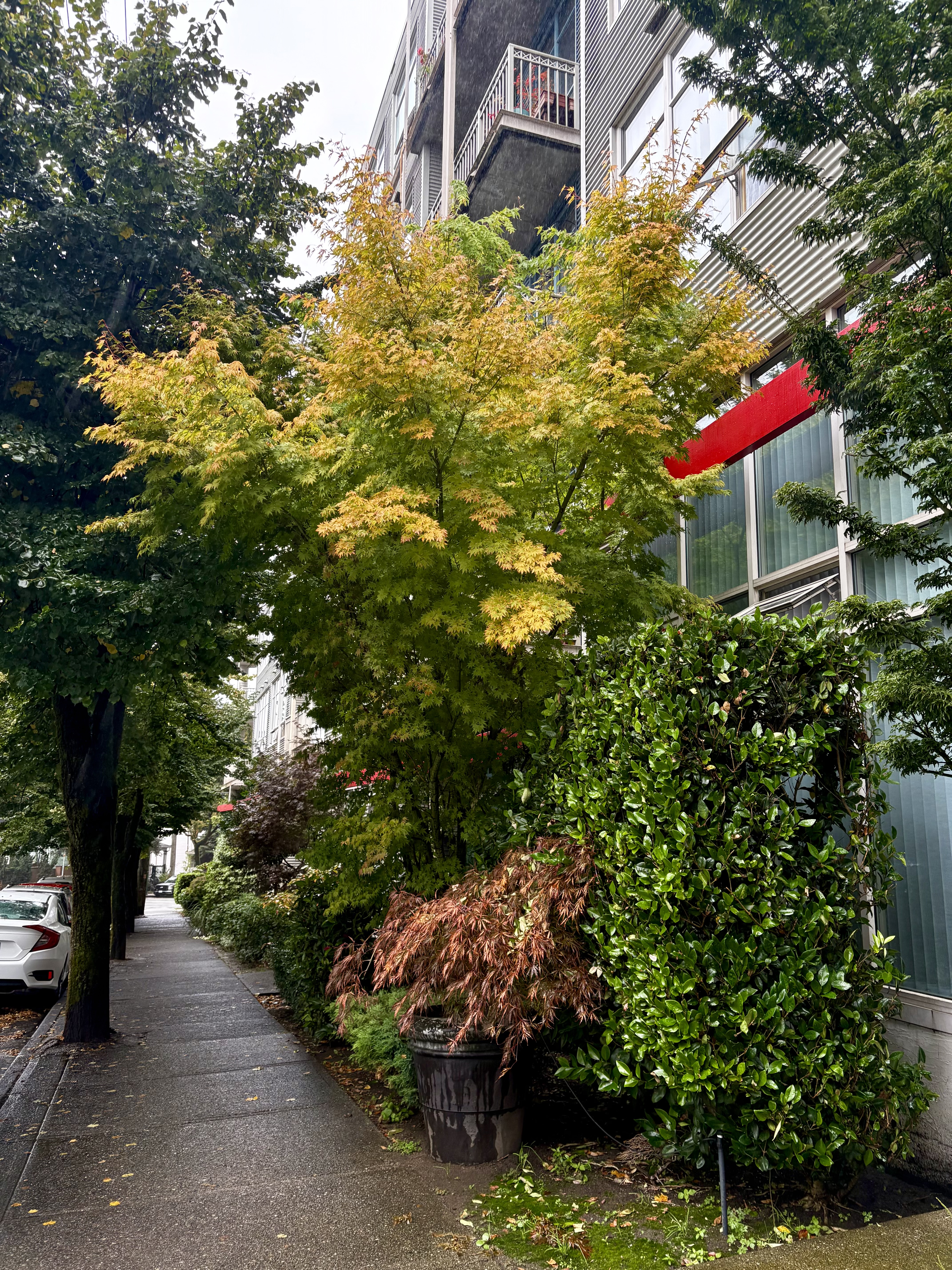
But, this year, I’ve started noticing other trees, other shrubs. I’m paying attention to the delicacy of their shade ranges, as chlorophyll drops away. I am amazed by what I start to see. (Isn’t that the way? First, you have to look. Then, you see.)
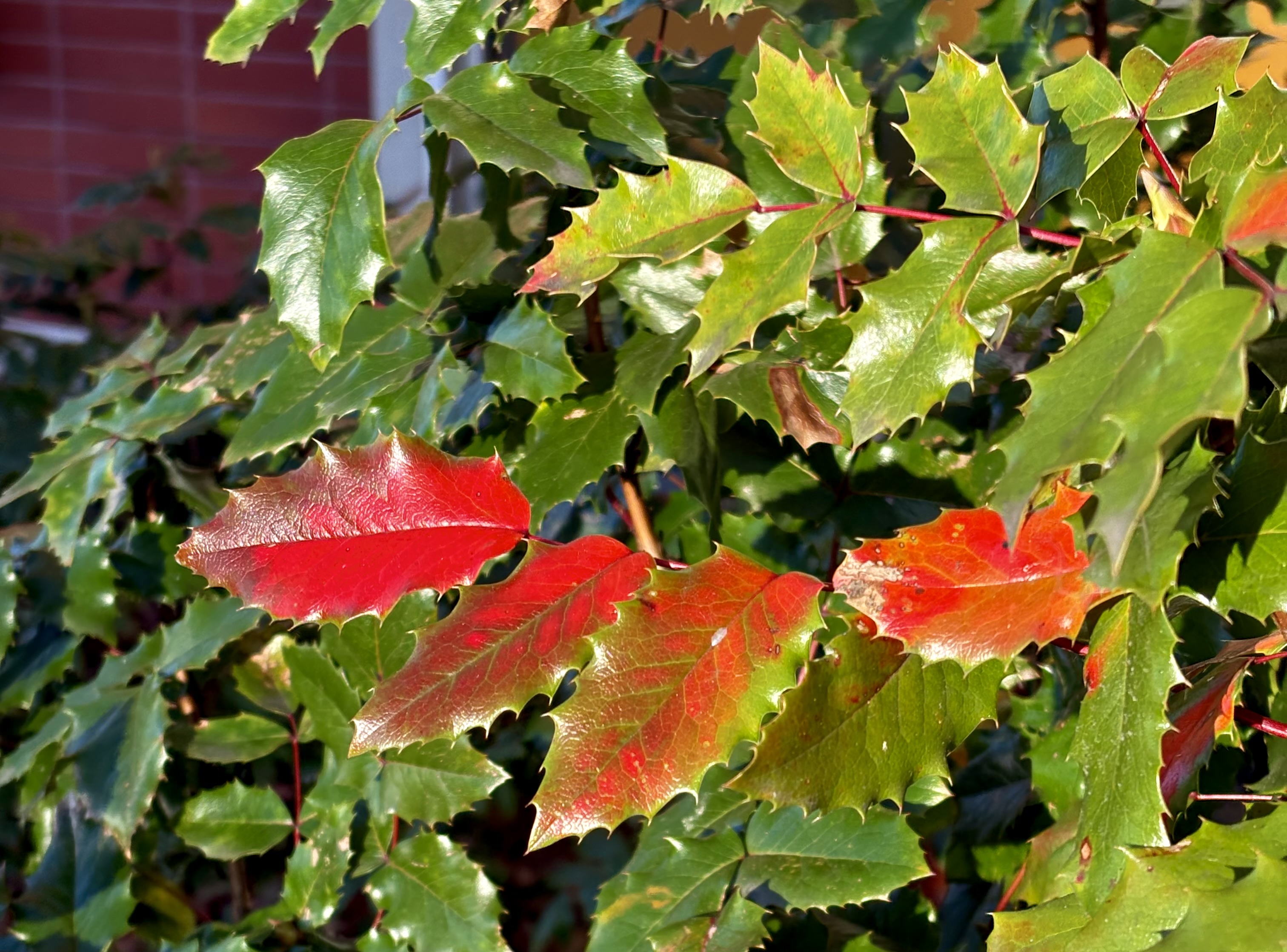
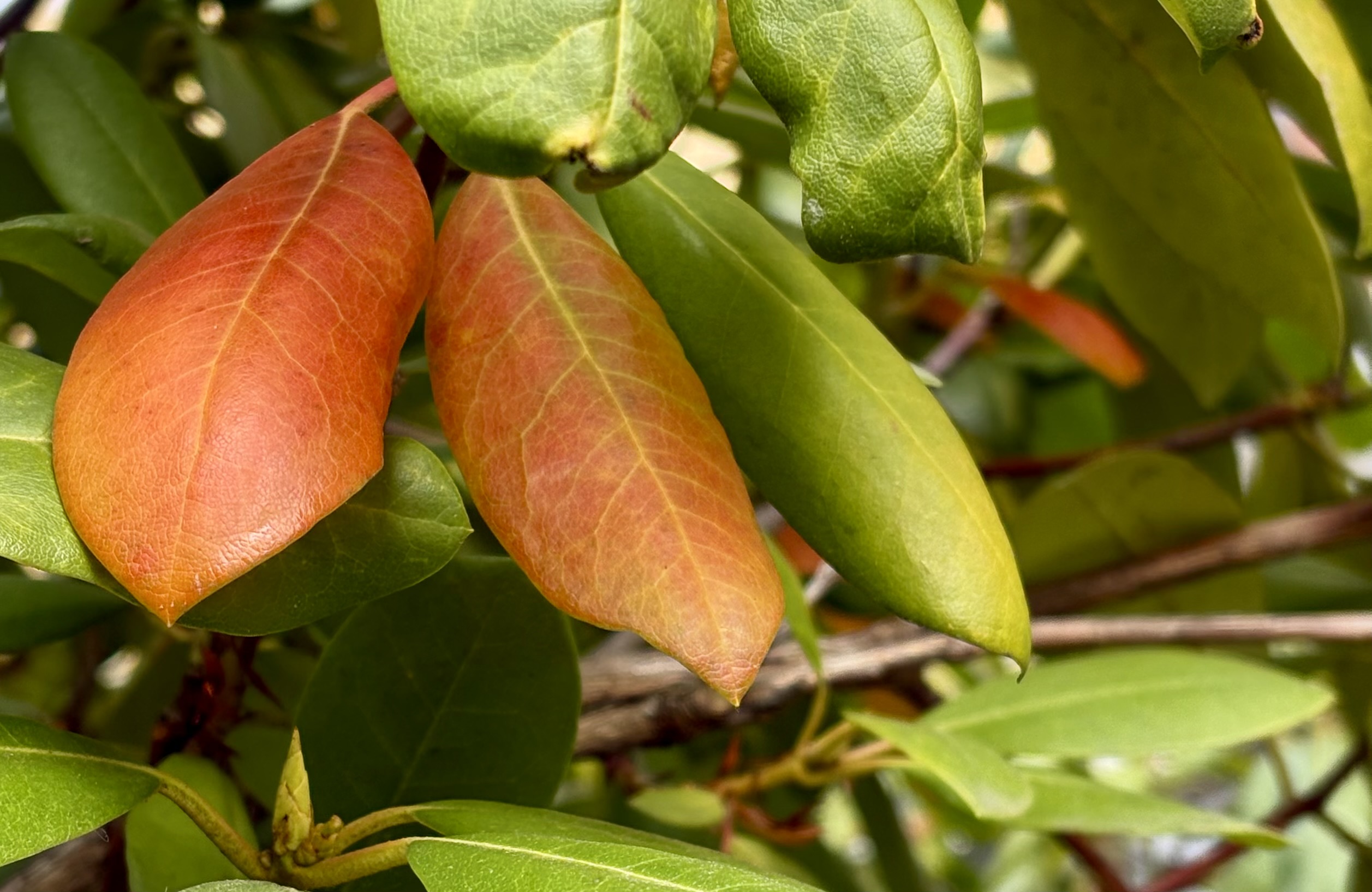
This, for example…
and this…
and this, my absolute favourite. Theme and variations.
Now that I’m paying attention…
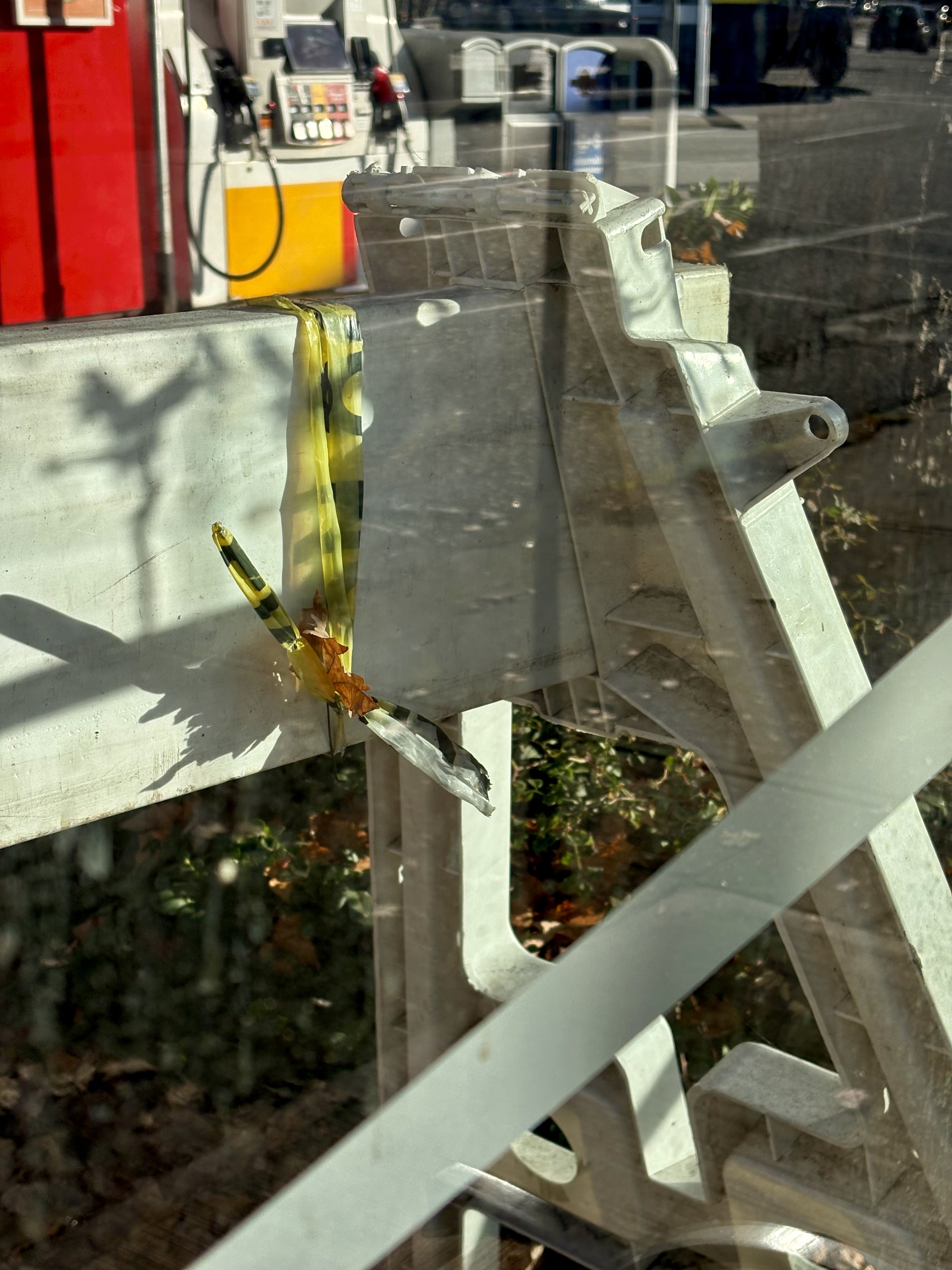
Days later, seated at a bus stop in the east end of town, I idly glance backward through the glass. At first the view is an unprepossessing tangle of background gas pumps and foreground traffic bric-à-brac storage, including a white barricade. There is also a something-or-other wrapped around the barricade, and my idle gaze sharpens to interest.
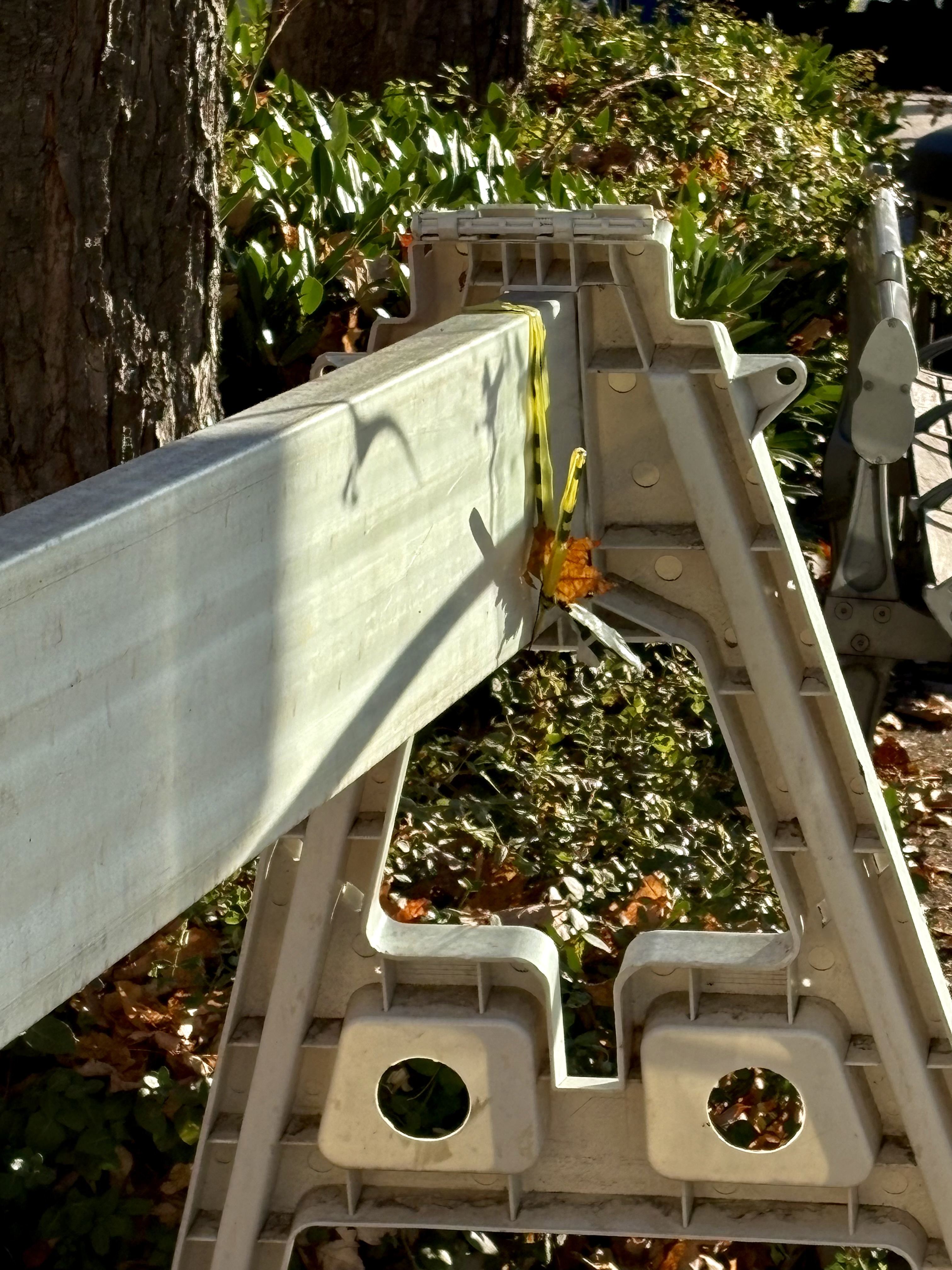
No bus in sight. I have time to walk around the bus shelter for another angle.
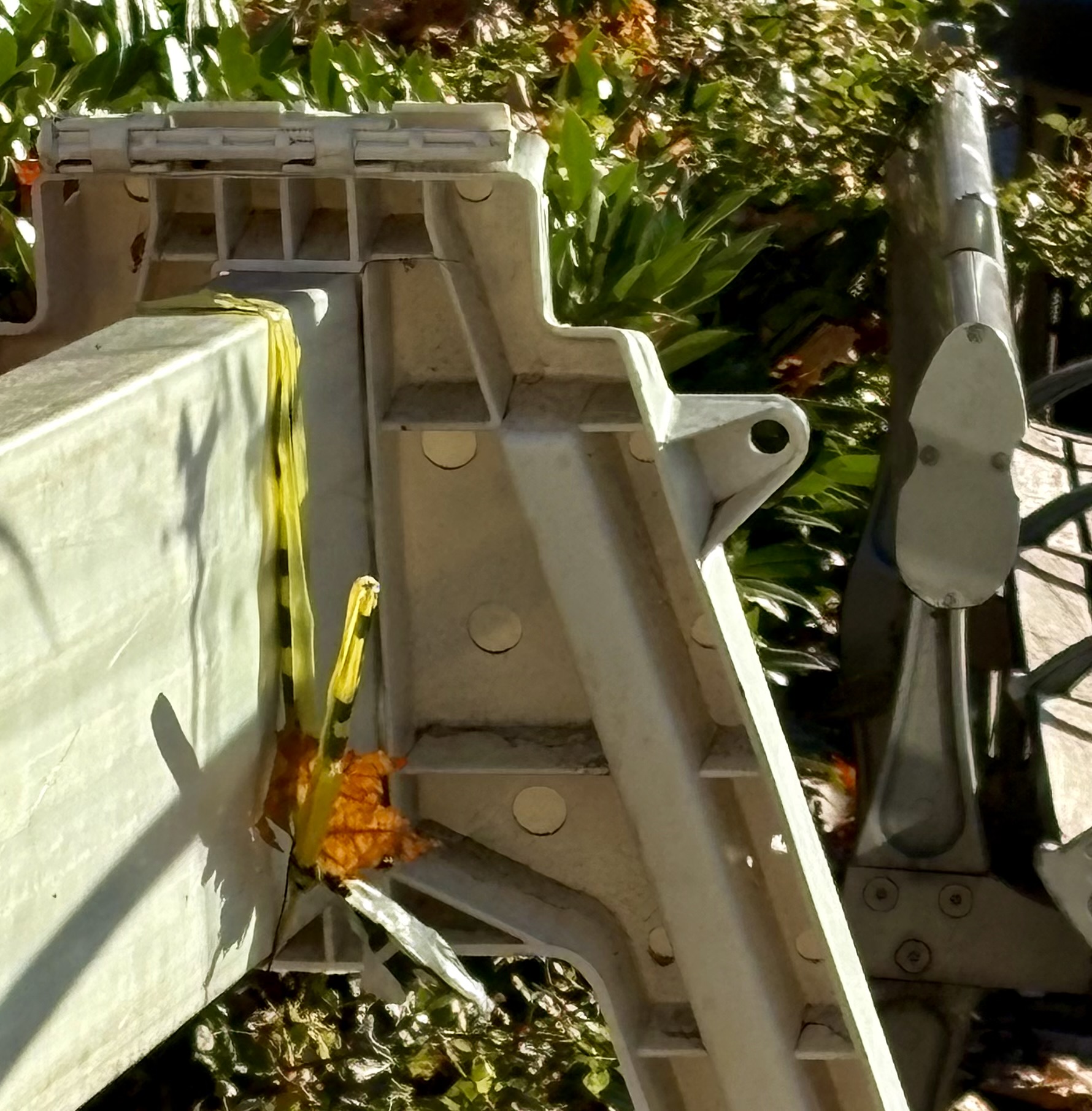
I laugh out loud. Somebody (probably waiting for a bus, killing time) found a bit of construction warning tape, wound it around one end of the traffic barricade, and neatly inserted into it… one leaf, caught in its brief, bright moment of glory.
Well, of course somebody went to all that trouble. We do love the leaves of fall!
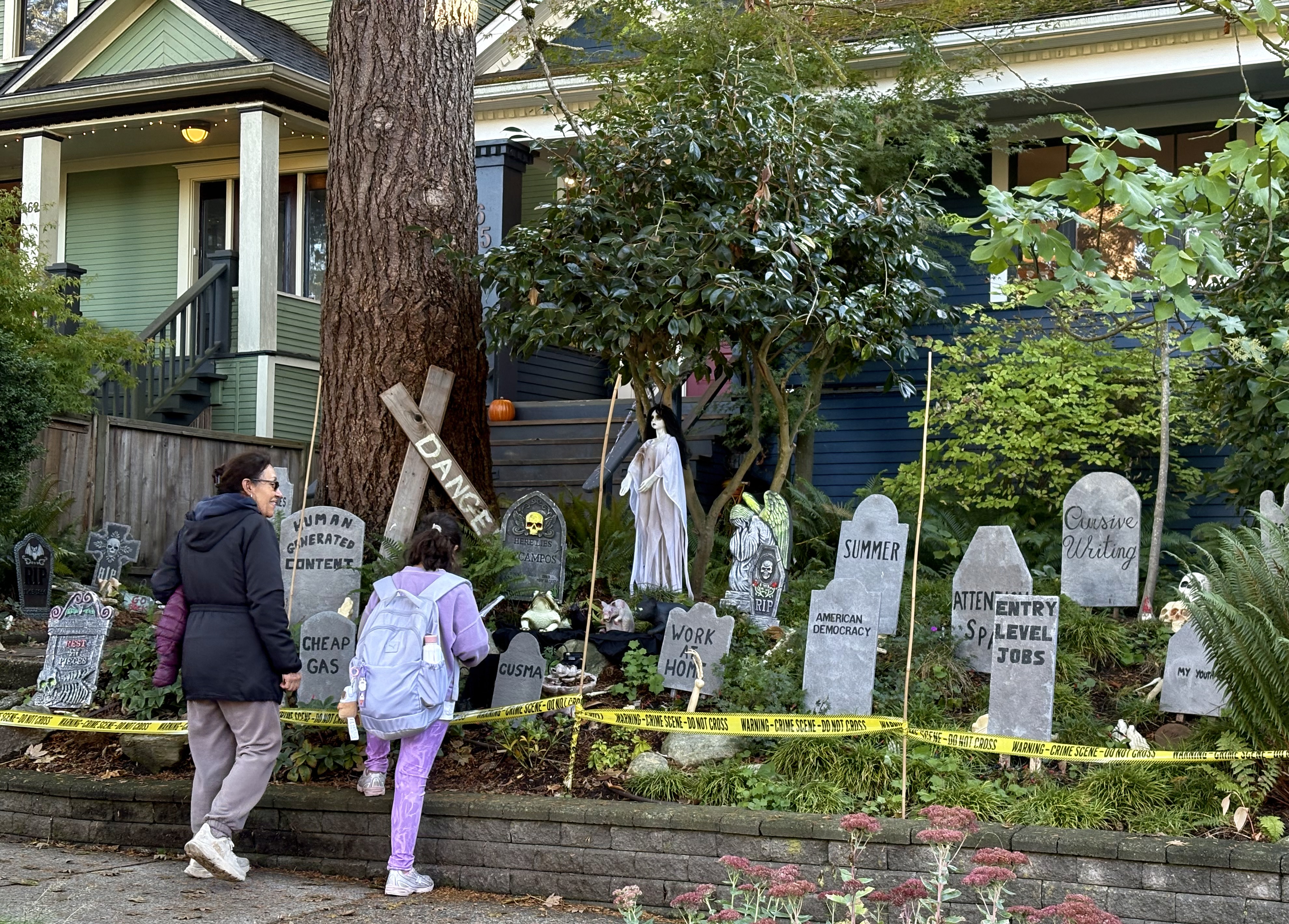
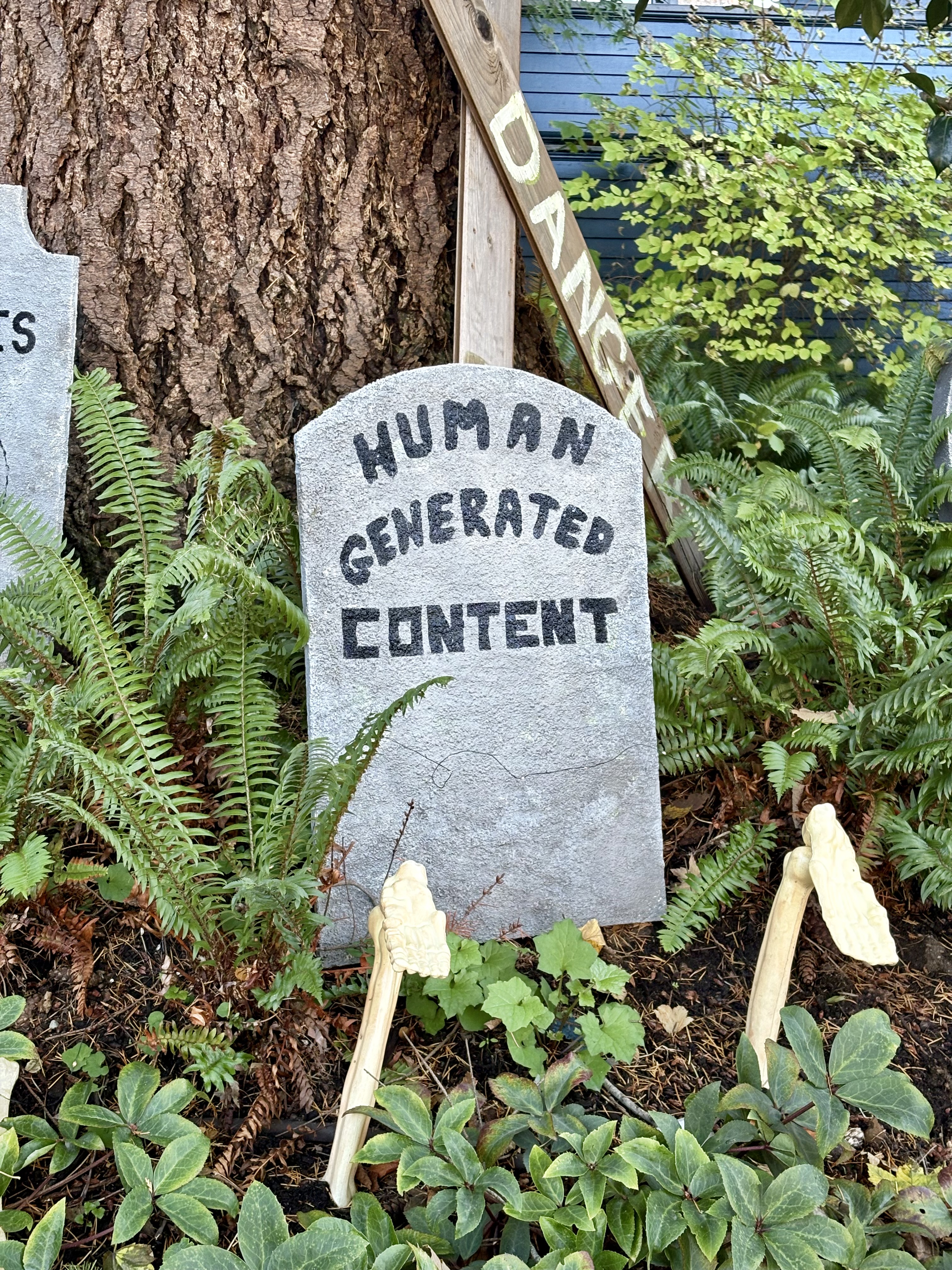
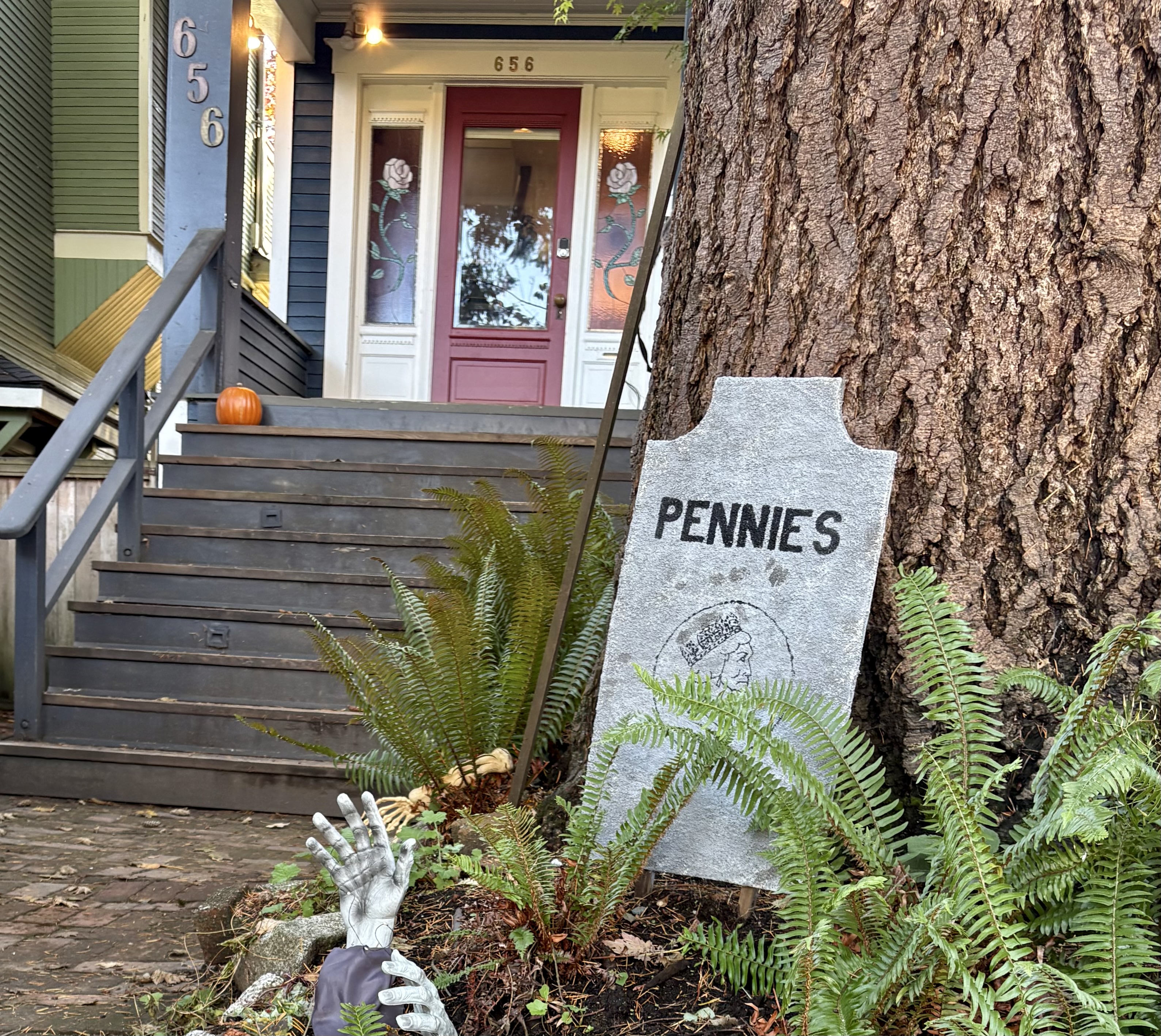
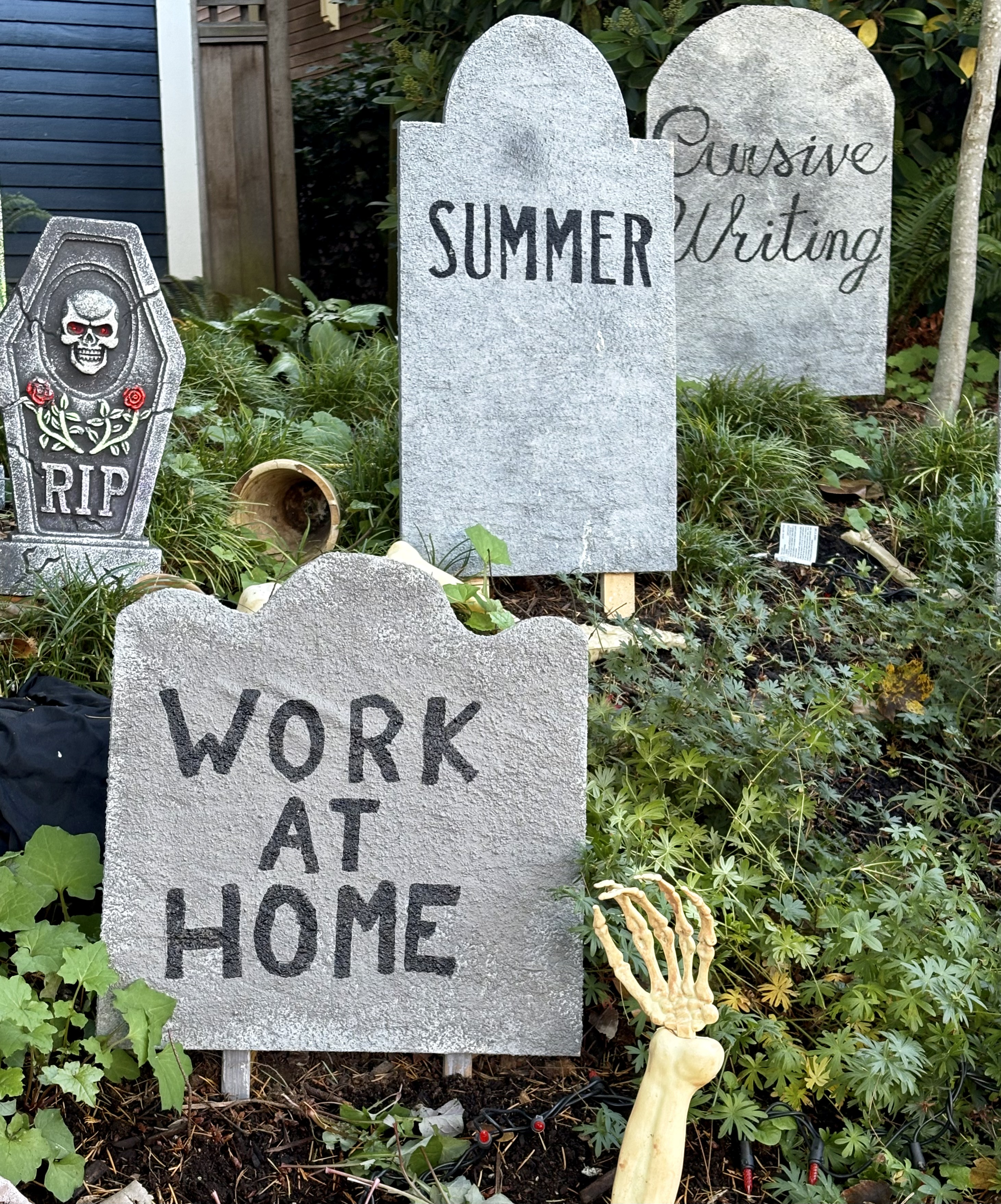
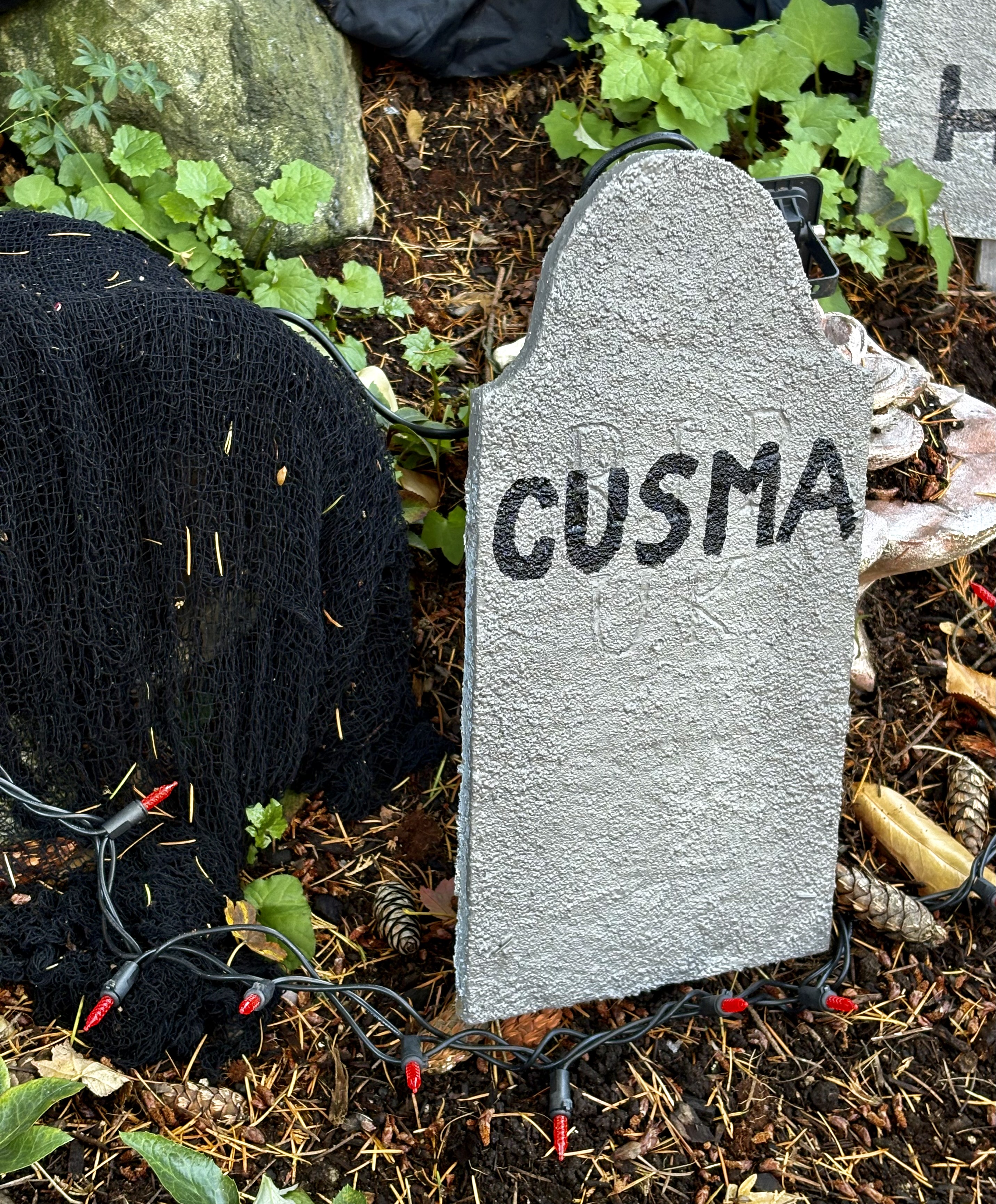
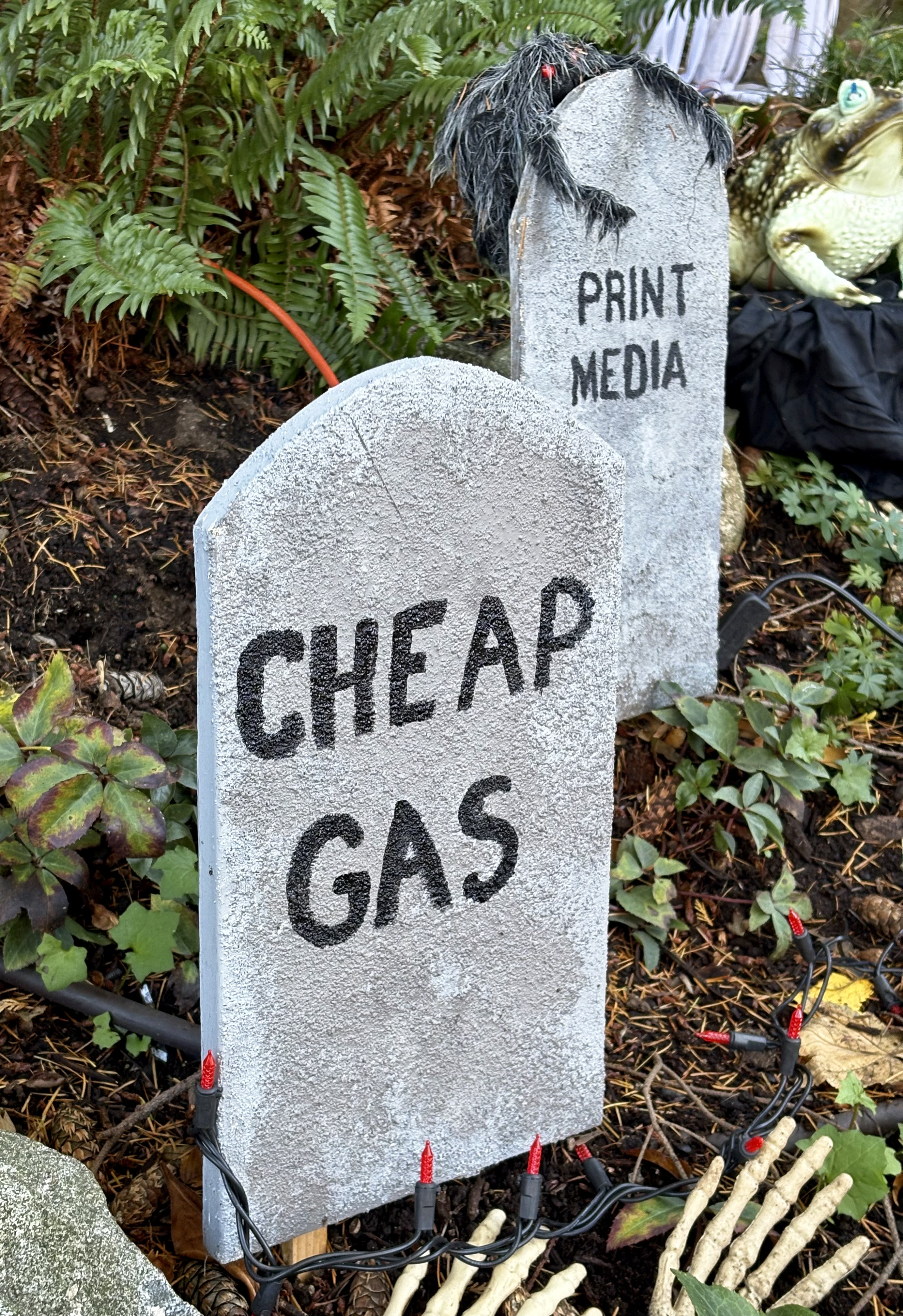
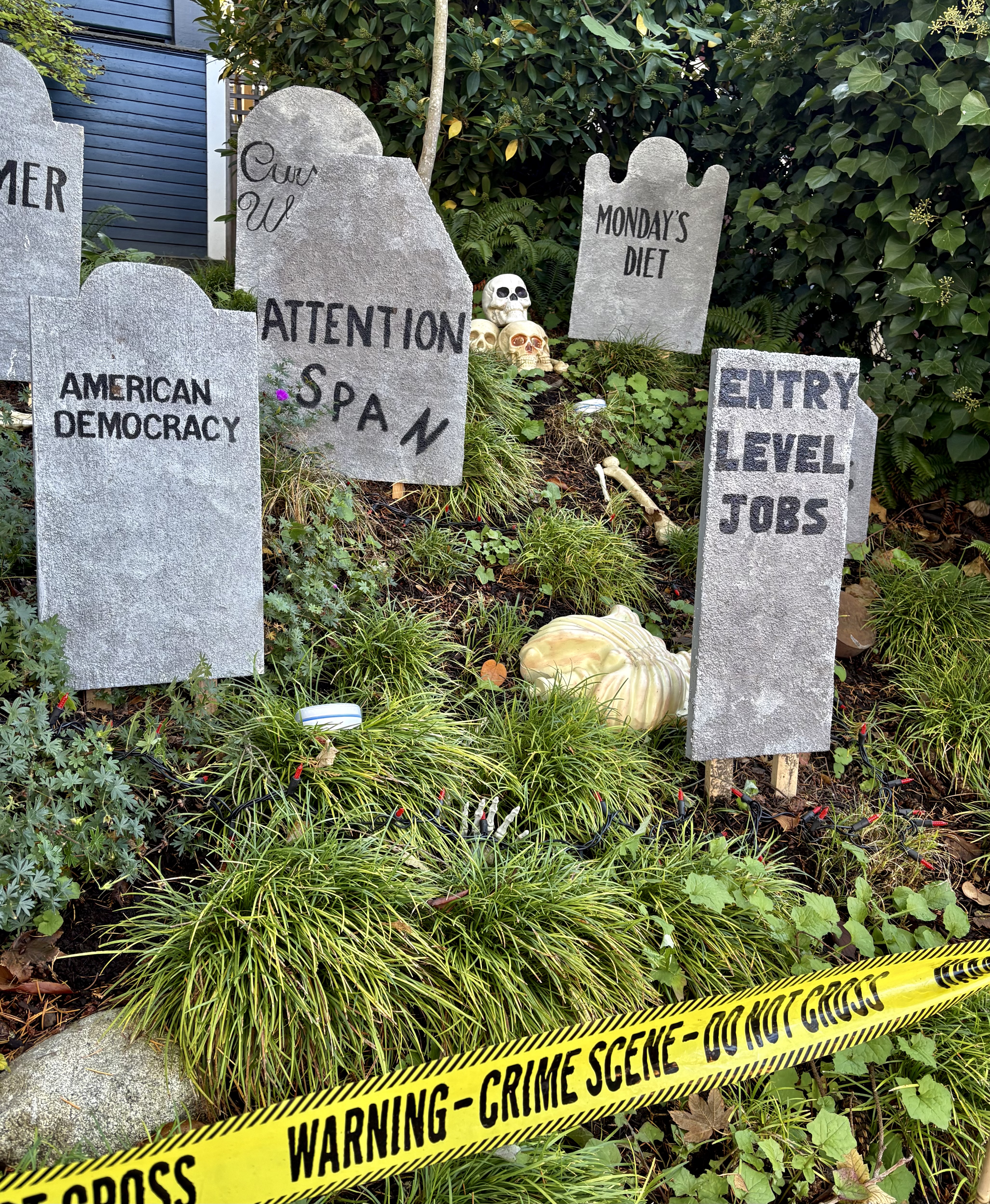
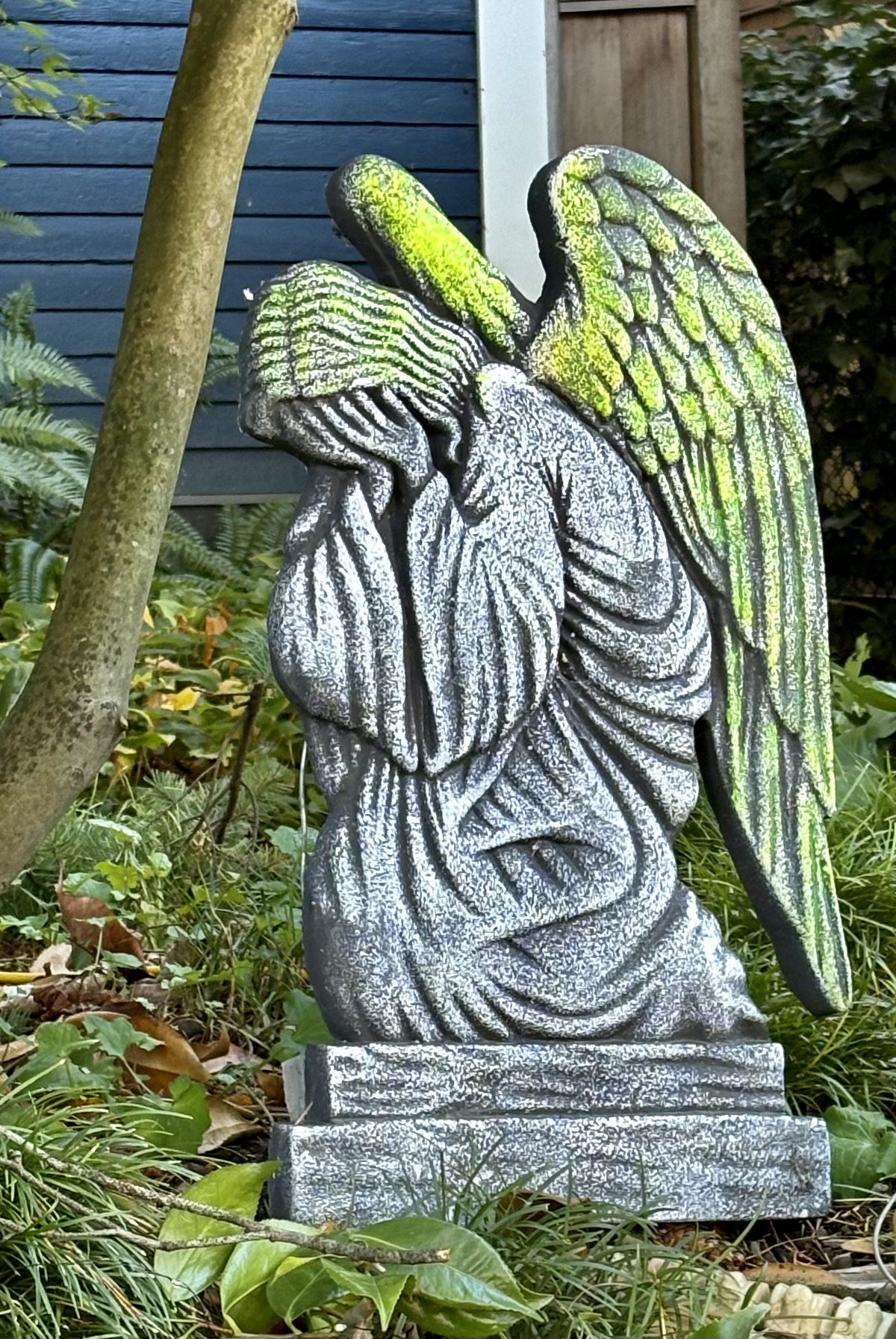
15 October 2026 – At a first quick glance, walking along East 10th, I think it’s just another Hallowe’en-themed front yard — the usual cliché cemetery.
Then I step closer, and realize we are being offered quite a different category of deaths.
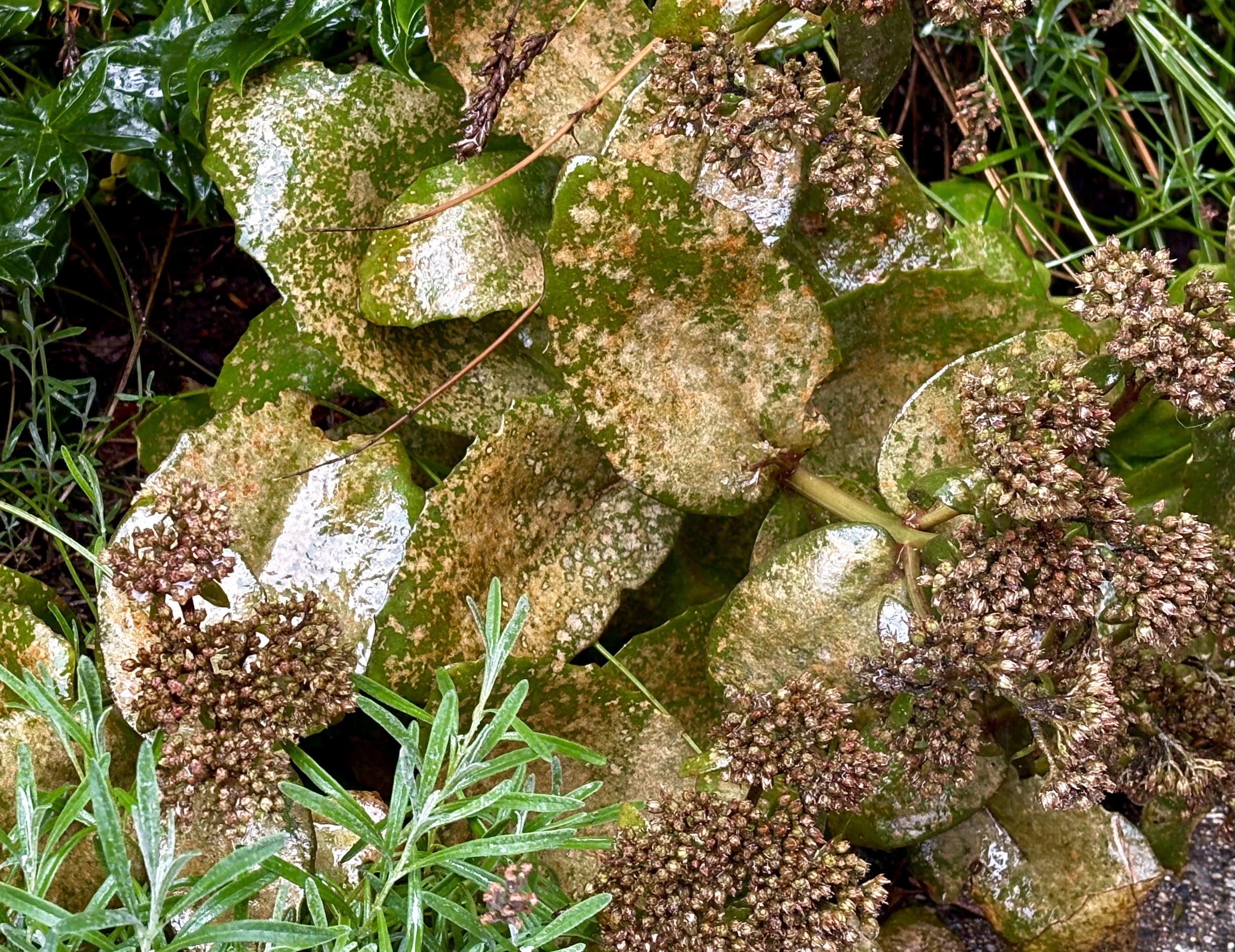
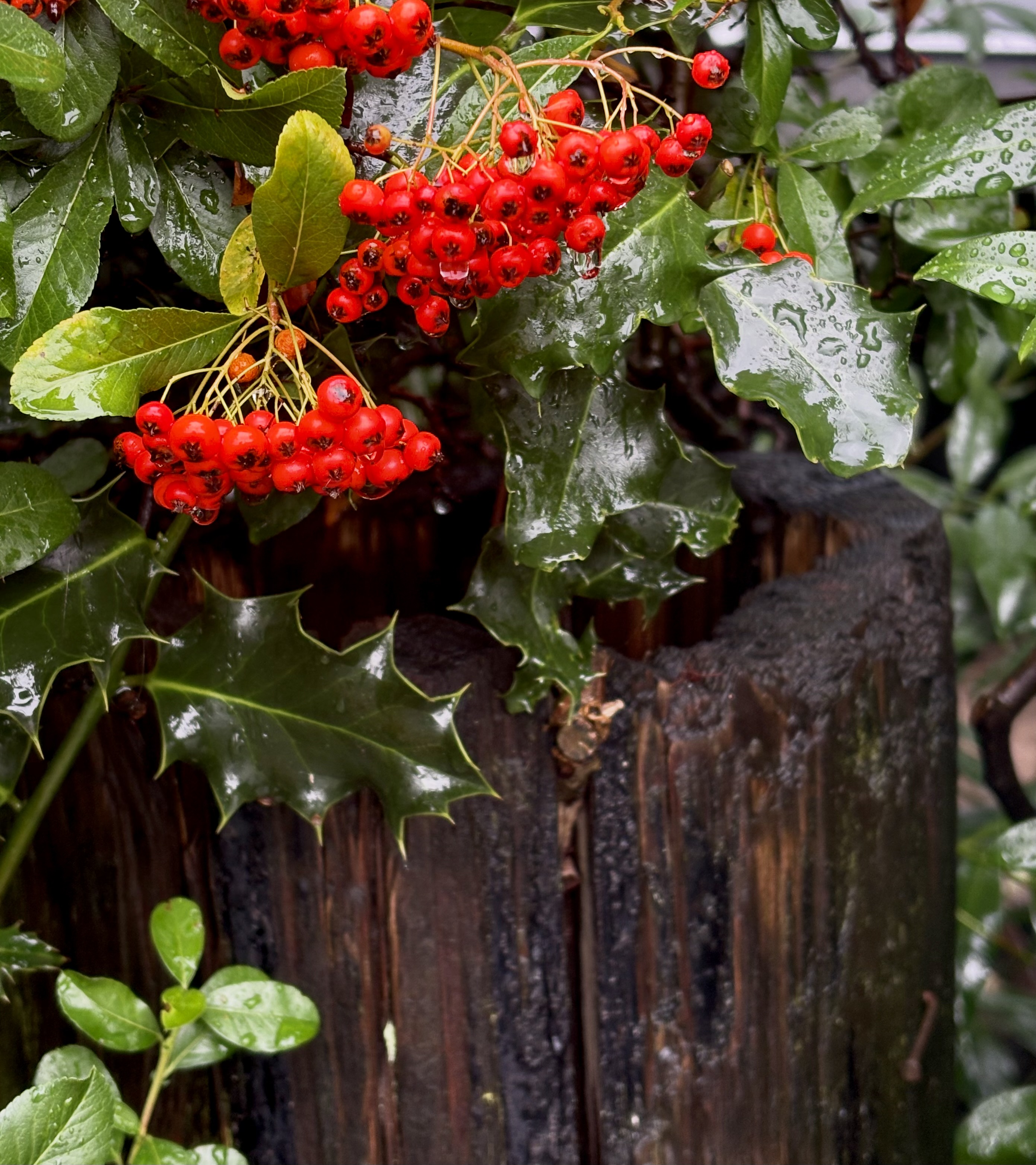
The colours of ordinary street-side plantings that much richer, with their faces fresh-washed in the rain.
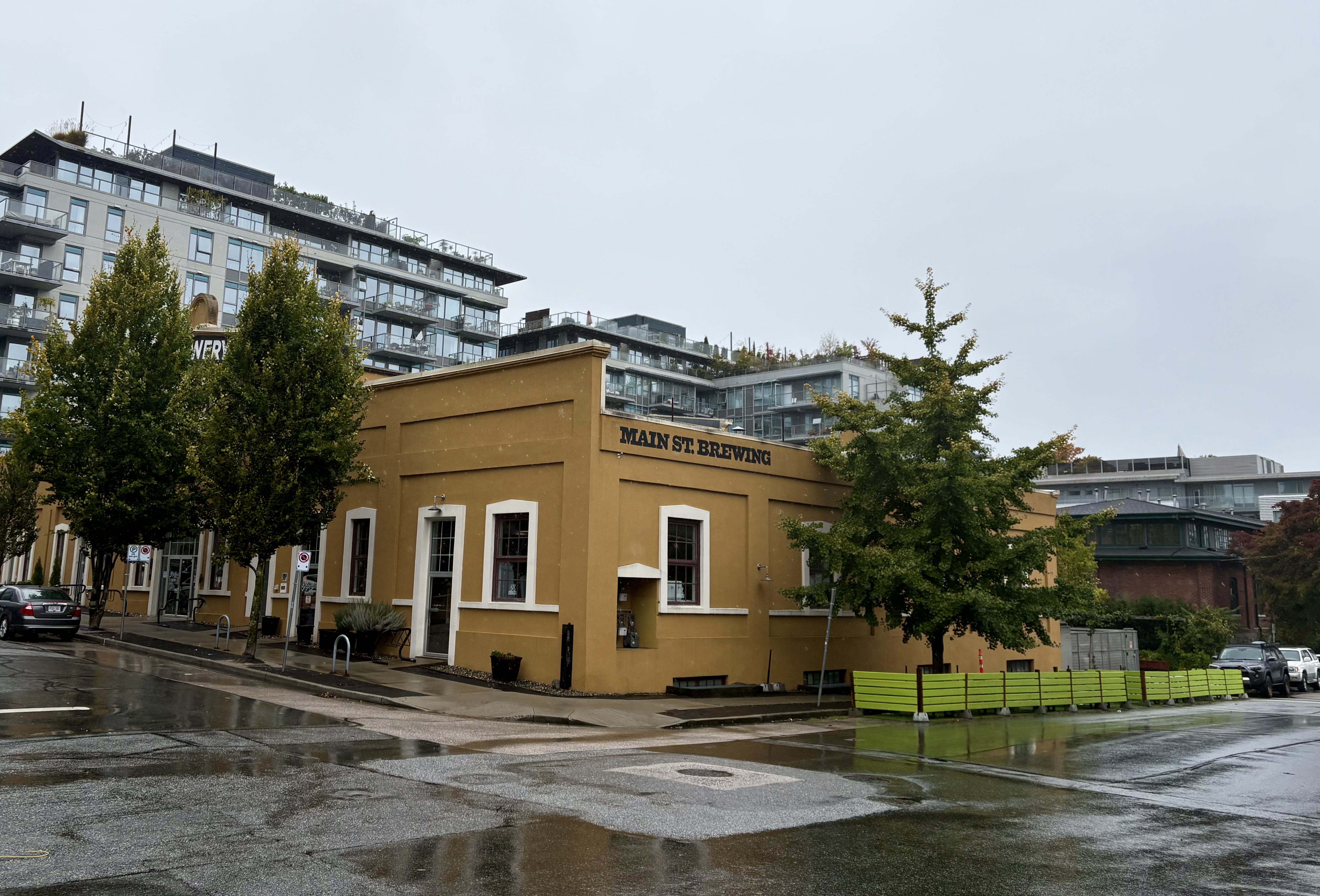
I pause on the south-east corner of East 7th and Scotia, with two of the area’s iconic buildings in eyesight — Main St. Brewing opposite and (to the right) the back of the stone-and-brick Brewery Creek Building at East 6th.
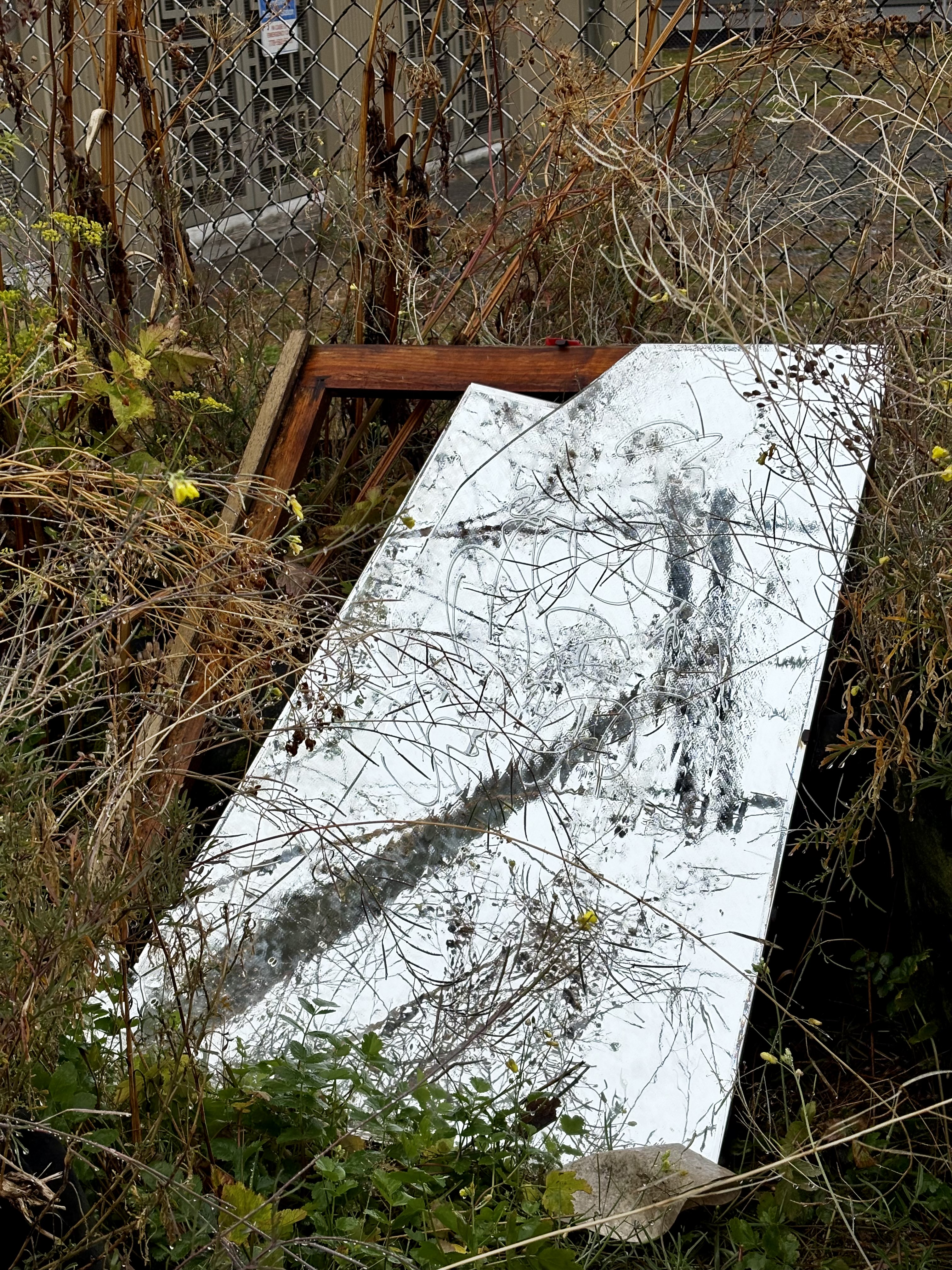
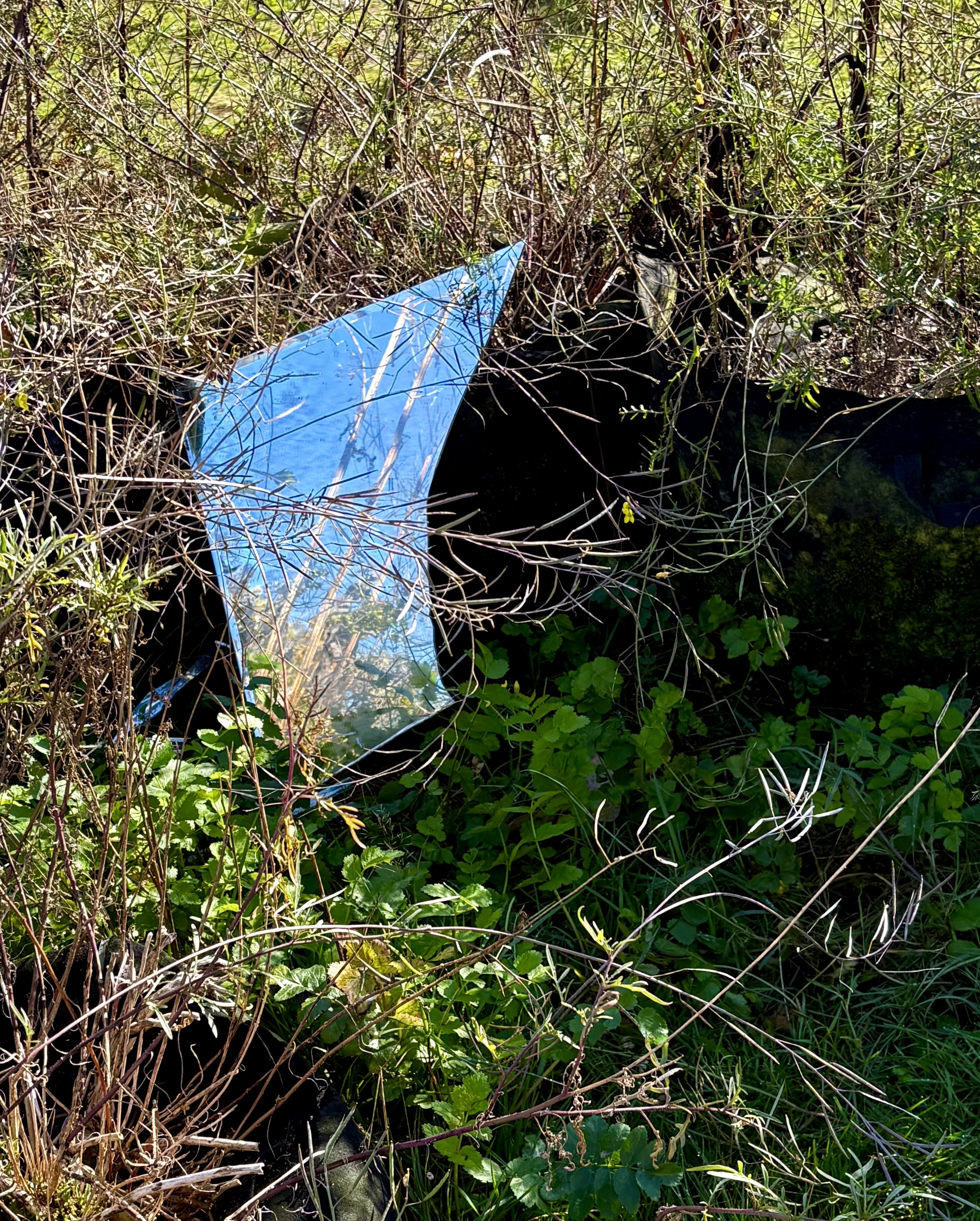
I’ll be heading that way, north on Scotia, but I’m momentarily distracted by the shine that is almost literally at my feet.
Even a discarded mirror fragment works magic, when it shimmers a hydro pole at us in blurry brilliance.
At East 6th, some magic that doesn’t depend on rain — though somehow rain makes its story all the more vivid, and all the more poignant.
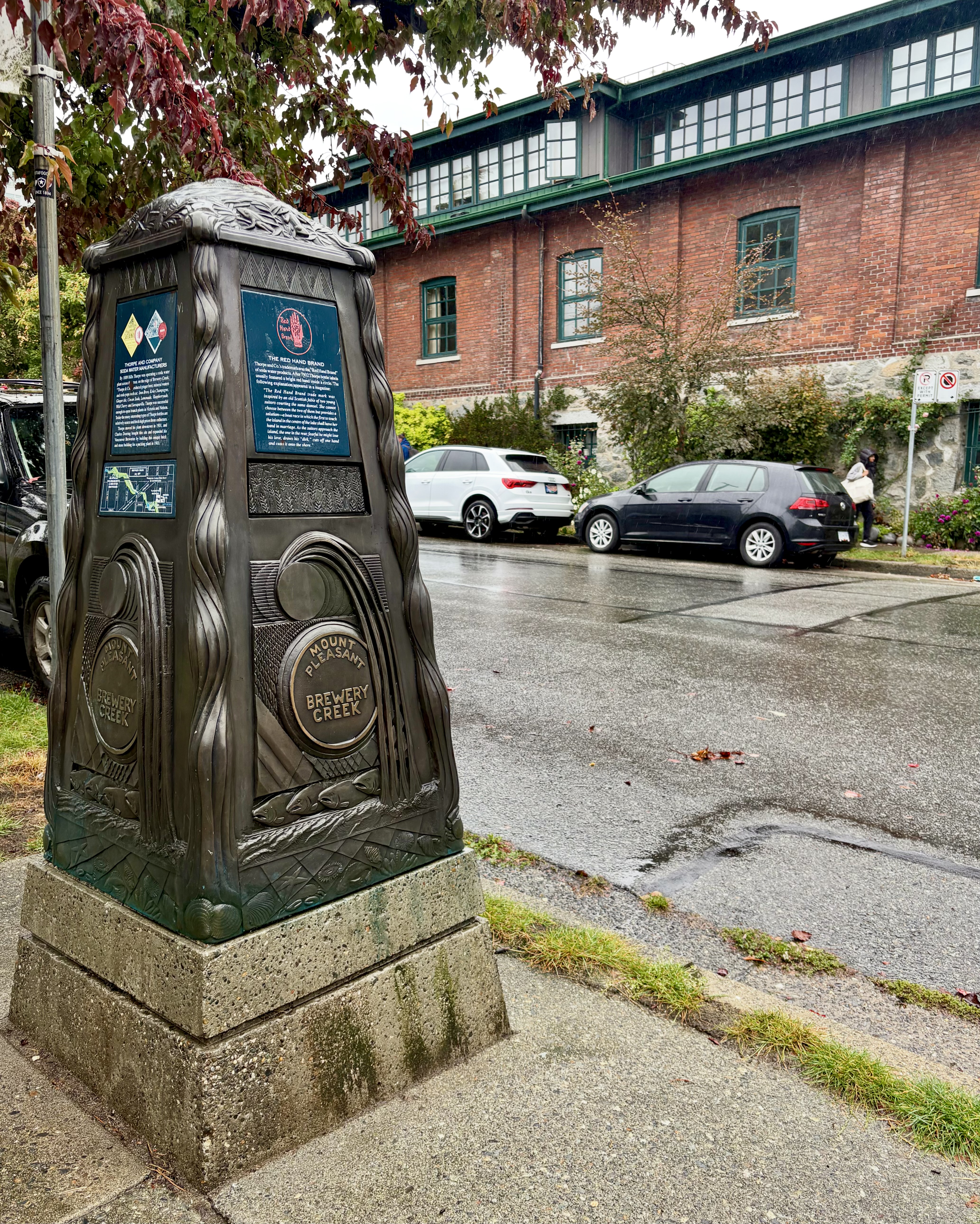
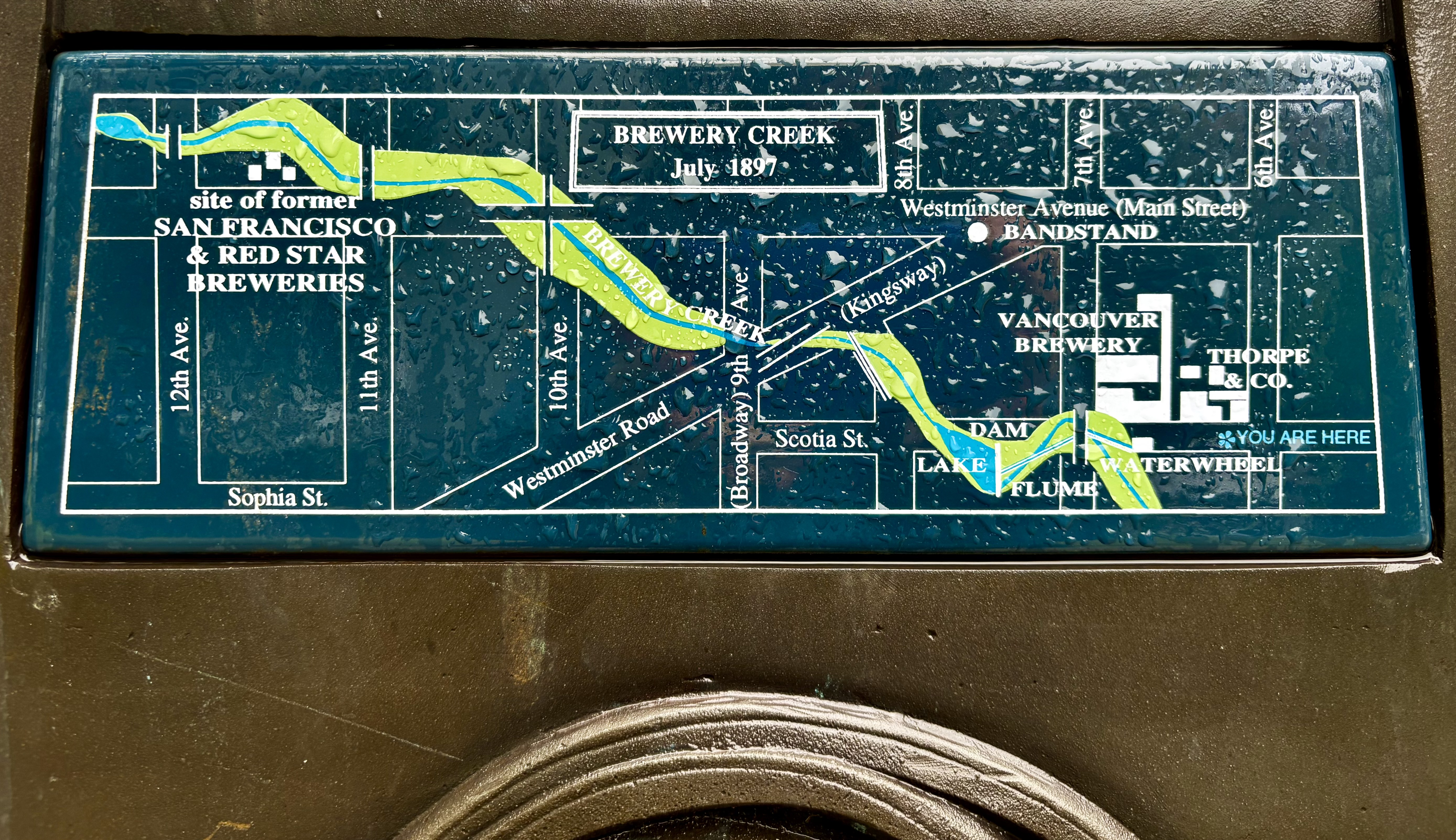
This handsome bronze cairn reminds us that although rain now courses down a steep roadway, until early last century rain simply added yet more water to a tumbling creek: Brewery Creek.
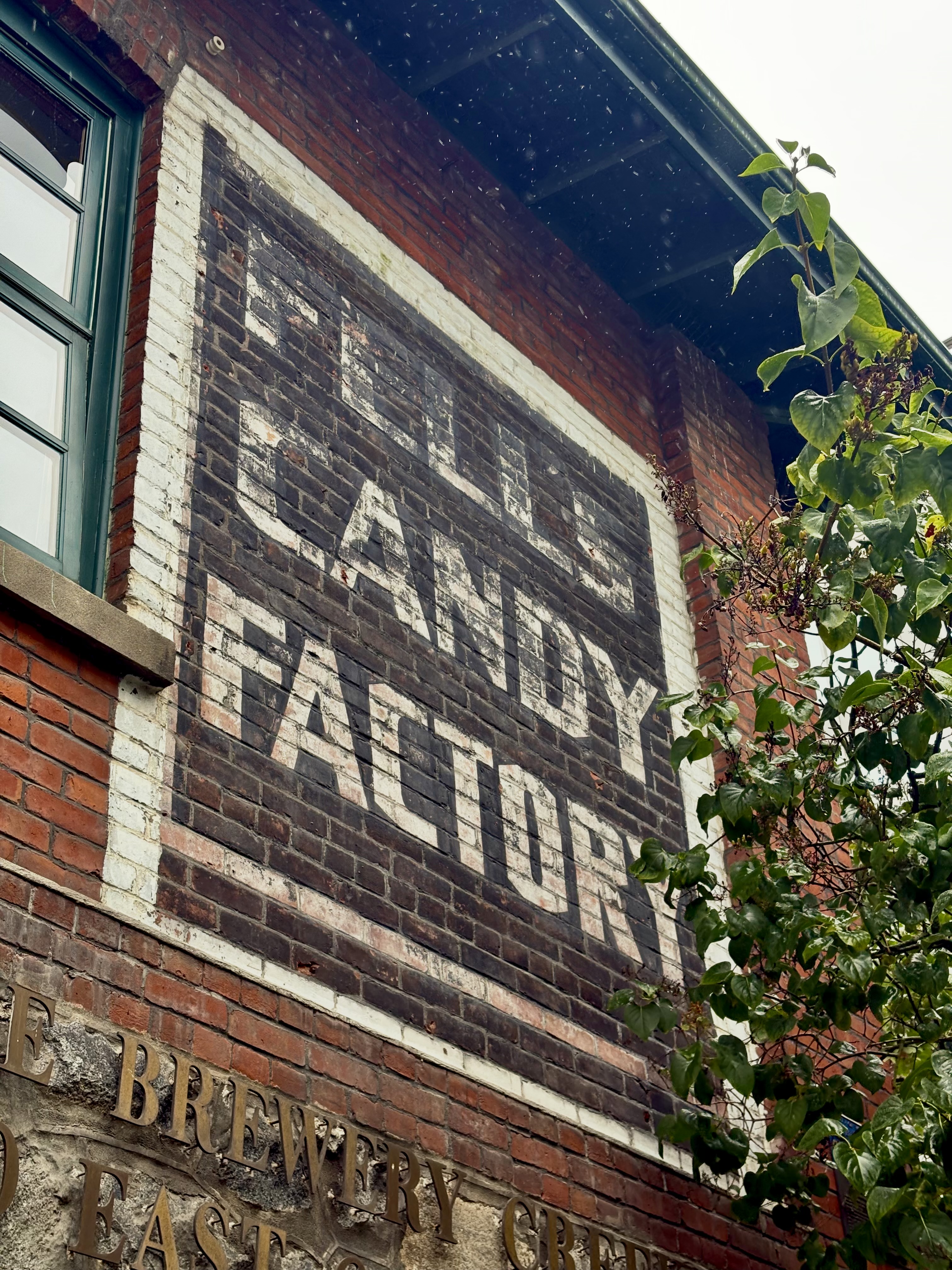
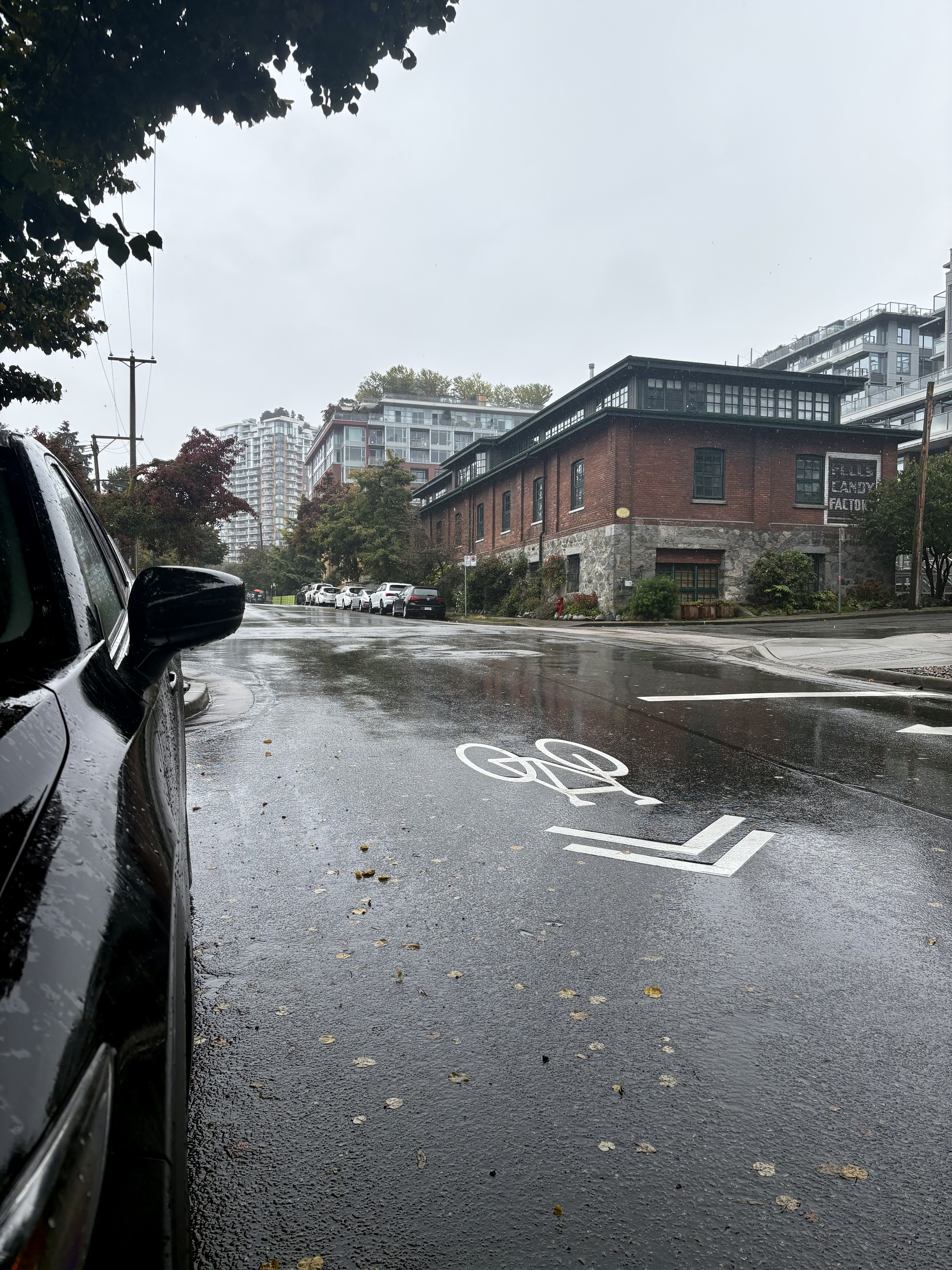
We are where the maps says we are (in turquoise letters lower right): on the banks of the old creek. In 1897, it still ran free. Now it is underground. The buildings opposite are not the ones shown on this map — Vancouver Brewing and Thorpe & Co. — but they are direct successors. Main St. Brewing, uphill, is the artisan beer company now occupying the 1920s building that was originally a garage for Vancouver Breweries (the amalgamated version of the original brewery), and the Brewery Creek Building, opposite, went up in 1903 as an expansion to the Vancouver Breweries complex. This structure later went through a succession of uses, including candy factory…
before 21st-c. restoration and expansion transformed it into live/work spaces for artists.
The “brewery” tag was, and again is, apt. Early breweries made use of the creek; a collection of new boutique breweries makes use of that history. The whole area now preens itself under the collective label of Brewery Creek.
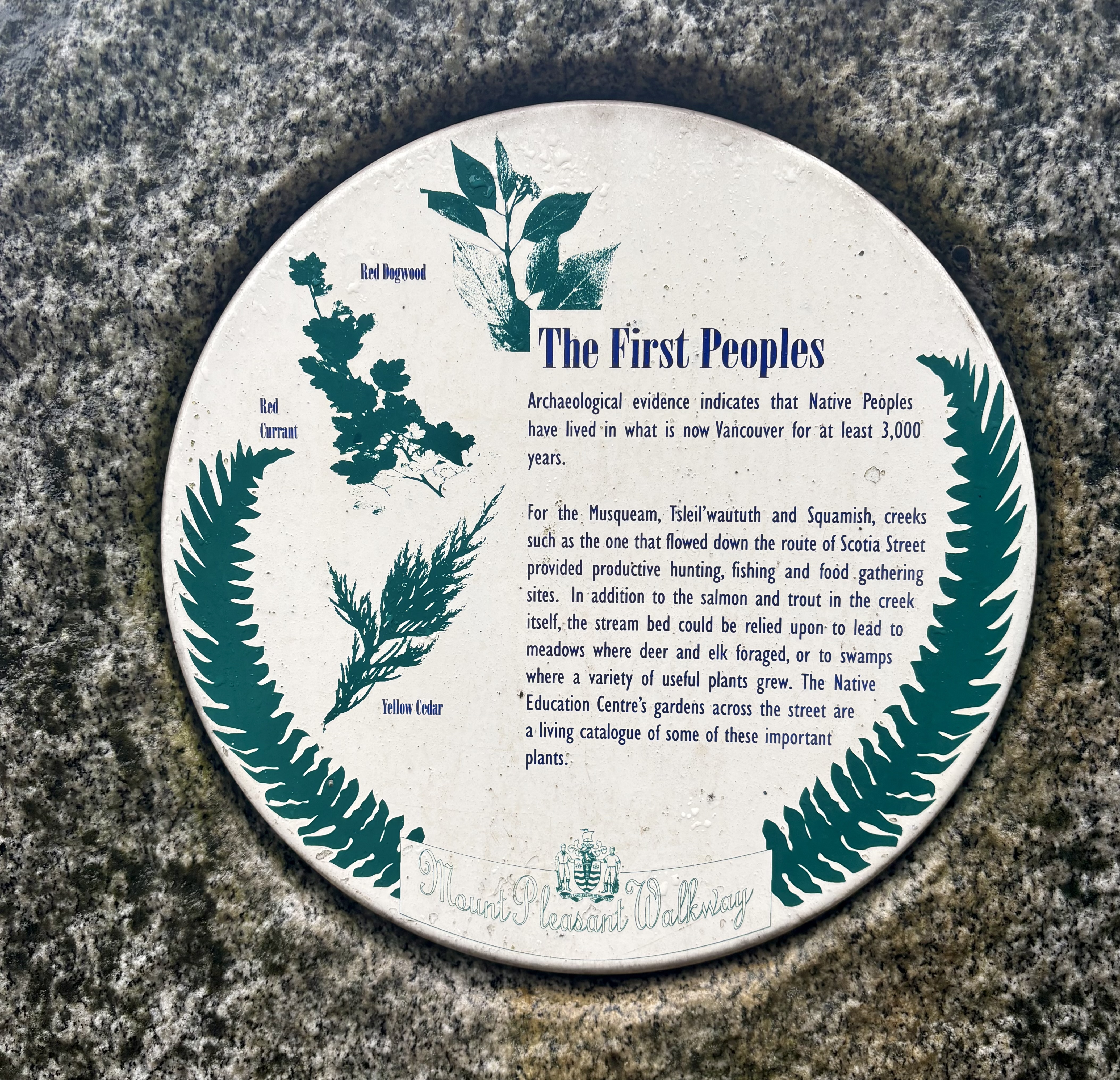
Another plaque takes us back to much earlier history — some three millennia back — and to those earlier uses of the watercourse and surrounding forests.
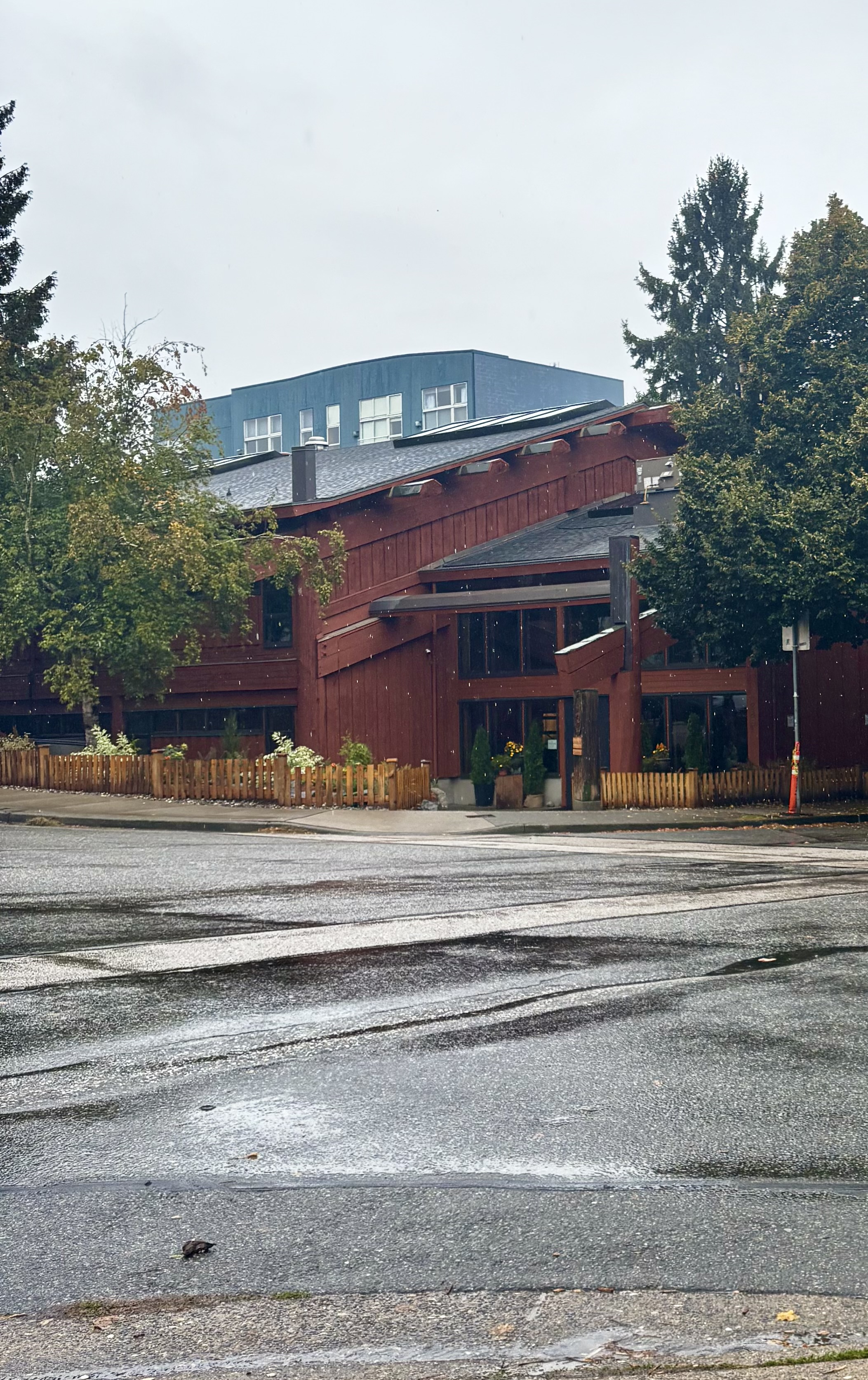
Kitty-corner to the plaque, the Native Education Centre it references, and its gardens.
My mind full of what used to be, imagining a creek to complement the rain, I walk on. Walk “downstream.” There is no visible creek, but there is real rain, and colours punched that much brighter as a result.
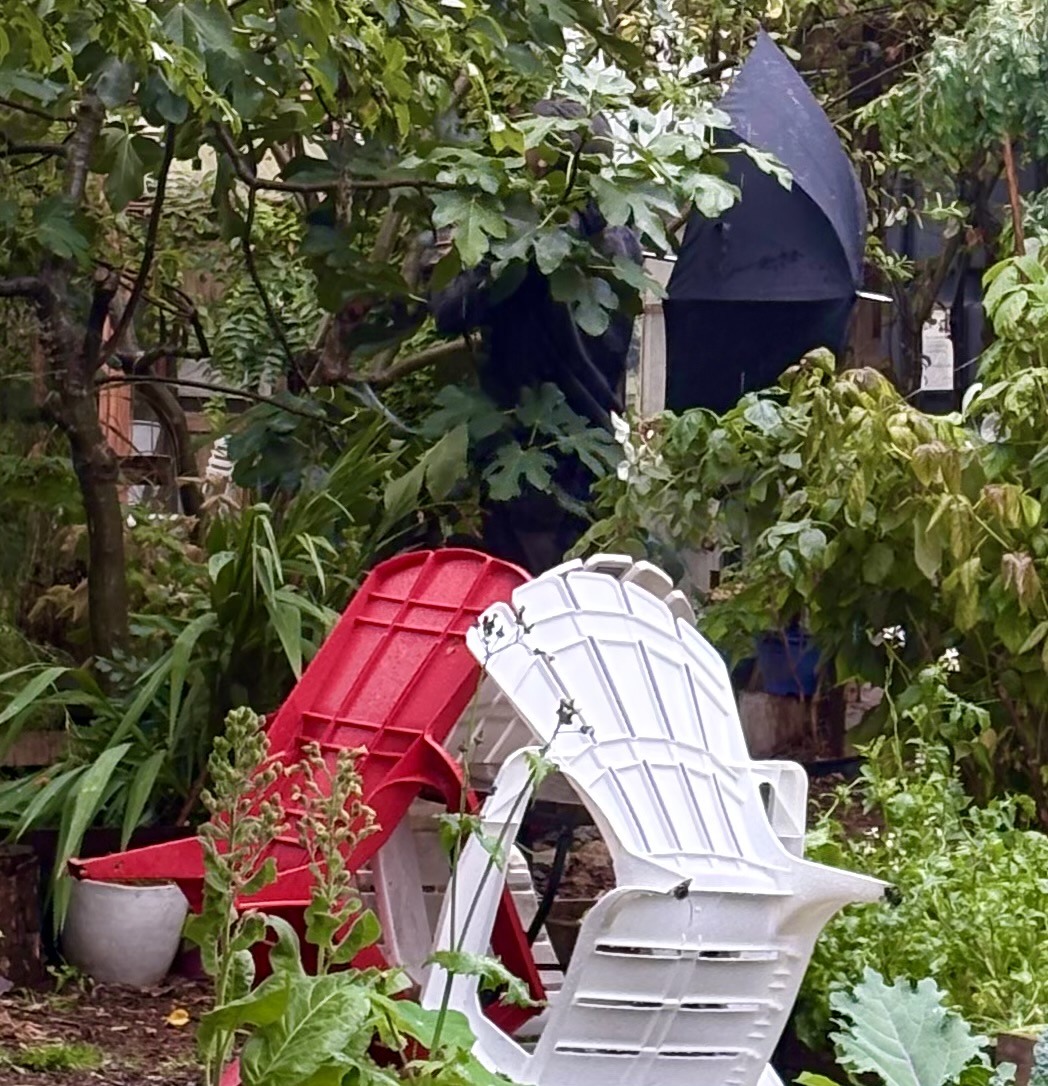
Including plastic colours, here at East 4th.
But I’m not focused on those tip-tilted chairs, I’m watching the horizontal black umbrella beyond the chairs (upper right). It belongs to a member of the coFood Garden Project that occupies this space, who is carefully shoulder-balancing it with one hand as he uses the other to wrest something out of the tree overhead. Branches interfere, I have no idea what he is doing. (Rescuing an injured bird? Snatching up some Spanish doubloons? Leaving a note for a secret lover?) There is suddenly a loud crack, he pulls his umbrella again vertical, and walks away. Mission presumably accomplished.
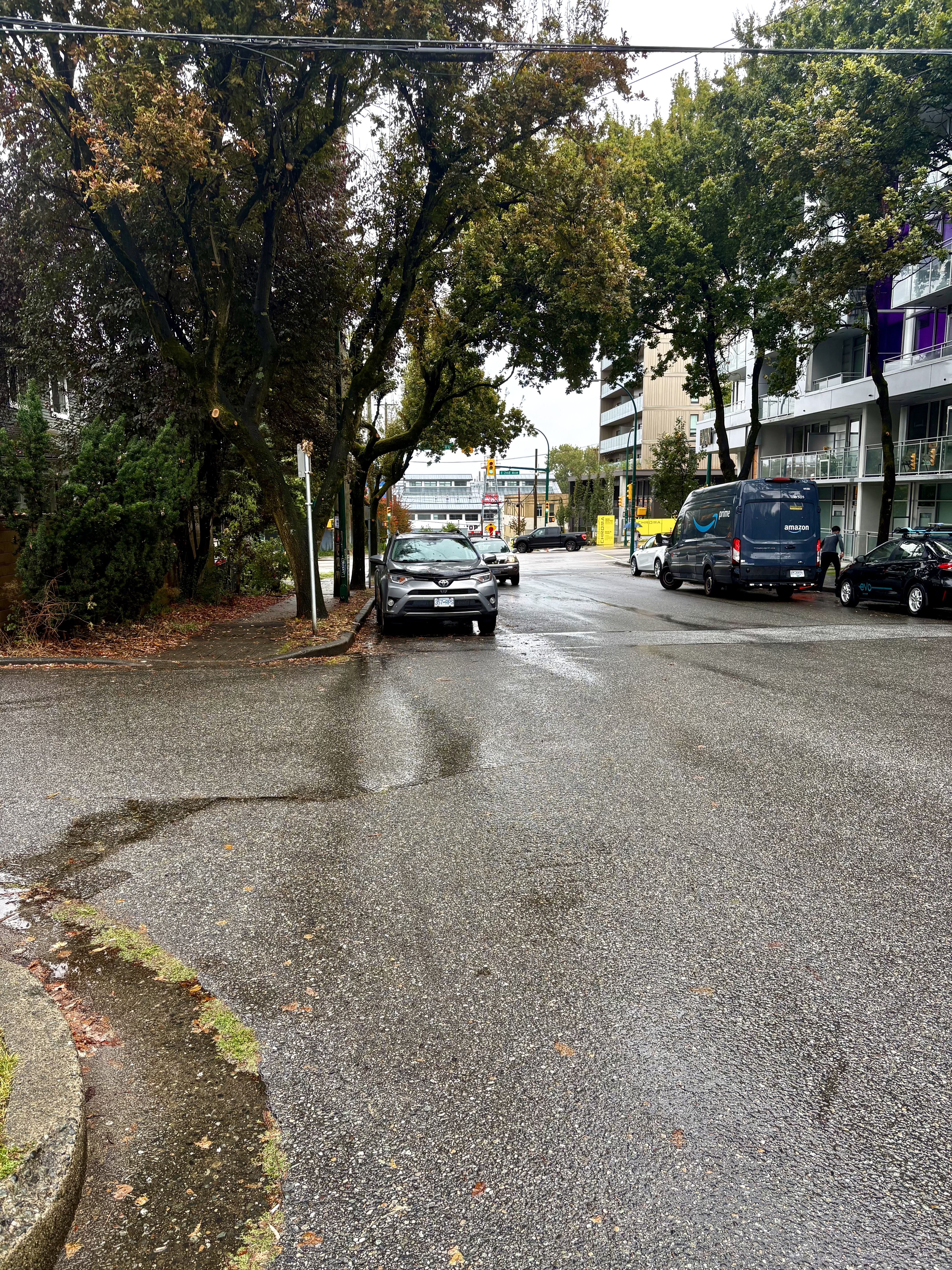
One last look north, watching water rivulets course downstream, again imagining a creek instead of pavement ..
and I turn to walk my way back upstream.
One final slight detour into a driveway, to admire one more example of shine in all this rain…
and at last I start thinking about dry indoors space and hot soup.
14 September 2026 – Late in the walk, both of them, one each for a two-part day.
Part One has me heading through Chinatown and back into the East Van neighbourhood of Strathcona. Since I’ll be attending an artist’s talk at the Paneficio Gallery on Keefer at Hawks, I walk my way in, all along Keefer from Main Street.
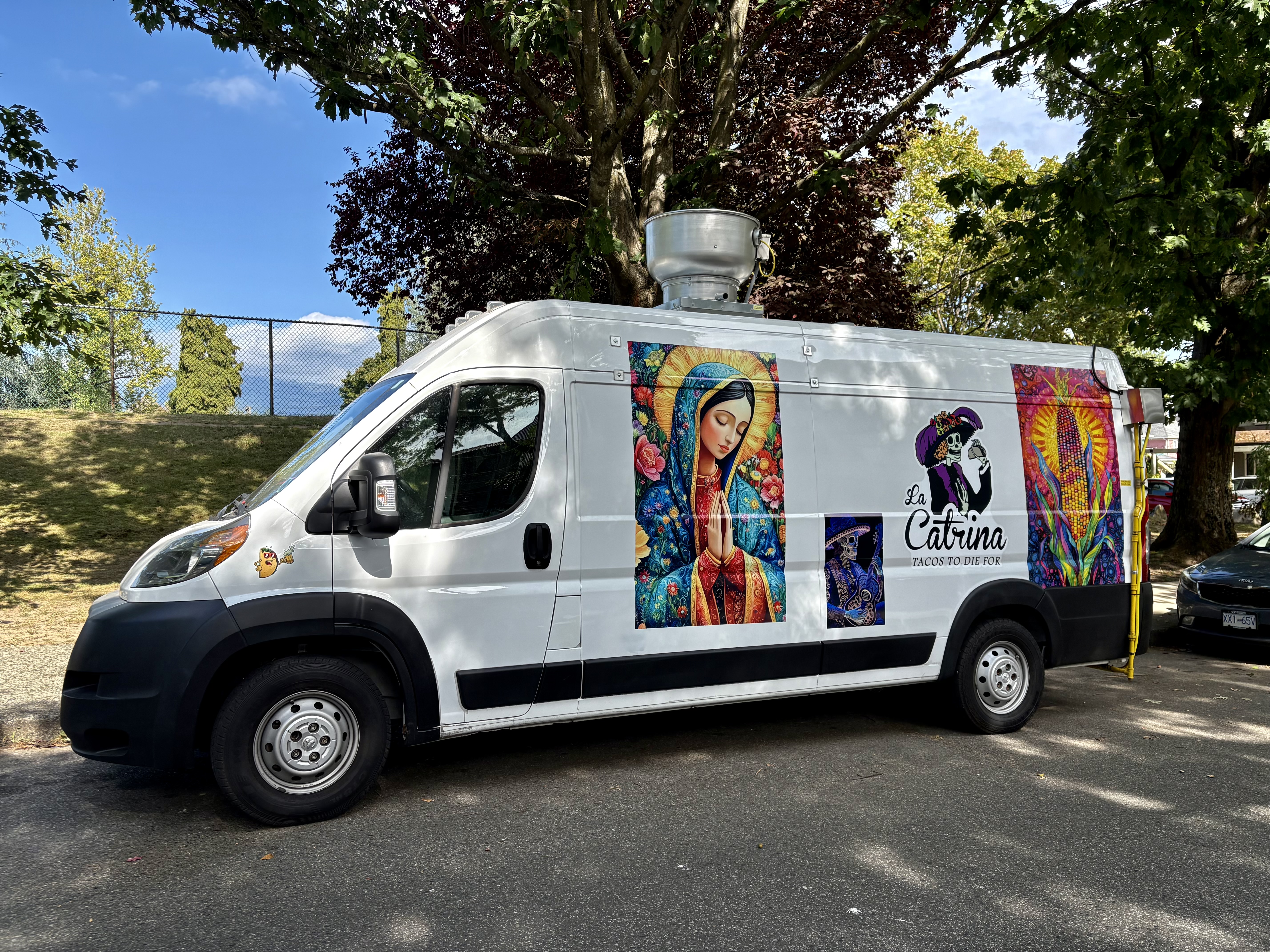
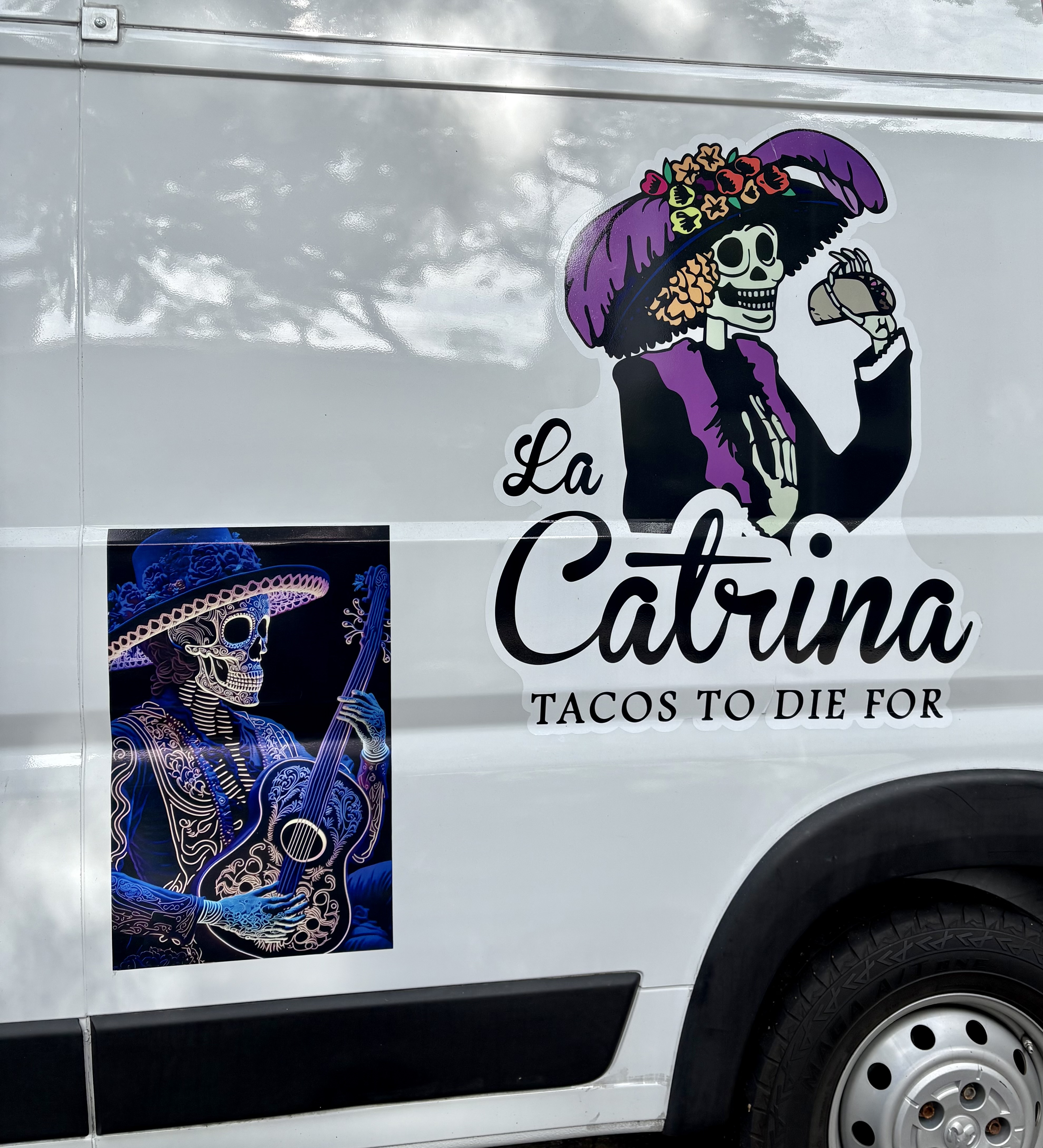
This taco truck stops me in my tracks just before Heatley Avenue. The big, bold colours and graphics, yes — but check the brand-name endorsements!
If the Blessed Virgin doesn’t convince you, maybe these guys will.
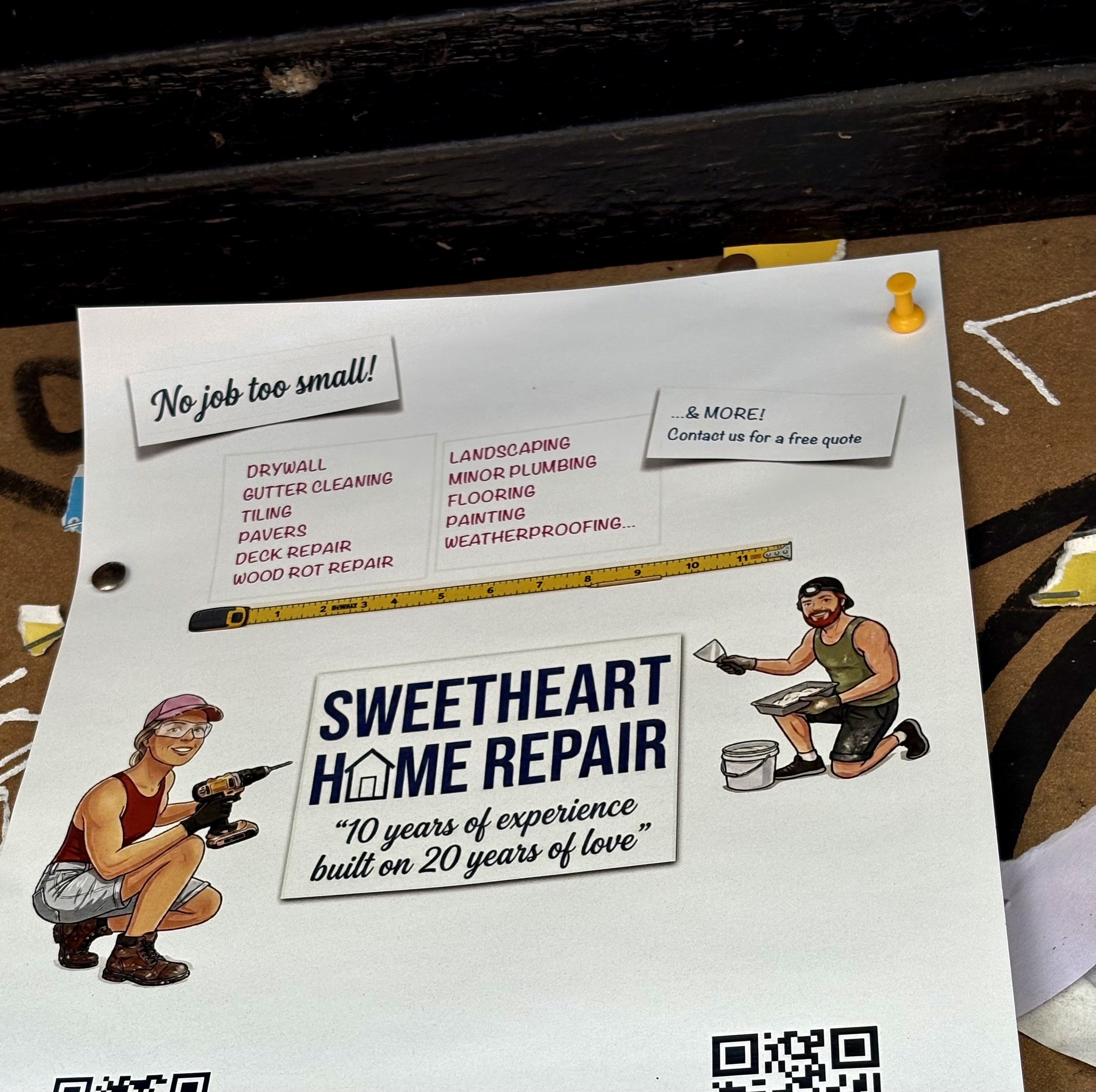
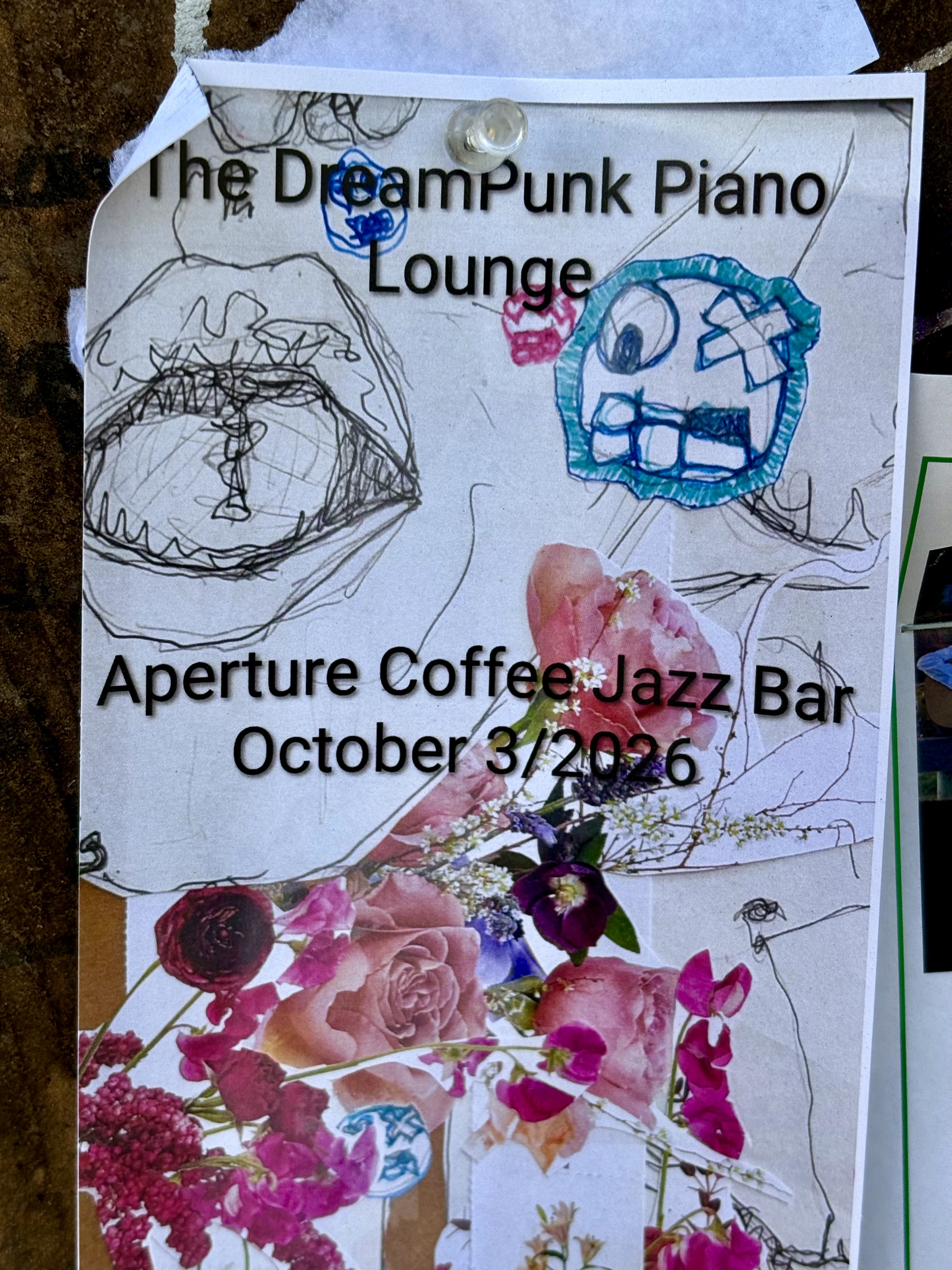
Next up, and almost immediately because it’s catty-corner from that truck: MacLean Park, and its giant notice board here at the north-west end. I read notices, impressed by the variety and fascinated by some of the names, the descriptions. This home repairs business, for e.g….
and this night club…
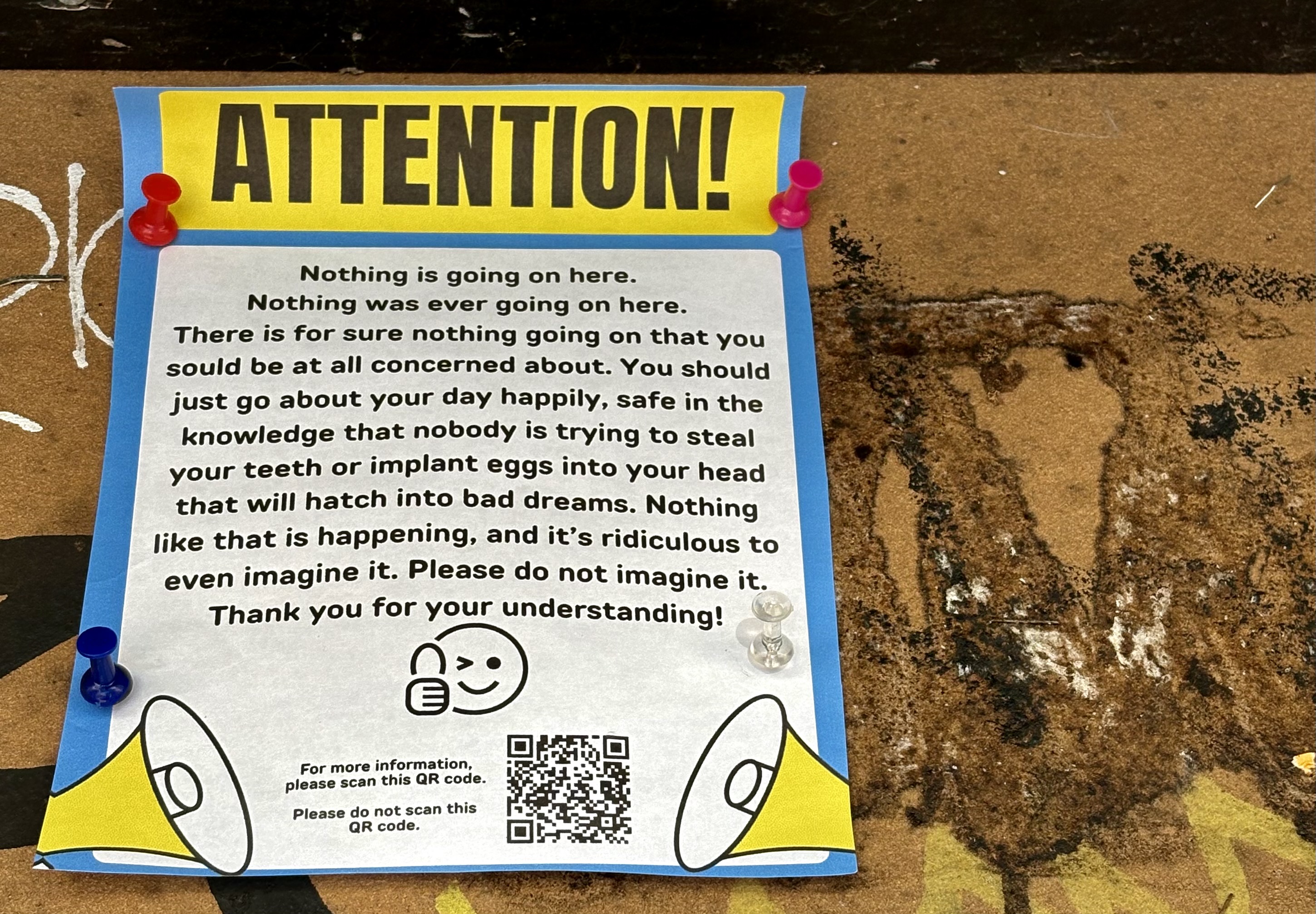
and… and… and I don’t know what this is.
I read it very carefully, right to the end, including the QR code instructions…
and it is then with some relief that I return to the physical, actual world.
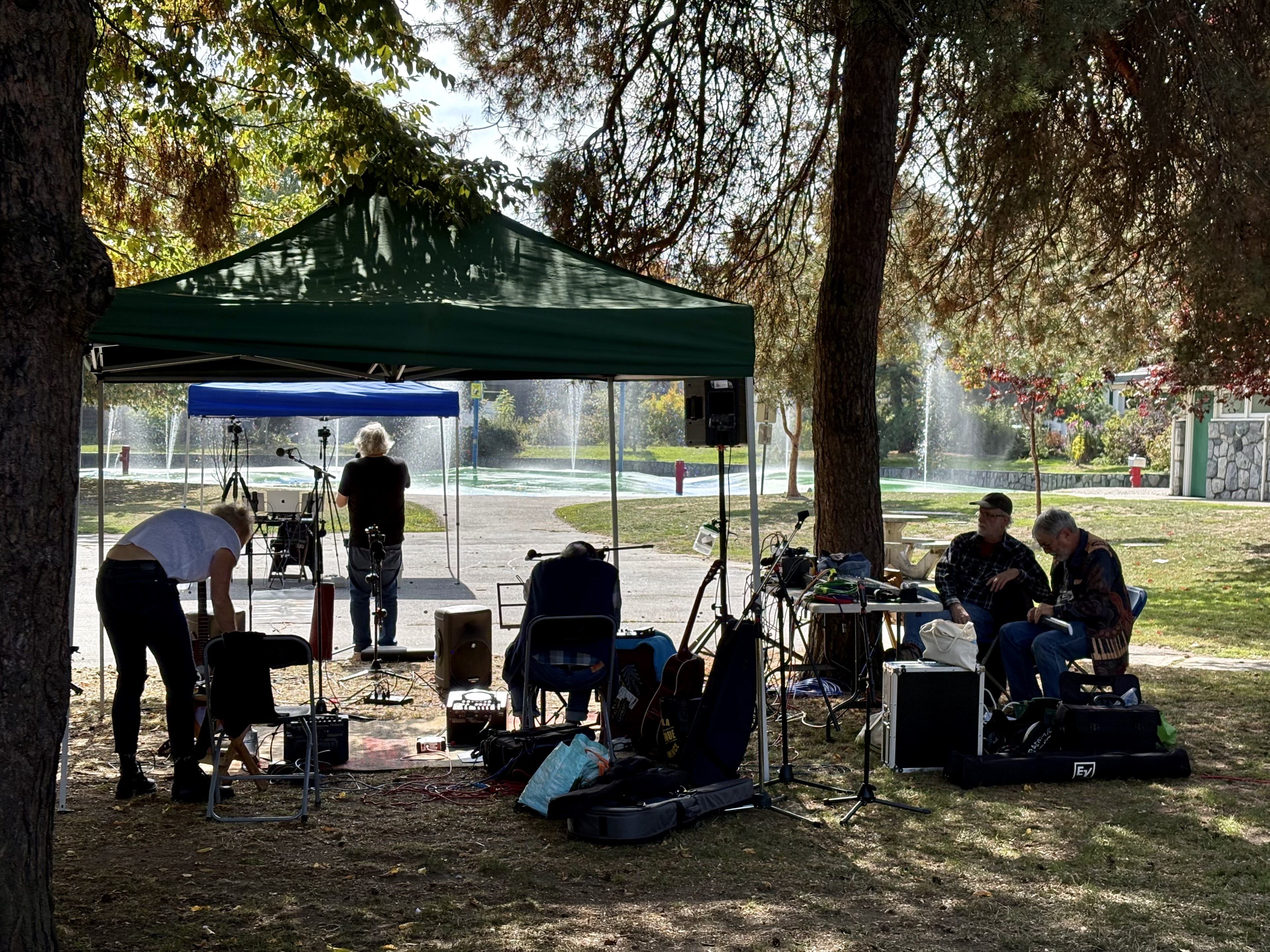
I watch these musicians setting up for their free-concert gig in the park…
and, reassured by the normalcy of it all, cross back to the north side of Keefer and walk on.
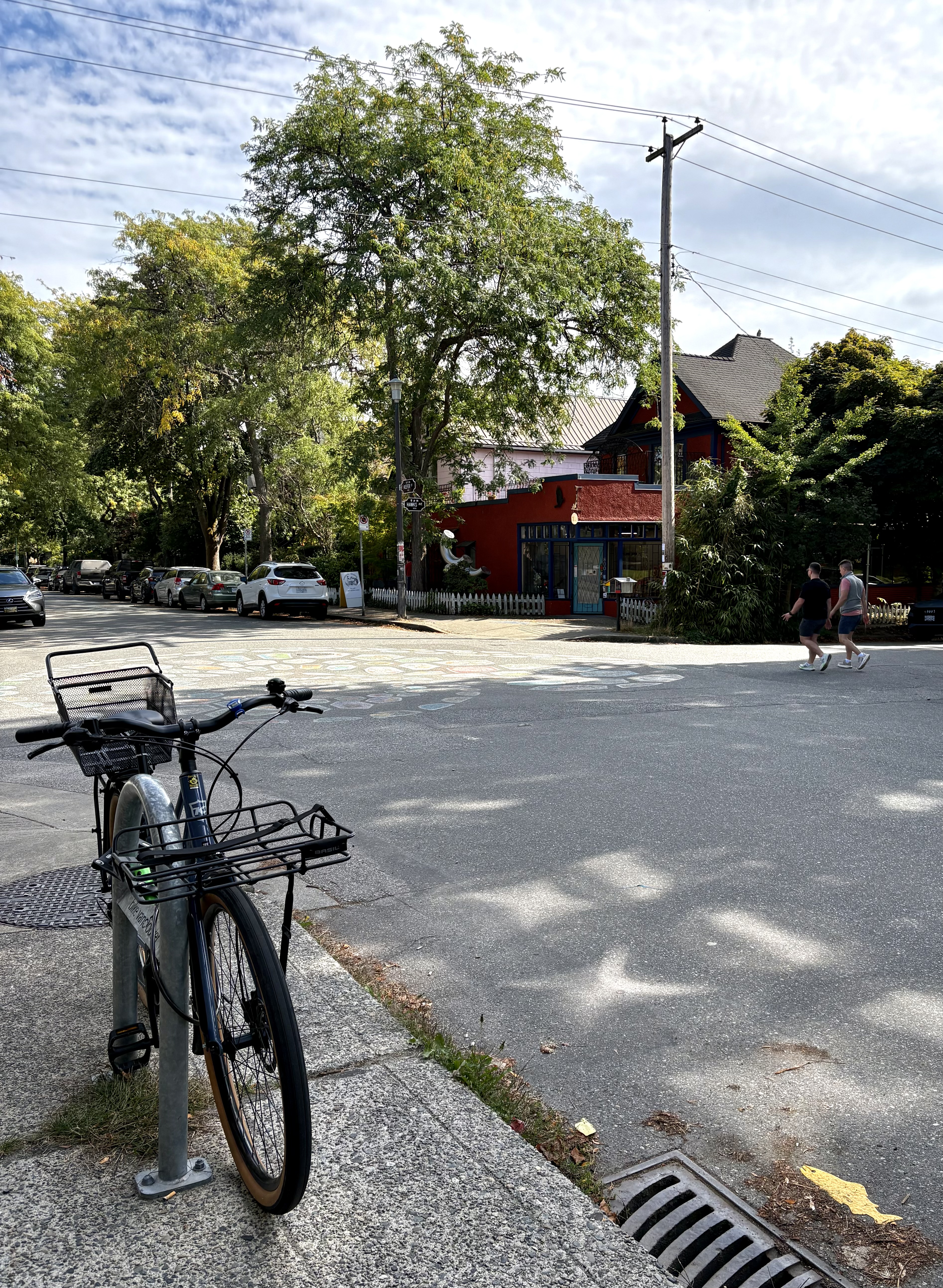
Almost at the corner of Hawks, diagonally beyond that bicycle, there’s Paneficio, its bright façade dominating the street corner. The building is a complex of artists’ studios, living space and a small exhibition gallery. This is the last day of Yuri Arajs‘ show, Dust to Dust, and an impressive number of red dots mark the works that he discusses in his remarks.
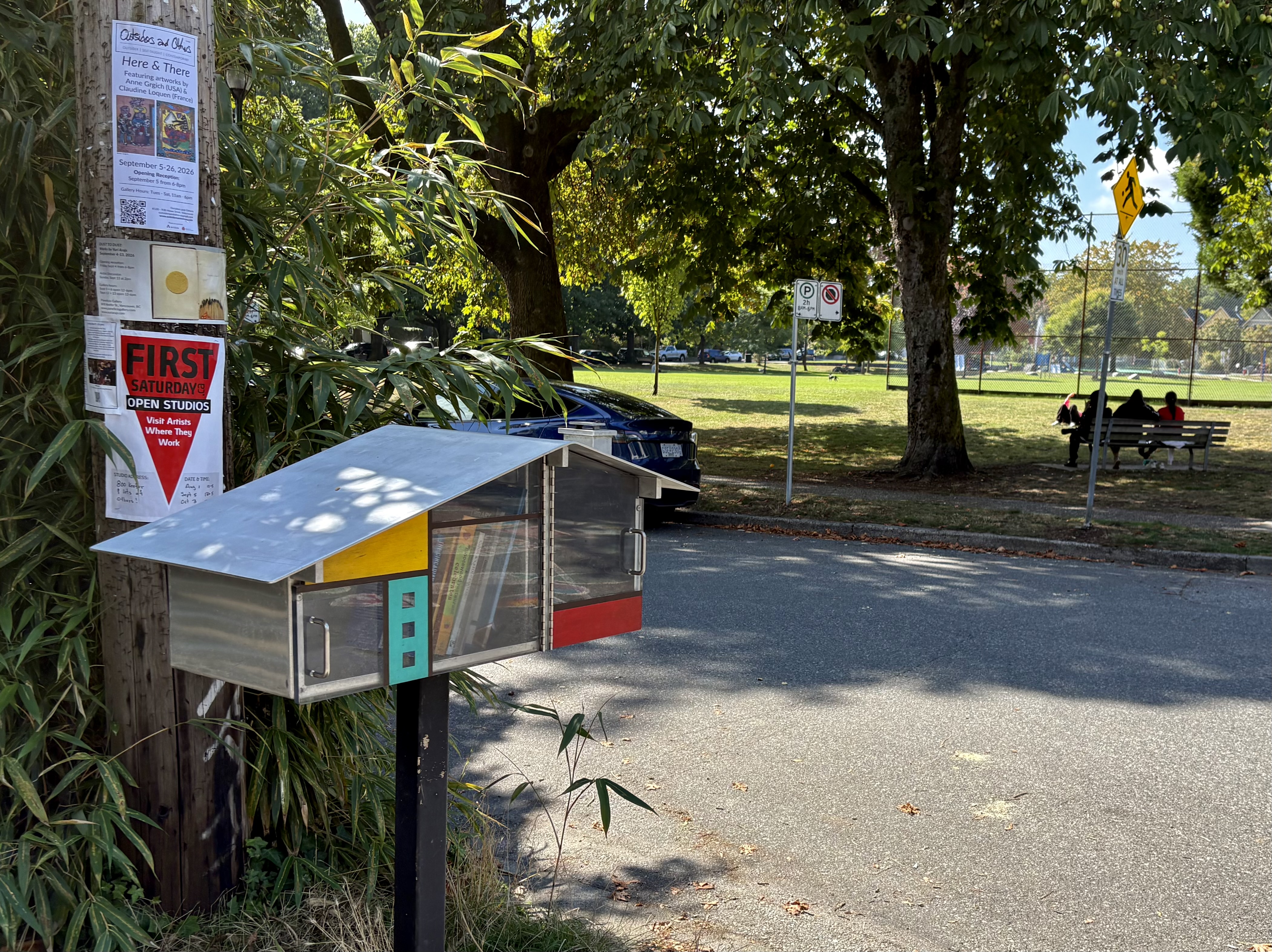
Afterwards, I check the current offerings of what is surely the city’s sleekest little-free-library…
where a quick riffle through one of the books, Make My Curry! (New Indian Cuisine), by Uganda-born Vancouverite Sami Lalji, convinces me to scoop it up.
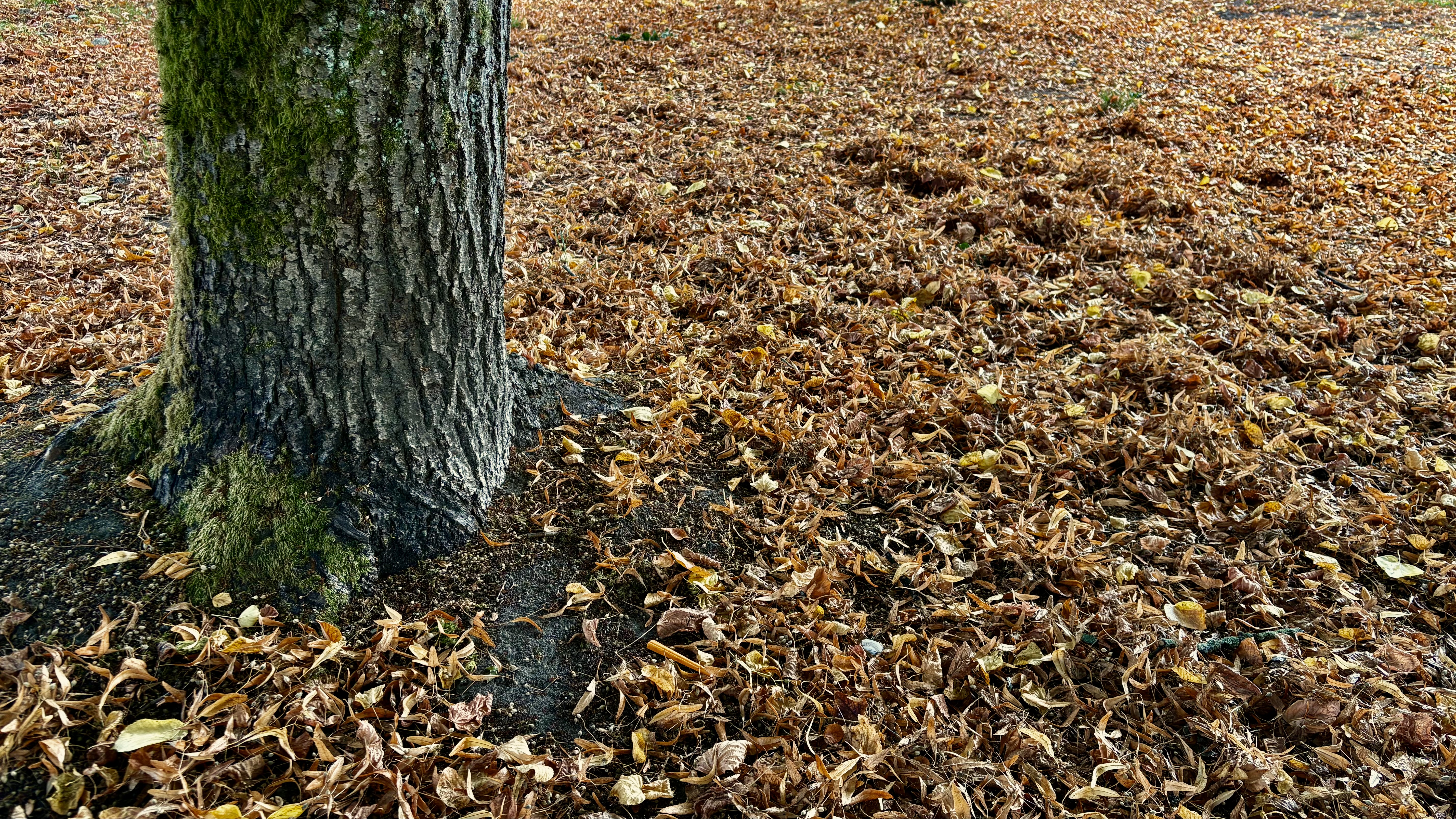
My south-west loop toward home takes me first through leaf litter on Hawks, bright with the golden tones of fall…
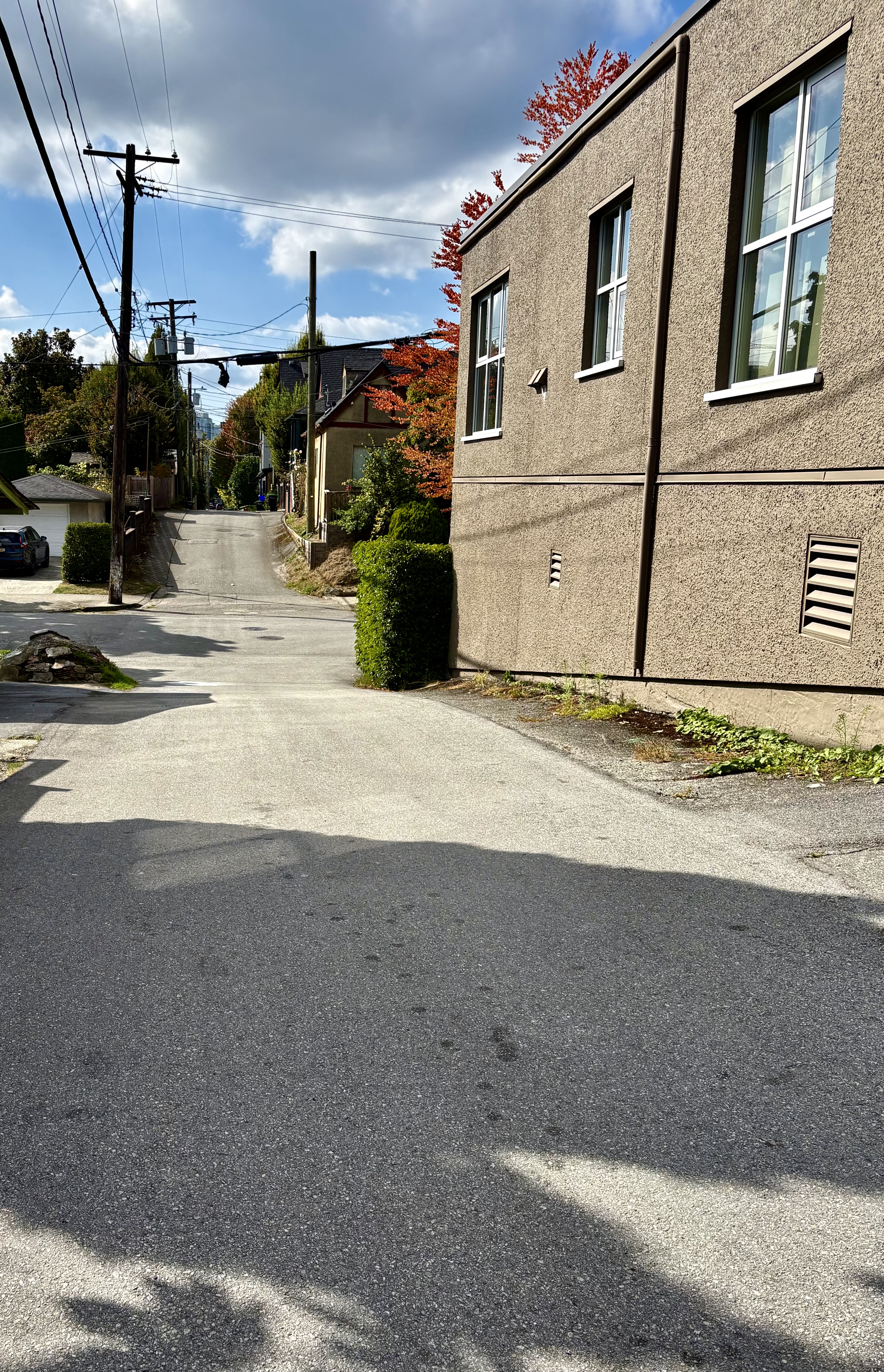
and then west on the alley between East Georgia & Union streets. Crisp shadows at my feet, seasonal reds and golds overhead into the distance.
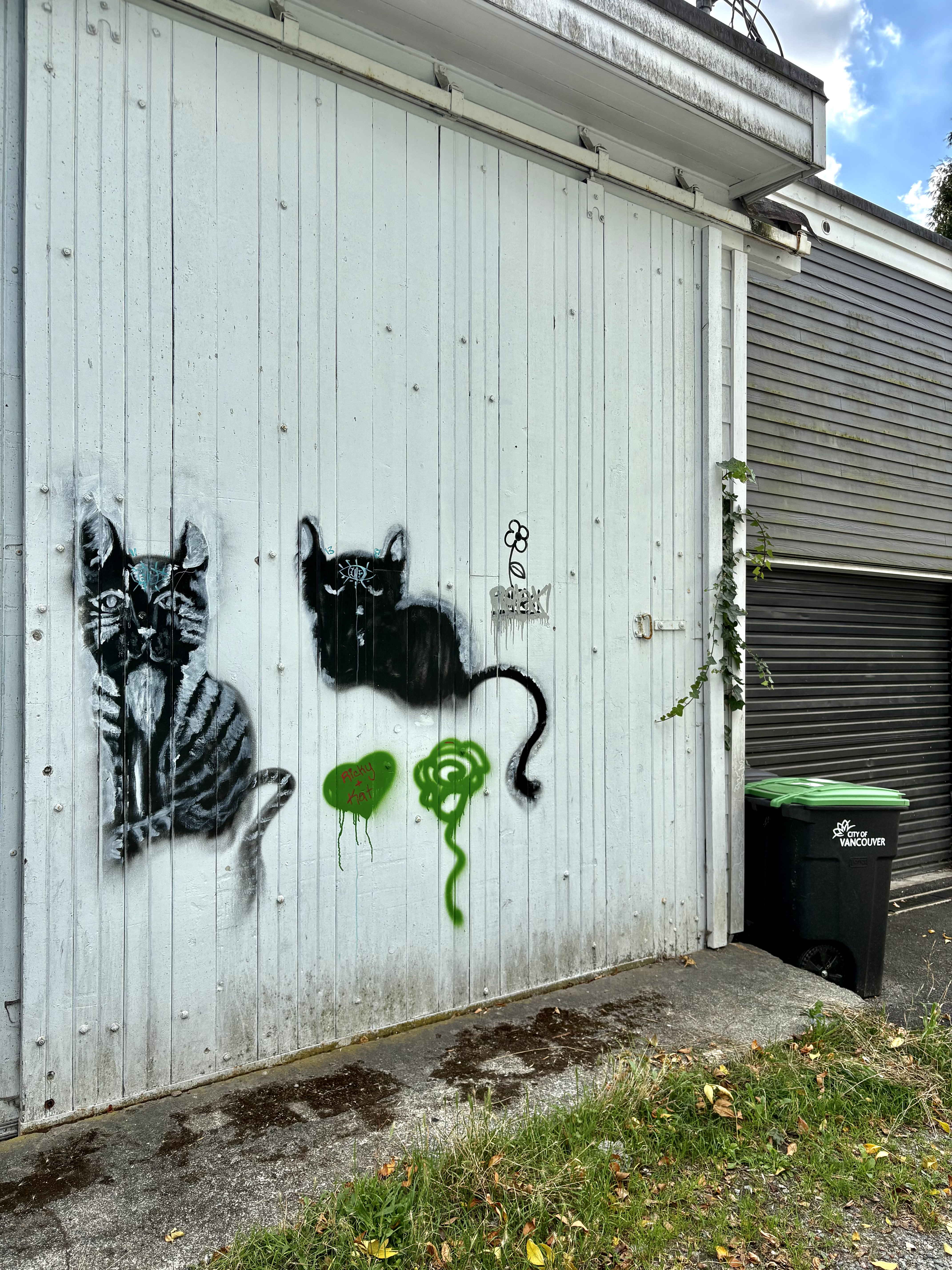
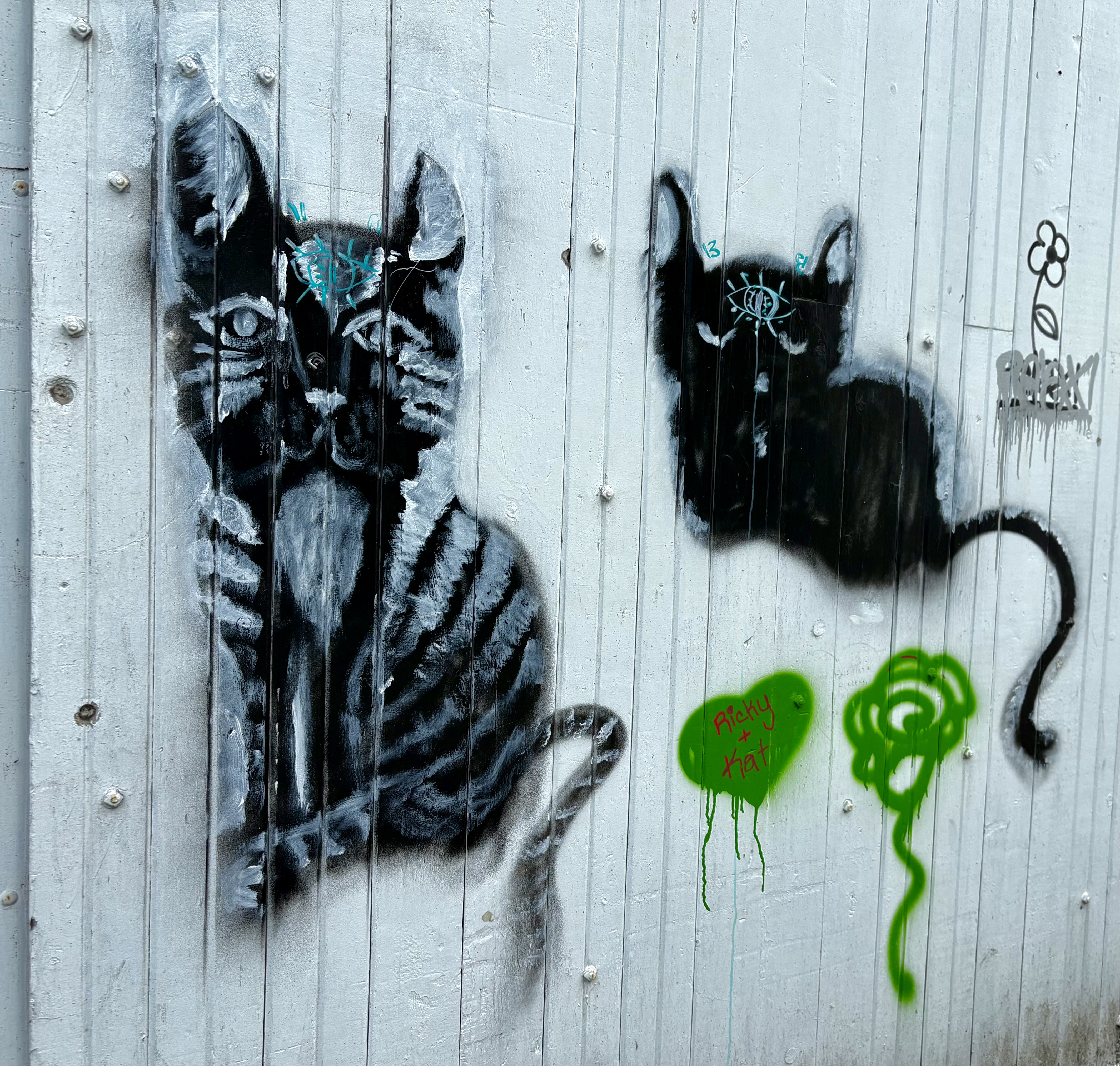
No alley murals, just some tagging and (I say this with petulance) some scrawls. Sulk. I’m almost at Jackson, about to drop down to Union, when a garage door gives me reason to stop sulking and be happy again.
I know, I know, this is not terrific art. But they are cats, and they do have attitude. (And third eyes.)
So I make my way out to Main and back south with good humour restored.
The bus drops me just north of Broadway — and launches me on Part Two of my day.
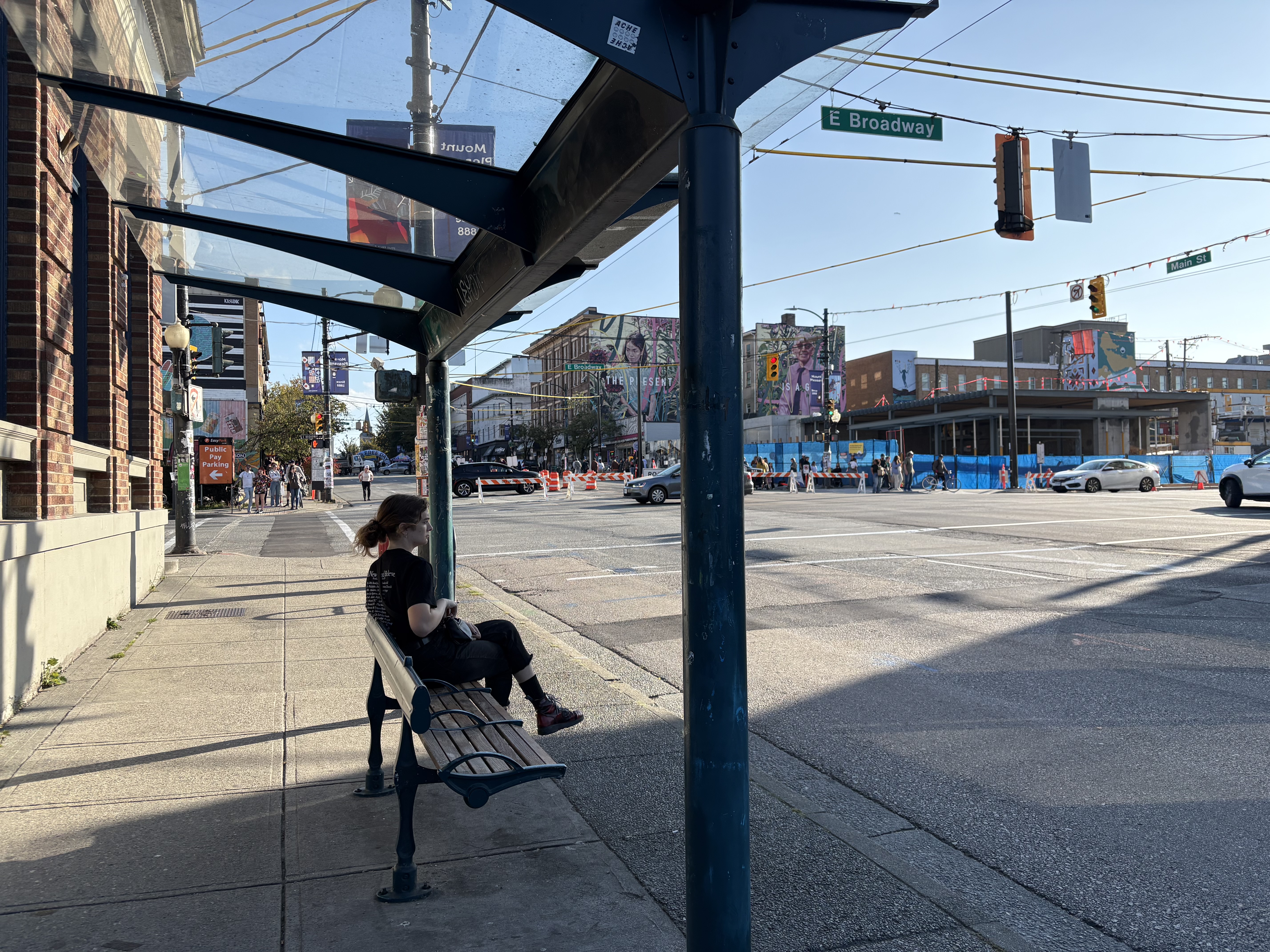
Because this is Car-Free Day on Main Street (10th Av to King Edward)! The view south from the Main Street bus stop here at Broadway, aka 9th, draws me in. It is blissfully empty of vehicles and, a bit farther along, full of tents and people.
Tents on both sides of the street, a great jumble of foodstuffs, handcrafts, vintage and up-cycled clothing, pottery, jewellery, plants and veggies, and every kind of organization compatible with the neighbourhood and a “car-free” ethos.
The farther south I walk, the busier it gets, more and more adults, kids and leashed dogs, more and more ways for everyone to interact with each other and with all the offerings.
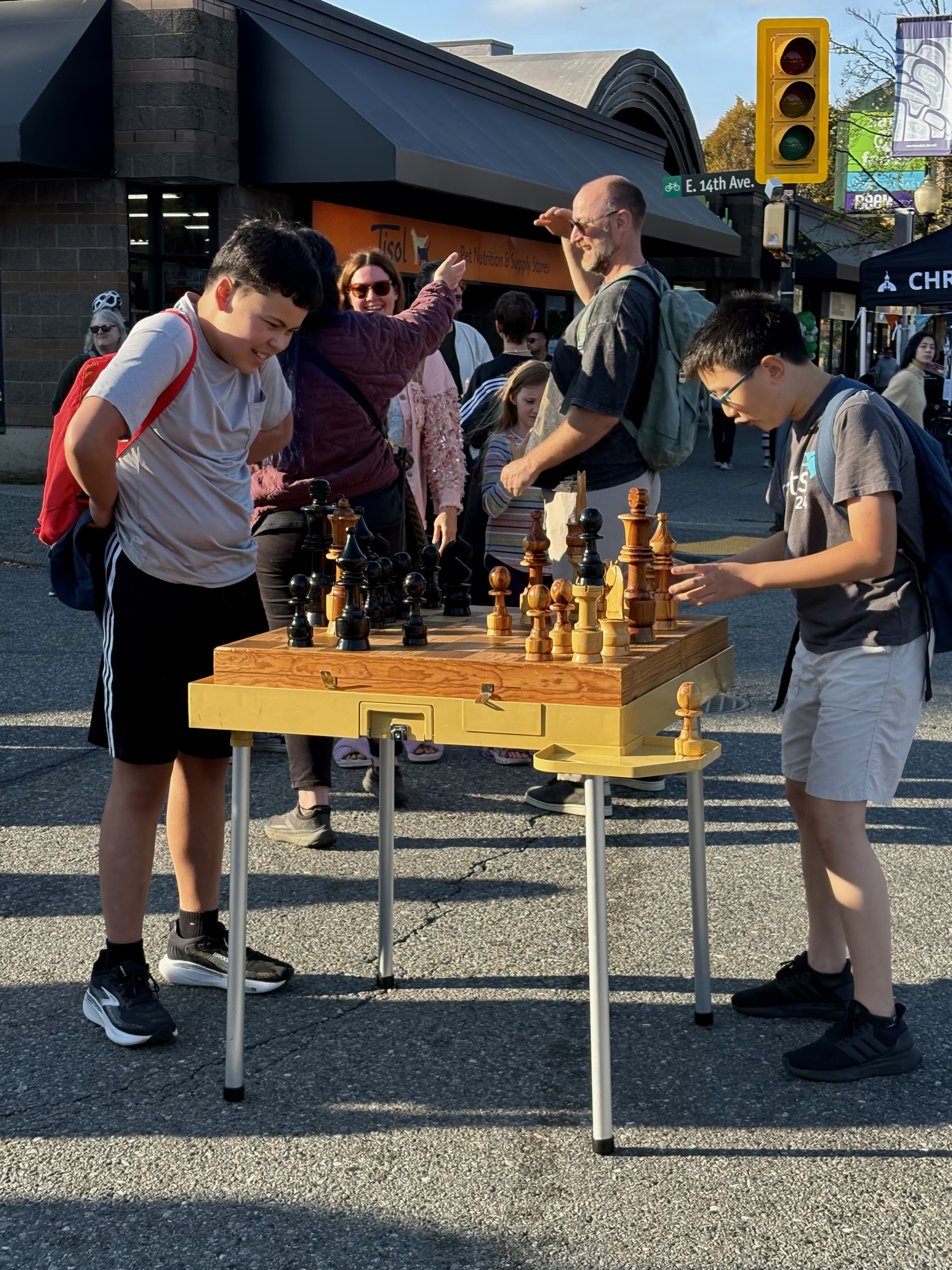
I watch two clever boys play chess…
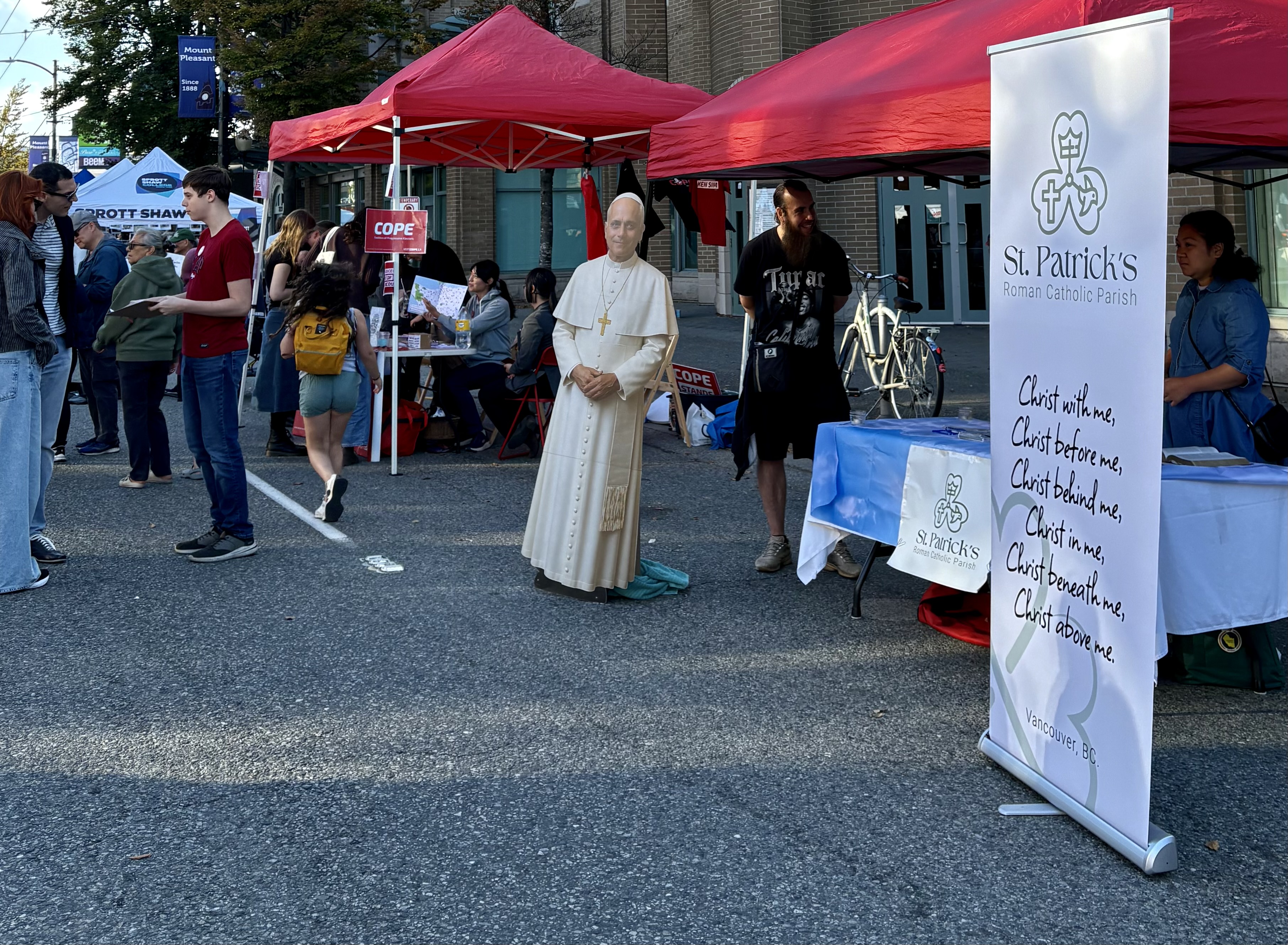
I watch a cardboard pope smile gently while his human colleagues watch for opportunities to talk Roman Catholicism and St. Patrick’s Church with passersby.
I am definitely in Advocates Alley now.
Do you see the red and white COPE sign, just past the pope’s shoulder? COPE is one of the municipal political parties, gearing up for the 17 October civic elections here in Vancouver.
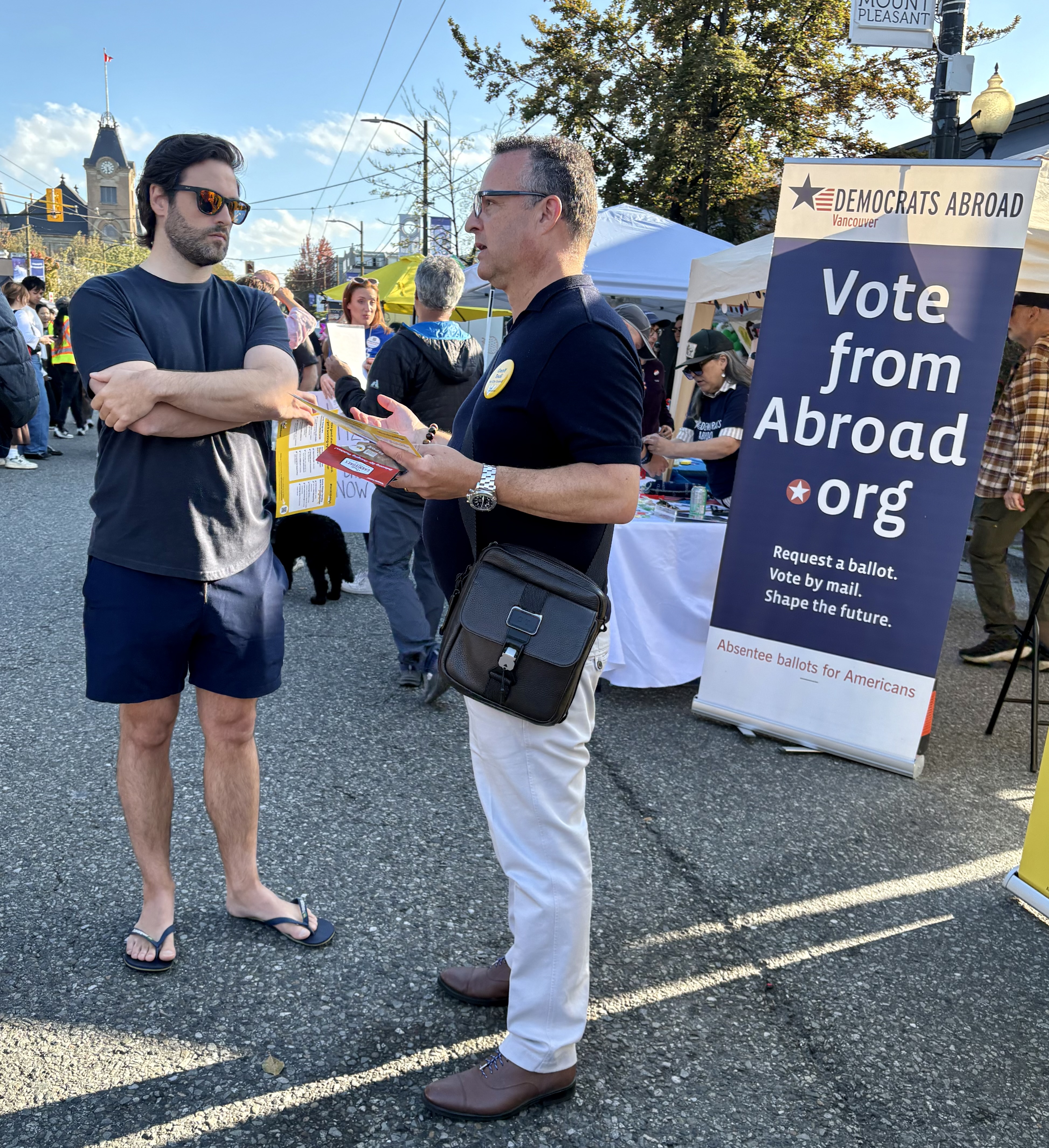
Next up, this duo: the sign on the right more obvious than the affiliation of the white-trousered, yellow-buttoned gentleman in the middle, who is trying to persuade the uncommitted listener on the left.
Sign on the right? You got it: the USA mid-term elections are coming up in November and Democrats, as always prior to an American election, want to pull in as many “abroad” votes as they can. Yellow-Button Man is with a very new party on the Vancouver civic scene called Vote Vancouver, and he is talking about our elections thank you, not theirs.
I accept a leaflet as i walk by… and then carry out my own act of advocacy.
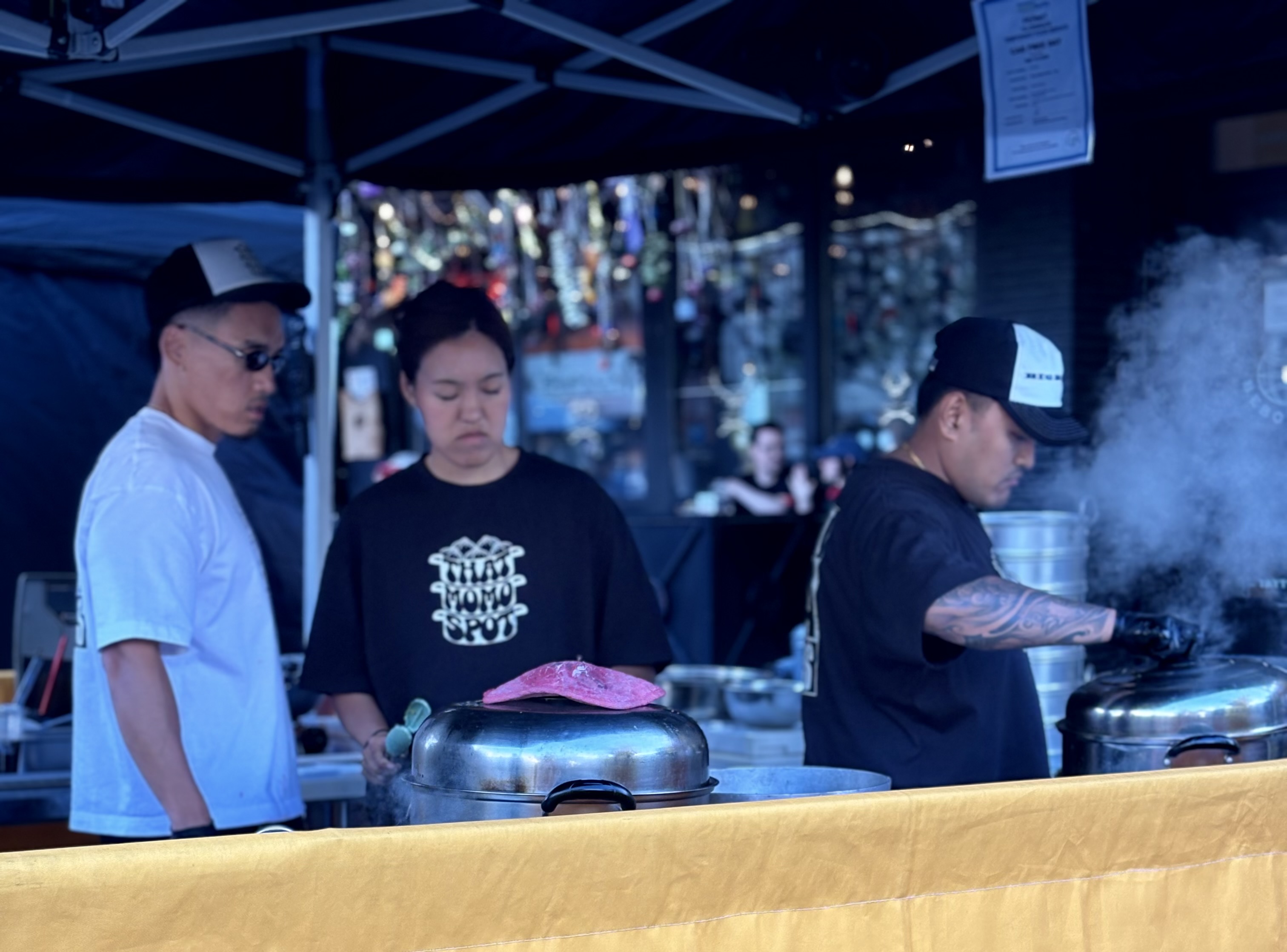
I choose a bowl of traditional Himalayan steamed dumplings. This is only mid-September! I still have a whole month, to prep for my civic duty.
11 September 2026 – Time travel: you’re with me on 8 September, downtown, corner of West Georgia and Granville. I’m about to turn from the former onto the latter and notice that busy Granville is barricaded, although its sidewalks are open.
I complete the turn, expecting some kind of kerfuffle to justify the barricade — nothing major, since no sirens or emergency vehicles, but something.
I get something.
A great big metal apple, on a car-free street.
I’m surprised, but then, as I walk closer, no longer surprised. The apple fits right in.
Its reflection sparkles in Fatburger’s doorway, across the street…
and the apple itself sparkles even more, viewed from across the street.
It embraces the woman who just wants to read her book…
and it makes neighbourly conversation with skyscrapers and sky.
I walk south on this peaceful street, see some workers busy with an installation at the next corner, and ask, “Going up? Coming down?”
They give me a friendly but puzzled where-have-you-been face, and explain it’s all coming down. This stretch of Granville has been a Pedestrian Zone all summer long. As of tomorrow, the cars return.
Okay, I missed that one.
But I’m all set for Car-Free Day on Main Street, East 10th to King Edward, this very Sunday.
7 September 2026 – You won’t remember and I had to look it up, but back on 17 April, I titled a post Walking the Dogleg. It was all about walking the final stretch of the Arbutus Greenway north from West 16th, around its “dogleg” twist, to the end at West 4th. This weather-friendly holiday weekend, I decide to walk the rest of it — the 7-plus kilometres that precede the last bit, the total running some 9 km from the Fraser River in the south to False Creek in the north.
It is old railway land that is now a walking/rolling/running/cycling corridor, mostly beside Arbutus Street, bordered in places by community gardens and by various dimensions of streets and alleys and cityscape all along the way. I am totally in favour of it, for multiple reasons you can guess for yourselves. But. I just, and here my voice drops to a whisper…
I just don’t much identify with it.
So if you have something else to do, go do it and I won’t sulk. If you stick around… well, I hope you’ll agree there are some endearing moments along the way.
I haven’t walked this southern stretch in eight years, but here I am: feet on the Greenway down by the Fraser.
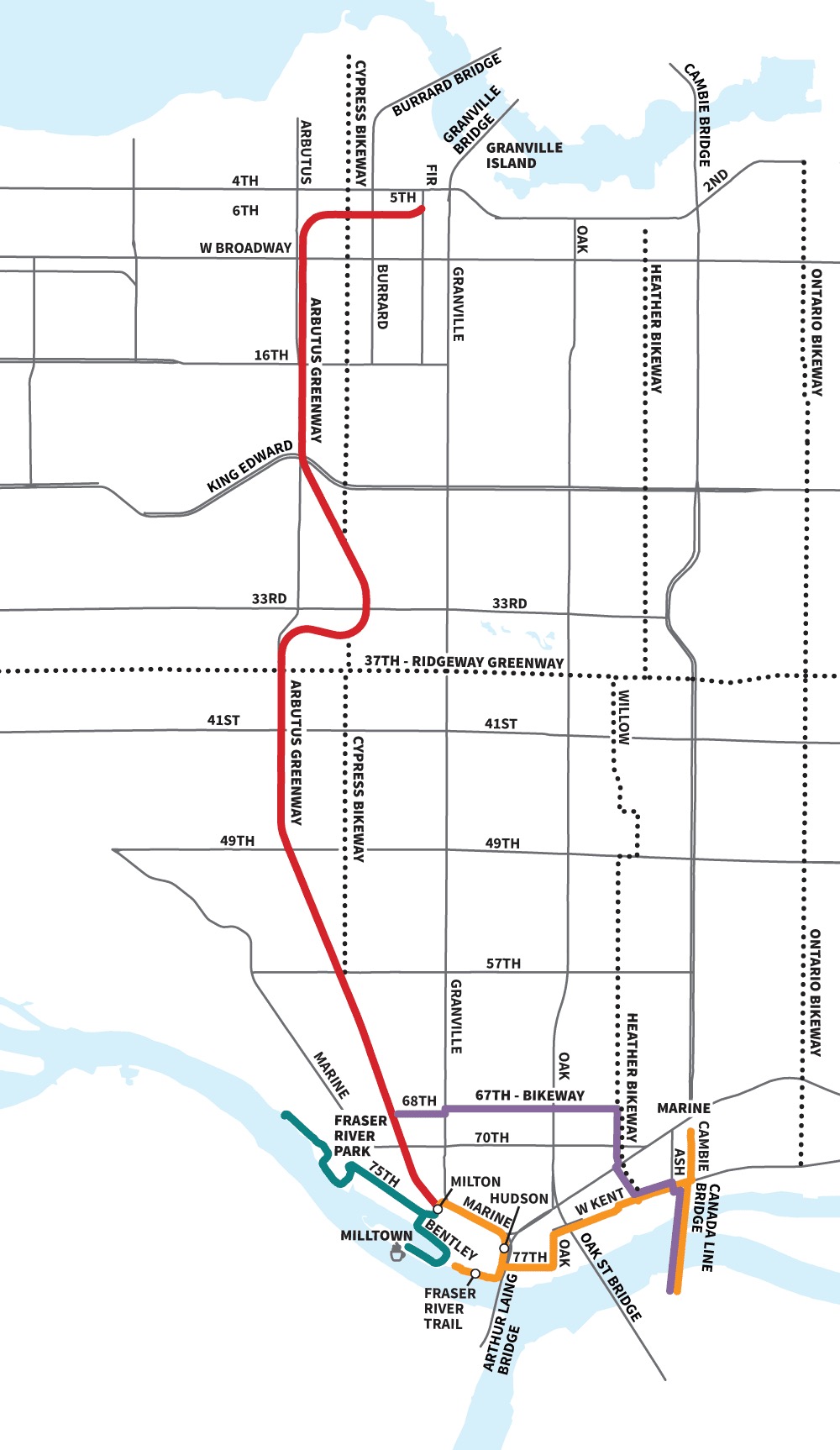
More specifically, I’m at the level of West 71st Avenue, near the very bottom of the red-line trail on this map.
The map also shows how the City’s grid of E/W avenues are numbered, decreasing from south to north, making it easy to situate yourself on the Greenway as it crosses the numbered intersections.
As you’ve probably already guessed, this post will not be faithfully linear. It’s more about those endearing moments.
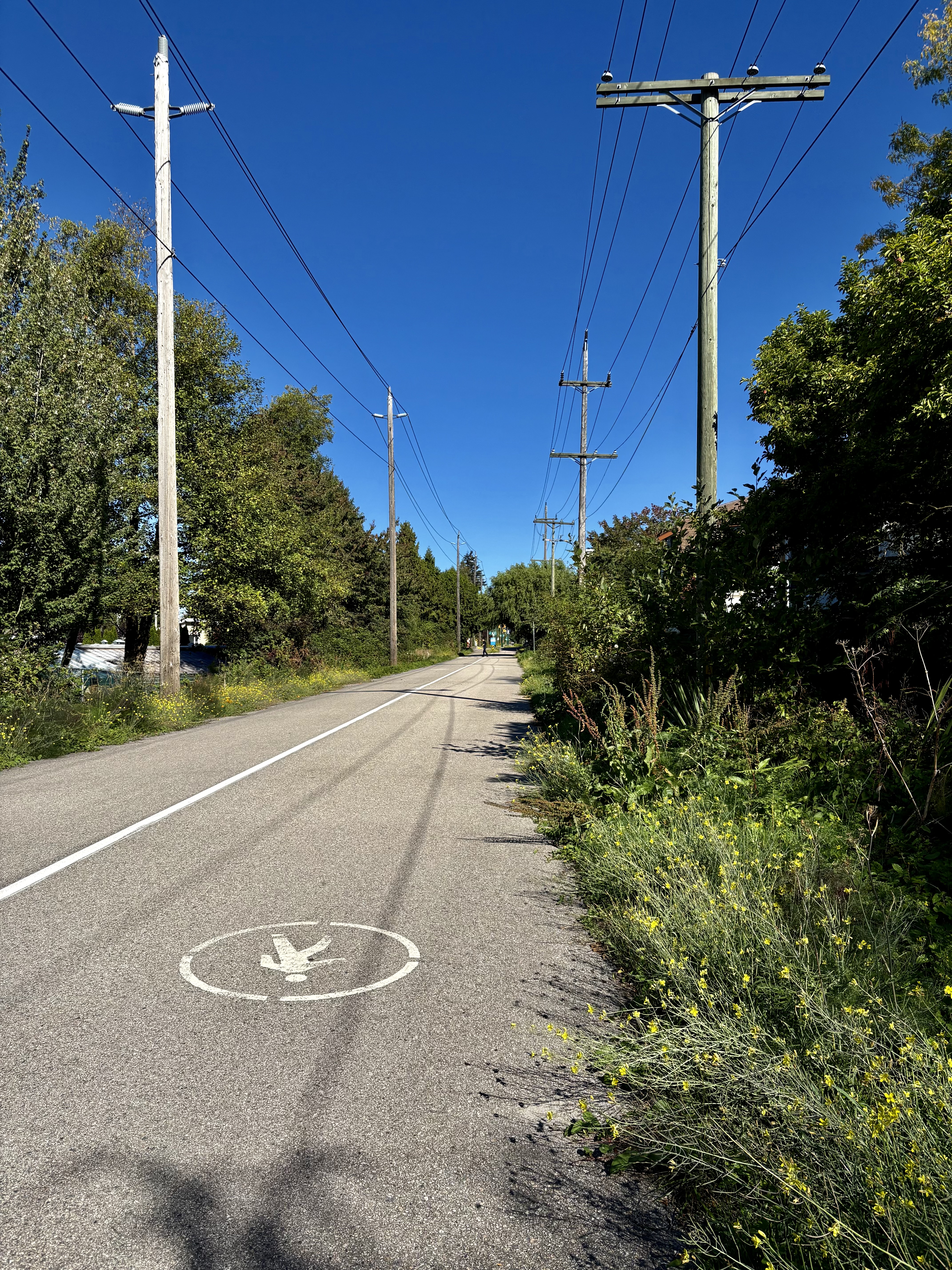
The first of which occurs ’round about the West 53rd level, and high time too, because while I appreciate the health benefits of striding along a pathway between grassy borders (cf. that first photo), and while I am trying to have Proust-like “new eyes”… the fact remains that this is all very much of a muchness. I would like Something To Happen.
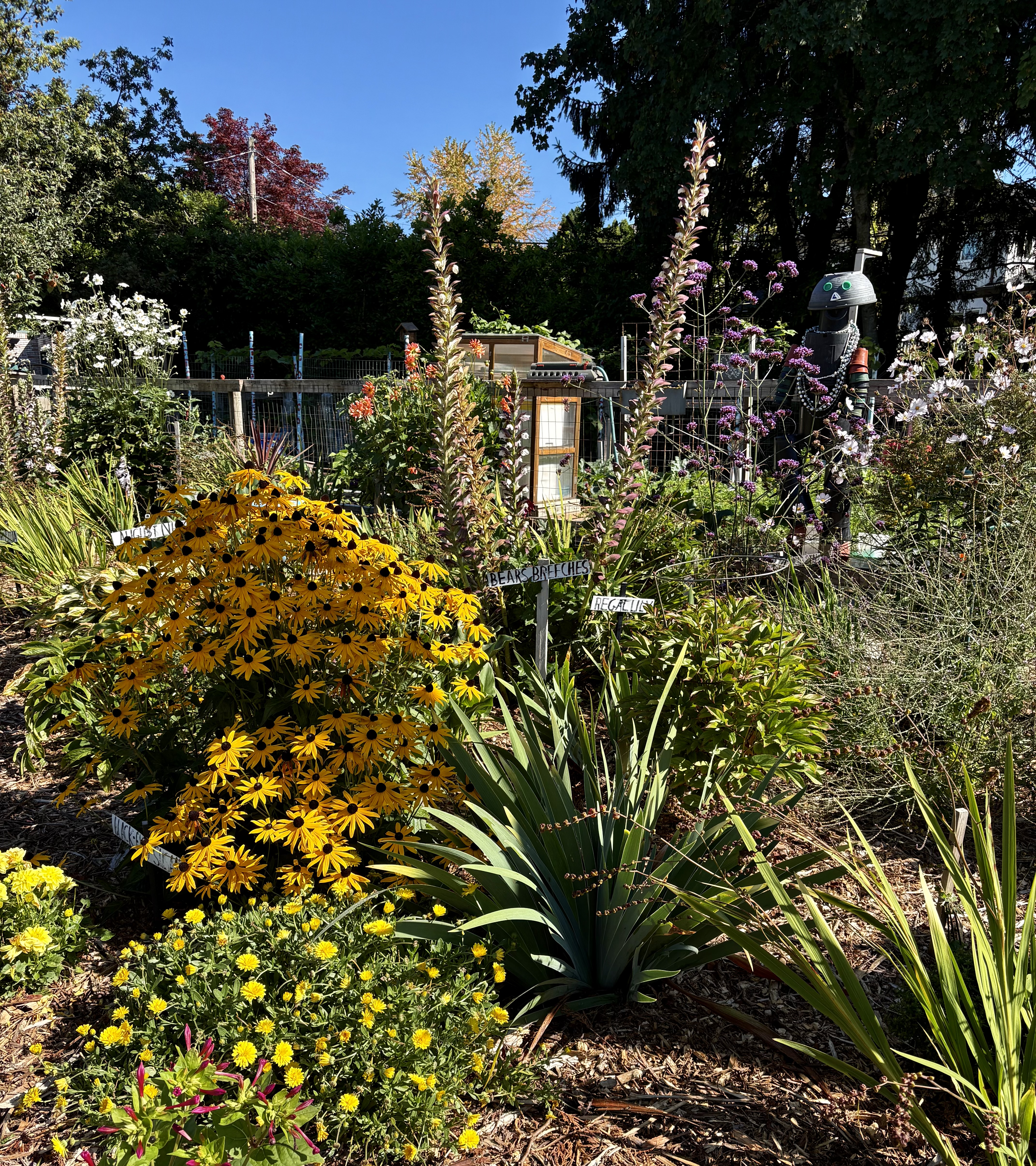
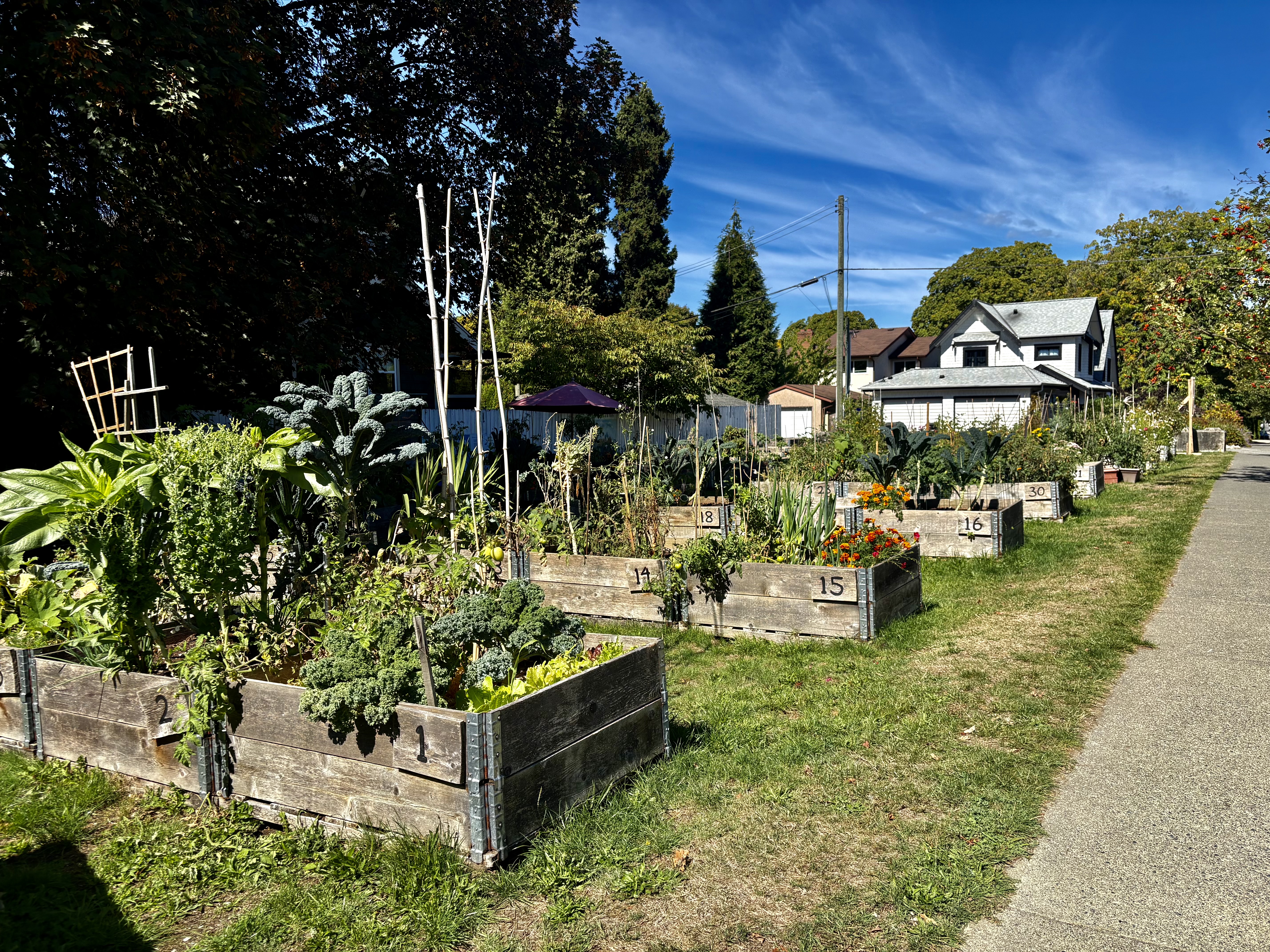
Then it does. The first of a string of community gardens, this one with lots of labels to help Greenway passers-by know what they are admiring.
That tall V, for example, is formed by two spikes of Bear’s breeches (Acanthus mollis). I admire the general effect, read a few more labels, and then, gleefully…
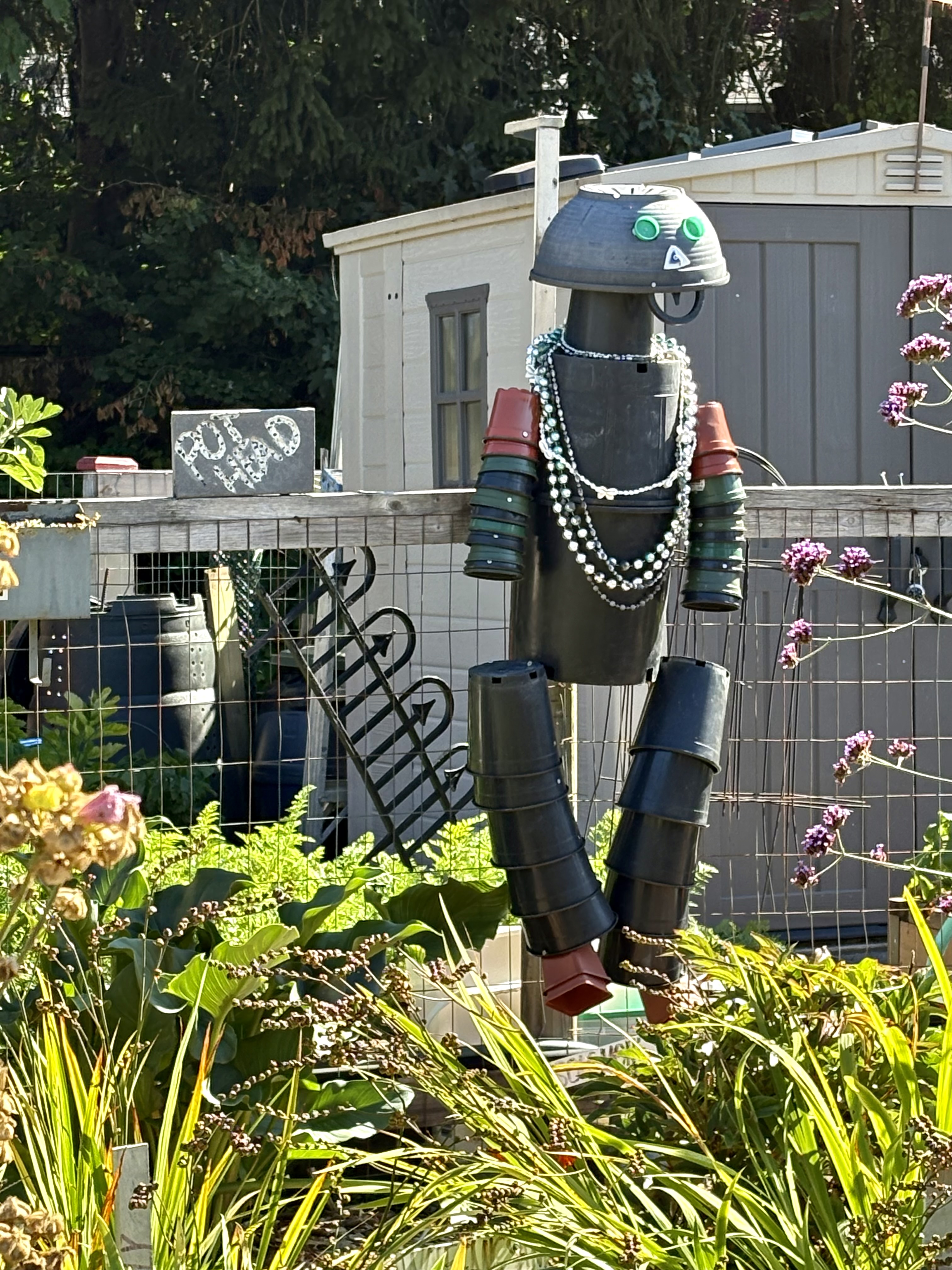
I zero in on Pot Head. Also labelled. (Now you know what to do with your old plastic plant pots.)
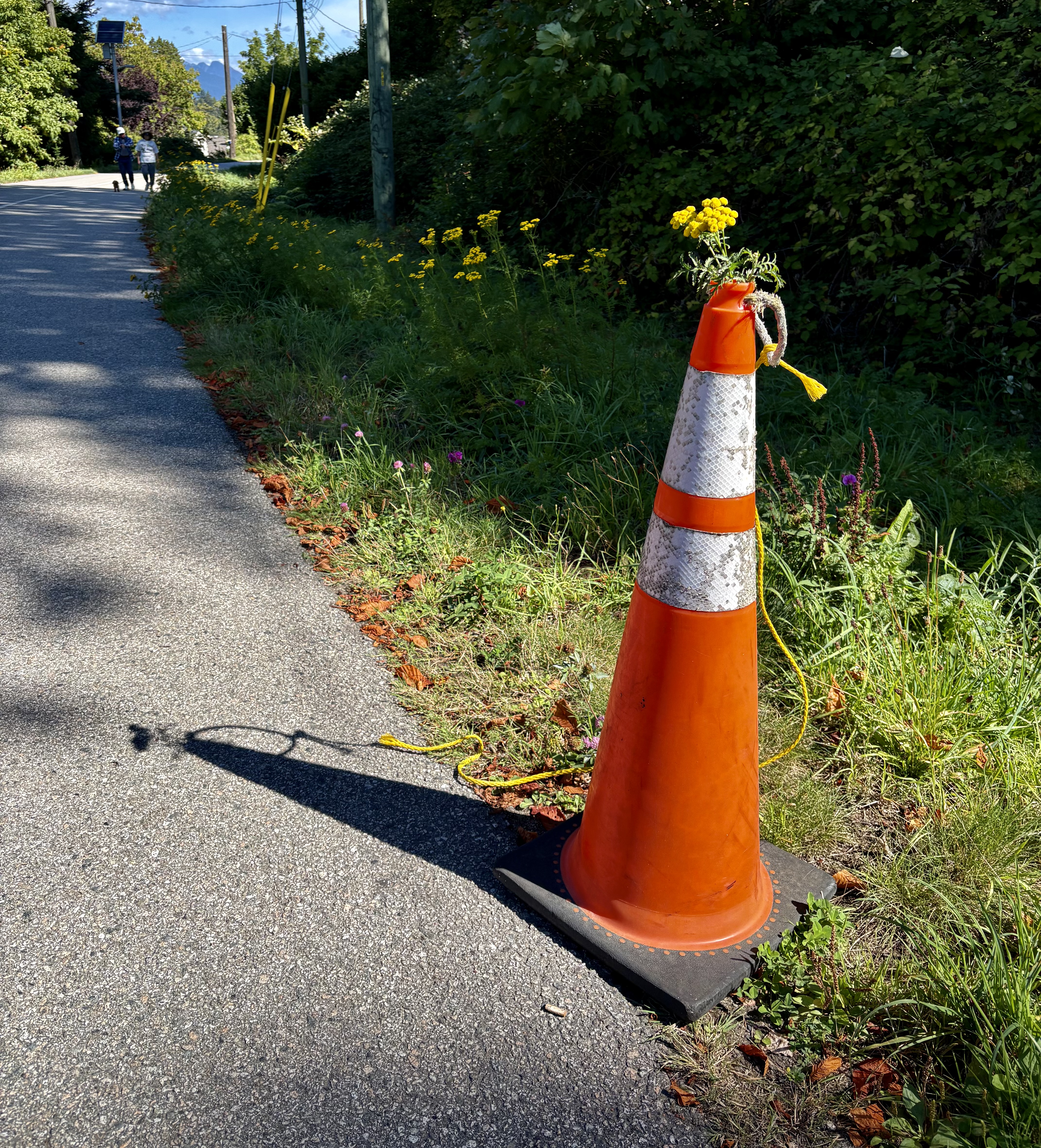
Even much-of-a-muchness stretches have their endearing moments. I am just thinking how some type of Knobby Yellow Stuff is all along the path, when I see someone has put it to good use.
In a nosegay for this traffic cone.
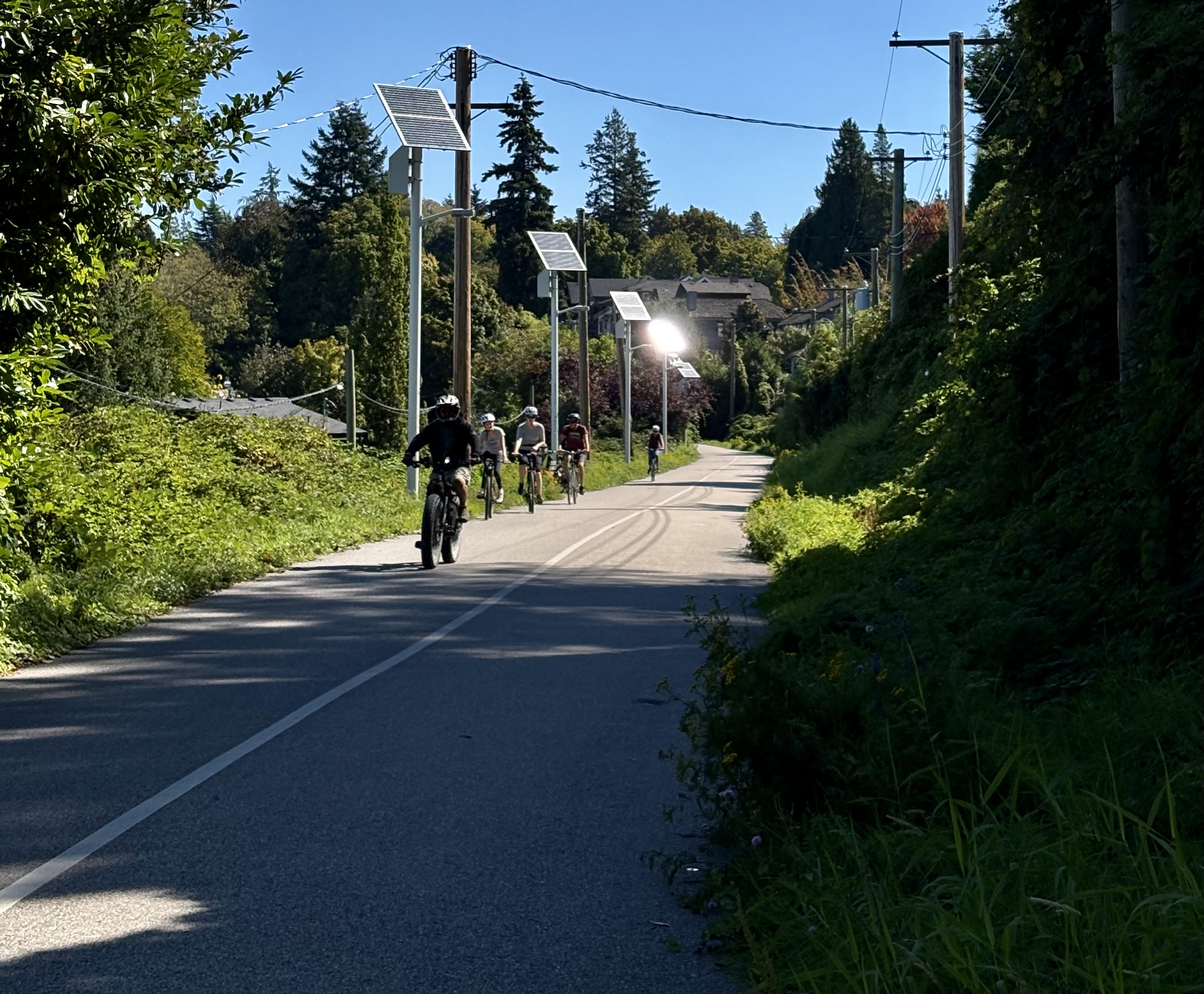
More walkers appear, as the day wears on and as I move farther north, and also plenty of cyclists. This lot look mildly dramatic, with their helmets and their sleek outfits, whirring themselves southward under a line of solar panels, the farthest panel a-flare with sunlight.
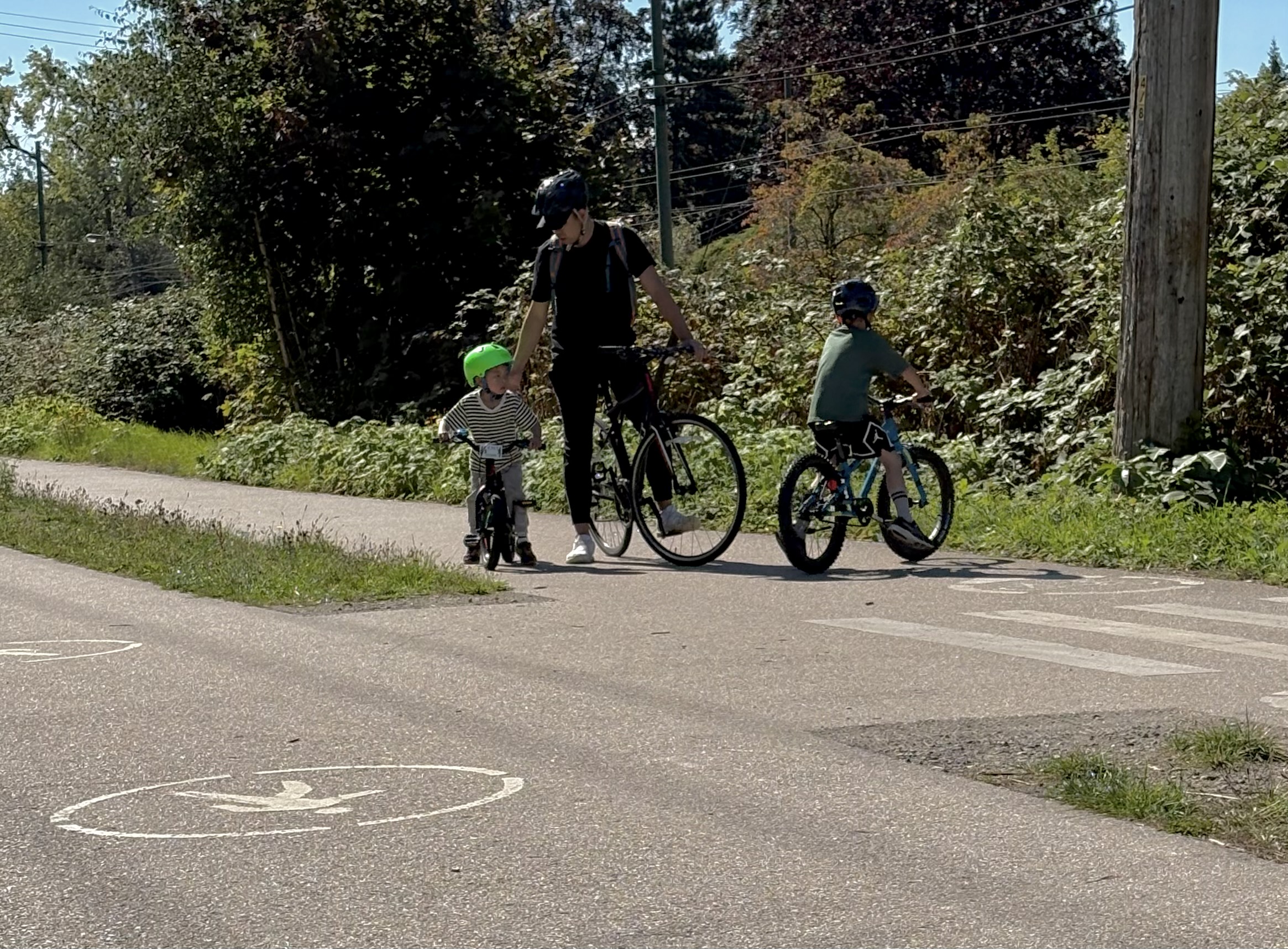
But I have more fun watching a dad give his toddler son some biking pointers, while older son pedals around in circles, waiting for them to get going.
“Stay in the bike lane, and stay on the right-hand side,” says dad to the little guy. “Remember, always stay on the right.”
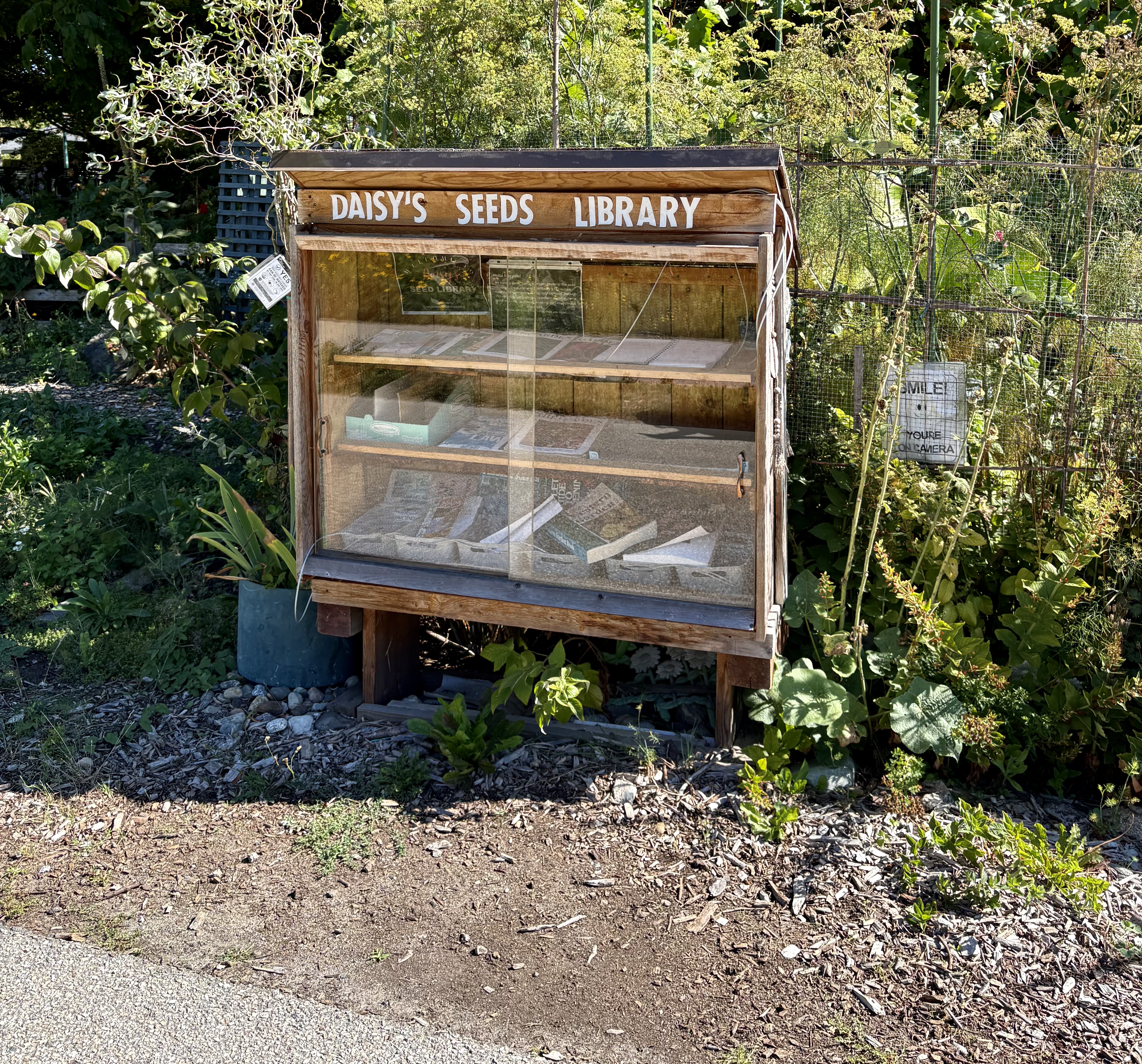
I discover a couple of community libraries along the way. How much fun is that?
The first is an obvious fit with the location, and clearly labelled to boot.
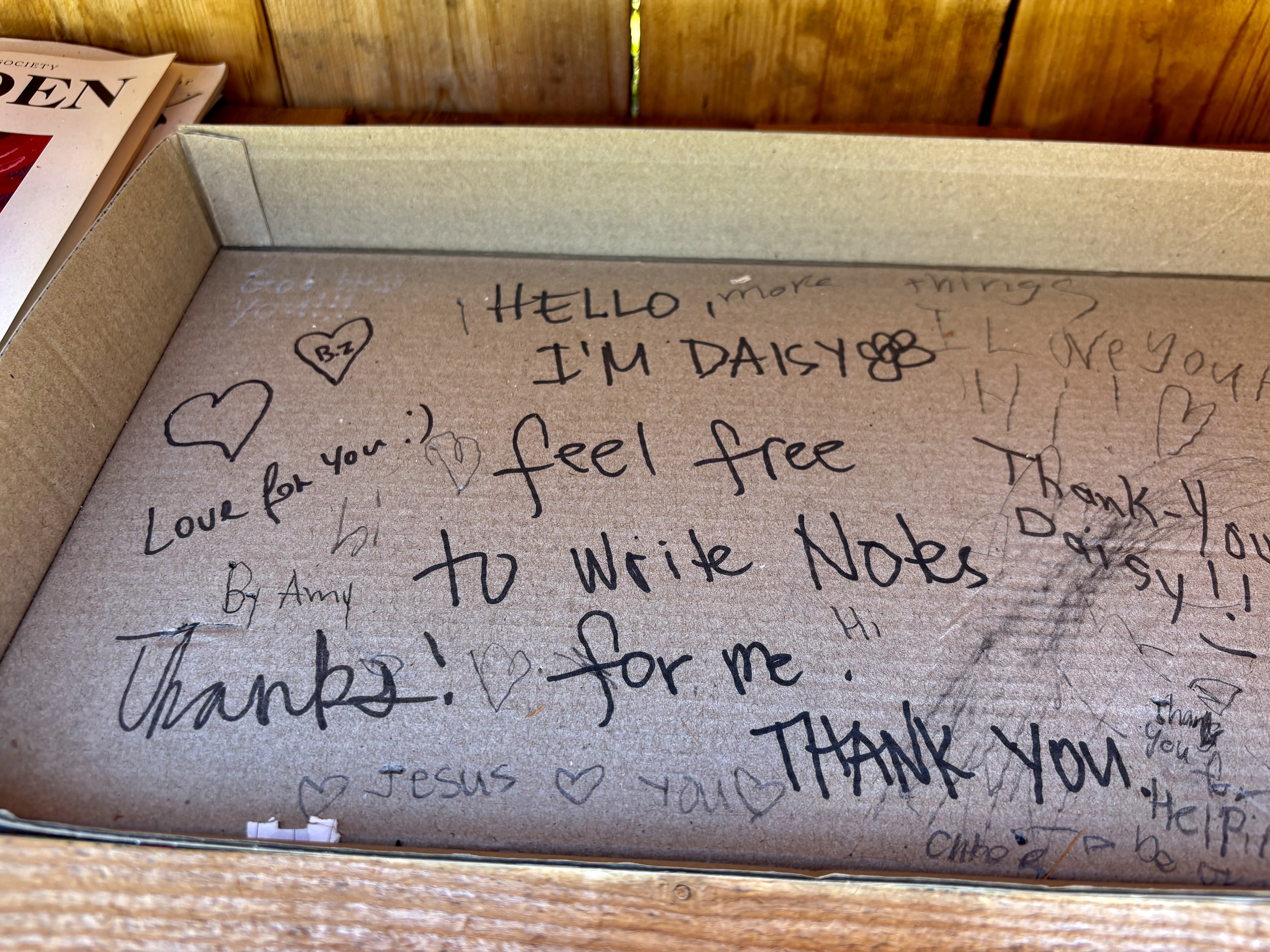
I look inside. Seed and gardening materials, as you’d expect, plus a note from organizer Daisy, inviting feedback.
Which she gets.
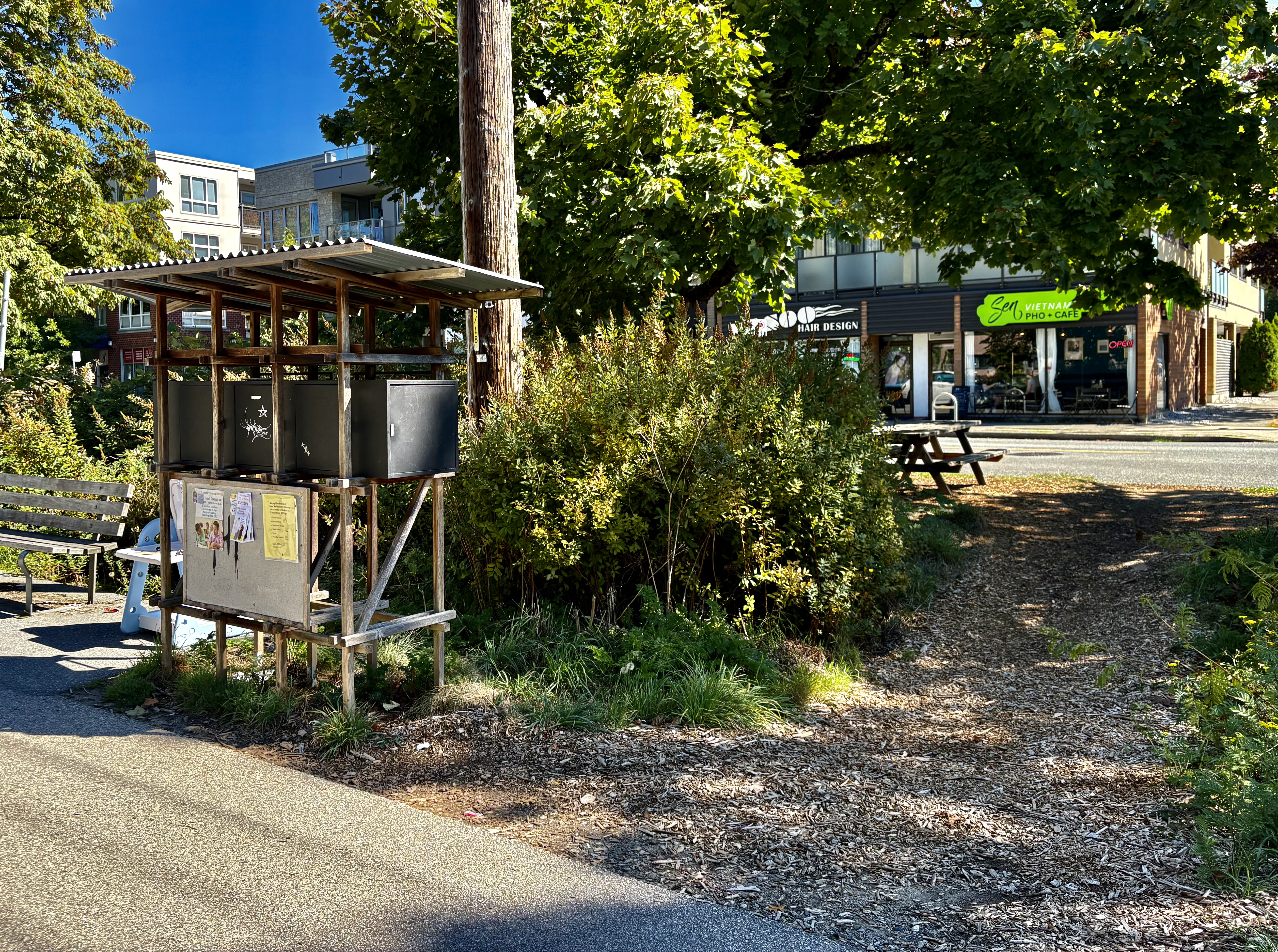
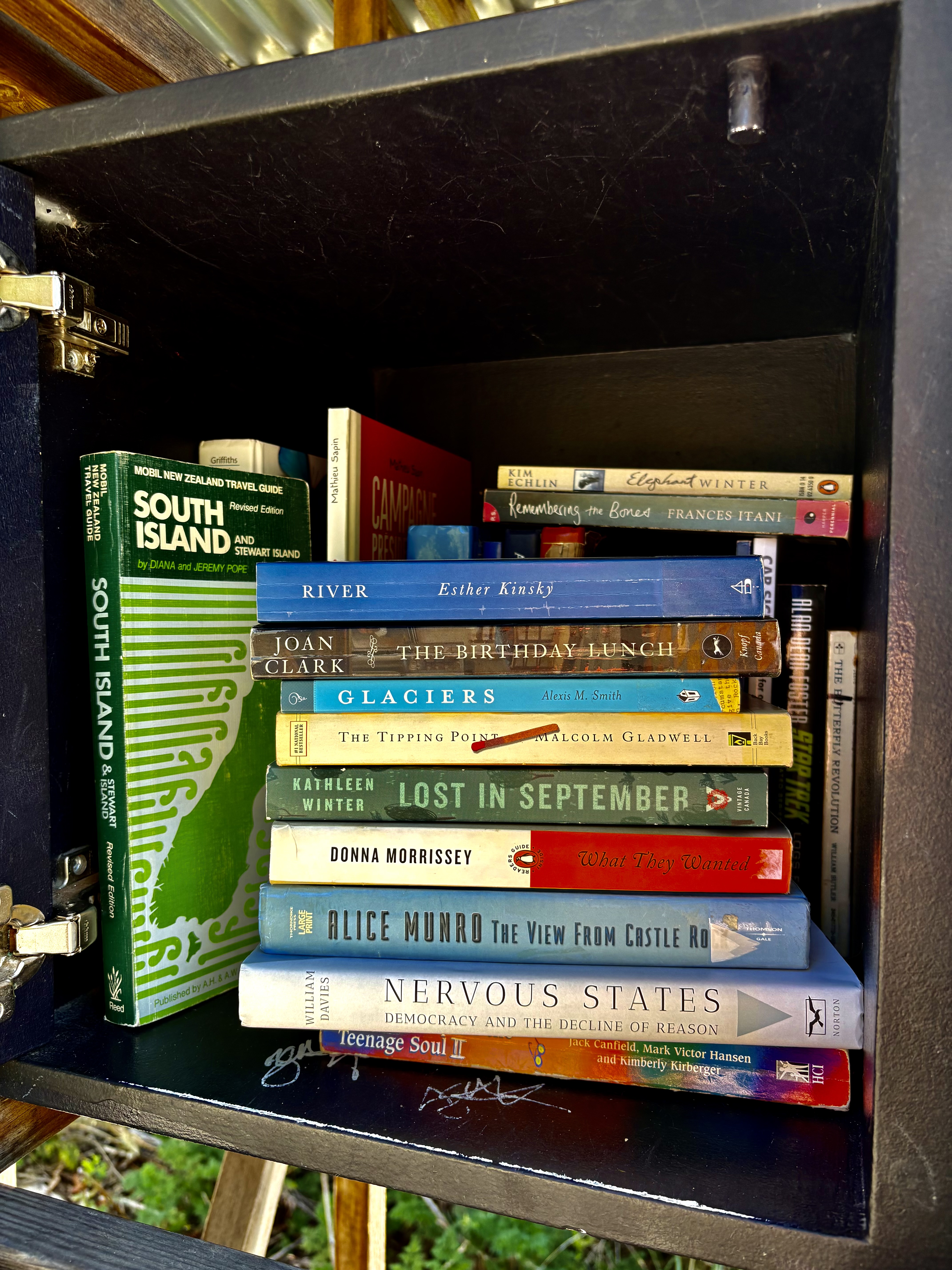
The other library, some 10 blocks farther north, is entirely anonymous. Just four black cubes in a sort of lean-to, with no explanation.
I poke around anyway, because I am curious. When I see the cubes have doors and the doors are not locked… I open a door. Of course.
Each cube is full of books. Some I’ve read, some don’t interest me, and while I admire the range, I don’t pick up any of them. (Later, I mildly regret not taking Kim Echlin’s Elephant Winter.)
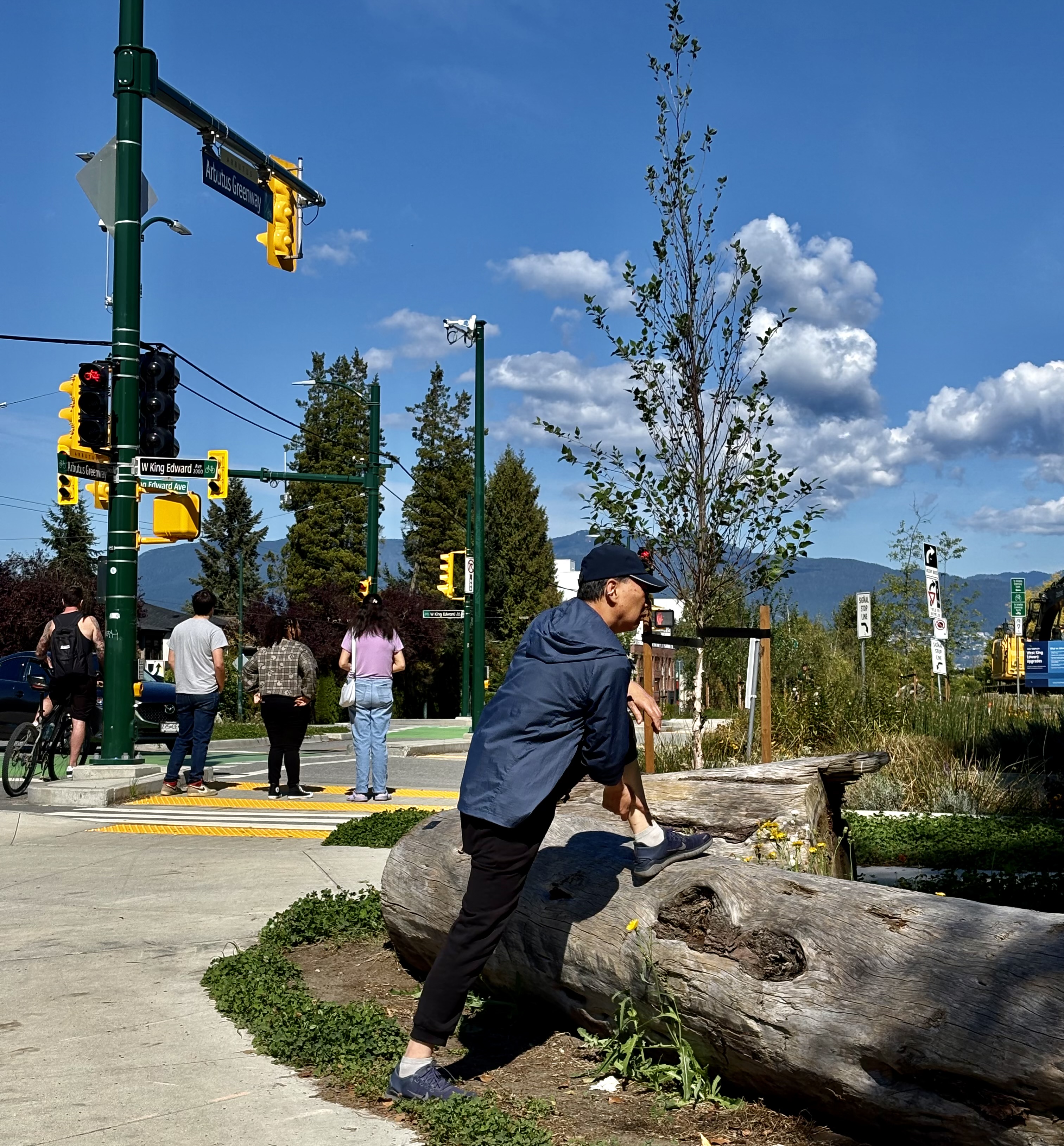
There are lots of public access points for the Arbutus Greenway. Some are just pedestrian paths, up from a neighbouring street or park; some are minor or major road crossings, with the trimmings appropriate to their scale. Here, at King Edward Blvd. (between West 26th and West 24th), there are traffic lights and zebra markings and everything you’d expect for a major artery.
Plus logs, for sitting or, as above, stretching out your leg muscles before continuing your walk.
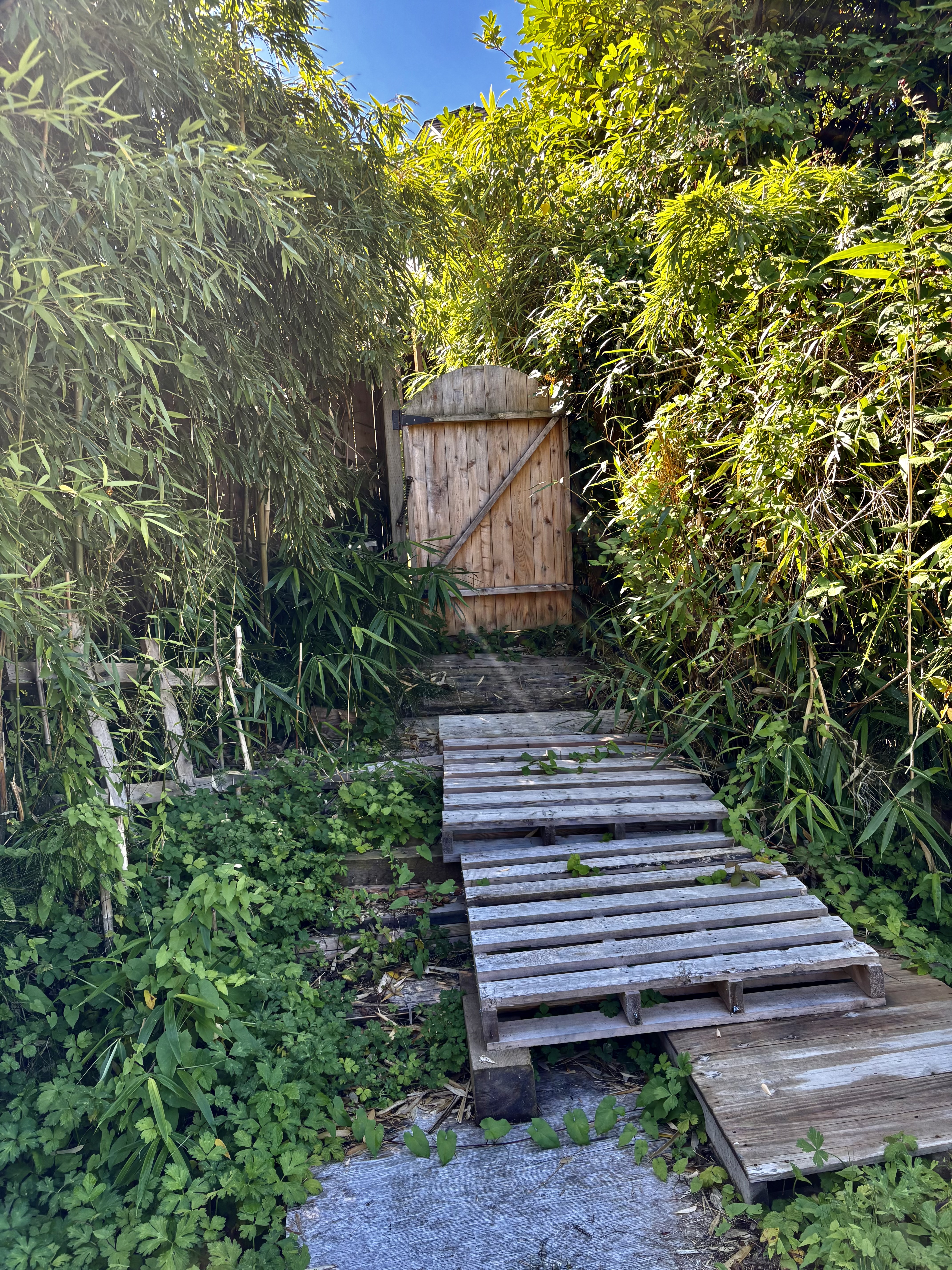
I only see one private access point — one homeowner has created his own gate and walkway from his property out to the Greenway.
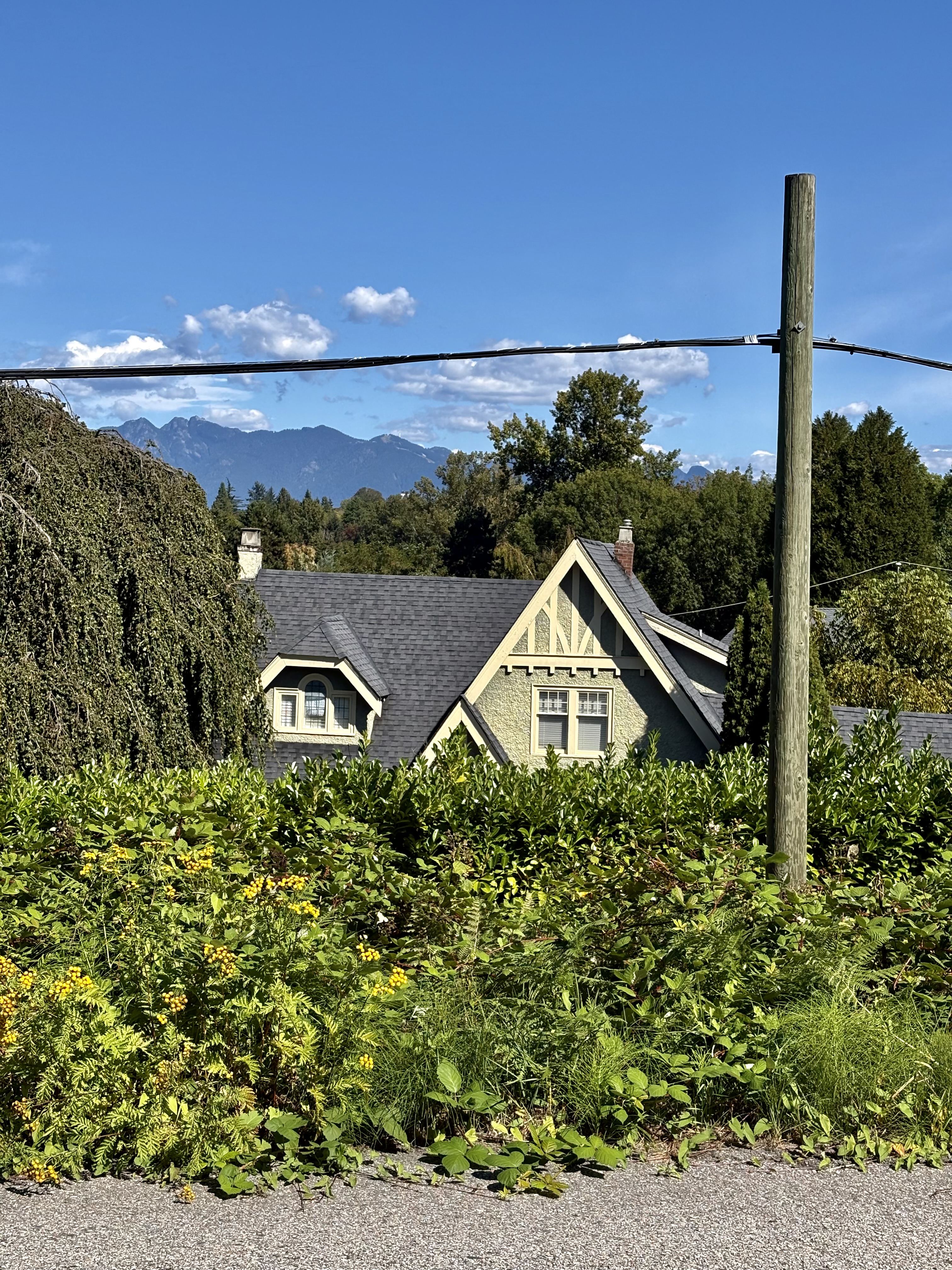
There are views out to the side, as well as straight ahead. Most of the time, since I’m walking north, the mountains are straight ahead. (When I first moved here, a good friend tried to orient me. “Repeat after me,” she said. “Mountains, north.” I dutifully repeated, “Mountains, north.”)
I’m not yet at the dogleg I described last April, but I am at a version farther south: a short stretch near West 33rd where the trail runs east/west. Therefore my long view, sideways to the left as I walk temporarily east…
is mountains, north.
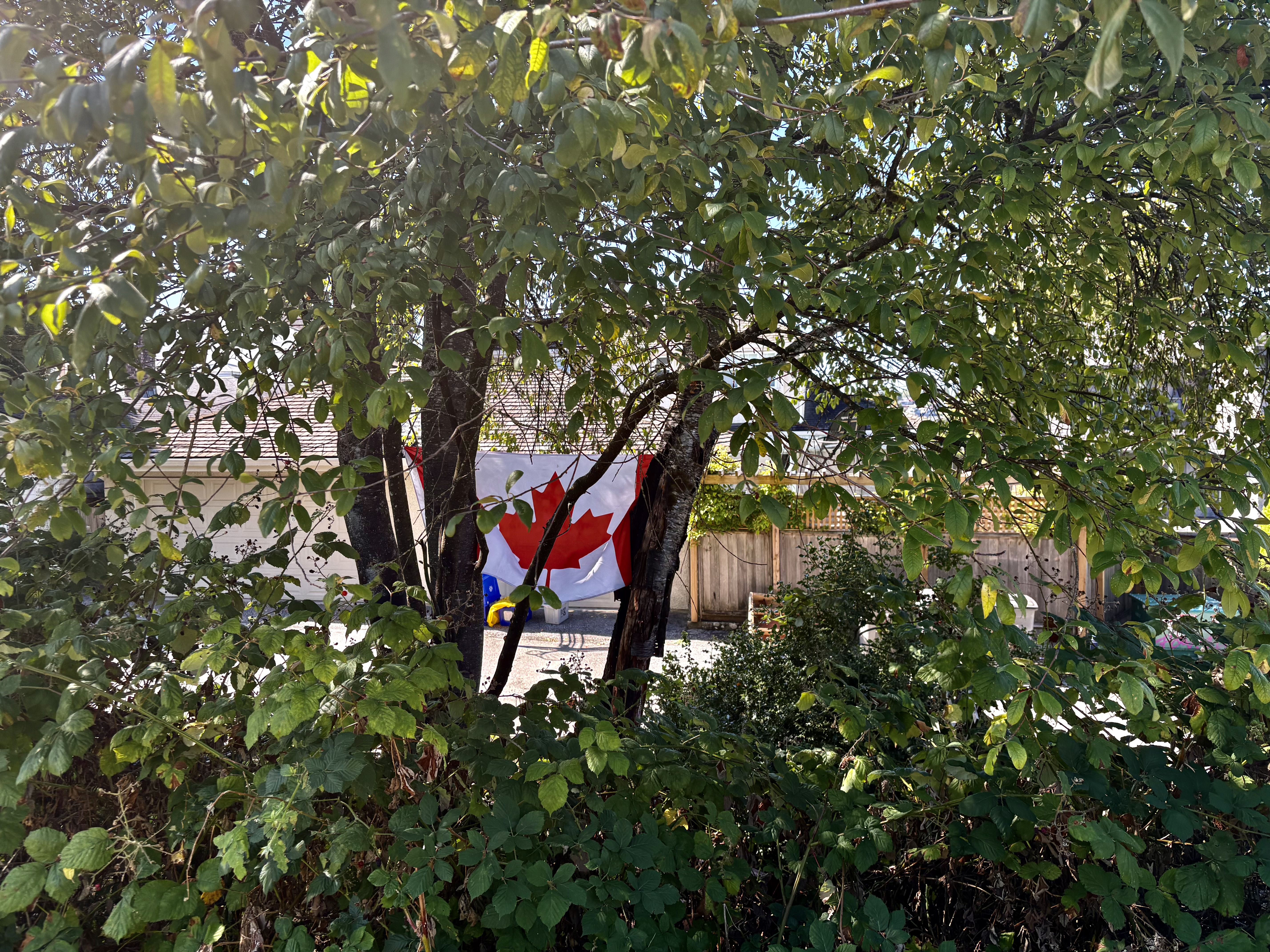
Close-up views also, either side. I see a flash of colour in the trees, figure it out, and promptly give the location a name. Elbows-Up Alley.
Somebody has nailed a big, bright Canadian flag to the trees, in that laneway down in the dip.
Now the confession of a not-endearing moment. More than a moment! By the time I’ve walked from West 71st level to West 41st, I am feeling a bit peckish, but I decide to wait. As memory serves, there’s a place where I’d like to eat just a bit farther ahead, at West 33rd or so.
Except, oops, memory doesn’t serve, there’s nothing at that level and I walk on. And on. And on. And when finally I see what I’ve been looking for, just over on Arbutus Street itself… I’m at West 16th. Good grief.
Lunch time, you bet.
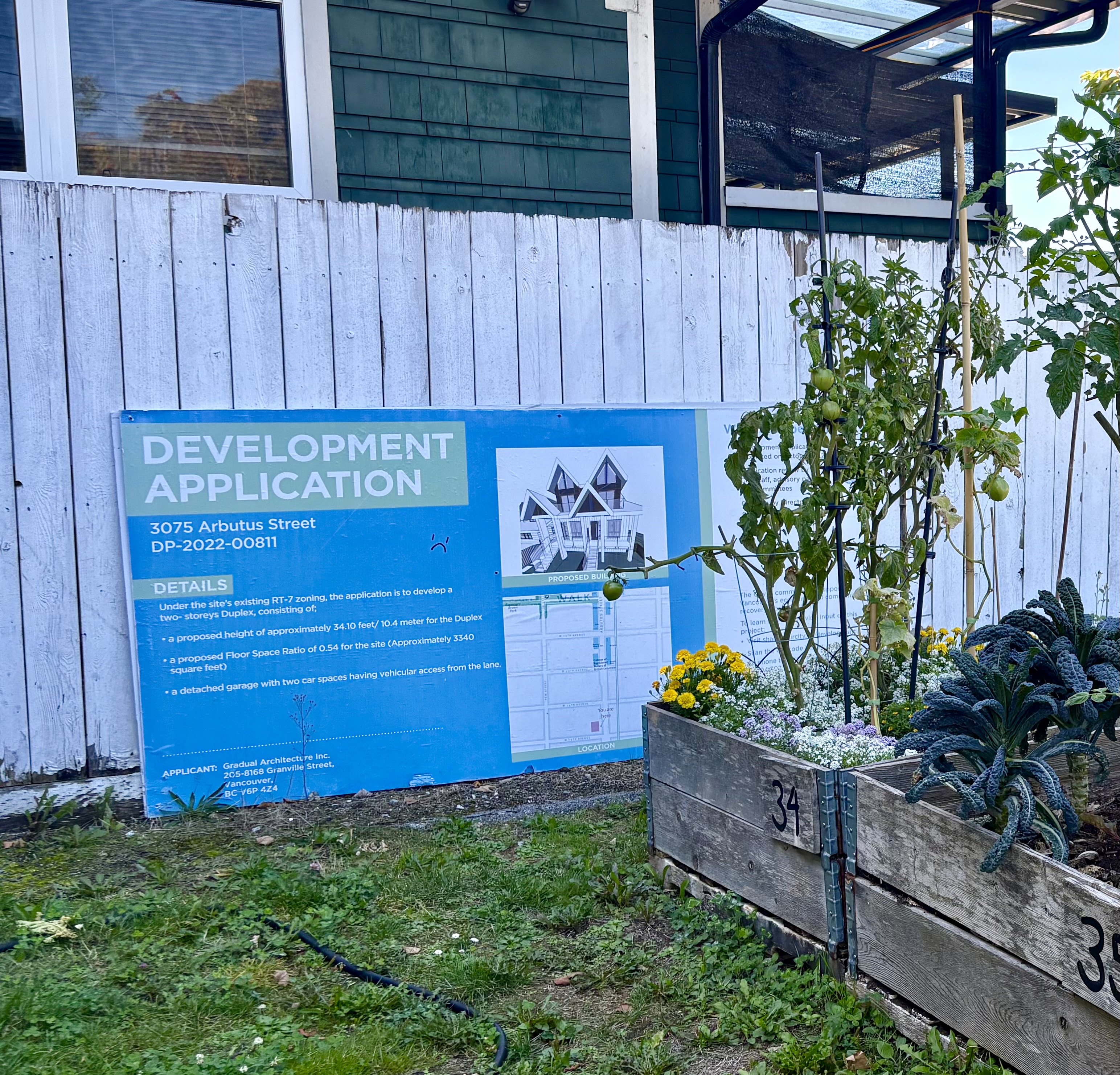
Having eaten, I decide to stay with the city street. It promptly rewards me with another community garden.
Enjoy it while you can.
But isn’t that life? Everything changes.
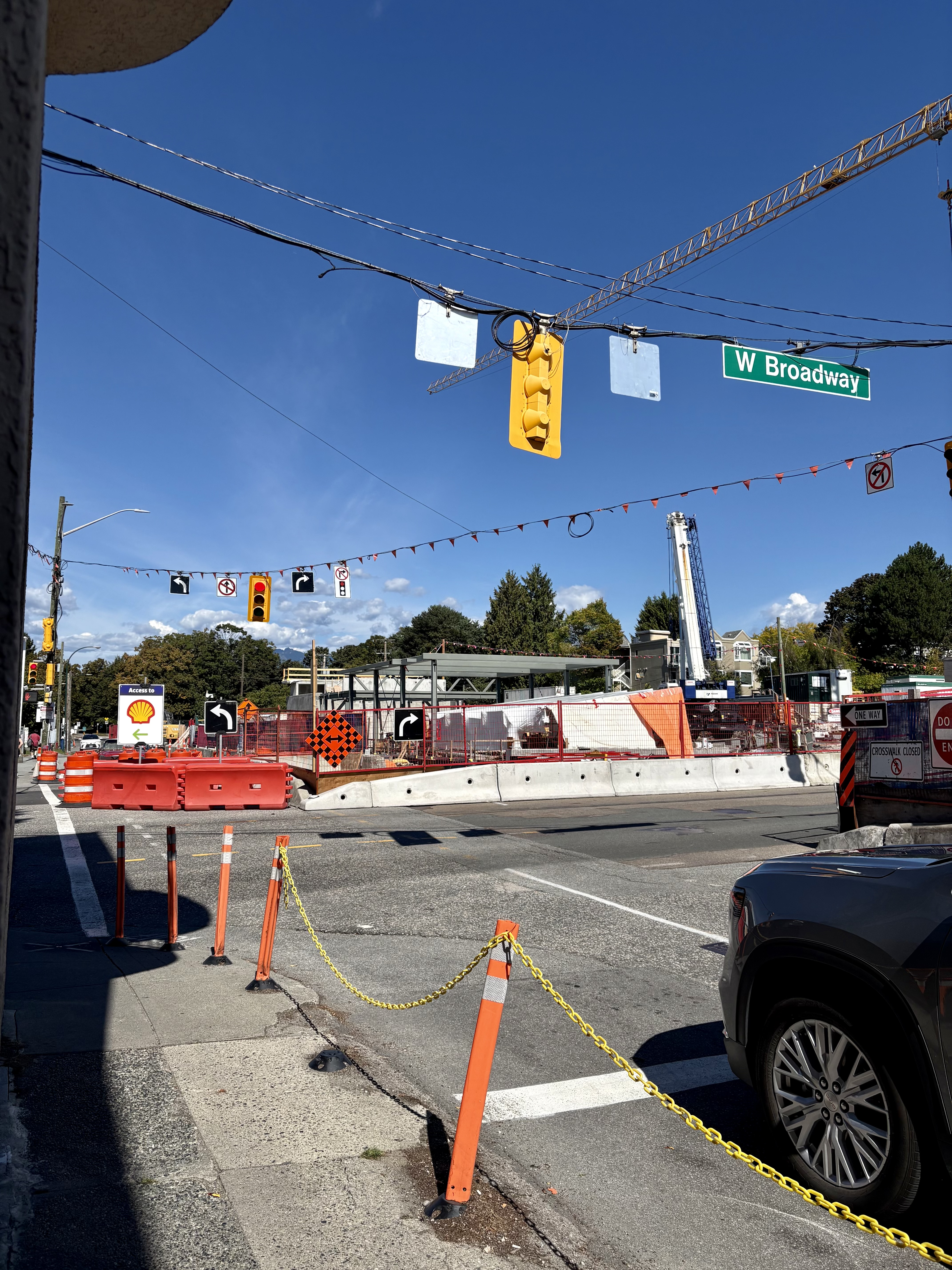
On that philosophic note, I left-turn onto West Broadway (equivalent of 9th, had it been numbered), smack amidst the subway-extension construction…
"Traveller, there is no path. Paths are made by walking" -- Antonio Machado (1875-1939)
"The voyage of discovery is not in seeking new landscapes, but in having new eyes" -- Marcel Proust (1871-1922)
"A city is a language, a repository of possibilities, and walking is the act of speaking that language, of selecting from those possibilities" -- Rebecca Solnit, "Wanderlust: A History of Walking"