26 April 2026 – Not a real elephant. But play along with me on this, will you? Imagine the side view of an elephant’s head — one with an unusually large eye and an unfortunately short and lumpy trunk.
Now look at this map of Stanley Park.
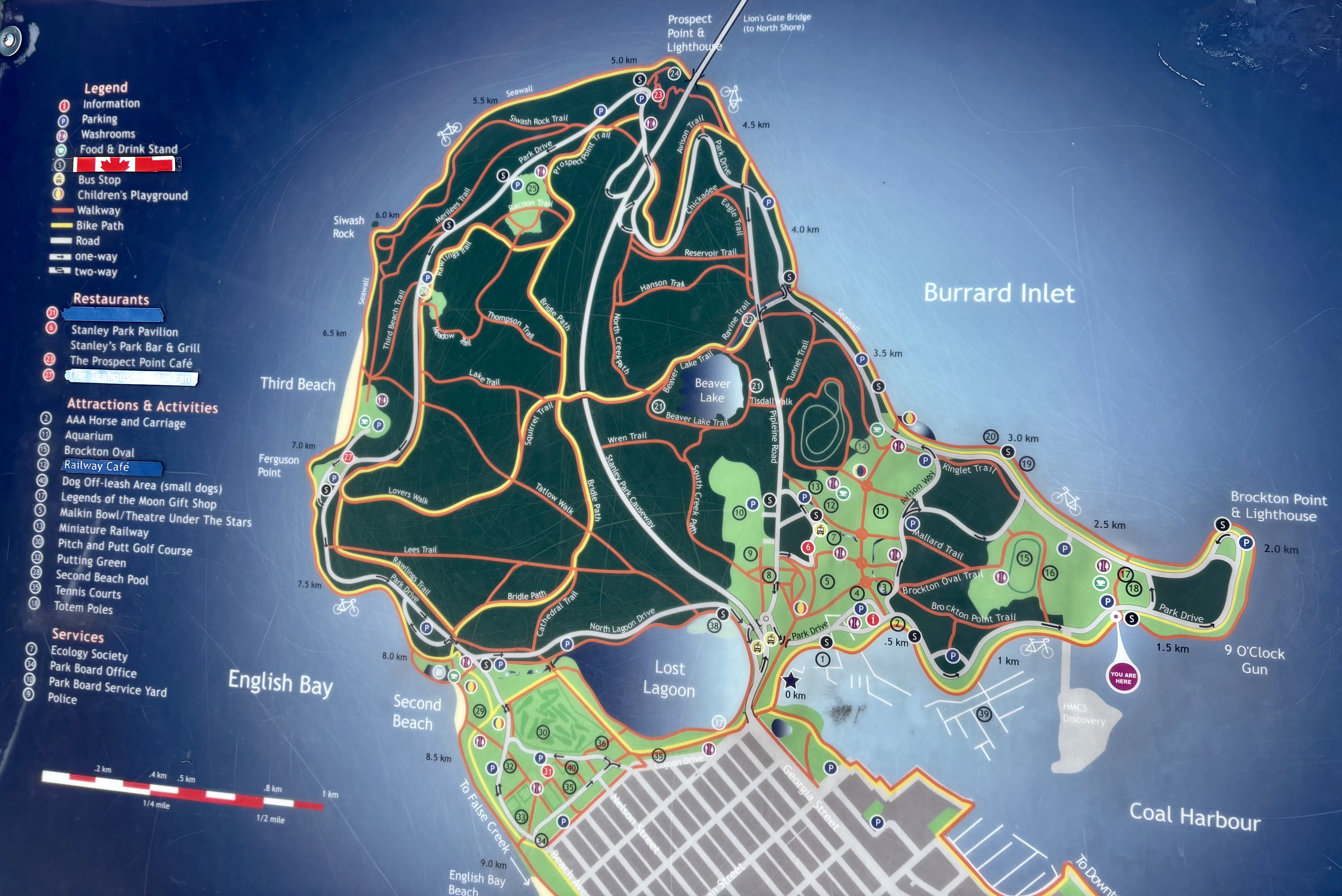
I hope you’re laughing.
It’s a bright, mild, breezy day, and I am about to walk the Seawall right ’round the elephant’s head, starting at the black-starred “0 KM” marker at the base of his thick neck, down there to the right of Lost Lagoon.
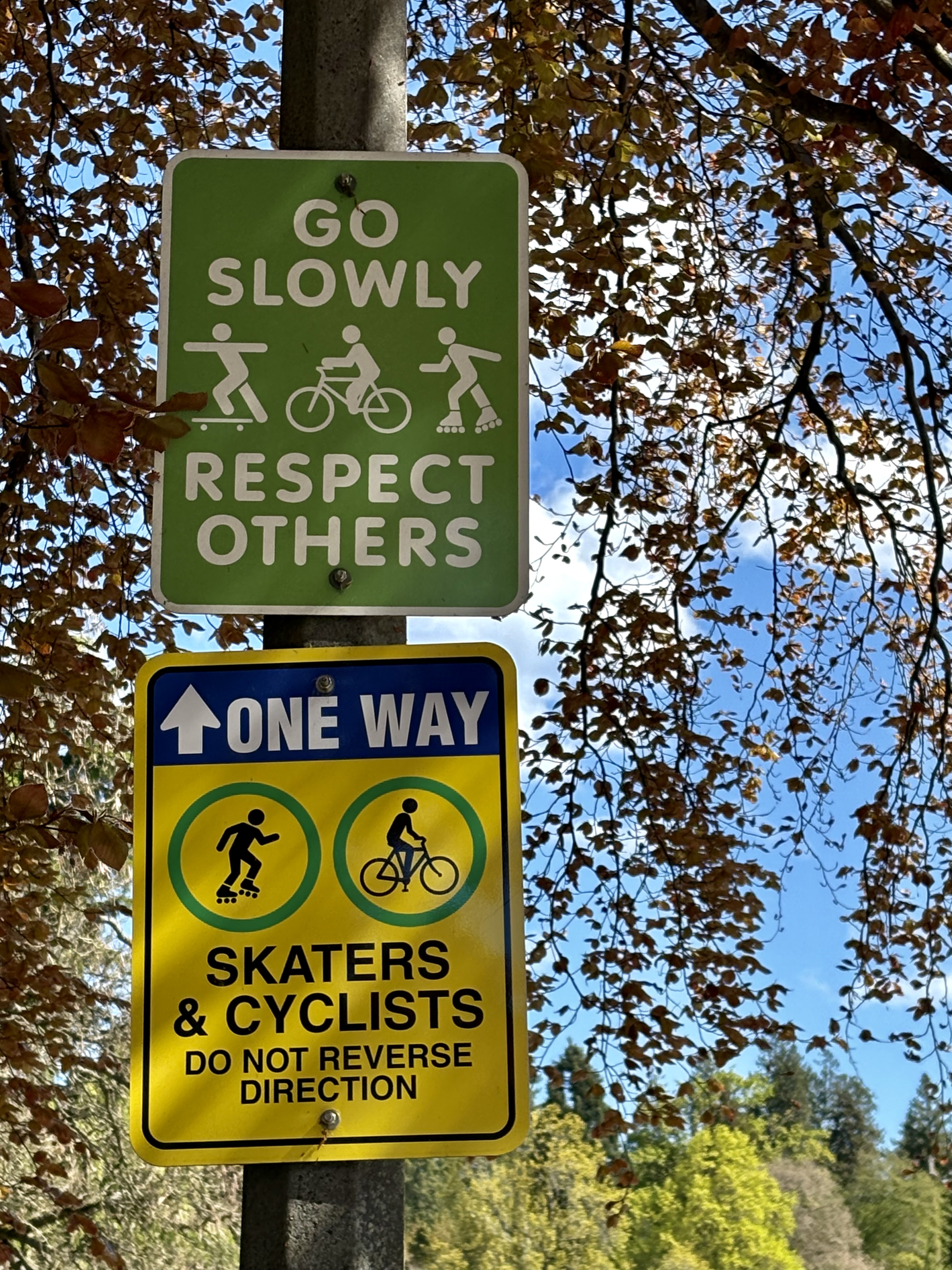
Signs remind us to play nicely with the other children.
Halfway along the underside of that lumpy trunk, I take a picture of the seabed exposed by low tide…
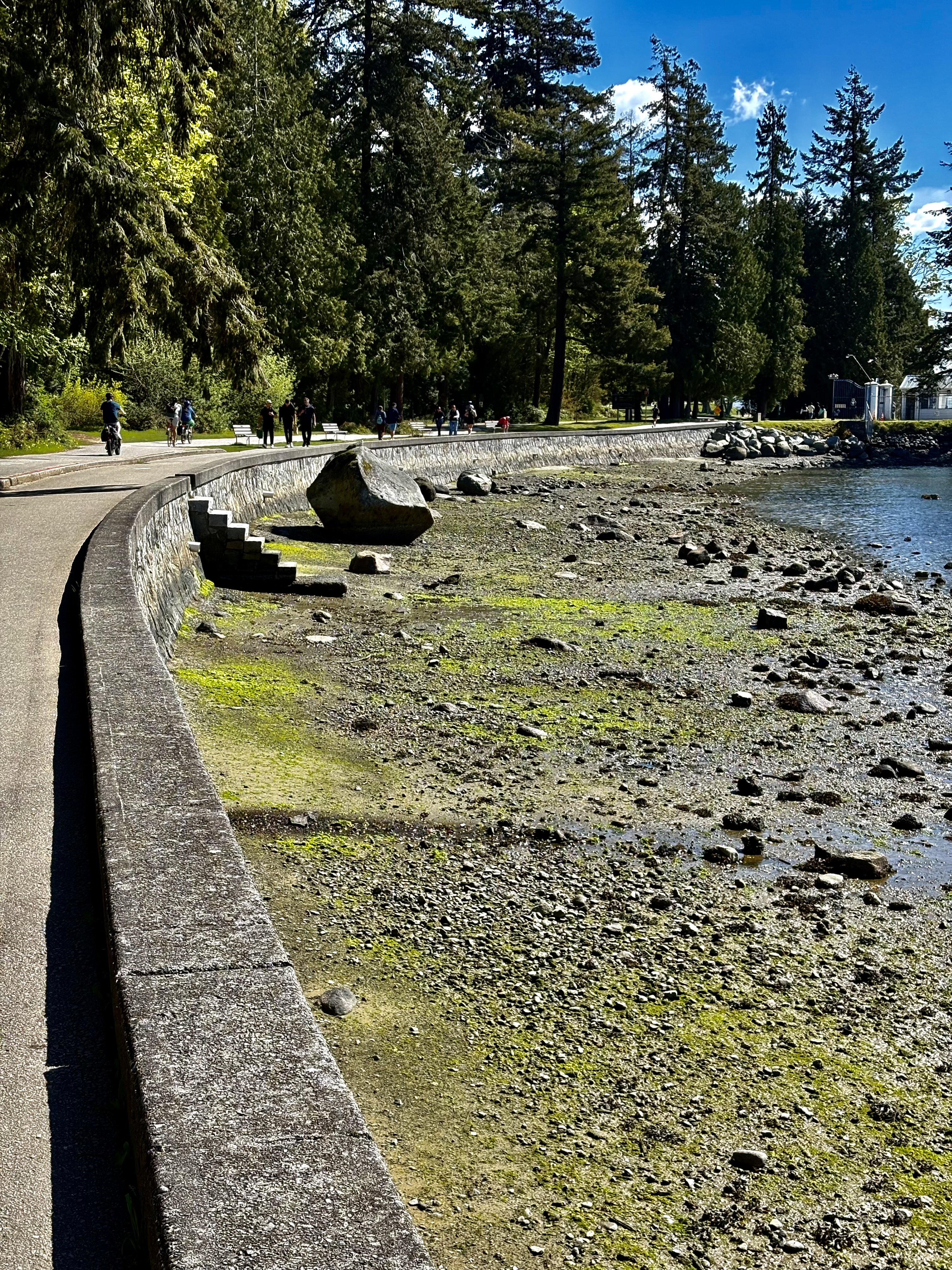
and hear a puzzled little voice behind me ask, “Daddy, where’s the water?” Daddy meets the challenge: with child-appropriate vocabulary and to child-appropriate length, he explains the concept of tides. “Oh!” she cries, very pleased. We all move on.
I pass HMCS Discovery, out there on the Deadman’s Island military reserve, admiring both its own dignity and, to the left, the silhouette of the Convention Centre roof-top “sails.”
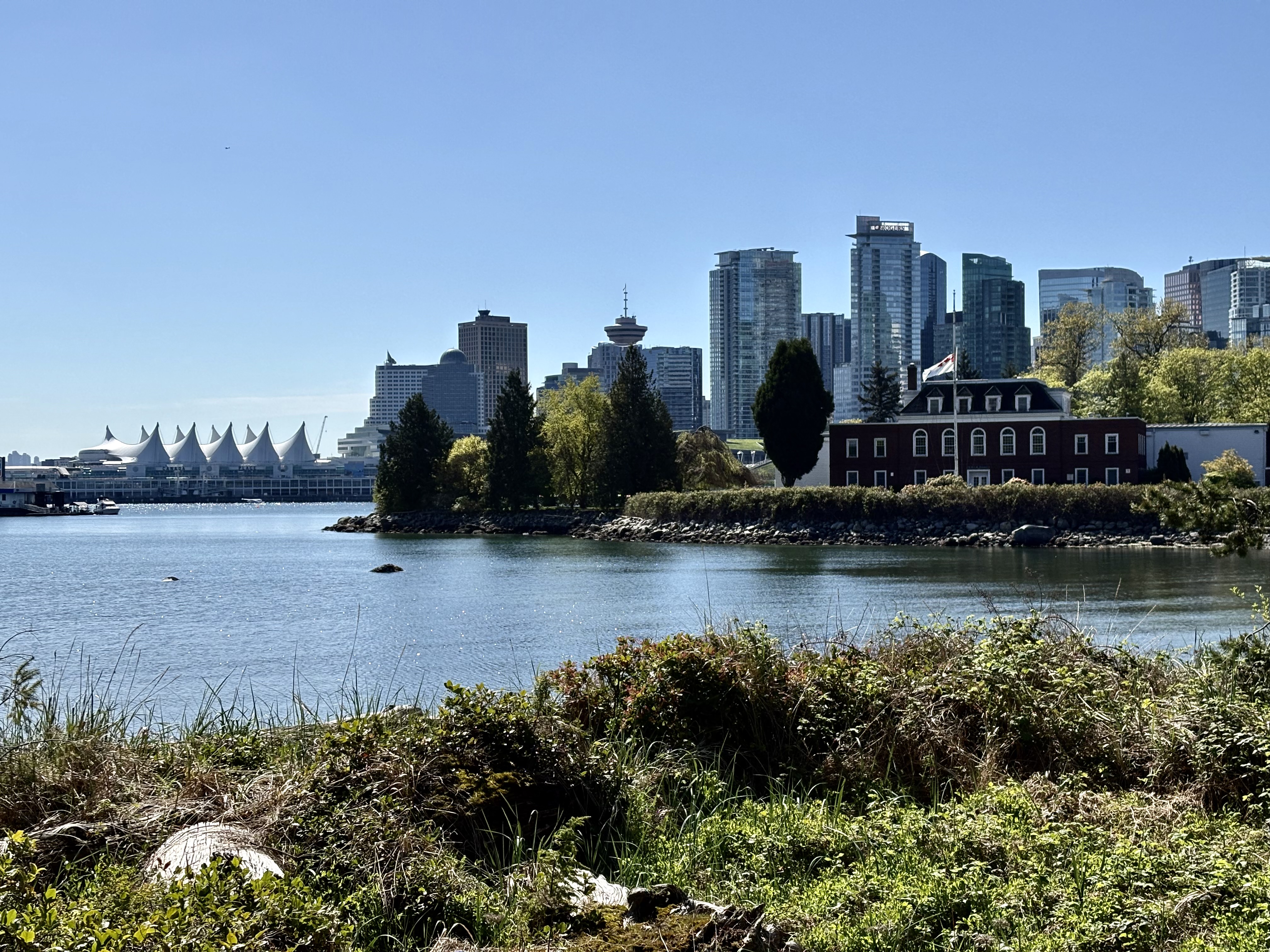
Soon after, I notice something else — first a diver-below warning flag out in the water, and then the diver herself at water’s edge, working with a colleague to hand her oxygen tank up to waiting hands above.
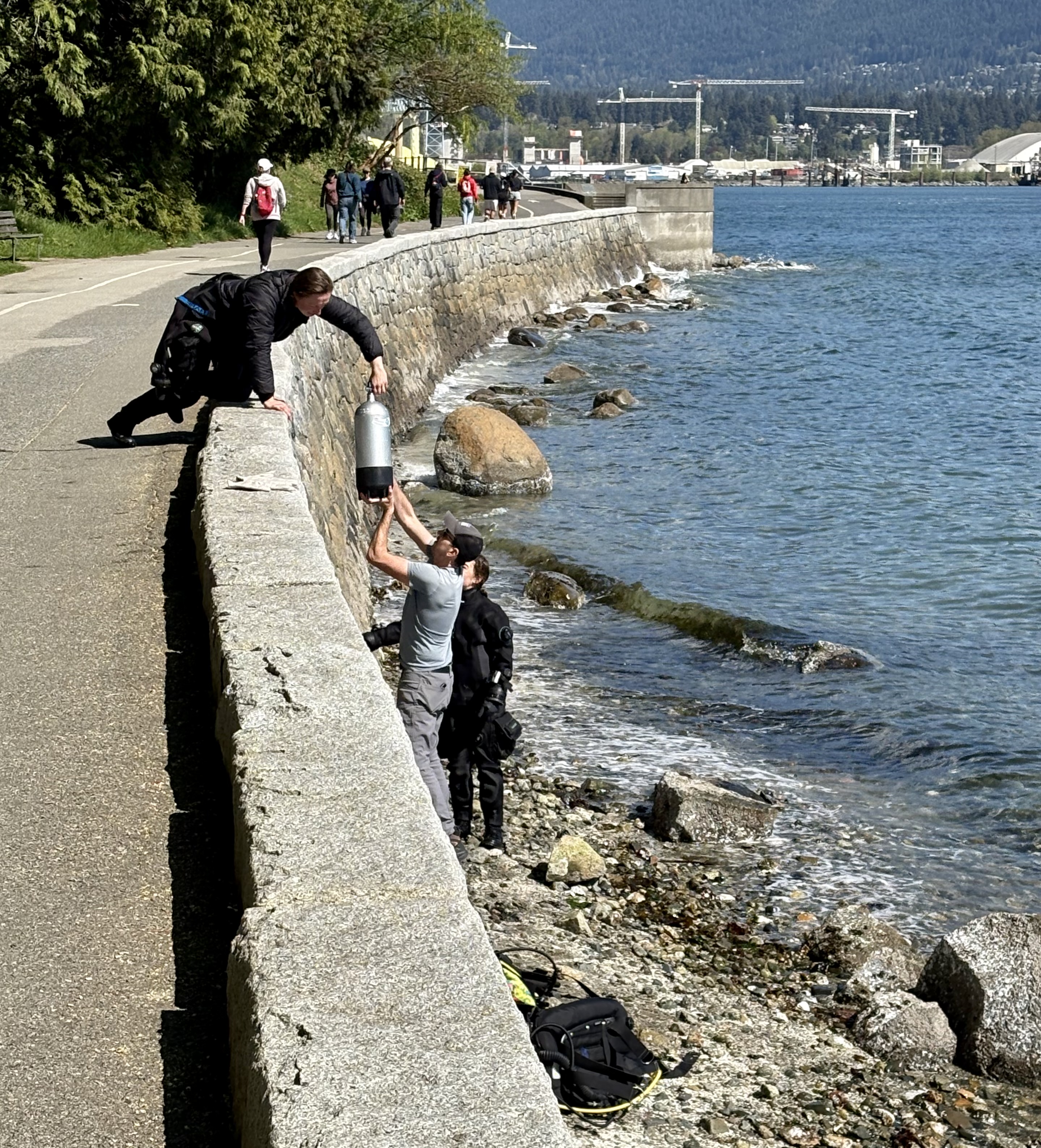
I ask; she explains: routine monitoring of the kelp beds. She grins at my next question. “Yes,” she says, “they look healthy.”
A float plane flies still-low over the water, snarling its way into the sky.
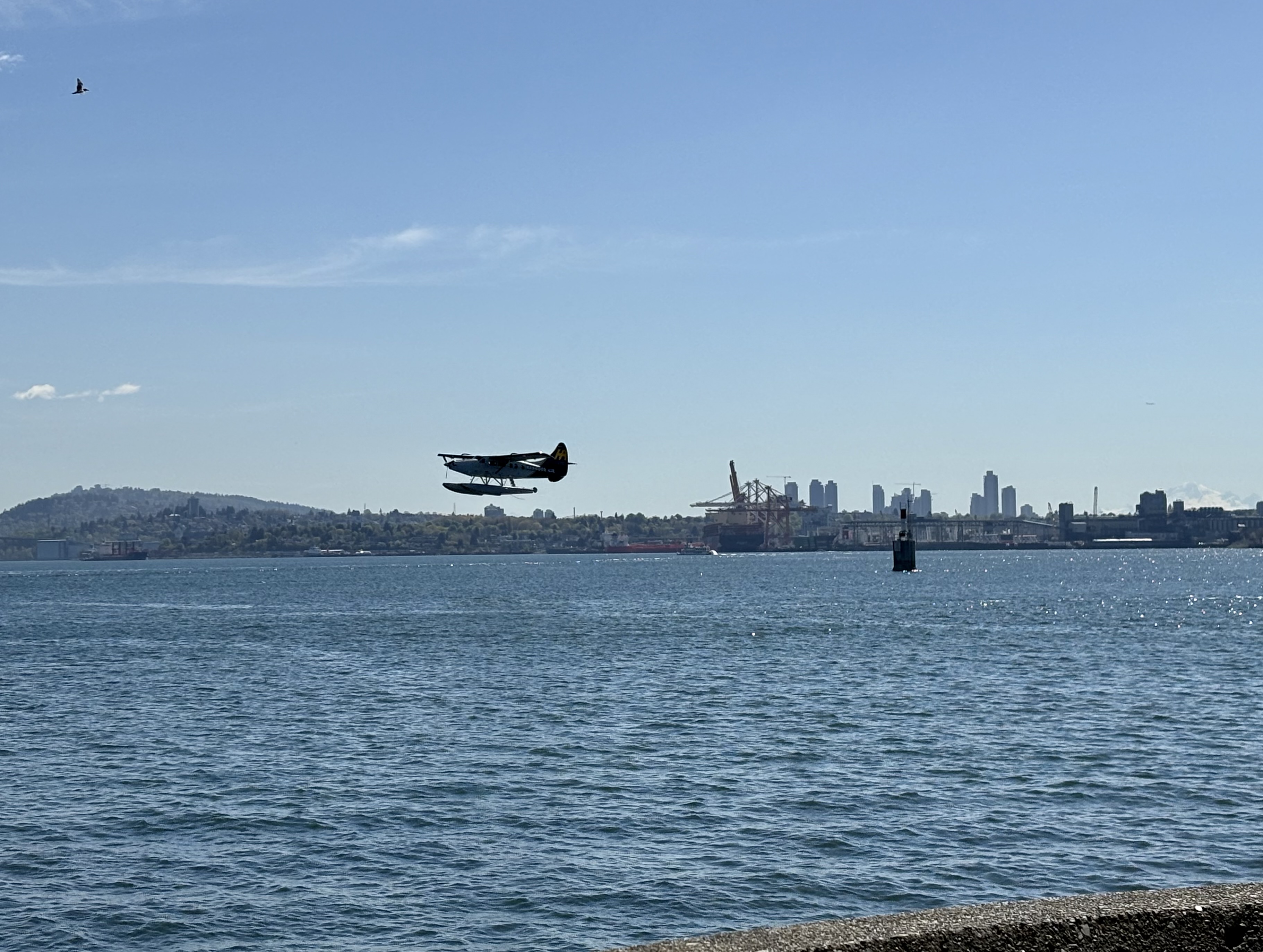
Later, in the photo, I see that bird upper left, already soaring high. Silently.
Soon I’m at Brockton Point, the tip of the elephant’s stubby trunk. Across Burrard Inlet, gleaming piles of yellow sulphur in the Port’s North Vancouver terminals…
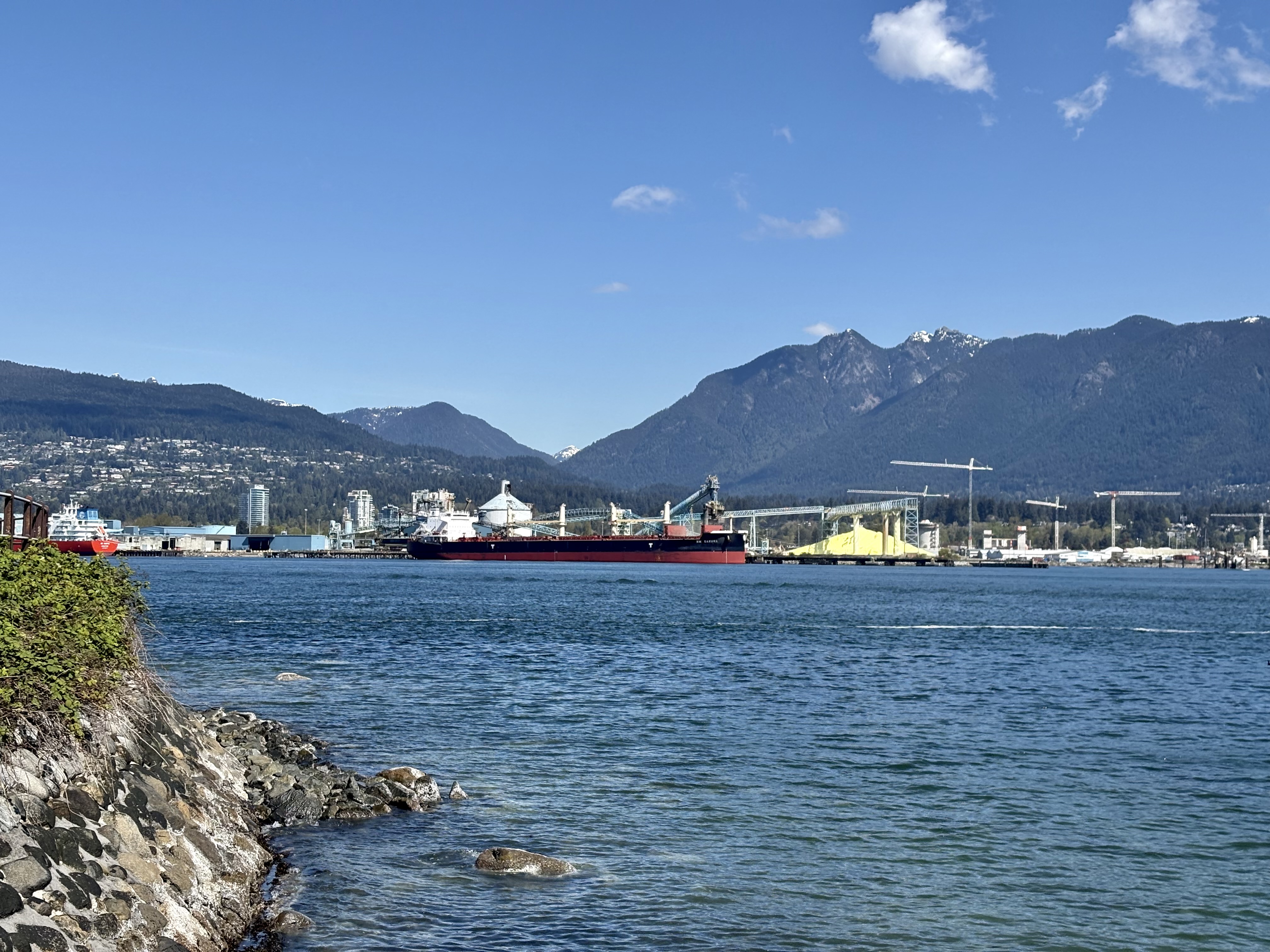
and at my feet a plaque reminding me that while the sulphur (from Alberta) is the visually dramatic export, those terminals handle so much more — including millions of tons of potash (Saskatchewan), coal (BC), petroleum products and concentrates, all brought here for export to six continents.
I’m now walking the upper side of the trunk, all along Burrard Inlet. I pause a moment, mesmerized for once not by natural phenomena but by a cultural phenomenon of our times. I watch a couple of intense young podcasters as they set up their next production.
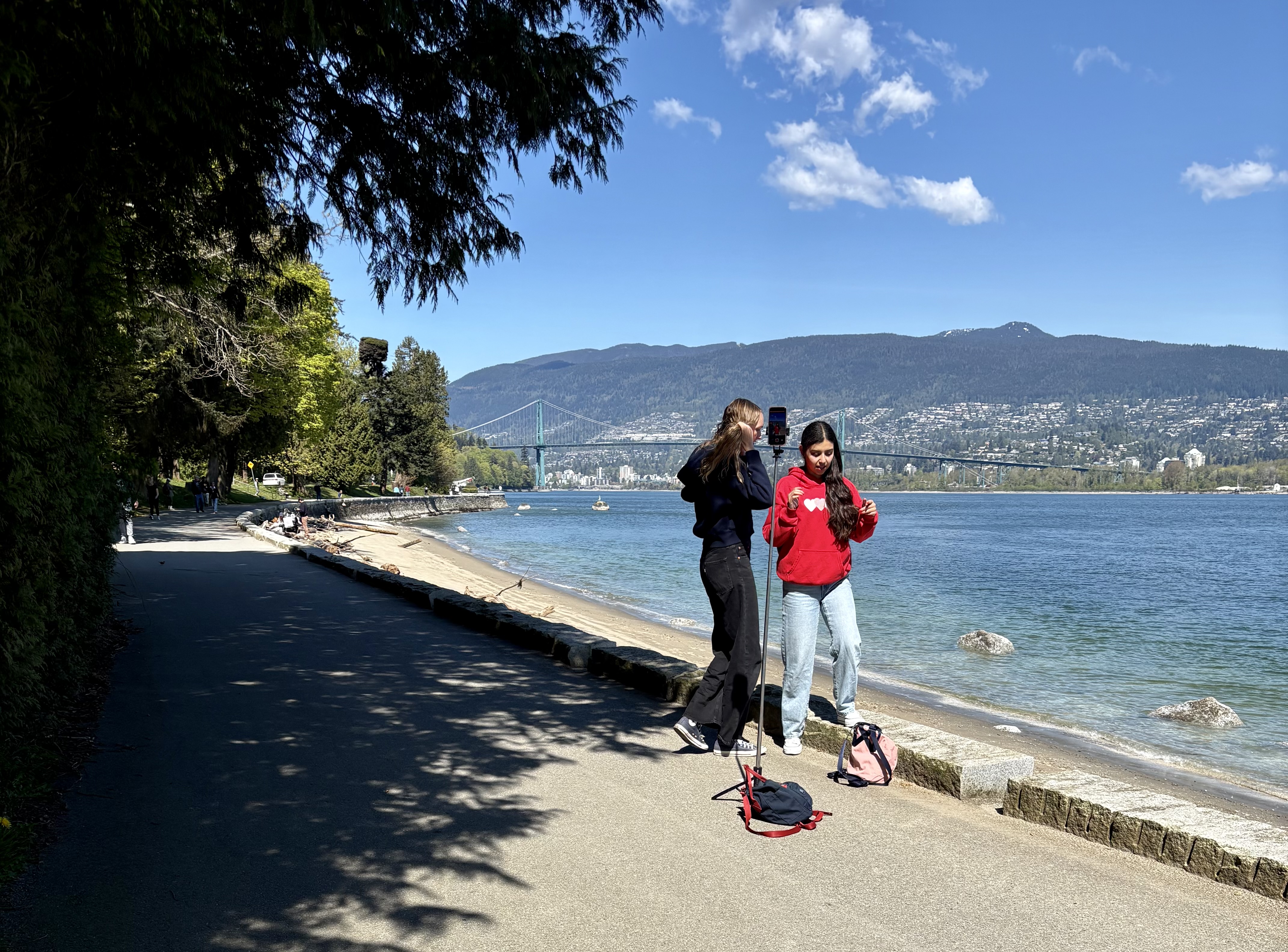
Red Shirt is rehearsing her lines, fists clenched for emphasis; Black Shirt is twiddling and re-twiddling her hair. A moment later they are posed before the camera, about to emote, their lips carefully stretched far enough to approximate smiles but not far enough to (gasp) cause any wrinkles.
As I move on, sternly reminding myself not to judge, I overhear a woman’s remark to her male companion as they walk the other way. She is, or is not, passing judgment. You decide. “I really admire your ambition and your determination, but sometimes… sometimes it’s OK to slow down.” I don’t hear his reply.
I see Lumberman’s Arch to my left, don’t veer inland to revisit it. Soon after, I stop for a modest little sundial, currently benefiting from all the sun it needs to do its job.
I have to wait my turn: a guy in a Blue Jays cap is checking the sundial against his watch. “It’s an hour out,” he announces. Then he wags a finger to withdraw that remark, and we both laugh. “Yeah,” I say. “It’s on nature’s time, not on daylight-saving.” He walks on, I take a photo and, since there’s no way to avoid shadows, I decide to make them a feature.
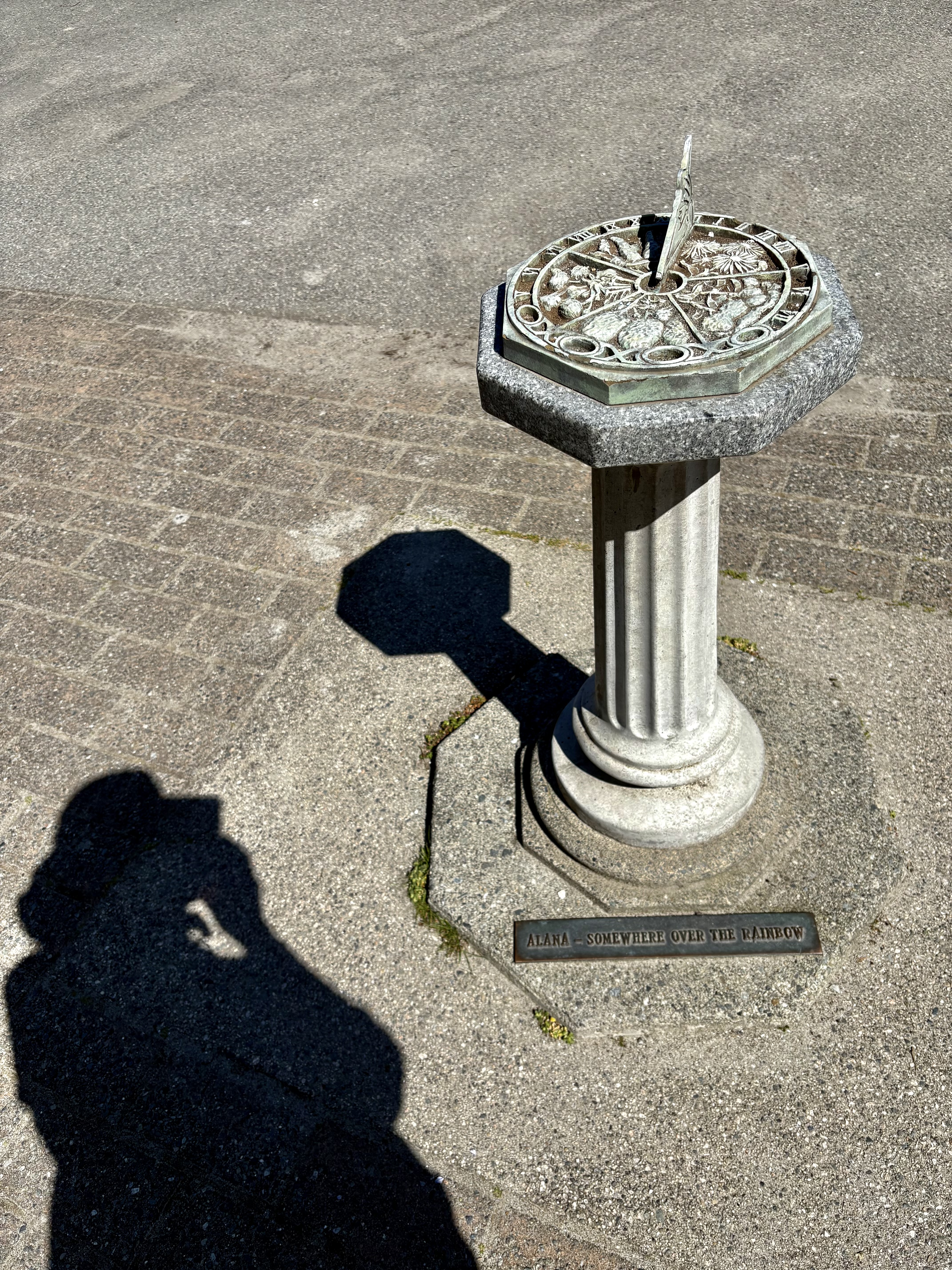
I am being kinder to this sundial than is the North American Sundial Society, which puts technical expertise behind its conclusion that this “once very beautiful” sundial is now in “poor condition.”
As I work my way toward the top of the elephant’s head, I get frequent glimpses of Lion’s Gate Bridge, each one a little closer.
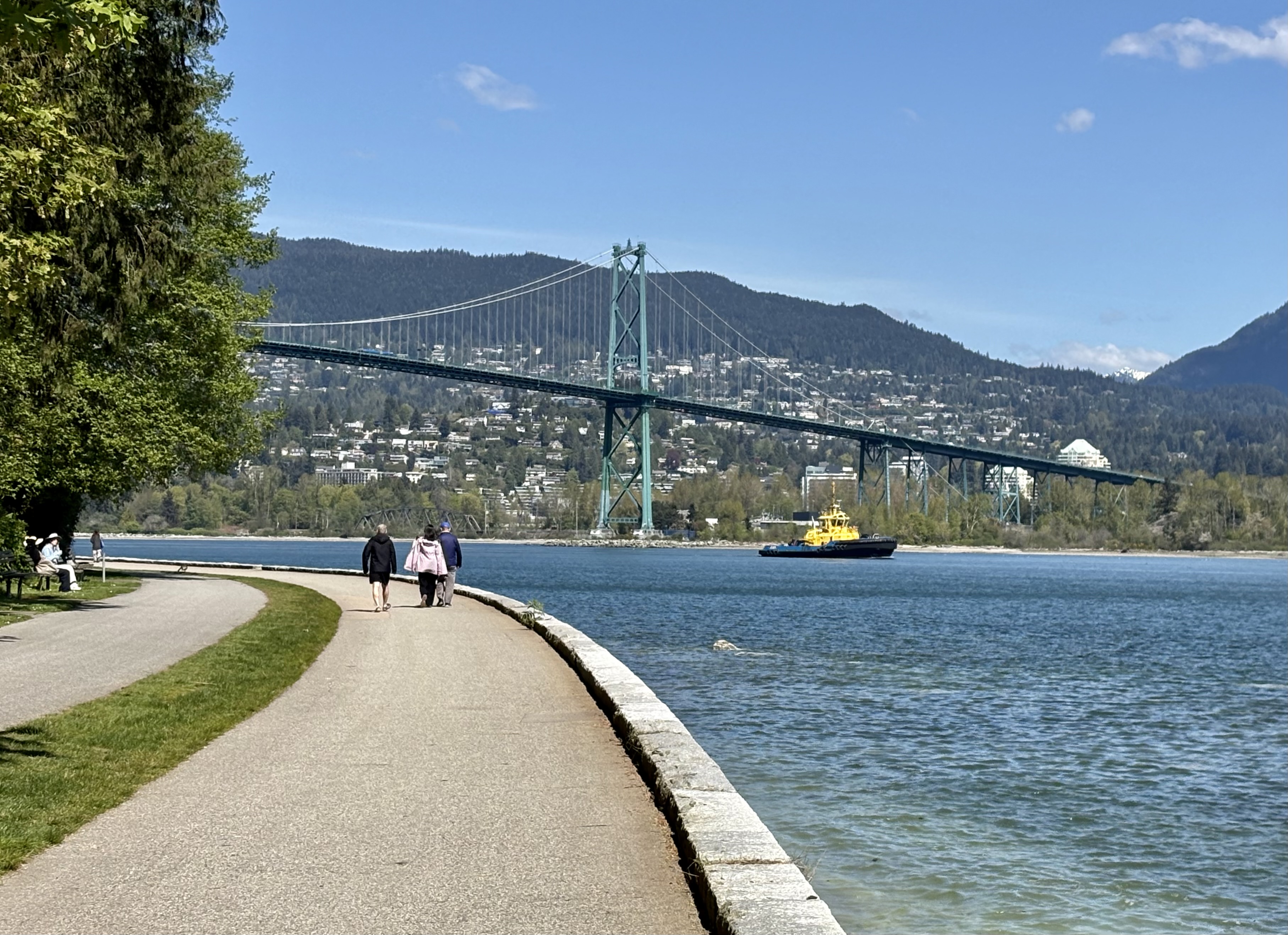
And, then, I’m right under it.
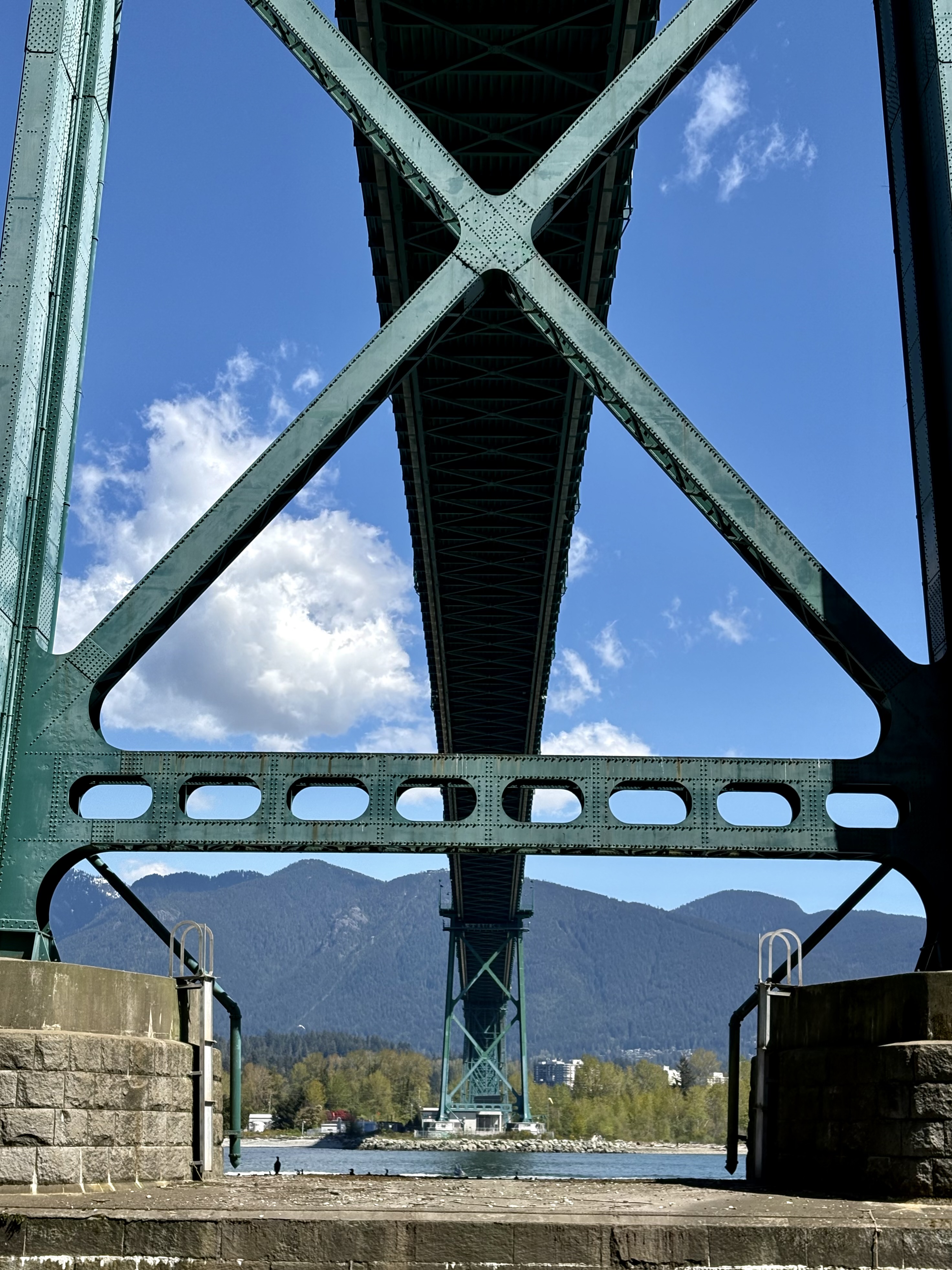
So much ocean, out there on my right-hand side. It’s easy to forget there is also so much forest on my left-hand side.
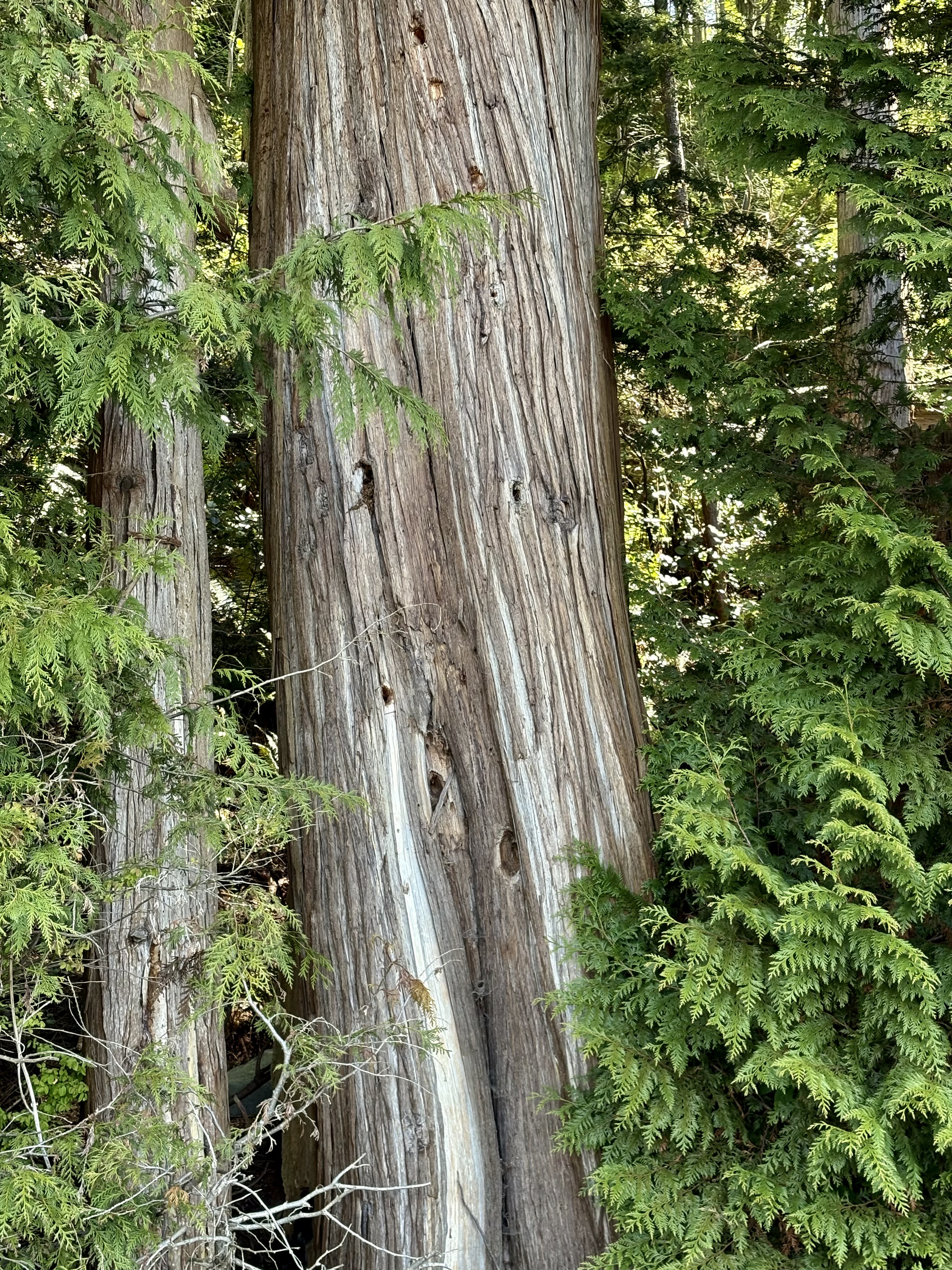
At 400 hectares (about 1,000 acres), Stanley Park is some 20% larger than Central Park in NYC.
I’m now past Prospect Point, starting down the back side of the elephant’s head along English Bay. Mostly shade, and breezy. Some dramatic hits of sunshine slicing through…
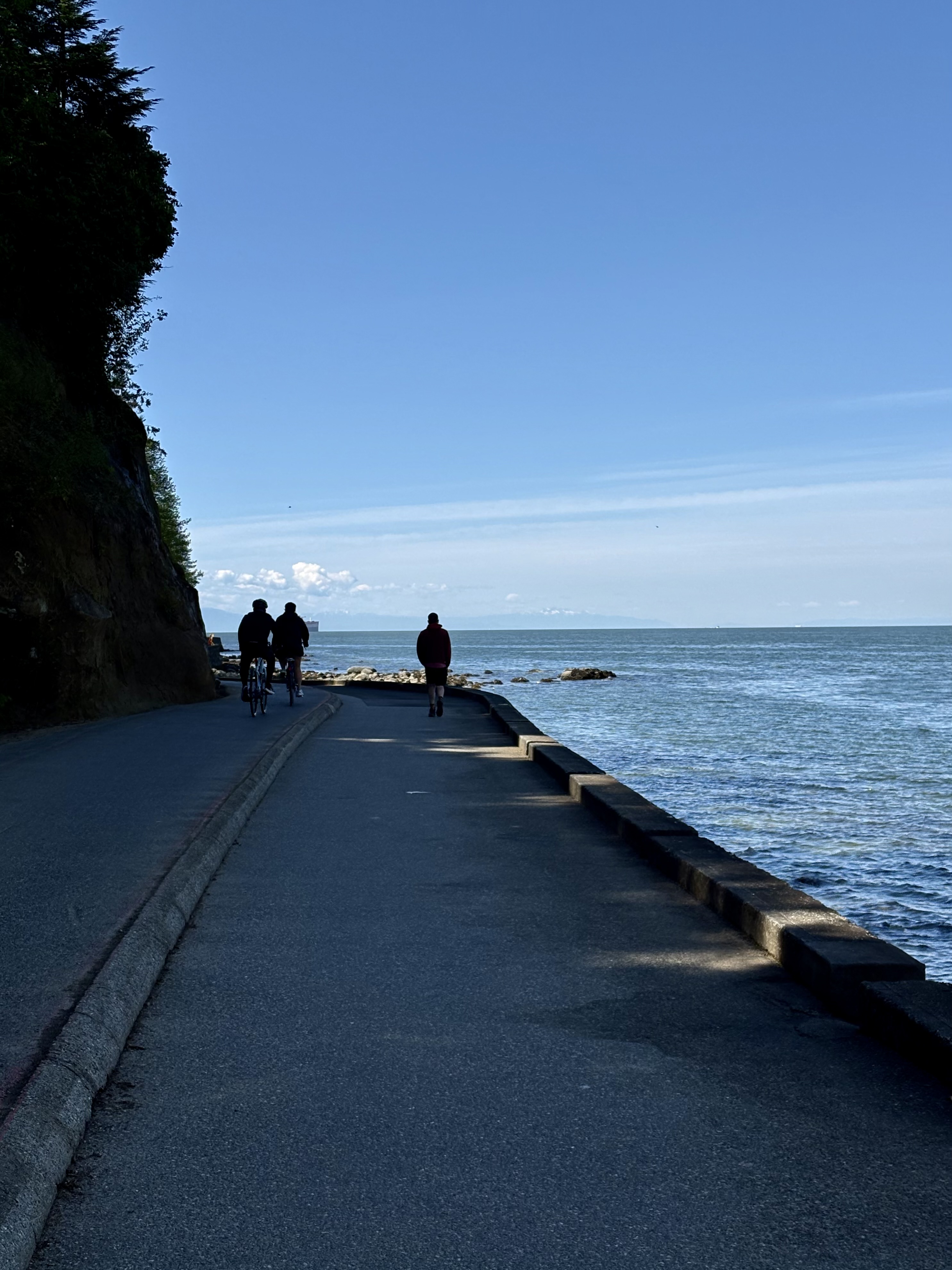
but mostly, visuals be damned! It’s just a chilly reminder of the difference sunshine vs shade makes to ambient temperature.
I pass Siwash Rock, an ancient sea stack and an important cultural site for the Coast Salish peoples, noticing both the rock and the line of freighters behind it, out there in the Port Authority’s parking lot.
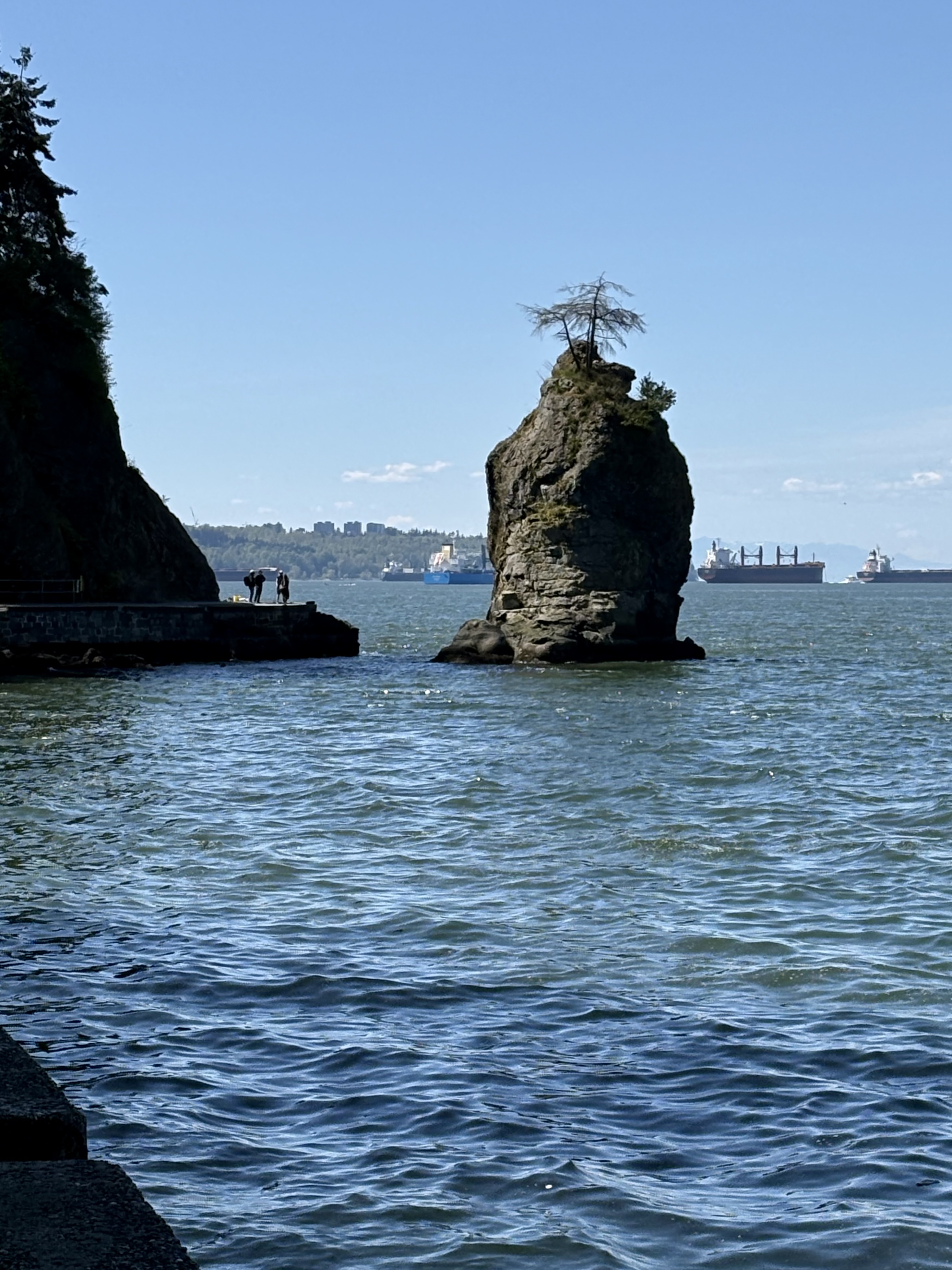
It’s only as I pass beside the rock that I notice that the Douglas fir on top appears dead — and it’s only back home, later, I learn that the tree has already been replaced several times in the past dozen years or so, a victim to storms.
Third Beach! I’m mid-way down the back of the elephant’s head.
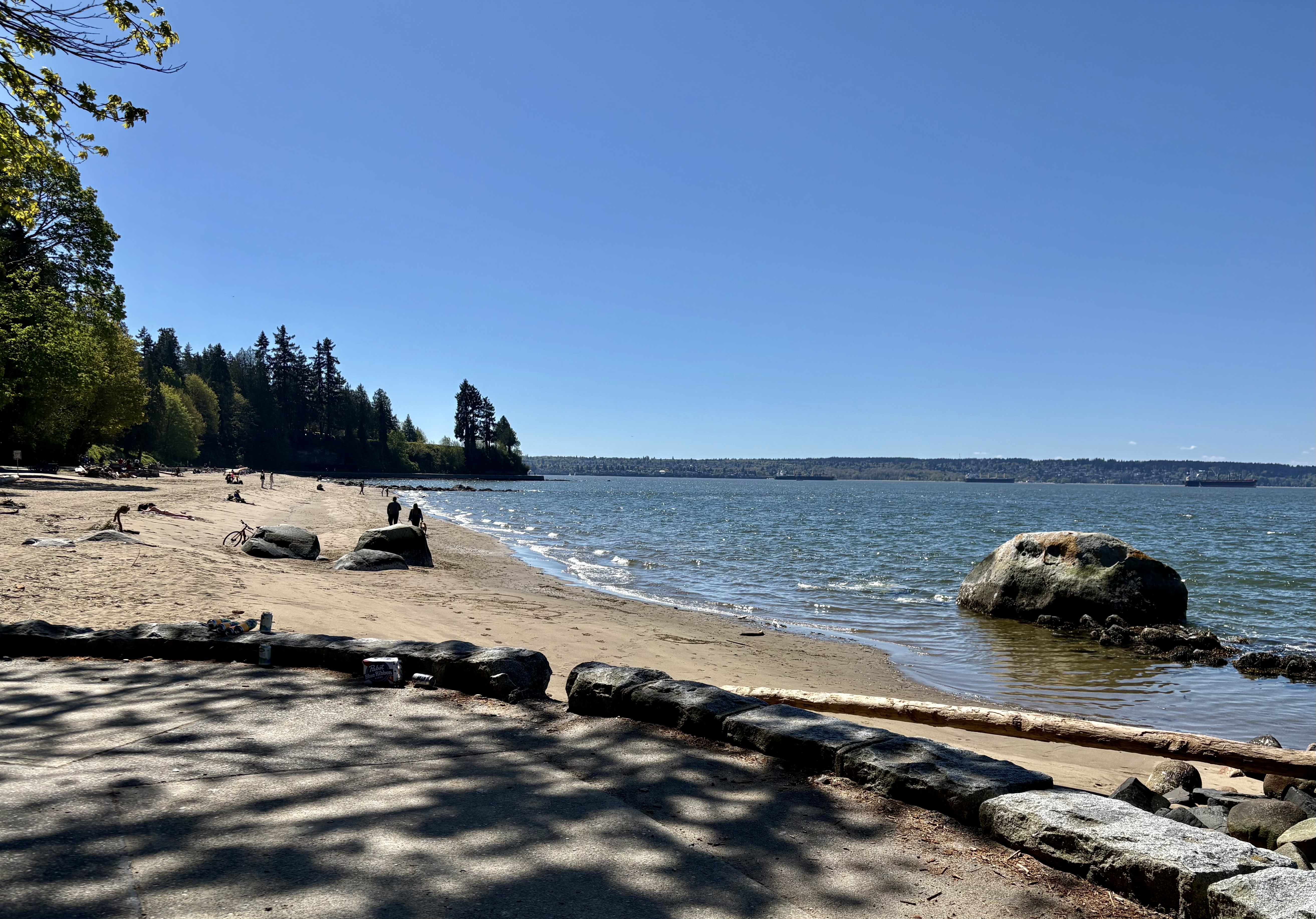
A short off-ramp leads to some food stalls, already open for business. It’s a popular refueling point for walkers & cyclists, and I join them. A bit later, happy and re-energized, I drop back down to the Seawall, with a backward, grateful glance up to those red umbrellas and all that they offer.
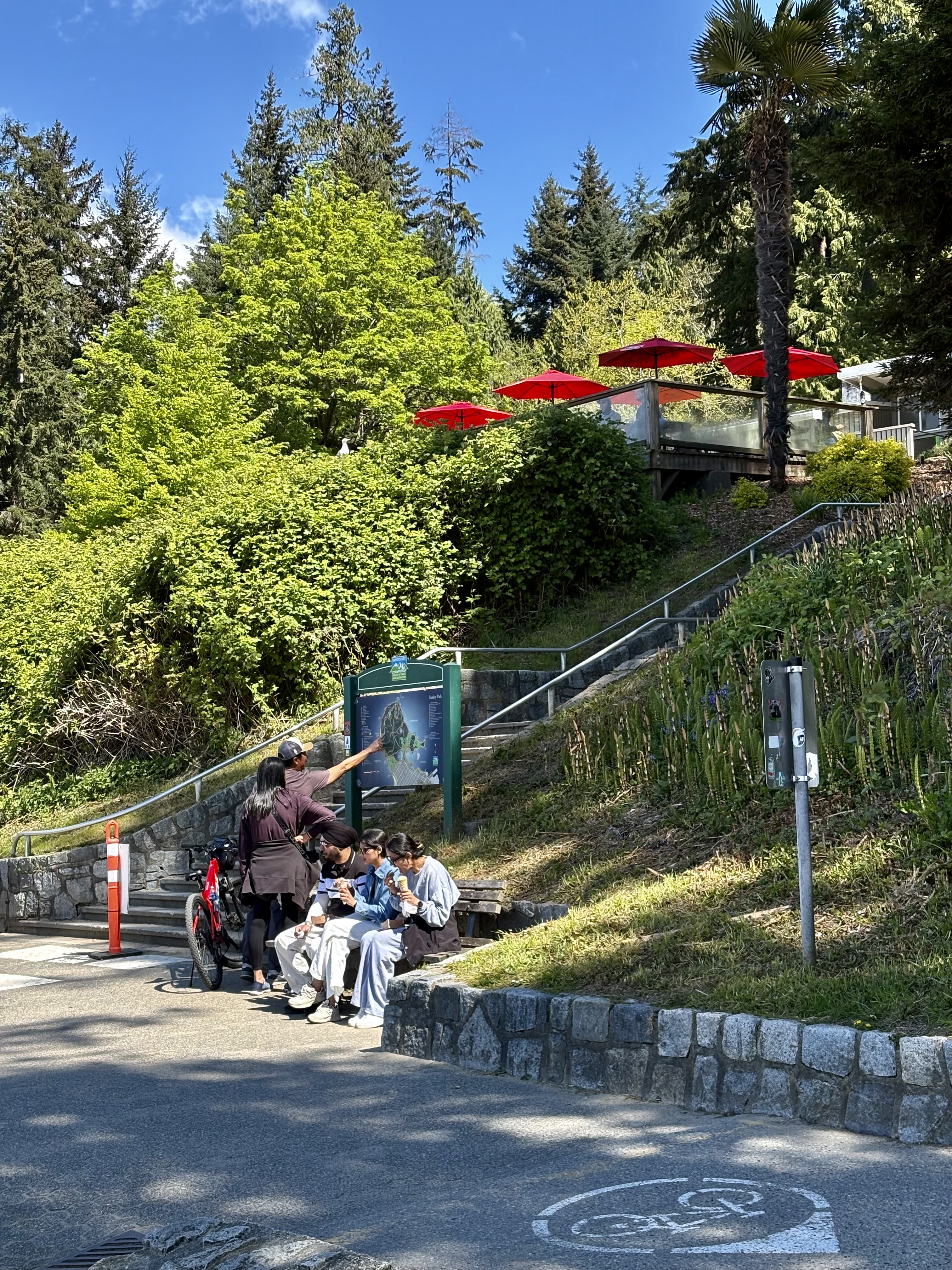
Just to add to my pleasure: a Great Blue Heron, close to shore.
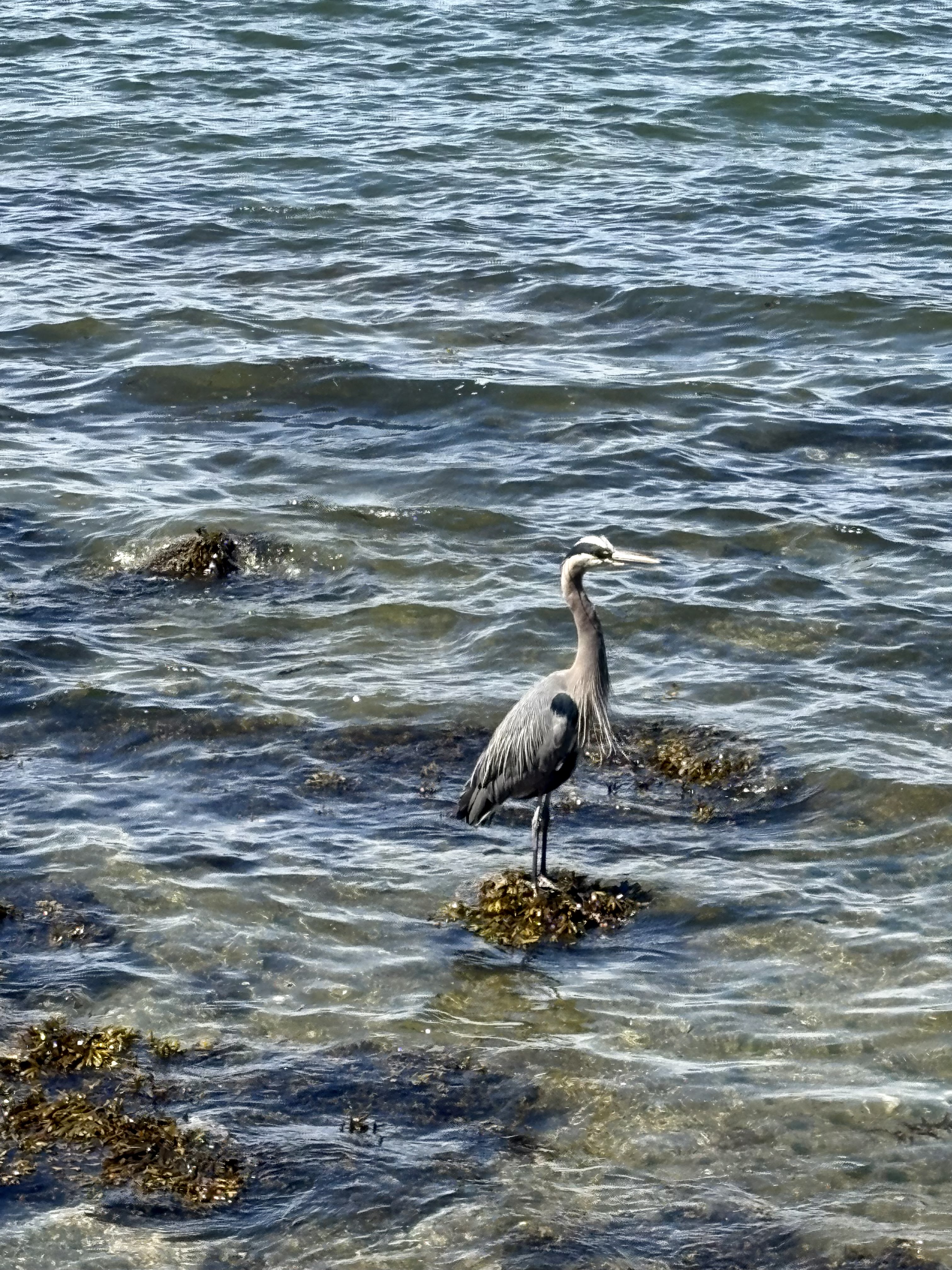
Everyone stops to admire. Even the chatter-boxes fall silent. One man mouths “Beautiful!” at me and we nod at each other.
Somewhere between Third and Second beaches, I share a bench with the spirit of (so says the plaque) one Henri Félix Bonay. I count 15 freighters, out there in the parking lot.
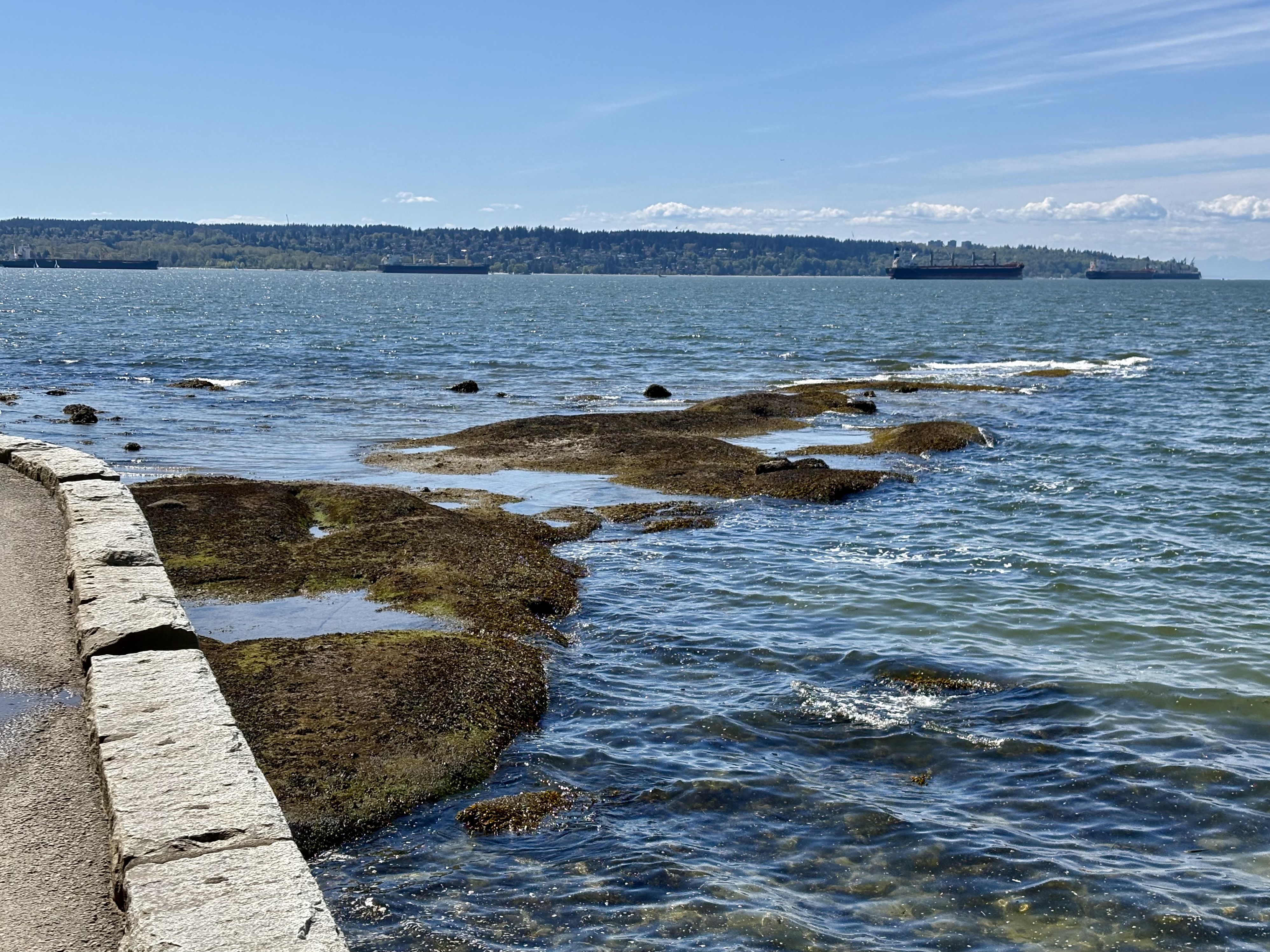
It’s an impressive number, but not as impressive as the number attached to M. Bonay. According to dates on the plaque, he lived to 103.
Curve upon curve in the Seawall, vista upon vista. I am now beyond Second Beach, with its open-air swimming pool, well down the English Bay side of the elephant’s thick neck. I look back, this time following my ears not my feet.
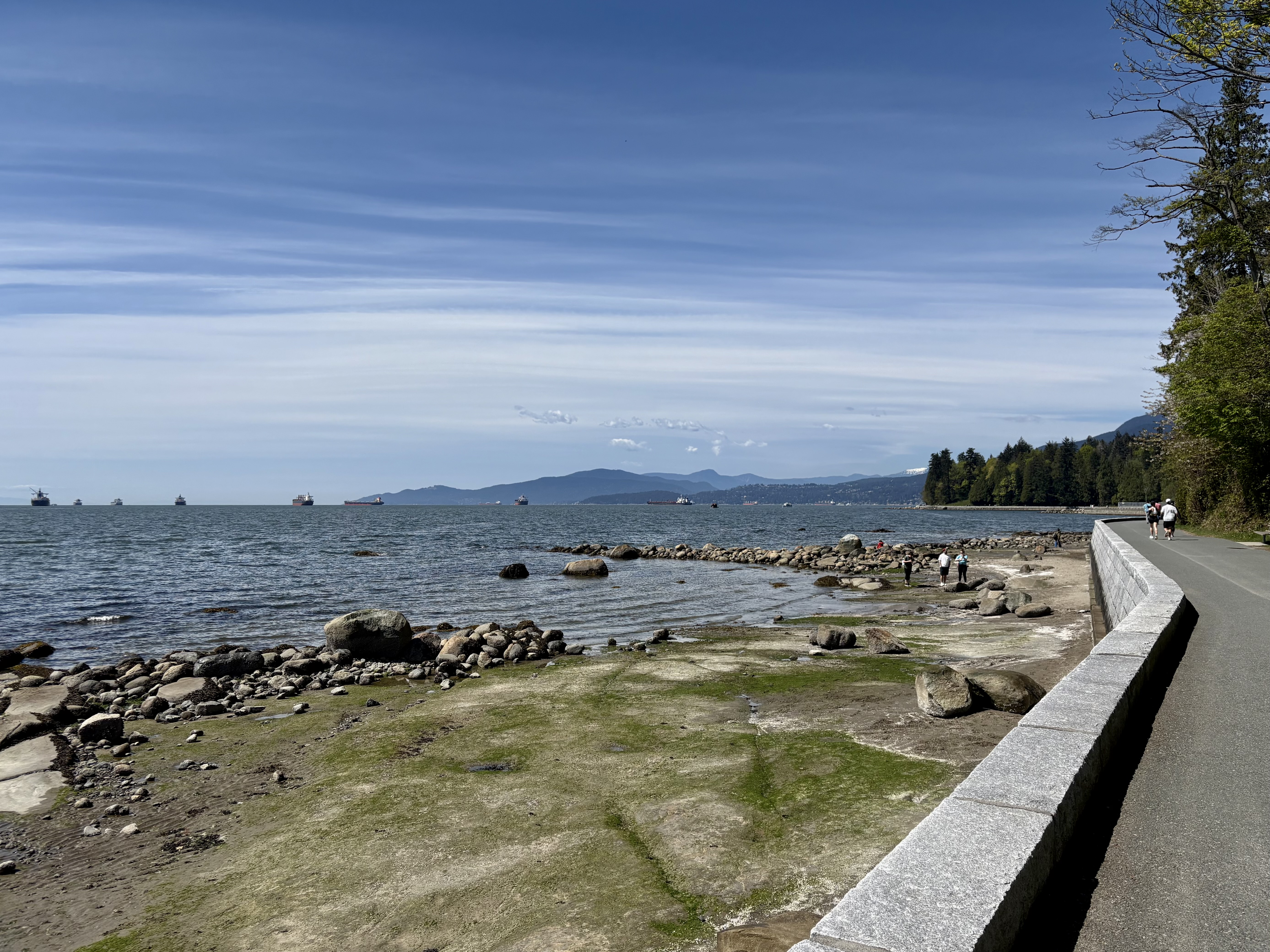
Salsa music! Somewhere out there, on one of those freighters, it’s party time. Or perhaps it’s chore time, but with music to make the work more agreeable.
I see city streets above me. I’m about to leave Stanley Park for the ribbon of English Bay Beach Park…
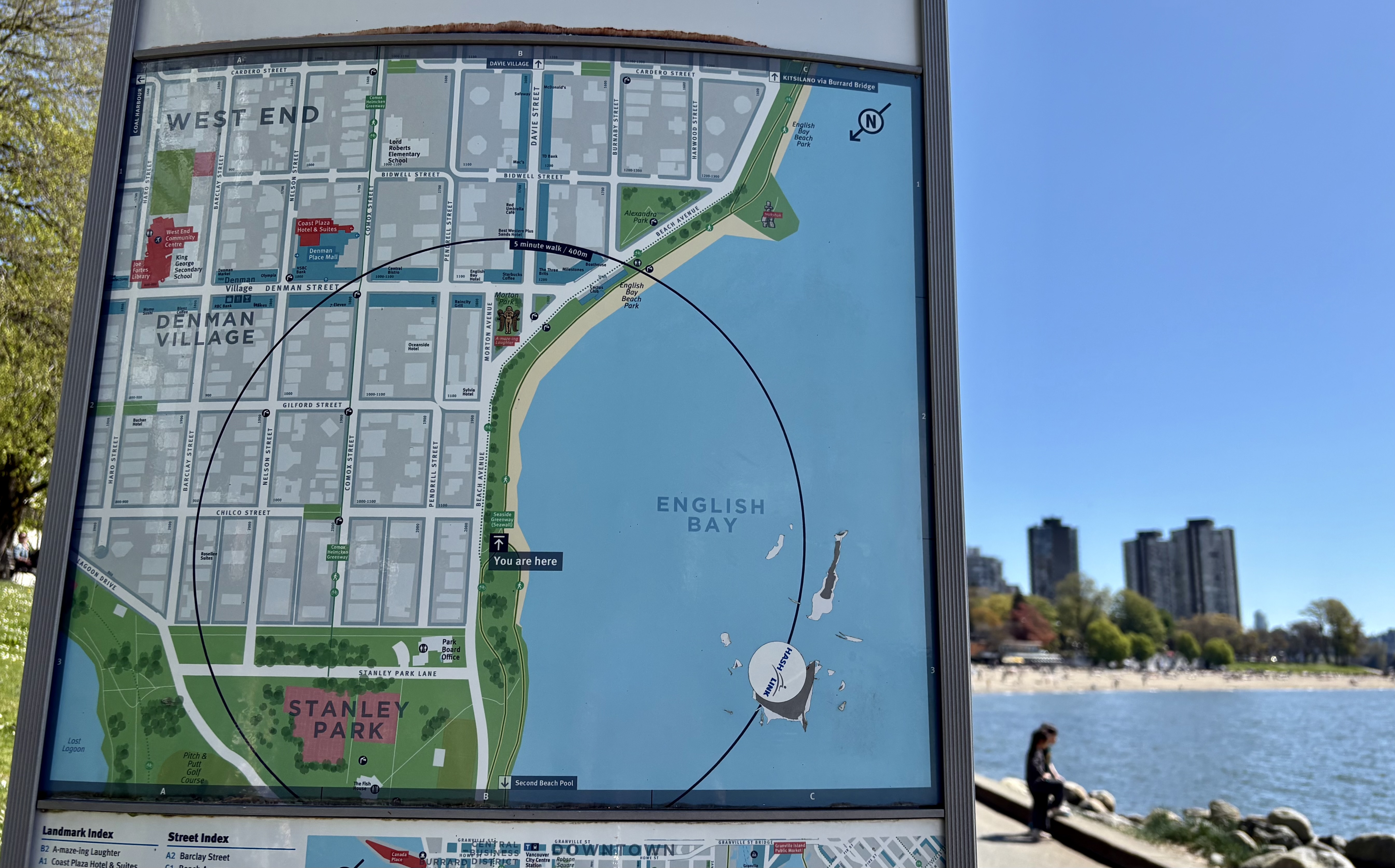
its sands on view to the right of this map.
Good-bye, elephant.
I cross over to Morton Park, spend a few moments with the lads of A-Maze-ing Laughter...
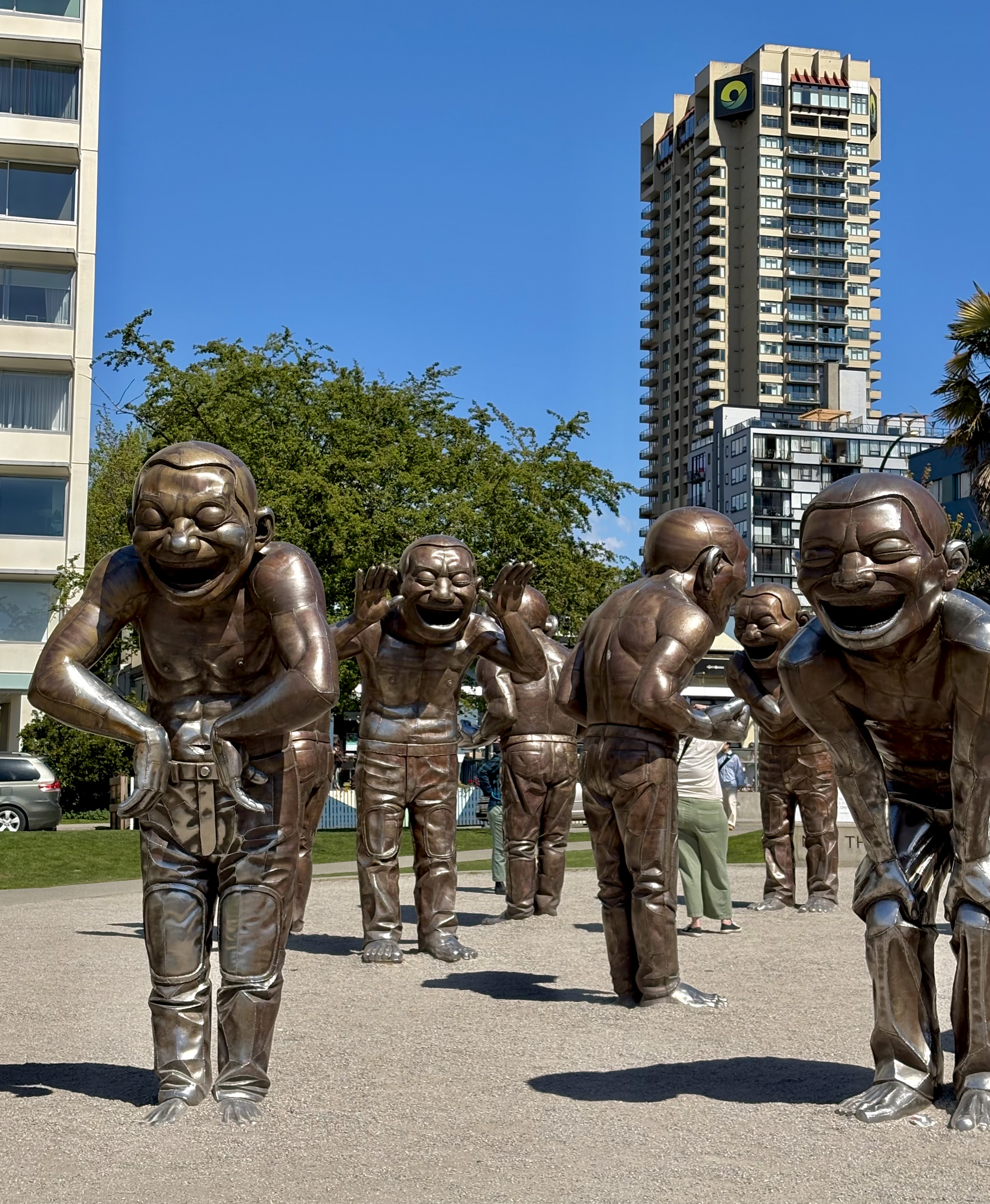
and make my way home.


restlessjo
/ 26 April 2026Nice lads! It’s a busy old waterway, isn’t it? Have a great week, Penny xx
Liz
/ 26 April 2026A good walk there with plenty to see.
Bronlima
/ 27 April 2026So, no trunk road around ths elephant’s head, just a path!
icelandpenny
/ 27 April 2026Nope, no trunk road, just an Ivory Coastline…