Land Cruise: 5-6 September

5 September – Now I’m doubling back across the same terrain, this time south, Churchill to Winnipeg. It will surprise none of you that even though we’re travelling the same tracks, passing/stopping in the same places, the trip is entirely different. There’s the same train culture around me, but with different people. Perhaps because I’m slightly less obsessed with the landscape this time, I’m more aware of the people — who, because we’re still between tourist seasons, are again individuals rather than job-lot packages on tour. Such a range!

  • the trio who trained as nurses in Winnipeg long ago and as a result have been friends, and attending reunions and sharing other adventures, for more than 65 years
  • the young Parks Canada IT/AI specialist, who works summers based in Churchill and winters back in Winnipeg
  • the Australian couple (she originally from Ireland) who are this side of the world to attend a wedding in the Caribbean but decided, having come this far, to explore Canada while they’re at it
  • the deep-south American who “hates heat” and therefore does advance reconnaissance each year for the following summer’s travels in Canada with his wife (so far, Newfoundland is his hands-down favourite)
  • and… Origami Man. Oh, I’ll save him ’til later.

I think the other reason the reverse trip is different is precisely because it is in reverse. You approach from a different angle, you come at a different time and probably in different weather, and you yourself, even if only slightly, are already a different person. So, you notice differently.

For example, I notice the young man dis-embarking in Thompson, sporting the cap his wife found for him on the internet…

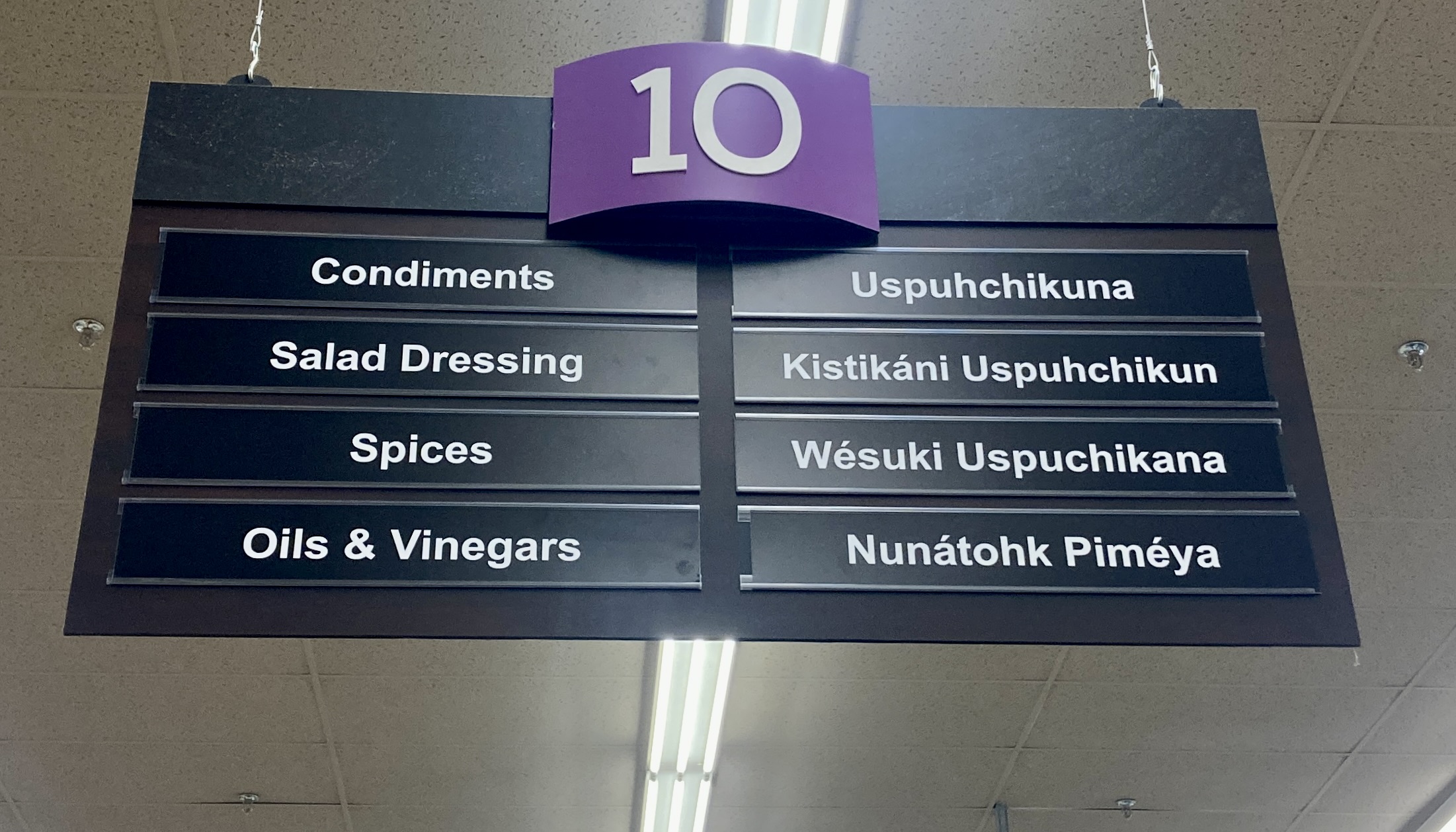
and the bilingual aisle signs in a Thompson grocery store.
Soon after Thompson, ’round about Mystery Lake, I come through the dining car and see Origami Man teaching the basics to two VIA staff with a rare moment free of obligations.

It’s another day before I learn he and his wife (she knits, while he folds) are from Detroit, and have their own deep Canadian memories, including ferry travel some 17 years ago down the north shore of the St. Lawrence River east of Quebec City.

We roll into The Pas at 10:30 pm. This time, I’m awake. I raise my blind a smidge…

take in the sliver of train station, and decide our steward is right. The location means there’s nowhere interesting to walk, especially this time of night. I pull down my blind once again.

6 September – I meet Calgary Alex going into the dining car, also with breakfast on his mind. He tells me he saw a deer, when he looked out his window shortly after dawn. I saw no deer — but now, in the dining car, we both see cranes.

Origami Man strikes again!

Talking with him later, I learn that, maybe predictably, his career was in the spatially precise world of engineering, and that this skill has become his passe-partout worldwide. “I start folding paper wherever I am. People gather. I spent a whole afternoon with kids in Mongolia.”

I’m startled when, at about 7:30 am, our cabin attendant announces we’ll soon roll into Kenora for a 10-minute stop. I smack the side of my head. Kenora? We’re in Ontario? She smiles, sorts me out: “Cee-ay-nora. Canora. Not Kay-ee.”

At the station, the display caboose and its signage complete the story.

No, a comment from fellow passenger Sue completes the story.

She is from the other one, from Kenora, and she explains that its name is also an acronym. In their case, for local communities & history: KE – Keewatin; NO – Norman; RA – Rat Portage. I tell her I want to visit Rat Portage; she says it’s now Kenora. Kenora was called Rat Portage until Maple Leaf Milling Company said they wouldn’t build a mill there if it meant putting the word “rat” on their flour.

Back to Canora-with-a-C. The town has an historic main street…

and a this-minute communications tower.

Approaching Dauphin, early afternoon, I don’t have to gawp at the 1912 train station — I’ve done that already. I’m free to notice brightly-graffiti’d box cars…

and the RR-themed parkette, with its plaque-bearing benches.

The arrival of the first train in 1896, says the plaque, “sparked the binding of over 550 communities across Canada, and forever changed the landscape of immigration, settlement, agriculture and commerce.”

{While all this 2025 train travel is going on, Origami Man is teaching Parks Canada AI Man some serious skills. The young man bends his head to the task. There is much laughter and an accumulation of geometric, and beyond-geometry, shapes.}

And then, pouf!, we’re in Winnipeg.

By 5:30 pm, I’m physically out on the street….

but mentally/emotionally…

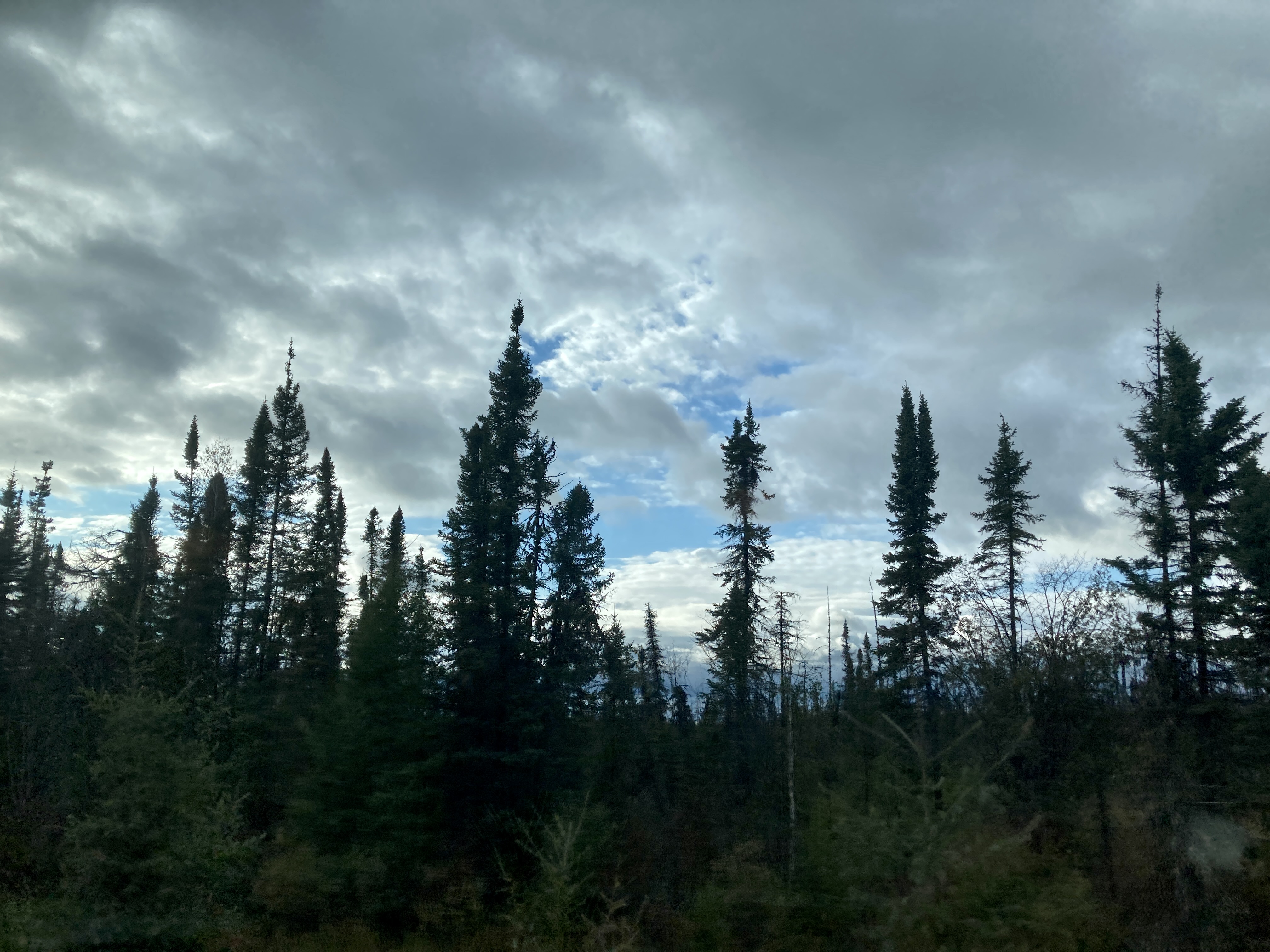
I’m still back there with the birch and the black spruce.


Land Cruise: 4 September

Somewhere north of Gillam, the sun not yet visible, but the horizon glowing…

and, an hour and a half later, the first glimpse of Churchill, its massive port structure.

We arrive. We scatter, each to our own priorities.

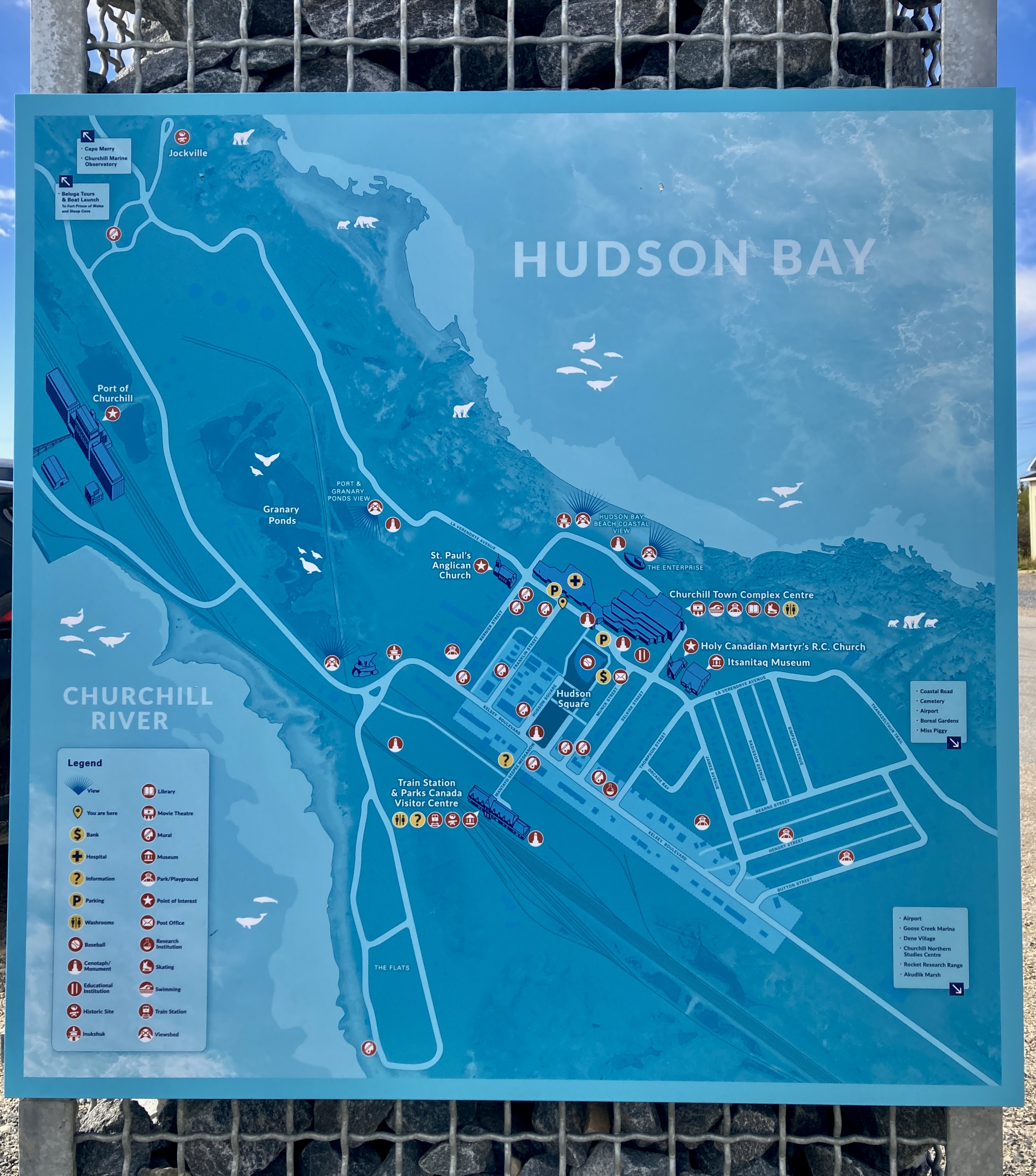
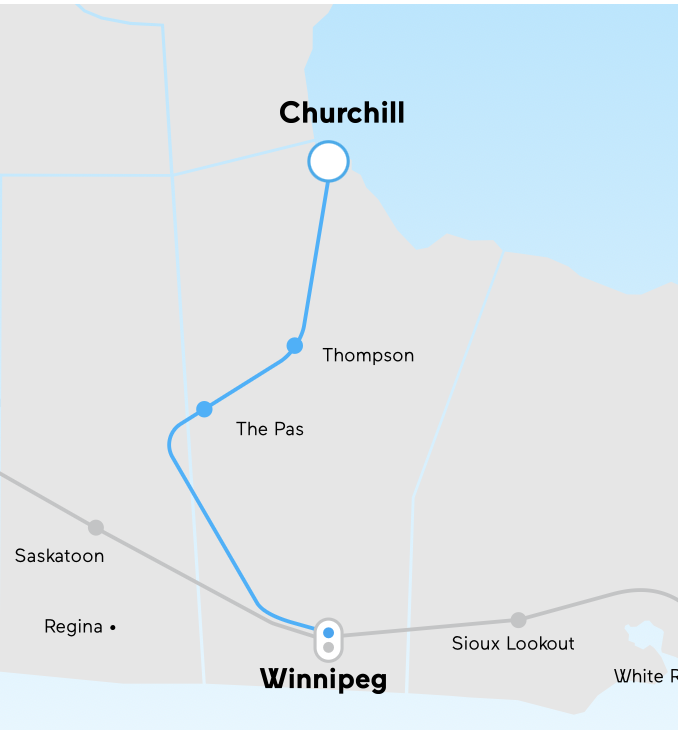
Mine will take me pretty directly from the train station (the dark oblong near the top of that bottom blue loop) straight through town to Hudson Bay.

Not quite directly. First a stop to refuel in the Seaport Hotel’s coffee shop.

It is clean and cheerful, unpretentious, and near the station. A convenient pivot-point. (I have no idea of the dramatic role it will play in my life, later that day.)

Fortified, I take my own boots past a boots mural…

straight-lining it to the water.

And there it is.

There, too, is one of the warning signs I’ve been told about. The polar bear “season” has not yet quite started. But this is the polar bears’ world, and they live by their own instincts, not the schedule of glossy tourist brochures. Every visitor is told to obey all the signs. Yes, I am told, go to the beach area, but no, don’t go to water’s edge, because bears can rise right up out of the sea, and don’t go near the rocks, because that’s where they like to hang out. As the tourism rep in the train station explains to the person in front of me: “You wouldn’t want to step on one.”

Lots of “don’ts.” I take them seriously. You have to respect nature.

So I do something very safe. I climb this convenient, if unorthodox, observation tower…

right to the top level.

Where, first, I view the forbidden rocks to the east …

and then, second, I focus on the beach right in front of me.

I focus, specifically, on the man way down there at water’s edge, walking happily along — man plus small dog, equally happy and unleashed.

This dog.

Not eaten by a polar bear, as you can see. The dog’s owner is a quite elderly Inuk, so I decide if anyone can give me reliable advice, he’s the one. I greet him. I say I watched him enjoying his shoreline walk, and I’d like to do that myself.

He explains he goes there because he likes to pick up stones. “Me too!” I cry. We beam at each other, dig in our respective pockets, and hold out our handfuls of stones for mutual inspection. Much murmured enthusiasm and poking at treasures ensues. After all that, I ask about safety. He says, “You have to watch. I don’t see any bears around right now.” He adds that if I position myself behind the sand bar, I should be fine, since I won’t be next to deep water.

With further compliments about our respective good taste in beach stones, we part company. He toward town, and I straight to the rivulet behind that sand bar.

Where (bottom left)…

I keep the promise I made my toes, that day on the Point Grey beach.

The day is cool — about 9-10C — but sunny and not yet windy. I continue walking the beach, completely happy. I see beluga whales cresting the water surface — just arcs of white, rising and falling, nothing dramatic, but clear enough for me to know they are indeed whales and not waves.

Finally, I walk west toward another line of forbidden rocks…

obediently stop short, and turn inland.

These bright, helpful signposts are all over town. This one is just uphill from the beach, and persuades me to visit the Granary Ponds…

with an initial stop in St. Paul’s Anglican Church, there on the left.

I look at various artefacts, including this 1930s Cree plaque quoting scripture from the Gospel of St. Matthew…

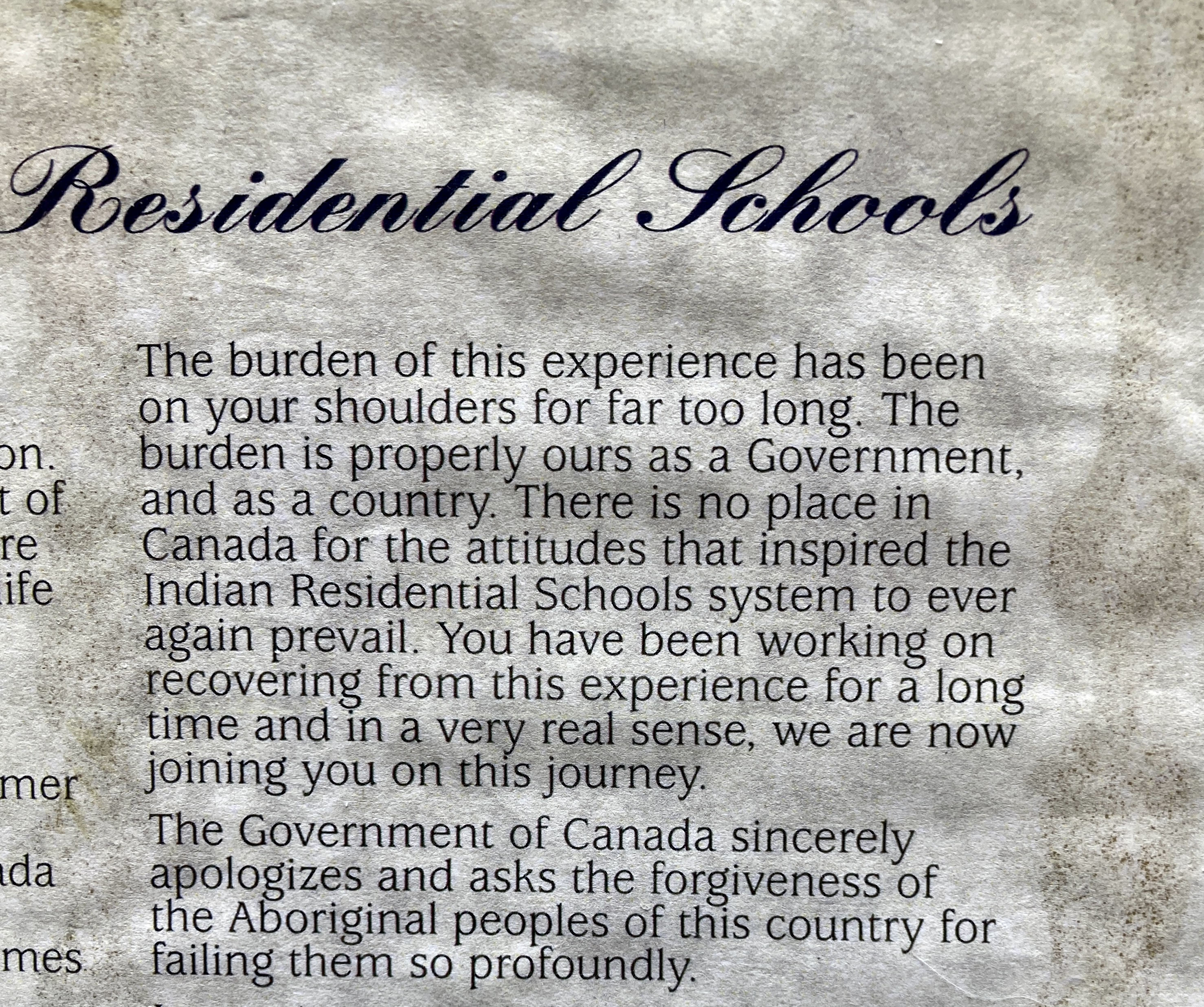
and I read the 2008 Federal Government’s Statement of Apology, signed by then-Prime Minister Stephen Harper, to all those who suffered under the residential school system. Here’s an excerpt:

The road out to the Granary Ponds leads me past riots of wildflowers, still vibrant so late in the season…

and then a closer view of the Port of Churchill…

which, if political promises are kept, will benefit from major expansion in the near future. (An initiative announced by Prime Minister Carney during a European trip — one more move in building stronger and more diversified relations with other parts of the world.)

I backtrack into town. My one goal is to walk. A lot. Though I’ve had only one prior visit to Churchill, in the early 1980s, I spent a lot of that decade going in and out of the Arctic hamlets. I haven’t the foolishness, the arrogance, to think I am any kind of insider, but I do still resonate with all of this. Young self did lots of jumping around. Old self seeks only to put feet on the land, to see and smell and hear the land, and be in this place. So I walk.

And, oh yes, I see very northern sights.

This truck decal, for instance…

and this komatik (sled), waiting for winter…

and this polite request in the doorway of Itsanitaq Museum.

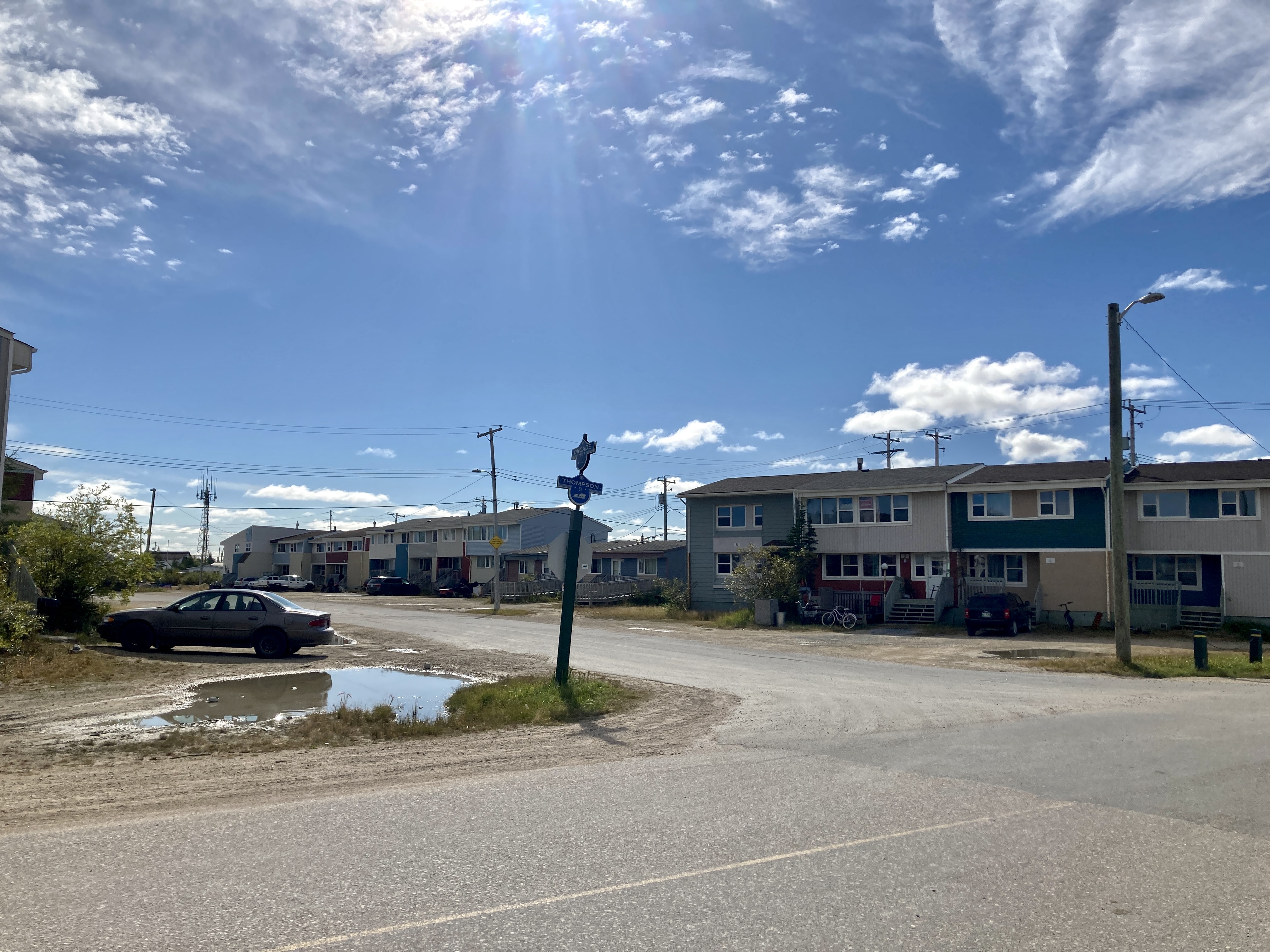
But I also see streetscapes that could be anywhere in Canada.

There are community gardens all over Canada, as well…

though this one takes proper northern measures to protect the crops.

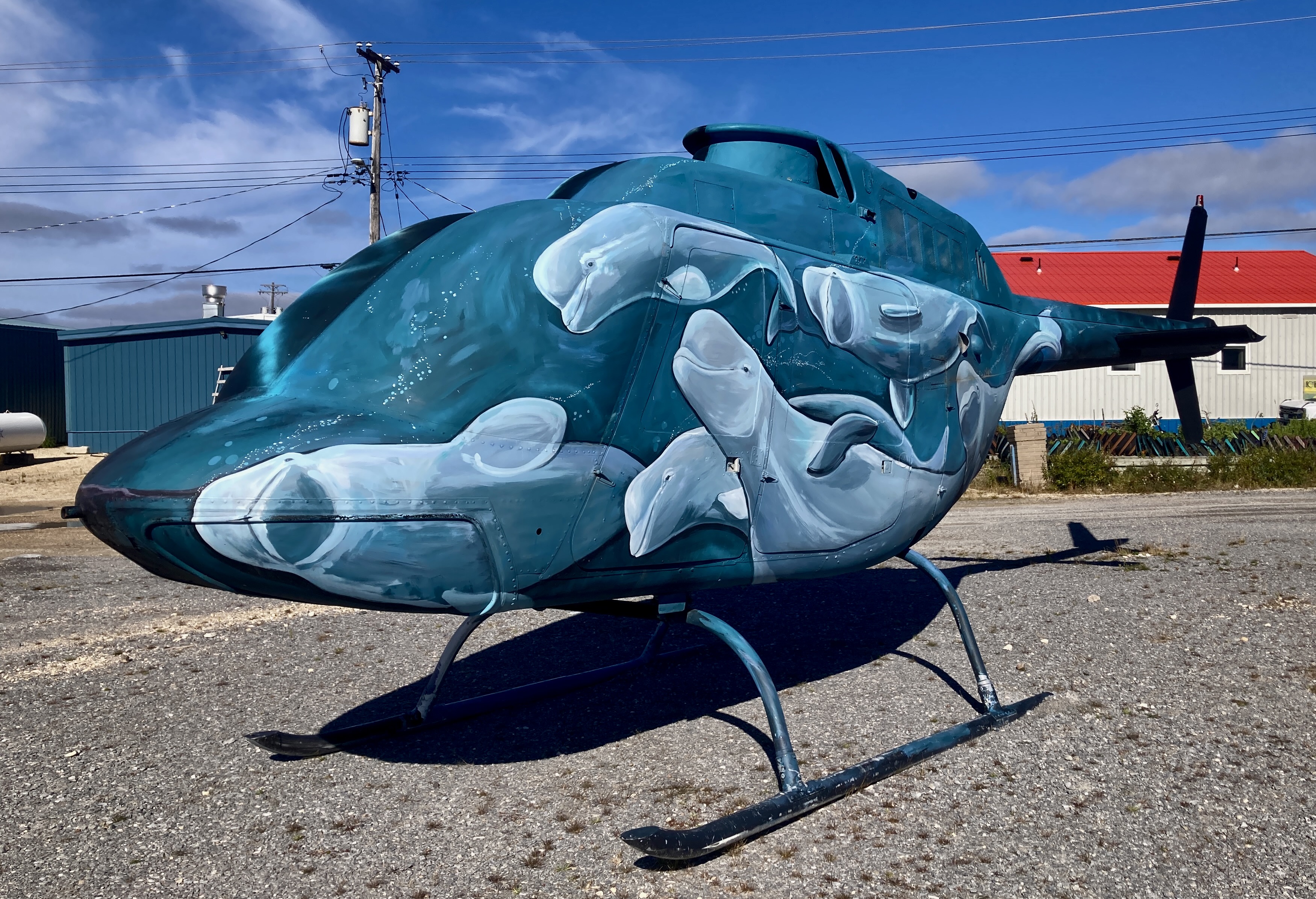
Right next to it, a happy pod of beluga whales, swimming a very different ocean.

And then… and then, no more pictures.

Because then, getting on for 5 pm, my gut announces that it is not pleased with the tasty falafel bowl I had for lunch in a highly recommended local bistro. My gut makes clear that it plans soon to start Throwing Out the Garbage.

This will be merely unpleasant, not dangerous, but also highly inconvenient. The train station is not yet open and I am not registered in any hotel. I’m again near the Seaport Hotel, so I walk in. What else can I do? They look after me. I am safe and sheltered. My gut can briskly go about its housekeeping detail in privacy. When I finally totter off to the train station, a fellow passenger, the station staff and VIA Rail staff are all equally practical and kind. Soon I am whooshed aboard the train, tucked up in my own sleeper-cabin. After a few more rounds of garbage-removal, I sleep. When I wake again, I am completely well. It’s all over.
So is the day in Churchill. Our train is now in motion.

I lie there, think about all that helpful kindness — and decide that my little bout of food poisoning was in fact the final heart-warming event in a thoroughly wonderful day.

Land Cruise: 2-3 September

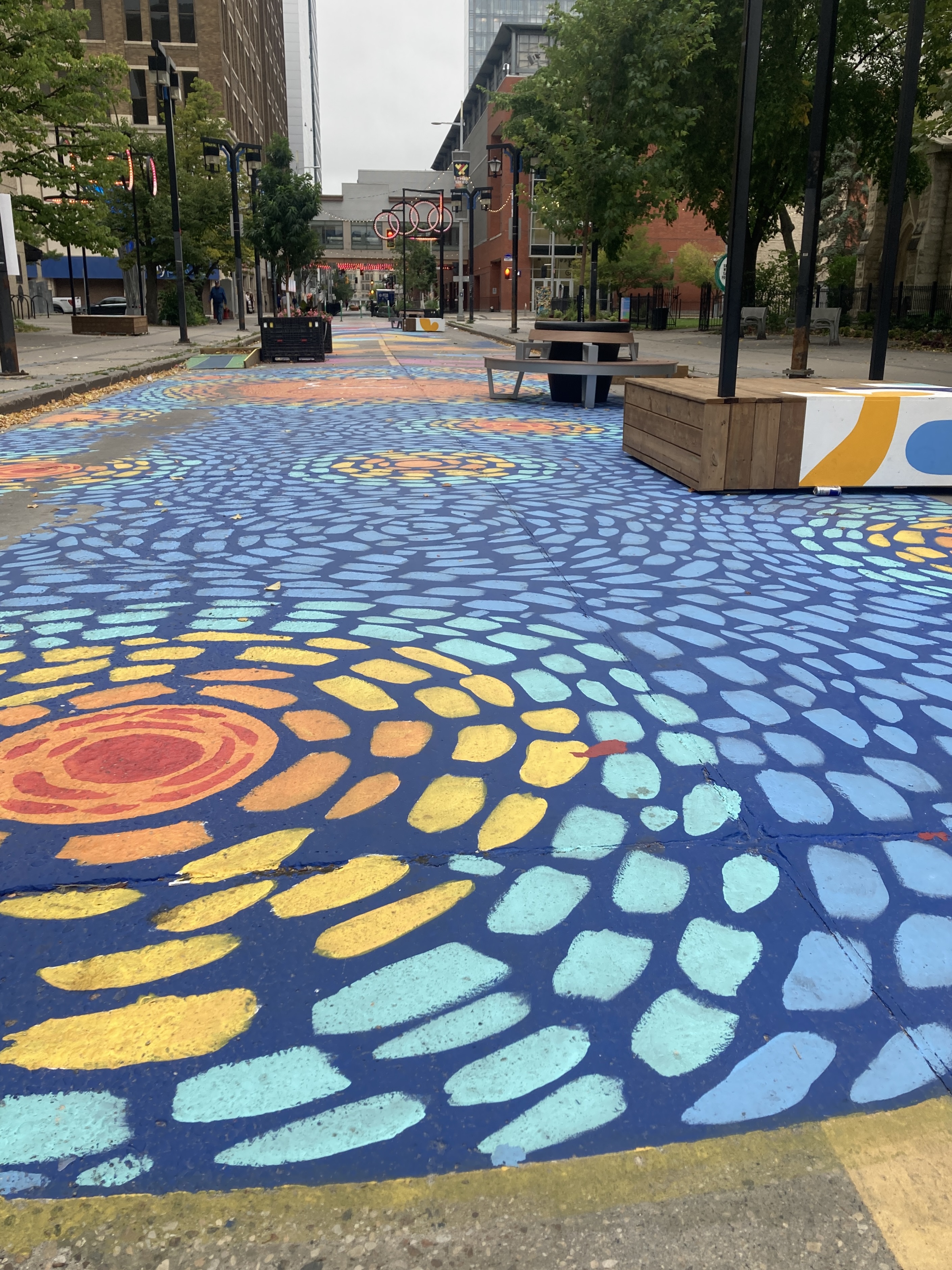
2 September – The train doesn’t depart until 12:05 pm, so I have time for a morning walk on Winnipeg’s “Cool Streets”…

before obediently turning up at Union Station by 11 am.

I just see people. I don’t yet know, for example, that the Calgary couple in the cluster on the left are delighted to see some distant relatives will also be on our train, albeit only part way. Or that the young people over there on the right belong to two separate post-grad teams, one from France and one Québécois (Université Laval), travelling north to research climate change on ice structure and on permafrost, respectively. (Even later, I learn the French project was originally planned for Siberia, but world politics got in the way, and they had to find themselves a new home.)

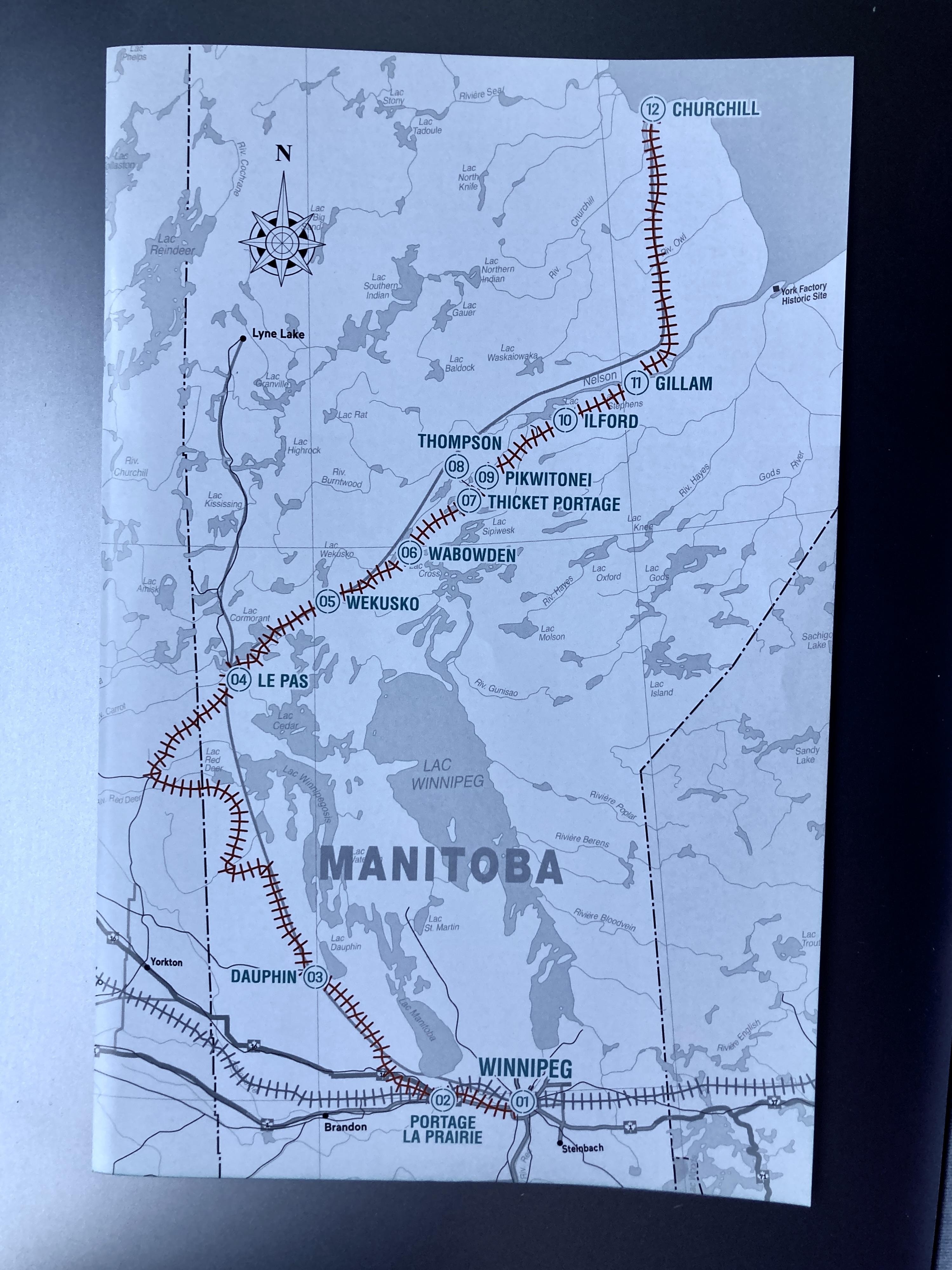
Into my cabin, and a quick study of our trip map.

I am excited. Once, so many decades ago, I returned to Winnipeg from Churchill by train, but I’ve lost almost all memory of the trip. Here I am, about to do it again. Both ways! We’ve been told there’ll be quite frequent stops, in many very small communities as well as the larger ones. This train run is still an important communications link — and, indeed, beyond Thompson, the only land route to Churchill.

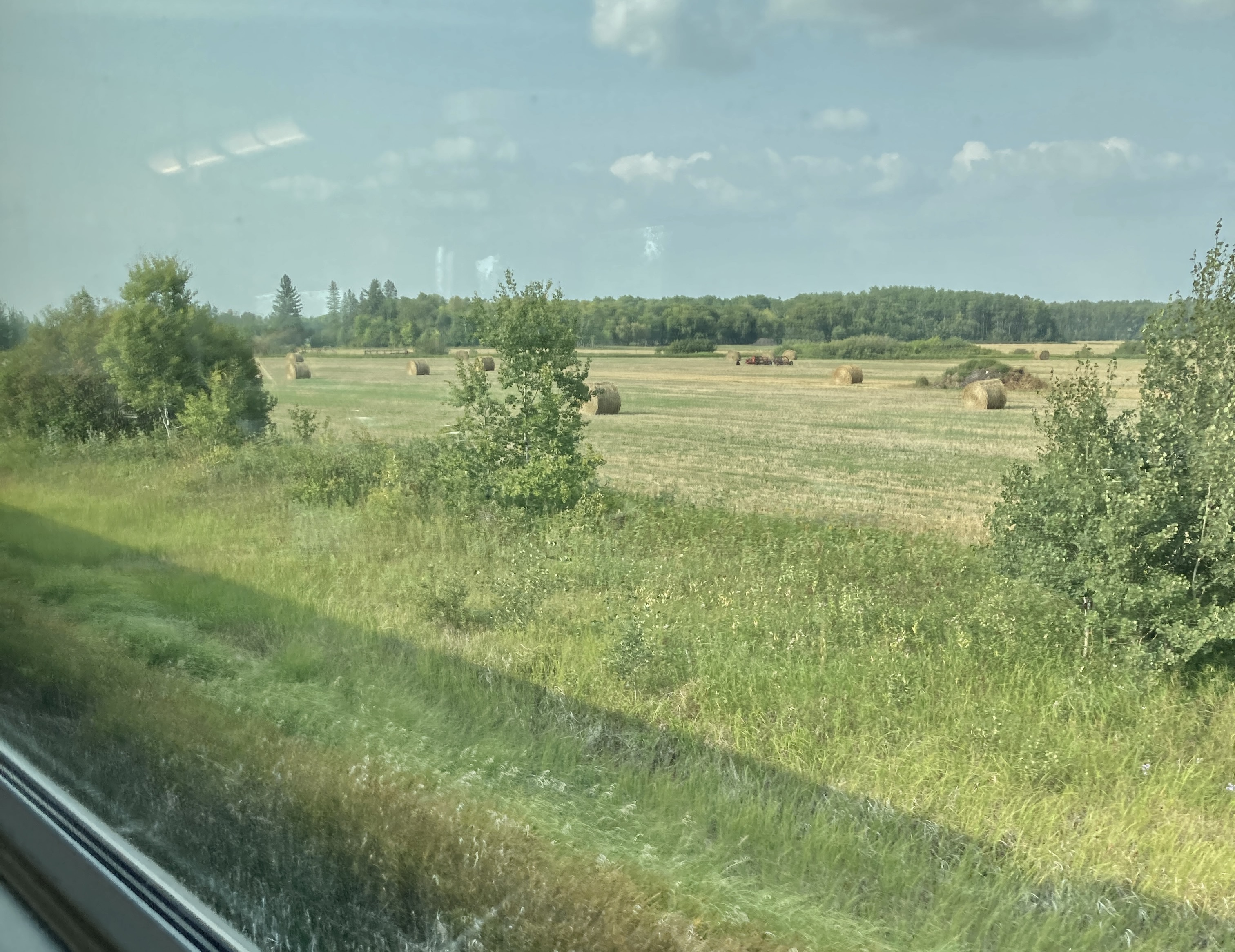
Farms, harvested fields…

as we roll past Portage la Prairie, the land still looks a lot like Saskatchewan. Still very southern.

How could I have forgotten the imposing train station in Dauphin?

A CN station, built in 1912, when train travel was a very big deal indeed.

The next stop will be The Pas, but I’m long asleep by then. I don’t even notice our brief swing across the Saskatchewan border and back again.

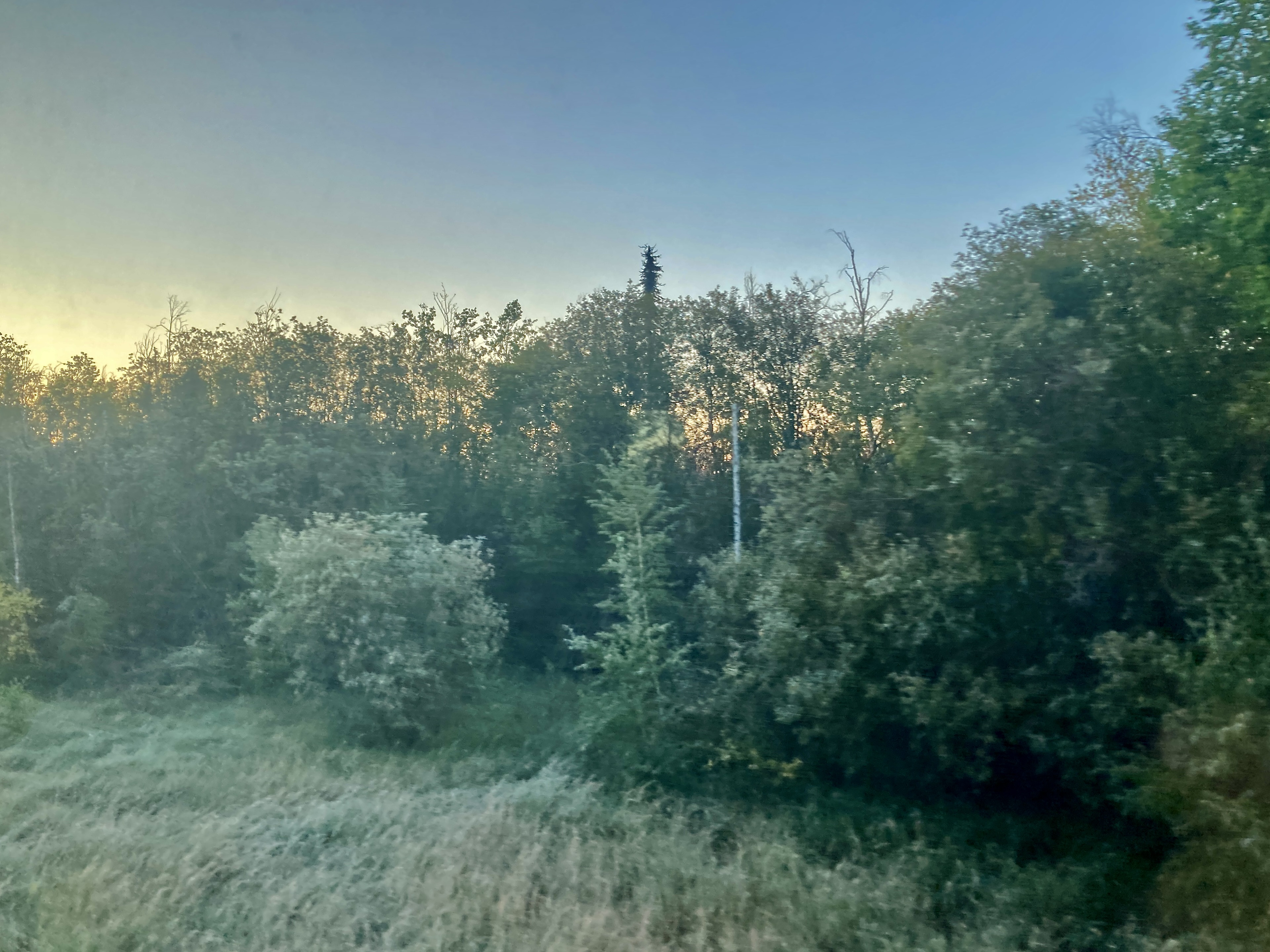
3 September – Sunrise somewhere near Wekusko, and it’s a different world.

Becoming boreal, it really is. I think some of those lacy silhouettes are tamarack, also some white spruce? I’m not an expert, don’t quote me, but at least I can tell we’re moving into a different world.

Colder, too. Hoar frost rims every leaf, needle and blade…

and here I can name a few things with reasonable certainty. That tall skinny guy in the back row is black spruce, there’s at least one white birch (later I see whole groves of them) and the deciduous trees there on the right look like trembling aspen — all these species part of the boreal mixture.

As the sun rises, mist also rises…

from ponds, lakes and this pretty creek.

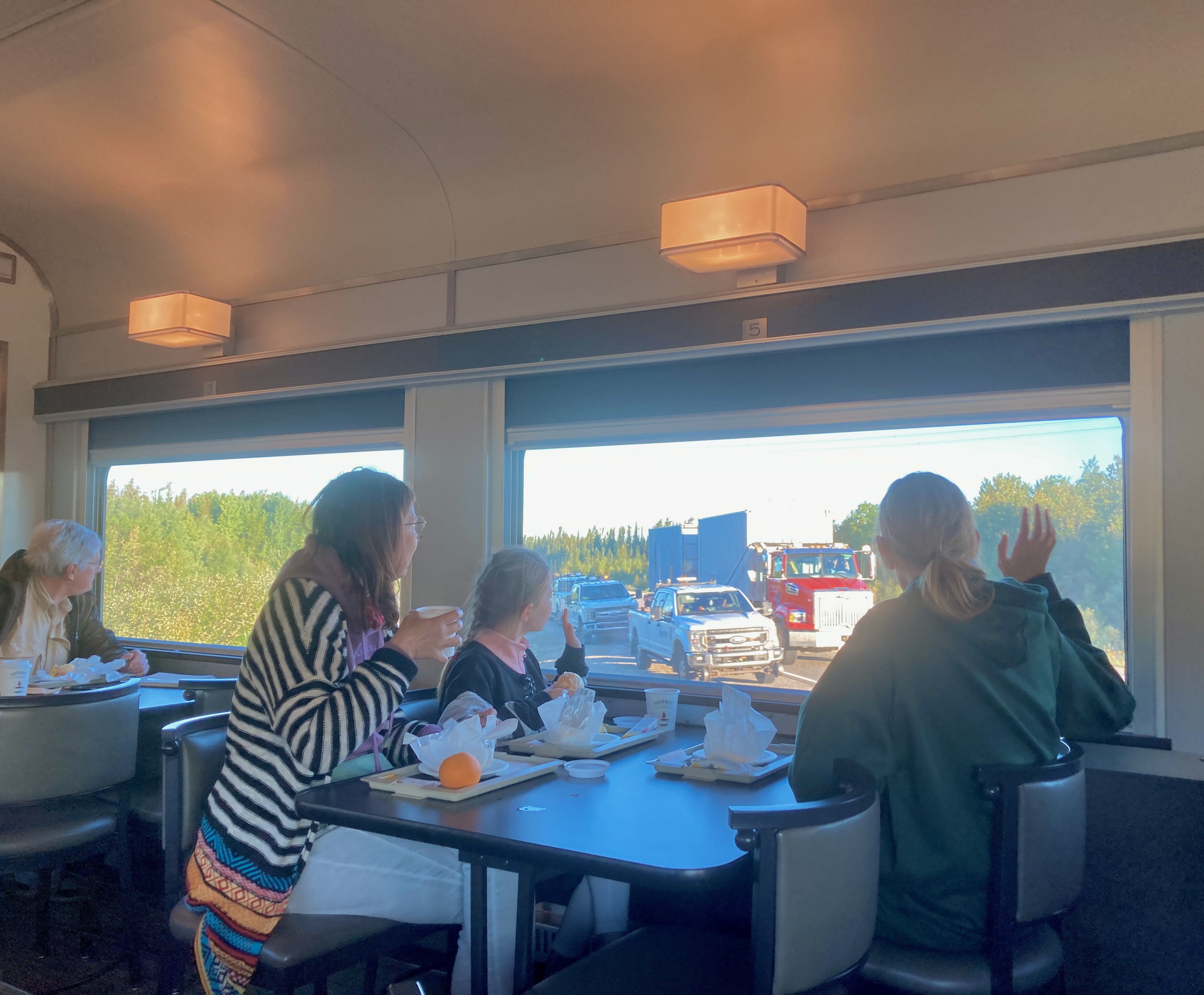
Usually this run has a dome car, but what should have been our dome car is in the repair shop, so the dining car is our everything car. It becomes our hangout, for much more than food.

Families wave to cars at the road crossings…

the students bend over the data on their laptops, prepping for their projects…

and I have my own little spread of resources, quite frivolous by comparison.

Notepad, map, coffee, grapes (I swapped one of my Gemini apples for some of the attendant’s grapes), and — and how appropriate is this? — Agatha Christie’s 1930s The Mystery of the Blue Train. (My copy is in French — snapped up from the Take/Donate bin on my previous train.)

We make brief stops in small communities. Fresh air and a look at daily life for us; vital on- and off-loading for them. Wabowden, for example…

and Thicket Portage, where the Quebec students are chatting next to that ubiquitous vehicle of the north, the fat-wheeled buggy.

Back on board, and in passing I meet Conductor Ted Thompson.

(So there, Paddington Bear! We have Ted.)

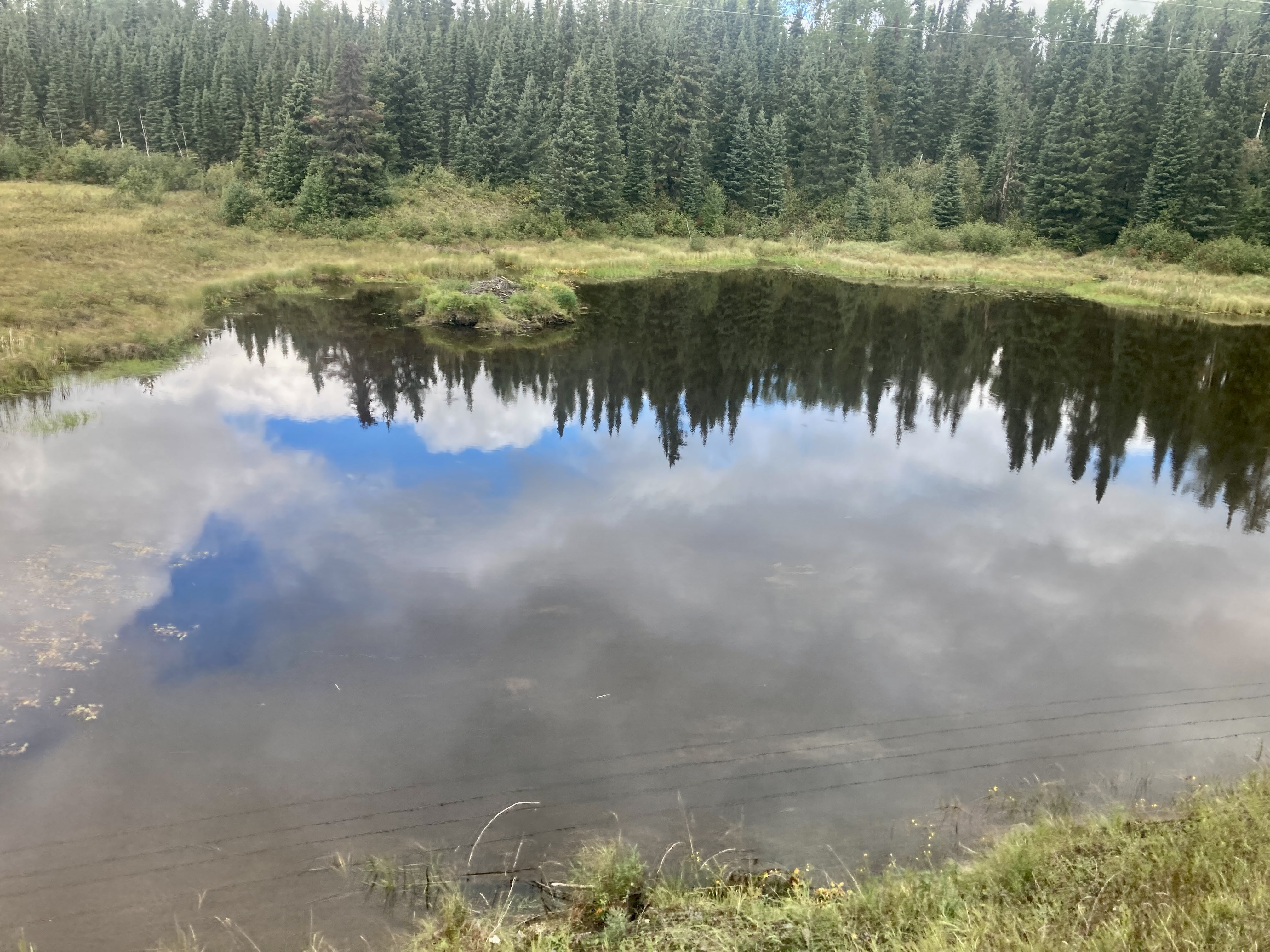
I see my first beaver lodge of the trip…

that knob at 11 o’clock in the pond, but I almost miss it, so many leaves cover the distinctive twiggy dome.

I watch the train curve with the tracks. Completely different from those craggy twists in the Alberta mountains! Here, a setting of scrub, aspen, birch and coniferous I don’t dare to try to identify.

There’s a rock cut that makes me think of driving though Ontario’s Muskoka region…

and piles of materials…

presumably for some project along this river.

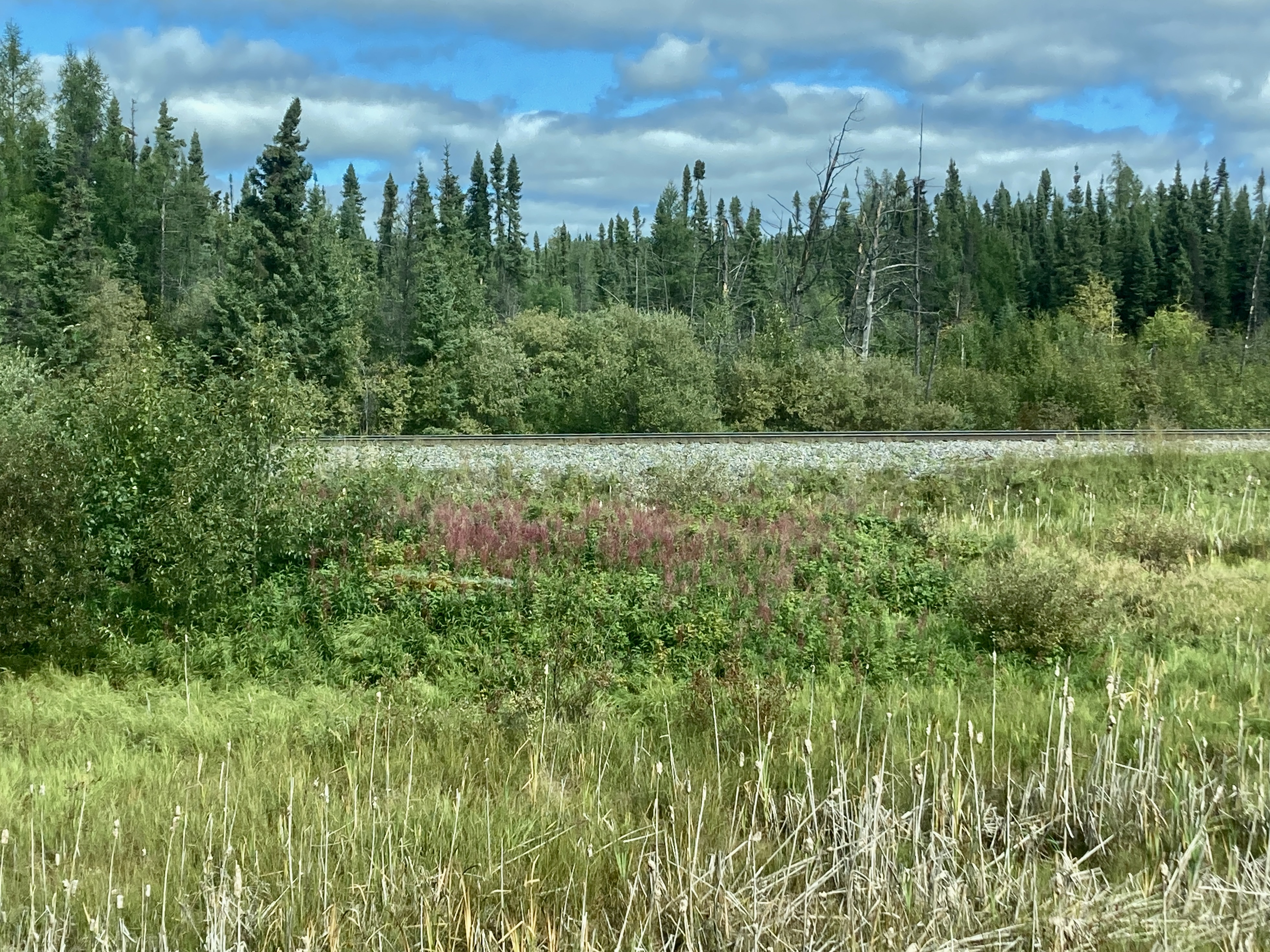
A set-piece scene:

wildflowers, train tracks, aspen, birch and conifers.

Just before 3 pm, we do the back-and-forthing required to shift us from the main track to the spur line into Thompson. Thompson: created by INCO, a planned city and a mining town. While now more diversified, you still see that mining architecture from anywhere in town.

The part we got to walk is very big-box. Anybody who knows the outskirts of Barrie ON will know what I mean. Still, everyone I spoke with was friendly and helpful, and I did get to see my first — of what surely will be many — polar bear mural.

(Though I must add, I prefer the battered float plane mural on the left.)

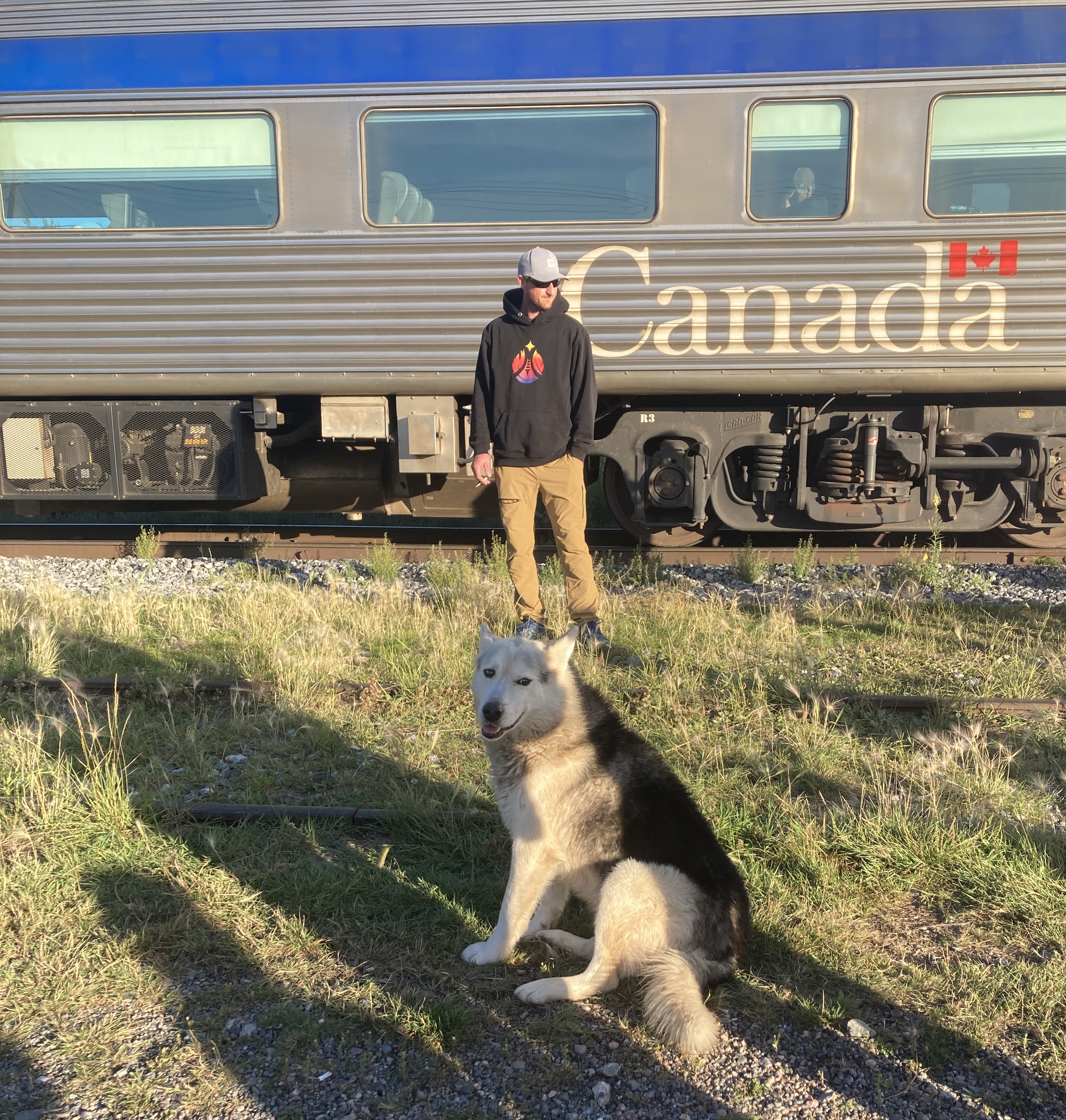
Out of Thompson, back on the main line, and on to Pikwitonei. Population less than 100, says our travel guide, but don’t curl your lip. It also has its very own Greeter Dog.

Greeter Dog meets every train, and while I scratch under his ears and he leans happily on my leg, a Cree gentleman teaches me how to pronounce the town name. It is “Pick-whi-tonNAY.” with the emphasis very firmly on the last syllable. (Like NewfoundLAND. Understand?)

Round about 8:20 or so, somewhere north of Pikwitonei but still south of Ilford, I watch the moon rise…

and then I fall asleep.

Tomorrow: Churchill. Tomorrow: Hudson Bay.

My boots expect me to keep my promise.

Land Cruise: 1 September

1 September – I’ll be one day and a bit, in Winnipeg. On the land, and on the water too.

The theme of land and rivers, the two great pathways of our country, keeps gaining strength. Not because I intellectually seek it out. Because it is imposing itself on me.

A tear-off map at my hotel inspires my walk: down to the Red River, there behind the Canadian Museum for Human Rights, and then along the walking trails up into Stephen Juba Park, back down and around the curve of The Forks (where the Assiniboine River joins the Red), onto the water in a 30-minute tour, and more river-side walking, both rivers.

The Red River. The cereal of my childhood, even my very own Red River coat, as a child.

The river, of course, is more important for reasons other than cereal and coats.

My path along the Red up into Stephen Juba Park leads me past old pilings, last remnants of the glory days of this port (before the Panama Canal opened, and offered shipping an easier, quicker route through the Americas).

This is also when I first tap my boots in the water.

Literal next step in a whimsical project I hope I can complete: having tapped toes in the Pacific (Burrard Inlet, cf. my post of 25 August), I want now to tap them in the Red River, Hudson Bay and Lake Ontario.

Did you notice the trestle bridge, in the distance of that last photo? Used for military purposes, I’m told, and now the train bridge. I’m drawn to it. I admire the utility of these bridges, their visible geometry and, once I draw near, the majesty (albeit scruffy) of the near end of this particular example.

After I turn, after I follow the riverwalk bend around the point of land, I am now beside the Assiniboine River. I tap toes in its waters as well — a bonus not part of the original plan — and, as I do so, I notice a yellow Waterways tour boat mid-stream.

There is a dock, there is a boat about to depart, I climb aboard.

Only one fellow passenger, this early in the day: a Montreal film-maker, in town to work on a production here. Our guide has an impeccably Spanish name and an impeccably Canadian accent: his family moved here when he was two years old.

Kayak going one way, we’re going the other. Miguel is powering ahead, having now explained those three lines on the bridge pillar. Each is a water level: blue for normal spring levels, yellow for the danger of rising waters, red for floods. (I think of my brother’s years in Winnipeg, and the spring he helped sandbag against that year’s inundation.)

Back on land, toes duly tapped in not one but two mighty rivers, I head for the markets within The Forks complex. While you can buy food aboard the Winnipeg-Churchill run, it’s the like of microwaved subs, I’ve been told — the same person then suggesting I lay in some supplies.

So I do. Bison Snack Sticks (Canadian), Thunderbird “real food” bars (American), oat cakes (Isle of Mull) and Gemini apples (very very very local). Tomorrow morning, I’ll snag myself a few hard-boiled eggs from the hotel’s breakfast bar as well.

Feeling sufficiently prepared, I leave The Forks. But not before I admire Caboose 76602, a permanent installation on the grounds.

Built in Montreal in the 1930s, retired from service in Winnipeg in 1988, it is now “dedicated to the thousands of CN train crews who travelled through Winnipeg and the ‘East Yard’ that is now The Forks.”

Tomorrow, 12:05 pm Central time, I’ll be back on board one of today’s trains.

The one that will take me to Churchill.

Land Cruise: 29-31 August

29-31 August 2025 – You’ve had the tease, and my friend Larry correctly guessed: I was about to start an epic VIA Rail adventure. Another friend Blane plaintively asked, “Why not farther east?” and the answer is: I would’ve if I could’ve.

  • Plan A (back in the dreaming stage, in January): coast to coast! Vcr-Tor; visit friends; then back on VIA for Tor-Montreal and on again Montreal-Halifax.
  • Plan B (after time with a patient VIA rep in Pacific Central Station, still January): coast to coast to coast!!! Hop off in Winnipeg for the side-jaunt Wpg-Churchill-return, which would put me on the shores of Hudson Bay; then carry on, as in Plan A.
  • Plan C (after searching train availability with that patient rep across three months): the reality plan. Not possible to book sleeper-cabin on all legs of any one trip. Time to choose — Arctic or Atlantic? Arctic wins.

These first days get me to Winnipeg: 2 days + 5 hours of travel, over 2,485 km.

Just look at it. This trip, as my friends & family already know, is not about visiting cities. It is about seeing again friends farther east, and — given the mode of transport — it is hugely about once again travelling through great chunks of this astounding land. The literal land. By train, which has so shaped this country, and which has featured in many of my own earlier travels in this country, various segments at various times.

I am hungry to see it again, to cherish my own memories, and honour the land. And to be reminded of its complexity, its variety — so easily forgotten or not known, as we live each in our own local world.

But! All of this belongs to all of us. Is part of all of us.

29 August – we pull out at 3 pm Pacific time; I’ll be asleep before we arrive in Kamloops, late at night.

Last bustle on the Pac Central platform…

a train’s eye view of the bridge across the Fraser River at New Westminster…

and then, as that first map shows you, we follow the Fraser north-east.

Into the mountains where, past Yale and close to Spuzzum, I notice not just the craggy heights, but the power lines that top them.

I think about that, too — the trinity of river/railroad/power lines, our historic and present pathways through the country, the ways we connect our small settlements of people across such vast sweeps of land.

Farther along again, fading light, well into the Fraser Canyon and a deceptively calm-looking stretch of the river far below.

Deceptive, because we are just short of Hell’s Gate, where an abrupt narrowing of the river creates churning white water.

And then… and then it’s dark, and I chat a bit with others…

and then I’m asleep. Somewhere in there, passengers come and go in Kamloops, and the train carries on.

30 August – I’m up by 7 am, in the dome car by 7:30. Mountains tower above us and all around.

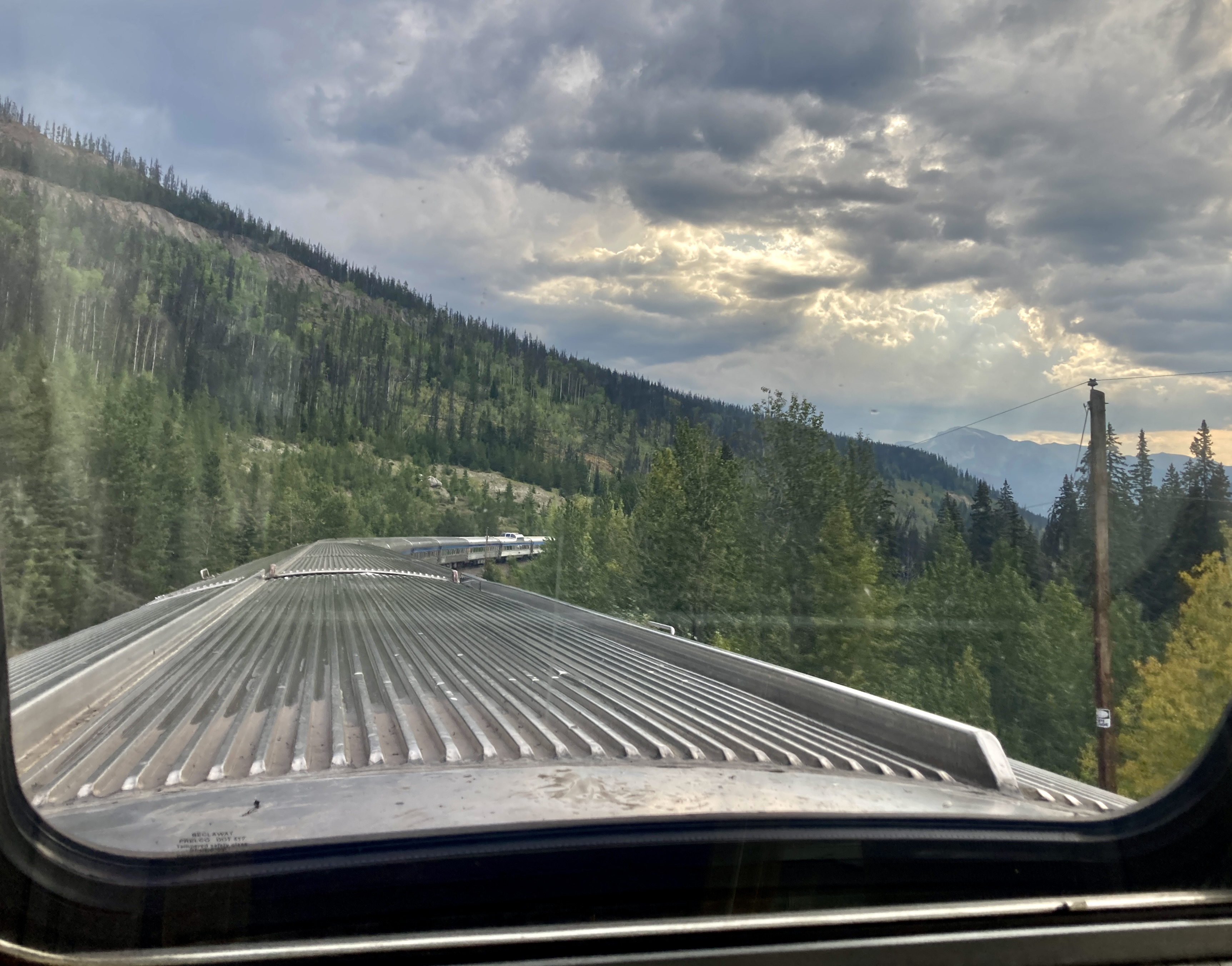
We clatter along, on through Jasper National Park, the train lines clinging to the cliffs, power lines ditto, with tunnels where necessary.

None of this stunning feat of engineering deletes (or even dilutes) the human cost involved — lives lost not only through the honest limitations of 19th-c safety measures, but also through sheer disdain for some of the people living those lives. (Chinese workers, for e.g., were primarily the explosive crews.) We must acknowledge all that. We can also acknowledge the achievement as well. Life is both/and, not either/or. (In other words, cancel nothing, Acknowledge it all.)

This is a long train — still the full 21 cars of high season.

Two engines, baggage car, crew car, some other utility car whose title I forget, and car after car of all of us passengers: mostly older, but not all; predominantly Canadian and (despite everything) American, but not all, and with a major presence of Aussies; train nerds among us; cruise-goers ditto, ticking their lists of Been There, Done That; and a whole range of people with other motives, from family reunions to curiosity to hikers giving their legs a break to Europeans with some Canadian connection offering themselves a nostalgic return.

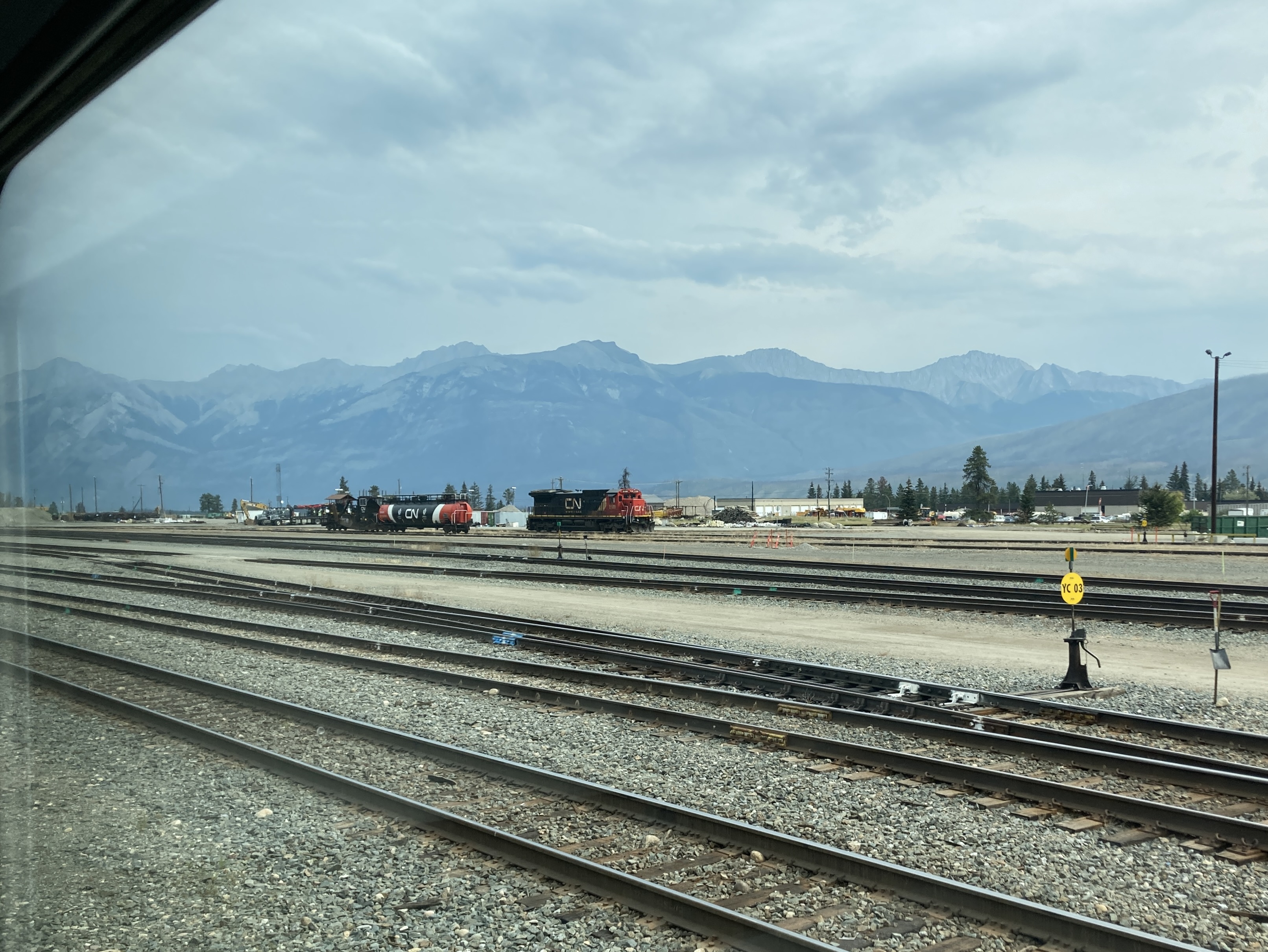
We pull into Jasper…

and how telling it is that I’m showing you the rail yard, not a picture-postcard view of the town! (Maybe I’m becoming a train nerd myself…)

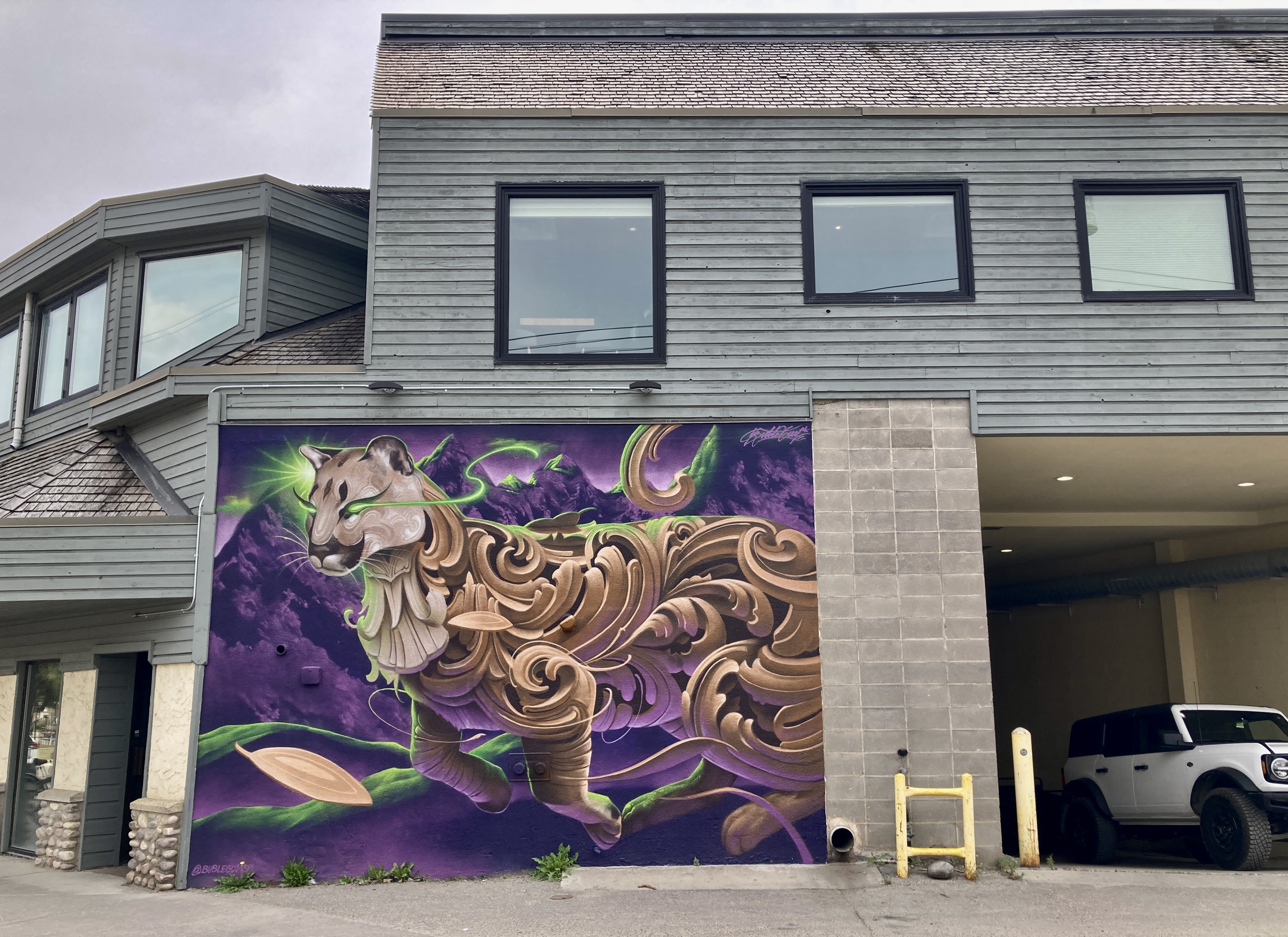
With 45 minutes free time in town, we scatter. I get away from the tourist-trap main streets as quickly as I can, walk a loop in-behind, stop to admire a cougar (or something) never seen in the wild…

and climb back on board.

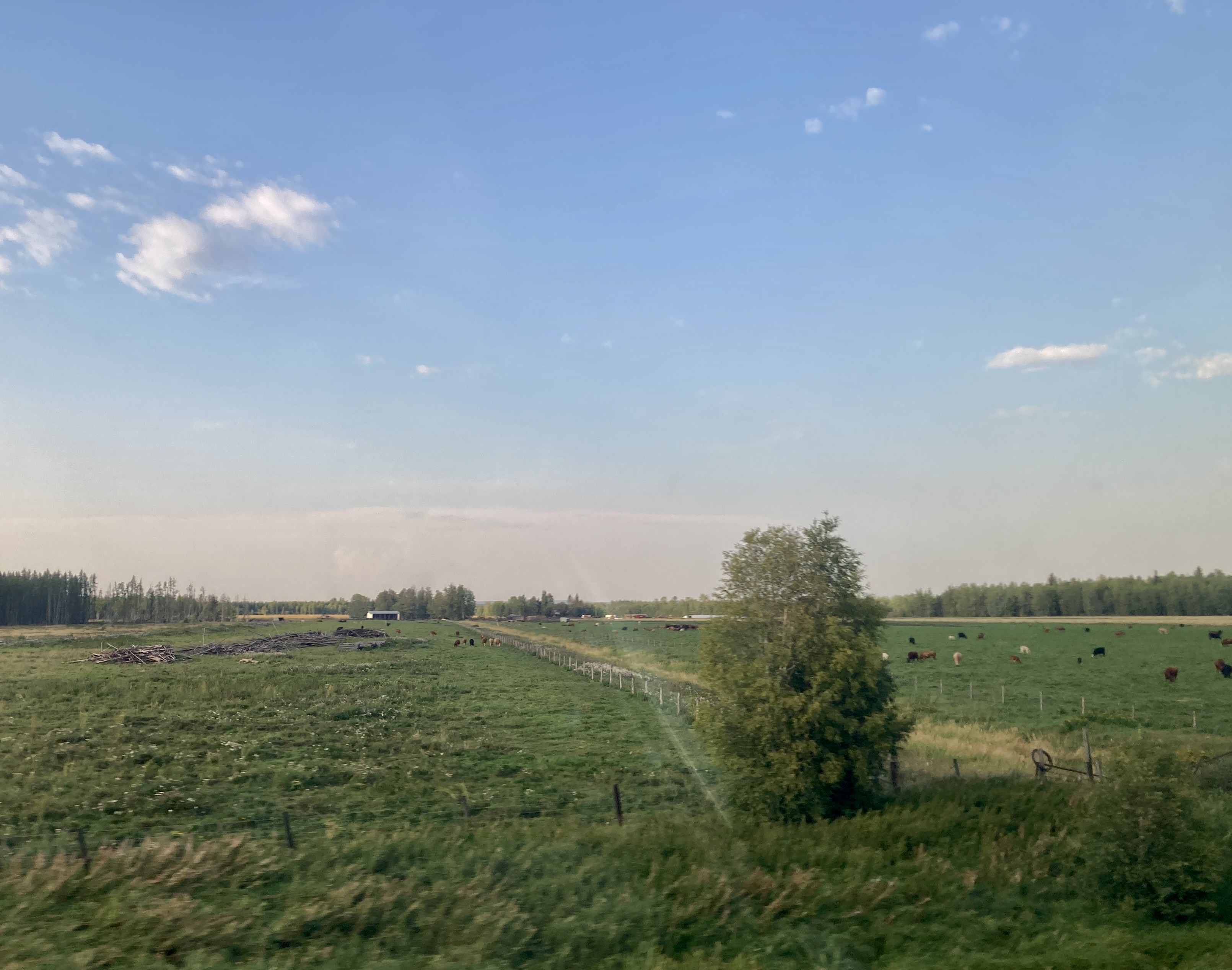
And then, and then, after a while, we’re in Alberta. The land changes, and the uses of the land we can see from our train track also change.

Cattle!

And wheat! And nodding donkeys!

That is, the pump jacks that bring crude oil to the surface, whose rhythmic up-and-down inspired the nickname. You see them tucked into all kinds of locations. (I remember, when new to the west, being stunned to see some within the grounds of the Calgary airport — well away from runways, you understand.)

Sunset from the dome car, nearing Stony Plain…

and deep night by the time we pull into Edmonton.

Which is all I know about 30 August.

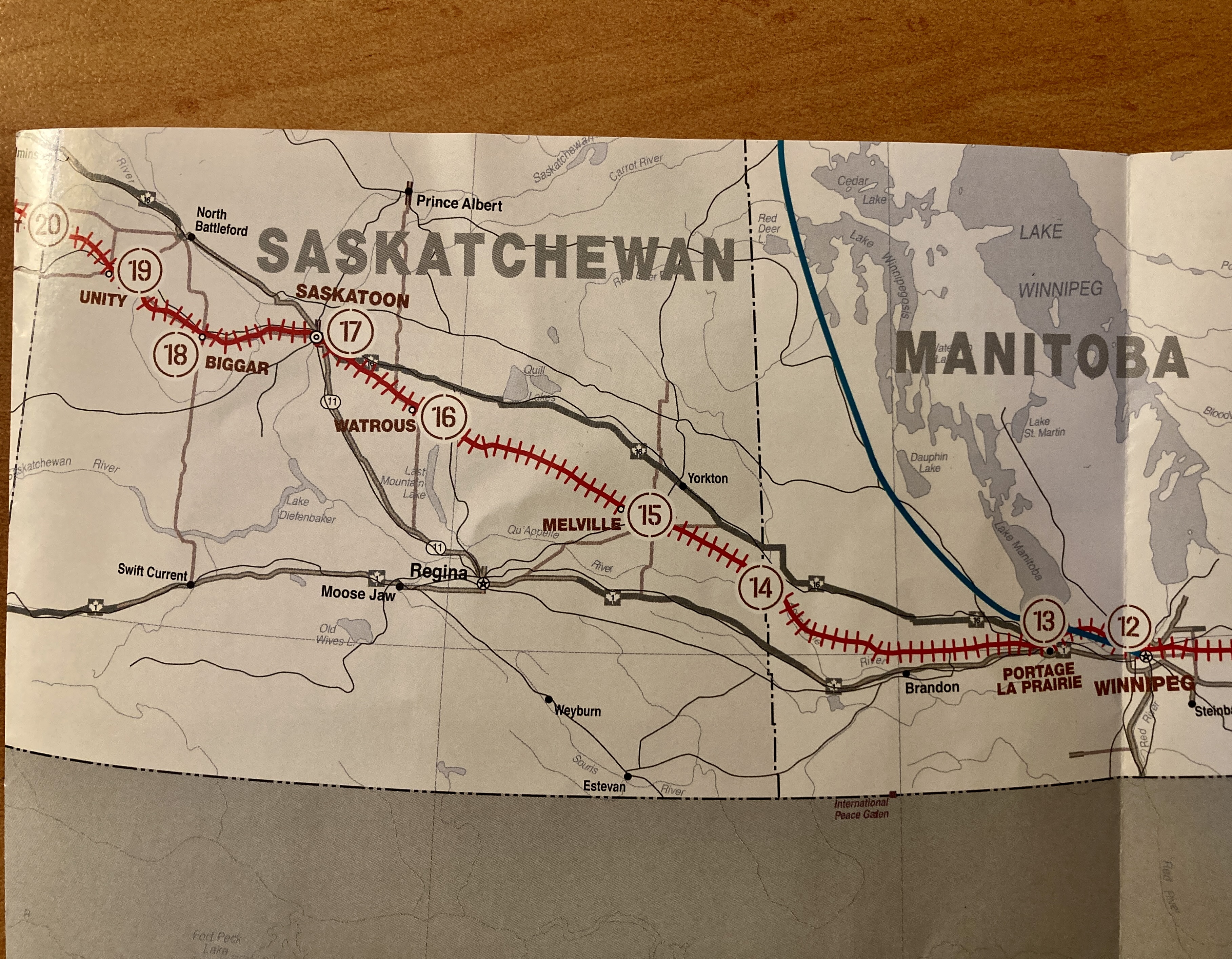
31 August – When I awake, we’re just leaving Saskatoon. (On to that second map, ‘way up above.)

Again, the changing land.

And, oh, the big sky.

Alberta carries on about being big-sky country but, old Alberta girl that I am, I have to confess that for me that sky is at its most glorious across the prairies. (The prairie landscape, period, is glorious. I had forgotten its beauty.)

Right. Back to the sky.

Straight up through the dome…

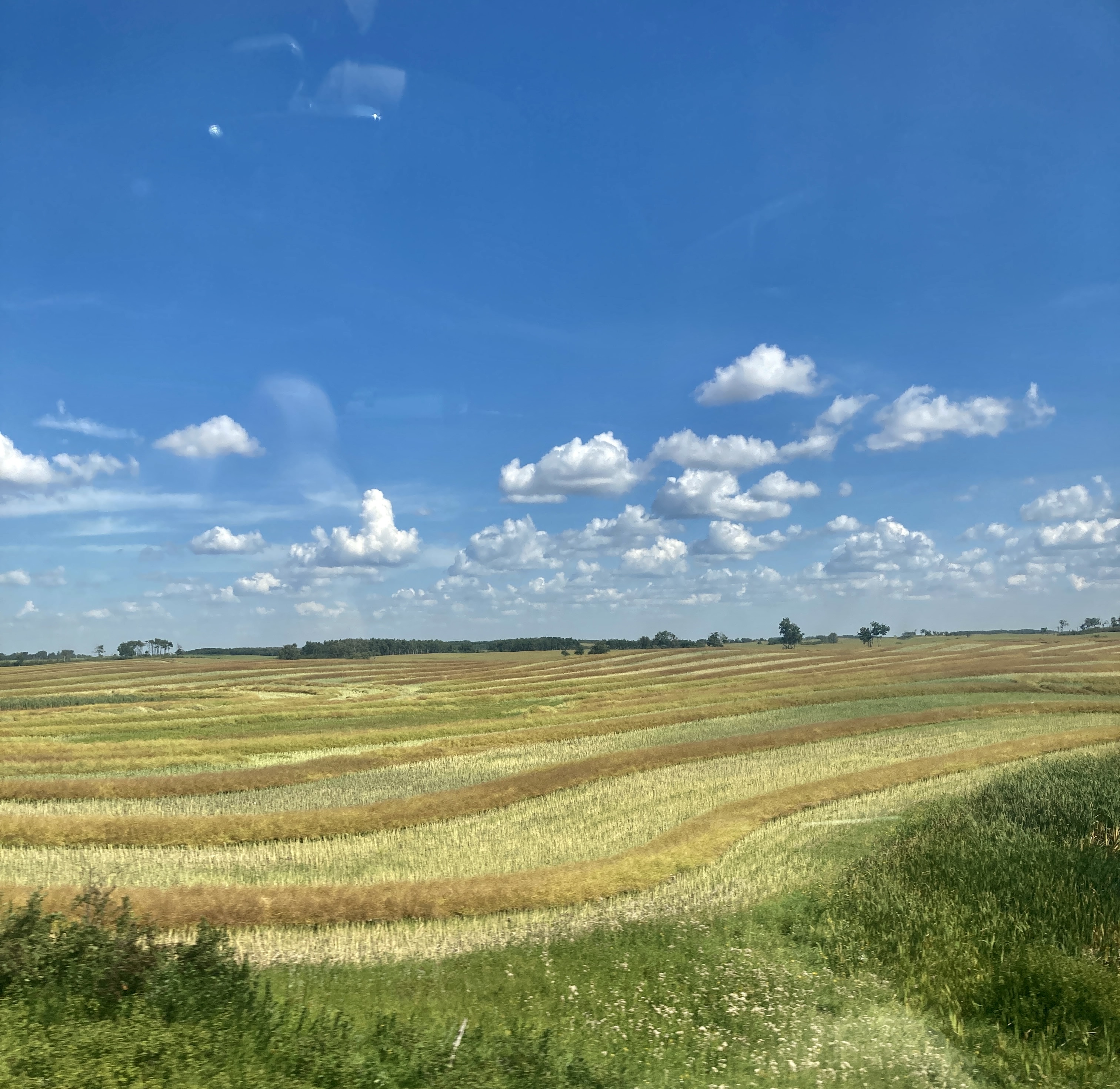
over harvested fields, near Kelliher…

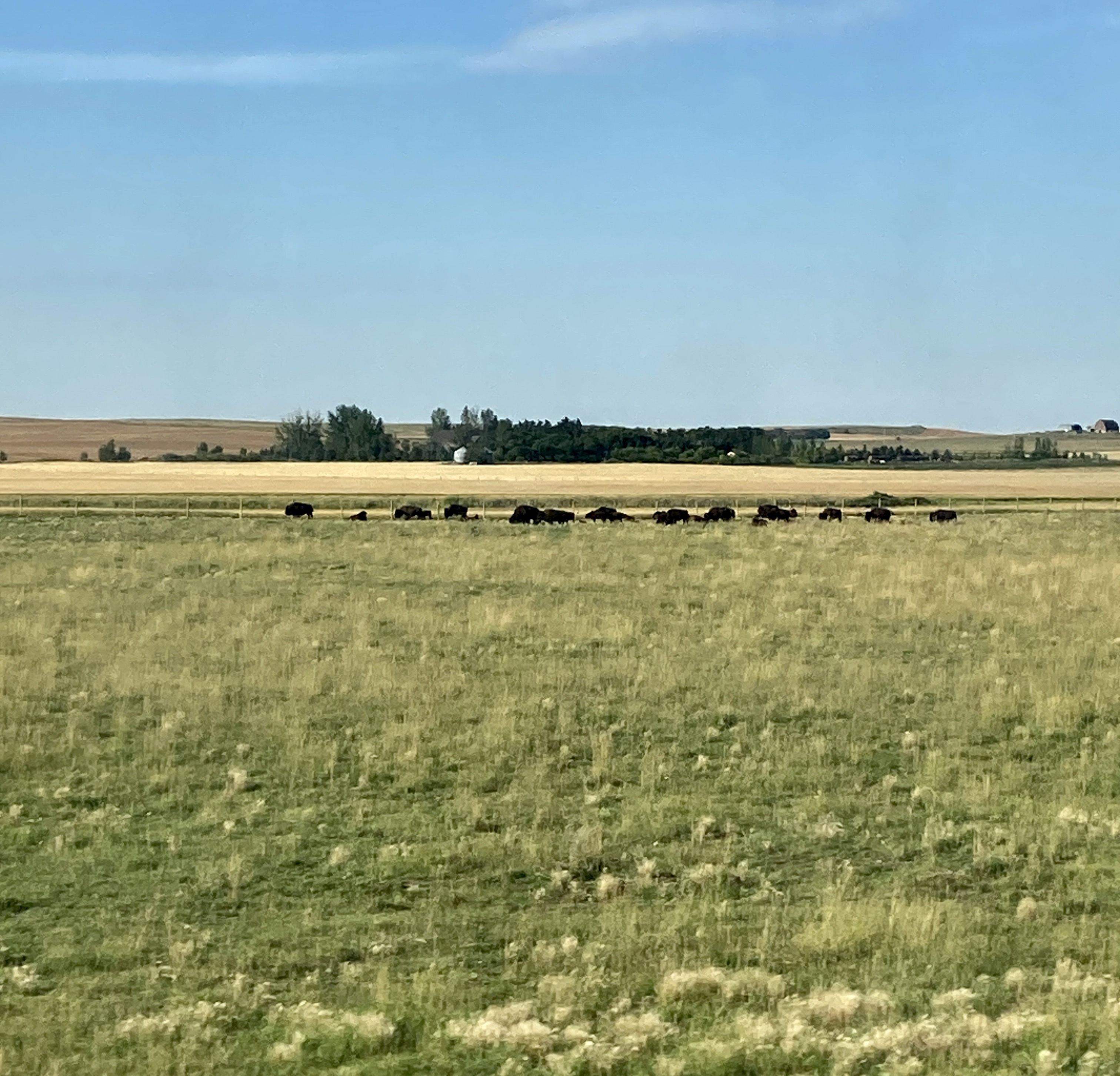
over a bison ranch, near St-Denis…

over the Young (near Watrous) grain elevator (possibly superseded by now, but its architecture iconic and worth our attention)…

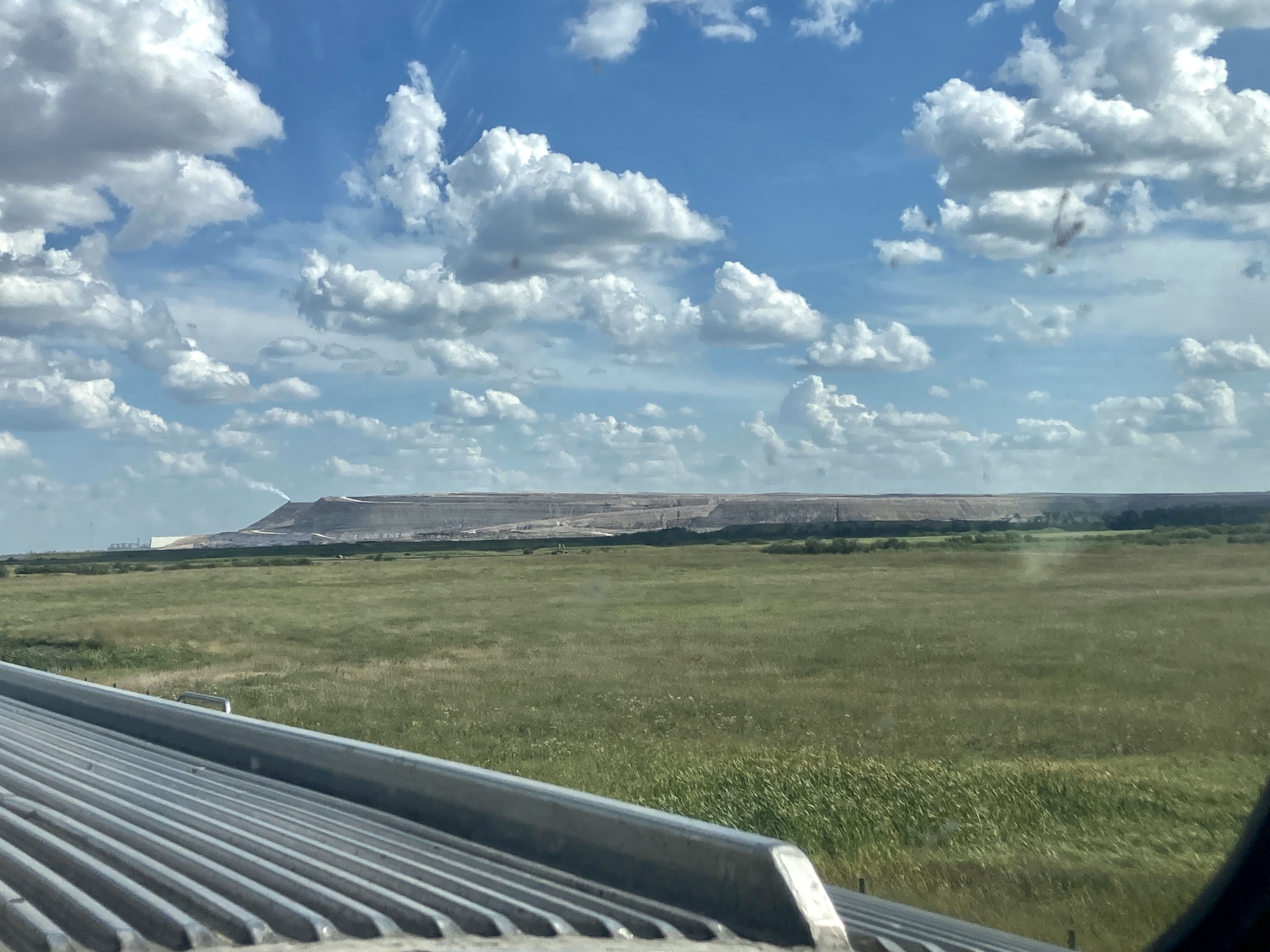
even over a potash mine (this one near Yarbo).

Herewith a nerdy aside about potash. Canada is the world’s largest producer and exporter of potash (some 33% of total world production), and all 11 of our active mines are in Saskatchewan. Yes, there is a lot more to this province than wheat.

And that’s all I can show you for 31 August.

I feel mildly, but only mildly, apologetic. I also spend time talking to people, and eating (very well), and just looking, endlessly looking, out across the land. In fact, maybe I should own up to reverse pride in the fact that, for long stretches of time, I put down the damn camera and just fall into the land.

There is one more fact of note: somewhat after 9 pm Central Time, we pull into Winnipeg, and I get off the train.

For a changing-gears day and a half in Winnipeg. Before the next leg of the train trip.

Land Cruise

29 August 2025 – Here’s the tease:

Oh yes, all of that. In stages, with add-ons.

You’ll see!

(But not immediately.)

Bike to Baik to ¡Bueno!

2 March 2025 – Long ago, I lived for a while in Peru. Only slightly less long ago, I lived for a while in Indonesia. And now, on this one afternoon here in Vancouver, I revisit each — in new physical experience, and in old memories as well.

1 – Bike to Baik

First, courtesy of the VPL (Vancouver Public Library) Staircase Sounds series of noon-hour musical events: a program of Indonesian gamelan music, performed by the Vancouver group Gamelan Bike Bike.

The name Bike Bike is a double, and bilingual, play on words.

In English, it nods to the fact that the musicians complement traditional gamelan instruments with ones they build themselves from old bicycle parts.

See? On the red table-tops: segments of old bike frames (left & far right) and bike sprockets (second from right).

Even their shirts, custom-designed and created in Indonesia, continue the theme, with bike chains and sprockets in amongst more traditional design elements.

The group of musicians is very good — and that is the second, bilingual, part of the play on words. In the Indonesian language, baik baik (virtually the same pronunciation) means exactly that: “very good!” (Literally, good-good.)

I sit for an hour, awash in the intricate beauty of the music as it pulses and swirls through this Vancouver space. Awash, also, in memories of another time and that other place.
Baik baik sekali. Saya senung sekali.
2 – to ¡Bueno!

And then, my head full of glorious music, I leave the glorious Central Library building (thank you, Moishe Safdie) and walk five blocks north to Silvestre (“gusto latino”) on Water Street in Gastown.

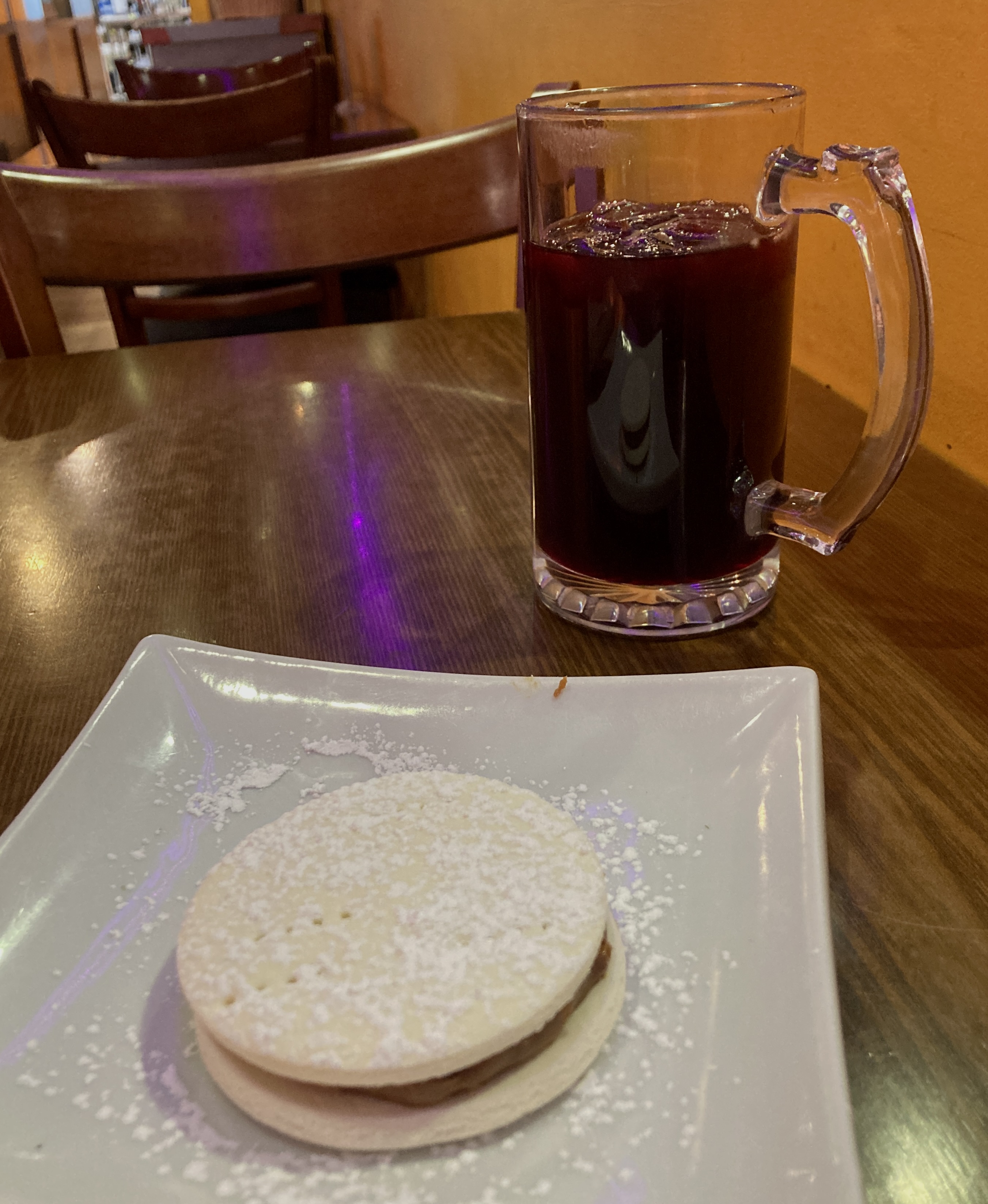
More precisely, this deli-bistro offers “gusto peruano,” for it was founded by Peruvian immigrants and is dedicated to Peruvian cuisine and ambiente. I’ve never been here before, but I’ve checked the menu online, and I know what I want: an alfajor dessert (two shortbread rounds, filled with dulce de leche and topped with icing sugar) and a mug of chicha morada (a purple corn drink, slightly tart and refreshing).

The young server treats me to widened eyes and a dimpled smile when I speak with her in Spanish. And I smile — oh, how I smile — when she delivers my order.

Odd thing, memory.

Tracking down alfajores in Vancouver had become an obsession; chicha morada was an afterthought. But now, as I sit with the physical reality again before me and in my mouth… the power is in the drink.

The alfajor is delicious, but it is not tied to any one moment or place we’d visit while in Lima. The chicha morada, however… It is absolutely tied to the one very small café in the High Selva village where we lived, and to the people with whom we conversed in that café, all those people who deepened our knowledge of the language and the place and how best for us to be there with them.

All these decades later, that taste is again fresh in my mouth — and old memories are again fresh in my mind. ¡Qué bueno!

Bike-baik-bueno.

Love & Death & All of Us

31 August 2024 – Post-COVID yay! we can travel again. But, whoa, what’s going on? World-wide, attitudes to tourists have changed. Some locations are now actively hostile and others are imposing stiff restrictions.

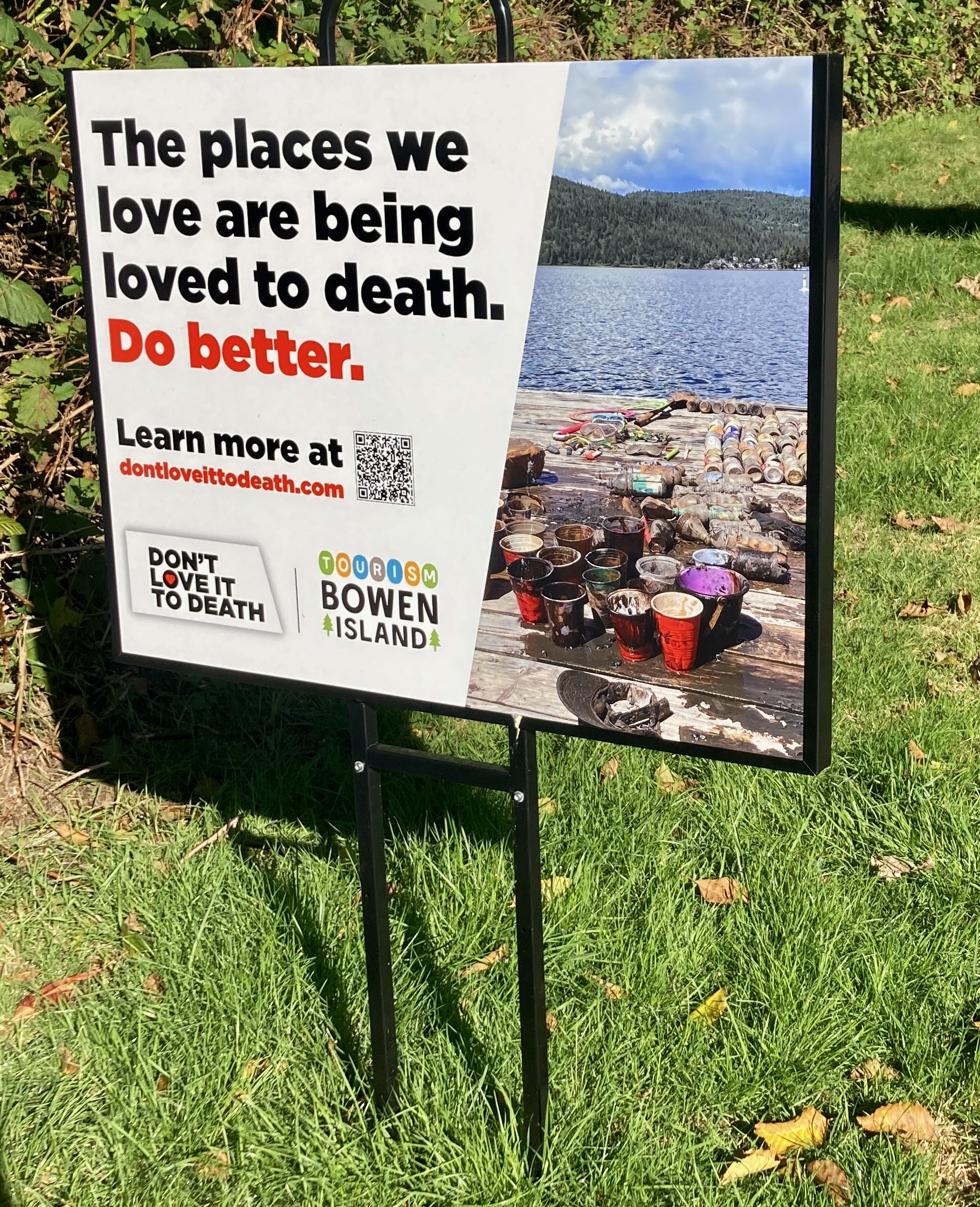
British Columbia still puts out the welcome mat. However, as signage next to the Information kiosk on Bowen Island demonstrates…

the province now expects more from its visitors than money.

Want to be a better lover? Click for info about impacts and solutions that are relevant well beyond BC boundaries.

Boom!

28 July 2024 – I’ve always loved working boats, starting with the sturdy little Dorval Island ferry of my young childhood. The MV Aurora Explorer is a recent addition to the list, for all the reasons given in my previous post, At Work & Play.

But, I must confess, she is not my very most favourite of all.

That honour goes to another boat working the Discovery Islands area — more specifically, to one tied up by the Bear Bay logging camp in Bute Inlet.

This boat.

I hung over our own meticulously cared-for railing, and fell in love with every rusty, battered, grubby, dented, faded — and still functioning! — square millimetre of her.

And I had no idea what I was looking at. I asked my boating friends for help.

She is a boom boat — used to sort logs and push them around. “Super fun to drive,” fondly recalls Commodore C., as relayed by Commodress (sic) F., “and super effective and efficient. They go sideways, forwards, backwards. There are even boom-boat rodeos!”

This relic is still in service because she still serves, not because the company couldn’t replace her. The most basic internet search turns up sleek new models, boasting for e.g. a “fully enclosed wheelhouse” and promising “special focus on safe navigation and low noise levels.”

Don’t care. My heart is with this one.

At Work & Play, on the Remote BC Coast

26 June 2024 – My previous post ended with a tease: having visited the Port Moody Art Shuffle, I announced I was preparing a “shuffle” of my own.

Not soft-shoe! (Though thank you, Jo, for the quip.) Nope, my shuffle is all about water, even though it begins in the air.

A 40-minute Beechcraft flip…

positions me in Campbell River, on Vancouver Island, for a five-day exploration of the Discovery Islands Archipelago…

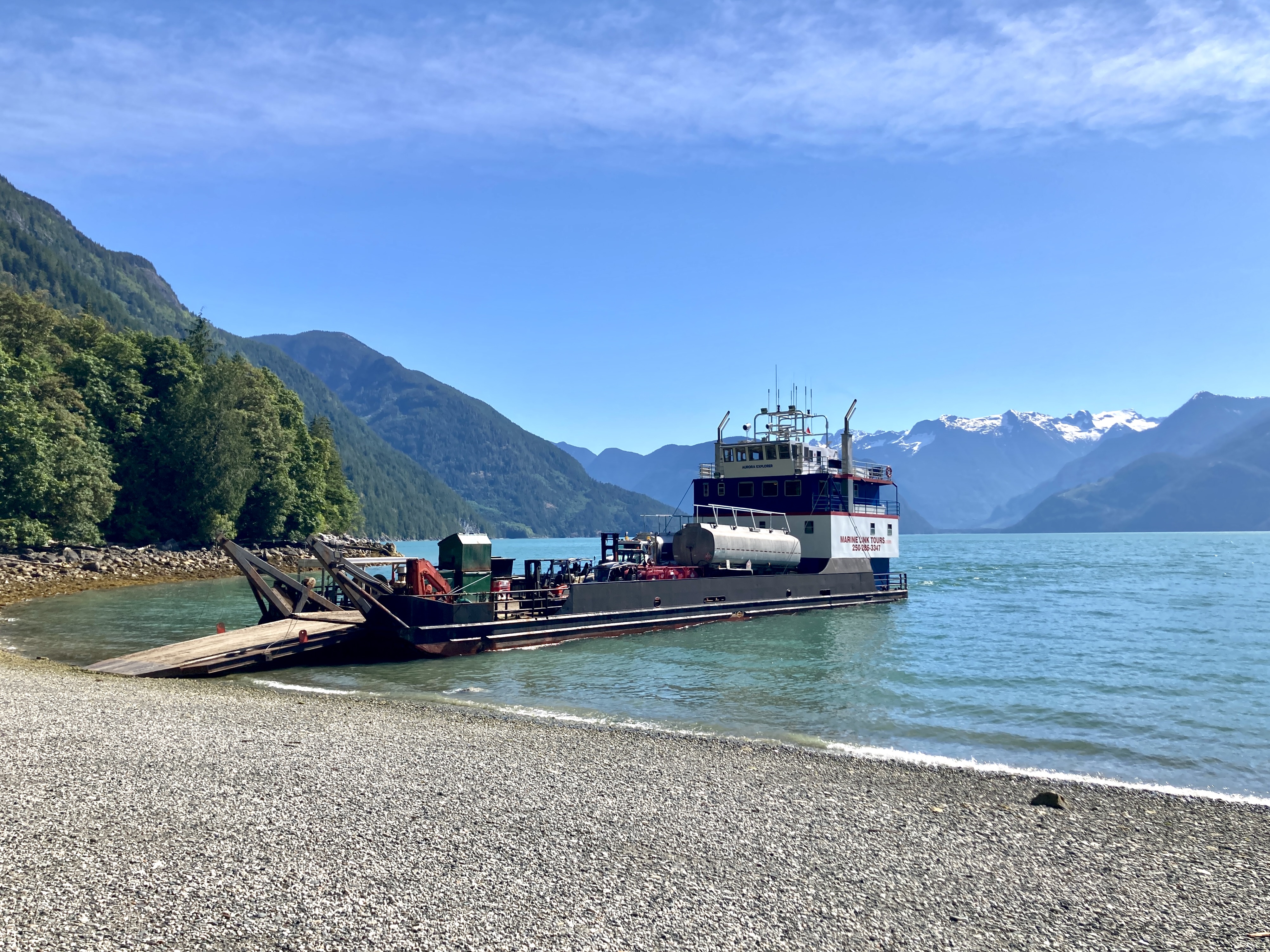
aboard a steel landing craft…

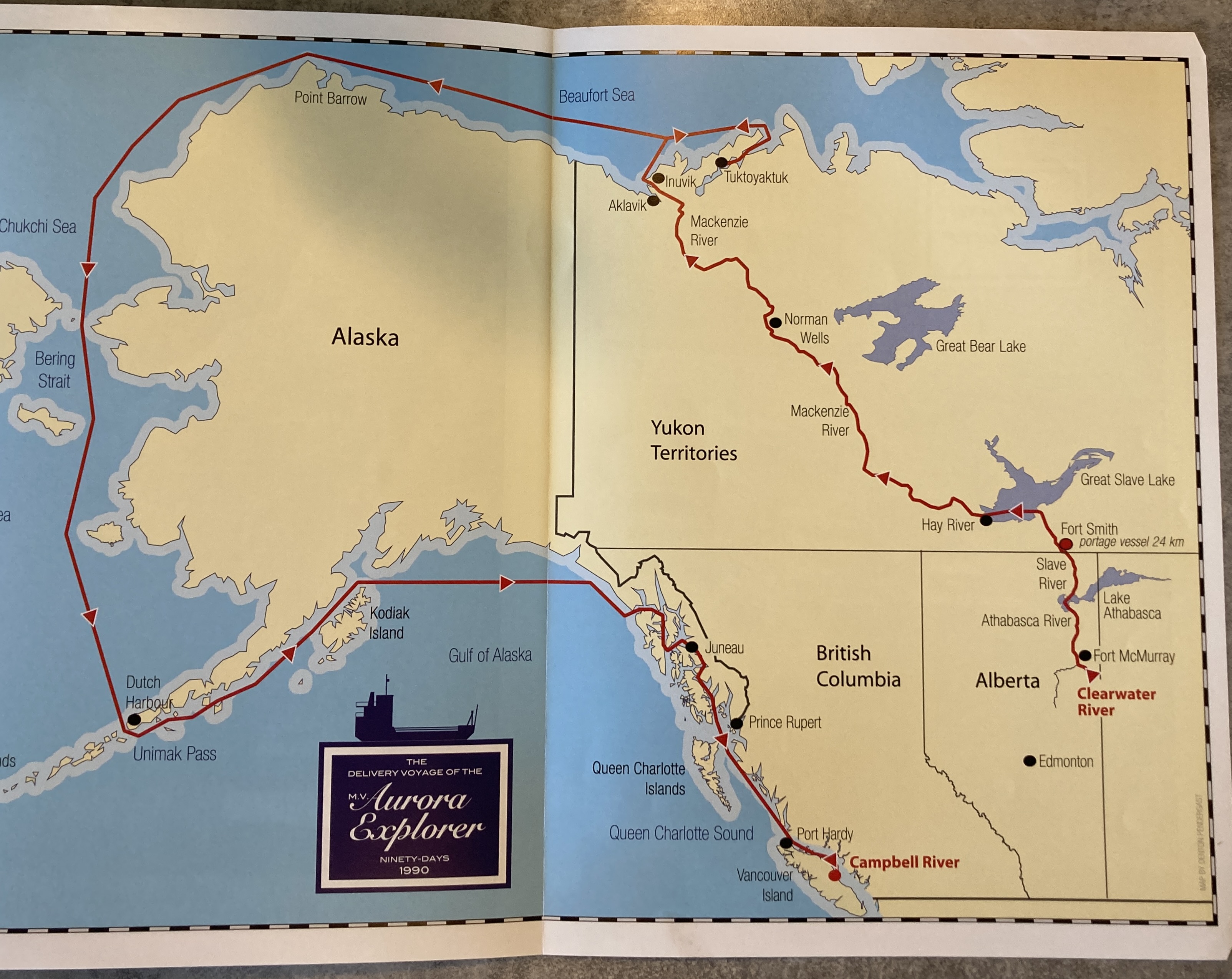
that had worked two decades in the Arctic, before being rescued from dryland storage in Fort McMurray and sent on her own 90-day delivery trip up a chain of rivers into the Beaufort Sea, through the Bering Strait, around Alaska, and down the Inside Passage to Campbell River…

where she was enlarged and rebuilt for her new life as the cargo/passenger vessel she is today: 135′ long, 34′ wide, capable of carrying 200 tons of cargo plus 12 passengers in six compact but well-equipped staterooms.

This June 18-23, I was one of them.

Boating friends had told me about the MV Aurora Explorer, flagship of Marine Link Transportation (whose fleet also includes tugs and barges), and I jumped at the idea.

It brought back memories of travelling around Newfoundland’s remote communities aboard a passenger/supply vessel in the 1970s, and it reminded me how much I enjoy discovering the nitty-gritty behind the pretty-pretty — the hidden hard work that makes happy outcomes possible.

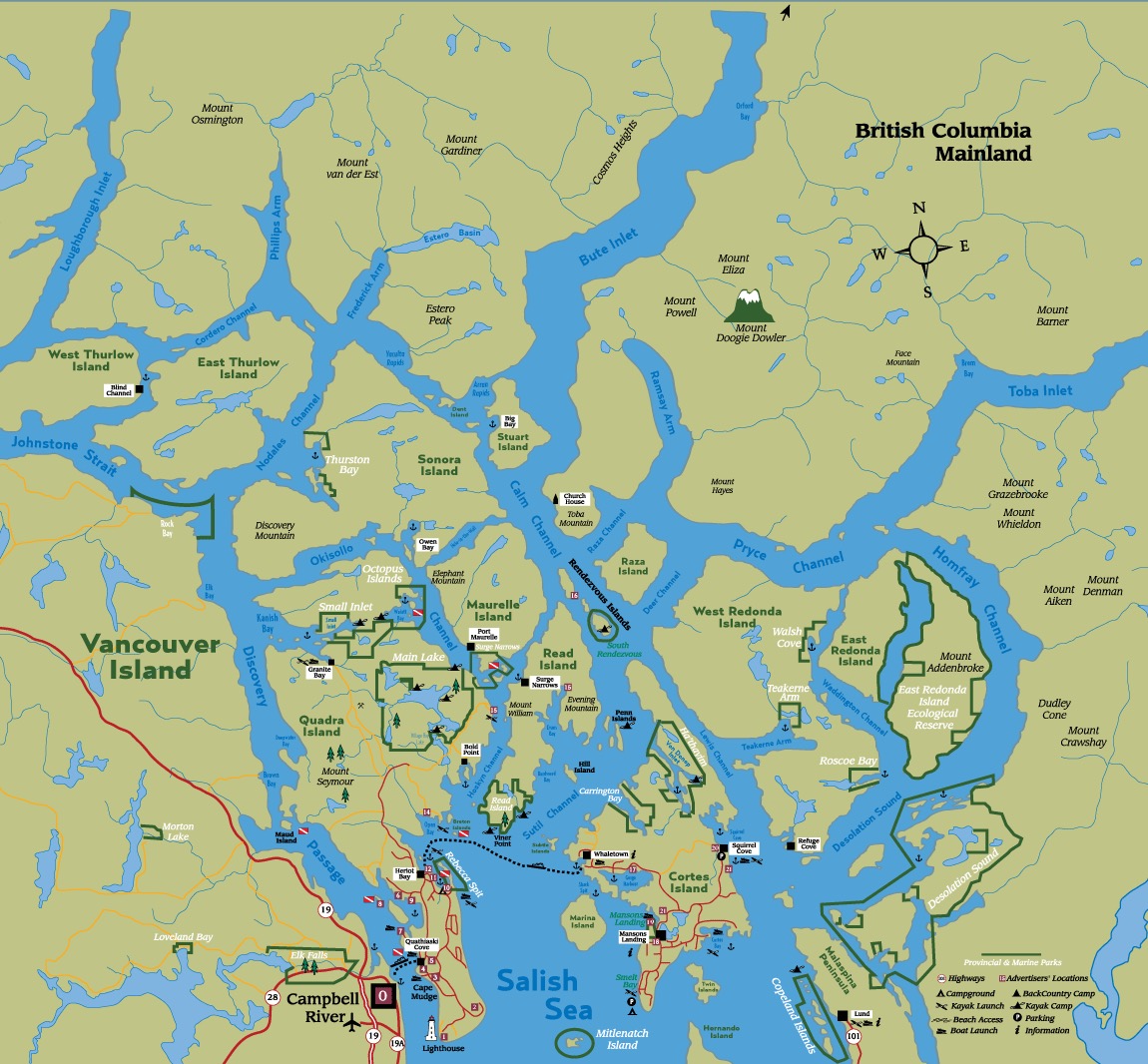
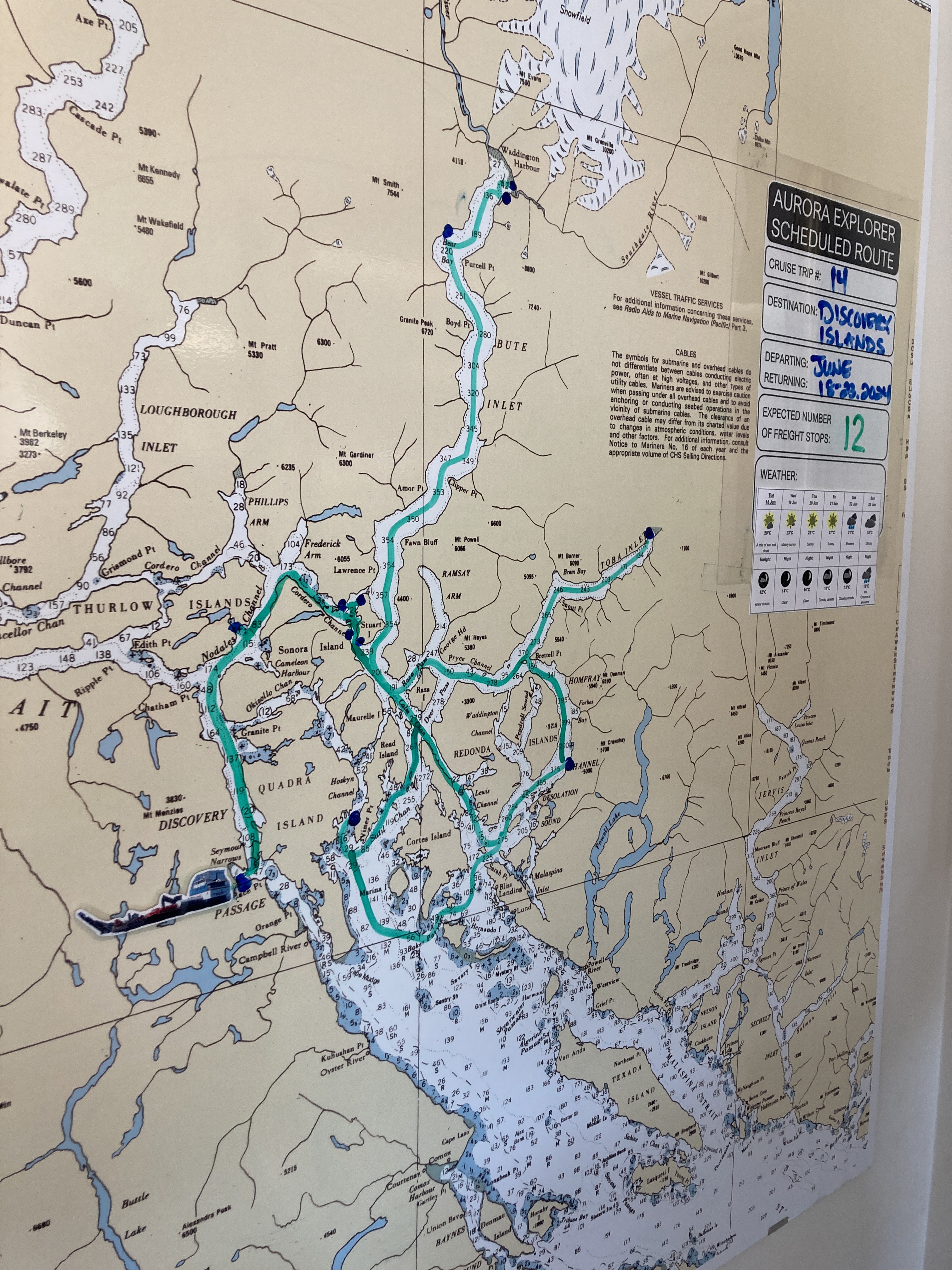
We passengers assemble at the terminal north of Campbell River, and see our projected route marked on a map on the wall.

We will weave among various of the islands that cluster between Campbell River and the mainland to the east, and also travel to the head of two long mainland inlets, Toba and Bute. We will learn first-hand the truth behind the claim on MLT‘s “working” website (distinct from its tours website). This company provides “full marine freight delivery service,” handling everything from “logging equipment and camp barge site relocations to small pallets of champagne flutes,” offering charter and helicopter options as well, in order to service “remote coastal needs.”

We will also learn the endless calculations and adjustments needed to handle — among other things — tides, currents, cargo rebalancing after each delivery, and the varying states of the access points on shore.

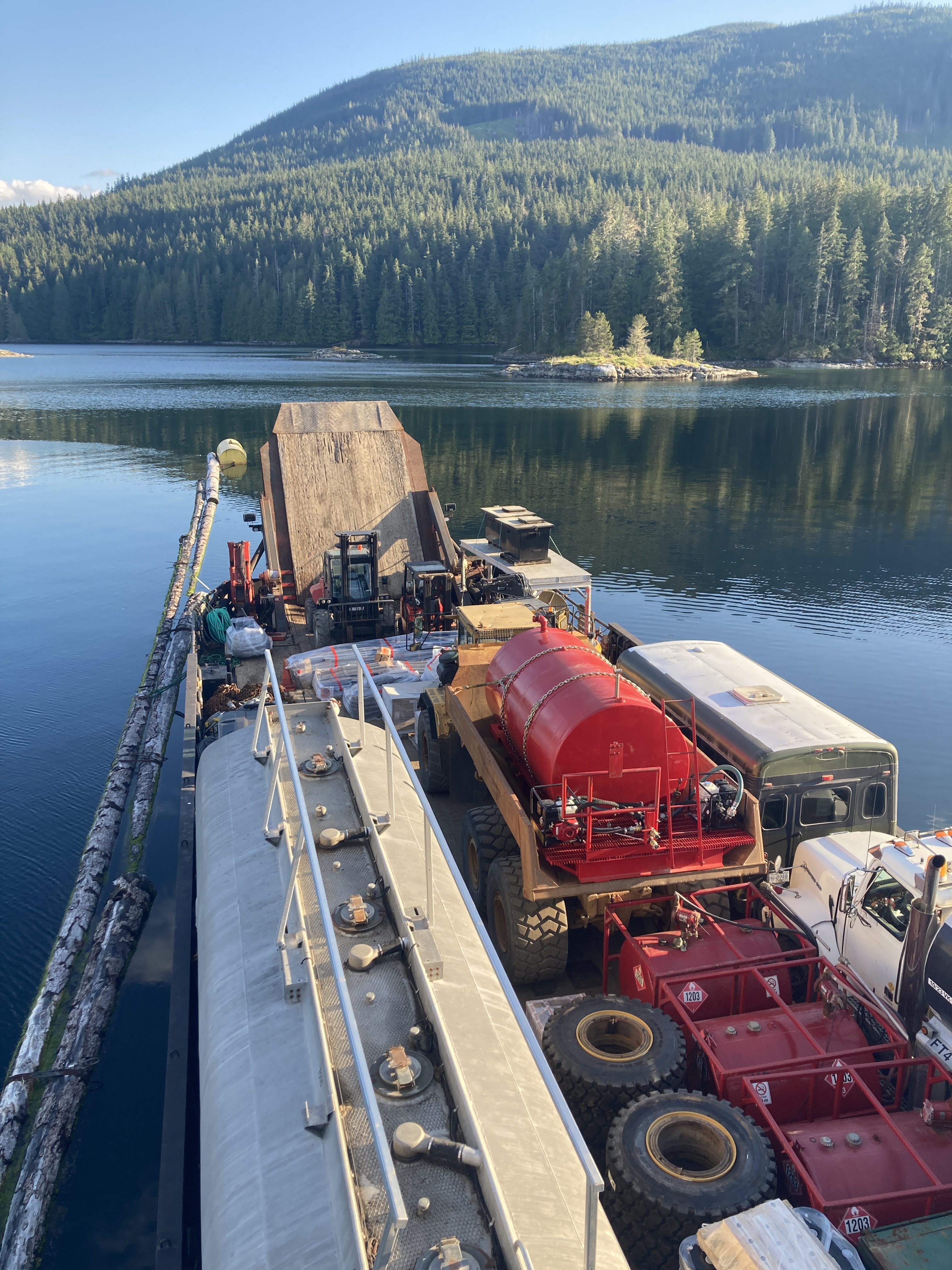
The Aurora sets out fully loaded…

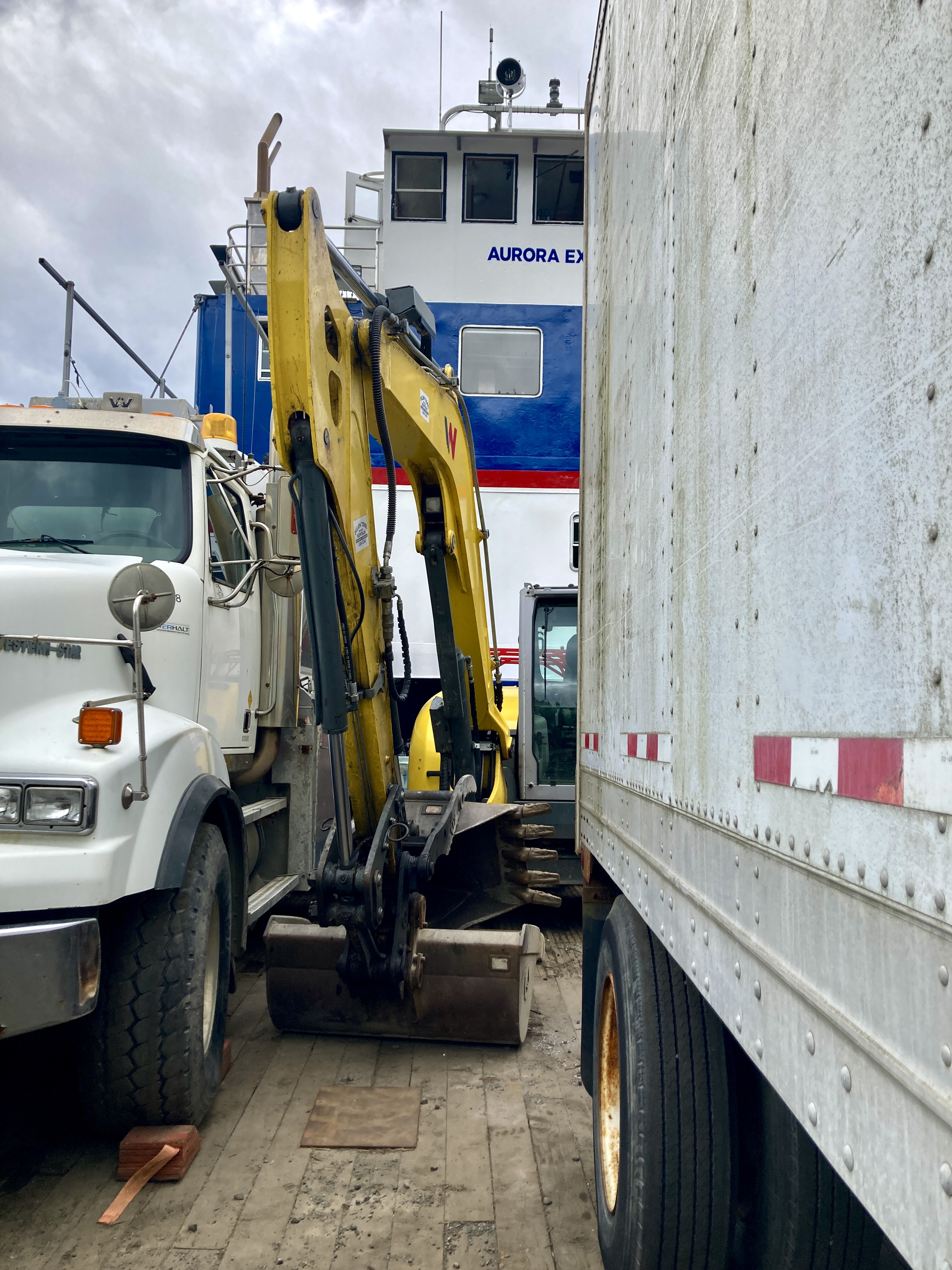
carrying vehicles, tires, fuel and other supplies to deliver to (among others) logging camps, a road-building project, a luxury wilderness resort and an equally luxurious private get-away.

She also carries her own fuel tanker, forklifts and other equipment…

to ensure delivery can and will be made.

We passengers sleep comfortably, eat very well, and hang out up top, sometimes in deckchairs but just as often lined up at the railing, stunned by the scenery around us and by the careful choreography of each delivery.

We immediately appreciate the skills of the chef and the steward; we quickly learn to appreciate the rest of the crew — captain, mate, engineer, deckhand — and, especially, appreciate what all six of them embody. Most of them have BC coastal life in their DNA, along with experience working in remote locations (Alberta’s Oil Sands, for e.g., and an Arctic mining camp), and all have the ability to multi-task.

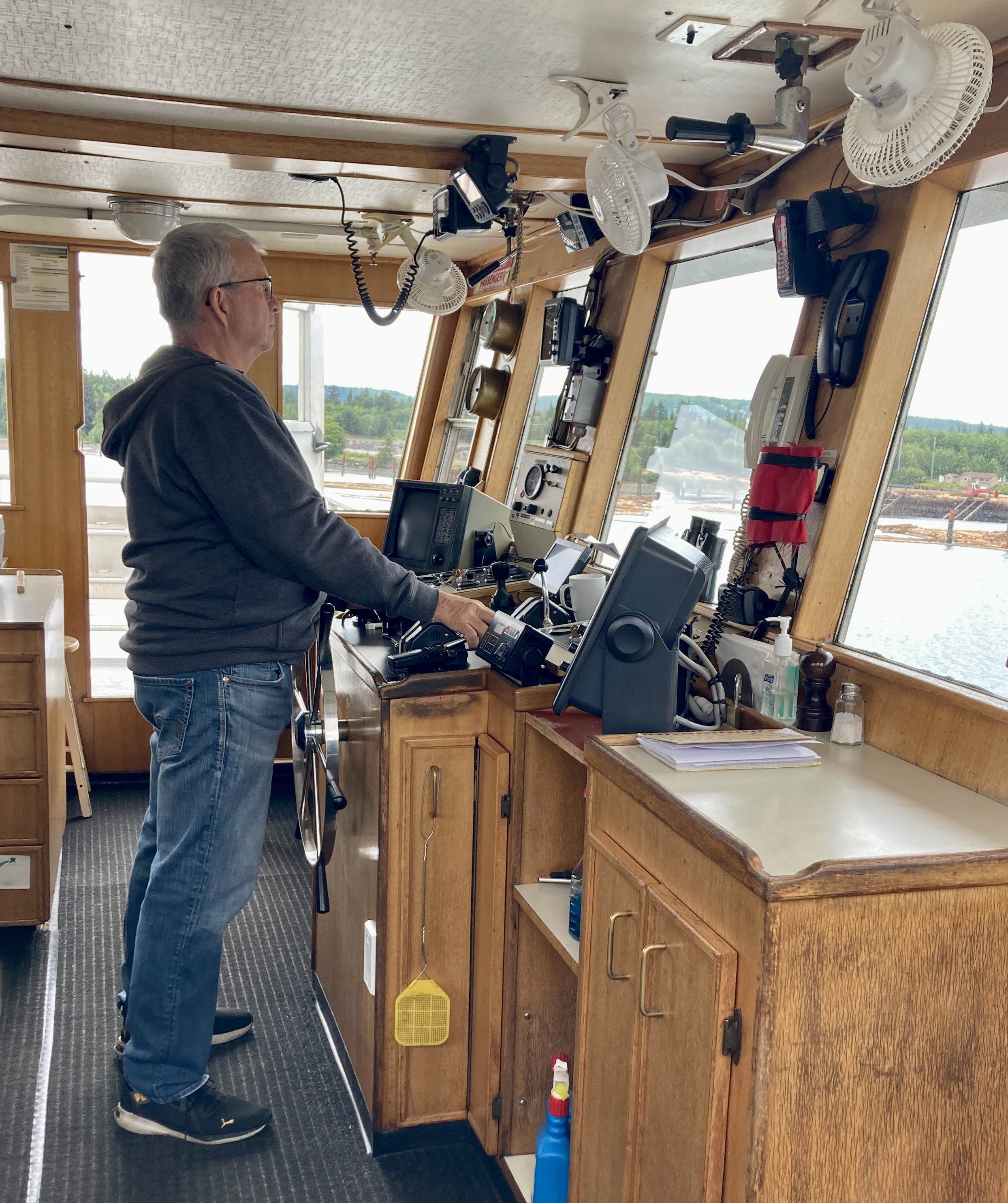
The captain is usually in the wheelhouse…

but we also see him run a forklift, when that’s what’s needed. Typically, though, it’s the mate, engineer and deckhand who jockey the deliveries. Each site has its requirements.

At one site, the engineer guides the mate as he prepares to off-load a vehicle…

at another, all three work to patch an unstable access road with boulders, so it can bear the weight of the van and trailer they need to bring on-board for delivery to a companion site…

and somewhere else, they deliver fuel from the on-board tanker to on-shore tanks, with one person positioning the nozzle, another controlling hose performance and the third about to wield the dipstick.

Even at a luxury wilderness resort, where everything is perfection — including the access road — there is risk. A combination of factors means there are only 20 minutes between the first safe moment to arrive and the last safe moment to depart. Exceed that window, and you wait for the next tide. The resort knows that if they want that vehicle to be loaded on board, it has to be right there, ready and waiting.

It is right there…

and it is securely in place on deck within the magic 20 minutes. Off we go.

But the Aurora is not only about work, here on the remote BC coast!

There is play time as well.

Always available: the endless beauty that surrounds us. Big vistas as we travel, here for e.g. high up Toba Inlet…

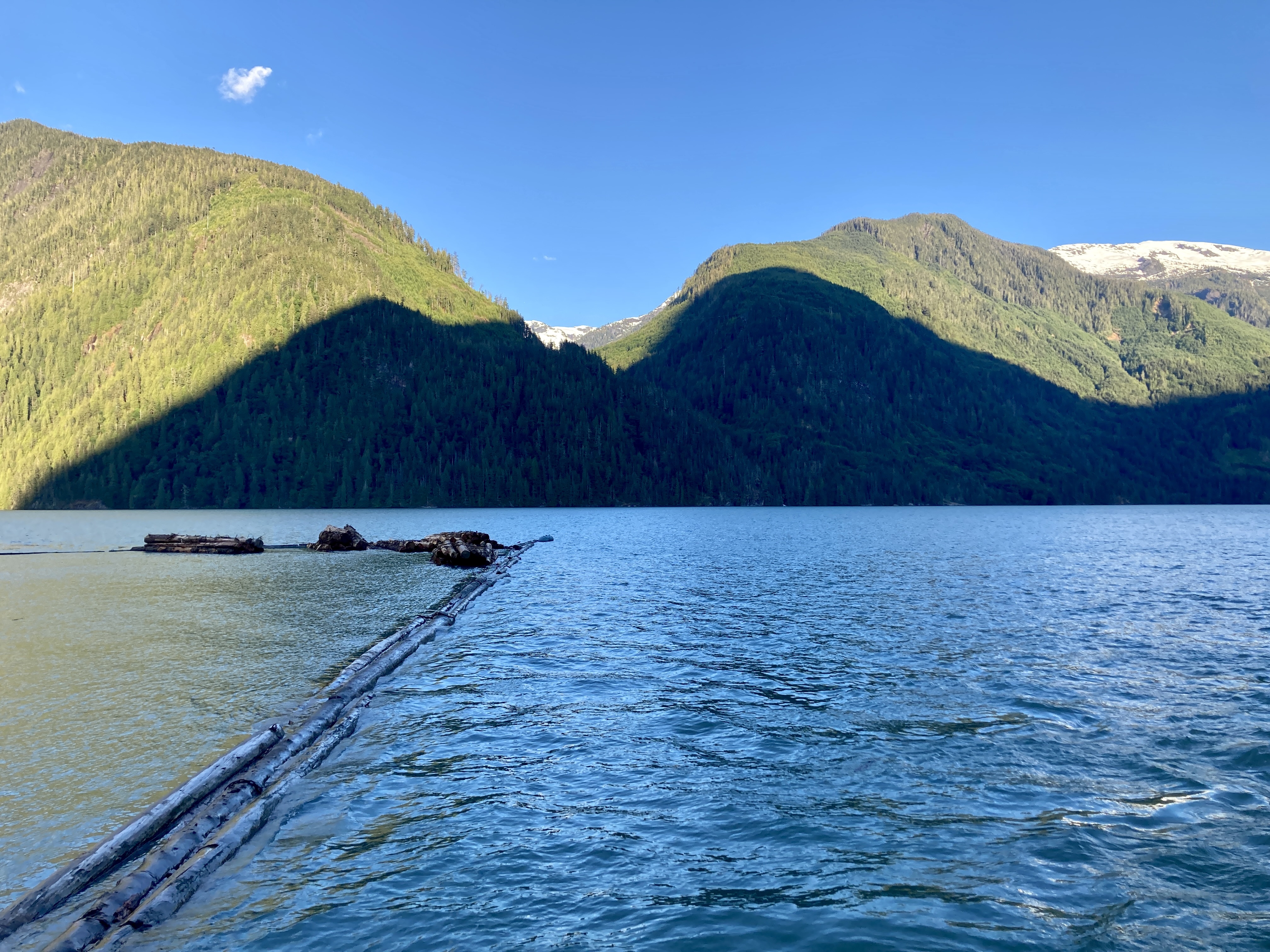
and more beauty when we tie up each night alongside some boom logs. We spend a night in Toba Inlet, where the setting sun throws dramatic mountain shadows onto the mountains opposite.

We have time ashore. One day ATVs carry us up the steep rough track to the top of Hall Point, Sonora Island, where the view pretty well ticks the checklist:

ripening salmonberries in the bushes; a tug and neat rectangular log boom in the water; and mountains beyond, rolling away to infinity. All that’s missing — and thank goodness — is a bear or two. We are happy to make do with bear scat along the track.

Then there are the days when the Aurora lowers her ramp…

not to deliver a bear-watching van or sets of huge tires or tanker-loads of fuel or even furniture for a rich man’s private residence. But, instead, to deliver… us.

Pebbles (above) at Amor Beach, Bute Inlet; sand and rocks at Brem Bay Beach, Toba Inlet…

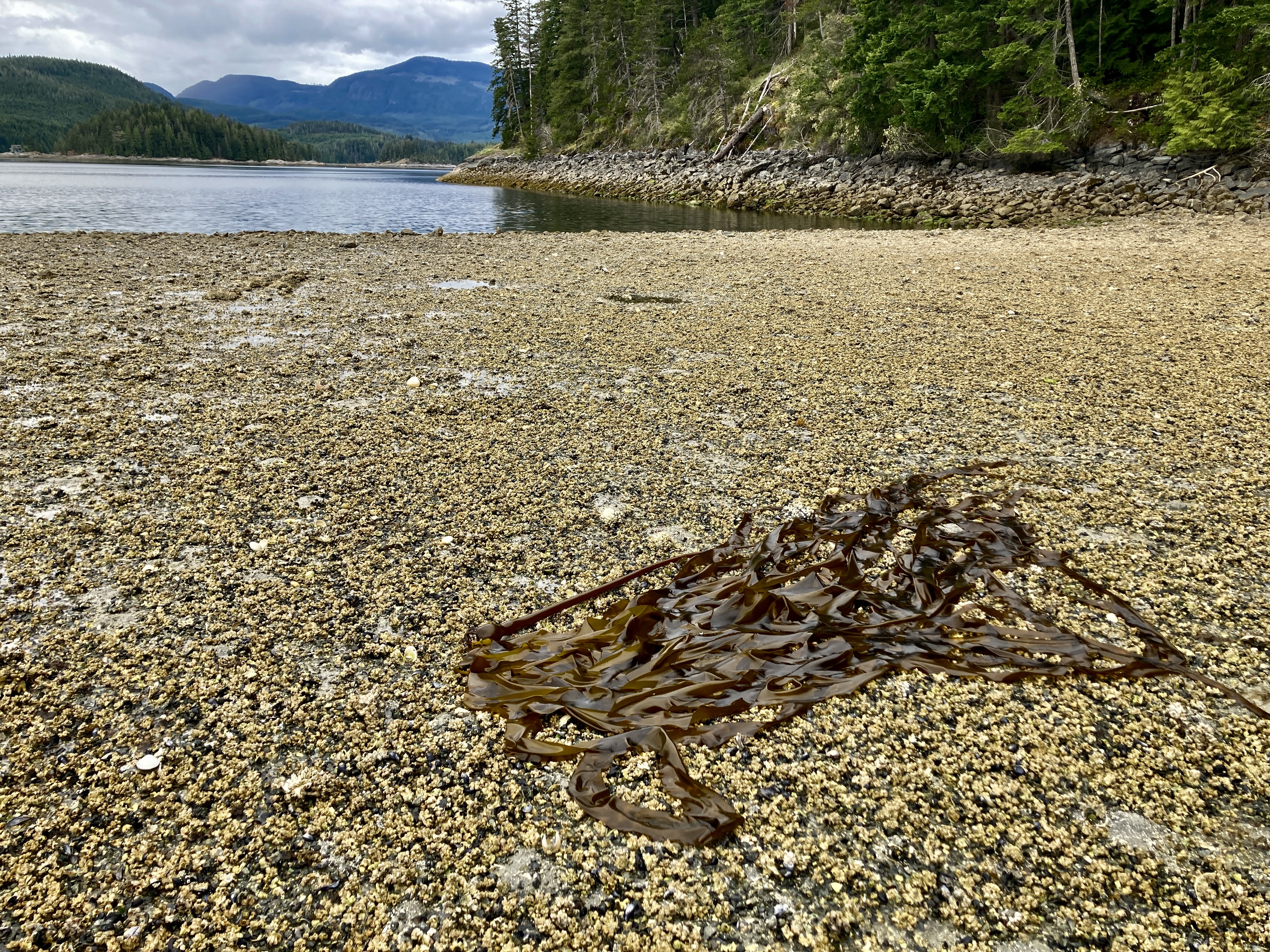
and crunchy barnacles underfoot at Orchard Bay on Quadra Island…

with huge ribbons of kelp and tiny scurrying baby crabs to complete the scene.

The Aurora lingers at several dramatic waterfalls to allow us a good view. Here at her namesake, the Aurora Falls in Bute Inlet, we are first allowed on the cargo deck to feel the spray in our faces…

and then we are shooed back upstairs. The captain, you see, has a plan. He angles the landing ramp slightly in under the falls, so that Aurora (Falls) power-washes Aurora (Explorer).

Water soon cascades down that ramp to flood the entire deck and scour it clean.

We have the pleasure of life all around us: a pod of Orca whales south of Read Island (too low in the water for any successful photography from our respectful distance); eagles in the air and in the trees; more than a dozen curious seals supervising that 20-minute loading feat at the resort; and the disappearing bum of a bear, who obediently scampers when the captain sounds some warning blasts, to make the landing site safe for the crew.

Human life as well, aboard fishing boats and, my favourite…

in tugs hauling booms of logs, as they have done for so very long.

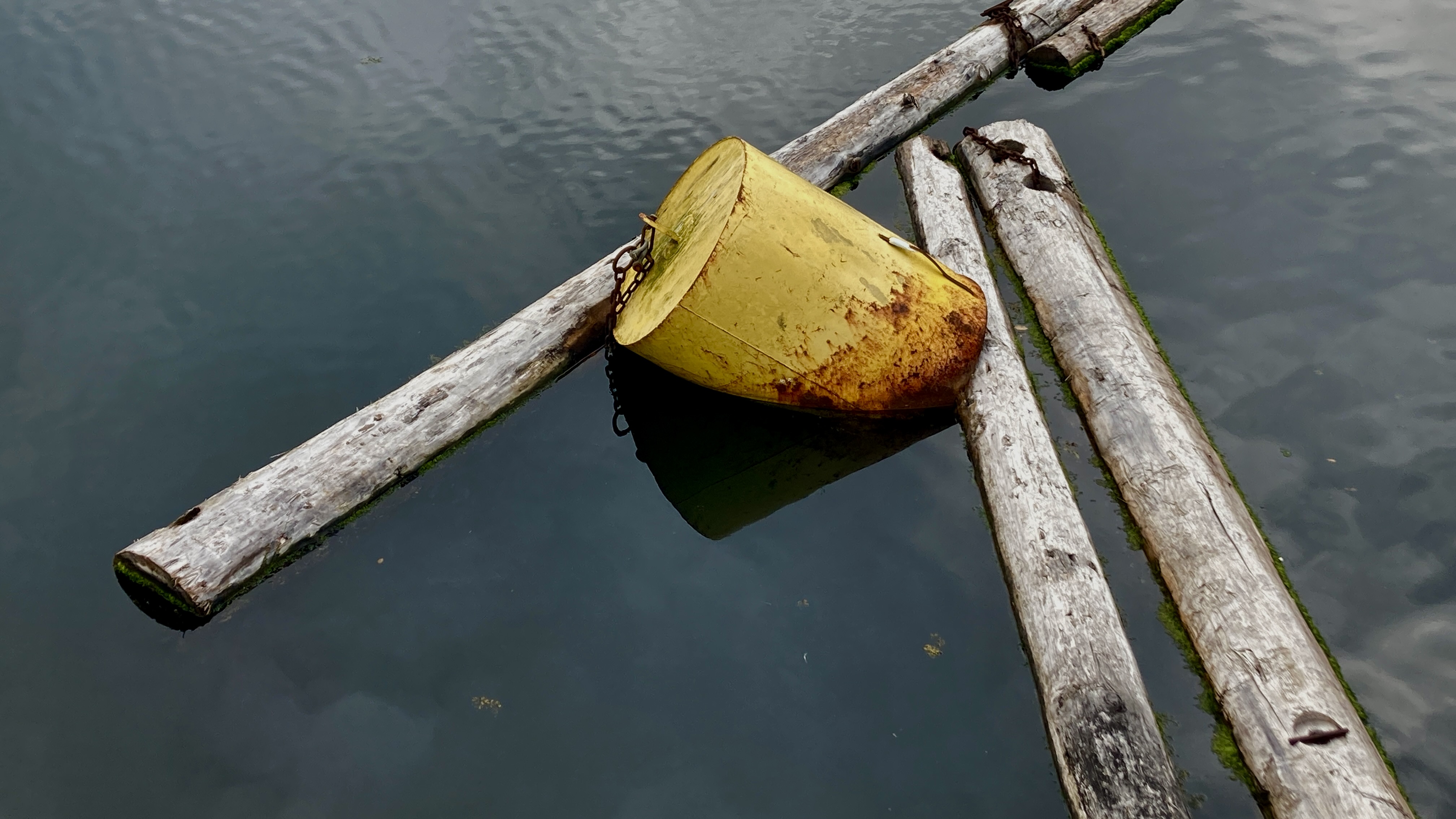
I even hang over the railing just before we leave our tie-up early one morning, fascinated by the neat angles of the logs, and the punch of that single yellow buoy.

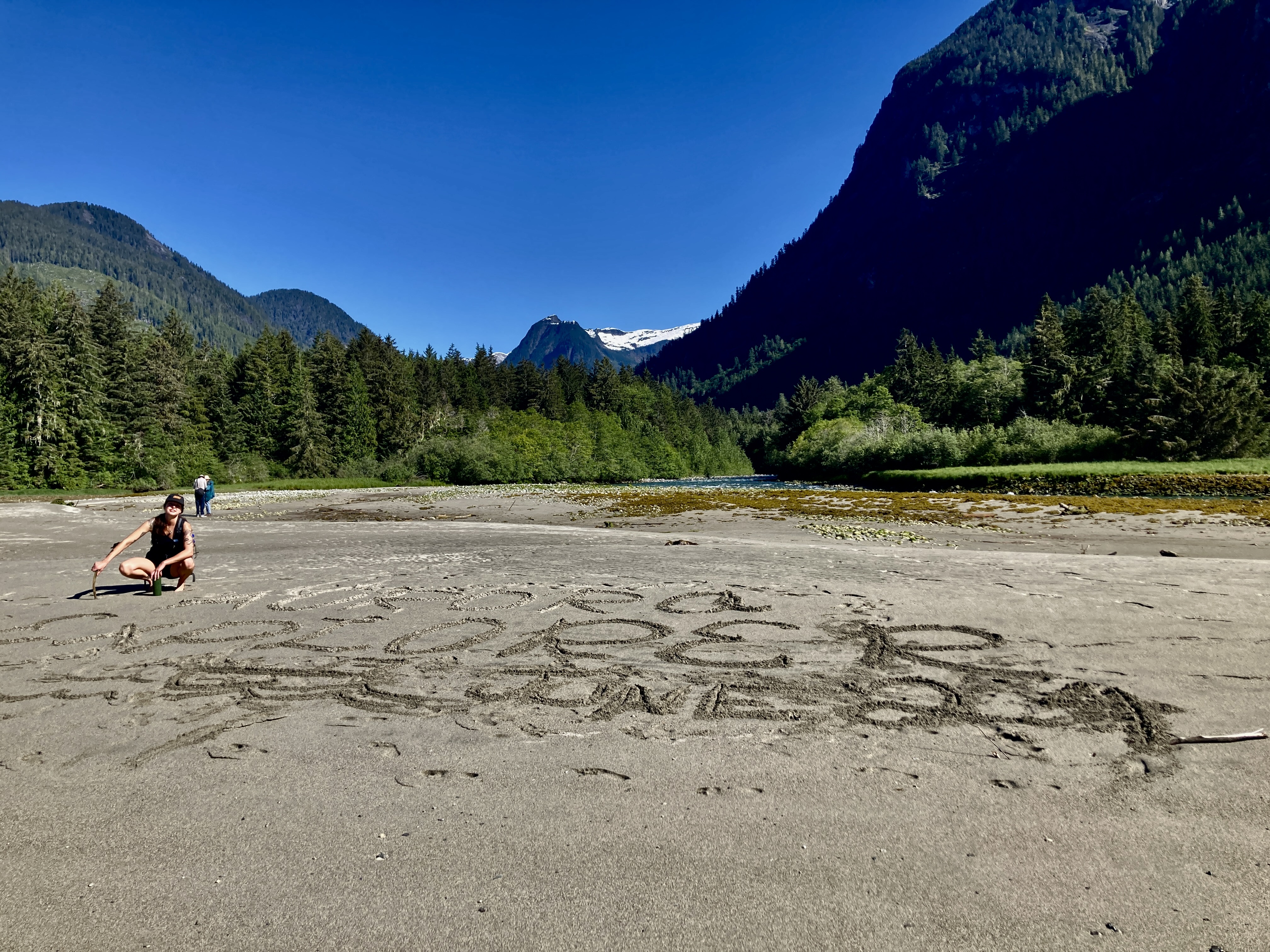
What else? Oh yes, the message in the sand. What is a walk on a sandy beach if nobody writes a message in the sand?

While we walk along Brem Bay Beach, and the mate runs into the water for a swim, our deckhand proves that she pours as much cheerful energy into play as into her work with a forklift, dipstick or boulders to repair roads.

I name her and show her with her permission. So: may I introduce you to Paige Boroski? I can’t think of a better final image for this voyage than her message in the sand: the words “Aurora Explorer” plus a drawing of a boat plus the date.

Unfortunately, not even I can read it, photographed from this angle! And the tide has long since washed it away.

But who cares? This image, like the whole trip, is in my heart.

  • WALKING… & SEEING

    "Traveller, there is no path. Paths are made by walking" -- Antonio Machado (1875-1939)

    "The voyage of discovery is not in seeking new landscapes, but in having new eyes" -- Marcel Proust (1871-1922)

    "A city is a language, a repository of possibilities, and walking is the act of speaking that language, of selecting from those possibilities" -- Rebecca Solnit, "Wanderlust: A History of Walking"

  • Recent Posts

  • Walk, Talk, Rock… B.C.-style

  • Post Categories

  • Archives

  • Blog Stats

    • 135,533 hits
  • Since 14 August 2014

    Flag Counter
  • Enter your email address to follow this blog and receive notifications of new posts by email.

    Join 2,089 other subscribers