18 December 2025 – Just a description, mind you, not a complaint. Compared to weather almost everywhere else in the country, including here in BC, Vancouver’s weather is a walk in the park.
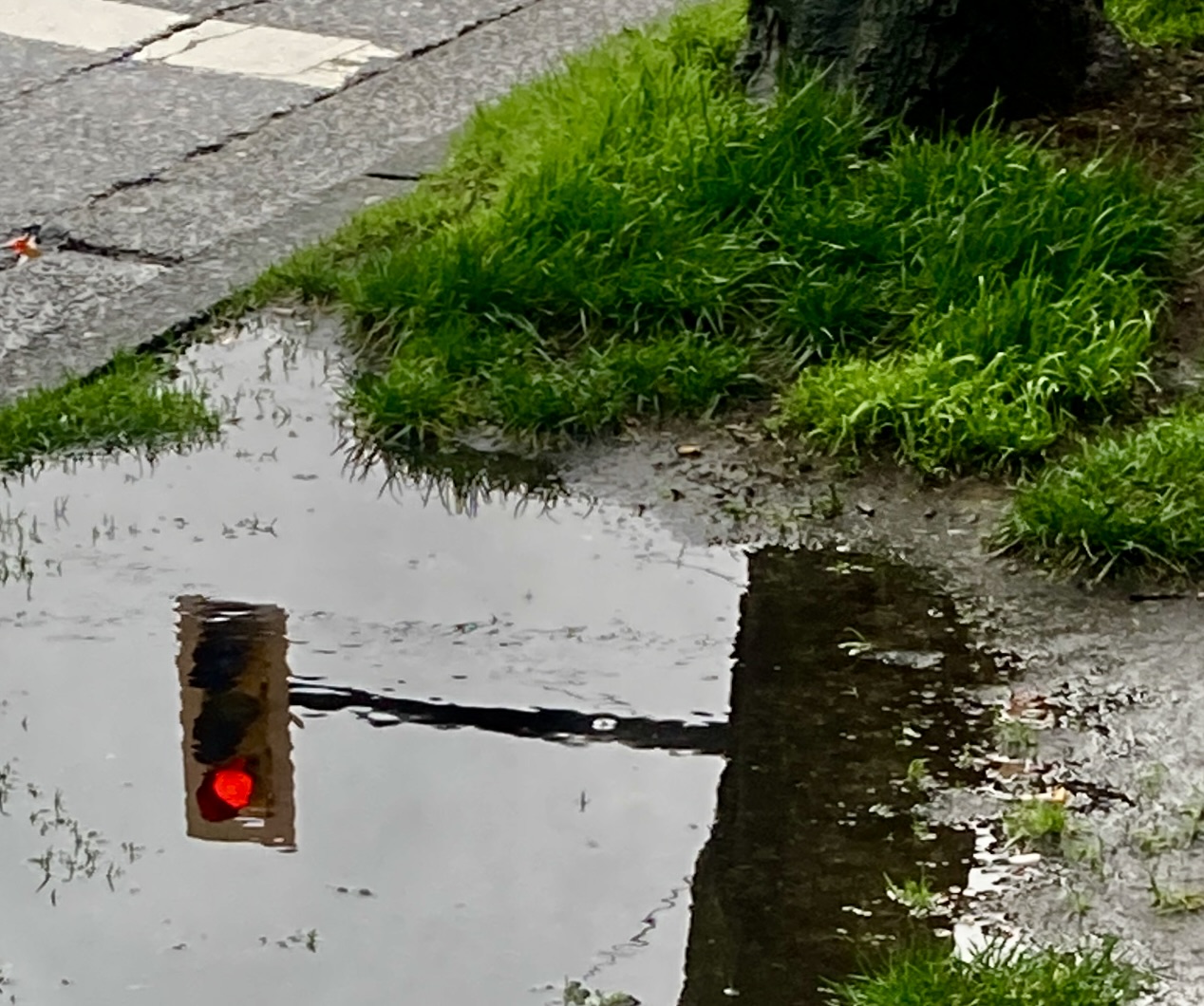
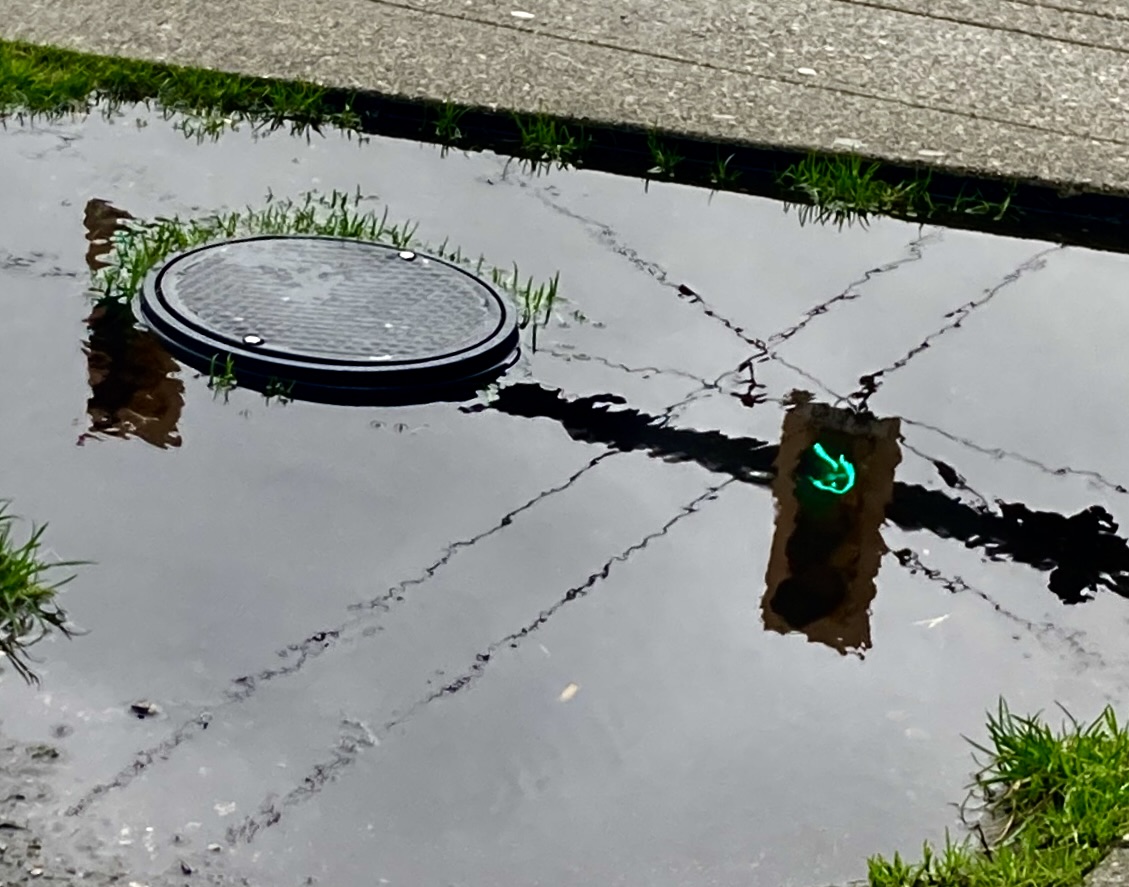
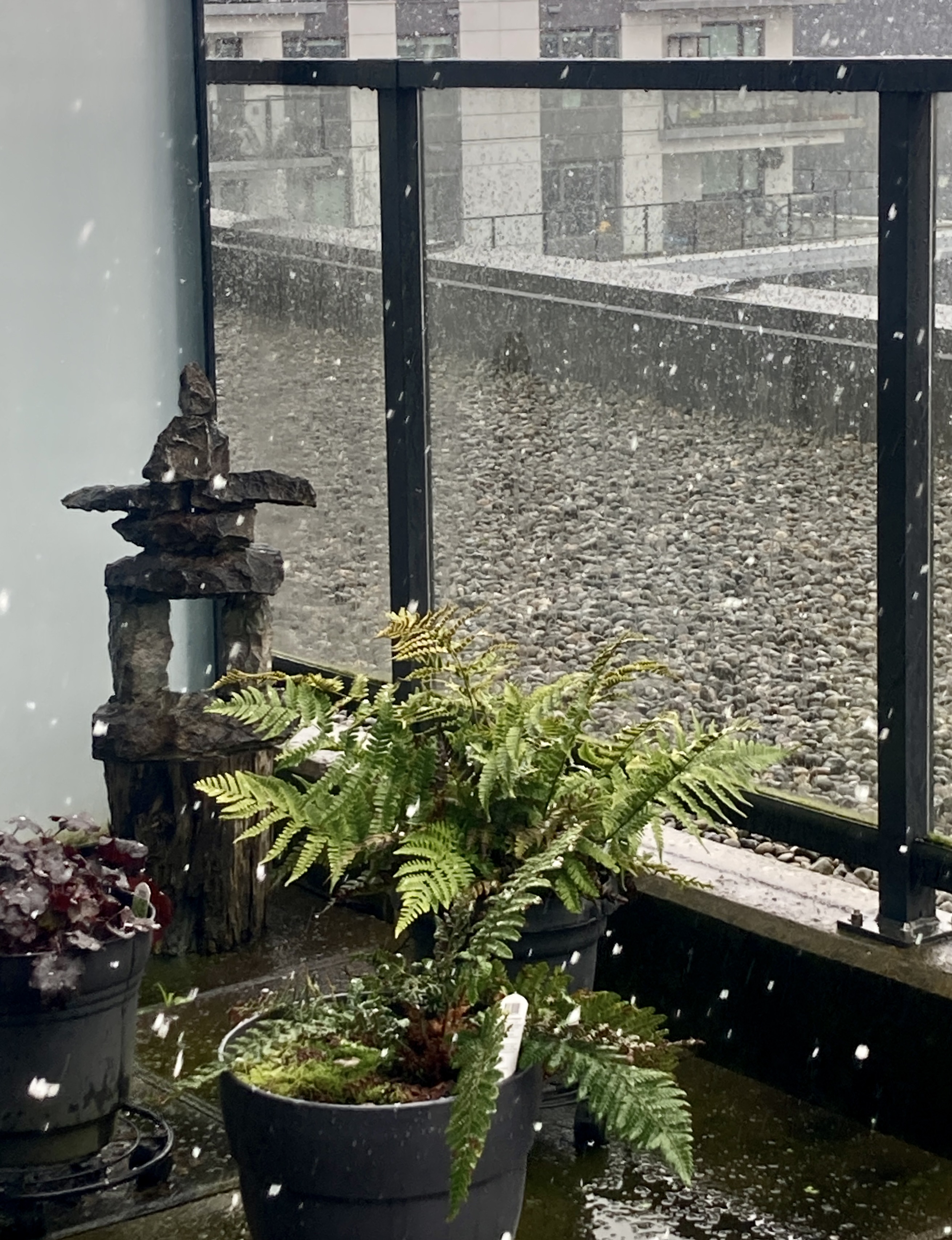
But even so, it is still very windy and very wet!
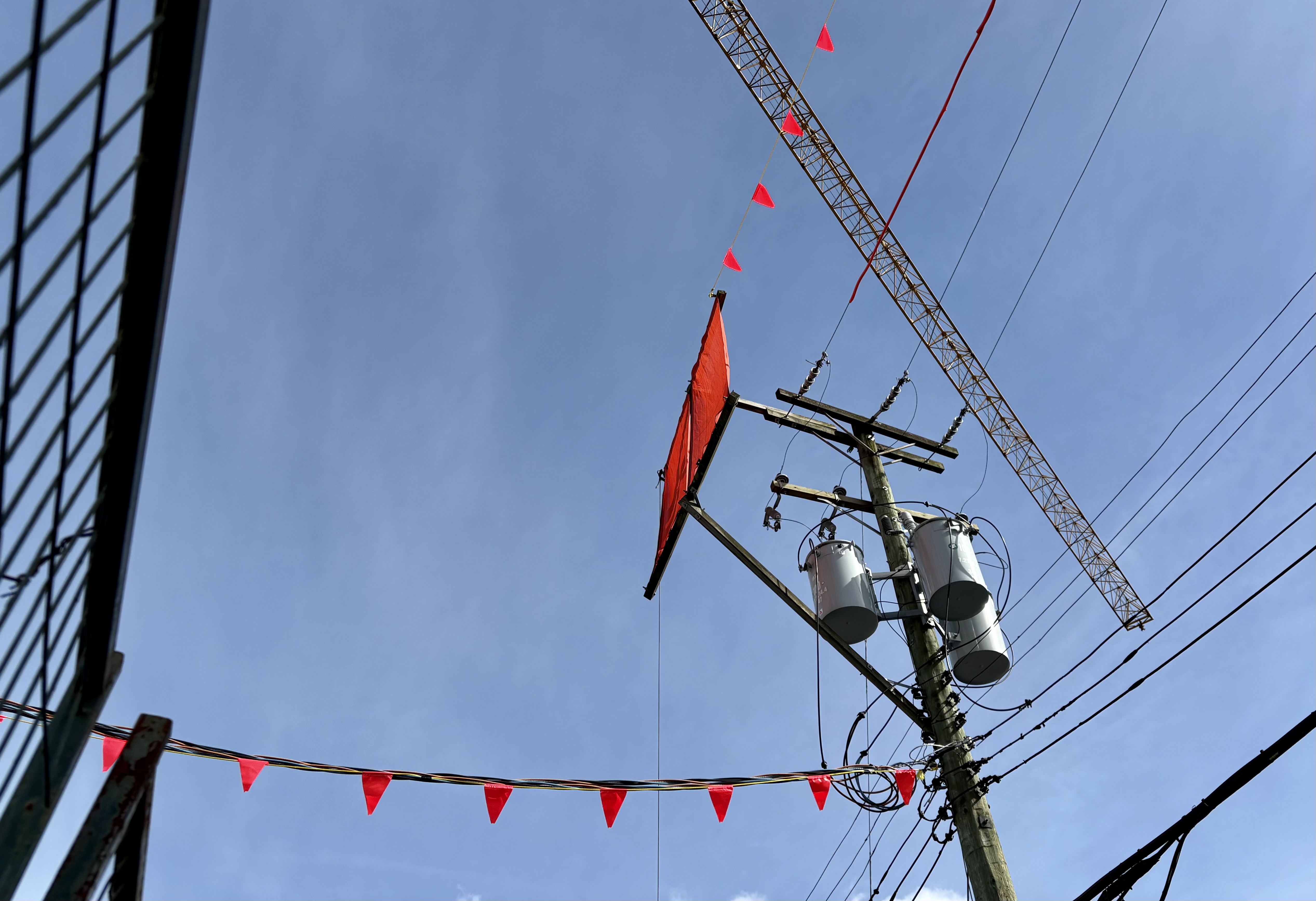
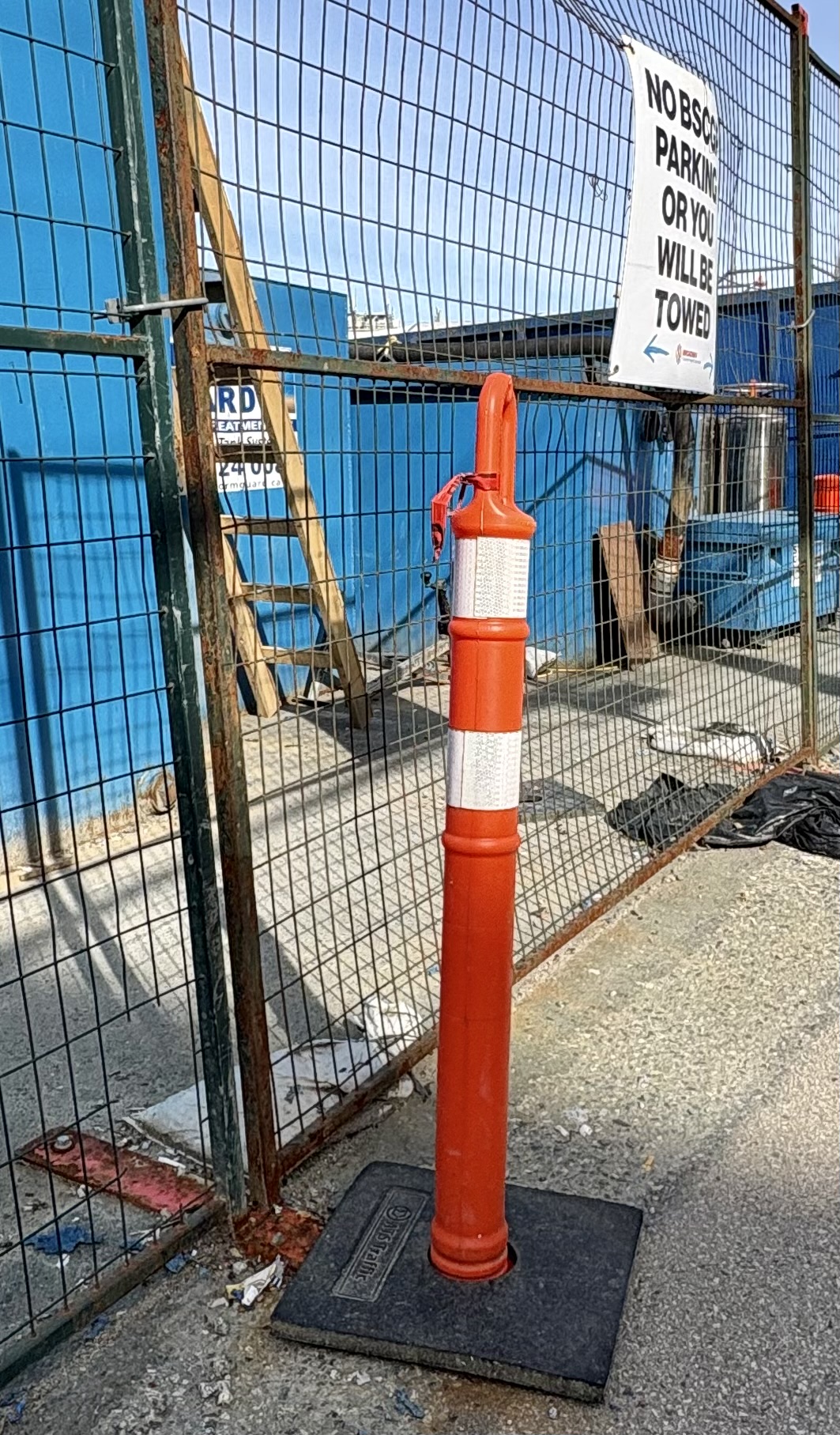
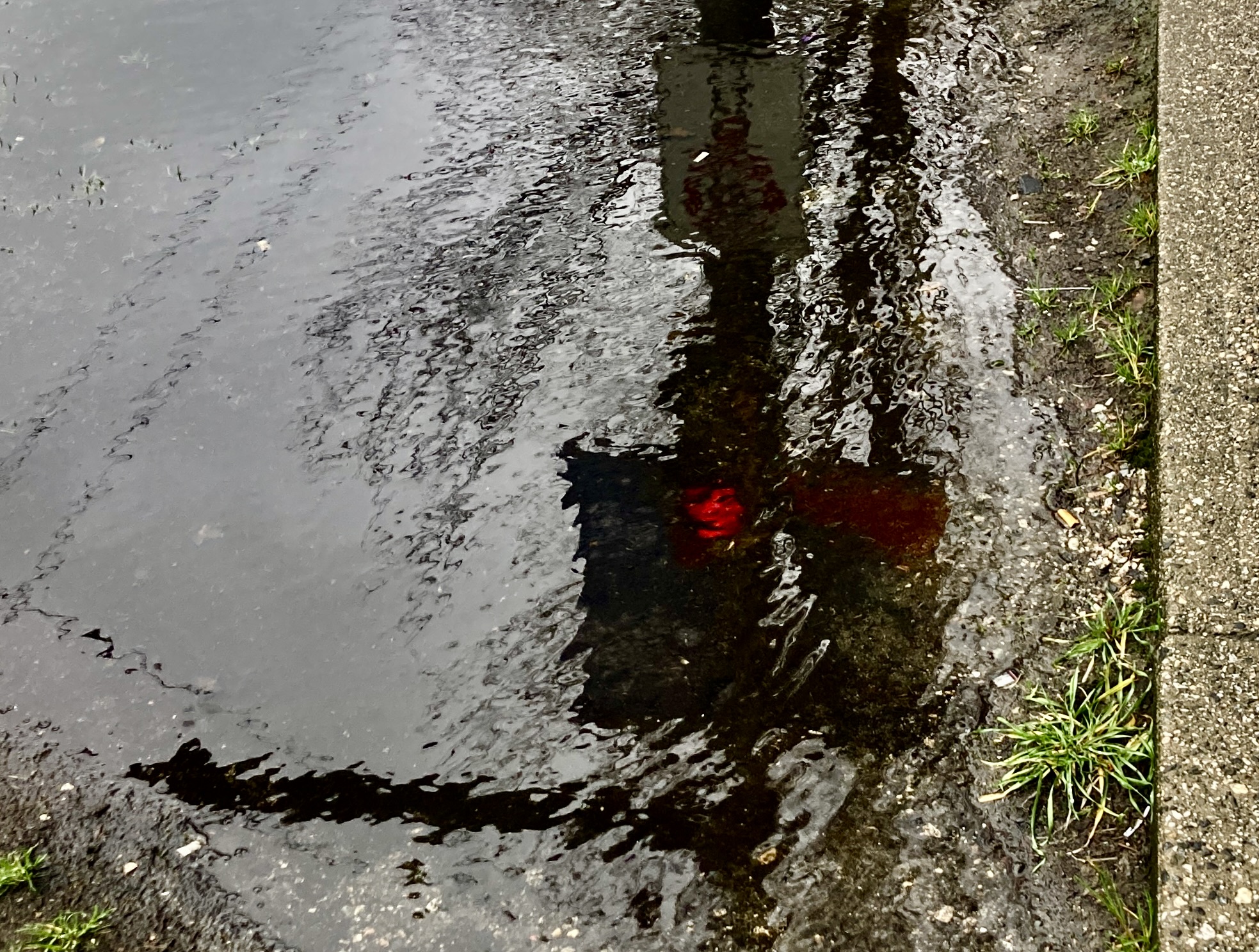
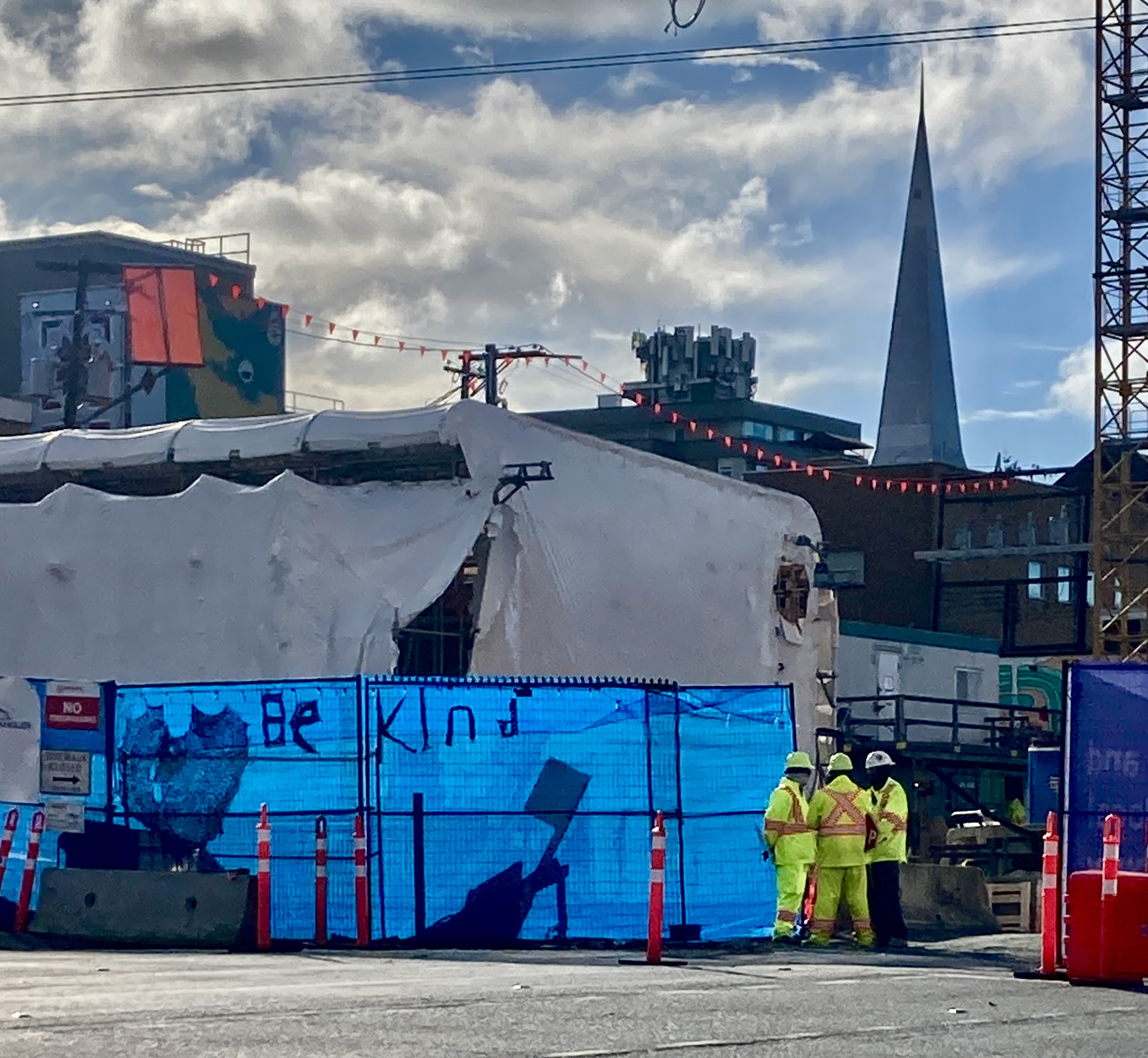
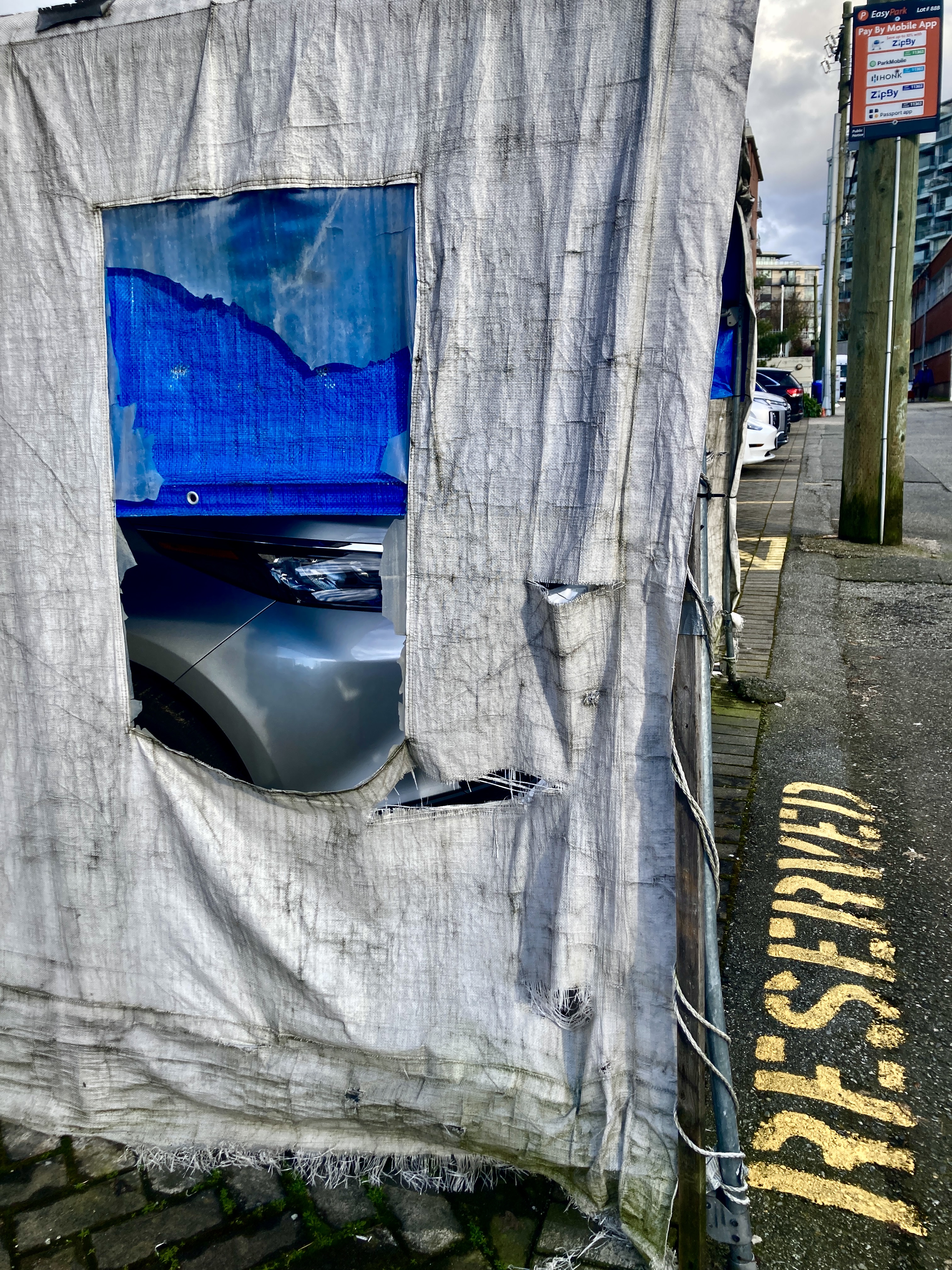
Just look at the air vents blown horizontal in the sodden construction fence fabric, as I splosh my way along West 10th this morning.
By the combined might of word + weather association, I start thinking about anapest metre.
Why? Because wet weather on 8 December caused me to rewrite a limerick to fit, and that in turn caused me to discover the anapest metre and its (quote-unquote) “galloping rhythm.”
So here I am, in yet more wet & windy weather. To distract myself, I compose a limerick. An ode to the anapest metre.
(More throat-clearing)
The anapest metre is now my best friend,
It offers me rhythm without any end,
I gallop and giggle,
I wobble and wiggle.
It distracts me from rain and that’s a great trend!
Once home… and dry… I look up “anapest metre” online. The Poetry Foundation explains it consists of two unaccented syllables followed by one accented syllable, and then helpfully gives two examples of words that — all by themselves! — are anapestic: “underfoot” and “overcome.”
Yah well, here’s the Canadian example: “Newfoundland.”
13 December 2025 – Poised for a trip on SeaBus, I am…
across Burrard Inlet from Vancouver’s Waterfront Station to Lonsdale Quay in North Vancouver.
The draw is the engrossing show currently on view (to 1 February) at the Polygon Gallery — American photographer Lee Miller, whose body of work encompassed both high society and high fashion…
and the stark realities…
she documented as a wartime photographer.
As usual, the ferry ride to the North Shore is an uneventful 15 minutes or so.
Also as usual, we are met by a welcoming committee of cormorants at the Lonsdale dock.
The man standing next to me is waxing lyrical about their inherent grace, their ease with being exactly what they are (unlike fretful striving humans). I am less lyrical. Every time I see these birds, I hear again the cry of my outraged friend, that day in the Bruce Peninsula, who thought we were looking at loons, and discovered they were only — and I quote — “F**king cormorants!” FC’s they became, and FC’s they remain.
I leave that nice man being lyrical, and carry on, looping my way toward the Polygon via the Lonsdale Quay waterfront, with its long views back south.
Another black bird, this time a solitary crow, soars over helipad and private pier.
His backdrop is one stretch of the south shore of this busy port: a line-up of monster freighter cranes, like so many orange giraffes, with a monster freighter (COSCO Shipping, says its lettering) before their high-stretched necks and downtown buildings at their backs.
From one solitary crow, to a veritable panorama of Eternal Love.
Lock upon lock upon lock. (Upon lock.)
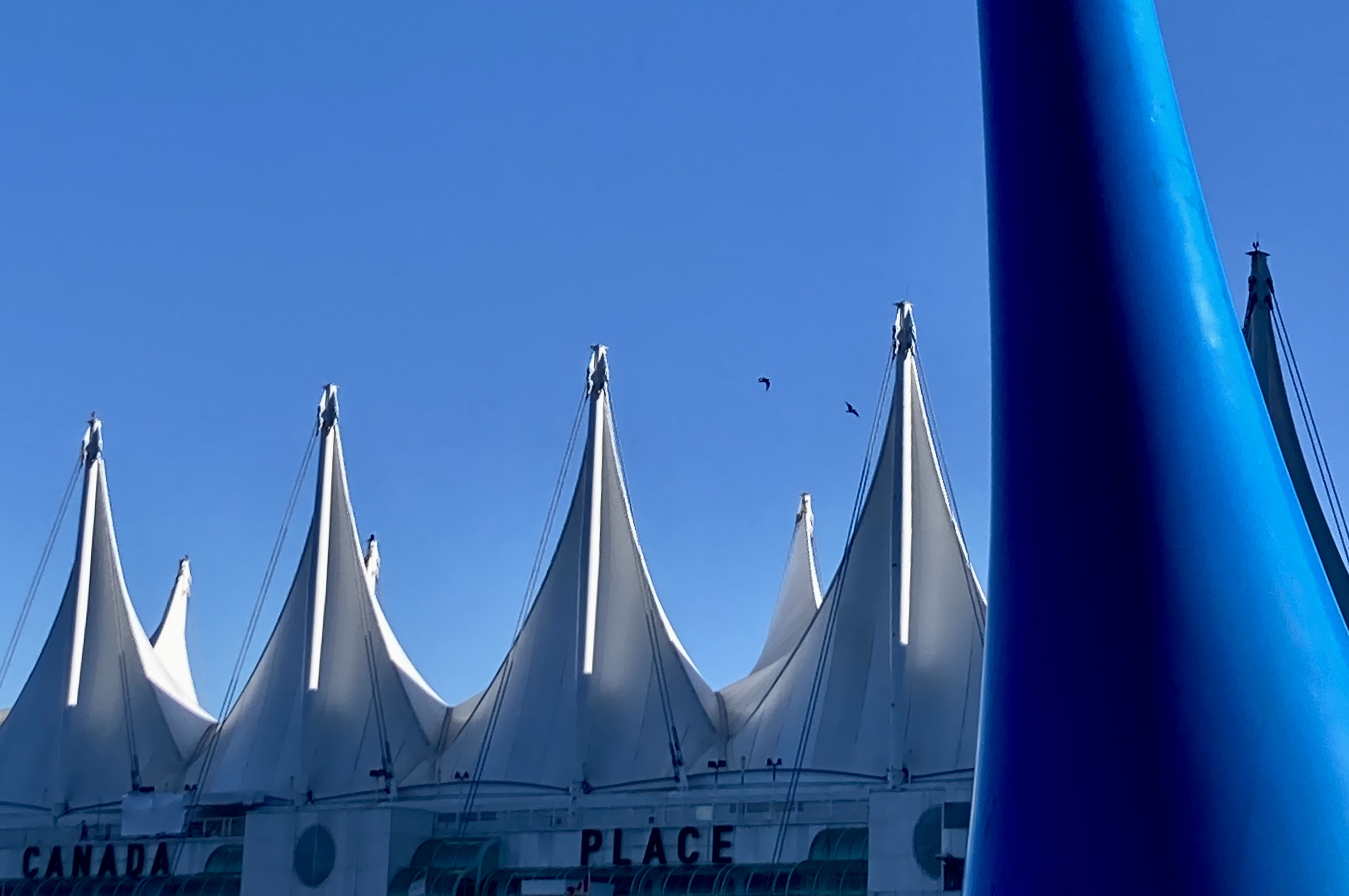
Different foreground, same Port of Vancouver background. L to R: the cranes; the COSCO freighter plus another, equally massive but unidentified; the white fabric “sails” that comprise the roof of Canada Place; a SeaBus placidly bustling back to the south shore. Behind all that, the city skyline. (North Shore shows us mountains; South Shore shows us towers.)
Return trip, those towers grow larger in the ferry windows…
and, approaching the terminal, we glide past a heavily laden freighter…
being nuzzled by an attentive crane.
But were you greeted by a welcoming committee of FC’s? you want to know.
* and (says a man who knows) “a propensity for the perverse.”
I am not thinking of the perverse. I am, however, thinking of a limerick that meets all the 5 lines-AABBA-anapest-meter requirements. I am thinking of the one that begins: “There was a young lady from Spain.”
Only when I look around online do I discover that this Young Lady goes on to have many different limerick adventures.
My particular Young Lady has her adventures on the train. To wit:
“There was a young lady from Spain / Who used to get sick on the train.”
I herewith offer you a timely Vancouver re-write of those first two (AA) lines. After that, it’s the same BBA outcome that the Young Lady knows well.
25 November 2025 – In my bit of the Northern Hemisphere, November means lots of rain…
and seasonal criteria for “awesome.”
This year-round sign on the allotment fence in Tea Swamp Park invites us to adapt our eye, and enjoy what’s currently on offer. Rusty old leaves, for example, still clothing this shrub…
and shameless bare-naked deciduous trees…
dancing around in their bones.
Walking back north on Main, I pass a trio of parks-in-the-making.
A “permanent plaza” under construction, here at Main & 12th (yes folks, your tax dollars at work)…
with gravel being industriously moved from Here to There.
Farther north, the site at Broadway & Main that had lain razed and desolate behind mesh fencing ever since a triple-alarm fire gutted its buildings…
is now fence-free and adorned with bright, shiny-wet picnic tables.
Plus a smidge of new landscaping, along the southern edge.
I’m still thinking about that slightly surreal tableau when — crossing 7th & Main — I see something even more surreal:
No, not the mural, not Slim’s BBQ — the snowplow! What? A bright yellow snowplow fitted to the front of the truck behind that white car. Ready to take on the snow. In the rain.
One more future-park. With more tax-dollar signage.
Like the one down the street, it’s early stage, mostly gravel and hints of Things To Come, narrowly visible through fence post gaps.
I take advantage of the building opposite, for the roof-top perspective.
The rain, here in Rain City, blurs the view but the view still rewards the trip.
16 November 2026 – I have a plan. Take the #19 bus; get off at Granville; walk south a few blocks; visit two art galleries.
But then I get on the wrong bus, and things do not go according to plan.
Two different bus routes come ’round the corner, you see, and I don’t bother reading the signage before I jump aboard. I settle back, ready to indulge in city-watching until we reach the #19’s Granville stop. Except… we don’t. The bus turns north well before Granville and ends its run at Waterfront Station.
Which is exactly what the #8 is supposed to do.
More than a little sheepish, I step down and rethink my route. I’m still within easy reach of my first target, the VAG (Vancouver Art Gallery); I’m just approaching it from a different angle — an angle that, with a couple of zig-zags, finds me heading south on Howe Street, between West Pender and Dunsmuir.
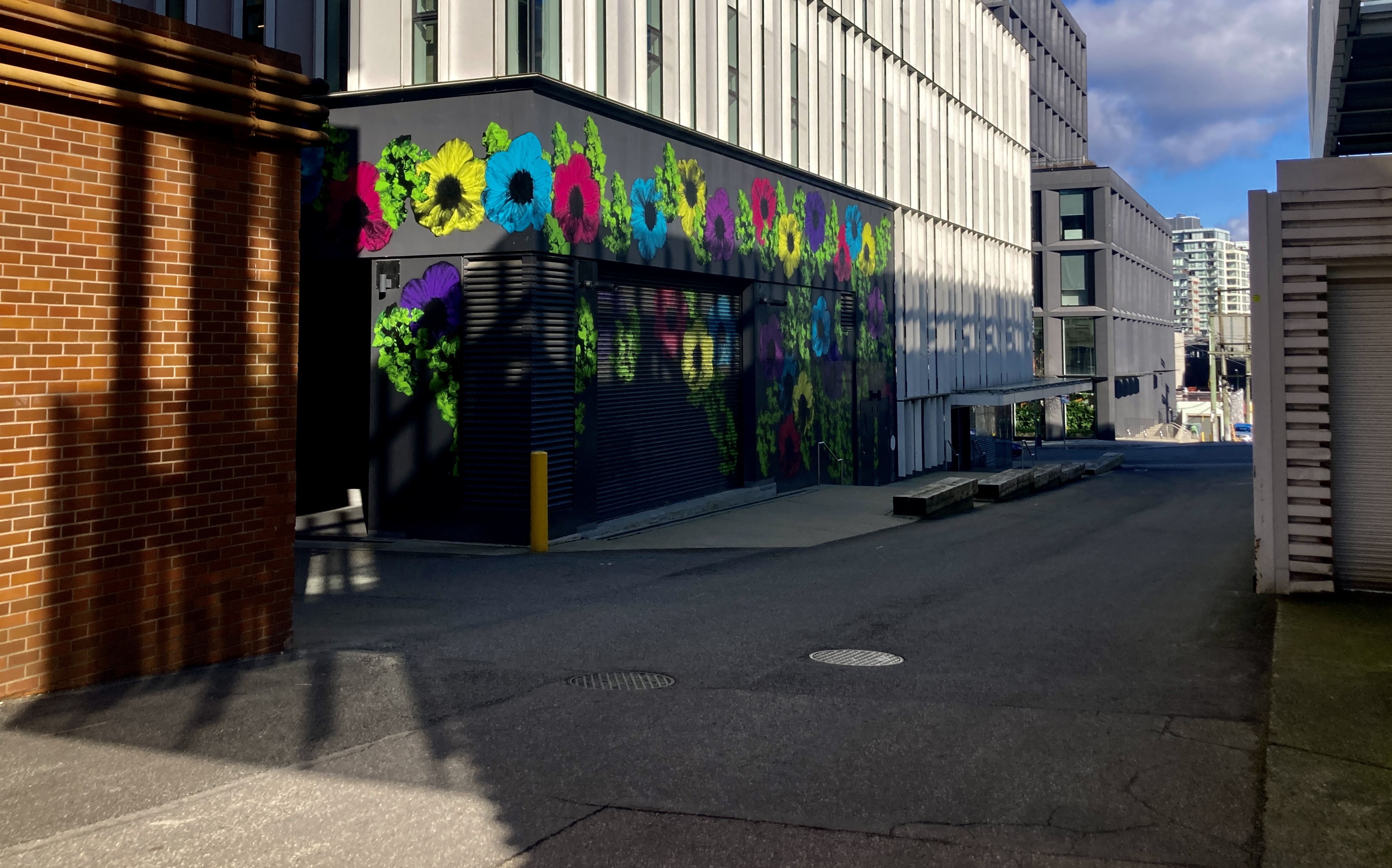
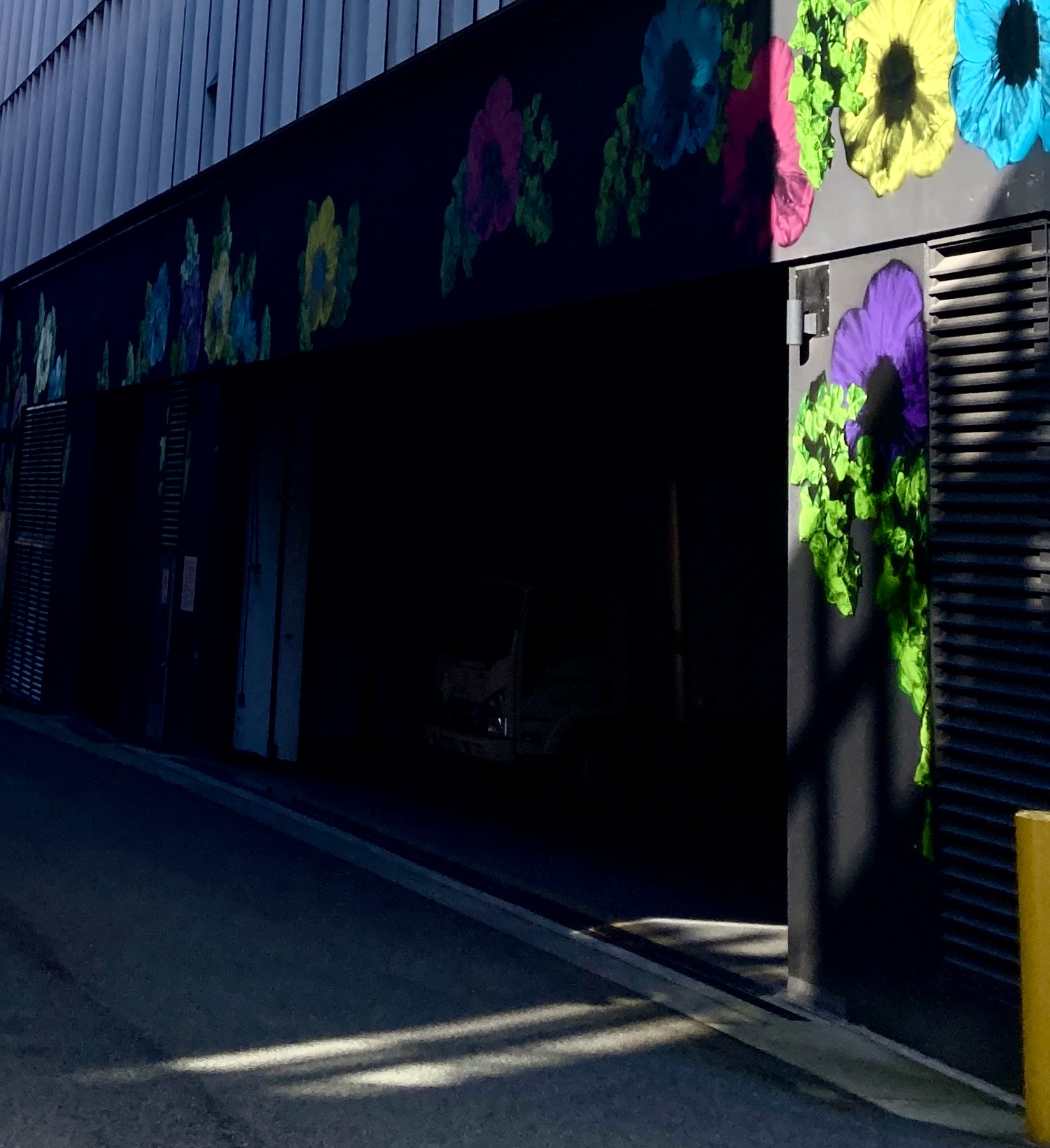
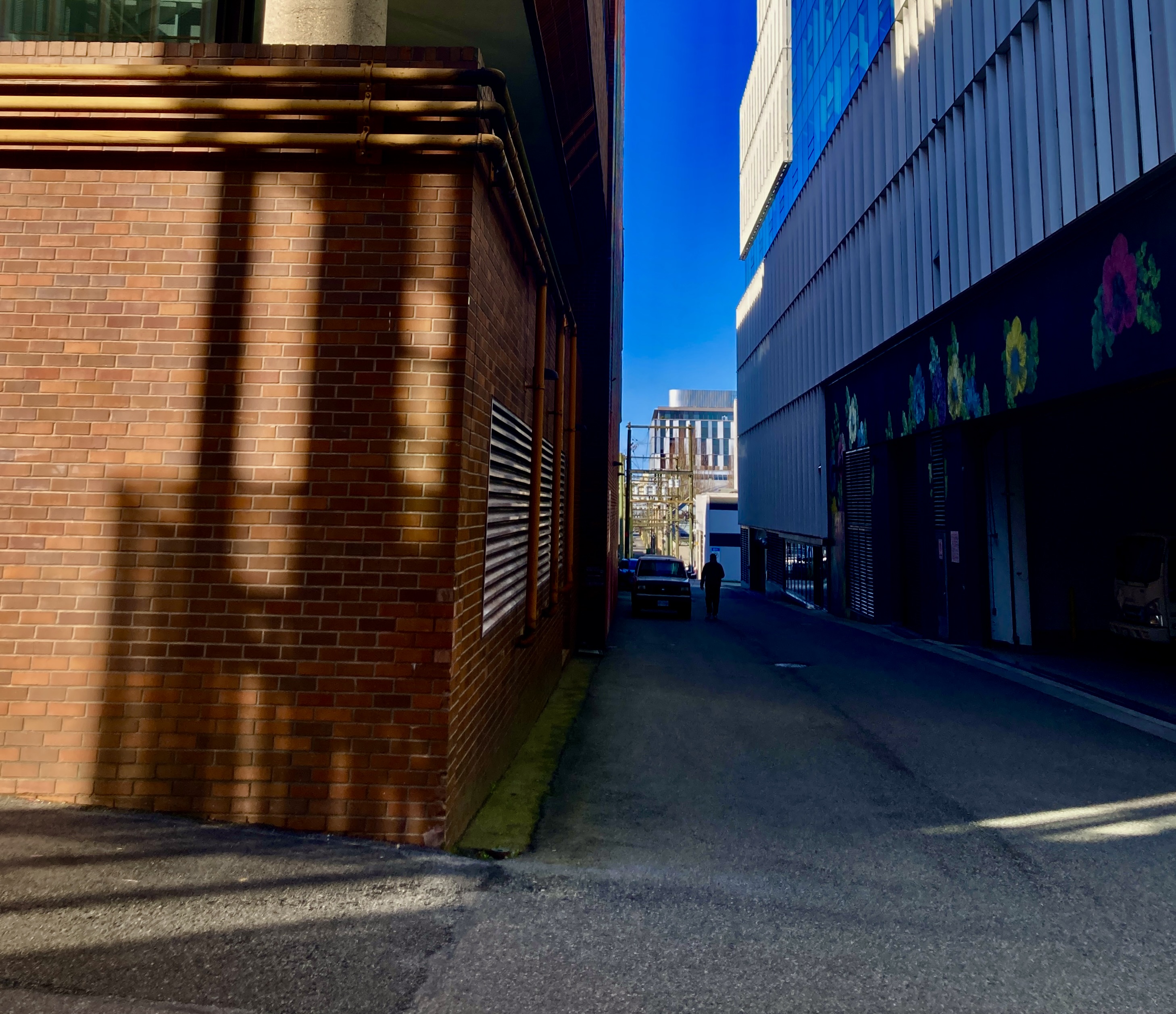
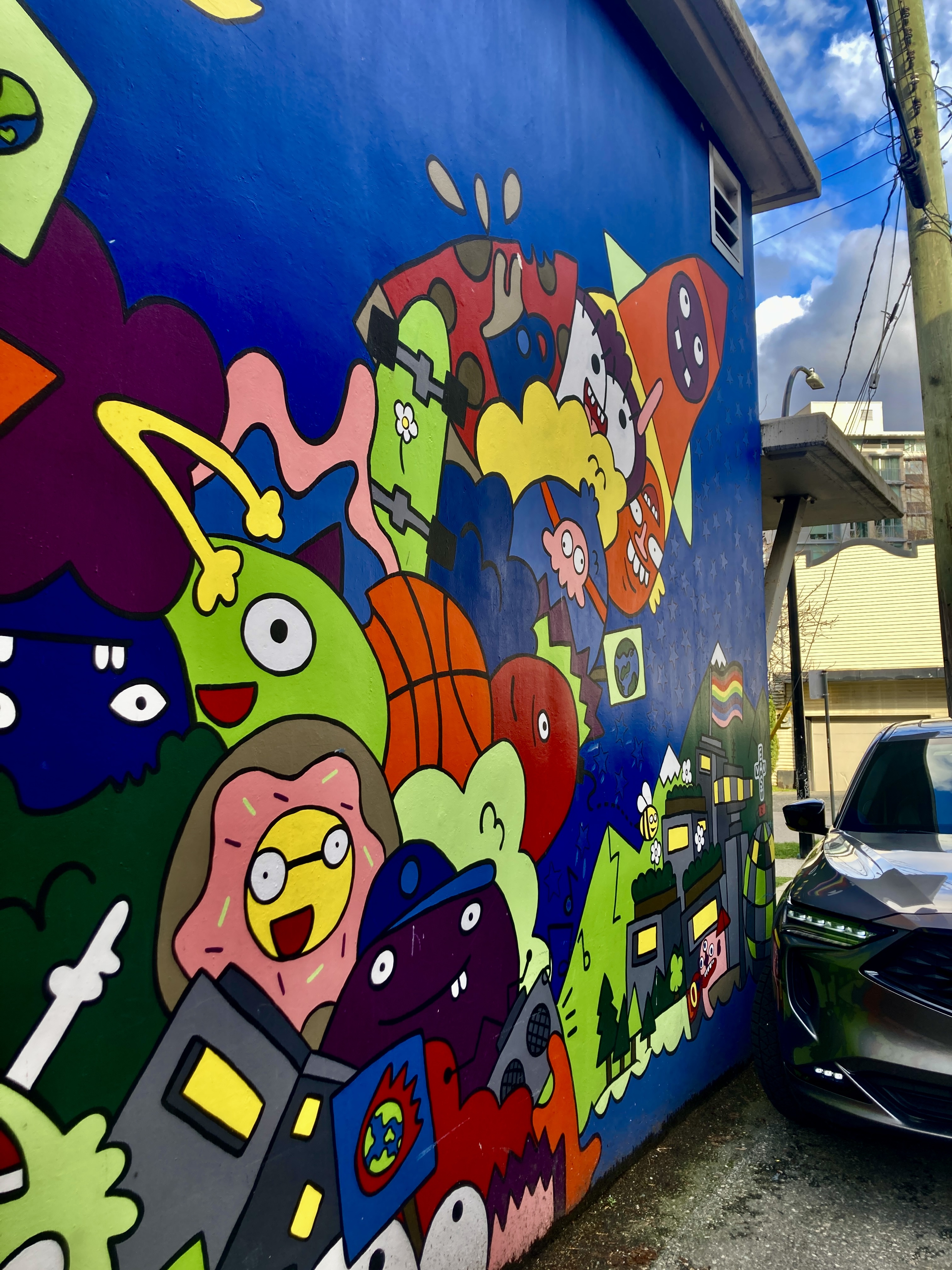
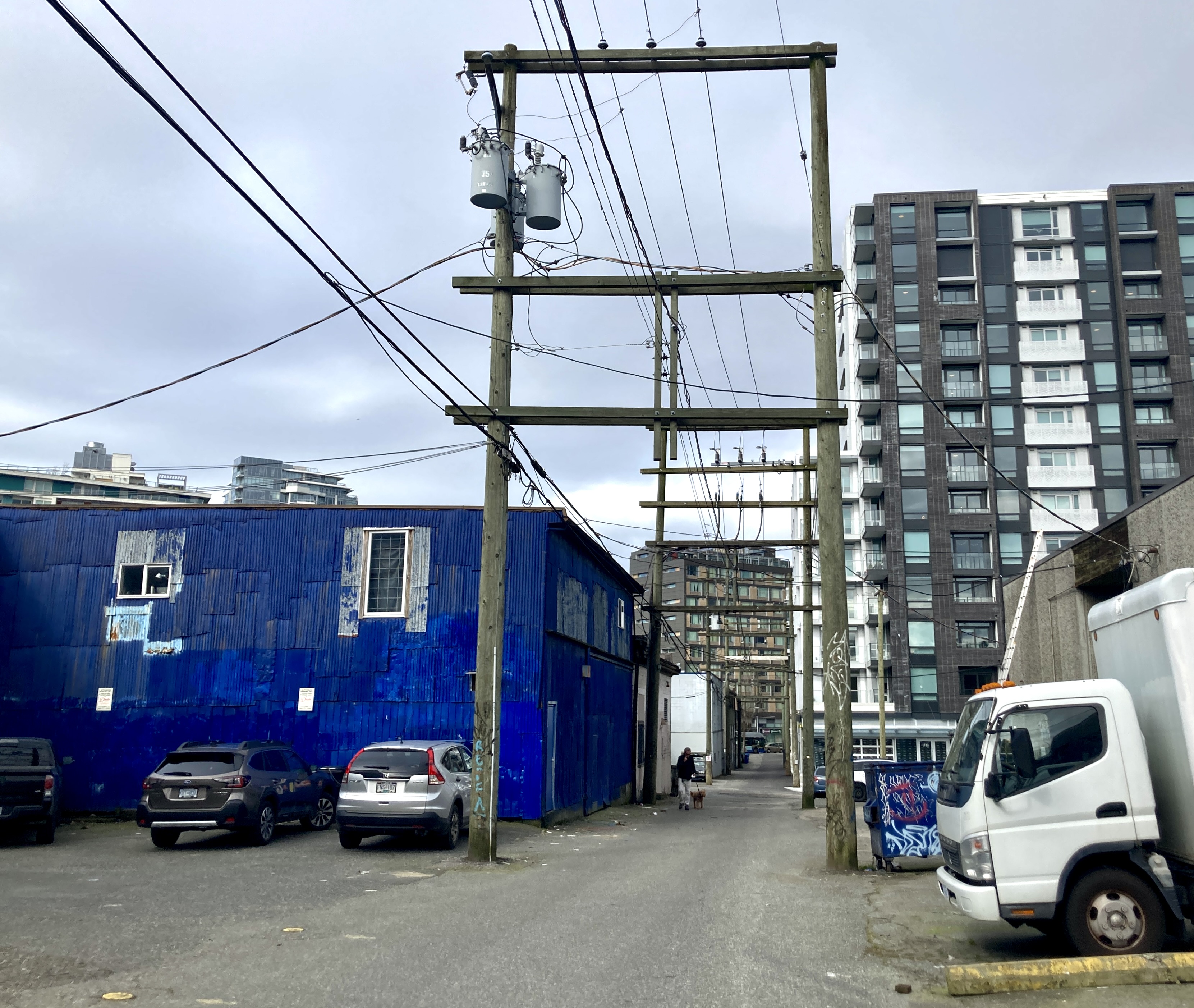
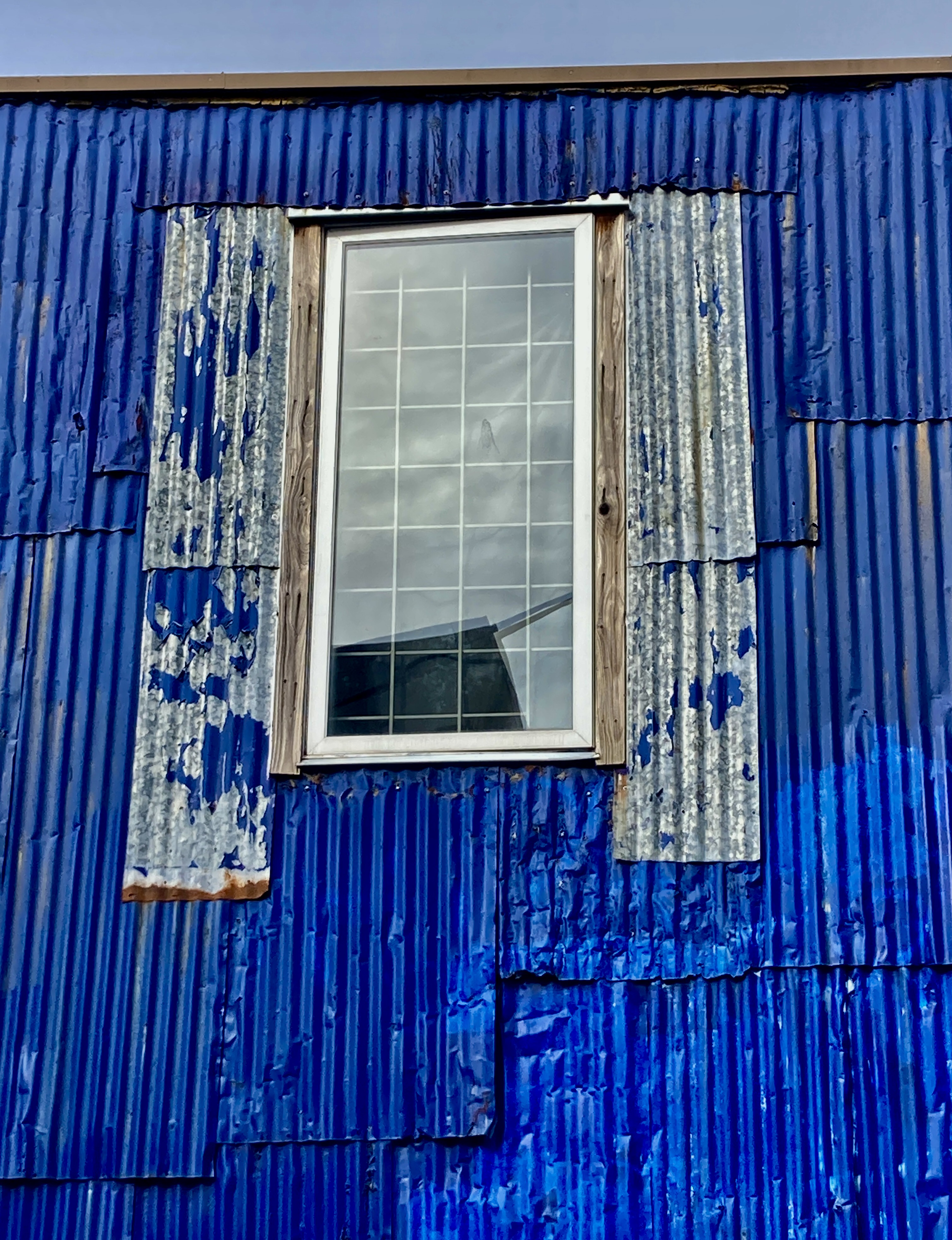
Where — eyes right — I see this alley, bouncing its colours in every direction.
Look at all those rectangles! And the polka-dots! (Which splash their reflections all over the adjacent white van.)
The alley pulls me in, how could it not? Happy rectangles to the south; happy circles to the north…
forming still-life tableaux with delivery trucks and doorway tubing.
Splatters on the pavement. Yellow…
and red…
and, here at the Hornby end of the block, bright blue. Further adorned with russet leaves.
I’m well-pleased with my wrong-bus start to the day. It fed me into this alley, handed me all this unexpected art while on my way to expected art.
There’s one more hit of the unexpected yet to come. I find it in the plaza just east of the VAG.
Lanterns.
All the forms in these lanterns, says the signage for Lux Memoriae (Tidal Reflections) by Ari Lazer, come from the tidal contours of the Fraser River.
This theme ties perfectly, and I am sure deliberately, with the VAG exhibition I have come to see: We who have known tides . Drawn from the VAG’s permanent collection of art by indigenous artists, all of the works in some way reference life interwoven with ocean and tide.
A spill of abalone shells (I am turning towards tides, winds, clouds, rainfall, by Tanya Lukin Linklater), for example, burnished and positioned on a tarp…
and, on the far wall, four pieces of found cedar (Longing, by Sonny Assu)…
all end cuts, and each selected for its resemblance to a mask.
I do not visit other floors, other exhibitions. I take myself a little farther south on Howe, for the Our French Connection show at Outsiders and Others.
This is a different art world entirely, in a gallery focused on contemporary work by self-taught and non-traditional artists. There is great diversity of styles, materials and objects — but every piece pulses with the outsider energy of the person who created it. I’m always engaged, when I visit this gallery, a-buzz with what surrounds me.
And, almost always, before I get to the art I have a bit of a chin-wag with Yuri Arajs, the gallery’s Artistic Director and Curator. Today I pull out my phone, show him the alley I discovered en route.
He plucks the phone from my hand, walks over to the wall, and holds this image I took of the alley in Vancouver…
next to this pen-on-paper Star Car, drawn by Dominique Lemoine in France.
We shake heads at each other and laugh. Art is all over the place! Inside, outside, in galleries, in alleys, bursting 360° through human demographics & world geography, discovered by intention or just by climbing on the wrong bus.
Pleased with that thought, I reclaim my phone and turn my attention to the show.
(Which I urge you to do as well, should you be in Vancouver this month.)
11 November 2025 – A story balanced on five stones in the water — and a much happier story than the one painted in 11 words on that alley shed door, in my previous post.
It’s a bright fall day. We are hoofing our way along the False Creek Seawall, no end point in mind, just the pleasure of hoofing along.
Then we stop in amazement, to stare at the stepping stones out to Habitat Island.
Usually, practically always, the stones look like the way they look in this Parks Board photo:
a spine of bone-dry vertebrae, on a mounded bed of gravel that, even at high tide, still offers a narrow path for those who’d rather not hop the stones.
Ahh, but, this day is not at all as-usual.
This day follows the super moon (Beaver Moon) of November 5, and therefore it offers us a super tide.
Like this:
We watch, fascinated, as the living beings on five of those stones — human and canine both — make their Go? Stay? decisions.
Fixed stones, active stories.
Left to right:
on stone # 1 – Red Slacks waits, while…
on stone # 2 – Small Dog hesitates, not at all sure he wants to leap to…
stone # 3 – where Dad / Baby Duo look toward…
stone # 4 – where Reluctant Toddler turns away from…
stone # 5 – where Loving Mum is tugging his hand and try to coax him forward.
And, all around, the larger context: marine vessels (False Creek ferry, private boat, kayaks); a couple of people already log-lounging out on the island; and even a soaring gull.
It all works out. Small Dog makes the jump; Reluctant Toddler finally trusts Loving Mum; and Red Slacks is rewarded for her patience. Everybody makes it to the island.
We, on the other hand, keep walking the Seawall instead, and end up on Granville Island. Where we do our own prowling for a bit, and then ride a ferry all the way back east.
26 October 2025 – A double pun, both parts inspired by what I see, this drizzle-rich day, at the VanDusen Botanical Garden.
One part, the Michael Dennis cedar sculptures visible from the forecourt, which I always enjoy…
but whose title I always forget. I have to read it anew each visit: Confidence, says the label, Western red cedar, 2012.
Truth to tell, I don’t quite understand this title.
Dennis’ cedar sculpture for Guelph Park was called Reclining Figure, a name that made obvious sense — though also a name that disappeared from popular memory when the piece was recast in bronze, nicknamed The Dude, and in turn caused the park itself to become known as Dude Chilling Park. (But that is another story, and one I’ve already told you.)
To me, this Van Dusen duo look more contemplative than confident. Pffft, who cares? Confidence is an admirable characteristic, so let’s run with it. Confidence in my outerwear to be as waterproof as it claims, for example… confidence in nature’s transitions each season… confidence in the bones and installations of this Garden to be of interest, whatever the season, whatever the weather.
Confidence immediately justified. This is what greets me, as I start northward along the west side of Livingstone Lake.
Contrasts in the slopes to my left, fall textures and colours at play against the deep green of the coniferous background.
Sculptural details, in seed pods I can’t identify…
and in a curious fall fruit that I can, namely the Common Medlar (Mespilus germanica).
Then, just before I reach the footbridge that divides Livingstone Lake from Heron Lake, I see this enormous leaf on the ground before me.
Which I can also identify, and which sets me looking for more.
This is a Gunnera leaf — Gunnera manicata, aka Giant Chilean Rhubarb, and worthy of the adjective. One leaf can be a couple of metres wide, clumps run 3-plus metres high and 3-4 metres across. There are great clusters of this plant around the inter-zone of these two lakes.
The plant towers over visitors all summer long.
In fall, it is cut back…
and its leaves inverted, to protect plant crowns from winter temperatures.
I’m properly awed by Gunnera in summer, I giggle at it in winter.
Giant pixie caps!
I’m across the foot bridge now, looking north into Heron Lake, taking in the whole sweep of autumn complexity, from desiccated russet stalks at my feet to flaming trees in the distance. So rich.
Also, in places, so denuded.
I follow the sweep of this dug-over flower bed, past that uprooted tree, and come to a signpost that promises me the most extraordinary amount of choice: both seasonal and geographic.
Here’s where the other part of my punning post title kicks in. I am offered a stroll, and I take it. Specifically, at this point, an autumn stroll in Eastern North America.
Yes. It is very all-of-that.
A side trail loops me past the Cypress Pond, and brings me out once again to the south-east curve of Livingstone Lake.
Where I rejoin the Confidence couple.
I too have confidence — confidence they watch over their lake, just as The Dude watches over his park.
23 October 2025 – I had a much longer title in mind. To wit: “Above/Below/In Front/Behind/Then/Now/Here/There… and All the In-betweens.” Aren’t you glad I restrained myself?
That verbal onslaught is prompted by yet another walk along the north shore of False Creek, from foot of Davie east to Main. More specifically, prompted by this:
I only now, after all these years, bother to learn that this artsy structure has a name. It is one of the two shelters + glass panels that comprise Lookout (Dikeakos + Best, 1999), which traces the natural & industrial history of the area and is an early contribution to the public art we enjoy on both sides of the water.
You can spread the image, read the keywords panel by panel — or just read this paragraph! L to R: “box cars, flat cars, tank cars” / “dining cars, sleeping cars” / “… the yard master makes a train…” / [then a panel written to be read from the other side] / “all built and all rebuilt” / “gone and a thousand things leave, not a trace” / “lumber co yards, islets of gravel.”
I climb up to the street, take a closer look at the inscribed and silhouette steel uprights, also part of the story.
Natural + industrial history indeed, from “mudflats” upper left to “red caboose” lower right.
Then I check the panel meant to be read from this, the street, side:
This one you can read for yourselves. And, given all these prompts, you can also take a stab at imagining “as if it were” all still present as it used to be.
What you will have trouble reading, even if you spread the image, is the black-lettered graffito neatly inked in just below “across the waters.” It says: “build a washroom.”
I think this is perfect. An interjection of a “now” reality in a tribute to “then.”
It is also a further prompt to do what I do every time I pass this installation, with its invitation to remember the past, superimpose it on the present, build it into my understanding of how much more is still Here-And-Now than is Right-Now visible. Every time, my mind flips back, vaguely but insistently, to Italo Calvino’s 1972 book, Invisible Cities. As one astute reviewer observed, the novel is “a travelogue to places that do not exist.” It also invites us to think more richly about how we define “exist.” (Side nod to the wise fox, who taught The Little Prince, “What is essential is invisible to the eye.”)
I am primed, in other words, to read above, below and ‘way inside the everyday sights that greet me as I walk.
Jerry Pethick’s Time Top sculpture, for example, that invites us to imagine a time top spinning across the galaxy…
to crash-land on the shores of the Pacific Ocean, right here…
or the blue bands of A False Creek (Rhonda Weppler, Trevor Mahovsky), that invite us to imagine what all this will look like if climate change indeed causes ocean levels to rise 4-6 metres…
and, right next to it, another interjection of a “now” reality, again in the form of a polite and neatly lettered graffito. This one, beneath the No Dogs Allowed notice there on the right, yanks our attention back to the present. “Clean The Water,” it snaps.
I stop my fancy metaphysics for a moment, offer myself a simple contrast between sky-high…
and shoreline…
then, sideways, a panorama of nature, reminding us that it invented fall colours long before built structures began to emulate them…
followed by, at my feet, the tight focus of a single fallen leaf…
reminding us that diversity, whether in or out of political favour, is the building-block reality of life.
However pure green this leaf long appeared to be, all these other colours were woven into it right from the start and are equally part of it. As are (side nod to Thich Nhat Hanh and the concept of interbeing) sunlight, water and soil, plus all the nutrients of those three elements as well, all of which made the existence of this leaf possible.
Quite literally, the universe in a single leaf.
Enough. I think I’m done. But, no.
There is one more juxtaposition. One more interweaving. One more dance to vibrate my own little world, as I walk on by.
Upper right: nature’s wasp nest. Lower left: street-guy’s sneakers. Both at home in the tree. A tree shedding its leaves, itself at home with the cycles of the universe.
"Traveller, there is no path. Paths are made by walking" -- Antonio Machado (1875-1939)
"The voyage of discovery is not in seeking new landscapes, but in having new eyes" -- Marcel Proust (1871-1922)
"A city is a language, a repository of possibilities, and walking is the act of speaking that language, of selecting from those possibilities" -- Rebecca Solnit, "Wanderlust: A History of Walking"